MORENO VALLEY, Calif. (BN24) — A weekend mass shooting in a Southern California neighborhood left six teenagers hospitalized—most with life-threatening injuries—as authorities continue to search for suspects and a motive behind the violence.
The shooting occurred just before 11 p.m. on Friday, June 21, in the 12000 block of Orchid Lane in Moreno Valley, according to the Riverside County Sheriff’s Office. The suburban community is located approximately 15 miles south of San Bernardino and 60 miles east of downtown Los Angeles.
Deputies responding to reports of gunfire found a teenage boy suffering from multiple gunshot wounds near the corner of Hemlock Avenue. Moments later, they discovered four more teenage boys nearby, each wounded by gunfire, the sheriff’s office said in a statement.
All five teens were rushed to local hospitals for treatment of life-threatening injuries.
Shortly after the initial response, a sixth teenager—also wounded in the shooting—arrived independently at a hospital. All victims were male and ranged in age from 14 to 18, officials confirmed.
As of Sunday, June 23, authorities had not made any arrests in connection with the mass shooting. No suspects have been publicly identified, and the sheriff’s office has not released information about a possible motive.
“Deputies checked the area for the suspects responsible for the shooting; however, they were unable to locate them,” the department wrote in its official release.
Officials have also not disclosed whether the shooting occurred inside a home or outside on the street, and no further details about the scene or circumstances have been released.
The Riverside County Sheriff’s Office is urging anyone with information that might aid in the investigation to contact them at 951-486-6700.
The Moreno Valley shooting adds to the growing number of mass shooting incidents in California this year, continuing a troubling trend of youth-targeted gun violence across the United States.
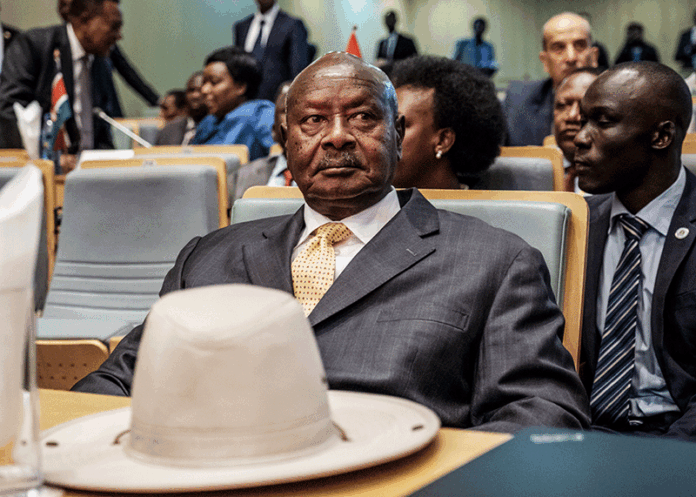
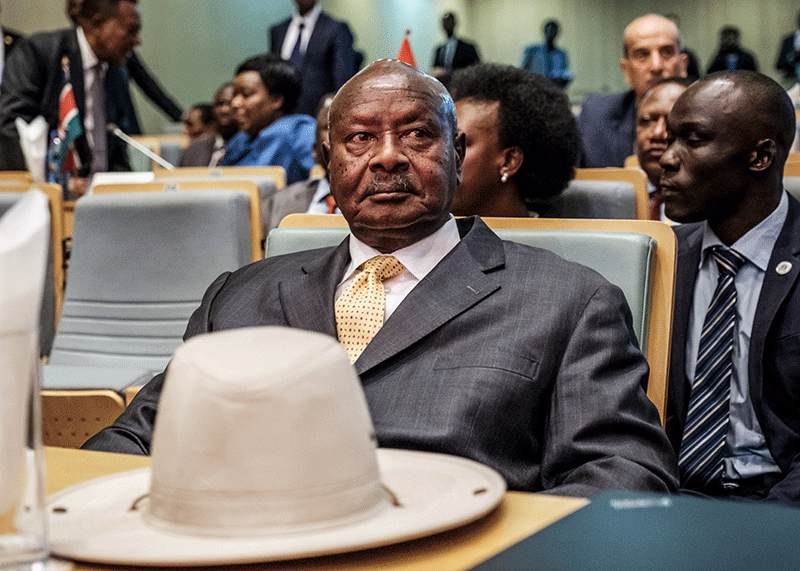
KAMPALA, Uganda (BN24) — Uganda’s ruling party on Tuesday confirmed that President Yoweri Museveni, 80, will once again seek re-election, aiming to extend his nearly 40-year grip on power in the East African nation.
The announcement from the National Resistance Movement (NRM) came via a statement on its official website, stating that Museveni intends “to retain the positions of the NRM chairman and party presidential flag bearer in the 2026 elections.” Tanga Odoi, chair of the NRM’s electoral commission, later confirmed to AFP that Museveni would formally express his interest in continuing as the party’s presidential candidate.
The decision, though long anticipated, adds fresh tension to an already fraught political landscape ahead of the general election scheduled for January 2026. The opposition, which has increasingly been targeted by the state, faces intensifying repression marked by arrests, abductions, and intimidation of key figures and supporters.
Museveni, a former rebel who took power in 1986, was once seen as a reformist committed to restoring Uganda’s stability after years of chaos. But over time, he has steadily dismantled constitutional term and age limits, consolidating power and neutralizing opponents through legal and extralegal means.
Museveni’s renewed bid comes just weeks after his most prominent rival, pop star-turned-politician Bobi Wine, announced his intention to run in the 2026 election. Wine, whose real name is Robert Kyagulanyi, lost to Museveni in the 2021 contest, which was widely criticized by observers for voter suppression, widespread irregularities, and state-led violence.
Since entering politics, Wine has faced multiple arrests and harassment, while top government figures — including Museveni’s son and presumed successor, General Muhoozi Kainerugaba — have publicly threatened him. On social media, Kainerugaba has issued chilling posts, including threats of execution, against the opposition leader.
Another longtime critic of Museveni, Kizza Besigye, was reportedly abducted from Kenya last year and forcibly returned to Uganda. He now faces treason charges that carry the death penalty. Human rights groups and international observers have condemned the case as politically motivated.
Besigye’s wife, UNAIDS executive director Winnie Byanyima, condemned his detention as “political persecution,” saying, “He is being criminalised because he has challenged, he has put himself forward as a candidate in elections.”
Museveni’s persistent hold on power and repeated constitutional manipulations have raised fears that Uganda is sliding deeper into authoritarian rule. His son Muhoozi Kainerugaba has taken on an increasingly visible political role, fueling speculation that a dynastic succession is being prepared behind the scenes.
Despite domestic unrest and international criticism, Museveni has long relied on a loyal military and tight control over the media and judiciary to suppress dissent. His administration has often dismissed opposition leaders as foreign-backed agitators or security threats.
Museveni’s sixth official presidential campaign in 2026 is likely to be contested in an environment heavily tilted in his favor, with state institutions aligned against challengers and a security apparatus that has shown little restraint in cracking down on protest and dissent.
As Uganda inches closer to the polls, rights groups, foreign governments, and international observers are watching closely — though many warn that without sweeping reforms, the vote may only further entrench one of Africa’s longest-serving rulers.
LONDON (BN24) — The UK government is set to formally designate Palestine Action as a terrorist organisation, making membership or public support for the group a criminal offence under British law, Home Secretary Yvette Cooper announced on Monday.
The decision comes in the wake of a high-profile breach at RAF Brize Norton last week, where activists broke into the Oxfordshire military installation and caused significant damage to an Airbus Voyager air-to-air refuelling aircraft. A video posted online by the group showed two individuals inside the base, with one riding an electric scooter and allegedly spraying paint into the aircraft’s engine — an act that reportedly caused millions of pounds in damage.
In a statement, Cooper described the incident as “a disgraceful attack on Brize Norton” and cited it as “the latest in a long history of unacceptable criminal damage committed by Palestine Action.” She confirmed that a draft proscription order will be laid before Parliament next week.
If the order is approved, the group will be added to the list of banned terrorist organisations under the Terrorism Act 2000, making it illegal to be a member of or offer support to the group. Certain offences under the legislation carry penalties of up to 14 years in prison, while others are punishable by fines.
In response to the announcement, group member Saeed Taji Farouky criticized the planned ban as “completely irrational” and “without precedent.” Speaking to Sky News, he framed the government’s move as “a knee-jerk reaction” aimed at silencing activists after the security breach at RAF Brize Norton exposed “serious flaws in the defences” of the Royal Air Force.
Farouky and other supporters of Palestine Action have positioned the group as a nonviolent direct action movement targeting companies linked to the Israeli defense industry. However, critics and officials point to the group’s repeated acts of property destruction as evidence of criminal — and now, potentially terrorist — behavior.
Armed Forces Minister Luke Pollard confirmed that a comprehensive review of security procedures at military installations is currently under way in response to the Brize Norton incident. He said the Ministry of Defence is working closely with counterterrorism police to track down the individuals who breached the base.
“This was not just a breach of security — it was a serious act of sabotage against critical military infrastructure,” Pollard said.
Palestine Action has also claimed responsibility for a series of high-profile actions in recent years, including attacks involving red paint splattered on corporate offices and government-linked sites. The group typically targets companies it accuses of supplying weapons or equipment used by Israel in military operations.
The draft proscription order is expected to be introduced in Parliament in the coming days. If passed, it would align Palestine Action with other banned organisations under UK counterterrorism laws. Previous proscription orders have targeted groups accused of promoting extremism or violence, although such orders are rarely applied to domestic activist organisations.
Legal experts note that the move marks a significant escalation in the government’s handling of activist groups engaged in disruptive protest tactics, and could set a precedent for future designations.
If the proscription is approved, individuals found to be members of, or providing material support to, Palestine Action could face arrest and prosecution.
As of Monday evening, the group remained defiant, continuing to post online in defiance of the government’s plans.
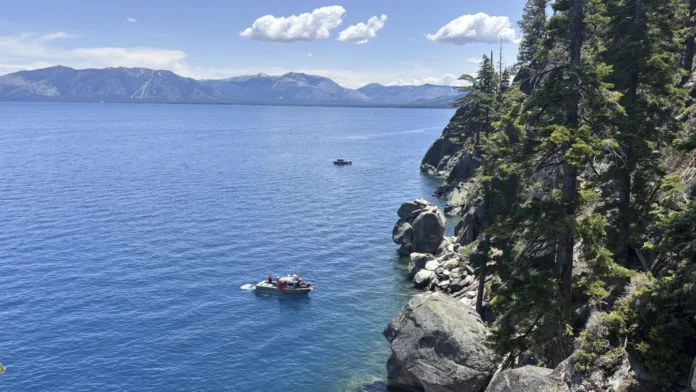
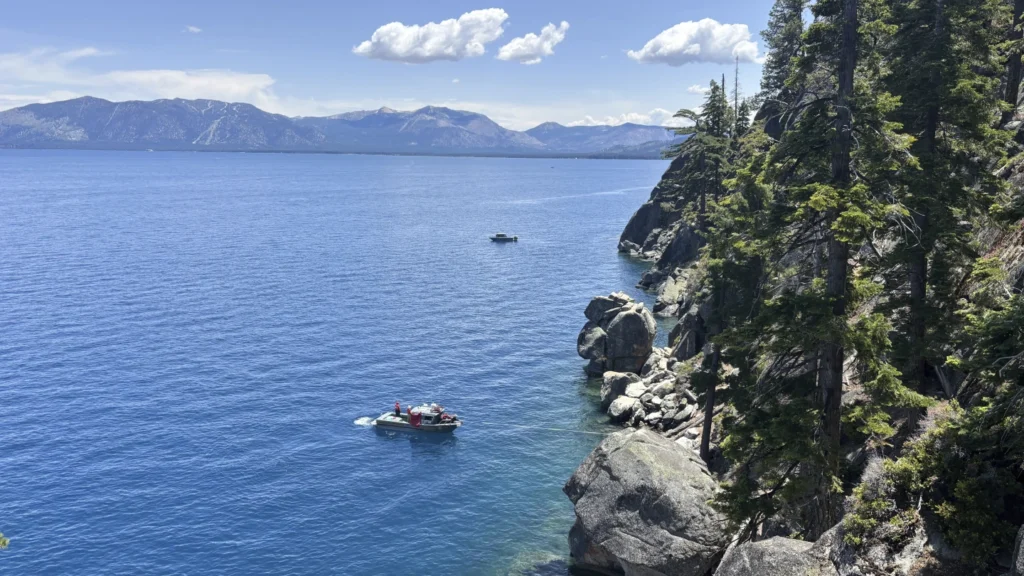
SOUTH LAKE TAHOE, Calif. (BN24) — Authorities recovered the final body Monday from a boating tragedy that unfolded over the weekend on Lake Tahoe, raising the death toll to eight in one of the deadliest accidents on the lake in recent memory.
According to the U.S. Coast Guard, a 27-foot Chris-Craft vessel carrying 10 people capsized Saturday afternoon near D.L. Bliss State Park on the lake’s southwest edge when a powerful and fast-moving thunderstorm triggered dangerous conditions, including eight-foot waves and winds exceeding 35 mph. The final victim was located Monday afternoon by dive teams searching the lake’s depths.
El Dorado County Sheriff’s officials confirmed that two people were rescued from the water immediately following the accident and hospitalized. Six bodies were recovered on Saturday, and a seventh was found Sunday evening. The identities of the victims have not yet been released, pending notification of their families, Sgt. Kyle Parker said in a statement.
While drowning incidents occur annually on Lake Tahoe — a high-altitude alpine lake straddling the California-Nevada border — large-scale boating disasters like Saturday’s are rare. According to the South Lake Tahoe Police Department, the lake sees an average of six deaths each summer, with a record of 15 in 2021. Officials could not immediately provide updated figures for 2023 or 2024.
Meteorologist Matthew Chyba of the National Weather Service in Reno, Nevada, said the storm that engulfed the southern part of Lake Tahoe shortly after 3 p.m. on Saturday came on stronger than expected. Although some rain had been forecast, the intensity of the thunderstorm — with wind gusts over 35 mph and wave swells surpassing eight feet — exceeded predictions.
“We weren’t expecting it to be so strong,” Chyba said, noting that the cold, unstable air mass contributed to the severity of the storm. “Eight-foot waves on Tahoe is pretty significant. They were really rocking the lake.”
Brittany Glick, who was celebrating a friend’s bachelorette party on a rented pontoon boat Saturday, said the weather shifted dramatically within minutes. What began as a sunny day quickly turned into a nightmare as visibility dropped, temperatures plummeted, and waves intensified.
“It felt like we were in a tsunami that was starting,” Glick told reporters. “We were shaking uncontrollably. Our feet were numb. That was probably one of the scariest moments I’ve had in my 30 years.”
As Glick’s group returned to the dock, hail began to fall and boats nearby began colliding in the chaos. Video captured by KCRA-TV showed vessels slamming into one another at a nearby marina.
Authorities have not yet released information on whether the vessel involved in the fatal accident was privately owned or rented, nor have they shared details about the occupants.
Lake Tahoe, with its stunning scenery and deep, cold waters, is a top summer destination for recreational boaters, kayakers, and paddleboarders. But the lake’s high elevation and unpredictable weather can pose serious dangers, particularly during sudden storms.
Saturday’s storm cleared within about two hours, but the aftermath has left a community shaken — and a stark reminder of the risks that come with navigating one of America’s most beautiful, yet unforgiving, lakes.
WASHINGTON (BN24) — President Donald Trump travels to The Hague this week for a high-stakes NATO summit, just hours after unveiling a sudden and dramatic ceasefire agreement between Israel and Iran — a move that has already upended the summit’s agenda and spotlighted the unpredictable nature of U.S. foreign policy under his leadership.
The president’s first appearance at NATO since returning to office was expected to center on his administration’s push to pressure allies into committing to a historic increase in defense spending. Instead, the headlines have been dominated by Trump’s authorization of U.S. airstrikes on three Iranian nuclear enrichment sites and his subsequent declaration that Israel and Iran had reached a “complete and total ceasefire.”
The ceasefire announcement, which caught both allies and adversaries by surprise, is certain to dominate closed-door meetings in The Hague, where NATO leaders are gathering to discuss rising security threats and the alliance’s long-term cohesion.
The Israeli-Iranian truce, brokered just days after U.S. strikes targeted Iranian nuclear infrastructure, is expected to cast a long shadow over the summit. Although NATO Secretary-General Mark Rutte had hoped to keep the focus on increased military budgets, the conflict’s sudden de-escalation has shifted priorities.
Hundreds of protesters had already gathered in The Hague over the weekend to denounce both the Iran strikes and Trump’s aggressive posture, reflecting wider European concerns that the U.S. president could destabilize the fragile security balance.
Rutte, now serving in the alliance’s top role, has sidestepped questions on whether Trump consulted NATO partners before launching the strikes.
Trump has made clear that he intends to use the summit to tout a breakthrough defense spending pledge: a proposed requirement for NATO nations to allocate 5% of their GDP to defense-related spending by 2035. The proposed split — 3.5% for military hardware and operations, and 1.5% for dual-use infrastructure like roads and bridges — is ambitious and already generating resistance among some member states, particularly Spain.
While the U.S. already spends about 3.4% of GDP on defense, Trump has argued that Washington should be exempt from the 5% target altogether.
Still, many European leaders are bracing for Trump’s signature bombast. In previous summits, he has questioned NATO’s relevance, criticized allies for underinvesting, and even threatened to withdraw the U.S. from the alliance. His 2018 suggestion that members aim for 4% spending was once viewed as radical. Now, some believe his demands are reshaping the NATO consensus.
“There’s a genuine fear in Europe that unless they meet Trump’s expectations, the United States might walk away,” said Matthew Kroenig of the Atlantic Council. “Whether they like it or not, his tougher approach has yielded results.”
Sen. Jeanne Shaheen, the ranking Democrat on the Senate Foreign Relations Committee and a summit attendee, warned that Trump’s behavior could hand strategic victories to adversaries like China.
“If the president uses this moment to divide our allies or undermine NATO unity, it plays right into the hands of Xi Jinping and Vladimir Putin,” Shaheen said.
Those fears are amplified by signals that the Trump administration may reduce U.S. troop levels in Europe to bolster forces in the Indo-Pacific, a move interpreted by some as a strategic pivot away from the transatlantic alliance.
Secretary of State Marco Rubio and U.S. Ambassador to NATO Matt Whitaker have both insisted the administration remains committed to NATO, arguing that calls for more defense investment are meant to strengthen, not fracture, the alliance.
Trump’s past rhetoric continues to haunt NATO capitals. As a candidate in 2016, he openly questioned whether the U.S. would honor NATO’s Article 5 mutual defense clause. During his 2024 campaign, he recounted telling an unnamed leader that if their country failed to meet defense targets, he would “encourage Russia to do whatever the hell they want.”
Those remarks alarmed U.S. allies, many of whom now view Trump’s return to the NATO stage with a mix of caution and resignation.
“The alliance has learned to expect the unexpected with Trump,” said Max Bergmann, director of the Europe, Russia and Eurasia Program at the Center for Strategic and International Studies. “There’s no coherent strategy — just moment-to-moment instinct and pressure.”
Although NATO does not handle trade issues, Trump’s concurrent threats to slap 50% tariffs on European goods loom large in the background. He has set a July 9 deadline for the U.S. and European Union to finalize a new trade agreement, but has warned that the EU’s offers have so far been insufficient.
Rutte has insisted that the transatlantic tariff standoff will not interfere with the alliance’s military agenda, though few believe it will remain entirely separate from summit conversations.
It remains unclear whether Trump will meet with Ukrainian President Volodymyr Zelenskyy, who is also attending the summit. A planned meeting between the two leaders at the recent G7 summit in Alberta was scrapped when Trump abruptly left early to return to Washington.
For now, the NATO summit — originally framed as a turning point in transatlantic burden-sharing — has become a broader referendum on Trump’s foreign policy, on his ability to unite allies, and on the future direction of an alliance still grappling with war on its eastern border and discord within its ranks.
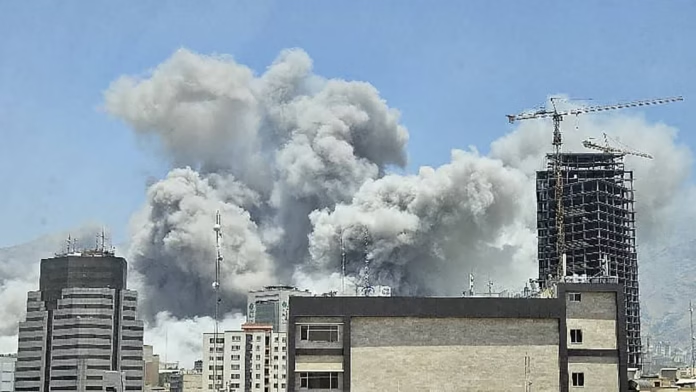
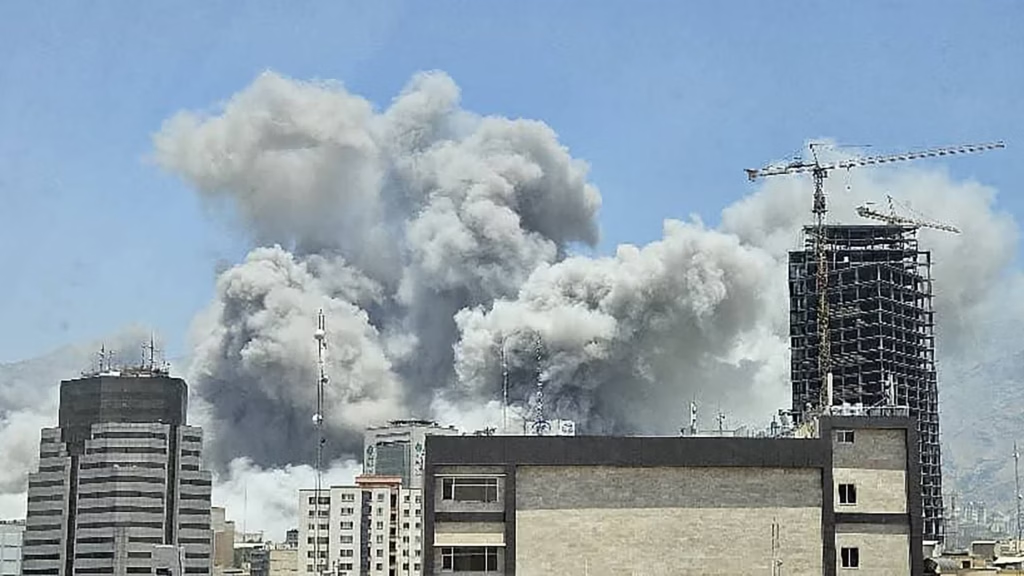
JERUSALEM (BN24) — Israeli Defense Minister Yoav Gallant on Monday ordered the military to launch a series of intense airstrikes on Tehran, accusing Iran of violating a newly implemented ceasefire agreement with missile attacks targeting Israeli territory. The move threatens to unravel the fragile truce reached just hours earlier and reignite full-scale hostilities between the two regional adversaries.
“The Iranian regime has flagrantly violated the ceasefire,” Gallant said in a statement. “I have instructed the IDF to respond with powerful strikes targeting strategic regime infrastructure in central Tehran.”
His order came after the Israel Defense Forces confirmed detecting missile launches from Iranian territory, prompting air raid sirens and warnings for Israeli civilians to take cover. Israeli air defense systems were activated to intercept the incoming threats, though the full scale of the assault and its impact remained unclear.
Chief of General Staff Lt. Gen. Herzi Halevi backed the retaliatory strikes, saying in a post shared by the IDF that Israel “will respond with force” to what it calls Iran’s “severe violation” of the ceasefire terms.
“The ceasefire was an opportunity to de-escalate, not a license for renewed aggression,” Halevi said. “Tehran will feel the consequences.”
Israel’s far-right Finance Minister Bezalel Smotrich echoed those sentiments, posting on social media: “Tehran will shake.”
Despite the Israeli accusations and incoming strikes, Iran’s state media has denied launching missiles toward Israel, stating that reports of such an attack were “false.” General Abdolrahim Mousavi, Iran’s top military commander, reiterated that no missiles had been fired in recent hours, according to state-run IRNA.
Iran’s Foreign Minister Abbas Araghchi previously said Tehran was abiding by the ceasefire on the condition that Israel also halted its strikes. Araghchi noted that if Israel ceased operations by 4 a.m. local time, Iran would reciprocate.
However, Iranian civilians reported intense overnight bombardments, particularly in Tehran and the northern province of Gilan. Residents described hearing a wave of “heaviest explosions” since the beginning of the conflict. As of early morning, the situation appeared to have calmed.
Iran’s Ministry of Health reported approximately 500 fatalities since the outbreak of hostilities, though it remains unclear how many were civilians. The Iranian regime has labeled all victims as “martyrs,” whether they were combatants or not, making a precise civilian death toll difficult to determine.
Despite the renewed escalation, Iran has not confirmed any military retaliation since the ceasefire took effect, casting further doubt over whether it violated the truce or was targeted preemptively by Israel based on intelligence assessments.
The apparent collapse of the ceasefire marks a dramatic reversal just hours after U.S. President Donald Trump announced that Israel and Iran had agreed to a phased 24-hour ceasefire, aiming to officially end a 12-day war triggered by a series of airstrikes on Iranian nuclear facilities.
With both sides now exchanging accusations and fire, the future of diplomatic efforts remains in question. International observers are closely watching for further statements from Tehran and Jerusalem as the region braces for what could become an even more destructive phase of the conflict.
MIAMI GARDENS, Fla. (BN24) — In a landmark moment for Major League Soccer, Inter Miami CF clinched a place in the FIFA Club World Cup knockout stage, becoming the first MLS team to do so following a 2-2 draw with South American champions Palmeiras at Hard Rock Stadium on Monday night.
Fueled by a stunning solo goal from Luis Suárez and an early strike by Tadeo Allende, the Herons advanced from Group A with five points, earning a Round of 16 clash against Paris Saint-Germain at Atlanta’s Mercedes-Benz Stadium on Saturday. While Palmeiras secured the top spot in the group thanks to late goals from Paulinho and Maurício, Miami’s draw was enough to write MLS history.
In front of a raucous crowd split between pink-clad Miami fans and Palmeiras supporters, Allende opened the scoring with a 60-yard solo run and clinical finish in the 16th minute. But it was Suárez who electrified the stadium in the 65th, turning back the clock with a bulldozing run through defenders before slotting home the second goal.
Palmeiras responded with relentless pressure and found their equalizer in the final minutes, but Inter Miami had done enough to escape the group and secure a place in the Club World Cup’s next round—a first for any MLS side.
While Lionel Messi didn’t score Monday, his presence loomed large throughout the match—and across Inter Miami’s entire Club World Cup campaign. From his free-kick winner against FC Porto last week to the intangible leadership he provides, Messi has not only transformed Miami’s fortunes but elevated the club into global relevance.
“He’s a player who guides us,” said Inter Miami coach Javier Mascherano. “His hunger, his resilience, his desire to compete at any level—it shows us where we need to go.”
Messi’s arrival sparked a roster revolution: former Barcelona teammates like Suárez, Sergio Busquets, and Jordi Alba joined, while South American prospects flocked to the club, drawn by the chance to play with the GOAT. The result? Perhaps the most formidable squad in MLS history.
Inter Miami’s success is remarkable—but it stands in sharp contrast to the broader MLS performance at the Club World Cup. Seattle Sounders and LAFC both exited early, unable to win a single match. LAFC’s loss to Tunisian champions Espérance remains a stain on MLS’s competitive credibility.
The difference is stark: Inter Miami is an outlier, a superteam built around Messi with resources, allure, and a brand few MLS teams can match. While the league continues to emphasize parity, Miami has broken the mold—and rewritten what’s possible for North American soccer on the global stage.
With their place in history secured, Inter Miami now face their biggest challenge yet—European giants PSG. The knockout round match in Atlanta will mark another chapter in a meteoric rise for a club that only entered MLS in 2020.
As Mascherano put it, “We’ve shown the world that we can compete.” Whether Miami’s success can be replicated across MLS—or remains a Messi-fueled anomaly—remains to be seen.
But for now, Inter Miami stand alone as MLS’s breakthrough on the world stage—and their journey continues.
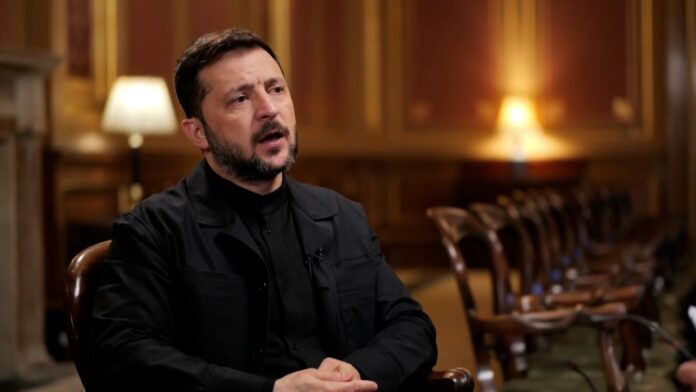
KYIV, Ukraine — Ukrainian President Volodymyr Zelenskyy warned that Russia could launch an attack on a NATO member within five years, arguing that Western allies must accelerate their defense spending plans to deter future aggression from the Kremlin.
In a televised interview with Sky News, Zelenskyy said Russian President Vladimir Putin might attempt to test the unity of the NATO alliance by striking one of its members within the next several years.
“If Putin wins in Ukraine, he won’t stop there,” Zelenskyy said. “He needs a pause to rebuild, and then he could target a NATO country to test the alliance. That could happen within five years.”
Zelenskyy criticized NATO’s recently proposed plan for members to raise defense spending to 5% of GDP by 2035, calling the timeline “very slow” and potentially dangerous given Russia’s growing military ambitions.
“We believe that, starting from 2030, Putin can have significantly greater capabilities,” Zelenskyy warned. “Right now, Ukraine is holding him back. But if we lose, or the West slows its support, he will use that time to drill and rebuild his army.”
The 5% goal, to be formally discussed this week in The Hague, includes 3.5% for traditional military defense and 1.5% for related areas, including infrastructure and cybersecurity. The benchmark mirrors Cold War-era military investment levels across the alliance.
When asked whether Putin might act within months, Zelenskyy said he does not believe the Russian leader is “ready” at this moment, citing massive Russian battlefield losses in Ukraine.
“His army is getting annihilated. He’s not ready right now. But give him 10 years, and he will be,” Zelenskyy cautioned. “He needs a pause, he needs sanctions lifted, and he needs time to prepare a new army.”
The remarks come as NATO members gather in The Hague for a summit expected to focus on security spending, strategic posture, and long-term deterrence amid rising global threats. Western leaders have long feared that a Russian victory in Ukraine would embolden Moscow and test NATO’s Article 5 collective defense clause.
Zelenskyy continues to urge NATO nations to increase support for Ukraine as a frontline state defending Europe’s eastern flank.
“The faster you act now, the less you’ll have to fight later,” he said.
RALEIGH, N.C. — Five people were transported to a hospital after an American Airlines flight encountered unexpected turbulence Sunday night as it descended toward Raleigh-Durham International Airport, airline and federal officials said.
Flight 1286, an Airbus A321 en route from Miami International Airport, hit turbulence while passengers were seated and the seat belt sign was illuminated, the airline confirmed.
The flight crew reported possible injuries to both passengers and crew members, prompting emergency personnel to meet the aircraft upon landing at approximately 10:50 p.m., according to the Federal Aviation Administration.
In a statement Monday, American Airlines said three flight attendants and two passengers were evaluated and taken to a nearby hospital for observation. All five were later released, and no serious injuries have been reported.
“We thank our crew members for their professionalism and our customers for their understanding,” the airline said, adding that safety remains its top priority.
The exact cause and intensity of the turbulence were not disclosed, but the FAA said it would investigate the incident as standard procedure.
The event adds to a recent string of turbulence-related injuries that have drawn renewed attention to in-flight safety. Aviation experts continue to stress the importance of wearing seat belts at all times when seated, even if the seat belt sign is off.
While commercial aircraft are designed to withstand turbulent conditions, sudden air disturbances—especially during descent or in storm-prone areas—can pose serious risks to unrestrained passengers and crew.
Flight 1286 landed without further incident, and no delays or disruptions to other flights at Raleigh-Durham were reported.
American Airlines said it is cooperating fully with the FAA review and will continue monitoring the health of those involved.
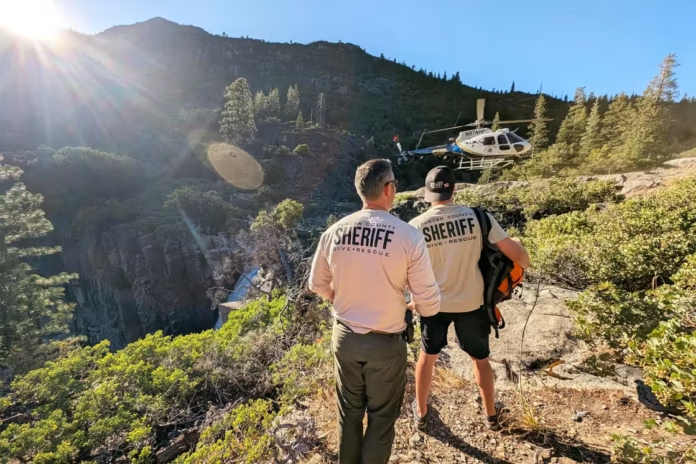
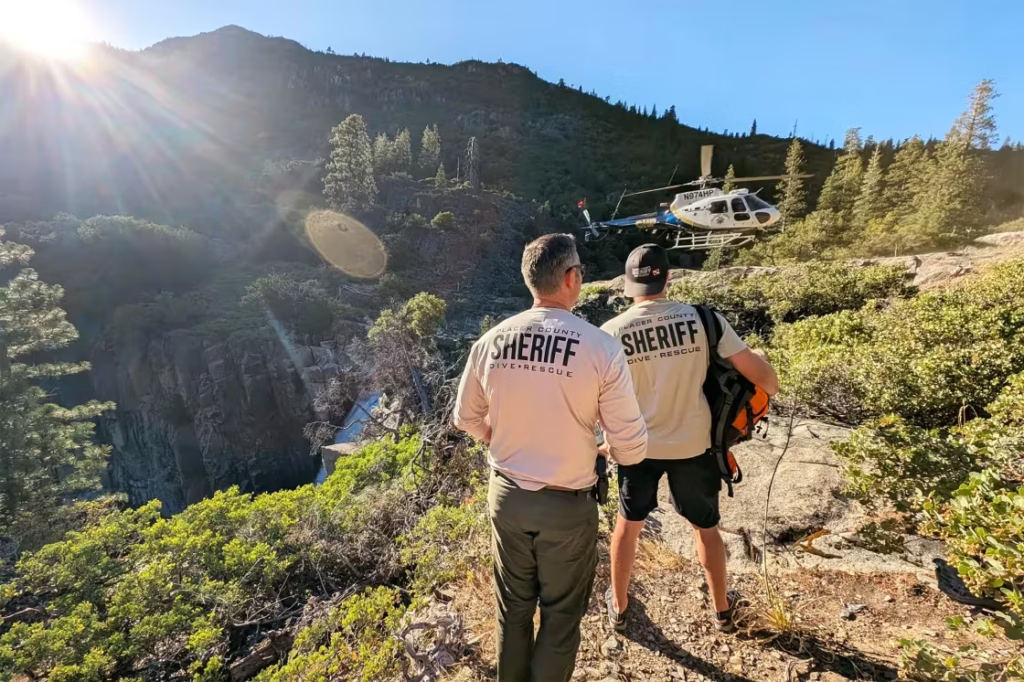
SODA SPRINGS, Calif. (BN24) — Three men who vanished after jumping into a waterfall in a remote part of Northern California have been found dead, authorities confirmed Sunday, marking a tragic end to a hiking trip near Lake Tahoe.
The Placer County Sheriff’s Office said the victims were among a group of six hikers trekking Wednesday through rugged terrain near Rattlesnake Falls, about 30 miles west of North Lake Tahoe in the Soda Springs area.
The three men jumped into the waterfall and did not resurface, prompting an emergency call just before 3 p.m. that led to the deployment of a dive team via helicopter, the sheriff’s office said in a statement.
Search-and-rescue crews worked swiftly, airlifting the remaining three hikers out of the remote area on Wednesday night. But efforts to recover the missing men were hampered by treacherous weather, including powerful winds and poor underwater visibility, which forced the suspension of operations on Thursday afternoon.
The search resumed on Sunday under improved weather conditions, allowing divers to safely navigate the fast-moving waters around Rattlesnake Falls, a notoriously slippery and isolated spot.
The sheriff’s office confirmed the bodies were recovered but did not release further details on the victims’ identities or the exact circumstances of their deaths.
The incident adds to a growing list of tragedies involving visitors drawn to California’s scenic but hazardous waterfalls. While picturesque, many such areas—including Rattlesnake Falls—pose severe dangers due to cold, swift currents, hidden rocks, and limited access for emergency responders.
Officials have not confirmed whether the hikers were swept away by the current or struck by debris in the water, but urged the public to remain cautious during outdoor adventures.
“Waterfalls are beautiful but unpredictable,” a Placer County official said. “Even strong swimmers can find themselves in grave danger.”
The sheriff’s office said it will continue to investigate the drownings and work with the families of the victims. No foul play is suspected.
As summer draws more hikers into Northern California’s backcountry, authorities are reminding visitors to exercise extreme caution around fast-moving water—especially in remote, hard-to-reach locations like Rattlesnake Falls.