Home Blog Page 318

Supreme Court Allows Trump to Resume Third-Country Deportations Amid Warnings of Grave Risk

0
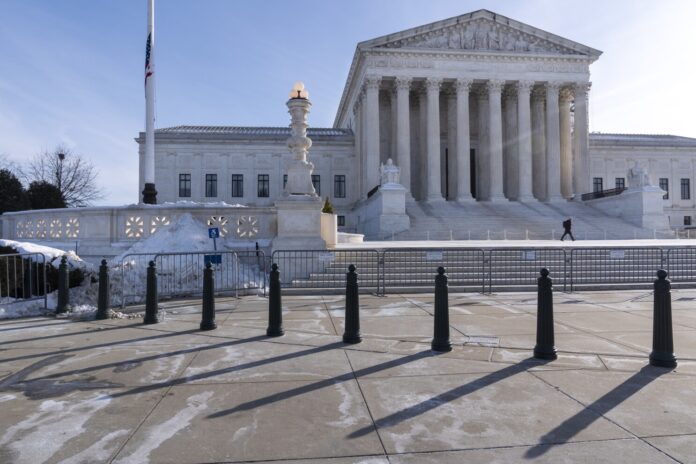
FILE - The Supreme Court is pictured, Jan. 10, 2025, in Washington. (AP Photo/Jacquelyn Martin, File)

WASHINGTON (BN24) — The Supreme Court on Monday gave President Donald Trump the green light to resume deporting migrants to third countries, lifting a previous federal court order that required due process for individuals facing removal to places other than their homeland.

The decision, issued without explanation from the conservative majority, came over the strong objection of the Court’s three liberal justices, who warned the move could expose thousands of migrants to “torture or death.”

Deportations Resume Under Controversial Policy

The high court’s ruling clears the path for immigration officials to restart rapid deportations under Trump’s expanded third-country removal policy, a cornerstone of his ongoing immigration crackdown. The policy allows the U.S. to deport individuals not to their countries of origin, but to third nations willing to accept them—regardless of the risks they may face there.

The Department of Homeland Security hailed the ruling as a “MAJOR win for the safety and security of the American people,” according to a social media post from spokesperson Tricia McLaughlin.

In May, officials attempted to deport eight individuals—including refugees from Myanmar, Vietnam, Cuba, and others convicted of violent crimes in the U.S.—to South Sudan, a country ravaged by internal conflict. That flight was diverted to a U.S. naval base in Djibouti after a federal judge intervened.
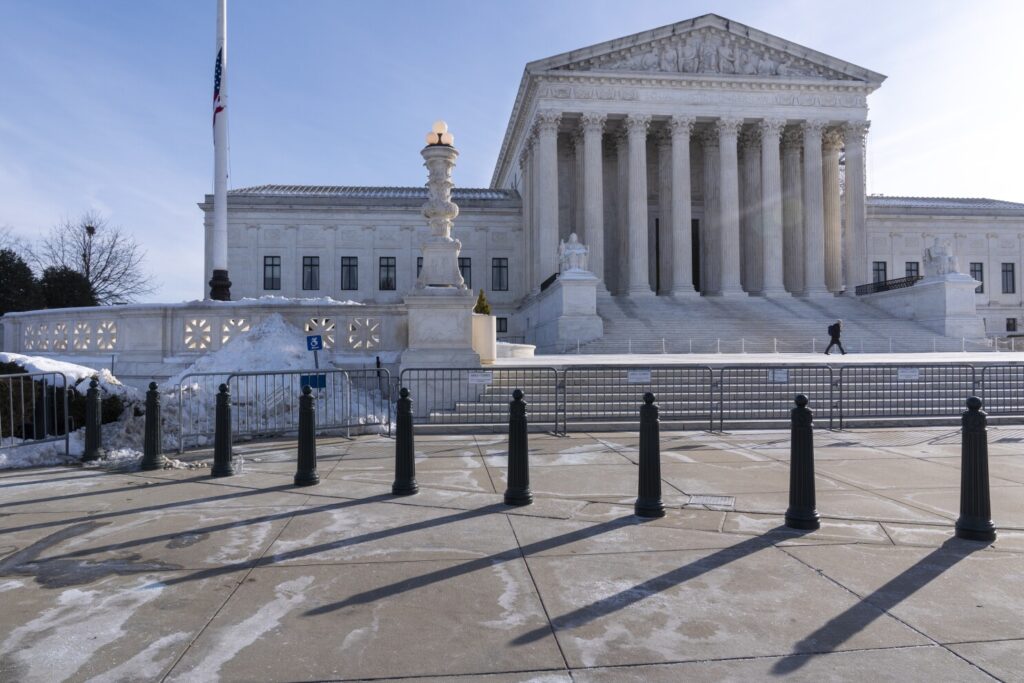
FILE – The Supreme Court is pictured, Jan. 10, 2025, in Washington. (AP Photo/Jacquelyn Martin, File)

Sotomayor Issues Fierce Dissent

In a scathing 19-page dissent, Justice Sonia Sotomayor, joined by Justices Elena Kagan and Ketanji Brown Jackson, rebuked the court’s majority for abdicating its responsibility to protect vulnerable people from life-threatening harm.

“The government has made clear in word and deed that it feels itself unconstrained by law,” Sotomayor wrote. “[It] is free to deport anyone anywhere without notice or an opportunity to be heard.”

She warned that the Court’s inaction effectively exposes migrants to potentially fatal outcomes, including torture and extrajudicial violence in countries where U.S. deportations lack oversight or transparency.

Lower Court Judge Had Blocked Deportations

The Supreme Court’s order overturned an April ruling by U.S. District Judge Brian E. Murphy of Massachusetts, who had prohibited the deportation of migrants to third countries without giving them a meaningful opportunity to argue they would face serious danger there.

Murphy’s decision came after reports that migrants deported to Djibouti were confined in converted shipping containers, raising further concerns about the humanitarian conditions tied to the Trump administration’s deportation logistics.

The judge emphasized that while third-country deportations were not inherently illegal, due process demands that individuals be given a chance to raise fears of persecution or torture before removal.

Murphy, appointed by President Joe Biden, had also previously ordered the return of a gay Guatemalan man who had been deported to Mexico and allegedly raped and extorted, calling the original deportation unlawful.

Broader Implications of the Ruling

Trump’s resumed deportation program comes amid new bilateral agreements with countries like Costa Rica and Panama to receive deported migrants. Many of these migrants originate from nations that are either unwilling or unable to take them back directly.

The legal battle over third-country removals has emerged as a major flashpoint in Trump’s second-term immigration agenda. Critics warn that the policy undermines international protections for asylum seekers and refugees, while supporters argue it is essential for restoring border security and removing criminal aliens.

Trina Realmuto, executive director of the National Immigration Litigation Alliance, said the ramifications of Monday’s ruling are “horrifying.”

“We are talking about real people with credible fears of persecution,” she said. “This ruling could cost lives.”

AP
Trump Says Israel and Iran Have Agreed to ‘Complete and Total’ Ceasefire

0

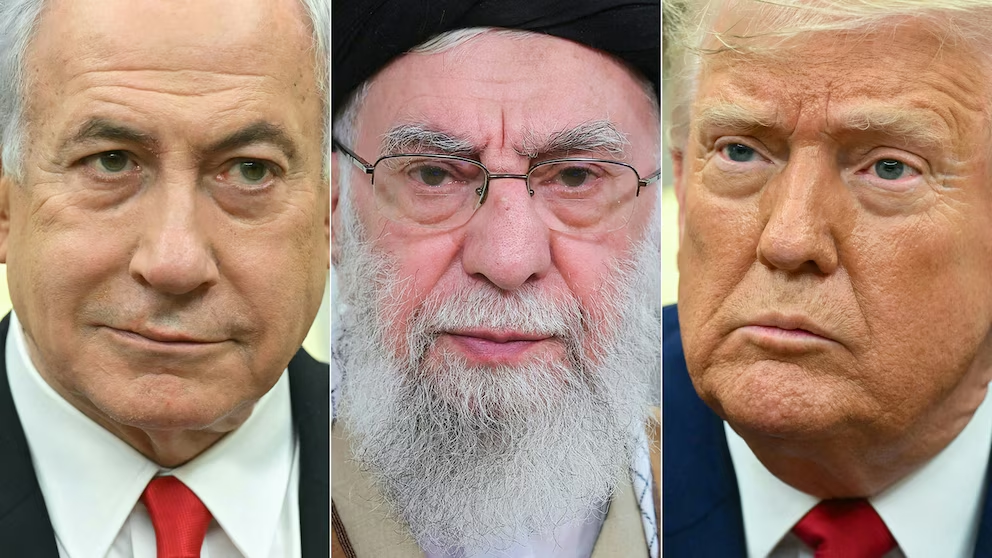
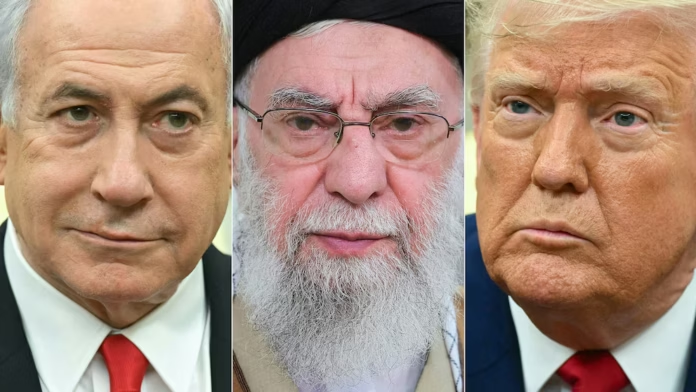
WASHINGTON (BN24) — President Donald Trump announced Monday that Israel and Iran have agreed to a “complete and total ceasefire” that will be implemented in phases over 24 hours, potentially ending what he termed “THE 12 DAY WAR” between the two Middle Eastern powers.

The ceasefire announcement came after Iran launched a retaliatory missile attack on a U.S. military base in Qatar following American strikes over the weekend on three Iranian nuclear facilities. Trump said on Truth Social that the ceasefire would bring an “Official END” to the war, marking a significant shift in hostilities that have escalated dramatically since mid-June.

Trump’s social media post outlined a specific timeline for the ceasefire implementation, stating it would begin at approximately midnight Tuesday EST. Under the proposed schedule, both countries would have six hours to wind down and complete their ongoing military operations. Iran would then cease attacks first, followed 12 hours later by Israel stopping its strikes at noon EST Tuesday. After an additional 12 hours, “the War will be considered, ENDED!” according to Trump’s announcement.

The conflict began June 13 when Israel launched surprise attacks on sites in Iran, with Israeli officials claiming the strikes were necessary to prevent what they described as an imminent threat of Iran developing nuclear weapons. Iran responded with a series of missile and drone strikes against Israel, while Israel continued targeting Iranian sites in an escalating cycle of retaliation.

The most recent escalation occurred when Iran fired missiles at the U.S. Al Udeid Air Base in Qatar earlier Monday. A Qatari military officer reported that Iran launched 19 missiles at the facility, with one impacting the base but causing no casualties. Trump’s account differed slightly, stating that 14 missiles were fired, 13 were intercepted, and one was “set free.”

Iran characterized its missile attack as matching the number of bombs the United States dropped on Iranian nuclear sites over the weekend, signaling what analysts interpreted as Tehran’s desire to de-escalate the situation. Iranian officials said they deliberately targeted the Qatar base because it was located outside populated areas, minimizing potential civilian casualties.

Trump acknowledged that Iran provided advance warning of the missile attack, thanking Iranian leaders for the “early notice” and expressing hope that this would be their only response to the American nuclear facility strikes. He described Iran’s retaliation as “very weak” while praising the country for the advance notification.

Congressional leaders quickly praised Trump’s ceasefire announcement. House Speaker Mike Johnson called it “a really remarkable achievement” and credited Trump’s approach, stating that “President Trump deserves all the credit. This is what peace through strength looks like. We haven’t seen this in a while, and it’s really a big sigh of relief here on Capitol Hill.”

Vice President JD Vance, appearing on Fox News Channel minutes after the ceasefire announcement, described the Israel-Iran conflict and U.S. bombing of Iranian nuclear facilities as “an important reset moment for the entire region.” Vance expressed hope that Iran had learned that any future attempts to build nuclear weapons would result in confrontation with “a very, very powerful American military.”

The White House reinforced Trump’s message by reposting his social media announcement, accompanying it with a photo of the president holding a red hat emblazoned with “Trump was right about everything” in capital letters.

Despite the ceasefire announcement, reports indicated that Israel continued striking Iranian targets with what its defense minister described as “unprecedented force.” However, Israeli government sources suggested through Arab intermediaries that the country was prepared to conclude the conflict within days. Prime Minister Benjamin Netanyahu reportedly expressed disinterest in a prolonged war of attrition, particularly as Israel faces depletion of its missile interceptors after ten days of Iranian attacks that breached defense systems and caused casualties and property damage.

Intelligence assessments suggest both sides may be seeking an exit strategy from the conflict. Trump’s measured response to Iran’s Monday missile attack, combined with Israel’s diplomatic messaging through regional partners, appears to represent a coordinated effort to signal Tehran that both countries are prepared to end hostilities if Iran agrees to cease operations.

As of Monday evening, neither Israel nor Iran had officially confirmed or responded to Trump’s ceasefire announcement, leaving the implementation timeline and verification mechanisms unclear. The lack of immediate response from both countries underscores the tentative nature of the proposed agreement and raises questions about enforcement and compliance monitoring.

The ceasefire announcement represents a significant diplomatic development in a conflict that has raised fears of broader Middle Eastern warfare and potential disruption to global oil markets. The successful implementation of Trump’s proposed timeline would mark a rapid conclusion to hostilities that began with Israel’s preemptive strikes against Iranian nuclear infrastructure.

Analysts noted that the ball remains in Tehran’s court as the Iranian government, described as severely weakened by the conflict, must decide whether to accept the ceasefire terms and formally end what both sides appear ready to conclude after nearly two weeks of escalating military exchanges.

Colombian Army Says 57 Soldiers Kidnapped by Civilians Coerced by FARC Dissidents

0

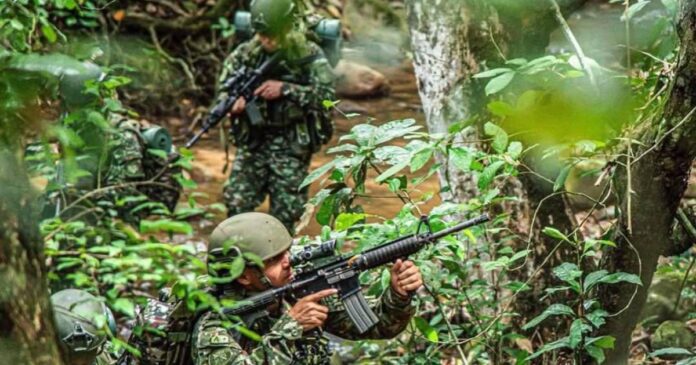
BOGOTÁ, Colombia (BN24) — The Colombian army on Sunday reported that 57 of its soldiers were kidnapped in the country’s volatile southwest by civilians allegedly acting under coercion from dissident factions of the FARC, the defunct rebel group that once dominated Colombia’s long civil conflict.

Military officials said the mass abduction took place near El Plateado, a mountainous area in the department of Cauca, long regarded as a strategic corridor for cocaine production and trafficking. The army described the civilians’ actions as being carried out “under pressure and threats” from FARC dissidents who have refused to lay down arms despite a 2016 peace accord.

“This is not an isolated incident, but a sign of how dissident groups are using civilian populations as tools in their escalating campaign against the state,” a senior military official told local media, speaking on condition of anonymity due to the sensitivity of the operation.

The Cauca region remains one of Colombia’s most contested zones, plagued by clashes between armed groups vying for control of lucrative drug routes, illegal mining operations, and local governance. Although the Revolutionary Armed Forces of Colombia (FARC) formally demobilized following the peace deal nearly a decade ago, numerous splinter factions have since emerged and continued to operate with impunity in remote parts of the country.

The army did not release detailed information on the conditions of the detained soldiers or efforts to secure their release, but said it was “coordinating a response” to de-escalate the crisis without further endangering the hostages or local residents.

Russia, China, Pakistan Push UN Resolution Condemning U.S. Strikes on Iran, Demanding Ceasefire

0

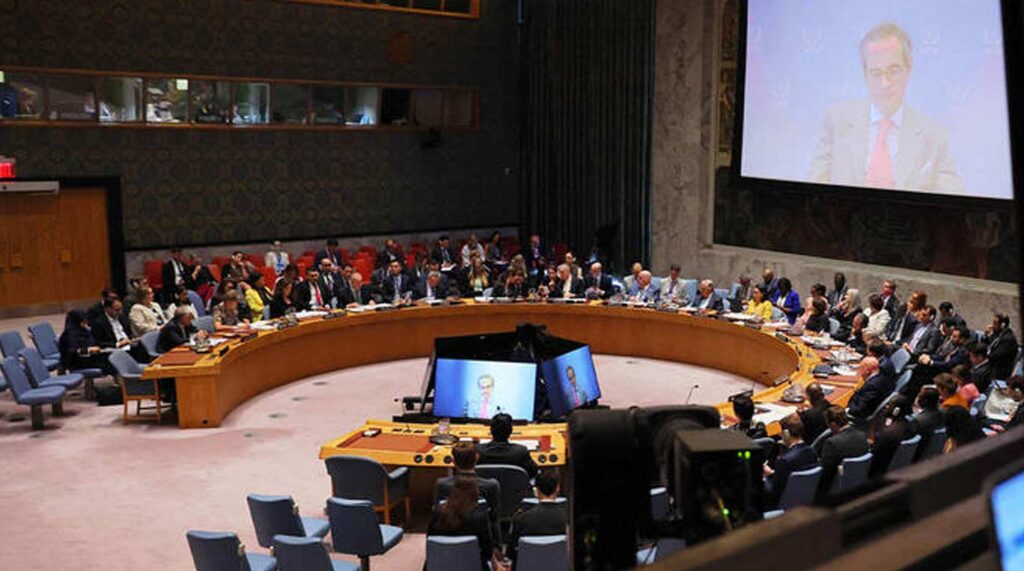
UNITED NATIONS (BN24) — Russia, China, and Pakistan have jointly introduced a draft UN Security Council resolution condemning the United States’ military strikes on Iranian nuclear facilities and calling for an immediate ceasefire in the escalating conflict between Israel and Iran, according to a copy of the proposal obtained by The Associated Press.

The draft resolution, distributed Monday to the 15 members of the Security Council for review, accuses the United States of targeting “peaceful nuclear sites under safeguard” by the International Atomic Energy Agency (IAEA) and demands that such attacks be condemned “in the strongest terms.”

The proposed resolution also calls for an “immediate and unconditional ceasefire,” the protection of civilians and civilian infrastructure, and renewed diplomatic engagement to resolve tensions surrounding Iran’s nuclear program. It urges that any peaceful resolution include guarantees of Iran’s compliance with peaceful nuclear development, in exchange for the lifting of both unilateral and multilateral sanctions.

While the document marks a strong rebuke of Washington’s recent military action, its current language is almost certain to face a veto by the United States, one of the five permanent members of the Security Council. However, revisions through negotiation remain possible, diplomats said.

The U.S. strikes over the weekend targeted three major Iranian nuclear sites — including the underground Fordow facility — prompting a wave of condemnation from Iran’s allies and renewed global alarm over a possible regional war. The draft resolution reflects mounting unease over the potential for broader destabilization in the Middle East.

The rare united front by Moscow, Beijing and Islamabad illustrates a growing axis of resistance to what they describe as unilateral Western military aggression. All three governments have previously voiced concerns about the legality and consequences of the U.S. and Israeli operations against Iran, especially as Iran’s nuclear sites remain under IAEA monitoring.

Diplomats say the draft is unlikely to pass without major changes, but its introduction signals an intensifying geopolitical split at the UN and a renewed attempt by Eastern powers to challenge Western dominance over international conflict narratives.

As tensions escalate, Security Council discussions over the draft resolution are expected to continue in the coming days, with international focus centered on whether any consensus can be reached — or if the UN will again find itself deadlocked amid a deepening global crisis.

Atletico Madrid Crash Out of Club World Cup as PSG, Botafogo Advance to Knockouts

0

PASADENA, Calif. (BN24) — European giants Atletico Madrid suffered an early and stunning exit from the FIFA Club World Cup on Monday, crashing out in the group stage despite a narrow victory over Brazilian champions Botafogo at the Rose Bowl.

Atletico’s hopes were dashed as Paris Saint-Germain sealed a 2-0 win over MLS side Seattle Sounders in a simultaneous Group B match, propelling the French side into the last 16 as group winners. Botafogo, despite the loss, advanced as group runners-up due to goal differential.

Antoine Griezmann struck late to secure a 1-0 win for Atletico Madrid in Pasadena, but the effort proved futile. Diego Simeone’s side entered the final matchday needing a victory and a favorable result in the PSG-Sounders game. While the win came, the math didn’t — PSG’s dominant performance left Atletico on the outside looking in.

The result marks a bitter disappointment for the Champions League semifinalists, who were widely expected to contend for the Club World Cup title. Instead, they become the first major European club eliminated in the group phase of this expanded global tournament.

With clinical finishes and composed play, PSG topped the group thanks to a confident win over the Seattle Sounders, confirming their status as title favorites. Their victory ensured a perfect record in Group B and safe passage into the knockout rounds.

Despite their defeat to Atletico, Botafogo’s earlier win and goal advantage were enough to send them through. The Brazilian side now joins PSG in the round of 16, while Atletico Madrid are left to ponder a missed opportunity on the global stage.

Court Evidence Photos Show Diddy’s Stockpile of Lingerie, Lubricants and Baby Oil Amid Federal Trial

0

NEW YORK (BN24) — Newly unveiled court photographs presented Monday in the federal case against Sean “Diddy” Combs offer a revealing look inside the embattled music mogul’s private world — one prosecutors claim was marked by coercion, control, and disturbing sexual behavior.

Among the most striking images introduced into evidence were pictures showing dozens of lingerie sets, high heels, fishnet stockings, whips, baby oil, and bottles of Astroglide lubricant — items prosecutors argue were used to orchestrate what they’ve described as “freak-off” sex marathons with women under duress.

Evidence Shows Massage, Intimate Setting

Several photos displayed in court appeared to depict Combs mid-massage, including one image where his leg is raised in the air as a female masseuse balances on a table, holding it up. Another shows him relaxed on an exercise bike, drink in hand, in a dimly lit room — part of what prosecutors say was a space carefully curated for exploitation.

The lingerie collection — reportedly belonging to or worn by Combs’ alleged victims — included various pieces of intimate apparel, stacked and folded alongside stilettos and accessories. According to prosecutors, the visual evidence supports claims that Combs weaponized his wealth and status to maintain control over women and isolate them for sexual exploitation.

Prosecutors Cite Explicit Texts: “Orgasms and Foodgasms”

In addition to the photographs, the court was shown explicit text messages between Combs and a woman identified in court documents as Jane Doe. In a message exchange dated November 7, 2021, Combs allegedly wrote:

“I’m serving orgasms and foodgasms.”

The exchange began innocently enough, with Combs asking Jane how her day was, followed by discussion of brunch — but quickly veered into sexually charged territory. Jane responded playfully to what appeared to be an explicit photo, replying:

“Sheesh, you need to come with a warning sign,” followed by emojis.

While the defense has admitted that Combs, 55, engaged in domestic abuse, they contend that the prosecution is attempting to “criminalize consensual sexual activity between adults.” His legal team is set to present their defense this week, rejecting the allegations of sex trafficking and racketeering conspiracy.

The evidence — both visual and digital — is part of a sweeping federal case that alleges Combs used intimidation, violence, and influence to entrap women and manipulate them sexually. Prosecutors argue these were not isolated encounters, but part of a calculated pattern involving coercion and control over multiple victims.

Combs has pleaded not guilty to all federal charges.

The trial, already drawing national attention for its graphic and high-profile nature, is expected to continue making headlines as more testimony and evidence surface in the coming days.

Oil Prices Surge as Markets Brace for Potential Iranian Retaliation

0

WASHINGTON (BN24) — Global oil prices soared Sunday evening amid escalating tensions between the United States and Iran, reaching their highest point since President Donald Trump returned to office, as markets await Tehran’s response to U.S. strikes on Iranian nuclear facilities.

West Texas Intermediate crude futures surged more than 6%, hitting $78 per barrel, surpassing prices recorded on Trump’s inauguration day in January. The sharp increase is expected to trickle down to consumers at the gas pump, just days ahead of the busy Fourth of July travel weekend.

The average U.S. price for regular gasoline is already nearing $3.22 per gallon, approximately 10 cents higher than it was at the start of Trump’s term. Analysts say prices could climb further depending on how aggressively Iran chooses to retaliate.

The prospect of Iran disrupting traffic in the Strait of Hormuz — the world’s most critical oil chokepoint, through which nearly 25% of global seaborne crude flows — has rattled energy markets. Though Iran’s parliament has voted in favor of closing the Strait in response to U.S. aggression, only a decree from Supreme Leader Ayatollah Ali Khamenei’s appointee can make that decision legally binding.

The extent of Iran’s retaliation remains unclear. While Tehran has not formally acted against global oil shipments, Western intelligence reports suggest the Islamic Republic may opt for limited harassment tactics, such as targeting commercial tankers or escalating military presence near the Strait — rather than initiating a full-scale blockade.

Amid rising fears of regional escalation, the White House has reportedly signaled to Iran that no further strikes are imminent, according to officials familiar with backchannel communications. The Trump administration’s apparent attempt to de-escalate — while maintaining military readiness — is seen by analysts as an effort to contain oil market panic.

“This choreography underscores that both sides want to calibrate this crisis, not lose control of it,” said Scott Modell, CEO of Rapidan Energy Group. “We expect Iran’s response to be stage-managed: think harassment of commercial shipping, symbolic seizures of tankers, and limited rocket fire on U.S. outposts — but not a full-scale campaign to choke energy flows through the Strait of Hormuz.”

While some in the industry are optimistic that alternative producers such as Saudi Arabia and U.S. shale operators can step in to stabilize the market, others warn that the worst may still lie ahead.

“True, these oil market dynamics indicate that investors have incorporated a greater risk premium to account for the increased probability of an oil supply shock,” said Roukaya Ibrahim, senior analyst at BCA Research. “Yet the more important question is whether this pricing adequately reflects the level of risk. Our sense is that crude price pressures will remain tilted to the upside over the near term.”

An extended disruption in Hormuz, even if not a full blockade, could easily push crude prices above $100 per barrel, potentially undermining Trump’s “energy dominance” agenda and reversing his earlier promises to cut fuel costs for American consumers.

As global leaders monitor the next move from Tehran, energy traders and motorists alike are bracing for more turbulence in the weeks ahead.

Kenyan Police Officers Charged in Death of Blogger Albert Ojwang as Protests Intensify

0

NAIROBI, Kenya (BN24) — Three Kenyan police officers were formally charged with murder on Monday in connection with the death of blogger Albert Ojwang, whose killing in police custody has ignited a nationwide outcry over police brutality and misuse of state power.

Ojwang, 31, died earlier this month after being arrested for allegedly defaming Deputy Police Inspector General Eliud Lagat in a series of social media posts. While Lagat has denied any role in the incident, he temporarily stepped aside last week pending the outcome of an internal investigation.

The officers — Samson Kiprotich, Talaam James Mukhwana, and Peter Kimani — appeared in court alongside three civilians who also face charges related to the case.

Authorities initially reported that Ojwang died of self-inflicted injuries, but an independent post-mortem examination contradicted that claim, citing blunt force trauma as the cause of death. The findings have sparked widespread public outrage and triggered mass protests across several cities, including Nairobi and Kisumu.

The case has become a symbol of rising anger toward Kenya’s security forces, who are frequently accused by rights groups of excessive force and extrajudicial killings with little accountability.

Tensions intensified last week when a street vendor, Boniface Kariuki, was critically injured after being shot during a protest in Nairobi. Witnesses said Kariuki, who was selling face masks at the time, was shot at close range by a police officer attempting to disperse demonstrators.

Civil society groups condemned the shooting and described it as a continuation of a pattern of unprovoked violence by Kenyan security forces.

In response to Ojwang’s death and the mounting violence, activists have called for a nationwide shutdown on Wednesday, marking the anniversary of last year’s deadly crackdown on anti-tax demonstrations. Organizers say the event will highlight ongoing abuses by police and the state’s failure to enact reforms.

“Albert’s death must not be in vain,” said Lydia Atieno, a spokesperson for the National Human Rights Coalition. “This is about more than one case. It’s about a culture of impunity that has gone on for too long.”

The government has faced mounting domestic and international pressure to ensure accountability in Ojwang’s death and broader allegations of police misconduct. Kenya’s Independent Policing Oversight Authority (IPOA) confirmed it is investigating multiple incidents related to recent protests.

“The prosecution of these officers is a welcome but long overdue step,” said Amnesty International’s East Africa Director, adding that “it must be the beginning of systemic reform, not just a single response to public outrage.”

As protests continue to spread, Ojwang’s name has become a rallying cry for demonstrators demanding justice, transparency, and an end to police violence in Kenya.

Iran Says It Targeted U.S. Forces at Qatar’s Al Udeid Air Base in Retaliation for Nuclear Strikes

0

DOHA, Qatar (BN24) — Iran claimed responsibility Monday night for launching a direct missile attack on U.S. forces stationed at Qatar’s Al Udeid Air Base, declaring it a powerful act of retaliation following American strikes on Iranian nuclear facilities over the weekend.

The announcement aired on Iranian state television, accompanied by martial music and bold captions hailing the launch as “a mighty and successful response by the armed forces of Iran to America’s aggression.”

The strike marks a significant escalation in the growing confrontation between Tehran and Washington, and is the first time Iran has admitted to attacking the Al Udeid base, a key U.S. and coalition military hub in the Middle East.

Shortly before Iran’s televised claim, explosions reverberated across Doha, with witnesses describing missile trails in the skies and loud detonations echoing through the Qatari capital. There was no immediate acknowledgment from Qatari authorities regarding the incident, though Qatar had preemptively closed its airspace earlier Monday amid escalating Iranian threats.

Al Udeid, located just outside Doha, houses U.S. Central Command’s forward headquarters and is the largest American air base in the region. It also supports British and coalition forces.

A senior White House official confirmed Monday evening that both the White House and Department of Defense are closely monitoring threats to the Al Udeid base. “We are aware of credible threats and are taking all necessary precautions,” the official said.

Although no casualties or structural damage have been confirmed, the situation remains fluid, and U.S. officials are conducting assessments.

The reported strike follows the Trump administration’s bombing of Iranian nuclear sites at Fordow, Natanz, and Isfahan over the weekend. Iran’s military vowed retaliation, and Monday’s action signals Tehran’s readiness to escalate the confrontation into direct attacks on U.S. positions in the Gulf.

Military analysts warn that Iran’s direct targeting of U.S. assets in Qatar — a close American ally — dramatically widens the conflict’s scope and places additional pressure on regional powers to navigate an increasingly unstable security landscape.

“The attack on Al Udeid signifies Tehran’s willingness to push the confrontation beyond proxies and into the heart of America’s military infrastructure in the Gulf,” said one regional defense expert.

The Trump administration has yet to formally respond, but President Donald Trump warned Sunday of “additional action” if Iran refused to engage in talks over its nuclear program and regional military behavior.

As night fell over Doha, U.S. aircraft were reportedly on standby, and regional air defense systems remained on high alert. The full scale of Iran’s attack remains unverified, but its implications are being felt across the Middle East — and far beyond.

Explosions Rock Doha After Iranian Missile Attack on U.S. Base in Qatar

0

DOHA, Qatar (BN24) — Multiple explosions echoed over the Qatari capital Monday evening after Iran launched a missile barrage targeting U.S. military assets in the Gulf, including the strategic Al Udeid Air Base, in what appears to be retaliation for American strikes on Iran’s nuclear sites.

A Reuters correspondent in Doha reported hearing several blasts over the city, as U.S. officials confirmed that Iran had fired at least six missiles toward American forces stationed in Qatar.

The Al Udeid base, located just outside of Doha and serving as the forward headquarters of U.S. Central Command (CENTCOM), was under heightened alert for days amid warnings from Tehran. British military personnel also operate at the facility under a joint rotational agreement.

The attack follows the Trump administration’s weekend bombing of three Iranian nuclear facilities — at Fordow, Natanz, and Isfahan — an operation that Iran’s military leadership vowed to answer with force. Tehran had warned of “everlasting consequences” following what President Donald Trump described as a “spectacular military success.”

According to U.S. and allied sources cited by Axios and The Wall Street Journal, Iran’s latest strikes were aimed at undermining America’s regional posture and testing U.S. resolve amid a broader conflict that now openly spans multiple Middle Eastern territories.

The Pentagon has confirmed it is tracking a credible threat to U.S. bases across the Gulf, and satellite imagery reviewed by defense analysts shows that the U.S. had relocated over a dozen aircraft from Al Udeid in recent weeks, anticipating a possible Iranian reprisal.

“Al Udeid has been a primary concern since the Fordow strike,” a senior administration official told reporters. “We’ve taken every precaution to protect American lives and allied personnel.”

U.S. officials in Washington were seen convening emergency briefings Monday afternoon following the missile attack, though no American or allied casualties had yet been confirmed at the time of reporting.

The strike marks the first known direct missile attack by Iran on U.S. assets in Qatar, a country that hosts one of Washington’s most critical military installations in the region. Al Udeid’s 24-hectare compound not only directs U.S. operations across the Middle East but also houses key coalition command centers for partner nations.

Iran has previously relied on proxy militias across Iraq, Syria, and Lebanon to carry out retaliatory strikes. But this move—firing from Iranian territory at a U.S. base in a Gulf state—represents a stark escalation and a significant strategic gamble by Tehran.

Iran’s retaliation comes amid rising tensions throughout the Middle East, as both Iran and Israel exchange long-range strikes. The targeting of Al Udeid underscores how vulnerable even heavily fortified Western assets have become, as Tehran’s missile capabilities evolve.

Military experts warn that Monday’s attack on Al Udeid could further destabilize the Persian Gulf, a region already on edge due to conflicts in Gaza, Lebanon, and Syria. It may also strain the strategic cooperation between Qatar and its Western allies.

While the Trump administration has emphasized that the U.S. does not seek a wider war, President Trump’s recent social media posts — including open musings about “regime change” in Tehran — have signaled a more aggressive posture.

As of Monday evening, search-and-rescue teams and damage assessment crews were reportedly mobilized at Al Udeid, while Qatari authorities maintained there was no immediate danger to civilians in Doha.

Further retaliatory steps by Iran or allied militia groups remain a concern, with CENTCOM officials warning of additional attacks in coming days.