Home Blog Page 324

FDA Approves Breakthrough HIV Prevention Shot Amid Political Uncertainty

0

WASHINGTON (BN24) — The U.S. Food and Drug Administration has approved a powerful new HIV prevention drug, Yeztugo, which nearly eliminated new infections in clinical trials. The landmark approval, announced by Gilead Sciences on Wednesday, comes at a moment of high promise — but also mounting concern that political headwinds could severely restrict the drug’s real-world impact.

Yeztugo, the brand name for lenacapavir, is administered as a twice-yearly injection and represents the most potent form of pre-exposure prophylaxis (PrEP) developed to date. It significantly outperformed daily PrEP pills in trials, with an 89% lower HIV rate among gay, bisexual, and transgender recipients compared to those taking daily Truvada. In a separate study involving cisgender women in sub-Saharan Africa, not a single person on Yeztugo contracted HIV.

Advocates hailed the approval as a milestone in the fight against HIV. “This is the single best opportunity in 44 years of HIV prevention,” said Mitchell Warren, executive director of the advocacy group AVAC. Gilead CEO Daniel O’Day added that Yeztugo could “end the HIV epidemic once and for all.”

However, that goal may be undermined by deep federal budget cuts. The Trump administration has proposed a 35% slash in domestic HIV funding, including a plan to shut down the Centers for Disease Control and Prevention’s (CDC) $794 million HIV-prevention division. While $220 million in HIV-specific funds would be retained under the administration’s Ending the HIV Epidemic initiative, much of the infrastructure that supports PrEP education, access, and implementation faces elimination.

Health policy experts warn that such cuts could dramatically reduce the ability of local health departments and community-based organizations to deliver the new treatment to vulnerable populations. Already, disparities in PrEP use persist, particularly among Black and Latino gay and bisexual men, who remain underrepresented among PrEP users despite experiencing higher rates of HIV.

Yeztugo’s clinical success lies in part in its ability to solve adherence problems common with daily oral PrEP. Unlike Truvada or Descovy, which must be taken every day, lenacapavir stays in the body long enough to require only two injections a year. Still, at a list price of $14,109 per shot, the drug’s cost poses a significant barrier, particularly for uninsured and underinsured patients.

Insurers may hesitate to cover the new injection when far cheaper generic versions of Truvada are available. Elizabeth Kaplan, director of health care access at Harvard Law School’s Health Law and Policy Clinic, said insurers could instead impose higher copays for Yeztugo or deny coverage entirely. A pending Supreme Court case concerning the Affordable Care Act’s preventive care mandates could also jeopardize free access to PrEP medications.

Gilead said it would cover up to $7,200 in annual out-of-pocket costs for insured patients and provide free access through its patient assistance program for those who qualify. Still, even under ideal circumstances, it could take up to two months after a patient requests the drug before they receive their first injection.

While oral PrEP drugs like Truvada and Descovy reduce HIV risk by over 99% when taken daily, their effectiveness plummets with inconsistent use. Previous attempts to simplify PrEP delivery through long-acting options like Apretude, a bimonthly injection approved in 2021, have seen slow uptake, with only around 21,000 users nationwide.

Dr. Susanne Doblecki-Lewis of the University of Miami, who led Yeztugo’s clinical trials in gay men and injection drug users, said lenacapavir’s potential to reduce racial disparities in HIV prevention depends on whether it’s made broadly accessible. “If there are barriers like high copays or complicated prior authorizations, we could see disparities just get worse,” she warned.

Despite the political and financial hurdles, telehealth providers like Mistr are preparing to offer Yeztugo through clinics and storefronts in major urban centers. Gilead has also begun lobbying insurers for broader coverage.

Whether Yeztugo becomes a transformative public health tool or another underused breakthrough may depend less on its science and more on whether the infrastructure supporting HIV prevention can survive the Trump administration’s budget ax. As the nation faces a crossroads in its decades-long fight against HIV, the stakes have never been higher.
Fresh Flooding Submerges Mokwa Communities in Niger State, Nigeria, Weeks After Deadly Disaster

0

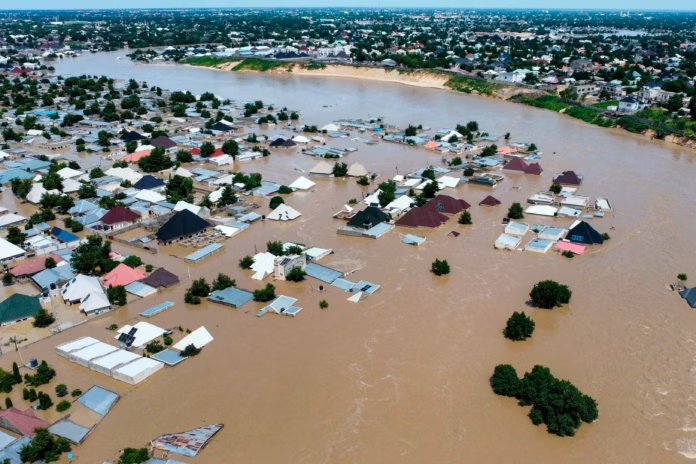
MOKWA, Nigeria (BN24) — New flash floods swept through communities in Mokwa Local Government Area of Niger State, Nigeria, early Wednesday, compounding the devastation from a previous disaster that killed at least 207 people and left more than 700 missing just weeks ago. Residents awoke in terror to find their homes, roads, and farmlands inundated, as torrents of water surged through Jaagi, Rabba, Koshaba, Daffan, Kpautagi, Ezhi, and other villages, displacing families and reigniting fears of further catastrophe.

In Jaagi, where a floodgate had reportedly collapsed last month, the damage was described by locals as “unprecedented.” Homes, livestock, and personal belongings were swept away in the early morning deluge. Many residents now face a second wave of displacement with little to no resources, pleading for immediate intervention from state and federal authorities.

“This is beyond anything we can handle alone,” one resident told local media. “People are stranded, and the destruction is worse than before.”

The Niger State Emergency Management Agency (NSEMA) confirmed the flooding but said a full assessment of the destruction and possible casualties was still underway. “I can’t ascertain the extent of casualties and damages for now as the rescue team is on their way to the community,” said Hussaini Ibrahim, the agency’s acting director general. “But I can tell you there was a flash flood this morning.”

The new flooding follows a humanitarian crisis that has left deep scars on Mokwa and surrounding communities. Last month’s flooding killed 207 people, displaced more than 3,000 households, and damaged over 400 homes and shops. Despite emergency appeals, over 700 people remain unaccounted for, according to state officials.

Governor Umaru Bago, represented by Deputy Governor Yakubu Garba during a condolence visit from Maj. Hamza Al-Mustapha (Rtd.), former Chief Security Officer to the late Gen. Sani Abacha, underscored the scale of the devastation. “Over 700 persons are still missing and we are yet to ascertain where they are,” Garba said. “The flooding has caused extensive damage.”

The governor has declared the situation a national disaster, urging individuals, corporate organizations, and humanitarian agencies to offer sustained support. The state government has pledged ongoing coordination with emergency responders, but residents say the pace of relief efforts has been slow and the risk of further flooding remains dangerously high amid the ongoing rainy season.

As authorities brace for more heavy rains in the weeks ahead, communities across Mokwa are left grappling with the dual burdens of grief and survival. For many, the question is no longer if another flood will strike—but when.

Trump’s Nuclear-Hardened ‘Doomsday Plane’ Lands Near Washington as Iran Strike Speculation Grows

0

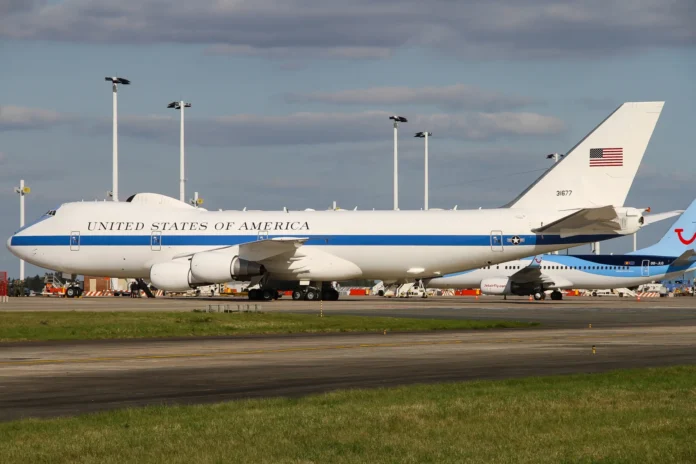
WASHINGTON (BN24) — A nuclear-hardened U.S. Air Force E-4B “Doomsday Plane,” designed to survive a nuclear attack and maintain presidential command and control, landed near Washington, D.C., late Tuesday night, intensifying speculation that President Donald Trump may be preparing for a direct U.S. military strike on Iran.

The Boeing 747-200, known officially as “Nightwatch,” touched down at Joint Base Andrews under the cover of darkness just hours after Trump held a high-level emergency meeting in the White House Situation Room. Aviation enthusiasts tracked the aircraft’s unusual flight path from Barksdale Air Force Base in Louisiana to Maryland, noting the unprecedented call sign ORDER01—departing from its typical identifiers—fueling further intrigue over the mission’s urgency.

While the Pentagon has not confirmed the plane’s role in any imminent action, its deployment so close to the capital has raised concerns within defense and diplomatic circles. The aircraft, equipped to withstand nuclear blasts, electromagnetic pulses, and thermal shockwaves, serves as an airborne command center for the president and top military officials in the event of national catastrophe.

The last time the E-4B was known to be actively used during a crisis was on September 11, 2001, following the terrorist attacks on the World Trade Center. Its reappearance now—amid mounting military tensions with Iran—signals a possible shift in the U.S. posture from deterrence to potential engagement.

President Trump has escalated rhetoric in recent days, publicly warning Iran’s Supreme Leader Ayatollah Ali Khamenei that the U.S. knows his exact location and that he is “an easy target.” While insisting that Washington does not seek war, Trump has also made clear that a military response remains on the table, and he has vowed that “full strength and might” would be used if American forces or civilians were attacked.

Simultaneously, the Pentagon has begun deploying additional military hardware to the Middle East. Dozens of KC-135 Stratotanker and KC-46 Pegasus aerial refueling aircraft have arrived at U.S. and NATO bases across Europe, including locations in Germany, Spain, Scotland, and Crete. At least 30 large tankers crossed the Atlantic, accompanied by a fleet of F-22 Raptors and F-35 Lightning stealth fighters—some of the most advanced jets in the U.S. arsenal.

While the aircraft are believed to be reinforcing Israeli air defenses amid fears that the Iron Dome system could become depleted, some analysts believe the fighter jets could also be used for offensive operations against high-value Iranian targets. The arrival of these assets coincided with the USS Nimitz moving into the Gulf to join the USS Carl Vinson, boosting American naval power in the region.

U.S. Defense Secretary Pete Hegseth acknowledged the military buildup, stating that he had ordered “the deployment of additional capabilities” to safeguard U.S. interests and allies in the region. Though Hegseth emphasized the deployments were for “defensive” purposes, the timing and scale have only added to global unease.

Meanwhile, the E-4B’s capabilities remain a key asset in any conflict scenario. The jet, which can remain airborne for more than 35 hours thanks to in-flight refueling, hosts up to 111 personnel and includes a war room, briefing center, and state-of-the-art satellite communication systems for global coordination. Each of the four engines generates 52,500 pounds of thrust, and the aircraft’s enormous structure—231 feet long with a 195-foot wingspan—can carry over 800,000 pounds.

With heightened alerts across U.S. forces and growing fears of a wider war, the sudden appearance of the Doomsday Plane near the capital serves as a chilling reminder of how close the world may be edging toward a major confrontation in the Middle East. Whether its mission was routine or a sign of something more ominous, its presence at Joint Base Andrews underscores the gravity of the moment.

the-sun.com

Iran’s Spiritual Leader, Ali Khamenei, Rejects Trump’s Call for Surrender, Warns of ‘Irreparable’ U.S. Consequences

0

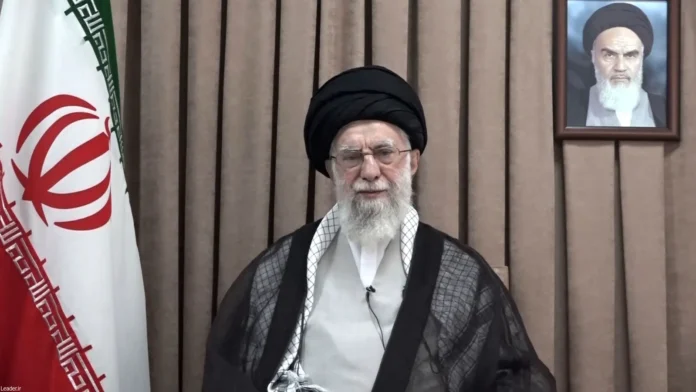
TEHRAN (BN24)  — Supreme Leader Ayatollah Ali Khamenei on Wednesday forcefully rejected President Donald Trump’s public demand that Iran surrender amid the escalating conflict with Israel, declaring the Iranian people would never bow to what he called “absurd rhetoric” from the American leader. Khamenei, speaking in a statement released on X and aired later in a televised address, dismissed the ultimatum and warned that any U.S. military intervention would be met with “serious irreparable consequences.”

“The U.S. President threatens us. With his absurd rhetoric, he demands that the Iranian people surrender to him,” Khamenei said. “They should make threats against those who are afraid of being threatened. The Iranian nation isn’t frightened by such threats.”

The supreme leader’s defiance came just hours after President Trump posted on Truth Social that the United States now had “complete and total control of the skies over Iran,” adding that Khamenei was “an easy target” but would not be killed — “at least not for now.”

The Iranian response was swift and sharp. In a fiery statement issued by Iran’s mission to the United Nations, officials accused Trump of lying and desperation. “No Iranian official has ever asked to grovel at the gates of the White House,” the statement read. “The only thing more despicable than his lies is his cowardly threat to ‘take out’ Iran’s Supreme Leader.” The post also dismissed any possibility of talks under pressure, saying, “Iran does NOT negotiate under duress, shall NOT accept peace under duress, and certainly NOT with a has-been warmonger clinging to relevance.”

Khamenei doubled down in a prerecorded statement broadcast on Iranian state media, condemning Trump’s threats as misguided and tone-deaf. “Intelligent people who know Iran, the Iranian nation, and its history will never speak to this nation in threatening language because the Iranian nation will not surrender,” he said, adding that the U.S. would suffer far greater losses than Iran in the event of direct conflict. “The Americans should know that any U.S. military intervention will undoubtedly be accompanied by irreparable damage.”

The sharp exchanges come as Iran faces mounting pressure from both Israel and the United States. Iranian state media has acknowledged missile shortages, and the government has increasingly turned to fiery rhetoric and diplomatic pushback in lieu of direct escalation.

Despite Trump’s earlier reluctance to involve the United States in Israel’s war campaign, recent statements from the White House indicate a more aggressive posture. After Trump demanded Iran’s “unconditional surrender,” he hinted at broader ambitions, stating that a simple ceasefire was no longer sufficient.

Iran’s Foreign Ministry spokesman Esmail Baghaei, speaking to Al Jazeera, warned that any U.S. action would “risk an all-out war in the region.” He did not elaborate, but U.S. intelligence officials have noted that thousands of American troops remain stationed across Gulf countries well within Iran’s missile range.

As the rhetoric intensifies, the possibility of deeper U.S. involvement continues to stir global alarm. Trump’s assertion that his administration knows the exact location of Iran’s supreme leader only further escalated tensions. “He is an easy target,” Trump wrote. “But we don’t want missiles shot at civilians or American soldiers. Our patience is wearing thin.”

Khamenei, in turn, reiterated Iran’s longstanding position of resistance. “The U.S. entering this matter is 100% to its own detriment,” he warned. “The damage it will suffer will be far greater than any harm Iran may encounter.”

With neither side showing signs of de-escalation, analysts warn the next days could mark a dangerous turning point in a conflict that now threatens to engulf much of the Middle East.

5 Nigerians Sentenced to 159 Years in U.S. Prison for $17 Million International Fraud Scheme

0

WASHINGTON (BN24) — A United States federal court has sentenced five Nigerian nationals to a total of 159 years in prison after convicting them in a sweeping $17 million international fraud scheme that targeted over 100 individuals, corporations, and government agencies. The U.S. Department of Justice revealed the details Wednesday in an official statement issued by Acting U.S. Attorney for the Eastern District of Texas, Ray Combs.

The convicted individuals—Damilola Kumapayi, Sandra Iribhogbe, Edgal Iribhogbe, Chidindu Okeke, and Chiagoziem Okeke—were identified as members of a transnational organized criminal group that began operating the scheme in 2017. Authorities said the defendants exploited elderly and vulnerable victims across the globe by executing elaborate romance scams, business email compromise attacks, and financial deceptions. Once they extracted money from victims, they laundered it through a complex network of bank accounts and transferred the funds to co-conspirators and companies in Africa and Asia.

According to Combs, the group strategically coordinated how to defraud their victims and then conceal the stolen money, siphoning off millions that in some cases represented the life savings of their targets. The operation spanned years and relied on sophisticated digital tactics and false identities to maintain the illusion of legitimacy.

The U.S. District Court found all five defendants guilty of conspiracy to commit wire fraud and money laundering. Upon conviction, they were handed prison terms that reflected the severity of their crimes. Kumapayi was sentenced to over nine years in federal prison. Sandra Iribhogbe, who pleaded guilty to multiple conspiracy charges, received more than 30 years. Her husband, Edgal Iribhogbe, along with Chidindu Okeke and Chiagoziem Okeke, were each sentenced to 40 years after being convicted at trial.

The Justice Department emphasized that the scheme not only victimized ordinary citizens but also infiltrated businesses and government agencies. Many of the victims were elderly Americans, who were lured through emotional manipulation and false online relationships, leaving some financially ruined.

Federal authorities have renewed their warning to transnational criminal networks that such crimes will not go unpunished. Combs called the sentencing a powerful signal that the United States remains committed to prosecuting cyber-enabled financial crimes, regardless of where the perpetrators are based. He added that justice had been served for the victims whose lives were upended by the defendants’ greed and deception.

The convictions and lengthy prison terms represent one of the most significant federal crackdowns on Nigerian-based fraud networks in recent years, as U.S. law enforcement continues to ramp up operations to combat internet scams and financial exploitation of vulnerable populations.

U.S. Resumes Student Visas With New Requirement: Open Social Media for Government Review-AP

0

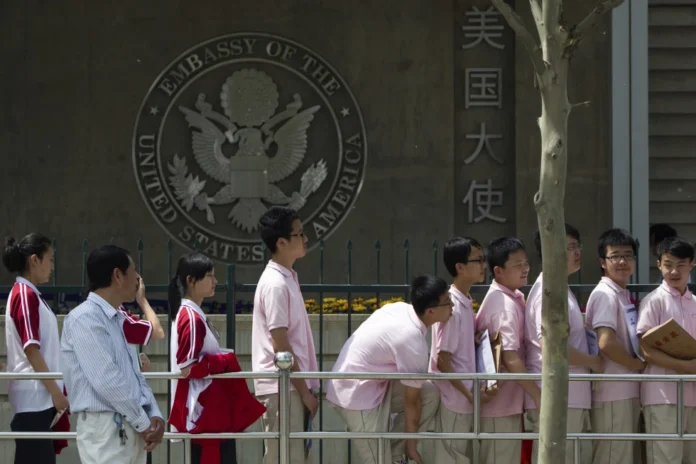
WASHINGTON (BN24) — The U.S. State Department announced Wednesday it has resumed processing student visas for foreign nationals after a temporary suspension—but is now requiring all applicants to provide unrestricted access to their social media accounts as part of an expanded vetting process.

Under new directives, consular officers will screen posts and messages for any signs of hostility toward the United States, its people, government, institutions, and foundational principles, according to a public notice and internal guidance issued by the department.

The policy requires applicants to set their social media profiles to “public”, allowing government officials to conduct what the department described as “comprehensive and thorough vetting” of each student and exchange visitor.

“Enhanced social media vetting will ensure we are properly screening every single person attempting to visit our country,” the department said in a statement. “Refusal to comply may be treated as a red flag indicating an attempt to evade scrutiny or conceal problematic activity.”

The decision to reinstate student visa processing comes after a May suspension that had halted most new applications. Now, the path for international students to study in the U.S. has reopened, but with significantly heightened scrutiny.

The State Department emphasized that the policy shift is driven by national security concerns, citing the need to prevent individuals who may pose ideological threats to U.S. values from entering the country.

In confidential guidance shared with U.S. consulates and reviewed by Reuters, officers are instructed to look for “any indications of hostility toward the citizens, culture, government, institutions, or founding principles of the United States.”

Applicants may be rejected not only for overtly violent or extremist content, but also for posts that undermine U.S. democratic ideals or promote disinformation, according to officials familiar with the criteria.

While the department did not specify which social platforms are subject to review, it is expected to include Facebook, Instagram, X (formerly Twitter), TikTok, LinkedIn, and others frequently used by students and young adults.

Critics of the move, including some civil liberties advocates and international education groups, warned the policy could have a chilling effect on speech and dissuade international students from applying to U.S. universities.

“There’s a fine line between national security and ideological policing,” said one immigration rights attorney who requested anonymity. “The requirement to publicly expose private communications for evaluation by a foreign government sets a troubling precedent.”

However, supporters of the change argue that thorough social media vetting is a necessary precaution in the digital age, especially as online behavior can reveal security risks that might not otherwise be detected.

The move mirrors earlier efforts during President Donald Trump’s first term to enhance vetting for visa applicants, which included requesting email addresses, phone numbers, and social media handles used in the past five years.

The policy could impact hundreds of thousands of international students who apply to U.S. schools annually. According to the Institute of International Education, more than one million foreign students were enrolled in American colleges and universities in the last academic year, generating billions in tuition and related spending.

Many universities are expected to monitor the impact of this policy on international admissions and student morale, especially in countries where online expression is common and sometimes politically charged.

For now, visa applicants must prepare for a new digital transparency standard that will play a central role in their eligibility to study in the United States.

Karen Read Acquitted of Murder in Death of Boston Police Officer Boyfriend; Convicted Only of DUI

0

DEDHAM, Mass. (BN24) — Karen Read, the Massachusetts woman accused of killing her Boston police officer boyfriend in 2022, was found not guilty Wednesday of second-degree murder, capping a high-profile case that drew national attention and intense public debate.

The Norfolk County jury acquitted Read of all major charges, including second-degree murder, manslaughter, and leaving the scene of an accident resulting in death, nearly a year after her first trial ended in a mistrial.

She was found guilty only of operating under the influence of alcohol, a misdemeanor for which she received a sentence of one year probation—the standard punishment for a first-time offense.

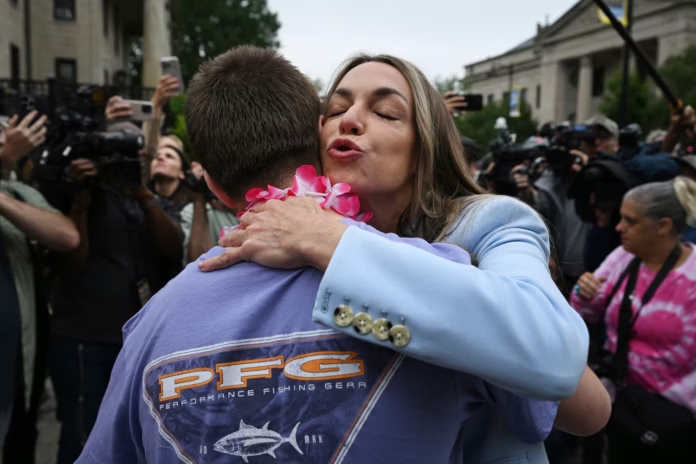
Supporters erupted in cheers outside the courthouse as the verdict was read. Inside, Read wept and embraced her legal team, visibly emotional after nearly four years under public scrutiny and legal pressure.

Prosecutors alleged that Read struck and killed John O’Keefe, her boyfriend and a Boston police officer, with her SUV in the early hours of Jan. 29, 2022. They claimed she hit him while dropping him off outside a Canton home during a snowstorm, after a night of drinking, then left him in the snow to die.

The state’s theory centered on forensic damage to her vehicle and phone data showing her movement that night.

Read’s legal team, however, argued she was framed to protect others. They presented an alternative theory that O’Keefe was assaulted by people inside the house, potentially mauled by a dog, and then left outside after succumbing to his injuries. The defense accused investigators of suppressing evidence and targeting Read to shield powerful figures.

Karen Read, 44, did not testify in either trial but told reporters during the retrial that the jury had already heard her voice in numerous interview clips. “I am not testifying,” she said June 10. “They’ve heard my voice. They’ve heard a lot of me.”

The jury began deliberating on June 13 and returned a verdict five days later, on June 19. During deliberations, jurors submitted multiple questions, including whether a hung jury on one charge meant a hung jury on all, and whether video clips of Read’s interviews could be considered as evidence. Judge Beverly Cannone declined to directly answer hypothetical queries but reminded the jury that no verdict was official until it was recorded in open court.

Earlier Wednesday, confusion briefly surrounded the outcome when the court revealed the jury had initially indicated a verdict had been reached—then reversed course. The verdict slip was sealed until their final decision was confirmed in court.

Read’s first trial ended in a mistrial in July 2024, when the jury could not reach a consensus. Her attorneys said four jurors had already voted to acquit her of both murder and leaving the scene of an accident, but could not agree on the manslaughter charge involving a vehicle.

They later challenged her retrial on those same counts, claiming double jeopardy, but appeals—including one to the U.S. Supreme Court—were rejected.

“Today, our hearts are with John and the entire O’Keefe family,” the statement read. “They deserved better from our justice system.”

Outside the courthouse, Read expressed gratitude to her supporters, many of whom rallied behind her for years, raising funds and pushing for her acquittal. “No one has fought harder for justice for John O’Keefe than I have—and my team,” she said.

She also added civil attorney Victoria George, a former alternate juror from her first trial, to her legal team for the retrial—a highly unusual move that underscored the unique public nature of the case.

The verdict ends one of Massachusetts’ most controversial recent trials, though questions may still linger—and further legal action is possible in the civil or federal arena.

For now, Read walks free, cleared of the charges that could have sent her to prison for life.

Israeli Airstrikes Rock Tehran as Iran’s Missile Barrages Diminish

0

TEHRAN, Iran (BN24) — Israeli warplanes unleashed a wave of airstrikes across Iran’s capital overnight into Wednesday, targeting facilities tied to Tehran’s nuclear ambitions and military infrastructure, as Iran’s once-fierce retaliatory missile barrages showed signs of fading.

According to Israel’s military, the overnight strikes hit a centrifuge manufacturing site and another facility producing missile components. The military also said it intercepted 10 Iranian missiles overnight, underscoring the diminishing scope of Iran’s response, which has tapered off significantly after Israel’s direct strikes on launch sites.

Iran, meanwhile, warned the United States against intervening, calling any such move a path toward “all-out war in the region.” Speaking to Al Jazeera English, Iranian Foreign Ministry spokesperson Esmail Baghaei declared that American involvement would escalate the conflict to catastrophic levels.

The confrontation, now in its sixth day, has spiraled from a surprise Israeli bombing campaign launched Friday against Iranian military and nuclear targets. The assault has killed at least 585 people in Iran, including 239 civilians, according to Human Rights Activists, a U.S.-based Iranian group known for documenting internal Iranian affairs during past crises.

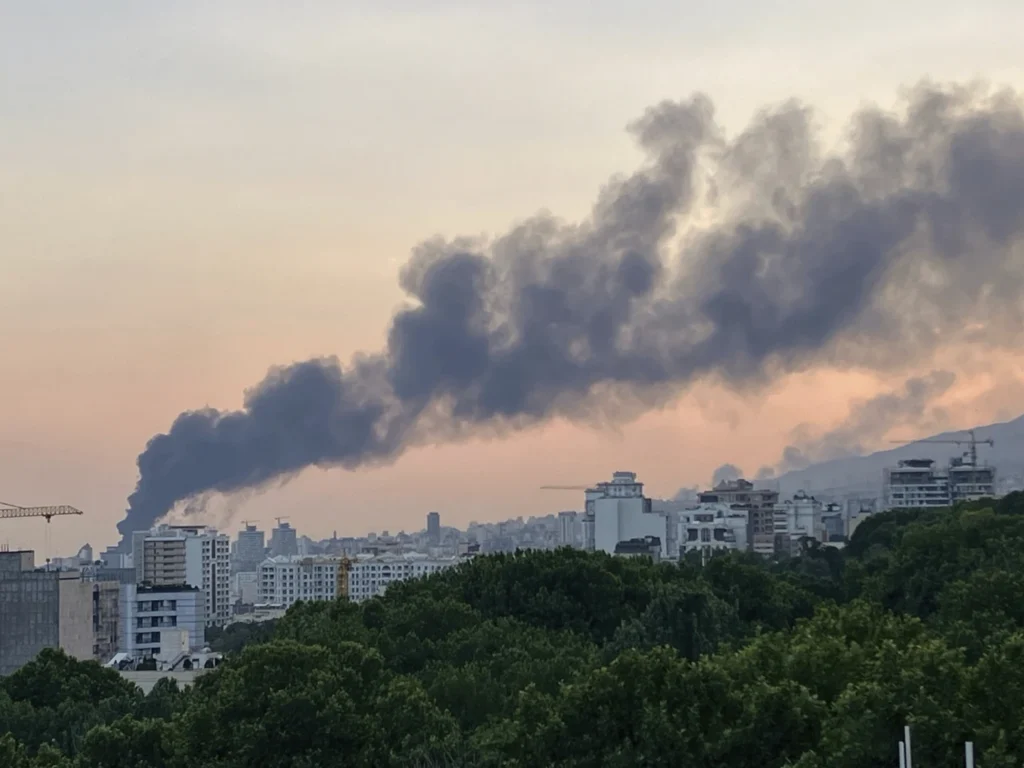
Across Tehran, the humanitarian toll is mounting. Shops and stalls in the city’s famed Grand Bazaar are shuttered. Long gas lines snake through neighborhoods. Roads are jammed with residents fleeing the capital as more explosions rattle the city in the early morning hours, including a major blast at approximately 5 a.m. near the Hakimiyeh district—an area housing a Revolutionary Guard academy.

Despite widespread damage, Iranian authorities have offered no official acknowledgment of the latest strikes, continuing a trend of silence as Israel’s assault intensifies. The country’s most recent casualty update, issued Monday, placed the death toll at 224 and the wounded at 1,277—figures now believed to be significantly outdated.

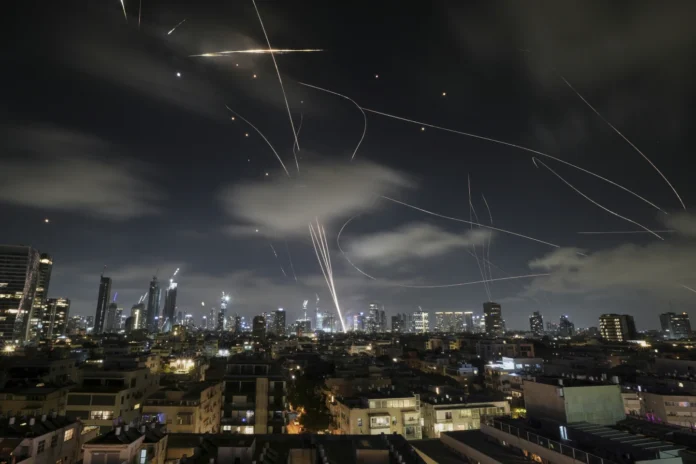
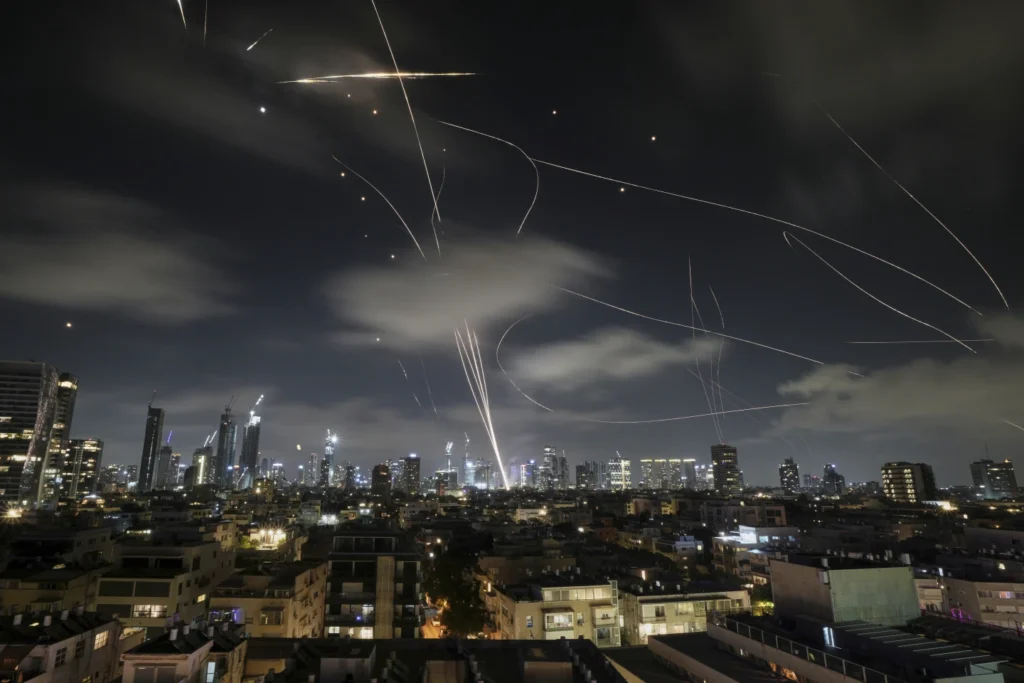
Since the conflict ignited, Iran has launched more than 400 missiles and hundreds of drones at Israel in retaliatory strikes, some of which struck civilian apartment buildings in central Israel, killing at least 24 and injuring hundreds. However, only a few missiles were fired on Wednesday—marking a stark drop-off Iran has not explained. Analysts attribute the lull to Israel’s successful targeting of many missile launchers across Iran.

The conflict has drawn close attention in Washington. President Donald Trump, who initially distanced the U.S. from the Israeli offensive, has since signaled a more aggressive stance. On social media, Trump called for Iran’s “UNCONDITIONAL SURRENDER” and warned Supreme Leader Ayatollah Ali Khamenei that “we know where you’re hiding,” though he added that the U.S. was “not planning to kill him—at least not for now.”

Trump’s comments followed a Tuesday phone call with Israeli Prime Minister Benjamin Netanyahu, according to a White House official. While the U.S. has yet to announce direct military involvement, it has deployed additional warplanes to the region.

Iranian military officials responded to Trump’s rhetoric with warnings of further action. “The operations carried out so far have been solely for the purpose of warning and deterrence,” said Gen. Abdul Rahim Mousavi, commander in chief of Iran’s army. “The punishment operation will be carried out soon.”

Israel has defended its escalation by citing Iran’s continued nuclear enrichment and what it says is a failure of diplomacy. The country claims the campaign is aimed at halting Iran’s ability to build a nuclear weapon. Though talks between the U.S. and Iran were still ongoing, Israel launched its offensive after the 60-day window for progress set by Trump passed without significant results.

Iran insists its nuclear program is peaceful, but remains the only non-nuclear weapons state enriching uranium to 60% purity—just shy of weapons-grade. U.S. intelligence agencies maintain there is no evidence that Iran is actively pursuing nuclear weapons.

On social media, Israeli Defense Minister Israel Katz wrote, “A storm is passing over Tehran. This is how dictatorships collapse.” Iran’s supreme leader struck a more defiant tone, vowing “no mercy” toward Israel in a post on his official X account.

For the first time since the war began, flights returned to Israel Wednesday morning. Two planes from Cyprus landed at Tel Aviv’s Ben Gurion International Airport, according to airport spokesperson Lisa Dvir.

Israel had shut its airspace to civilian flights due to the missile threat, stranding thousands of Israelis abroad and disrupting regional air travel. The partial reopening marks a shift, though the risk of incoming fire remains.

AP

Charred Bodies and Grief-Striken Survivors After Gunmen Kill Over 180 in Central Nigeria

0

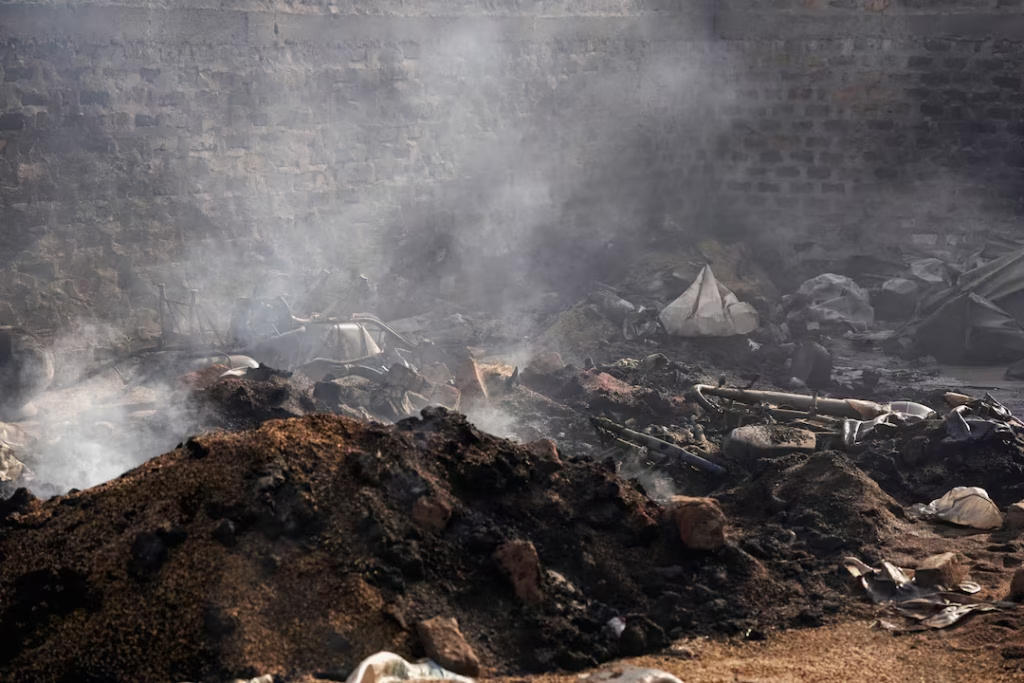
YELWATA, Nigeria (BN240)— In the charred ruins of a central Nigerian village, Fidelis Adidi stood silently, staring at the smoldering remains of the room where he lost nearly everything. Hours earlier, Adidi had fled as heavily armed attackers stormed Yelwata under the cover of night. When he returned at daybreak, he found the burned bodies of his wife and four of his children.

“I lost five of my family members,” the 37-year-old farmer told Reuters, his voice strained and trembling. “My body is weak and my heart keeps racing.”

The massacre in Benue state—one of the deadliest in Nigeria this year—has left at least 180 people dead, according to Amnesty International, and displaced thousands more. It marks another grim chapter in the long-running and deadly conflict between herders and farmers in Nigeria’s volatile Middle Belt, where ethnic, religious, and land-use tensions continue to ignite horrifying violence.

The attack began Friday night and lasted until the early hours of Saturday. Armed men swept through the community of Yelwata, shooting indiscriminately and setting homes ablaze. Adidi had rented a room in the local market to shelter his two wives and children from the increasingly frequent clashes. But his precautions were no match for the ferocity of the assault.

His second wife and another child survived with severe injuries, while the small room they had sought as a haven was reduced to ash and ruin. Nearby, corpses burned beyond recognition lay next to heaps of singed farming tools and food supplies.

Market vendor Talatu Agauta, who is pregnant with her second child, narrowly escaped death by fleeing toward the state capital Makurdi when the gunmen arrived. She returned days later to find her entire stock—40 bags of rice—destroyed in the flames.

“It’s a devastating blow,” Agauta said, standing in the wreckage of her stall. “But I came back, and even if I die here, I don’t mind.”

Like many residents, Agauta refuses to abandon her home, despite the escalating insecurity that has gripped the region and left entire communities in ruins.

Benue state sits at the fault line between Nigeria’s predominantly Muslim north and Christian south, a fertile but combustible region long plagued by conflicts between nomadic herders and sedentary farmers over access to land and water.

The violence has persisted for years, but recent attacks—like the one in Yelwata—have grown increasingly brazen and deadly. Nigerian authorities, despite pledges and task forces, have struggled to quell the unrest, which experts warn could spiral into broader sectarian conflict.

President Bola Tinubu, calling the weekend bloodshed “depressing,” is scheduled to visit Benue on Wednesday, his first trip to the region since assuming office two years ago. His administration has come under growing pressure to address the security crisis that continues to claim lives across the countryside.

The National Emergency Management Agency (NEMA) said it is coordinating with humanitarian organizations to assist at least 3,000 people displaced by the Yelwata massacre. Temporary shelters have been erected, but access to food, water, and medical care remains limited.

As officials prepare for Tinubu’s arrival and vow stronger security measures, many in Yelwata remain haunted by the loss and doubtful of protection.

“I’ve buried four of my children in one day,” said Adidi, looking down at the scorched ground where his home once stood. “Nothing will ever be the same again.”

The Benue massacre underscores the urgent need for comprehensive solutions to Nigeria’s farmer-herder crisis—solutions that address not only security, but land reform, justice, and reconciliation.

Until then, villages like Yelwata remain vulnerable, and the cost of inaction is written in ashes and blood.

U.S. Withdraws from Two More Syrian Bases, Stirring Alarm Among Kurdish Forces Over Rising ISIS Threat

0

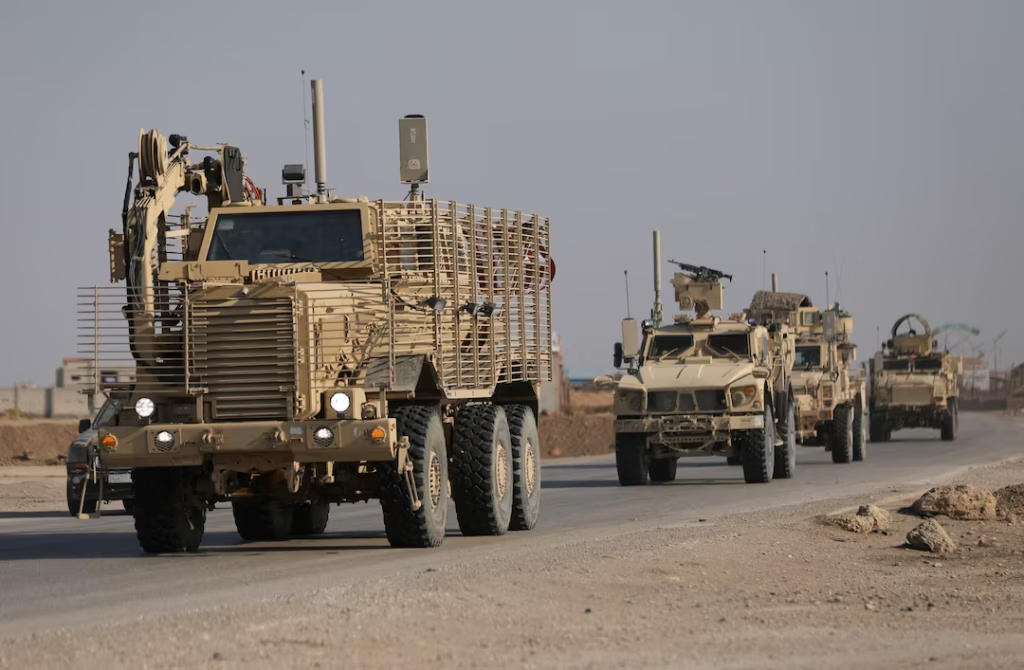
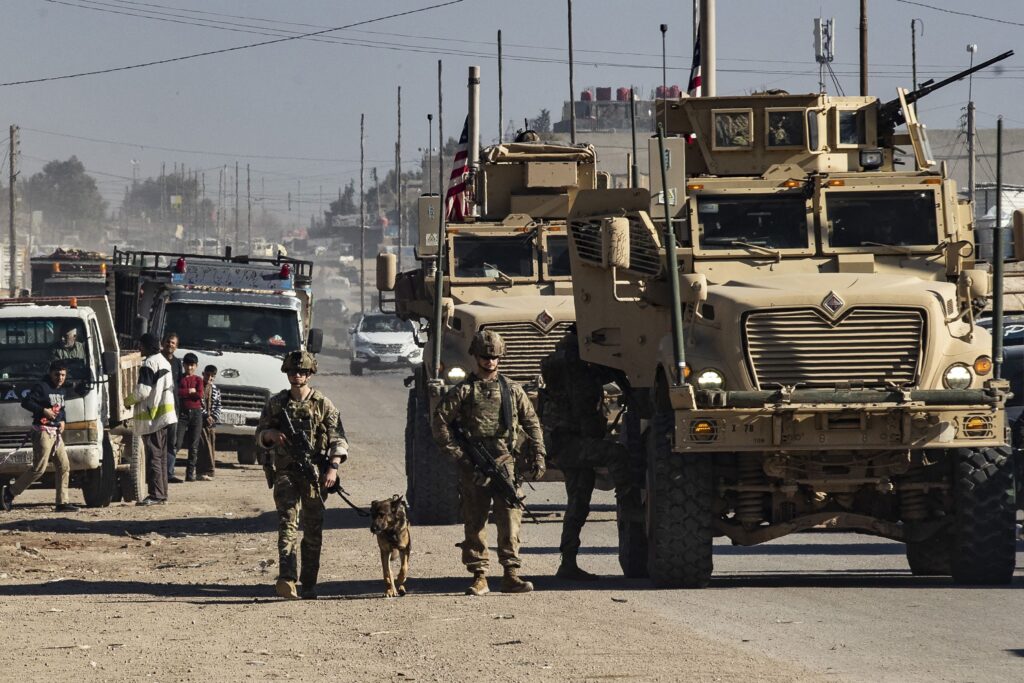
HASAKA PROVINCE, Syria (BN24) — U.S. troops have quietly pulled out of two more military bases in northeastern Syria, deepening a withdrawal campaign that Syrian Kurdish leaders warn is emboldening Islamic State militants and straining an already fragile security structure.

Journalists with Reuters who visited the now-vacant Al-Wazir and Tel Baydar bases in Hasaka province last week reported finding them mostly deserted, with only small Syrian Democratic Forces (SDF) units remaining to guard the perimeters. Razor wire fences were sagging, surveillance equipment had been removed, and signs of the once-robust U.S. presence were gone.

A Kurdish official living on one of the bases confirmed that American forces had departed entirely, while SDF guards at the second base said troops had left recently but declined to specify the timeline. The Pentagon offered no comment, but these ground reports confirm the latest withdrawals, bringing the total number of vacated U.S. bases in Syria to at least four since President Donald Trump returned to office in January.

The drawdown follows a policy announcement from the Trump administration earlier this month, stating plans to reduce U.S. military outposts in Syria from eight to one, cutting troop levels from approximately 2,000 to around 500 personnel. That consolidation leaves only a single active base in territory controlled by the U.S.-backed SDF, a Kurdish-led coalition that has spent the last decade fighting Islamic State insurgents alongside the United States.

Though the SDF has not disclosed the current number of American troops or operational U.S. bases, its commander, Mazloum Abdi, voiced grave concerns in an interview with Reuters at the Al Shadadi base — now the final American foothold in the region.

“The threat of Islamic State has significantly increased recently,” Abdi said. “But this is the U.S. military’s plan. We’ve known about it for a long time … and we’re working with them to make sure there are no gaps and we can maintain pressure on Islamic State.”

Abdi said a few hundred troops at a single base are not sufficient to contain the growing ISIS threat, which has resurged in recent months — especially following the fall of Syrian President Bashar al-Assad late last year to a coalition of Islamist rebel factions.

Abdi’s remarks came just hours before the Al Shadadi base was targeted by three Iranian-made missiles, which were successfully intercepted by U.S. defense systems, according to two SDF sources. The missile attack followed Israel’s launch of an aerial assault on Iran, though Abdi declined to speculate on the regional impact of the escalating conflict.

The Islamic State, also known as ISIS or Daesh, has taken advantage of U.S. military retrenchment and political instability to ramp up its operations. The extremist group once controlled vast territories in Iraq and Syria between 2014 and 2017, enforcing a brutal Islamist rule marked by public executions, sexual slavery, and global terror attacks. A U.S.-led coalition of more than 80 countries eventually broke ISIS’s territorial grip through a protracted air and ground campaign.

However, Abdi revealed that ISIS sleeper cells are again active in multiple Syrian cities, including Damascus, and that foreign jihadist fighters have recently joined its ranks following the collapse of Assad’s regime. He noted that ISIS had looted arms and ammunition from Syrian government depots left unsecured amid the post-Assad chaos.

Several Kurdish officials told Reuters that ISIS fighters have begun maneuvering openly near recently abandoned U.S. outposts in Raqqa and Deir Ezzor — two cities once at the heart of the group’s self-declared caliphate. In territories under SDF control east of the Euphrates River, ISIS has launched a wave of ambushes, bombings, and targeted killings, Abdi said, including a roadside bomb attack on a convoy of oil tankers near Al Shadadi.

The SDF has reported at least 10 of its fighters and security personnel killed in recent attacks linked to ISIS, with militants exploiting security vacuums left by the departing American forces.

As the U.S. shrinks its military footprint in Syria, Kurdish leaders are grappling with the dual pressures of defending their territory against ISIS and preparing for new uncertainties stemming from regional tensions, including the evolving Israel-Iran conflict.

While the Trump administration insists that the drawdown is part of a long-term recalibration of U.S. military engagement in the Middle East, critics warn that the timing could undermine gains made against ISIS and destabilize Kurdish security forces who now face the insurgent threat with dwindling international support.

With only one U.S. base remaining in northeastern Syria and ISIS appearing to reorganize amid the retreat, the question confronting Washington’s Kurdish allies is whether they can hold the line without American boots on the ground. As Abdi put it, “We’re doing everything we can, but we’re watching a dangerous pattern emerge.”