Home Blog Page 326

UPDATED: Deadly Floods Kill at Least 111 in Northern Nigeria as Climate Crisis Fuels Extreme Weather

ABUJA, Nigeria  — At least 111 people have died following devastating floods in the northern Nigerian town of Mokwa, as authorities warn that the true death toll is expected to rise in the wake of intensifying climate change and erratic rainfall.

Triggered by torrential predawn rains early Thursday, the floods swept through neighborhoods in Mokwa, a major agricultural hub located more than 300 kilometers (180 miles) west of Abuja, the nation’s capital. The Nigerian Hydrological Services Agency has not yet released the official rainfall total, but eyewitness reports and imagery shared online depict entire communities submerged, with only rooftops visible above the rising, muddy waters.

“This is catastrophic,” said Kazeem Muhammed, a Mokwa resident. “We lost many lives, and the properties, our farm produce. Those that have their storage have lost it.” Mokwa, which serves as a crucial trade center for farmers selling beans, onions and other crops to buyers from southern Nigeria, has been paralyzed by the deluge.

Officials from the Niger State Emergency Management Agency confirmed the initial death toll of 111, but warned more bodies had just been recovered and were yet to be counted. “We are still retrieving victims,” agency spokesman Ibrahim Audu Husseini told The Associated Press by phone Friday. “This is a disaster of historic proportion.”

Rescue efforts remain hampered by submerged roads and limited emergency infrastructure. Videos posted on social media show residents wading through waist-deep floodwaters, carrying children and salvaging food supplies, as entire villages have been left uninhabitable.

Climate experts have long warned that northern Nigeria is acutely vulnerable to extreme weather patterns, with prolonged dry spells during the dry season now followed by unusually intense rainfall during the brief wet season. These shifts are widely attributed to climate change, which has amplified both drought and flooding risks across sub-Saharan Africa.

Mokwa community leader Aliki Musa described the flood as almost supernatural in its scale. “The water is like spiritual water which used to come, but it’s seasonal,” he said. “It can come now and not again for another twenty years.” He noted that many villagers had no prior experience with floods of this magnitude and were unprepared for the onslaught.

Local officials echoed calls for urgent action to prevent future tragedies. Jibril Muregi, chairman of Mokwa’s local government, told Premium Times that the lack of proper flood-control infrastructure had contributed to the scale of the disaster. “This critical infrastructure is essential to mitigating future flood risks and protecting lives and property,” he said.

This week’s flooding in Mokwa is the latest in a series of weather-related disasters to strike Nigeria, where more than 54,000 people were displaced in a similar flood event last year. In September, torrential rains and a dam collapse in Maiduguri, in Nigeria’s northeast, killed at least 30 people and compounded a growing humanitarian crisis worsened by Boko Haram’s insurgency.

With millions of Nigerians already displaced by conflict and economic instability, the effects of climate change are now threatening to further strain national emergency services and deepen food insecurity in one of Africa’s most populous and agriculturally dependent regions.

As recovery efforts in Mokwa continue, families are left mourning their losses while fearing that more lives remain buried beneath the floodwaters. The disaster, officials say, underscores the urgent need for investment in climate-resilient infrastructure, early warning systems, and sustainable development policies in a region already buckling under pressure.

Slovakia’s Central Bank Governor Convicted of Bribery, Fined $225,000 Amid Controversial Legal Reforms

BRATISLAVA, Slovakia  — Peter Kažimír, the governor of Slovakia’s central bank and a key figure in the European Central Bank’s monetary policy council, was convicted of bribery on Thursday and ordered to pay a fine of €200,000 ($225,000) by the country’s Special Criminal Court.

FILE PHOTO: Petr Kazimir, when Slovakia’s Finance Minister, attends the Asian Financial Forum in Hong Kong, China January 15, 2018. REUTERS/Bobby Yip/File Photo

The ruling, delivered by Judge Milan Cisarik in the town of Pezinok, comes just days before Kažimír’s six-year term ends on Sunday. Though he was not present in court, Kažimír issued a statement maintaining his innocence and vowing to appeal the decision. His legal team had argued that the recent sweeping changes to Slovakia’s penal code — which include lighter penalties for corruption — should have led to his acquittal.

Kažimír, a former finance minister under leftist Prime Minister Robert Fico, was accused of paying €48,000 ($54,000) in bribes between late 2017 and early 2018 to the head of the national tax authority. The alleged payment was reportedly linked to a tax audit involving several private firms, one of which belonged to the seller of a luxury villa in Bratislava that Kažimír was in the process of purchasing at the time.

Kažimír has pleaded not guilty and repeatedly denounced the case as politically motivated and fabricated. The charges stem from his tenure in Fico’s Smer (Direction) party government, which ruled from 2012 to 2019.

He is the first cabinet minister from Fico’s era to stand trial for corruption, marking a rare legal reckoning within Slovakia’s elite. The case is seen as a litmus test for the country’s fragile commitment to combating systemic corruption.

The conviction comes in the midst of intense national debate over recent judicial reforms spearheaded by Fico’s newly reinstated government, which returned to power in 2023 on a pro-Russia and anti-American platform. In February 2024, lawmakers loyal to Fico’s coalition passed legislation that drastically weakened anti-corruption mechanisms — including the elimination of the special prosecutor’s office tasked with handling major crimes.

The penal code changes, which critics say were designed to shield political allies from prosecution, also included reduced sentences for corruption, broadened eligibility for suspended sentences, and shortened statutes of limitations. These reforms triggered widespread condemnation from civil society, legal experts, and international observers.

Thousands of Slovaks took to the streets in repeated demonstrations to protest what they viewed as a calculated dismantling of the rule of law and an attempt to sabotage ongoing high-profile corruption investigations.

Kažimír’s conviction is especially notable given his influential role on the European Central Bank’s governing council, which sets monetary policy for all 20 eurozone countries. His legal troubles cast a shadow over the ECB’s governance structure and have raised questions about ethical oversight within European institutions.

The central bank has not yet commented on Kažimír’s status or the implications of his conviction. With his term expiring imminently, speculation is growing about whether he will seek reappointment or step away from public office entirely.

As Kažimír prepares his appeal, the case has further inflamed the already volatile political climate in Slovakia, where anti-corruption efforts and judicial independence remain flashpoints in an increasingly polarized society.

 3 Ukrainian Siblings Laid to Rest After Russian Missile Strike Destroys Family Home

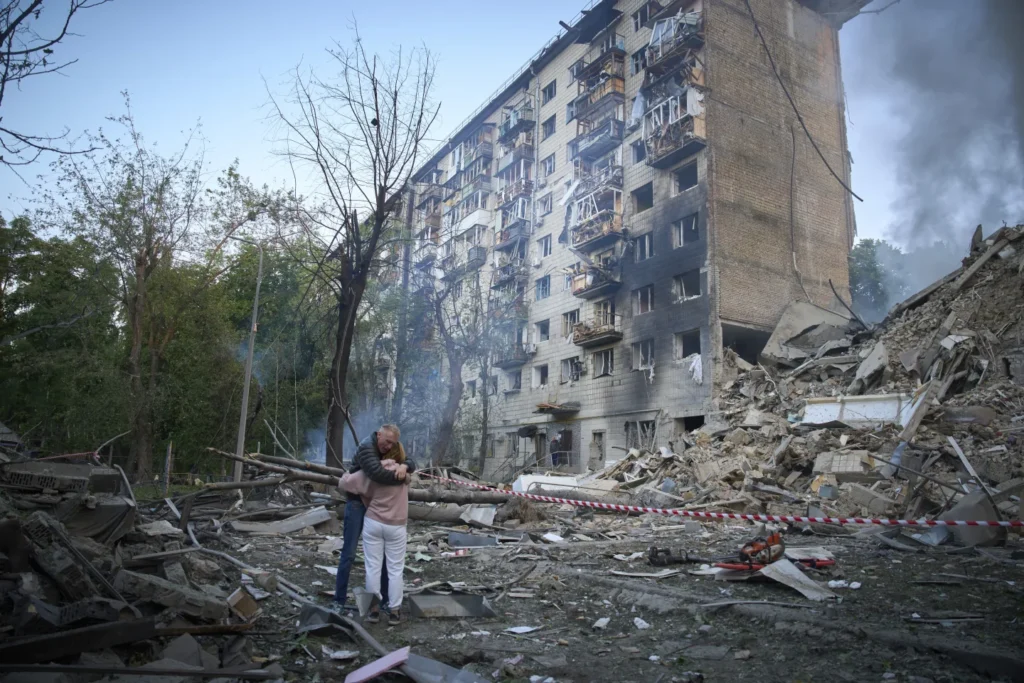
KOROSTYSHIV, Ukraine  — Under the somber interior of a Soviet-era Palace of Culture, the grief of a nation echoed silently Wednesday as hundreds of residents gathered to mourn three siblings — ages 8, 12, and 17 — killed by a Russian cruise missile that struck their home in the early hours of the weekend.

Inside the hall, three open coffins — one adult-sized, one medium, and one small — rested side by side, surrounded by wreaths and floral arrangements. A church choir sang quiet farewell hymns as mourners, some weeping, others stunned in silence, paid their final respects to children whose lives were cut short in their sleep.

The missile debris struck their home in Korostyshiv, a quiet town located approximately 100 kilometers (60 miles) west of Kyiv, during a pre-dawn aerial barrage launched by Russian forces. The siblings were asleep when the debris tore through their home at around 3 a.m., killing them instantly.

Family Shattered by Russian Attack as War Hits Fourth Year

The children’s father, visibly injured, was released from a hospital to attend the funeral. He sat with his two surviving children by the coffins, their grief raw and visible. The children’s mother remains hospitalized, her condition undisclosed. The image of a family torn apart by war — once unimaginable — has now become heartbreakingly routine in Ukraine’s small towns and cities.

The deaths of the three children highlight a dark and escalating pattern of civilian casualties as Russia intensifies airstrikes amid stalemated peace negotiations. According to Ukrainian authorities, recent weeks have seen a marked rise in attacks on civilian infrastructure and homes, many of them involving cruise missile debris or secondary explosions.

While Moscow officially denies targeting noncombatants, repeated incidents and extensive documentation from independent observers paint a grimly different picture. The latest strike in Korostyshiv is one of several recent episodes in which minors have become the direct victims of Russian aggression.

A Nation in Mourning

Local officials and community members described the three siblings as bright, joyful, and deeply loved by classmates and neighbors. Teachers from their school, still in shock, remembered the youngest as a budding artist, the middle child as a devoted athlete, and the eldest as a serious student with dreams of studying medicine.

“This is not just one family’s loss — this is the loss of Ukraine’s future,” said a local priest during the ceremony, his voice choked with emotion.

The community has rallied around the surviving members of the family, offering food, donations, and emotional support. Still, the scars left by the missile strike — both physical and emotional — will remain for years to come.

Civilian Deaths Mount Amid Diplomatic Deadlock

As the war enters its fourth grueling year, civilian casualties are rising even as efforts to restart formal peace negotiations have stalled. Ukrainian officials have urged international allies to intensify pressure on Moscow and increase air defense support to prevent further loss of life.

Human rights organizations have called the missile attacks part of a broader pattern of alleged war crimes, particularly in light of the targeting of residential areas far from the frontlines.

The funeral in Korostyshiv, captured in a poignant photo gallery curated by Associated Press photo editors, serves as yet another sobering reminder of the human cost of Russia’s war in Ukraine — a cost increasingly borne by its youngest and most vulnerable.

AP

Hamas Weighs Ceasefire Proposal as Israeli Airstrikes Kill 27 in Gaza

GAZA CITY, Gaza Strip  — At least 27 Palestinians were killed Friday in a series of Israeli airstrikes across the Gaza Strip, even as Hamas leadership reviewed a new Israeli-approved ceasefire proposal that could potentially pause the grinding war and facilitate humanitarian aid to the devastated enclave.

The deaths were confirmed by hospital officials in Gaza, who continue to report mounting civilian casualties amid intensified Israeli operations. The ceasefire proposal, approved by Israel earlier in the week, was met initially with skepticism by Hamas officials. However, diplomatic sources say negotiations remain active, with pressure mounting to reach a resolution that could halt hostilities, allow more humanitarian aid, and secure the release of remaining hostages.

According to U.S. officials, about 58 hostages are still believed to be held by Hamas, roughly a third of whom are presumed to be alive. President Donald Trump’s special envoy to the Middle East has expressed cautious optimism, describing the current draft agreement as the most promising pathway yet to break the stalemate.

Since the war’s eruption following Hamas’ Oct. 7, 2023, surprise attack on Israel, which killed approximately 1,200 people, Israel’s military campaign in Gaza has claimed more than 54,000 lives, according to the Gaza Health Ministry. The ministry does not differentiate between civilians and combatants, but international aid agencies estimate the majority of the dead are women and children.

With a population of around 2 million, Gaza has endured nearly three months of tight Israeli blockade, which experts warn has brought the territory to the edge of famine. Although some restrictions have eased slightly in recent days, the humanitarian crisis remains acute, and access to food, medicine, and clean water continues to be severely limited.

In a parallel escalation, the Israeli military launched airstrikes late Friday on targets in Syria, stating that the strikes hit missile storage sites on the Mediterranean coast that allegedly posed threats to “international and Israeli maritime freedom of navigation.”

Syria’s state-run news agency, SANA, confirmed the strikes in the Latakia region, reporting material damage but no casualties.

Israel’s military campaign in Syria has intensified since the fall of the Bashar Assad regime in late 2024. Israeli forces have since established a buffer zone along the Golan Heights and carried out hundreds of strikes against what they describe as hostile military infrastructure tied to Islamist insurgents and Iranian-backed groups.

The cross-border escalation comes a day after the U.S. special envoy to Syria formally reopened the American ambassador’s residence in Damascus, a symbolic move that underscores Washington’s evolving relationship with Syria’s new leadership following Assad’s ouster.

Analysts view the reopening of the diplomatic compound as a signal of U.S. intent to stabilize post-Assad Syria, even as Israel continues to enforce red lines against any perceived regional threats — especially those involving Hezbollah, Iran, or remaining Islamist factions.

The ongoing review of the Israeli ceasefire proposal by Hamas represents a fragile window of opportunity in a war that has devastated Gaza and displaced over a million residents. Sources close to the negotiations suggest that the proposal includes incremental aid deliveries, phased withdrawals, and hostage exchanges — all tied to a broader regional realignment being navigated by U.S., Qatari, and Egyptian diplomats.

Still, Israeli military operations show no signs of slowing, and the latest fatalities in Gaza further complicate the prospects for a sustainable truce. Hamas’ formal response is expected in the coming days, as mediators attempt to bridge deep divides between the warring parties.

AP

 Supreme Court Allows Trump to End Protections for 500,000 Migrants, Intensifying Deportation Risk

WASHINGTON  — In a decision with sweeping humanitarian consequences, the Supreme Court on Friday cleared the way for President Donald Trump to revoke temporary legal protections for over 500,000 immigrants, significantly escalating deportation risk for migrants from Cuba, Haiti, Nicaragua, and Venezuela. The ruling marks a major turning point in the Trump administration’s intensified efforts to dismantle Biden-era immigration policies.

Acting on an emergency appeal, the court lifted a federal judge’s injunction that had prevented the administration from ending humanitarian parole for migrants from the four nations. The brief order, issued without explanation as is customary on the emergency docket, did not represent a final ruling on the legal battle, but it allows Trump’s deportation plan to move forward while litigation continues in the lower courts.

Justices Ketanji Brown Jackson and Sonia Sotomayor publicly dissented from the decision, expressing deep concern over the consequences for hundreds of thousands of migrants.

The order comes just weeks after the Supreme Court allowed the administration to revoke Temporary Protected Status (TPS) for an additional 350,000 Venezuelan migrants. With Friday’s decision, the total number of people exposed to deportation nears one million, potentially creating the largest forced migration event initiated by U.S. policy in modern times.

The court’s decision followed a ruling from U.S. District Judge Indira Talwani, who blocked the mass termination of parole and criticized the administration’s blanket approach. Talwani, an appointee of President Barack Obama, had ruled that revocation must occur on a case-by-case basis — a position supported by migrant advocates and legal scholars alike.

However, the administration argued such an individualized process would be logistically unfeasible. Solicitor General D. John Sauer contended that the original parole approvals were granted as a group, and there is no legal requirement to dismantle them individually. “Undertaking hundreds of thousands of separate reviews would be a gargantuan task,” Sauer told the court.

Friday’s ruling aligns with President Trump’s aggressive immigration agenda. During his 2024 campaign and since retaking office, he vowed to roll back Biden’s humanitarian protections and deport millions of migrants. The Department of Homeland Security has criticized the Biden administration’s parole program as too expansive, claiming it lacked adequate vetting and legal foundation.

White House spokesperson Abigail Jackson defended the move as consistent with federal immigration law, stating, “We are confident in the legality of our actions to protect the American people and look forward to further action from the Supreme Court to vindicate us.”

In contrast, Karen Tumlin, founder of the Justice Action Center, condemned the decision as a green light for mass deportation. “I cannot overstate how devastating this is,” she said. “The court allowed the Trump Administration to unleash widespread chaos — not just for our clients, but for their families, workplaces, and communities.”

The Supreme Court order now returns the case to the 1st U.S. Circuit Court of Appeals in Boston, where the broader legal questions surrounding the scope of the president’s parole powers will be litigated.

Justice Ketanji Brown Jackson, in her written dissent, warned that the decision effectively tears apart the lives of half a million migrants before courts have had a chance to fully evaluate the legal merits of the administration’s actions.

Talwani’s earlier ruling similarly acknowledged the human toll, noting that affected individuals would face a stark choice: flee the United States or remain and risk arrest, detention, and family separation.

The Biden administration had used humanitarian parole more than any other presidency since the policy’s inception in 1952, extending relief to hundreds of thousands fleeing war, persecution, and economic collapse. According to government records, over 532,000 people entered the U.S. under parole since late 2022, including Afghans, Ukrainians, and unaccompanied minors from Central America — all of whom had to secure financial sponsors and fund their own travel.

Attorneys for these migrants described Trump’s decision as the first-ever mass revocation of humanitarian parole in U.S. history, calling it “the largest mass illegalization event in modern American history.”

The case reflects a broader trend of Trump using the Supreme Court’s emergency docket to fast-track major immigration rollbacks. While the court has occasionally ruled against him — notably in a recent case involving the deportation of Venezuelan detainees under the Alien Enemies Act — the latest decision signals a willingness to endorse Trump’s expansive view of executive power in immigration matters.

Beyond legal implications, the ruling could impact millions of U.S. residents — from children born to migrant parents, to businesses that employ parolees, to schools and community services that support immigrant families. Advocates fear the removal of protections could lead to widespread humanitarian crises, homelessness, and family separations.

While the Supreme Court has not issued a final ruling, its interim decision is a major victory for Trump’s immigration crackdown, and a potentially devastating blow to migrants who believed their legal status in the U.S. was secure — at least temporarily.

Ngũgĩ wa Thiong’o, Iconic Kenyan Author and Literary Giant, Dies at 87

NAIROBI, Kenya  — Ngũgĩ wa Thiong’o, the legendary Kenyan novelist, playwright, scholar, and unflinching advocate for African languages and postcolonial thought, has died at the age of 87, his family announced on Wednesday.

The death of Ngũgĩ — one of Africa’s most revered literary figures — was confirmed in a heartfelt statement issued by his daughter, Wanjiku wa Ngugi, who described her father as a man who “lived a full life, fought a good fight,” and urged admirers to celebrate his work and legacy. The statement said he died on the morning of May 28, 2025, with further details about his funeral arrangements to be announced by family spokesperson Nducu wa Ngugi.

Ngũgĩ’s death marks the end of an era in African literature and intellectual thought, but his voice will resonate for generations through his writings and tireless efforts to elevate African identity, language, and culture.

Born on January 5, 1938, in Kamiriithu village near Limuru, Kenya, Ngũgĩ was originally named James Ngugi. He would later renounce his English name, adopting Ngũgĩ wa Thiong’o in a powerful act of cultural and political reclamation.

His education began at Alliance High School, one of Kenya’s premier institutions, before he proceeded to Makerere University in Uganda, where he graduated with a degree in English in 1963. While at Makerere, he wrote The Black Hermit, his first play, which debuted at the inaugural Ugandan National Drama Festival — a seminal moment in his early literary career.

In 1964, Ngũgĩ traveled to the University of Leeds in the United Kingdom, where his exposure to global postcolonial discourse further shaped his ideological direction. It was during this period that he solidified his mission to challenge imperial narratives and write from an authentically African perspective.

Ngũgĩ’s groundbreaking novel Weep Not, Child (1964) was the first English-language novel by an East African writer, and it quickly established him as a major voice in African fiction. He followed this with The River Between (1965) and the widely acclaimed A Grain of Wheat (1967), all of which examined Kenya’s colonial legacy and the complex politics of independence.

In 1977, he made a defining decision to abandon English as his literary language, committing instead to Gikuyu, his mother tongue. That same year, he co-wrote and staged the politically charged play Ngaahika Ndeenda (I Will Marry When I Want), which criticized economic inequality and neocolonial oppression. The play’s impact was so profound that it led to Ngũgĩ’s arrest and imprisonment without trial by the Kenyan government.

Following his release, Ngũgĩ entered exile, first in Britain and later in the United States, where he continued to write and advocate for human rights, language justice, and cultural decolonization. His memoir, Detained: A Writer’s Prison Diary, and later works such as Decolonising the Mind and Dreams in a Time of War, offered searing critiques of colonial structures and celebrated African resilience.

Throughout his decades in exile, Ngũgĩ held academic positions at major institutions including Yale University, New York University, and the University of California, Irvine, where he served as a Distinguished Professor of English and Comparative Literature.

Ngũgĩ wa Thiong’o was more than a writer; he was a cultural warrior who championed the decolonization of the African mind, an intellectual beacon whose ideas influenced scholars, students, and activists across continents.

His death has triggered a wave of tributes from around the world, with literary communities mourning the loss of a visionary who challenged the hegemony of colonial languages, and empowered African writers to speak in their own voices — literally and figuratively.

Though Ngũgĩ has passed on, his message lives on. His body of work remains essential reading in postcolonial studies and African literature syllabi worldwide, and his enduring belief in the power of indigenous language will continue to inspire generations of writers and thinkers.

 South Korean Navy Patrol Plane Crashes Near Pohang, Killing All 4 Crew Members

SEOUL, South Korea — A South Korean navy maritime patrol aircraft crashed during a routine training mission on Thursday near the coastal military city of Pohang, killing all four crew members onboard, the navy confirmed in an official statement. The aircraft, identified as a P-3 patrol plane, went down shortly after takeoff, prompting the suspension of all flights involving the fleet pending a full investigation.

The P-3 aircraft, designed for anti-submarine and maritime surveillance missions, took off at approximately 1:43 p.m. local time (0443 GMT) from a naval airfield. Just six minutes later, the plane plummeted from the sky and burst into flames near the base, according to the South Korean Navy.

Television broadcaster YTN aired harrowing footage, purportedly captured by witnesses, showing the aircraft banking at low altitude before it rapidly descended. Moments later, a column of smoke and fire erupted from the crash site, confirming the worst fears of a fatal aviation accident.

“All four crew members aboard the aircraft have been confirmed dead,” the navy said in its statement. Search-and-rescue teams quickly responded and recovered the remains of the deceased at the crash scene. Authorities added that no civilian injuries or property damage were reported, as the plane went down in a remote area near the military base.

The identities of the victims have not been publicly released pending notification of next of kin, but military officials described the deceased as experienced personnel participating in a scheduled training exercise.

Following the fatal crash, the South Korean navy immediately grounded its fleet of P-3 aircraft and announced the launch of a comprehensive investigation into the cause of the crash. Military aviation and safety authorities will examine mechanical issues, pilot response, and weather conditions at the time of the incident.

“An accident investigation team has been formed and dispatched to the scene,” the navy said. “We are fully cooperating with aviation safety authorities to determine the cause of this tragic incident.”

The P-3 Orion aircraft, which has been in service since the Cold War era, has formed a core part of South Korea’s naval surveillance and reconnaissance operations, particularly along maritime borders with North Korea and surrounding regional waters. However, some defense analysts have previously raised concerns about the age and maintenance challenges of the aging fleet, sparking renewed debate in the aftermath of Thursday’s crash.

While the incident occurred during a training mission, the crash is expected to prompt a review of aviation safety protocols within the navy and potentially accelerate discussions about modernizing South Korea’s maritime patrol capabilities.

The South Korean Defense Ministry has not commented beyond confirming that the P-3 fleet would remain grounded until further notice. President Yoon Suk Yeol has been briefed on the incident and is expected to issue a formal statement after consultations with defense officials.

This tragedy adds to a series of military aviation accidents that have raised concerns in recent years, even as South Korea continues to modernize its armed forces to counter regional threats.

 Devastating Floods in Nigeria’s Niger State Kill 21, Leave Dozens Missing Amid Torrential Rains

ABUJA, Nigeria  — Severe flooding caused by intense rainfall devastated parts of north-central Nigeria on Thursday, killing at least 21 people and leaving more than 10 others missing, according to state emergency officials. The disaster struck Mokwa town in Niger State, where over 50 homes were submerged or swept away by surging floodwaters during a night of unrelenting downpour.

The Niger State Emergency Management Agency (NSEMA) confirmed the tragedy early Thursday, stating that floodwaters overwhelmed the communities of Tiffin Maza and Anguwan Hausawa during the overnight rainfall, submerging residential buildings and trapping occupants inside.

“NSEMA is in receipt of a report of a deadly flood disaster that ravaged two communities of Tiffin Maza and Anguwan Hausawa in Mokwa town,” said Abdullahi Baba-Arah, the agency’s director general. “The incident occurred last night during a torrential rain of very high intensity that lasted several hours. The surging floodwaters submerged and washed away more than 50 homes with their occupants.”

As of Thursday evening, 21 bodies had been recovered and search operations were ongoing to locate over 10 people still missing, Baba-Arah said. Emergency workers, assisted by local government authorities, volunteer divers, and courageous civilians, mounted an intensive search and rescue operation amid debris and floodwater.

Among the survivors, a woman and her two children were rescued and are receiving treatment at the Mokwa General Hospital for wounds and shock, officials added.

The flooding tragedy coincided with the second anniversary of Niger State Governor Mohammed Bago’s administration, casting a somber tone over what was intended to be a celebratory day. Instead, the governor’s office is now coordinating emergency relief and support efforts for the flood-affected communities.

Niger State has long been vulnerable to seasonal flooding, with Nigeria’s rainy season typically beginning in April and intensifying through the middle of the year. But this week’s rainfall, officials said, reached a particularly devastating volume and intensity, triggering rapid floods that gave residents little time to react or evacuate.

Beyond the tragic loss of life, the flood caused extensive property damage, displacing dozens of families and destroying livelihoods in the rural Mokwa area. Emergency responders reported that entire households were swept away while residents slept, underscoring the unpredictability and danger of extreme weather in the region.

“There was panic and chaos as the water levels rose overnight,” said an official involved in the response. “People were trapped in their homes, some climbed trees or rooftops, while others were simply overwhelmed.”

Though climate experts have warned of increasing flood risks in Nigeria due to changing weather patterns and poor drainage infrastructure, many local communities remain unprepared and under-resourced to deal with such disasters.

NSEMA and local officials said rescue and recovery operations would continue through the night and into the coming days, as efforts persist to locate the missing and provide aid to the displaced. The state government is expected to announce relief packages and temporary housing solutions for survivors as damage assessments proceed.

Governor Bago’s administration has pledged emergency support, while national officials have urged citizens in flood-prone regions to remain alert as the rainy season progresses. With many rural Nigerian communities lacking flood defenses or early-warning systems, the country continues to grapple with the escalating toll of climate-driven disasters.

 Ukrainian Drone Strikes Damage Russian Hospital, Homes in Kursk; Fierce Fighting Rages Near Sumy Border

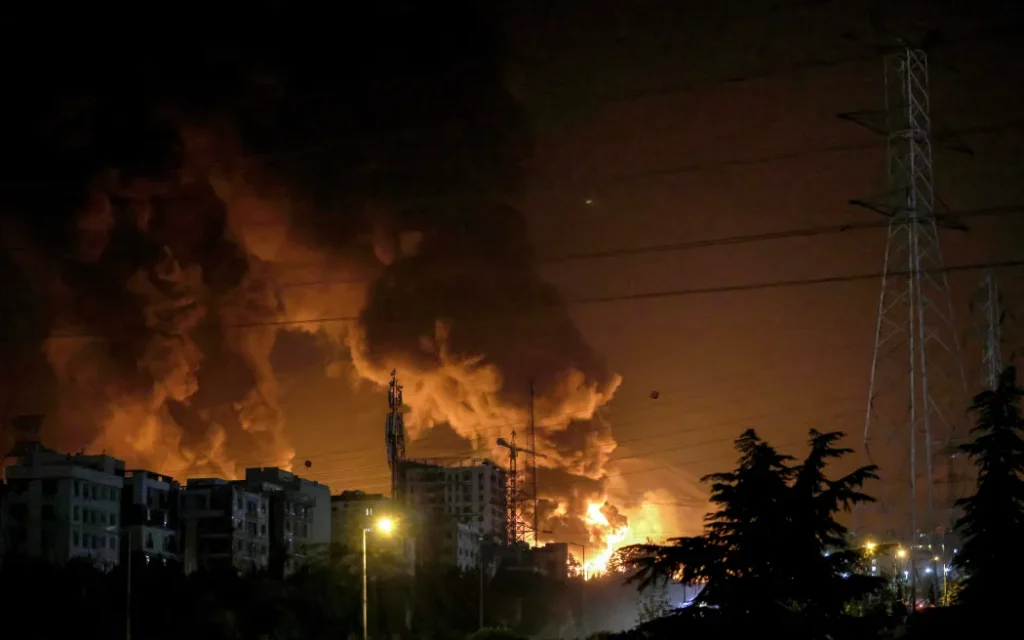
MOSCOW  — A series of Ukrainian drone strikes targeted Russia’s western Kursk region overnight, damaging a city hospital and nearby residential buildings, according to Russian officials. The attack marks another escalation along the volatile Russia-Ukraine border, where active fighting continues to unfold across multiple fronts.

Kursk regional Governor Alexander Khinshtein reported that drone fragments struck the No. 1 City Hospital in the regional capital, Kursk, breaking windows and damaging infrastructure. “Fortunately, no patients were injured,” Khinshtein said via Telegram, adding that debris also hit high-rise apartment buildings, causing further destruction. At least one person was reportedly injured in the assault.

The Kursk region, which borders Ukraine’s embattled Sumy region, has been the target of repeated Ukrainian cross-border drone and sabotage operations in recent months. Kyiv has not formally claimed responsibility for the latest strike, though Ukrainian military officials have previously confirmed limited operations within Russian territory, including in Kursk.

Just across the border in Ukraine’s Sumy region, where Russian forces have seized several villages, regional officials confirmed that frontline positions remain unstable. Sumy Governor Oleh Hryhorov said on Facebook that “active battles continue” near the villages of Khotyn and Yunakivka, as control of several settlements continues to shift.

“The situation on the line of contact is constantly changing,” Hryhorov wrote. “In some areas, our forces maintain the initiative; in others, the enemy is aggressively advancing.”

Russian President Vladimir Putin has explicitly stated his intention to create a buffer zone in Sumy, citing the region’s alleged role in launching Ukrainian raids into Russian territory, including last year’s Ukrainian incursion into Kursk.

Although the Russian military claims it has repelled all Ukrainian forces from Kursk since that incursion, Ukrainian military sources maintain that their forces remain active in limited pockets of the region, continuing sabotage operations and intelligence gathering.

Meanwhile, Russia’s Defense Ministry on Thursday claimed further territorial advances in eastern Ukraine, as its military presses forward in Kharkiv and Donetsk regions. The ministry said its troops had taken control of three more villages — Stroivka in northeastern Kharkiv, and Shevchenko Pershe and Hnativka near Pokrovsk, a town that has been the focal point of Russia’s months-long westward campaign.

Ukraine’s armed forces have not confirmed the loss of these villages. Instead, a military briefing late Thursday reported that Russian troops had launched 53 separate attacks near Pokrovsk over the previous 24 hours, suggesting that fighting remains intense and fluid.

The renewed drone strike on Kursk underscores the evolving nature of the conflict, where unmanned aerial systems (UAS) play an increasingly prominent role. Ukraine has relied on both long-range drones and localized sabotage operations to disrupt Russian logistics and target military and civilian infrastructure deep inside Russian territory.

The damage to a civilian hospital and residential buildings in Kursk will likely heighten tensions and could prompt retaliatory strikes by Moscow, especially as the Kremlin seeks to shore up domestic support for its military operations ahead of another potential summer offensive.

With fighting intensifying along the Sumy border and in eastern Ukraine, the situation on the ground remains highly volatile. Russia’s continued push to gain ground and establish buffer zones is facing resilient Ukrainian resistance, particularly in contested villages near the border.

The latest escalation highlights the growing complexity and reach of the war, now stretching into its third year, with both sides trading blows not just on conventional battlefields but also through strategic strikes on infrastructure and territorial raids.

U.S. Says Israel Accepts Gaza Ceasefire Proposal; Hamas Responds with Caution

WASHINGTON  — The United States said Thursday that Israel has agreed to a ceasefire proposal in Gaza, but Hamas responded cautiously, indicating that the plan falls short of its key demands. The announcement marks a potential breakthrough in stalled negotiations, but deep divisions between the two sides continue to threaten a resolution to the months-long war.

White House spokeswoman Karoline Leavitt confirmed that Israel has signed off on the proposal, which was delivered by President Donald Trump’s Middle East envoy, Steve Witkoff. The details of the plan have not been publicly disclosed, but The New York Times reported that the first phase would include a 60-day ceasefire and the resumption of humanitarian aid through U.N.-managed channels.

Hamas, the Palestinian militant group that governs Gaza, confirmed it is reviewing the proposal but signaled dissatisfaction. Senior Hamas official Sami Abu Zuhri told Reuters that the plan “echoes Israel’s position” and does not meet Hamas’s demands for a complete end to the war, Israeli troop withdrawal, or unhindered entry of humanitarian aid.

Abu Zuhri’s comments underline the stalemate that has derailed earlier attempts at a ceasefire since the collapse of a two-month truce in March. Israel continues to demand that Hamas disarm entirely, dismantle its governing structures, and return all 58 remaining hostages. Hamas has repeatedly rejected any condition that includes surrendering its weapons.

Israeli Prime Minister Benjamin Netanyahu has not officially confirmed Israel’s approval of the deal, though Israeli media reported that he informed families of hostages about the decision. The reports come amid growing international pressure on Israel to curb its military offensive and allow more humanitarian assistance into Gaza.

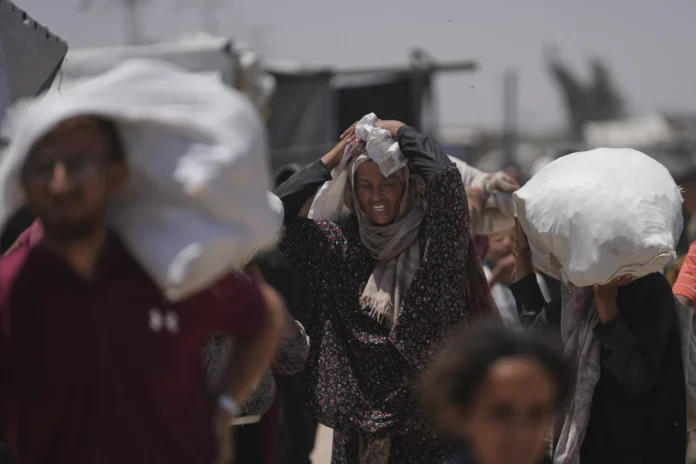
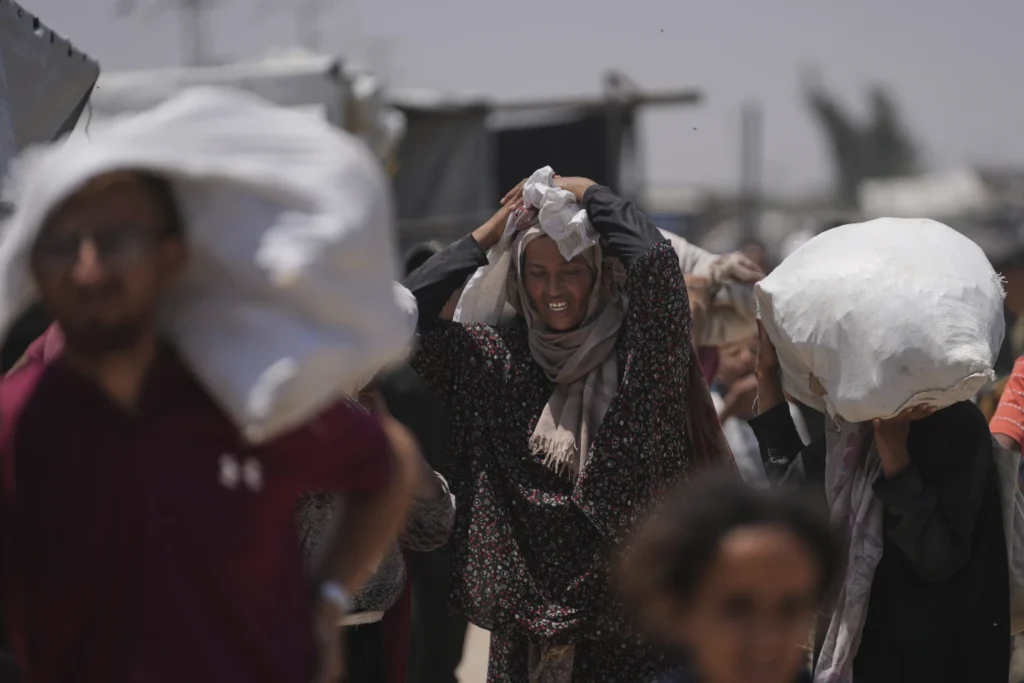
The diplomatic movement comes as a U.S.-backed initiative to deliver food aid expanded to a third site inside Gaza on Thursday. The Gaza Humanitarian Foundation (GHF) — a private organization supported by the U.S. and approved by Israel — has so far distributed 1.8 million meals despite a rocky launch earlier in the week.

The operation began under difficult conditions, with chaotic scenes on Tuesday as thousands of desperate Palestinians overwhelmed distribution points, forcing private security contractors to withdraw. Aid agencies and the United Nations have criticized the effort as inadequate and poorly executed, emphasizing that 2 million people in Gaza remain at risk of famine due to Israel’s 11-week blockade on humanitarian aid.

Envoy Steve Witkoff told reporters Wednesday that the U.S. is nearing the release of a new term sheet for both sides, expressing optimism about the potential for a temporary ceasefire leading to a long-term peaceful resolution. “I have some very good feelings about getting to a long-term resolution,” Witkoff said.

The war, now in its eighth month, was triggered by Hamas’s October 7 attack on southern Israel, which killed around 1,200 people and saw 251 others taken hostage, according to Israeli estimates. In response, Israel launched a devastating campaign in Gaza that has, according to Gaza health officials, killed more than 54,000 Palestinians and reduced much of the enclave to rubble.

As images of destruction and famine continue to circulate, international criticism of Israel has intensified, including from European nations that have traditionally been reluctant to challenge its military actions. The latest ceasefire plan could mark a turning point, but only if both sides are willing to compromise — a prospect that remains uncertain.

Reuters