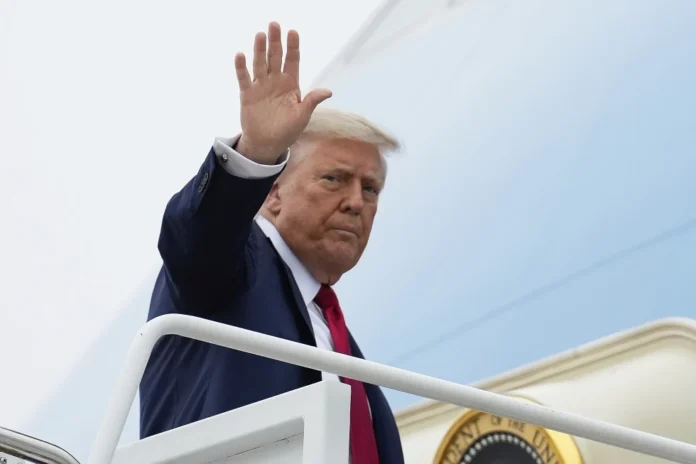
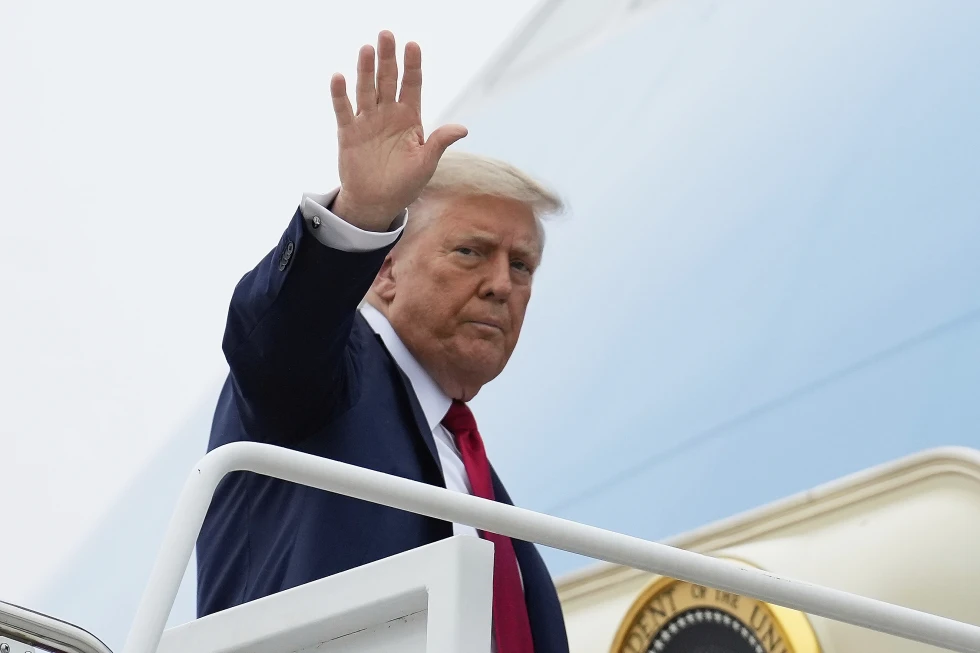
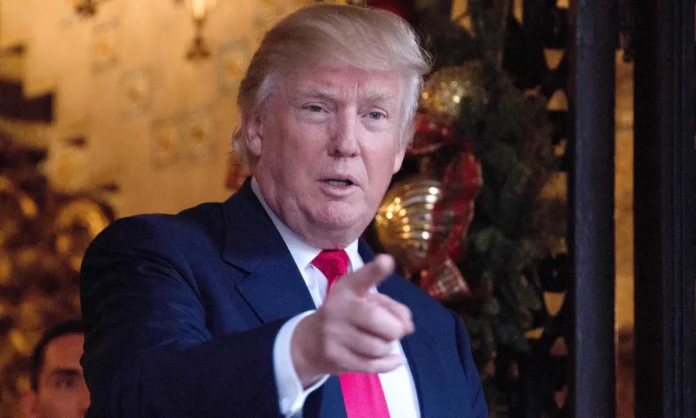
CHARLOTTE, N.C. — The NAACP has made a historic break from tradition, announcing Monday that President Donald Trump will not be invited to speak at its upcoming national convention in Charlotte, North Carolina — marking the first time in the organization’s 116-year history that it has refused to invite a sitting U.S. president.
NAACP President Derrick Johnson delivered the announcement during a press conference, citing Trump’s opposition to core civil rights protections as the reason for the unprecedented decision.
“This has nothing to do with political affiliation,” Johnson said. “Our mission is to advance civil rights, and the current president has made clear that his mission is to eliminate civil rights.”
The White House did not respond to a request for comment.
The move underscores growing tensions between the Trump administration and the nation’s oldest civil rights organization, which has repeatedly challenged the president’s policies in court. In April, the NAACP filed suit to block the Department of Education from withholding federal funding from schools that continued to implement diversity, equity, and inclusion (DEI) programs — arguing that the department’s actions violated the rights of Black students to equal educational opportunity.
The NAACP has a long-standing history of engaging presidents across the political spectrum — even those whose policies it sharply criticized. Democrat Harry S. Truman became the first sitting president to attend the convention in 1947, setting a precedent followed by both Democratic and Republican leaders.
In 2006, Republican President George W. Bush addressed the NAACP after enduring intense criticism over his administration’s slow response to Hurricane Katrina, which disproportionately impacted Black communities in New Orleans and along the Gulf Coast. Likewise, President Ronald Reagan, who drew widespread condemnation during his 1980 campaign for invoking the racially charged phrase “welfare queen,” accepted the NAACP’s invitation during his first year in office.
Speaking at the group’s 1981 convention in Denver, Reagan denounced white supremacist hate groups and pledged that his administration would uphold the constitutional rights of all Americans by prosecuting those who used violence or intimidation to suppress them.
By contrast, Johnson and other NAACP leaders argue that Trump has not only failed to engage with civil rights issues but has actively undermined decades of progress.
“There is a difference between policy disagreement and a fundamental disregard for civil rights,” Johnson said. “This president has chosen the latter.”
The decision is likely to further fuel political debate ahead of the 2024 election, where civil rights, racial justice, and education policy remain flashpoints. The NAACP’s move sends a powerful signal about what the organization views as a categorical threat to its mission — and underscores how sharply divided the political landscape has become, even in institutions once known for bipartisan engagement.
JERUSALEM — Iran’s intelligence chief and several senior members of the Islamic Revolutionary Guard Corps (IRGC) were killed in a precision Israeli airstrike in Tehran on Sunday, according to the Israel Defense Forces (IDF), dealing a significant blow to Iran’s military leadership structure.
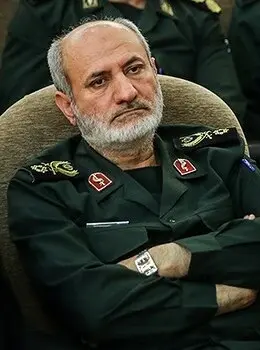
Major General Mohammed Kazemi, head of the IRGC’s Intelligence Organization, was killed alongside his deputy Hassan Mohaqiq during a high-level meeting targeted by Israeli fighter jets. The IDF confirmed that the airstrike was based on “precise intelligence” and aimed at a facility where top Iranian intelligence officials were gathered.
“These officials played a central role in shaping Iran’s strategic intelligence framework and in planning terrorist operations against Israel, Western nations, and regional partners,” the IDF said in a statement.
Kazemi, who assumed leadership of the IRGC’s intelligence operations in 2022, was central to Tehran’s counterintelligence efforts and internal security apparatus, particularly in identifying regime dissidents. Mohaqiq previously led the Strategic Intelligence Division within the Guard.
The death of Kazemi was publicly confirmed by Israeli Prime Minister Benjamin Netanyahu during a Sunday interview with Fox News.
“Moments ago, we got the chief intelligence officer and his deputy in Tehran,” Netanyahu said from an undisclosed location in Israel. “Our brave pilots are over the skies of Tehran, and we’re targeting military and nuclear sites.”
Iran’s Revolutionary Guard later confirmed Kazemi’s death, marking one of the most high-profile Iranian military casualties in recent history.
Also killed in the strike were Mohsen Bakri, head of intelligence for the IRGC’s elite Quds Force, and his deputy, Abu al-Fadl Nikouei. The Quds Force is the foreign operations wing of the IRGC, responsible for supporting proxy forces like Hezbollah in Lebanon and militias in Syria and Iraq.
Sunday’s strike follows a major Israeli offensive launched last week that resulted in the death of Mohammad Bagheri, head of intelligence for the Iranian armed forces general staff and the nation’s highest-ranking military officer. That attack marked the beginning of a broader Israeli campaign to dismantle Iran’s intelligence and nuclear infrastructure after the collapse of diplomatic efforts to contain Tehran’s atomic program.
According to the IDF, dozens of Iranian military commanders, intelligence operatives, and scientists have been killed since Israel began its bombing campaign on Thursday, with a particular focus on neutralizing the regime’s ability to plan and coordinate attacks beyond its borders.
“This marks a significant blow to the Iranian regime’s intelligence apparatus and its ability to carry out terrorist attacks against the State of Israel,” the IDF said, calling the operation one of the most successful targeted strikes in recent memory.
The deaths of such high-ranking officials are expected to deepen regional tensions and raise fears of further escalation between Iran and Israel. Iranian leaders have vowed to retaliate for what they describe as an unprovoked campaign of aggression, while Israel has signaled it will continue its operations until the threat posed by Iran’s expanding influence and nuclear ambitions is neutralized.
With its top military leadership increasingly under direct threat, Tehran now faces mounting pressure both domestically and internationally to respond, even as its intelligence and command capabilities have been severely weakened by Israel’s ongoing offensive.
BOSTON — Harvard University will urge a federal judge on Monday to extend a court order halting President Donald Trump’s latest attempt to block foreign nationals from studying at the university, as legal tensions between the administration and the Ivy League institution continue to escalate.
U.S. District Judge Allison Burroughs is scheduled to hear arguments in Boston on whether to impose an injunction preventing the Trump administration from enforcing a presidential proclamation that bars international students from entering the United States to attend Harvard. The administration claims the measure is necessary for national security, while Harvard contends it is an act of political retribution that violates constitutional protections.
Nearly 6,800 international students were enrolled at Harvard during the most recent academic year—approximately 27% of the university’s total student body. Students from China and India comprise a significant portion of that group, and the new restrictions would effectively shut them out of the campus in Cambridge, Massachusetts.
The court hearing follows Burroughs’ June 6 issuance of a temporary restraining order that froze the administration’s implementation of the proclamation, signed by Trump a day earlier. The order was the latest front in a growing legal battle between the Trump administration and the nation’s oldest and richest university, which is also challenging federal efforts to freeze billions in research grants and strip Harvard of its tax-exempt status.
In two lawsuits pending before Judge Burroughs, Harvard argues that the administration’s actions violate First Amendment protections by punishing the university for refusing to comply with political demands related to its governance, curriculum, and ideological independence.
“The administration has unconstitutionally sought to sever Harvard from its international students,” the university said in court filings, calling the move an intentional effort to destabilize the academic community and “throw into disarray every aspect of campus life.”
The proclamation, which suspends the entry of foreign nationals for an initial six-month period, authorizes Secretary of State Marco Rubio to also consider revoking the visas of students already enrolled at Harvard. Though the White House cited national security risks in the order, university officials view it as the culmination of a campaign to undermine academic freedom at institutions perceived as ideologically opposed to Trump.
The latest proclamation followed a prior move by Homeland Security Secretary Kristi Noem, who on May 22 announced the immediate revocation of Harvard’s certification under the Student and Exchange Visitor Program (SEVP). That status allows universities to legally host international students. Judge Burroughs quickly blocked that action with a temporary order.
While the Department of Homeland Security has since begun pursuing a more formal administrative review of Harvard’s SEVP certification, Judge Burroughs signaled in a May 29 hearing that she intended to issue a broader injunction to preserve the status quo during litigation.
But Trump’s June 5 proclamation has opened a new legal front. The U.S. Justice Department argued in court filings that the proclamation should not be grouped with Homeland Security’s actions, claiming it is legally distinct and does not apply retroactively to current students. Still, Harvard insists the effect is the same: to deny the university access to the international academic community.
The confrontation reflects mounting pressure on U.S. higher education institutions amid intensifying political rhetoric over immigration, national security, and ideological control of academia. For Harvard, the stakes are not just institutional but existential, with the future of international collaboration and academic exchange hanging in the balance.
The court’s decision could have sweeping consequences for other universities with large international student populations, particularly as the administration signals that similar actions may extend beyond Harvard.
A ruling from Judge Burroughs on whether to issue the injunction is expected soon following Monday’s hearing.
DUBAI — Iran has firmly rejected entering ceasefire negotiations while Israeli attacks continue, according to a senior regional official briefed on communications between Tehran and its Gulf intermediaries. The disclosure comes as tensions between the two arch-rivals surge following Israel’s devastating air campaign on Iranian territory, raising fears of an all-out regional conflict.
“Iran informed Qatari and Omani mediators that it will only pursue serious negotiations once it has completed its military response to the Israeli pre-emptive strikes,” the official told Reuters on Sunday, speaking on condition of anonymity due to the sensitive nature of the exchanges.
The message was unequivocal: Iran “will not negotiate while under attack,” the official said, pushing back against media claims that Tehran had requested U.S.-brokered ceasefire talks via Doha and Muscat. The source clarified that such reports misrepresented the Iranian position.
On Friday, Israel launched a surprise offensive that reportedly wiped out much of Iran’s top military command and inflicted damage on its nuclear infrastructure. Israeli officials have indicated that the campaign, which they describe as a response to Iranian threats, will intensify in the coming days.
In retaliation, Tehran vowed to “open the gates of hell,” setting the stage for what many analysts say is the gravest escalation between Iran and Israel in decades. The direct confrontation threatens to engulf other regional actors and potentially derail already-fragile diplomatic initiatives.
Iran’s Foreign Ministry declined to comment on the reports. Similarly, officials in Qatar and Oman did not respond to Reuters requests for confirmation or elaboration.
Both Qatar and Oman have served as key backchannel interlocutors in recent years, navigating the fraught relationship between Tehran and Washington, and occasionally facilitating quiet contact with Israel. Oman has hosted rounds of U.S.-Iran nuclear negotiations, though the most recent talks were abruptly canceled following Israel’s latest air offensive.
Qatar has also played a central diplomatic role, having brokered prisoner swaps and backdoor communications in the past, including a high-profile agreement between Iran and the U.S. in 2023.
While neither Gulf state has confirmed their current role, their efforts appear constrained by the intensifying pace of hostilities and the Iranian leadership’s insistence on completing its military response before considering de-escalation.
The current conflict marks an inflection point in a years-long shadow war that has played out through proxy skirmishes, cyberattacks, and sabotage missions. But the scale and intensity of Israel’s latest strikes—and Iran’s promise of full retaliation—signal a move from covert operations to overt warfare.
Analysts warn that without immediate diplomatic intervention, the cycle of reprisal could spiral into a broader regional war, drawing in actors such as Hezbollah in Lebanon and potentially triggering confrontations across the Gulf.
The United States, while a long-standing Israeli ally, has expressed concern over the escalation. Though Washington has not publicly commented on the reported rejection of ceasefire talks, it is believed to be monitoring backchannel diplomacy closely.
With Iran holding its position and Israel signaling continued military pressure, prospects for an immediate truce appear grim. The region braces for further confrontation as mediators face an impasse and diplomatic avenues narrow.
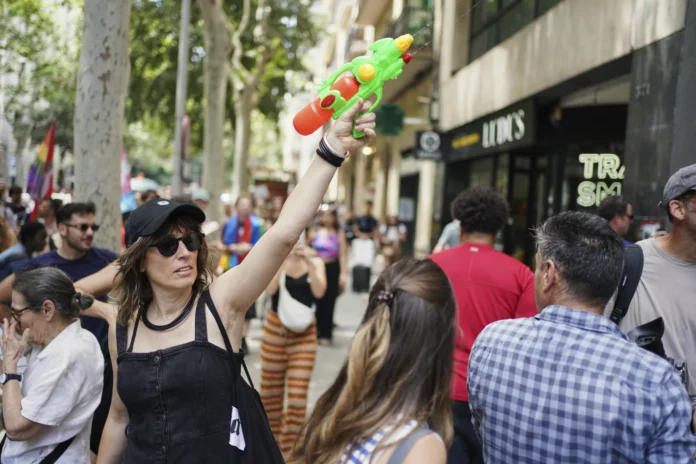
BARCELONA, Spain — Tourists lounging in cafes and strolling through historic streets in Barcelona and Mallorca were met with an unusual reception on Sunday: blasts from brightly colored water guns fired by angry locals demanding an end to what they say is the unchecked ravaging of their communities by mass tourism.
The squirt-gun salvos were the most attention-grabbing part of coordinated anti-tourism demonstrations staged across Spain — including Granada, San Sebastián, and Ibiza — as well as in Venice and Lisbon. Protesters say soaring short-term rentals, overtourism, and the prioritization of visitor comfort over local needs are pushing residents out of their neighborhoods and turning their cities into theme parks.
“This is a fight to give Barcelona back to its residents,” said Andreu Martínez, 42, an administrative worker who joined hundreds in Barcelona’s protest, squirting café-goers along the way. “Barcelona has been handed to the tourists.”
Barcelona, a city of 1.7 million, drew a staggering 15.5 million visitors last year. Locals like Martínez say they’ve felt the squeeze: rents in some neighborhoods have risen more than 30%, traditional businesses are being replaced by souvenir shops and bubble tea cafes, and a growing number of homes are being converted to tourist accommodations, leaving residents priced out and alienated.
“Our lives as lifelong residents of Barcelona are coming to an end,” Martínez said. “We are being pushed out systematically.”
In Palma, the capital of Mallorca, about 5,000 people marched through the streets with placards reading “Everywhere you look, all you see are tourists.” Many also carried water guns. The coastal city, popular with British and German vacationers, has seen housing prices soar as locals compete with global visitors for limited rental supply.
While many tourists laughed off the squirt attacks — with some even welcoming the cooling relief in the summer heat — others were startled by the intensity of sentiment behind the protests.
American tourists Wanda and Bill Dorozenski were walking along Barcelona’s luxury shopping boulevard when they were sprayed. “That’s lovely, thank you sweetheart,” Wanda quipped. “These people are feeling something very personal, and it’s perhaps destroying some areas of the city.”
Protesters made their message clear through banners and signs reading “One more tourist, one less resident,” and slapped stickers reading “Tourist Go Home” and “Citizen Self-Defense” on hotel doors. In front of one large hostel, tensions spiked as demonstrators emptied their water guns at employees and lit firecrackers. One hostel worker retaliated by spitting at the crowd before slamming the doors shut.
Spain’s anti-tourism protests are part of a larger reckoning across Europe as cities grapple with the dual challenge of sustaining tourism — which accounts for roughly 12% of Spain’s GDP — while preserving livability for residents. Spain recorded a record-breaking 94 million international visitors in 2024, inflaming tensions in cities already stretched thin.
Barcelona has become the epicenter of resistance. Last year, city authorities made headlines by announcing that all 10,000 short-term rental licenses would be phased out by 2028, a move seen as one of Europe’s boldest stands against Airbnb and similar platforms. Signs reading “Your Airbnb was my home” were widely displayed during Sunday’s protest.
Spain’s national government has also taken action. In May, it ordered Airbnb to delist nearly 66,000 illegal holiday rentals that violated local zoning or housing regulations. Consumer Rights Minister Pablo Bustinduy said tourism “cannot jeopardize the constitutional rights of the Spanish people,” including access to housing.
Economy Minister Carlos Cuerpo echoed the sentiment, stating that the government was focused on addressing “the unwanted side effects of mass tourism.”
The short-term rental industry has pushed back, accusing officials of scapegoating platforms like Airbnb for deeper housing policy failures. Jaime Rodríguez de Santiago, Airbnb’s general director for Spain and Portugal, recently told The Associated Press that political leaders were dodging responsibility for years of inaction.
But that argument holds little sway for Barcelona residents like Txema Escorsa, a schoolteacher who said he’s sworn off Airbnb altogether — even when traveling abroad.
“In the end, you realize that this is taking away housing from people,” Escorsa said.
As climate change, digital nomadism, and the global mobility of wealth continue to reshape the world’s tourism economies, Spain’s squirt-gun protests signal that the limits of local patience have been reached — and that the backlash may only grow louder.
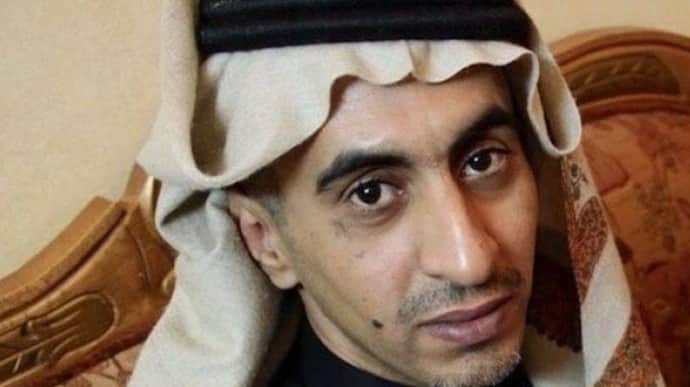
RIYADH, Saudi Arabia — A Saudi journalist arrested in 2018 on charges widely denounced as politically motivated has been executed, the kingdom confirmed over the weekend, prompting sharp condemnation from international rights groups and press freedom advocates.
Turki Al-Jasser, a well-known journalist and blogger in his late 40s, was put to death on Saturday, the state-run Saudi Press Agency said, after the kingdom’s highest court upheld his death sentence. Al-Jasser had spent the past seven years behind bars following his arrest in a 2018 raid in which authorities seized his personal devices and online records.
The Saudi government claimed Al-Jasser was convicted of terrorism and treason, but groups such as the Committee to Protect Journalists (CPJ) and Reprieve insist the charges were fabricated to punish him for running an anonymous Twitter account that criticized members of the royal family and the kingdom’s leadership, particularly Crown Prince Mohammed bin Salman.
The CPJ, citing information from Saudi insiders and digital watchdogs, reported that Al-Jasser was believed to be the voice behind an account that exposed alleged corruption at high levels of government. He had also posted commentary on Islamist militancy and social reforms — topics long considered sensitive in the Saudi political landscape.
Carlos Martínez de la Serna, CPJ’s program director, issued a scathing rebuke of the execution, stating, “The international community’s failure to deliver justice for Jamal Khashoggi did not just betray one journalist — it emboldened Crown Prince Mohammed bin Salman to continue his persecution of the press.”
Khashoggi, a Washington Post columnist and outspoken critic of the crown prince, was killed and dismembered by Saudi operatives at the kingdom’s consulate in Istanbul in 2018. U.S. intelligence agencies later concluded that Mohammed bin Salman had approved the operation — a finding the Saudi government continues to deny.
Human rights advocacy group Reprieve called Al-Jasser’s execution “a chilling demonstration” of the kingdom’s crackdown on dissent. Jeed Basyouni, Reprieve’s Middle East and North Africa director, said Al-Jasser was “tried and convicted in total secrecy for the ‘crime’ of journalism.”
“There was no due process, no transparency — only silence, imprisonment, and ultimately death,” Basyouni said. “This execution once again demonstrates that in Saudi Arabia, the punishment for criticizing or questioning Crown Prince Mohammed bin Salman is death.”
Al-Jasser had gained prominence for his writings on the Arab Spring uprisings, women’s rights, and government corruption, and maintained a personal blog between 2013 and 2015. Despite the blog’s closure, he remained active in Saudi digital discourse, often clashing with the state’s authoritarian sensitivities.
Saudi Arabia continues to face international criticism for its use of the death penalty, including methods such as public beheadings and mass executions. According to rights monitors, the kingdom carried out 330 executions in 2024 alone — a significant spike as authorities intensified repression of political dissent and online activism.
The case of Al-Jasser is not isolated. In recent years, Saudi Arabia has arrested several individuals for social media activity, including foreigners. Last month, a British-based Bank of America analyst was sentenced to a decade in prison, reportedly over a deleted social media post. In 2021, dual Saudi-American national Saad Almadi was sentenced to 19 years for tweets made while living in Florida. Though Almadi was released in 2023, he remains barred from leaving the kingdom.
The Saudi government has not disclosed details of Al-Jasser’s trial or the specific evidence presented against him, further fueling concerns about the country’s opaque judicial process and targeting of peaceful expression.
As global calls mount for accountability, many journalists and rights defenders warn that the international community’s muted response to cases like Al-Jasser’s only reinforces Riyadh’s impunity.
“Turki Al-Jasser paid the ultimate price for speaking out,” de la Serna said. “Without serious consequences for these abuses, other journalists will face the same fate — silenced in the shadows.”
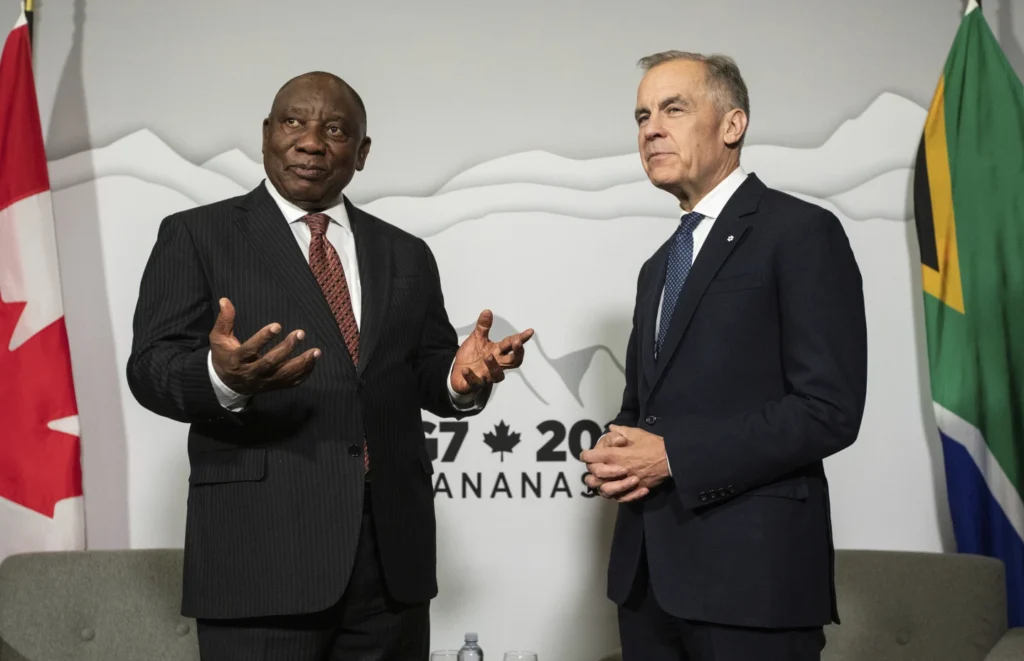
BANFF, Alberta — The Group of Seven summit opened Monday in Canada’s Rocky Mountains under a cloud of escalating global conflict, turbulent trade policies, and carefully choreographed diplomacy meant to avoid confrontation with U.S. President Donald Trump.
The meeting comes seven years after Trump’s last appearance at a G7 in Canada, where he famously refused to endorse the summit’s final communiqué, clashed with allies, and unleashed a barrage of insults at Canadian leadership from aboard Air Force One. The image of then-German Chancellor Angela Merkel leaning across a table toward a defiant, arms-crossed Trump became emblematic of the deep divisions that year.
This time, leaders of the world’s top democracies appear united in at least one goal: avoiding a repeat of that political spectacle.
“There’s clearly a shared interest in keeping things calm,” said Peter Boehm, a veteran of six G7 summits and Canada’s counselor at the 2018 meeting in Quebec. “The shadow of Quebec still looms.”
Trump’s arrival in Banff follows a period of intensifying global tension. His administration has issued sweeping new tariffs on dozens of countries, while wars in Ukraine and Gaza continue with no end in sight. Tensions are also rising between Israel and Iran over Tehran’s nuclear activities, further complicating the G7’s traditionally broad agenda that also includes climate change, immigration, AI regulation, and global drug trafficking.
Signaling the Trump administration’s disinterest in collective consensus, no joint communiqué is expected from this year’s summit — a departure from past G7 tradition that underscores Washington’s go-it-alone posture. Instead, Trump’s team appears focused on cementing a unilateral trade framework, intensifying pressure on allies through tariffs and pushing for policies that prioritize American manufacturing and energy expansion.
Caitlin Welsh, a former G7 adviser in Trump’s first term and now a director at the Center for Strategic and International Studies, said the approach reflects a simple philosophy: “The Trump administration almost certainly believes that no deal is better than a bad deal.”
Speaking to reporters before departing the White House on Sunday, Trump hinted at potential new trade announcements, saying, “We have our trade deals. All we have to do is send a letter. ‘This is what you’re going to have to pay.’ But I think we’ll have a few new trade deals.”
His administration has already levied 25% tariffs on steel, aluminum, and automobiles — measures that have hit Japan, Canada, and Mexico particularly hard. Trump has also imposed a 10% baseline tariff on imports from most countries, which could increase after July 9, when a self-imposed 90-day negotiating period ends.
Foreign leaders, well aware of Trump’s volatility, have taken care to emphasize personal rapport. U.K. Prime Minister Keir Starmer said Saturday that he maintains “a good relationship with President Trump,” a sentiment echoed by German, Italian, and Japanese officials. Their hope: keeping Trump engaged without provoking a fresh diplomatic row.
Trump’s bilateral meetings at the summit include sit-downs with Canadian Prime Minister Mark Carney, Mexican President Claudia Sheinbaum, and Ukrainian President Volodymyr Zelenskyy. Each encounter is expected to focus heavily on trade, defense contributions, and efforts to limit China’s economic influence — a particular priority for Washington.
Still, observers warn that Trump’s confrontational tactics may complicate efforts to build a united front.
“Trump will try to coordinate the group against China’s economic coercion,” wrote Josh Lipsky, chair of international economics at the Atlantic Council. “But the rest of the leaders may turn back to Trump and say that this kind of coordination, which is at the heart of why the G7 works, would be easier if he weren’t imposing tariffs on his allies.”
Canada and Mexico, both of which were signatories to the 2020 U.S.-Mexico-Canada Agreement (USMCA), are now facing tariffs of up to 25% — some under the guise of fentanyl interdiction. While certain products remain protected under USMCA provisions, Canadian officials have expressed growing unease about Washington’s long-term reliability.
“Canada can no longer look to the U.S. as an enduring friend,” Prime Minister Carney said last week, reflecting the broader mood of uncertainty among U.S. allies.
Trade has not been the only point of contention. Trump’s rejection of climate goals, insistence on fossil fuel expansion, and skepticism of multilateral institutions have also widened the rift. The absence of a joint G7 statement this year is seen by many as symbolic of a deeper fracture in global cooperation.
Still, the summit retains significance as a rare opportunity for face-to-face diplomacy. Originating in 1973 as a forum for finance ministers to coordinate responses to the oil crisis, the G7 has evolved into an annual gathering of heads of government to address global issues and foster personal ties. It briefly expanded into the G8 when Russia joined in 1997 but reverted back to seven nations after Russia’s 2014 annexation of Crimea.
With the wars in Ukraine and Gaza far from resolved, and a new round of hostilities threatening to erupt between Israel and Iran, the summit’s global security focus is urgent. Trump’s planned meeting with Zelenskyy is expected to touch on military aid and territorial integrity, but also on Trump’s calls for Europe to shoulder more of the burden.
While discussions on artificial intelligence, climate policy, and global economic growth remain on the agenda, few expect major breakthroughs.
“The reality is, this summit is more about optics and survival than substance,” one European diplomat said privately. “It’s about managing Trump — not solving the world’s problems.”
As leaders gather in the tranquil setting of Banff, the stakes remain high. Whether the summit will reinforce the G7’s value or further expose its fractures will likely depend not just on shared policy, but on the temperament of one man — and how the world responds to him.
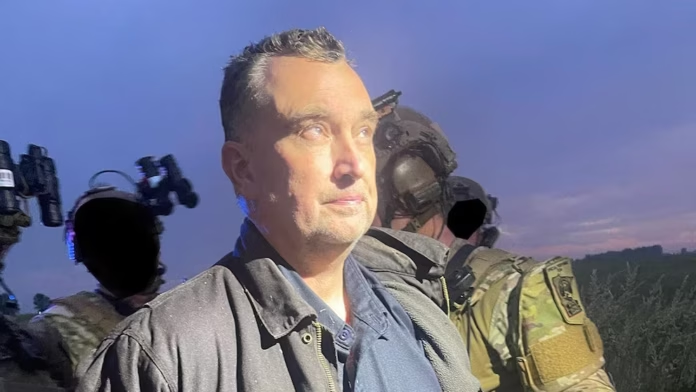
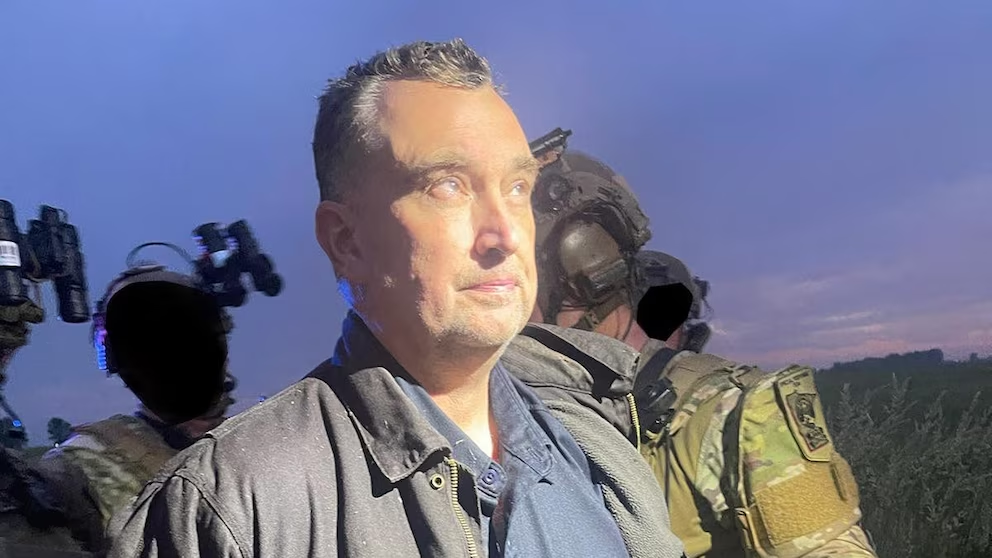
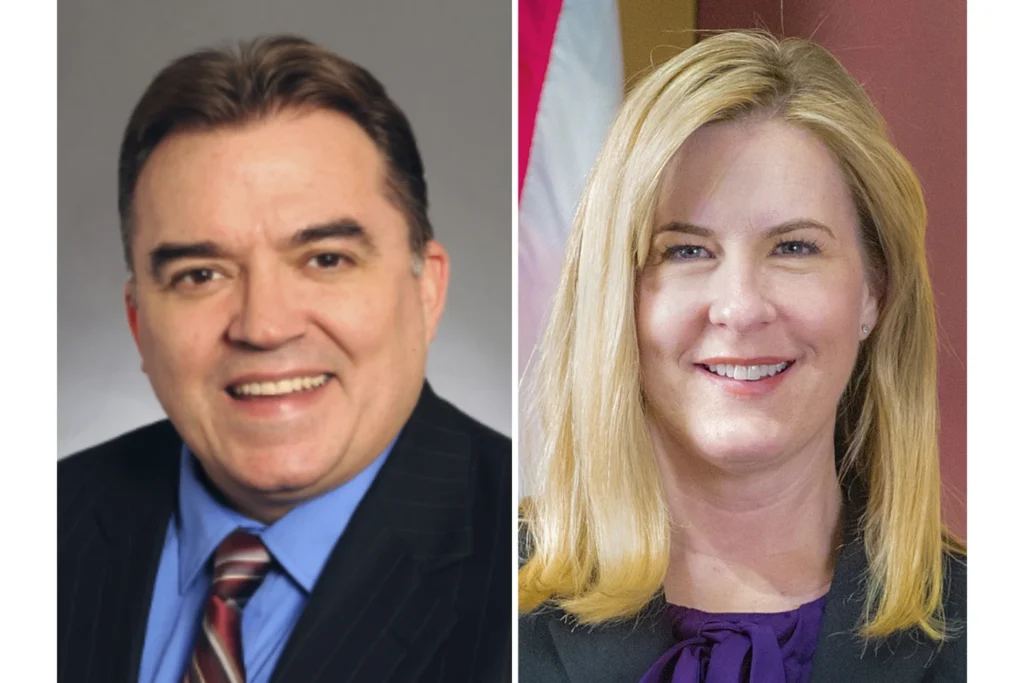
MINNEAPOLIS — The man suspected of killing former Minnesota House Speaker Melissa Hortman and wounding Democratic State Sen. John Hoffman was taken into custody early Monday after surrendering to police officers in a wooded area near his home, concluding a massive, nearly two-day manhunt that gripped the state in fear.
Authorities identified the suspect as Vance Boelter, who now faces two counts of murder and two counts of attempted murder. Officials say Boelter impersonated a police officer before launching coordinated attacks on the homes of both lawmakers, killing Hortman and her husband, Mark, and critically wounding Hoffman and his wife, Yvette, in a separate shooting.
Police said the shootings were premeditated and politically targeted, though a motive has yet to be formally established.
“This was the largest manhunt in the state’s history,” Brooklyn Park Police Chief Mark Bruley said Sunday. The search began early Saturday after police responding to the Hortmans’ Brooklyn Park residence witnessed Mark Hortman being shot through an open door before the suspect fled.
The trail led to Sibley County, a rural area west of Minneapolis, where officers discovered Boelter’s abandoned vehicle. A perimeter was set up, and tactical teams from more than 20 law enforcement agencies fanned out through the dense woods. After hours of tracking him with helicopters and ground units, Boelter reportedly crawled out of the underbrush to surrender without resistance.
He was booked into the Hennepin County Jail at 1:02 a.m. Monday, wearing an orange prison shirt in booking photos released later.
Officials say Boelter posed as a police officer, modifying a vehicle to resemble a patrol car before carrying out the shootings. According to an unsealed criminal complaint, the violence began at the Hoffman residence in Champlin early Saturday morning. The couple’s adult daughter called 911 just after 2 a.m., saying her parents had been shot by a masked gunman at the door.
Soon after, Brooklyn Park officers were dispatched to check on the Hortmans and arrived just in time to witness the fatal shooting of Mark Hortman. A gunfight ensued, but Boelter escaped. Melissa Hortman was found dead inside the home.
Drew Evans, superintendent of the Minnesota Bureau of Criminal Apprehension, said Boelter’s plans appeared far-reaching and could have resulted in more deaths had police not intervened when they did. “This individual had a list,” he said.
Two law enforcement officials, speaking anonymously to the Associated Press, said writings recovered from the fake police vehicle included a hit list of approximately 70 names, including federal and state lawmakers, abortion rights advocates, community leaders, and healthcare professionals.
A Minnesota official told AP that several legislators who had publicly supported abortion rights were on that list, although it is unclear if the attacks were ideologically motivated.
Boelter, a former political appointee, had previously served on a state workforce development board with Hoffman, though investigators have not clarified the nature of their relationship. Hours after the attacks, Boelter sent cryptic text messages to friends: “I may be dead shortly… I wish it hadn’t gone this way,” he wrote.
Governor Tim Walz, in an emotional press briefing, described the killings as a turning point. “One man’s unthinkable actions have altered the state of Minnesota,” Walz said. “This cannot be the norm. It cannot be the way that we deal with our political differences.”
As the Twin Cities region mourned, makeshift memorials were erected outside the Minnesota State Capitol, where mourners left flowers, American flags, and handwritten notes in tribute to the Hortmans. One read: “You were our leader through the hardest of times. Rest in Power.”
U.S. Sen. Amy Klobuchar shared a statement from Yvette Hoffman, who survived alongside her husband despite sustaining eight gunshot wounds.
“John is enduring many surgeries right now and is closer every hour to being out of the woods,” she wrote. “He took 9 bullet hits. I took 8. We are incredibly lucky to be alive. We are gutted and devastated by the loss of Melissa and Mark.”
Pam Stein, a Minneapolis resident who knelt beside the Capitol memorial, described Hortman as “an absolute powerhouse” and “the real unsung hero of Minnesota government.”
As the investigation continues, authorities are combing through Boelter’s digital and physical records for clues into his motives, amid a climate of increasingly hostile rhetoric and threats against public officials.
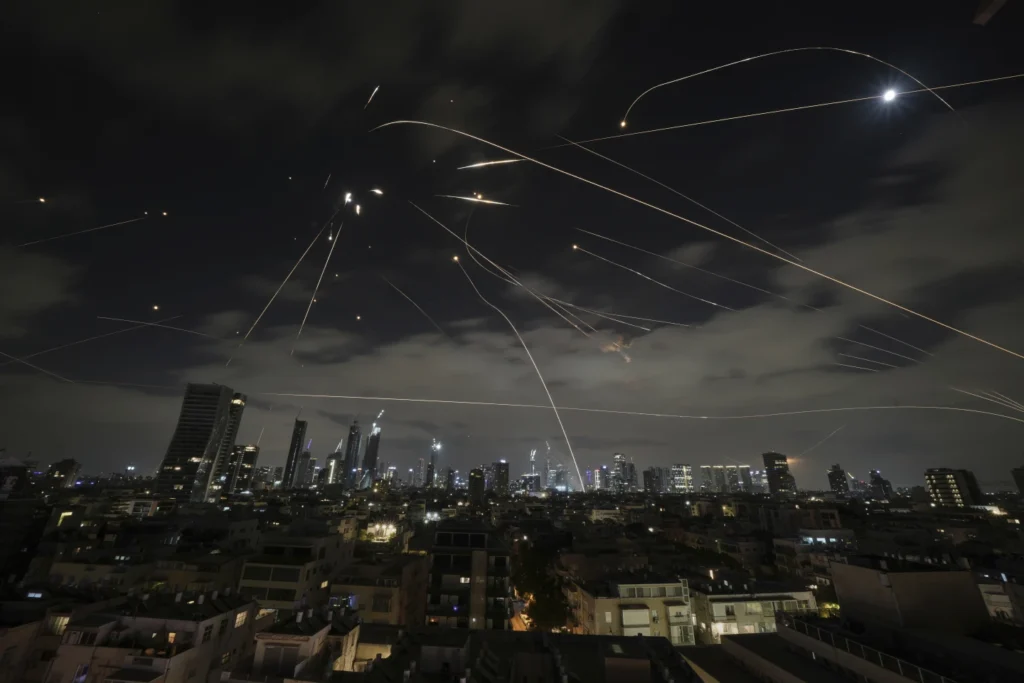
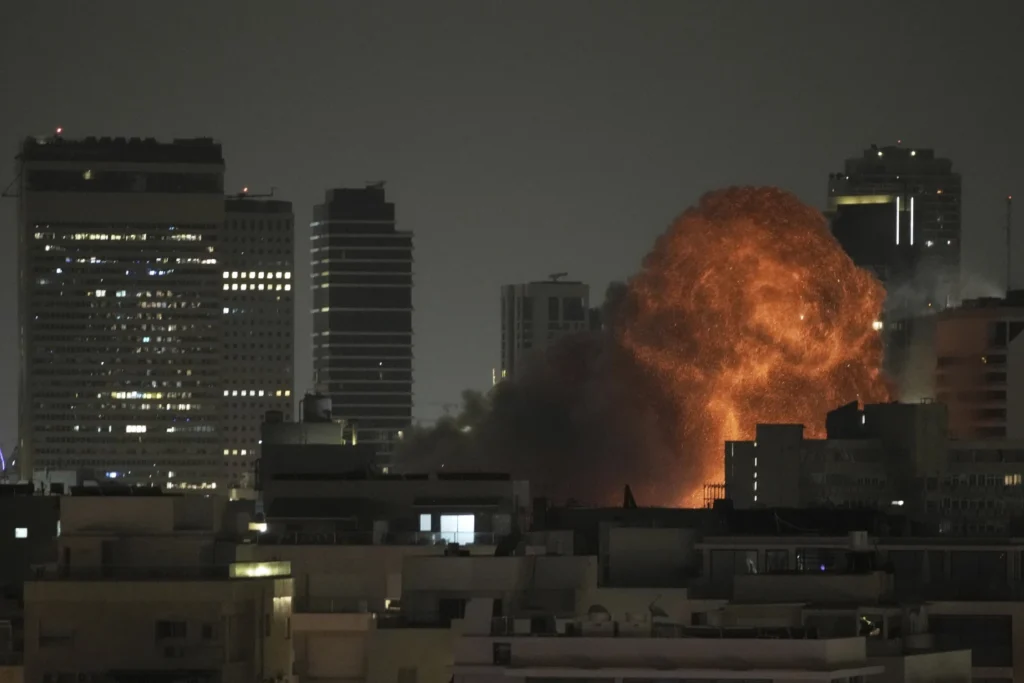
TEL AVIV, Israel — Iranian missile attacks killed at least five people in central Israel early Monday, as the war with Israel entered its fourth day and the Israeli military claimed it had achieved full air superiority over the Iranian capital.
The Israeli Defense Forces announced that its fighter jets now operate freely from western Iran to Tehran after systematically dismantling key components of Iran’s air defenses and missile infrastructure. More than 120 surface-to-surface missile launchers — a third of Iran’s arsenal — have been destroyed in aerial missions overnight, the military said.
“Now we can say that we have achieved full air supremacy in the Tehran airspace,” Israeli military spokesman Brig. Gen. Effie Defrin declared on Monday.
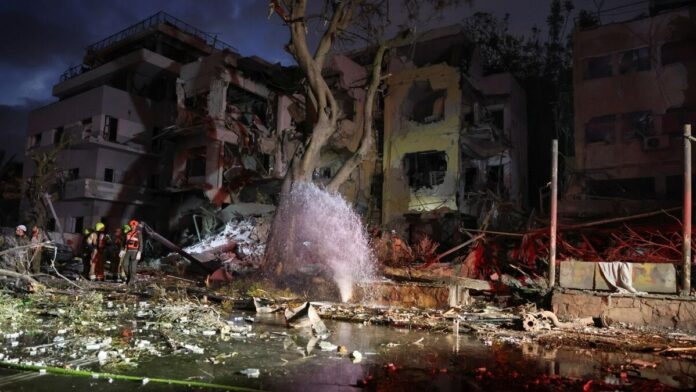
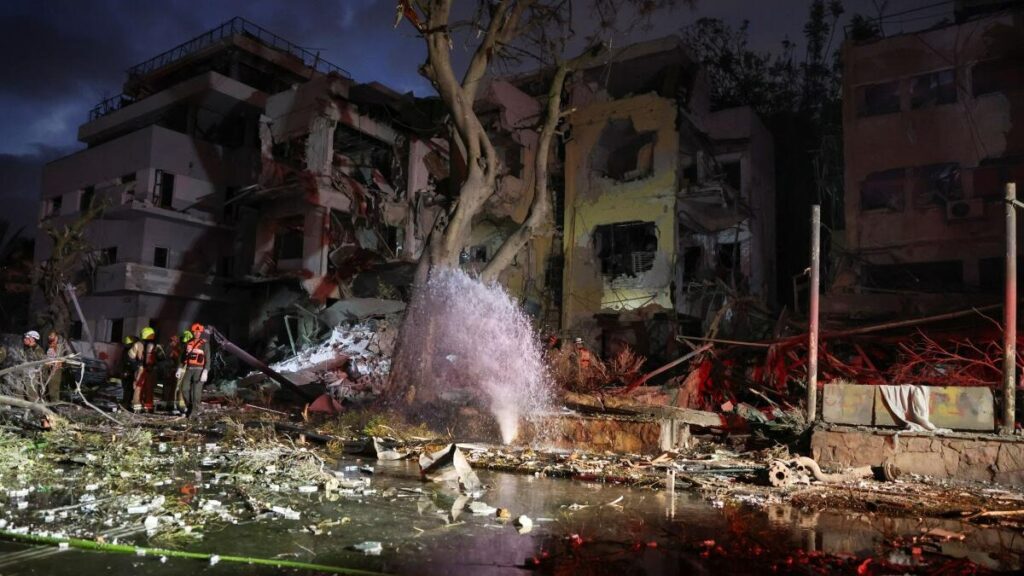
In a sign of Iran’s resolve to continue retaliating, its Islamic Revolutionary Guard Corps (IRGC) said it had fired over 100 missiles in the latest round, targeting multiple locations across central Israel. Among the sites hit were residential buildings in the city of Petah Tikva and near Tel Aviv, where sirens wailed before dawn and plumes of black smoke followed deafening explosions. Israel’s Magen David Adom emergency service confirmed that two women and two men in their 70s, along with another unidentified civilian, were killed in the strikes. At least 87 others were wounded.
One of the Iranian missiles reportedly fell near the U.S. consulate in Tel Aviv. U.S. Ambassador Mike Huckabee confirmed no American personnel were harmed and said the damage was limited.
In Petah Tikva, a missile tore through an apartment building, shattering concrete walls and windows and leaving several families displaced. Among the survivors was 60-year-old Yoram Suki, who rushed his family to a bomb shelter after hearing the warning sirens. When they emerged, their home was gone. Still, Suki stood firm in support of Israel’s military operation. “It’s totally worth it,” he said. “This is for the sake of our children and grandchildren.”
Israeli paramedics described chaotic scenes of destruction. Dr. Gal Rosen, an MDA paramedic, said he rescued a 4-day-old baby from the rubble as fires consumed what remained of the structure.
Despite the rising civilian toll, the Israeli government has continued its campaign, targeting not only Iran’s missile sites but also strategic locations including oil refineries, government buildings, and suspected nuclear facilities.
Iran’s Foreign Minister Abbas Araghchi offered conditional de-escalation on Sunday, suggesting Tehran would halt strikes if Israel did the same. But with the Israeli air force broadening its target range, the IRGC responded with a warning of “more forceful, severe, precise and destructive” retaliation in future barrages.
Iran’s health ministry said 1,277 people had been wounded since Israeli attacks began Friday, and state media reported at least 224 dead. However, rights groups like Human Rights Activists, based in Washington, say the actual death toll could exceed 400, including nearly 200 civilians.
Israel defends its campaign as a necessary preemptive action to cripple Iran’s nuclear capabilities and military leadership. “We are eliminating those who pose a direct threat to our existence,” said a senior Israeli defense official. While Iran maintains that its nuclear program is for peaceful purposes, recent uranium enrichment levels suggest Tehran could build multiple weapons within months if it made the decision.
In a chilling escalation on the espionage front, Iranian state-run television reported that authorities on Monday executed Dr. Esmail Fekri, a physician accused of passing sensitive military information to Israel’s Mossad. Fekri, imprisoned since 2023, was reportedly involved in facilitating Mossad’s efforts to place explosive drones and precision-guided munitions inside Iran ahead of Israel’s first wave of attacks.
As the toll mounts and the battle for regional dominance intensifies, both Iran and Israel show no signs of backing down — raising fears that the conflict may soon draw in additional powers and spiral further out of control.
WASHINGTON — President Donald Trump warned Sunday that the United States “could get involved” in the escalating conflict between Israel and Iran if the deadly exchange of missile strikes does not subside, marking his clearest indication yet that Washington’s hands-off posture could change.
Speaking to ABC News as violence between Israel and Iran entered its fourth day, Trump acknowledged that while the U.S. is not currently involved in military operations, intervention remains on the table.
“We’re not involved in it. It’s possible we could get involved. But we are not at this moment involved,” Trump said.
The president’s comments came amid intensifying hostilities that have seen hundreds of rockets fired by both sides since Friday, and as questions grow over how long the U.S. can remain on the sidelines. Trump insisted he is still hopeful that a resolution is within reach, predicting that “Iran and Israel will make a deal” to halt the conflict. But his warning signals that a prolonged war could draw Washington directly into a volatile regional confrontation.
In the same interview, Trump revealed that Russian President Vladimir Putin had offered to mediate talks between Israel and Iran. “He is ready. He called me about it,” Trump said. “We had a long talk about it. We talked about this more than his situation [Ukraine]. This is something I believe is going to get resolved.”
Iranian officials disputed Trump’s assertion that the U.S. is uninvolved. In Tehran, Foreign Minister Abbas Araghchi told reporters the Iranian government believes Israel’s military campaign has been carried out with U.S. knowledge and approval.
“We have received messages from the U.S. through various channels over the past two days stating that the U.S. had no involvement and will have no involvement in this attack,” Araghchi said. “As I said, we don’t believe the U.S.’s claim.”
As tensions escalated, the U.S. State Department on Sunday authorized the voluntary departure of family members and some non-emergency U.S. government employees from its embassy in Israel. A memo advised American citizens in Israel to leave while commercial flights remain available, warning that the embassy’s shelter-in-place order remains in effect “until further notice.”
“U.S. citizens who wish to depart should not delay in taking advantage of commercial transportation options,” the advisory said.
While Trump has publicly distanced the U.S. from direct involvement in the current conflict, his close alignment with Israel and the longstanding U.S.-Israel defense relationship has led Iran and its allies to view Washington as complicit. The former president also referenced his previous efforts to resolve international disputes, such as negotiations between Serbia and Kosovo and tensions between India and Pakistan.
“This will get resolved,” Trump said. “Just like I got India and Pakistan to stop fighting — and they were very close.”
Still, his stark warning underscores the growing risk that the conflict between Israel and Iran could entangle the United States, particularly if Israeli operations intensify or if Iranian retaliation targets U.S. forces or allies in the region.
For now, Trump’s message is a balancing act between deterrence and diplomacy — but with no ceasefire in sight, the threat of U.S. military involvement in another Middle East war grows more real by the day.