Home Blog Page 328

French National Charged with Orchestrating Online Child Sex Abuse in Colombia

0

PARIS (BN24) — A 55-year-old French national has been arrested and charged in France for orchestrating online child sex abuse in Colombia, as part of an extensive transnational investigation into livestreamed pedophile crimes, French prosecutors announced Saturday.

According to the Paris prosecutor’s office, the suspect faces a string of grave charges, including complicity in human trafficking involving minors under 15, rape and sexual assault of children — including incestuous acts — as well as possession, acquisition, and viewing of child pornography. He was formally charged this week and has been remanded into custody pending trial.

Authorities allege the man transferred over €30,000 (approximately $35,000 USD) to individuals in Colombia, paying for the live-streamed sexual abuse of children, some of whom have now been identified and placed under protective care. Prosecutors say the operation uncovered a network that included local abusers, intermediaries, and so-called ‘money runners’, all of whom were arrested in a coordinated action with Colombian law enforcement.

Weapons were also reportedly found in the suspect’s residence in France, although authorities have not yet clarified their connection to the broader investigation.

The case has drawn international attention to a particularly heinous form of child exploitation known as livestreaming abuse, where predators in wealthier nations commission sexual assaults on minors abroad in real-time. These crimes are often carried out by the victims’ own relatives in return for payment, with the abuse streamed live to the perpetrators.

“This kind of abuse is particularly insidious and difficult to detect, as it crosses borders and is often facilitated through encrypted digital transactions and private video platforms,” said a law enforcement source familiar with the case.

The prosecutor’s office stressed that this arrest marks a significant breakthrough in a multi-agency international effort to dismantle livestreaming pedophile rings. French and Colombian authorities cooperated closely to ensure the simultaneous arrests of the French suspect and his co-conspirators in Colombia, preventing further harm to vulnerable children.

Child protection advocates have long warned of the rising threat of online abuse-for-hire models, urging governments to expand monitoring of cross-border financial transactions and digital content sharing. The French suspect’s arrest now puts a spotlight on the global infrastructure enabling such crimes — and the urgent need for coordinated responses.

Legal proceedings in France are ongoing, and prosecutors say the suspect could face decades in prison if convicted on all charges. Meanwhile, authorities in Colombia continue working to identify additional victims and unravel further links in the abuse-for-profit network.
Brazil Hot-Air Balloon Tragedy Kills 8, Injures 13 in Fiery Plunge Over Santa Catarina

0

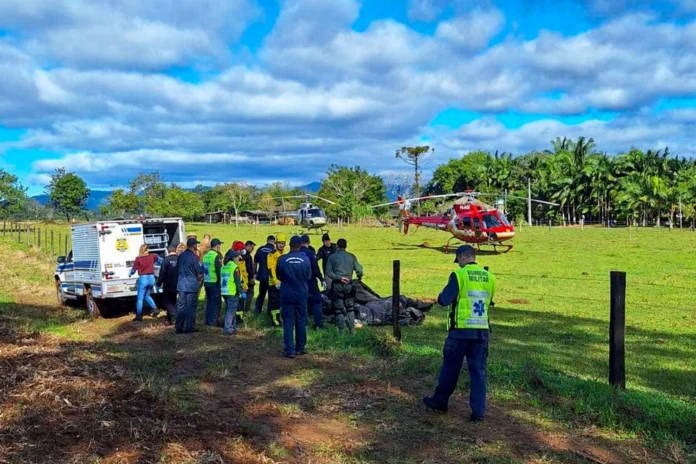
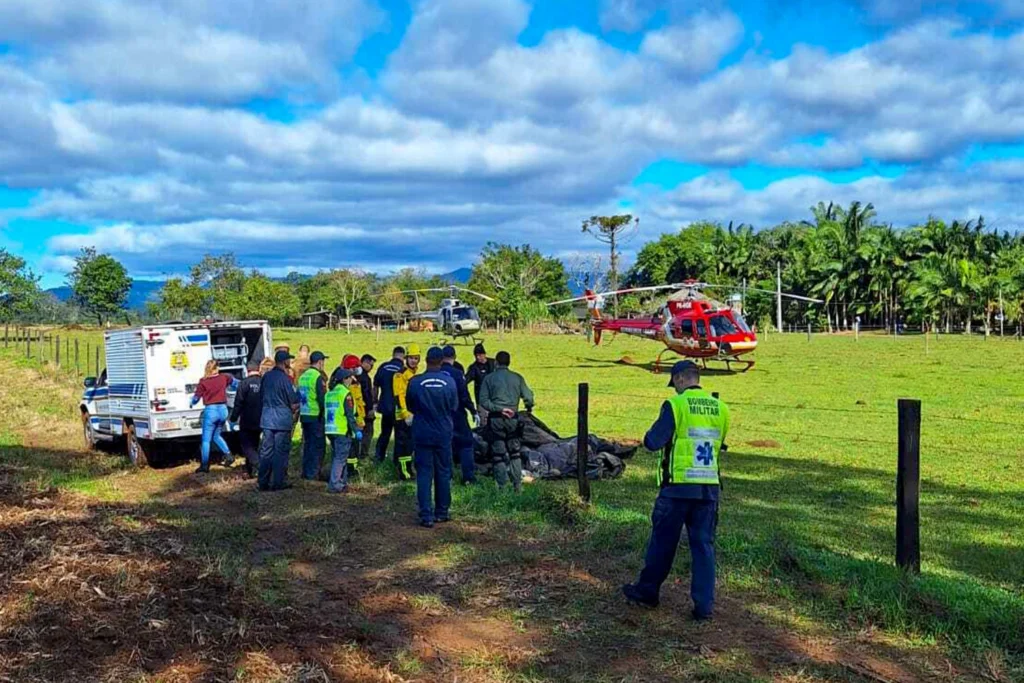
PRAIA GRANDE, Brazil (BN24) — A hot-air balloon burst into flames mid-air and crashed to the ground in southern Brazil’s Santa Catarina state on Saturday, killing eight people and injuring 13 others in one of the country’s deadliest ballooning disasters in recent memory.

The tragedy unfolded in Praia Grande, a popular ballooning destination near the Serra do Rio do Rastro mountain range, where the balloon caught fire during flight and fell rapidly with 21 people aboard, including the pilot.

Graphic video footage shared by local outlet G1 and on social media showed the balloon engulfed in flames as it plummeted. In one harrowing clip, two passengers can be seen falling through the air as the fire spread through the aircraft’s basket.

According to Santa Catarina’s military fire brigade, 13 survivors were pulled from the wreckage and taken to nearby hospitals. Among the deceased, three were found embracing each other, a detail shared by state civil police chief Ulisses Gabriel on X. “It hurts the soul,” he wrote.

Officials say the crash occurred just minutes into what was supposed to be a 45-minute flight reaching an altitude of 1,000 meters. The experience reportedly cost around 550 reais (about $100 USD) per passenger.

In a public statement, Santa Catarina Governor Jorginho Mello expressed deep sorrow and pledged full support to the victims and their families. “We are in mourning. A tragedy has happened. Now is the time for the state to act—rescue, assist, bring comfort,” Mello said in a video posted to X.

Initial reports from police suggest the fire broke out inside the basket, possibly from a fuel source or burner malfunction. As the blaze intensified, the pilot ordered passengers to jump when the balloon was close to the ground. “Some managed to jump, others didn’t. The fire grew, and the balloon crashed,” said Tiago Luiz Lemos, Praia Grande’s chief police officer, in comments to Folha de São Paulo.

The crash occurred during Brazil’s June festivities, a time of high tourism in the region and cultural celebrations honoring Catholic saints like St. John, whose feast is on June 24. Balloon rides are a popular activity in the area during this time of year.

The incident comes less than a week after another hot-air balloon mishap in São Paulo state killed a 27-year-old woman and injured 11 others, raising further concerns over ballooning safety standards in Brazil.

Authorities have launched a full investigation into the Santa Catarina disaster, including an assessment of the balloon’s licensing, maintenance records, and the pilot’s emergency protocols.

As families mourn and survivors recover, the nation now grapples with the aftermath of a spectacle turned catastrophe—one that has shaken the festive spirit of southern Brazil.

U.S. Deploys B-2 Bombers to Guam as Trump Considers Military Role in Israel-Iran Conflict

0

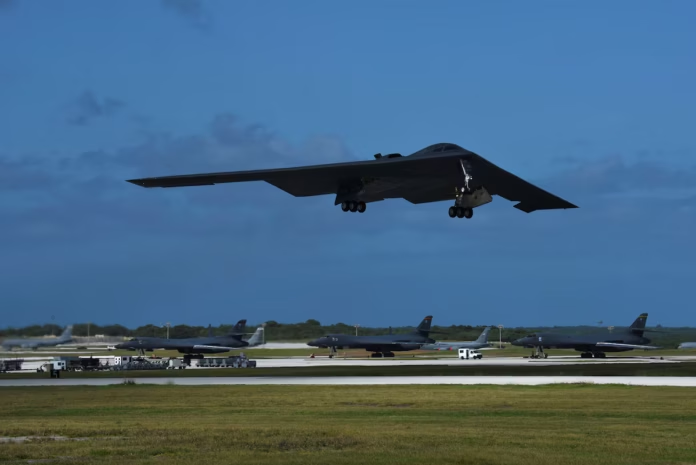
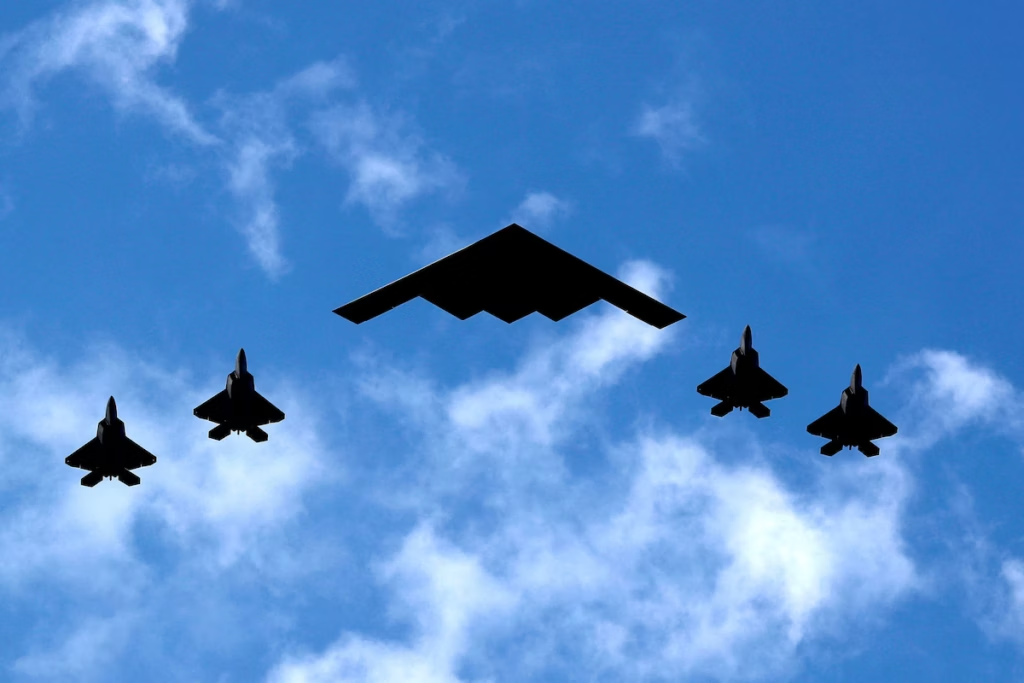
WASHINGTON (BN24)— The United States has quietly moved B-2 Spirit stealth bombers to Guam, U.S. officials confirmed Saturday, as President Donald Trump weighs whether to commit American military forces to Israel’s escalating conflict with Iran.

While the officials, speaking on condition of anonymity, declined to confirm a direct link between the deployment and the Middle East crisis, the move is being interpreted by defense analysts as a strategic signal of readiness. The B-2 bombers are capable of carrying the GBU-57 Massive Ordnance Penetrator — a 30,000-pound bunker-busting bomb widely believed to be designed for targeting deeply buried nuclear facilities like Iran’s Fordow enrichment site.

“No forward orders have been issued yet beyond Guam,” one official said, adding that details such as the total number of bombers deployed remain classified. The Pentagon declined to comment on the movement.

The aircraft transfer comes as Trump has delayed a final decision on direct U.S. involvement in the Israel-Iran conflict. Speaking Friday in New Jersey, the president said he would take up to two weeks to assess the situation, stating, “We’re ready, willing and able — and we’ll see what happens.”

Military experts are closely monitoring whether the B-2s will be relocated from Guam to Diego Garcia, a remote U.S.-British base in the Indian Ocean that provides ideal strike access to the Middle East. The U.S. had previously stationed B-2s there before recently rotating in B-52 bombers.

“This could be classic power projection,” one senior U.S. defense analyst said. “Guam is a strategic waypoint. But if the B-2s start flying out of Diego Garcia, it’s a clear shift toward operational readiness.”

The B-2 deployment coincides with a marked uptick in U.S. global military movements. As Reuters first reported this week, the U.S. has relocated a large number of aerial refueling tankers to Europe and bolstered forces in the Middle East with additional fighter jets. An aircraft carrier in the Indo-Pacific is also now en route to the Middle East.

The latest moves come as Israel intensifies its air campaign, claiming Saturday to have killed a senior Iranian Quds Force commander in a strike on Qom. Iran, for its part, reiterated it will not resume nuclear talks while under military threat.

Israel alleges Iran is on the verge of weaponizing its nuclear program — a claim Tehran denies, maintaining its atomic activities are solely for peaceful purposes. But U.S. officials have warned that any strike on Iranian nuclear sites could escalate rapidly into regional war, potentially drawing in American forces.

As Israel’s airstrikes on Iran continue, the White House has kept diplomatic channels open, while reinforcing its deterrence posture. Trump’s Director of National Intelligence, Tulsi Gabbard, recently told reporters that the U.S. intelligence community has assessed Iran is taking steps consistent with nuclear weapons development — a claim Iran rejects.

With the B-2 bombers now positioned within striking range, U.S. military readiness has quietly entered a new phase — one that reflects deepening uncertainty over how far the current conflict could spiral.

“Guam is just the beginning,” said one former senior Pentagon official. “Where those bombers go next will tell the world how close we are to a wider war.”

Iran’s Khamenei Prepares for Succession Amid Assassination Fears, Orders Secret List of Replacements

0

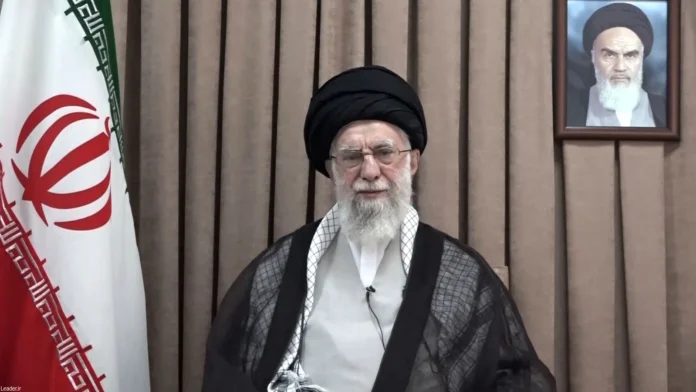
TEHRAN, Iran (BN24) — Iran’s Supreme Leader Ayatollah Ali Khamenei has secretly selected a trio of potential successors, according to officials briefed on the matter, as fears mount within Tehran that he could become the next high-value target in a wave of lethal Israeli strikes that have decimated the ranks of Iran’s top military commanders.

The 86-year-old cleric, who has ruled since 1989, reportedly drew up the list while sheltering in a fortified bunker, and instructed Iran’s Assembly of Experts — the powerful clerical body responsible for choosing the next Supreme Leader — to select from his handpicked candidates in the event of his death, The New York Times reported.

“The ayatollah is clearly rattled. His preemptive move to name successors signals just how fragile the regime sees itself right now,” a senior U.S. official told The Post.

While the names on the list have not been formally disclosed, Iranian political analysts say Gholam-Hossein Mohseni-Eje’i, 68, the current head of Iran’s judiciary, is widely viewed as the frontrunner. He is known for his hardline posture and loyalty to the Islamic Revolutionary Guard Corps (IRGC), making him a likely candidate to preserve the system’s continuity under crisis.

Other prominent contenders include Mohsen Qomi, 65, a senior cleric in the Assembly of Experts and foreign affairs adviser close to Khamenei, and Mohsen Araki, another longtime Assembly member. Guardian Council member Alireza Arafi and cleric Hashem Hosseini Bushehri have also been floated by Iranian insiders.

Notably absent from the succession list is Mojtaba Khamenei, the Supreme Leader’s influential 55-year-old son. Long rumored to be a possible heir due to his ties to the IRGC, his exclusion may be a strategic attempt by Khamenei to avoid the appearance of establishing a dynastic rule. However, some experts argue the Assembly could still sideline his father’s wishes and appoint Mojtaba regardless.

“This is an unprecedented deviation from Iran’s traditional succession process,” said Vali Nasr, a Middle East scholar at Johns Hopkins University. “But for Khamenei, the top priority now is regime preservation — not clerical formality.”

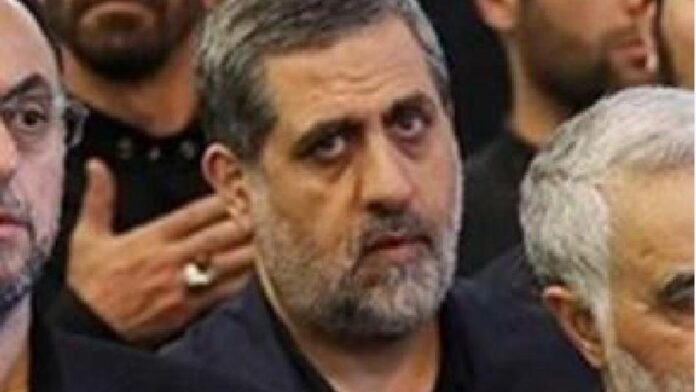
Khamenei’s decision comes amid Israel’s ongoing military campaign that has seen the elimination of several senior Iranian operatives. Most recently, Saeed Izadi, commander of the Quds Force’s Palestine Corps, was killed in a strike on the city of Qom. Israeli Defense Minister Israel Katz called the operation a “major intelligence and military success,” linking Izadi directly to Hamas’ preparations for its October 7, 2023, attack on Israel.

Two other senior officers were also eliminated: Benham Shahriyari, head of the Quds Force’s weapons transfer unit responsible for arming Hezbollah and the Houthis, and Amin Pour Joudaki, commander of Iran’s UAV Brigade, who reportedly oversaw hundreds of drone attacks on Israeli territory.

The Iranian regime has responded by intensifying internal security protocols. The Ministry of Intelligence has ordered all senior government and military officials into underground bunkers and barred the use of electronic communications. Khamenei himself has remained hidden since Israel began its strikes on June 13, having vacated his compound in Tehran known as beit rahbari (leader’s house).

Despite two pre-recorded addresses to the public in which Khamenei vowed not to yield, the mounting death toll among his top commanders has exposed deep vulnerabilities in Iran’s military leadership. Human rights monitors say at least 639 people, including senior officers and nuclear scientists, have been killed in Israeli airstrikes on Iranian soil since the conflict erupted.

Former U.S. officials say Iran’s top leadership is being rapidly decimated. “These guys aren’t just losing commanders — they’re losing the entire command structure,” a national security source familiar with the Trump administration’s Iran policy told The Post. “If I were in their shoes, I’d be buying a one-way ticket out of Tehran.”

While Iran’s Ministry of Intelligence remains silent, internal memos seen by multiple sources confirm that government operations are now being coordinated through a single trusted aide — a measure aimed at preserving secrecy amid espionage fears.

The current crisis has added a volatile dimension to the question of Iran’s future leadership. Analysts say the preemptive succession plan suggests Khamenei sees his own survival as far from guaranteed.

“This is not just about mortality — this is about assassination,” said Gabriel Noronha, a former State Department adviser on Iran. “Khamenei has watched his inner circle get picked off one by one. Now he’s planning for the unthinkable.”

Belarus Opposition Leader Sergei Tikhanovsky Freed in Surprise U.S.-Brokered Deal

0

VILNIUS, Lithuania (BN24) — Belarusian opposition leader Sergei Tikhanovsky, who had been jailed for more than five years, was released Saturday along with over a dozen political prisoners in a surprise deal hailed as a “symbol of hope” by human rights advocates and Western leaders.

Tikhanovsky’s release, brokered with the help of the United States, marks one of the most significant prisoner releases in Belarus in recent years and signals a potential shift in diplomatic engagement with the country’s long-standing authoritarian regime. His wife, Svetlana Tikhanovskaya, who launched her political career in 2020 after his arrest, shared a video on social media embracing her husband with the caption: “FREE.”

“It’s hard to describe the joy in my heart,” she wrote on X, formerly Twitter. The couple was reunited in Lithuania, where the released prisoners are receiving care and protection.

The U.S. played a pivotal role in negotiating the release. Tikhanovskaya thanked President Donald Trump, crediting his administration with facilitating the transfer. The announcement came just hours after Trump’s special envoy, Keith Kellogg, met with Belarusian President Alexander Lukashenko in Minsk — the most senior U.S. visit to Belarus in years.

Tikhanovsky, 46, had intended to run against Lukashenko in the August 2020 presidential election but was arrested weeks before the vote. His wife, a political novice at the time, stepped into the race, rallying opposition forces and becoming the face of Belarus’s pro-democracy movement.

A charismatic YouTuber and activist, Tikhanovsky gained notoriety for mocking Lukashenko as a “cockroach,” and rallied supporters around the slogan “Stop the Cockroach.” In 2021, he was sentenced to 18 years in prison for charges including “organizing riots” and “inciting hatred,” later receiving an additional 18 months for “insubordination.” He was reportedly held incommunicado, with rumors of his death circulating as recently as 2023.

Video footage released by the Viasna Human Rights Center on Saturday showed a visibly altered Tikhanovsky—shaved head, emaciated face—as he stepped out of detention for the first time in years.

Among the other 13 freed detainees were Radio Liberty journalist Igor Karnei, jailed in 2023 for alleged ties to an “extremist” group, and Galina Krasnyanskaya, a Swedish-Belarusian citizen accused of supporting Ukraine. They were all transferred to Lithuania, according to Lithuanian Foreign Minister Kestutis Budrys.

Belarus remains one of Europe’s most repressive states, still holding over 1,000 political prisoners, according to Viasna. Lukashenko, who has ruled since 1994, has outlawed all opposition parties and continues to be the only European leader to enforce the death penalty.

The release follows growing U.S.-Russia détente under President Trump, who has ended efforts to isolate Russian President Vladimir Putin and reopened back-channel negotiations with Kremlin allies, including Lukashenko.

European leaders welcomed the move but emphasized the broader crisis of political repression in Belarus.

European Commission President Ursula von der Leyen called the release “fantastic news and a powerful symbol of hope” and urged Minsk to release all remaining political detainees.

German Foreign Minister Johann Wadephul echoed that sentiment, calling Tikhanovsky’s release “fantastically good news” but stressing, “Lukashenko must finally release them all.”

Former Belarusian Culture Minister Pavel Latushko, now an exiled opposition figure, described the event as an “important moment” but insisted that those freed had been “jailed illegally.”

Polish Foreign Minister Radoslaw Sikorski added: “The free world needs Tikhanovsky. My sincerest joy goes out to Svetlana and your entire family.”

Tikhanovsky’s release is widely seen as a rare moment of hope for Belarus’s democratic movement—one that still faces daunting challenges under Lukashenko’s firm grip on power.

Israel Says It Killed Top Iranian Commander as Escalating Strikes Intensify Conflict

0

TEL AVIV/QOM (BN24) — Israel said Saturday it had killed senior Iranian Quds Force commander Saeed Izadi in a targeted airstrike as both nations traded fresh attacks, further inflaming a week-long conflict that shows no signs of de-escalation.

Defense Minister Israel Katz called the assassination of Izadi — the head of the Palestine Corps within Iran’s Islamic Revolutionary Guard Corps — a “major achievement” for Israel’s intelligence and air forces. The commander, long accused by Israeli officials of arming and funding Hamas before its deadly Oct. 7, 2023 assault, was reportedly killed in an airstrike on an apartment in the religious city of Qom.

“Izadi played a central role in Iran’s terror axis. His elimination sends a clear message,” Katz said.

The Iranian Revolutionary Guards have yet to confirm Izadi’s death. State-affiliated media acknowledged five IRGC members were killed in Israeli attacks on the city of Khorramabad but made no mention of the top commander. Earlier reports from Iran indicated that a 16-year-old was killed and two others injured in the Qom strike.

Iran’s Fars news agency also claimed that Israel targeted the Isfahan nuclear facility—one of the country’s largest—but added there was no hazardous material leakage.

In its own statement, the Israeli military said it had conducted widespread airstrikes against Iranian missile storage and launch sites. Iran’s air defense units responded with a barrage of missiles that triggered sirens across central Israel, including Tel Aviv and the occupied West Bank. Explosions and air defense interceptions were visible in the skies over Israel’s commercial hub, though no injuries were reported.

Among the casualties so far are 639 Iranians, including top military officials and nuclear scientists, according to the U.S.-based Human Rights Activists News Agency. On Saturday, Iran’s health minister accused Israel of targeting medical facilities, claiming that three hospitals had been hit, resulting in the deaths of two health workers and a child. Israel did not immediately respond to the accusation. Meanwhile, a hospital in Beersheba was struck by an Iranian missile on Thursday.

In Israel, at least 24 civilians have been killed in Iranian missile strikes, Israeli authorities said.

The latest escalation follows Israel’s June 13 military offensive, which it said was aimed at halting Iran’s alleged progress toward nuclear weapons capability. Iran has repeatedly denied those claims, insisting its nuclear program is purely peaceful.

President Donald Trump, speaking Friday in New Jersey, said he believes Iran could acquire nuclear weapons “within weeks, or certainly within months,” contradicting assessments from some in his own administration, including Director of National Intelligence Tulsi Gabbard.

“We can’t let that happen,” Trump said, expressing skepticism over ongoing European-led diplomatic efforts to defuse the crisis.

Trump reiterated that he would make a decision within two weeks about possible U.S. military intervention, saying he wants to see whether “people come to their senses.” He added that asking Israel to scale back now would be “very hard… if somebody is winning.”

Despite continued European mediation efforts, Iran’s foreign minister Abbas Araqchi ruled out negotiations while Israeli aggression persisted. Araqchi met with European foreign ministers in Geneva on Friday, but the talks yielded no breakthrough.

“Iran doesn’t want to speak to Europe. They want to speak to us,” Trump told reporters. “Europe is not going to be able to help in this one.”

U.S. State Department officials confirmed that hundreds of American citizens have fled Iran since the aerial conflict erupted.

Israel’s ambassador to the United Nations, Danny Danon, told the Security Council that Israel would not cease operations “until Iran’s nuclear threat is dismantled.” In response, Iranian envoy Amir Saeid Iravani called for immediate Security Council intervention and expressed alarm at U.S. discussions of joining the war.

Russia and China issued urgent calls for de-escalation. But a senior Iranian official, speaking to Reuters, said Tehran would consider limitations on uranium enrichment—but not an outright ban, particularly “now under Israel’s strikes.”

Back in Iran, prominent regime figure Ali Shamkhani, a close ally of Supreme Leader Ali Khamenei, claimed he had narrowly survived an Israeli attack. “It was my fate to stay with a wounded body, so I stay to continue to be the reason for the enemy’s hostility,” he said in a statement carried by state media.

As military and diplomatic tensions mount, both sides appear entrenched, with little sign of a ceasefire in sight.

Pro-Palestinian Columbia Protester Mahmoud Khalil Released From Immigration Detention After 104 Days

0

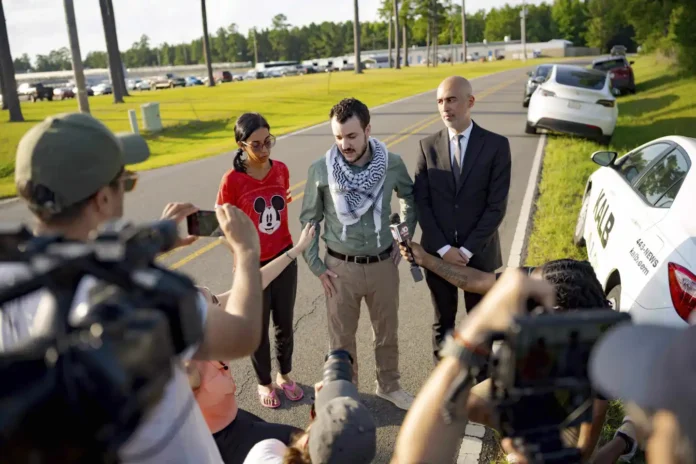
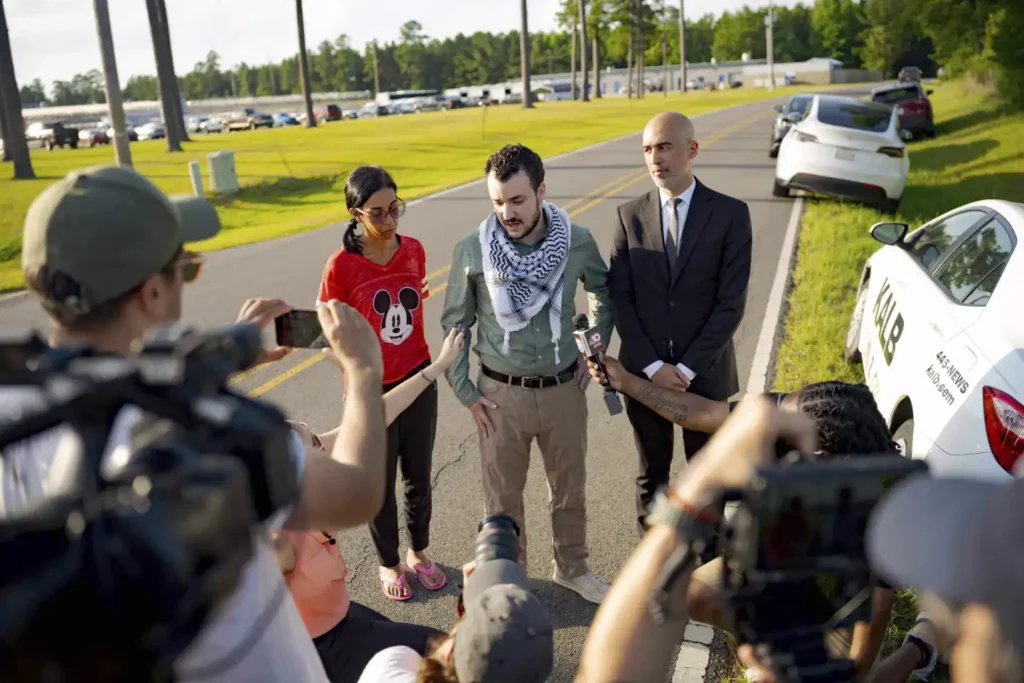
JENA, La. (BN24) — Palestinian activist and Columbia University graduate student Mahmoud Khalil was released from U.S. immigration detention Friday, ending a 104-day confinement that had drawn national attention and symbolized President Donald Trump’s intensified campaign against pro-Palestinian campus protesters.

Khalil, 32, walked free from the federal detention facility in Jena, Louisiana, following a ruling from U.S. District Judge Michael Farbiarz, who sharply rebuked the government’s continued efforts to hold Khalil without criminal charges.

“Justice prevailed, but it came far too late,” Khalil said outside the detention center, shortly before departing for New York, where he will reunite with his wife, Dr. Noor Abdalla, and their newborn son—born during his detention.

The Trump administration had sought to deport Khalil, accusing him of supporting protests deemed hostile to U.S. foreign policy. He was detained on March 8 in New York and became the first person arrested under Trump’s controversial crackdown on student-led opposition to Israel’s military offensive in Gaza.

Judge Farbiarz, however, ruled Friday that the government’s justification for holding Khalil was insufficient and constitutionally suspect.

“Petitioner is not a flight risk, and the evidence presented is that he is not a danger to the community. Period, full stop,” Farbiarz said during an hourlong hearing, conducted by phone from New Jersey.

Shortly after the judge’s decision, the Department of Homeland Security announced it would appeal. DHS argued that an immigration judge in the same Louisiana facility had earlier ruled Khalil should be deported and denied him bond—effectively clashing with the federal court order.

Khalil’s release comes amid a broader legal and political battle over student activism and the rights of noncitizens to protest U.S. foreign policy. Trump administration officials, including Secretary of State Marco Rubio, have framed pro-Palestinian demonstrations as antisemitic threats to national interests and have advocated for deportation in such cases.

Civil rights groups, however, argue that such actions violate free speech and due process rights. Khalil, who was never charged with a crime and was not arrested during campus protests, served as a negotiator and public voice for student demonstrators at Columbia. His public profile made him a target of political scrutiny and legal action, his attorneys said.

Farbiarz agreed that Khalil’s detention lacked legal basis and warned against the government’s overreach. He also ruled that the administration cannot deport Khalil simply because of its claims that his activism undermines U.S. foreign policy. However, the court left the door open for separate proceedings over alleged inconsistencies in Khalil’s green card application—claims that Khalil adamantly denies.

Following his release, Khalil criticized what he described as a betrayal of American democratic ideals.

“Whether you’re a U.S. citizen or not, your humanity should not be up for debate,” he said. “This experience revealed a different reality about a country that claims to stand for liberty and human rights.”

Khalil is under travel restrictions but will regain his green card and be allowed limited movement between states for court obligations and family reunification. He is also permitted to travel to Washington to lobby members of Congress about his case and broader immigration issues.

His wife, Dr. Noor Abdalla, expressed relief in a statement after the ruling.

“We can finally breathe again,” she said. “This ruling doesn’t erase the harm we’ve endured, but today we celebrate Mahmoud coming home to our family.”

Khalil’s release follows the recent liberation of other student activists, including Mohsen Mahdawi (Columbia University), Rumeysa Ozturk (Tufts University), and Badar Khan Suri (Georgetown University), all of whom faced government scrutiny over pro-Palestinian advocacy.

As he prepared to leave Louisiana, Khalil vowed to keep speaking out.

“Justice will prevail,” he said, “no matter how hard this administration tries to silence us.”

Mine Collapse in Eastern Congo Kills 12 at Key Global Coltan Source

0

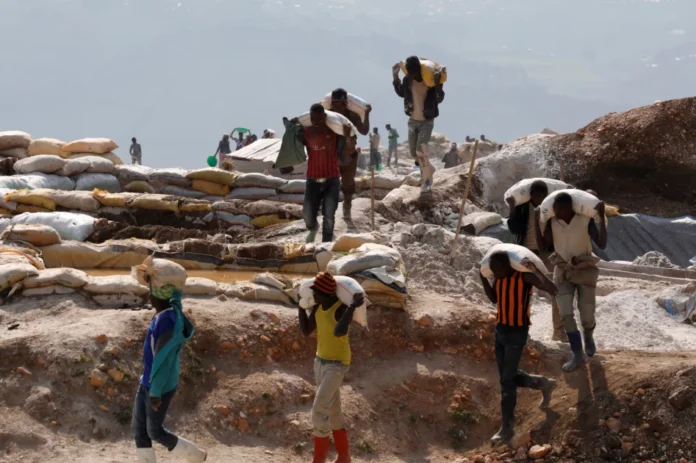
GOMA, Congo (BN24) — A coltan mine collapse in eastern Democratic Republic of Congo has left at least 12 miners dead, with dozens more managing to escape, officials said Friday, as dangerous working conditions and rebel control continue to plague one of the world’s most crucial sources of tech minerals.

The collapse occurred Thursday at an artisanal mining site near Rubaya, a remote town in North Kivu province. The cause of the disaster remains unclear, but collapses at informal mining sites are common in Congo due to unstable shafts and lack of safety protocols.

“We have confirmed 12 fatalities,” a local mining official told reporters on condition of anonymity due to the sensitivity of the situation. A civil society leader in the region confirmed the death toll and said that additional miners had narrowly escaped when the ground gave way.

Rubaya’s mines are among the world’s most significant producers of coltan, a metallic ore used in the manufacture of smartphones, laptops, and other electronic devices. Artisanal mining in the area accounts for roughly one-sixth of global coltan supply, making the region a vital link in the international tech supply chain.

The mine sits within territory held by the M23 rebel group, which has controlled parts of North Kivu since mid-2024. Rebel officials told Reuters earlier this year that they impose a 15% tax on coltan production in the region, further complicating international efforts to regulate Congo’s mining sector and trace minerals free from conflict financing.

As mining deaths mount across the country, rights groups and observers have urged Congo’s government and international stakeholders to prioritize safety reforms and limit exploitation in conflict zones. However, rebel control and weak oversight have rendered many artisanal sites inaccessible to regulators and humanitarian organizations.

The latest tragedy underscores the perils faced daily by Congolese miners working in some of the world’s most dangerous and unregulated conditions — all while powering the devices millions use around the globe.

Over 200 Jihadists on Motorbikes Kill 34 Soldiers in Deadly Assault on Niger Army Base

0

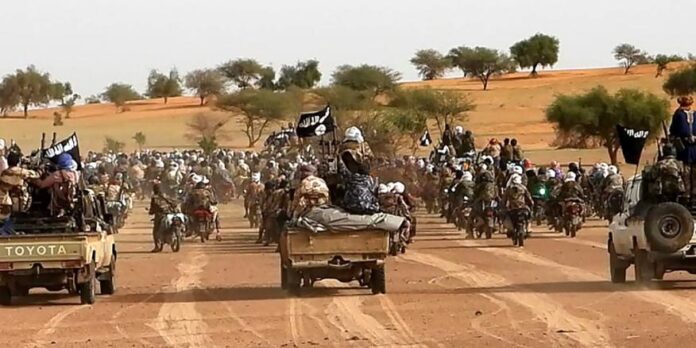
NIAMEY, Niger (BN24) — More than 200 armed militants riding motorbikes stormed a Nigerien army base near the country’s western border with Mali, killing at least 34 soldiers in a deadly assault that underscores the growing jihadist threat in the Sahel region.

Niger’s defense ministry confirmed the attack on the military post in the town of Banibangou occurred Thursday, describing the assailants as “mercenaries” and part of a well-coordinated force using eight vehicles and more than 200 motorcycles.

“This cowardly and barbaric attack was carried out by a horde of several hundred mercenaries,” the ministry said in a statement broadcast on state television. Fourteen other soldiers were wounded during the ambush, while dozens of attackers were reported killed during the ensuing battle.

Banibangou lies near the volatile tri-border area where Niger, Mali and Burkina Faso converge — a hotspot for extremist violence driven by jihadist groups affiliated with al-Qaida and the Islamic State. The zone has seen a steady escalation in deadly raids targeting civilians and security forces alike.

In the wake of the assault, Nigerien troops launched search operations in the surrounding area in a bid to locate and neutralize the remaining militants. The ministry did not provide details on which jihadist faction may have been responsible.

The attack is another blow to Niger’s ruling military junta, which seized power in a July 2023 coup, deposing democratically elected President Mohamed Bazoum. The junta had cited spiraling insecurity and jihadist insurgency as justification for its takeover — pledging to restore stability.

Since assuming control, Niger’s new leaders have expelled French and U.S. forces who were previously involved in counterterrorism operations across the region. Alongside Mali and Burkina Faso, Niger has withdrawn from Western military partnerships and instead aligned with Russia and Turkey in a shift that has raised concerns among international allies.

Despite the new security posture and a growing alliance between the three Sahelian juntas, the insurgency continues to spread. Analysts warn that deteriorating regional cooperation and weakening state institutions are leaving large swaths of territory vulnerable to militant control.

Thursday’s assault marks one of the deadliest single attacks on Nigerien forces in recent months and further highlights the challenges facing the junta’s promise to curb terrorism and restore order in one of the world’s most unstable regions.

Chris Brown Pleads Not Guilty to London Nightclub Assault Charge

0

LONDON (BN24) — American R&B artist Chris Brown pleaded not guilty Friday to a charge of attempting to inflict grievous bodily harm on a music producer during an alleged bottle attack at a London nightclub in 2023.

Appearing before Southwark Crown Court, Brown, 36, was formally accused of carrying out what prosecutors described as an “unprovoked attack” using a tequila bottle against music producer Abraham Diaw. The alleged assault took place at a London club during Brown’s previous visit to the United Kingdom.

Brown, dressed in dark formal attire, quietly confirmed his name and date of birth before responding to the charge with a calm: “Not guilty, ma’am.” His co-defendant, 38-year-old Omololu Akinlolu, entered the same plea.

The Grammy-winning performer did not enter a plea on a separate charge of possessing an offensive weapon — the bottle allegedly used in the incident. That charge is expected to be addressed at a later date.

Judge Christopher Hehir allowed both defendants to remain free on bail until their next scheduled court appearance on July 11. At that hearing, they may be asked to respond to a reduced charge of assault causing actual bodily harm.

Brown’s legal team previously secured bail in May after the singer agreed to post a £5 million ($6.7 million) security bond to continue his “Breezy Bowl XX” concert tour across Europe. The singer was arrested last month at a hotel in Manchester — his first return to the UK since the nightclub incident.

Supporters filled the courtroom gallery during the brief hearing, some shouting “We love you, Chris” as the pop star exited the dock.

Brown, best known for hits like Run It, Loyal, and Under the Influence, has faced multiple legal controversies over the years. The upcoming trial is set to begin on October 26, 2026, and could last several weeks.

Prosecutors have yet to disclose full evidence to the public but have characterized the assault as violent and unprovoked. Neither Brown nor his legal representatives have made further public comments on the case.