Home Blog Page 331

Israel and Iran Exchange Heavy Strikes Amid Escalating Conflict Over Tehran’s Nuclear Ambitions

0

TEL AVIV, Israel (BN24) — Israel and Iran unleashed a new round of mutual strikes early Saturday, intensifying the most dangerous escalation between the two regional powers in decades. The flare-up follows Israel’s unprecedented aerial assault on Iranian nuclear infrastructure and senior military leadership, which Tehran answered with a barrage of ballistic missiles aimed at Israeli cities.
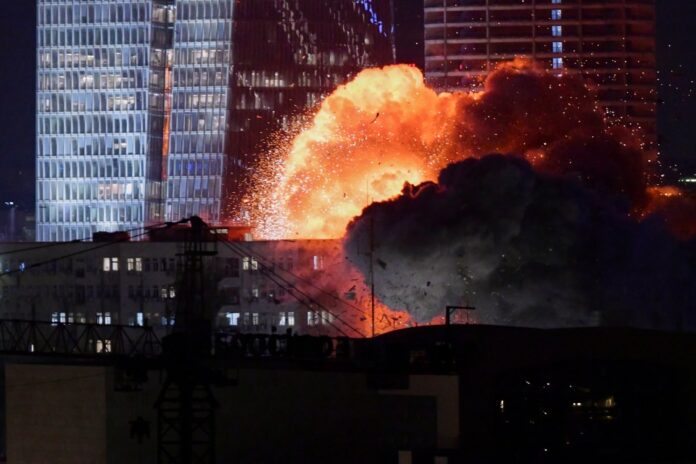
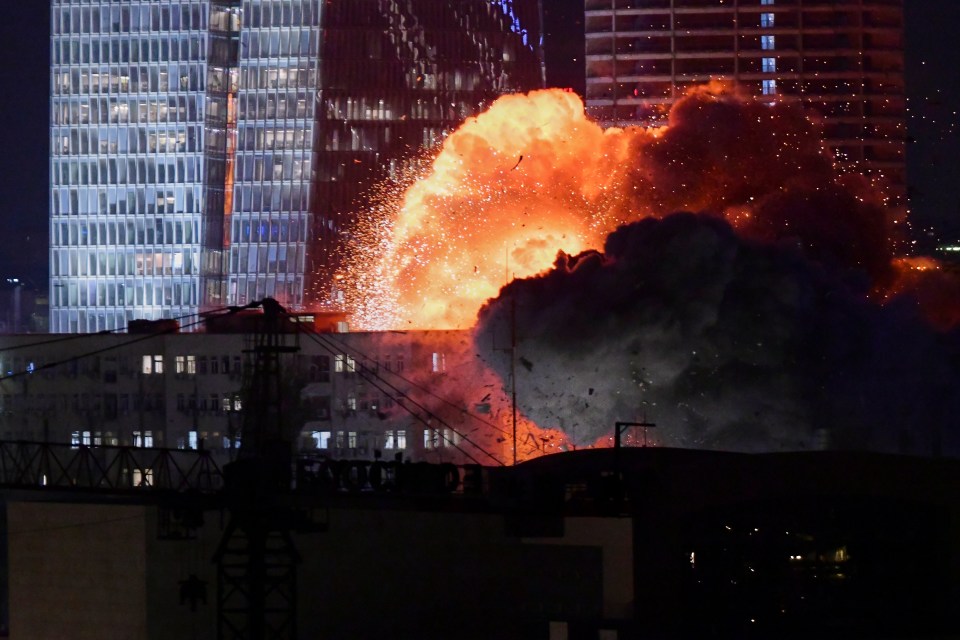
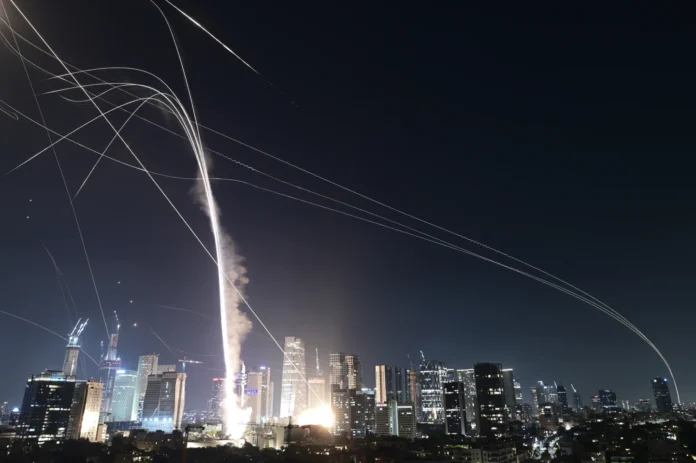
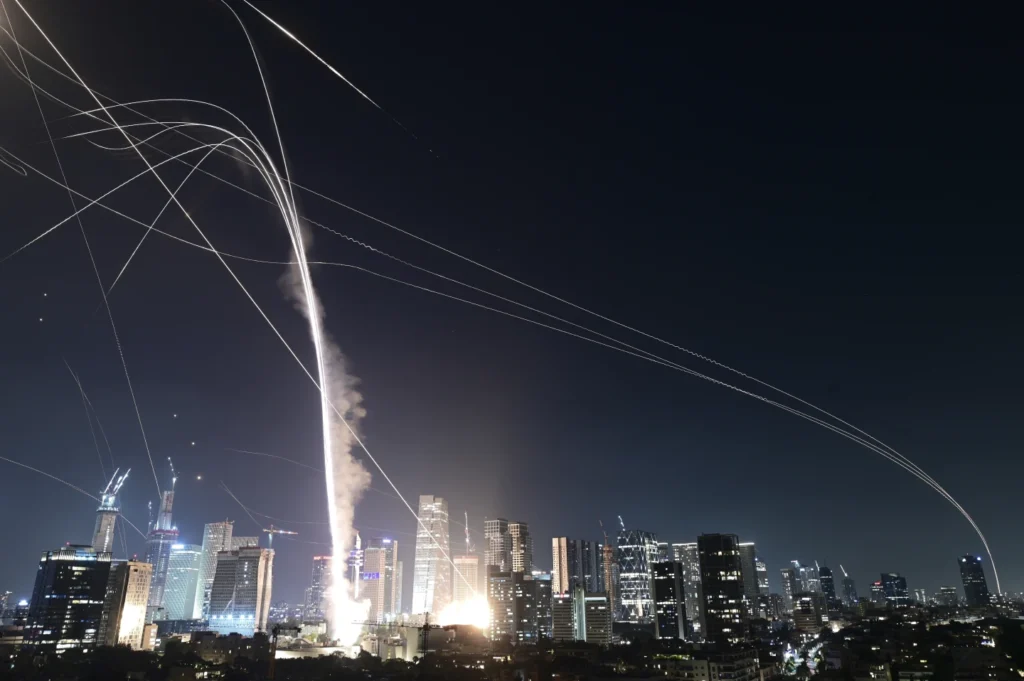
As air raid sirens wailed across Tel Aviv and Jerusalem before dawn, Israeli civilians scrambled into bomb shelters while air defense systems roared to life. The Israel Defense Forces (IDF) confirmed that dozens of Iranian missiles had been launched, with many intercepted mid-air. Still, several projectiles struck populated areas, including a Tel Aviv high-rise and residential buildings in nearby Ramat Gan, causing widespread damage and civilian casualties. Israel’s national ambulance service reported 34 injuries, and police confirmed at least one fatality in the Tel Aviv area.

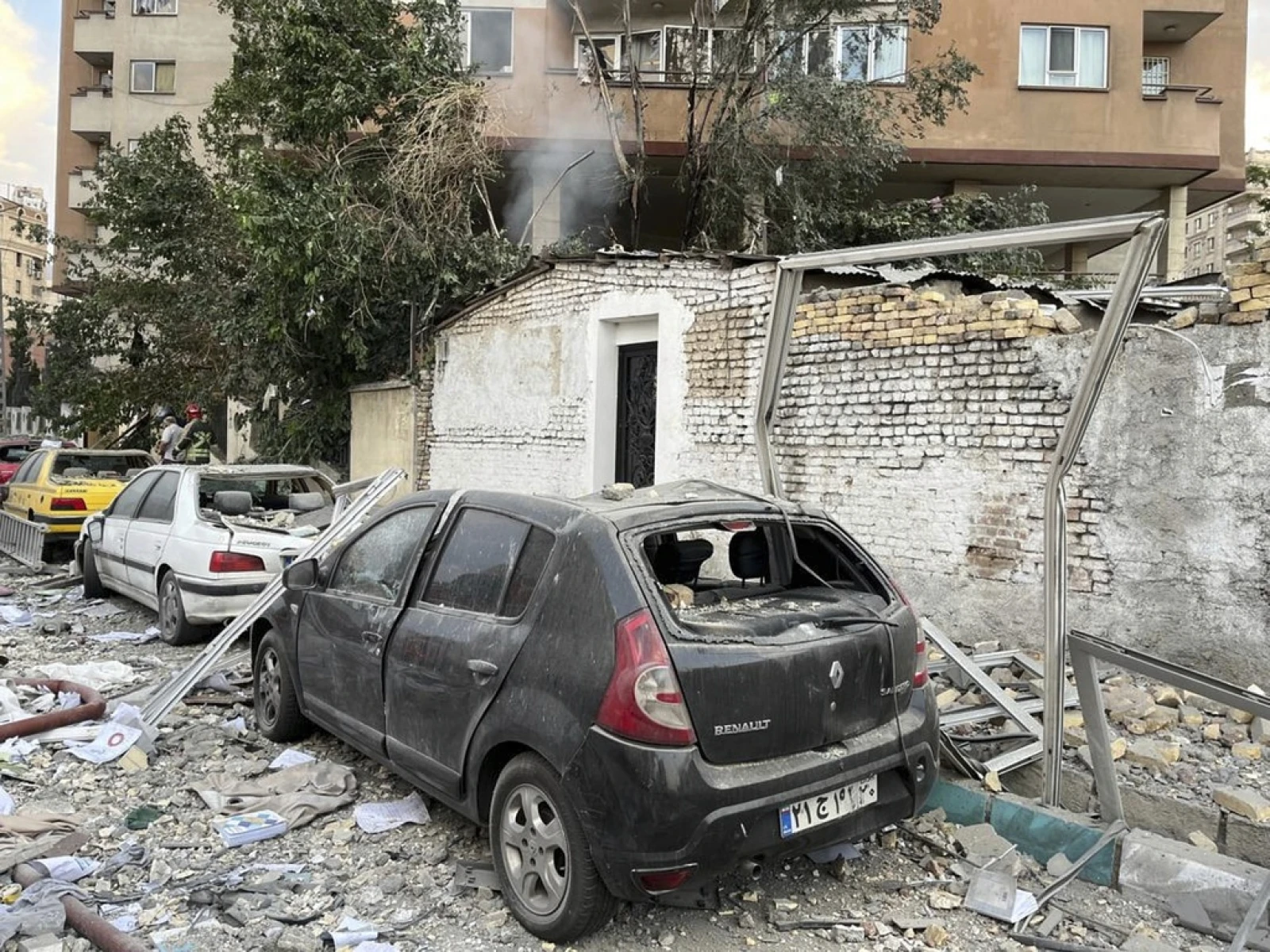
Simultaneously, explosions were reported in Tehran. Iran’s semi-official Tasnim and Fars news agencies stated that multiple Israeli projectiles struck Tehran’s Mehrabad airport — a sensitive site hosting both an Iranian air force base and key command infrastructure. Flames and secondary explosions were seen across the capital, intensifying concerns that Israel’s operation had directly targeted Iran’s military logistics.

The Fars agency later reported that Iran launched a third wave of retaliatory airstrikes on Saturday, continuing a counteroffensive that began Friday night following Israeli airstrikes on Iranian nuclear scientists, Revolutionary Guard Corps commanders, and sensitive nuclear installations, including the massive underground Natanz facility.

Iran’s state media declared the barrage a justified response to what it termed a “war of aggression” by Israel. IRNA said Tehran launched hundreds of ballistic missiles at Israeli territory in retaliation for the Israeli strikes, which reportedly killed 78 individuals — including top military officials — and injured more than 320, many of them civilians.

The U.S. military, according to American officials, played a supporting role by intercepting Iranian missiles headed toward Israel. The Pentagon confirmed that air defense assets in the region were engaged but reiterated that the U.S. was not directly involved in Israel’s offensive operation. Still, Iran’s ambassador to the United Nations, Amir Saeid Iravani, blamed the United States for aiding what he called a “blatant act of aggression,” and warned that Washington “shared full responsibility for the consequences.”

Israel’s ambassador to the U.N., Danny Danon, defended the airstrikes, stating that intelligence showed Iran was just days away from producing sufficient fissile material for multiple nuclear weapons. “This was an act of national preservation,” Danon said.

The International Atomic Energy Agency (IAEA) confirmed that Israel’s strikes had destroyed the above-ground pilot enrichment plant at Natanz. IAEA Director General Rafael Grossi informed the U.N. Security Council that inspectors were still assessing damage to the Fordow Fuel Enrichment Plant and another facility in Isfahan.

Iran’s Supreme Leader Ayatollah Ali Khamenei accused Israel of initiating a full-scale war, promising that “nowhere in Israel will be safe” from retaliation. President Masoud Pezeshkian declared Iran’s response would be “painful, strategic, and unwavering,” asserting that Tehran would not stop until “justice was achieved.”

Despite the rapidly deteriorating situation, President Donald Trump urged Tehran to pursue diplomacy before more devastation unfolds. “It’s not too late,” Trump said in a Truth Social post. He noted that Iran had been given a 60-day ultimatum to strike a new nuclear deal but failed to respond. “Today is Day 61,” he said. “I told them what to do — they just couldn’t get there. Now they may have a second chance, but time is running out.”

Israel has stated its campaign — described by Prime Minister Benjamin Netanyahu as “the most critical operation in Israel’s modern history” — will continue until Iran’s nuclear weapons capability is neutralized. The operation has already spanned dozens of strategic strikes on Iranian military and nuclear infrastructure, including in Natanz, Fordow, and Isfahan.

Military analysts warn the conflict could trigger a broader regional war, though Iran’s regional proxies — Hamas in Gaza and Hezbollah in Lebanon — have largely been neutralized by prior Israeli operations. However, the scale and pace of current Israeli and Iranian strikes have raised the specter of prolonged conflict with regional and global implications.
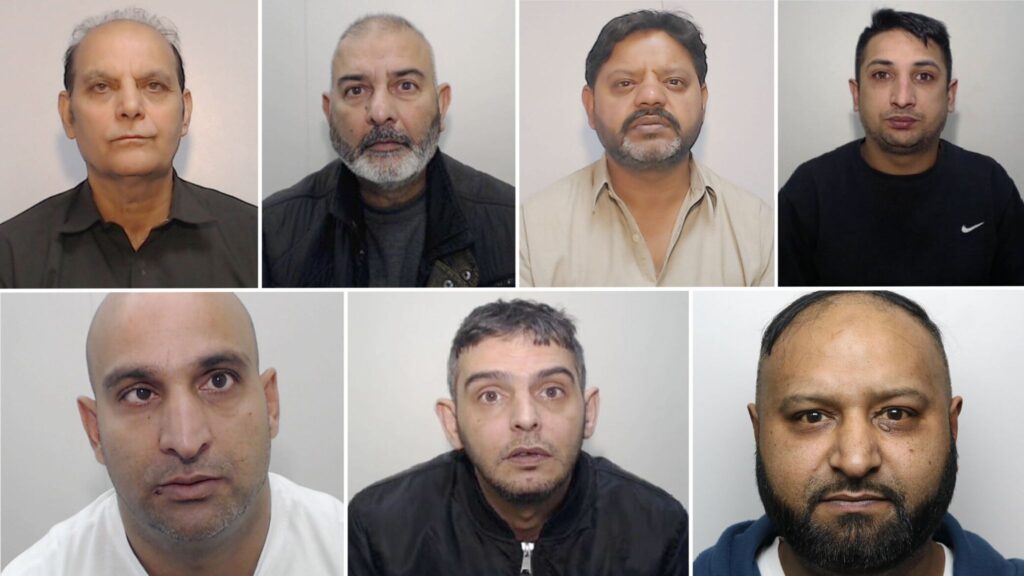
7 Men Convicted of Using Teenage Girls as ‘Sex Slaves’ in Rochdale Child Exploitation Case

0

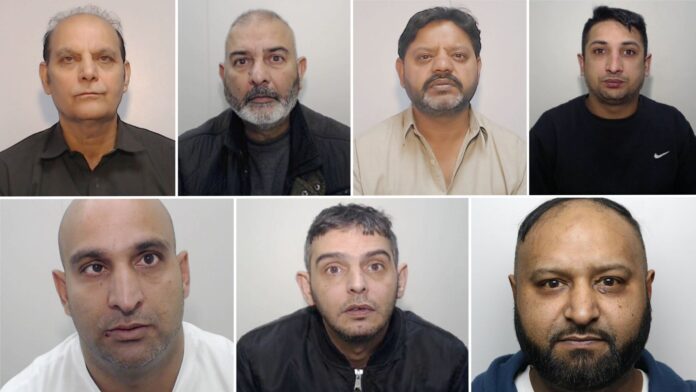
Seven men have been convicted of using two teenage girls as “sex slaves” in a major child exploitation case that has concluded at Minshull Street Crown Court in Manchester. The defendants were found guilty on 53 sexual offences believed to have occurred between 2001 and 2006, following a 72-day trial that lasted approximately four months.

The court heard testimony from two victims, now adults in their thirties, who described systematic abuse that began when they were just 13 years old. One victim testified that social services in Rochdale had labeled her a “prostitute” when allegations against the men first emerged, highlighting failures in the system designed to protect vulnerable children.

Evidence presented during the trial revealed that both victims were groomed and forced to engage in sexual acts with the defendants “whenever and wherever” they demanded. The abuse occurred in degrading conditions including on soiled mattresses, in car parks, and in alleyways throughout Rochdale and surrounding areas.

The victims were provided with drugs, alcohol, and cigarettes by their abusers as part of the grooming process. The court also heard that the girls were introduced to taxi drivers for further sexual exploitation, demonstrating the organized nature of the abuse network.

Mohammed Zahid, 64, of Station Road, Crumpsall, Manchester, emerged as a central figure in the exploitation ring. Known to victims as “Boss Man,” Zahid operated a market stall and used offers of free lingerie to lure the teenage girls. He was convicted of 20 offences including rape, indecency with a child, and attempting to procure a girl for unlawful sexual intercourse.

Kasir Bashir, 50, of Napier Street East, Oldham, was convicted in his absence and is now wanted by authorities. He was found guilty of four offences including rape and indecency with a child. His current whereabouts remain unknown to law enforcement.

Mushtaq Ahmed, 67, of Corona Avenue, Oldham, was convicted of nine offences including rape and indecency with a child. The court heard evidence of his repeated abuse of both victims over the five-year period covered by the charges.

Four additional defendants received convictions for their roles in the exploitation network. Roheez Khan, 39, of Athole Street, Rochdale, was found guilty of rape. Mohammed Shahzad, 44, of Beswicke Royds Street, Rochdale, was convicted of six offences including rape and assault by penetration. Nisar Hussain, 41, of Newfield Close, Rochdale, was found guilty of three offences including rape and assault by penetration. Naheem Akram, 48, of Manley Road, Rochdale, was convicted of seven offences including rape and assault by penetration.

All seven defendants had denied any wrongdoing throughout the investigation and trial proceedings. The jury delivered unanimous guilty verdicts on Friday following three weeks of deliberations, bringing the lengthy legal process to a conclusion.

Detective Chief Inspector Guy Laycock, the senior investigating officer, described the case as “complex” and revealed that investigators devoted “thousands of hours” to building the prosecution case. He emphasized the crucial role played by the two survivors in securing the convictions.

“They have been pivotal in bringing these abusers to long-awaited justice by bravely giving painful and difficult testimony during a four-month trial,” Laycock stated. “Without them this would not be possible, and today is about them.”

The detective characterized the defendants’ behavior as predatory, stating they “preyed on vulnerability for their own depraved sexual gain.” He described how the men “abused, degraded and then discarded the victims when they were just children,” noting that the abuse “knew no limits” despite consistent denials from the defendants.

Laycock criticized the convicted men’s lack of remorse, saying they showed “callous disregard for these women when they were girls, and continue to show no remorse for their unforgivable actions all these years later.”

This case represents part of broader efforts to address historical child exploitation in Rochdale and Greater Manchester. According to Greater Manchester Police, a total of 32 offenders have been sentenced to a combined 300 years in prison as part of two major investigations conducted over the past decade.

The legal proceedings are far from over, with an additional 20 men scheduled to face trial in connection with related charges. Their court date has been set for September 2025, indicating that the full scope of the exploitation network may extend beyond the seven men convicted in this case.

The convictions come years after the abuse occurred, highlighting the challenges faced by survivors in coming forward and the complex nature of investigating historical child exploitation cases. The successful prosecution demonstrates the commitment of law enforcement to pursue justice regardless of the time elapsed since the offences were committed.

The case has drawn attention to the ongoing need for improved safeguarding measures and support systems for vulnerable children, particularly in light of the victim’s testimony about being mislabeled by social services rather than being recognized as a victim of exploitation.

Sentencing for the seven convicted men has not yet been scheduled, but they face substantial prison terms given the serious nature and number of offences for which they have been found guilty.

Kenyan Senior Police Officer Arrested Over Death of Blogger in Custody, Igniting Public Outrage

0

NAIROBI, Kenya (BN24) — A senior Kenyan police officer has been arrested in connection with the death of blogger Albert Ojwang, whose body was found in a Nairobi police cell last week under suspicious circumstances, sparking nationwide protests and renewed scrutiny of police abuse in the East African nation.

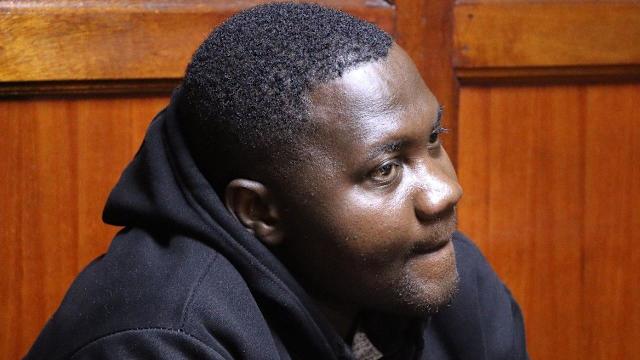
Arrested Kenyan police officer

Kenya’s Independent Policing Oversight Authority (IPOA) confirmed Friday that the officer in charge of Nairobi’s Central Police Station was taken into custody, alongside a CCTV technician accused of tampering with surveillance footage from the night Ojwang died.

Ojwang, 31, was found dead on Sunday, two days after being arrested. Police initially reported his death as a suicide, but an independent autopsy revealed signs of physical assault, contradicting the official version and prompting public outcry.

According to IPOA Commissioner Samati Kemboi, the station’s CCTV system had been intentionally interfered with, with footage altered and formatted in the early hours of Sunday, shortly before Ojwang’s death was discovered. The CCTV technician is accused of playing a direct role in the cover-up.

The case has reignited deep frustrations over Kenya’s long history of police brutality, extrajudicial killings, and enforced disappearances. Hundreds of demonstrators took to the streets in Nairobi on Thursday, setting vehicles on fire and clashing with police, who responded with tear gas to disperse the crowds.

Protesters specifically called for the resignation of Deputy Police Chief Eliud Lagat, who filed a formal complaint against Ojwang just days before his death. Lagat alleged that an X (formerly Twitter) account linked to Ojwang had published “continuous false and malicious publications” targeting him personally, according to IPOA’s investigative report.

blogger Albert Ojwang

The backlash over Ojwang’s death has exposed deeper fissures in Kenya’s security system, with watchdog groups and civil society organizations accusing authorities of using intimidation and violence to silence dissent and muzzle critical voices online.

Kenya’s national police service issued an apology for its initial suicide claims, a rare move in a country where state security forces are often accused of operating with impunity.

IPOA has pledged a thorough and transparent investigation, but critics remain skeptical given Kenya’s checkered history of accountability in police-related deaths.

Ojwang’s death marks the latest flashpoint in a series of alleged abuses that have drawn international concern and emboldened local demands for systemic reform.

Mali Military Government Passes Bill Extending Junta Leader Assimi Goita’s Rule by Five More Years

0

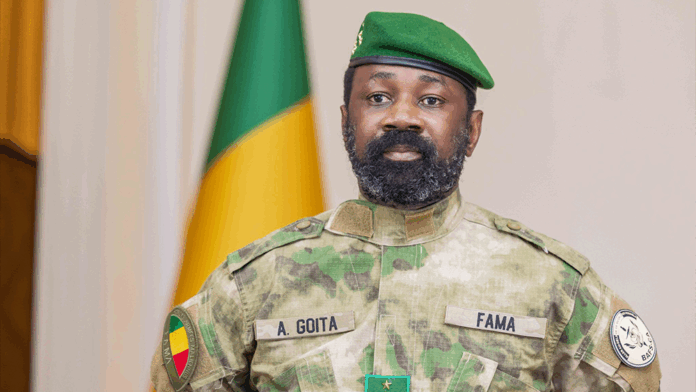
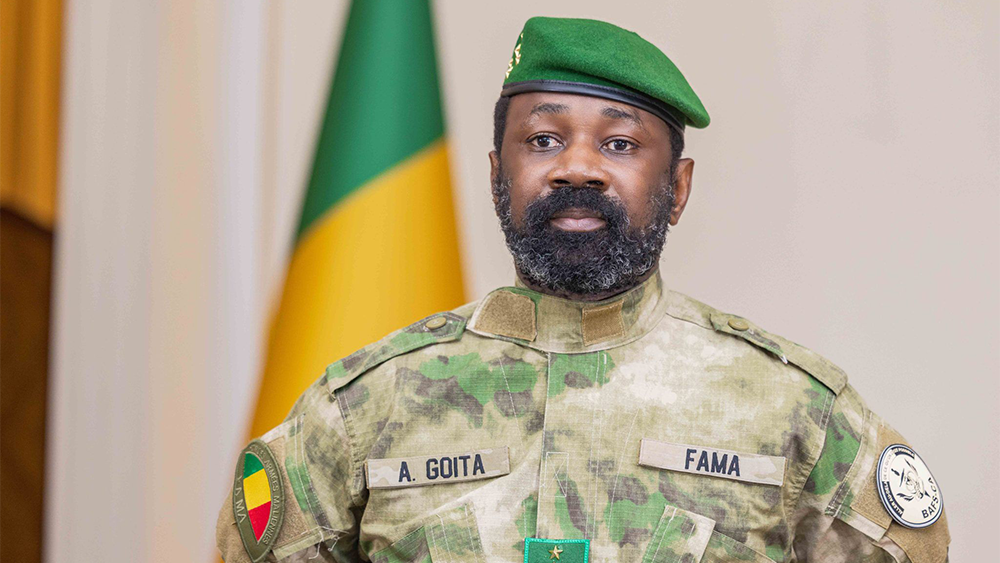
BAMAKO, Mali (BN24) — Mali’s military-led government has approved a bill that would extend the rule of junta leader Gen. Assimi Goita for an additional five years, a move that further entrenches the power of the man who seized control of the West African country through back-to-back coups in 2020 and 2021.

The decision, announced Wednesday by Mali’s Council of Ministers, paves the way for a major revision of the Transition Charter, allowing Goita to begin a five-year renewable mandate starting in 2025. The bill reflects recommendations made during April’s national dialogue consultations, a government-organized event boycotted by political parties and opposition leaders.

The legislation now heads to the National Transitional Council, Mali’s de facto legislature under the current military government, for ratification.

The controversial extension follows a string of authoritarian moves by the junta, including Goita’s May decree dissolving all political parties, which came amid increasing resistance to military rule. The crackdown coincided with a wave of kidnappings targeting democracy activists in Bamako, the capital, and shortly after hundreds demonstrated against the regime.

Human rights advocates say the dissolution of political parties has stripped the country of any institutional political opposition, compounding fears of a slide into long-term military autocracy.

Goita had initially vowed to return Mali to civilian rule by March 2024, but that promise remains unfulfilled. Elections were postponed indefinitely, and the junta has not announced a new date for the presidential vote.

The government’s new bill marks a clear departure from its previous commitments to democratic governance, further alienating international partners and West African neighbors who have pressed for a return to constitutional order.

Mali, a landlocked Sahel nation, continues to face a dire security crisis. Jihadi insurgencies linked to al-Qaida and the Islamic State group have deepened instability, particularly in rural areas. Since Goita’s initial takeover, the military government has severed ties with traditional Western allies and increased cooperation with Russia, including hiring the controversial Wagner Group mercenaries.

Political analysts warn that extending Goita’s mandate without broad-based political support or electoral legitimacy risks exacerbating the country’s internal tensions and deepening its international isolation.

Iran Tells UN That 78 Dead, Over 320 Wounded in Israeli Strikes, Blames U.S. for Complicity

0

UNITED NATIONS (BN24) — Iran’s ambassador to the United Nations told an emergency session of the U.N. Security Council on Friday that Israeli airstrikes killed 78 people and wounded more than 320, most of them civilians, in a sweeping military campaign that struck multiple sites across Iran. The ambassador, Amir Saeid Iravani, also accused the United States of complicity in the attacks, alleging Washington provided both intelligence and political cover for Israel’s assault.

“The overwhelming majority of the victims were civilians, including women and children,” Iravani said. “By aiding and enabling these crimes, the United States shares full responsibility for the consequences.”

The devastating death toll comes as tensions between Israel and Iran have exploded into direct conflict, with Israeli warplanes targeting Iranian nuclear facilities, military command centers, and senior officials, including top scientists. Iravani described the Israeli operation as a “barbaric and criminal attack,” branding it a flagrant violation of international law and a clear act of state terrorism.

The Iranian government reported that many of the 320 injured were non-combatants caught in densely populated areas hit by Israeli strikes. The attacks, which marked one of the most expansive Israeli military operations against Iran to date, prompted an immediate response from Tehran.

Just hours later, Iran launched dozens of long-range missiles targeting Tel Aviv and surrounding cities. Israel’s emergency medical services said at least 34 people were wounded, including a critically injured woman trapped under rubble. In Ramat Gan, east of Tel Aviv, rescuers worked to free 15 residents trapped inside a home that was hit during the barrage. The missile strike damaged multiple buildings and destroyed several vehicles.

Yossi Griver, a spokesperson for Israel’s Home Front Command, said the home had been full of families gathered for Friday night dinner, including many elderly residents. Scenes from the affected neighborhood showed homes with walls torn away and charred vehicles lining the streets.

At the U.N., Iravani emphasized that Israel’s strikes were not only aimed at military figures but also specifically targeted Iranian nuclear scientists, an act Tehran sees as a direct threat to its sovereignty and scientific advancement.

“These atrocities are part of a larger pattern of aggression by Israel, targeting both civilian infrastructure and key elements of our national defense,” Iravani told the Council.

The Israeli airstrikes came amid growing alarm over Iran’s expanding nuclear program, which has recently advanced its uranium enrichment efforts despite international pressure. Israel has long warned it would act unilaterally if it believed Iran was nearing the capability to build a nuclear weapon.

While past U.S. administrations had sought to deter Israel from launching a preemptive strike — fearing it would ignite a wider regional war — Iran now contends that the U.S. enabled the current assault.

Iran’s Supreme Leader Ayatollah Ali Khamenei declared that Israel would not “escape safely from this great crime,” vowing further retaliation for the deaths and destruction wrought by Israeli airpower.

As smoke and flame from missile interceptions lit the skies over both countries, global leaders called for restraint. However, both sides appeared poised for further escalation, with mutual threats and military deployments accelerating across the region.

Fox News Reporter Trey Yingst Caught in Missile Attack During Live Broadcast in Tel Aviv

0

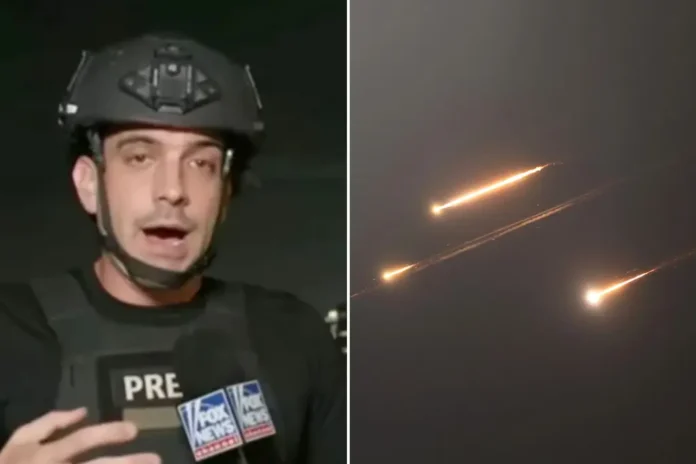
TEL AVIV, Israel (BN24) — Fox News foreign correspondent Trey Yingst was forced to run for cover during a live broadcast Friday night as Iranian missiles rained down on Tel Aviv, marking one of the most dramatic moments of real-time reporting since tensions between Israel and Iran erupted into open confrontation.

Video footage from Fox News showed Yingst yelling for his team to take cover as missiles streaked through the night sky, intercepted mid-air by Israeli air defense systems. “Everyone move!” Yingst shouted urgently, as fireballs exploded overhead and plumes of smoke rose across the city. The missile strike, part of a broader Iranian retaliation, occurred around 9 p.m. local time and sent air raid sirens blaring across central Israel, including in Tel Aviv and the nearby city of Ramla.

“There’s a massive amount of fire coming to Tel Aviv right now,” Yingst said at the start of the broadcast, his voice steady despite the looming threat. Moments later, as explosions rocked the city and Israel’s Iron Dome interceptors lit up the sky, he was seen abandoning his broadcast position, sprinting for safety with his camera crew.

Yingst later posted on social media, assuring viewers that he and his team were safe and continuing to report from the region.

The Associated Press confirmed that U.S. military forces are aiding Israel in intercepting the barrage of Iranian ballistic missiles. Though specifics were not disclosed, past instances have seen the U.S. employ both Air Force fighter jets and Navy destroyers equipped with missile defense systems in similar scenarios. The cooperation comes as part of Washington’s ongoing efforts to protect both U.S. regional assets and Israeli territory from the widening fallout of the escalating conflict.

The missile barrage from Iran followed a series of preemptive Israeli airstrikes on key Iranian nuclear and military targets, including sites near Natanz, Isfahan, and Fordo, where Iran conducts uranium enrichment. Among those killed in the strikes were three senior Iranian military officials, dealing a significant blow to Tehran’s defense command structure.

In response, Iranian President Masoud Pezeshkian vowed a “powerful response,” while Israel’s Prime Minister Benjamin Netanyahu warned citizens to “brace for impact” and declared the nation ready for prolonged engagement.

Friday’s missile exchange represents the most serious escalation yet in the yearslong shadow war between the two regional powers and has raised fears of a broader conflict engulfing the Middle East. Regional and global leaders have urged restraint, but military activity on both sides continues to intensify.

Nigerian-Australian Woman Arrested for Trafficking Papua New Guinean Students into Forced Farm Labor in Australia

0

BRISBANE, Australia (BN24) — A Nigerian-Australian woman has been arrested in connection with the trafficking of 15 students from Papua New Guinea, who were lured to Australia with false promises of educational scholarships but were instead forced into grueling, unpaid labor on Queensland farms, according to the Australian Federal Police (AFP).

Binta Abubakar, 56, was taken into custody at Brisbane Airport on Wednesday upon arrival from Papua New Guinea, where she had primarily operated her business. The arrest follows a two-year investigation by the AFP’s Northern Command Human Trafficking Team, which began its probe in July 2022 after receiving intelligence from Queensland Police.

Abubakar is accused of orchestrating a complex trafficking scheme through her company, BIN Educational Services and Consulting, by offering fraudulent full scholarships to at least 15 Papua New Guinean nationals, aged between 19 and 35, between March 2021 and July 2023.

According to the AFP, once the students arrived in Australia, they were allegedly coerced into signing a series of legal agreements obligating them to repay substantial debts that included “tuition, airfare, visa application, insurance, and legal costs.” These debts, which were never clearly disclosed upfront, were used as a means of coercion, effectively trapping the victims in debt bondage.

Forced Labor in Queensland

Instead of receiving education or training, the victims were reportedly dispatched to work on fruit farms in Queensland, including in Lockyer Valley and Stanthorpe, often in breach of their visa conditions. Police say the students worked 10-hour days, seven days a week, with wages allegedly collected and withheld by Abubakar as repayment for their so-called debts.

“The farmers did not know of Abubakar’s alleged scheme,” the AFP clarified in a statement, indicating that the exploitation was orchestrated solely by the accused.

Police also alleged that when students resisted or questioned their circumstances, Abubakar used threats and intimidation, including threats of deportation or harm to their families back in Papua New Guinea, to maintain control over them.

Criminal Charges and Court Proceedings

Abubakar now faces 31 criminal charges, including:

  • Four counts of trafficking in persons
  • 14 counts of deceptive recruiting for labor or services
  • 13 counts of engaging in conduct that caused a person to enter into debt bondage

She was granted conditional bail and is scheduled to appear in court on September 19.

AFP Condemns Human Trafficking Exploitation

AFP Detective Superintendent Adrian Telfer condemned the exploitation, describing the case as a stark reminder of how traffickers prey on vulnerable people through false promises of opportunity.

“Victims of debt bondage and other human trafficking offences can be lured to Australia with promises of a dream career or free education—things they may not have access to in their country of origin,” Telfer said. “When those conditions change, the victims find themselves in extremely vulnerable positions, isolated in a foreign country, often with no financial or emotional support and struggling with language barriers.”

Telfer emphasized that the AFP remains committed to protecting foreign workers from exploitation and encouraged the public to report any suspicions. “The AFP can help people who are exploited. We are focused on ensuring the welfare of victims,” he said.

This arrest comes less than two months after German authorities arrested 13 suspected members of a Nigerian criminal syndicate accused of international trafficking and fraud, highlighting growing concerns over transnational human trafficking networks operating under the guise of education or employment.

The case also underscores the challenges facing international students and workers in Australia, particularly those from less-developed nations, who are often targeted by unscrupulous actors exploiting legal loopholes and administrative gray areas for profit.

U.S. Military Assists in Intercepting Iranian Missiles as Israel-Iran Conflict Escalates into Regional Crisis

0

JERUSALEM/TEHRAN/WASHINGTON (BN24) — The U.S. military has joined efforts to intercept missiles fired by Iran at Israel in retaliation for a sweeping Israeli air campaign that struck the heart of Iran’s nuclear and military infrastructure, a U.S. official confirmed Friday.

The official, speaking on condition of anonymity due to the sensitivity of ongoing operations, said American military assets had been repositioned closer to Israel in recent days. Though details remain classified, past operations have seen U.S. destroyers and fighter jets play a key role in intercepting inbound threats. The assistance comes amid mounting fears of a broader war in the Middle East following Israel’s largest-ever strike inside Iranian territory.

In a high-risk and long-planned operation, Israel unleashed waves of airstrikes and drone attacks early Friday across Iran, targeting uranium enrichment facilities in Natanz and Fordo, and a nuclear research center in Isfahan. Israeli military sources said the strikes were carried out by nearly 200 aircraft and supported by Mossad-commanded drone units that had pre-positioned explosives near Iranian air defense batteries.

Among the most significant casualties were three of Iran’s highest-ranking military leaders: Armed Forces Chief Gen. Mohammad Bagheri, Revolutionary Guard Commander Gen. Hossein Salami, and Gen. Amir Ali Hajizadeh, head of the elite force’s missile program. Iranian Supreme Leader Ayatollah Ali Khamenei confirmed their deaths, describing them as martyrs and accusing Israel of committing a “great crime.”

“The Zionist enemy has opened its wicked and blood-stained hand to a crime in our beloved country,” Khamenei said in a televised address, vowing revenge and pledging that Israel “will not escape unharmed.”

Late Friday, Iran retaliated with a barrage of more than 100 ballistic missiles and drones launched toward Israel. Loud explosions echoed over Tel Aviv and Jerusalem, where smoke was seen rising and emergency crews responded to reports of injuries. Israeli military officials confirmed that many of the incoming threats were being intercepted outside national airspace with the assistance of allied forces, including the U.S.

Brig. Gen. Effie Defrin, an Israeli military spokesperson, said the strike on Natanz had “significantly degraded” Iran’s nuclear capacity and that the broader operation could continue for up to two weeks. “This mission is not over,” he said. “It is the beginning of a necessary campaign to prevent a nuclear-armed Iran.”

The Biden administration, while publicly distancing itself from Israel’s unilateral action, confirmed that military resources were being shifted across the region to protect American assets and personnel. Two U.S. officials said American warships had been moved closer to the eastern Mediterranean and that embassy personnel in Baghdad had been partially evacuated as a precaution.

U.S. Secretary of State Marco Rubio emphasized that Washington had not participated in the Israeli strikes but reaffirmed support for Israel’s right to self-defense. He also issued a stern warning to Iran: “Let me be clear: the United States will defend its people and interests in the region without hesitation.”

President Donald Trump, reelected in November, broke his silence on the crisis Friday via Truth Social, urging Iran to abandon its nuclear ambitions. “Iran must make a deal before there is nothing left,” he posted, warning that “Israel’s attacks will only get worse” if Tehran continues its current path.

Friday’s events triggered widespread condemnation and alarm. The United Nations Security Council convened an emergency meeting at Iran’s request, while world leaders called for restraint. Iran’s Foreign Minister Abbas Araghchi labeled the Israeli attacks “state terrorism” in a formal letter to the Council and declared that Iran had the right to self-defense under international law.

In Tel Aviv and Jerusalem, residents scrambled for supplies amid reports of further Iranian reprisals. Military reservists were activated, and troops deployed across Israel. Though streets were largely deserted, officials urged calm and insisted defense systems were intercepting the majority of inbound threats.

Hezbollah, Iran’s proxy in Lebanon, offered condolences but stopped short of declaring direct involvement. The group’s last major war with Israel ended with a U.S.-brokered ceasefire in late 2024, after most of its senior leadership was eliminated in Israeli strikes.

Israeli Prime Minister Benjamin Netanyahu said in a recorded statement that the attack had been in preparation since November, shortly after Hezbollah leader Hassan Nasrallah was killed. The final order to launch was given after Iran was censured on Thursday by the International Atomic Energy Agency (IAEA) for failing to comply with nuclear safeguards.

“This was a preemptive strike—one that became necessary to prevent Iran from crossing the nuclear threshold,” Netanyahu said. “The danger to Israel’s survival was real and imminent.”

Israel maintains that its intelligence showed Iran was weeks—possibly days—away from being able to assemble a nuclear weapon, despite international assessments suggesting Tehran had not yet resumed weaponization.

While Israeli officials insisted their strikes were aimed solely at military and nuclear targets, Iran accused Israel of hitting residential neighborhoods. State media shared images of damaged homes and wounded civilians in Tehran and Isfahan. Khamenei vowed the country would pursue justice for “our fallen scientists, our generals, and our civilians.”

Despite high casualties among Iran’s top leadership, the country has not yet signaled whether it will escalate beyond missile retaliation. Analysts warn that the death of senior military figures could limit Iran’s ability to coordinate a longer-term response.

The International Atomic Energy Agency said Friday that it was closely monitoring radiation levels and damage to Iran’s enrichment infrastructure. Meanwhile, U.S. intelligence continues to assess whether Iran intends to rebuild its nuclear program or shift further underground.

Regardless, Israeli leaders have made clear they view this moment as existential. “This is not about politics,” said Defense Minister Israel Katz. “This is about survival.”

UPDATED: Israeli Strikes Kill Top Iranian Military Commanders, Nuclear Scientists as Iran Launches Drone Retaliation

0
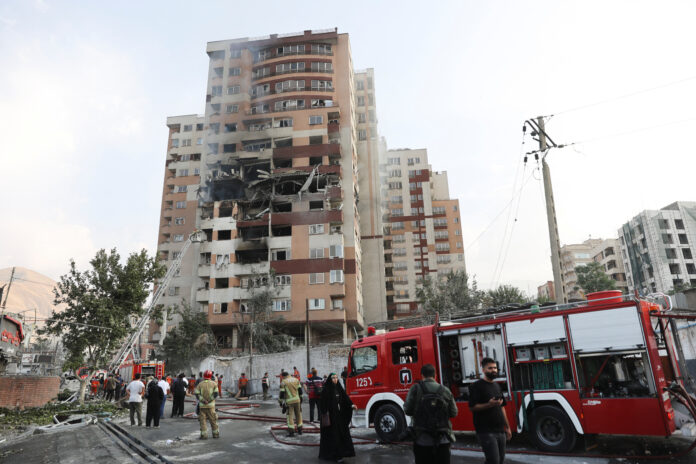
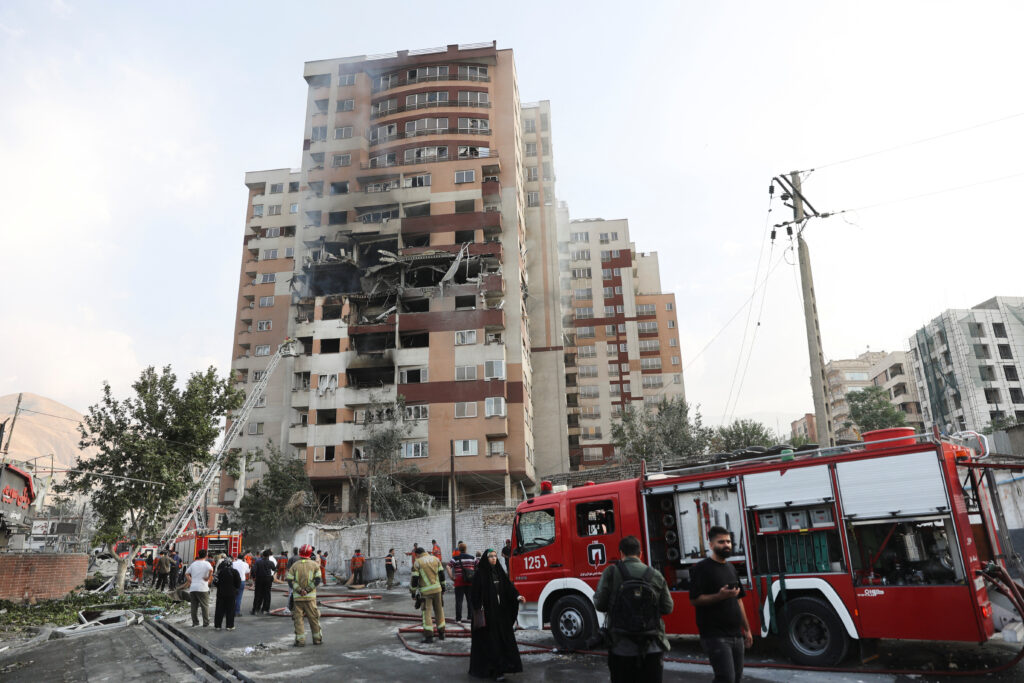
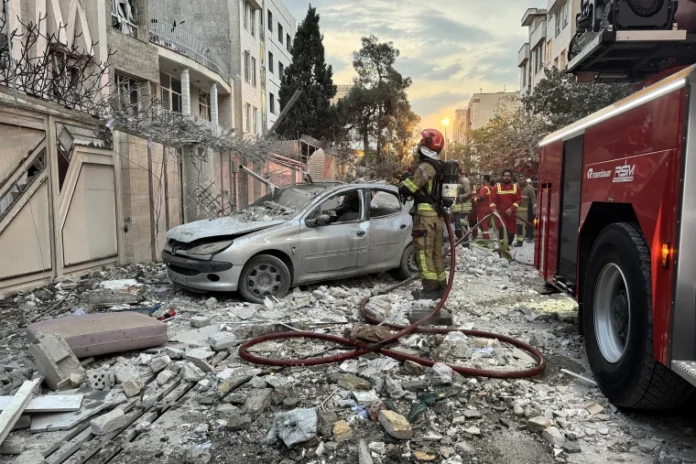
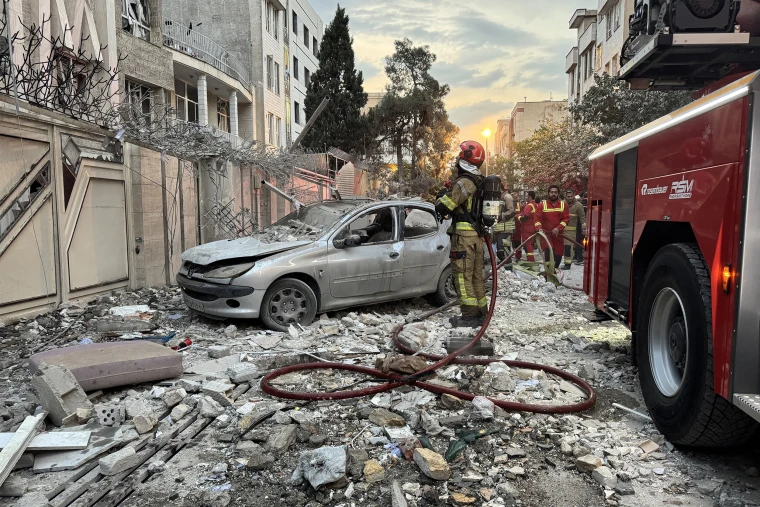
Firefighters work at the scene of a damaged building in the aftermath of Israeli strikes, in Tehran, Iran, June 13, 2025. Majid Asgaripour/WANA (West Asia News Agency) via REUTERS

JERUSALEM/TEHRAN (BN24) — Israeli airstrikes on Friday killed several of Iran’s top military leaders and at least six nuclear scientists, prompting a rapid retaliation by Tehran in the form of a massive drone barrage targeting Israeli territory, according to officials and state media reports from both countries.

Firefighters work at the scene of a damaged building in the aftermath of Israeli strikes, in Tehran, Iran, June 13, 2025. Majid Asgaripour/WANA (West Asia News Agency) via REUTERS

The unprecedented escalation followed a series of covert operations inside Iran led by Israel’s Mossad intelligence agency, which helped lay the groundwork for what Israeli officials are calling Operation Rising Lion. An Israeli security source confirmed that Mossad operatives carried out sabotage missions targeting Iranian air defenses, deployed precision-guided explosives near surface-to-air missile systems, and even established a covert drone-launching base near Tehran ahead of the main assault.

Drones Fill Skies Over Iraq as Iran Responds

Two senior Iraqi security officials, speaking on condition of anonymity due to the sensitivity of the matter, confirmed that more than 100 drones originating from Iran had crossed Iraqi airspace en route to Israel. The officials said that radar systems tracked the drones across the country, while residents of Iraq’s Diyala province near the Iranian border reported hearing explosions and the roar of aircraft before dawn.

Shortly after, civilians in Diyala said they witnessed waves of drones launched from Iranian territory streaking across the sky toward Israel. The Iranian attack marks Tehran’s first large-scale retaliation since Israeli airstrikes reportedly killed senior commanders of the Islamic Revolutionary Guard Corps and crippled nuclear research sites across multiple Iranian cities.

Iran Confirms Deaths of Nuclear Scientists

Iranian state media reported that at least six nuclear scientists were killed in Friday’s Israeli strikes, which targeted critical infrastructure involved in the country’s uranium enrichment and ballistic missile development programs. It remains unclear how many additional casualties occurred, though Iranian officials have acknowledged the loss of senior military figures.

This follows an earlier report that the Revolutionary Guard’s headquarters in Tehran had been engulfed in flames following a direct hit, with speculation continuing over the fate of Gen. Hossein Salami, the Guard’s top commander.

IDF: Over 100 Iranian Drones Launched

The Israel Defense Forces (IDF) confirmed that Iran had launched more than 100 drones in retaliation, marking one of the largest direct attacks on Israeli territory by the Islamic Republic to date.

IDF Brig. Gen. Effie Defrin said Israel’s air defense systems were fully activated and were intercepting the drones “far from Israeli airspace.” While not disclosing specific interception sites, another Israeli official, speaking on condition of anonymity, said much of the interception effort was taking place outside Israeli territory.

“The State of Israel is intercepting Iranian drones in real-time,” the official said. “Our defense infrastructure has been preparing for this moment, and we will respond with force if necessary.”

A Coordinated Strike and an Emerging Regional Crisis

Friday’s developments followed days of warnings by Israeli officials that Iran was nearing a nuclear breakout and that preemptive action was imminent. Israeli Prime Minister Benjamin Netanyahu declared earlier this week that the country stood at a “decisive moment” and would not permit Iran to become a nuclear-armed state.

In the lead-up to Friday’s strikes, intelligence reports suggested that Israel had increased coordination with allies and scaled up its military preparedness, even as diplomatic negotiations on Iran’s nuclear program in Oman appeared to stall.

Now, with airstrikes killing key Iranian figures and nuclear scientists, and Iranian drones inbound toward Israeli territory, the region appears to be edging toward a broader military confrontation. Analysts warn that further escalation could trigger wider involvement from proxy groups across Lebanon, Syria, Iraq, and Yemen, as well as regional powers with vested interests.

The United States, while not directly involved in the strikes, has placed its forces in the Middle East on high alert and reiterated that it will defend its personnel if targeted by Iran.

Iran’s Revolutionary Guard Chief Feared Dead in Israeli Strike; Headquarters Ablaze in Tehran

0

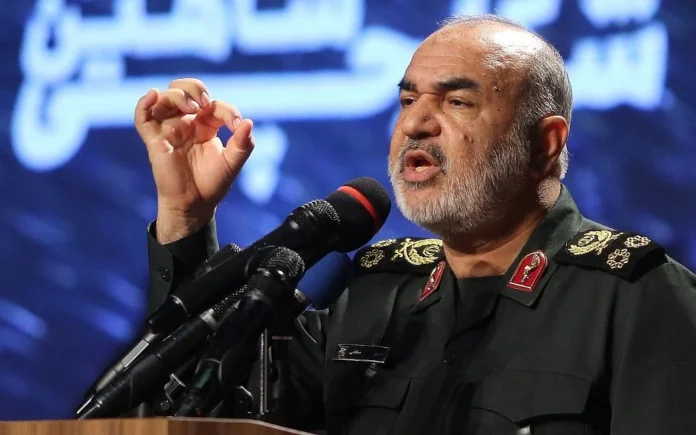
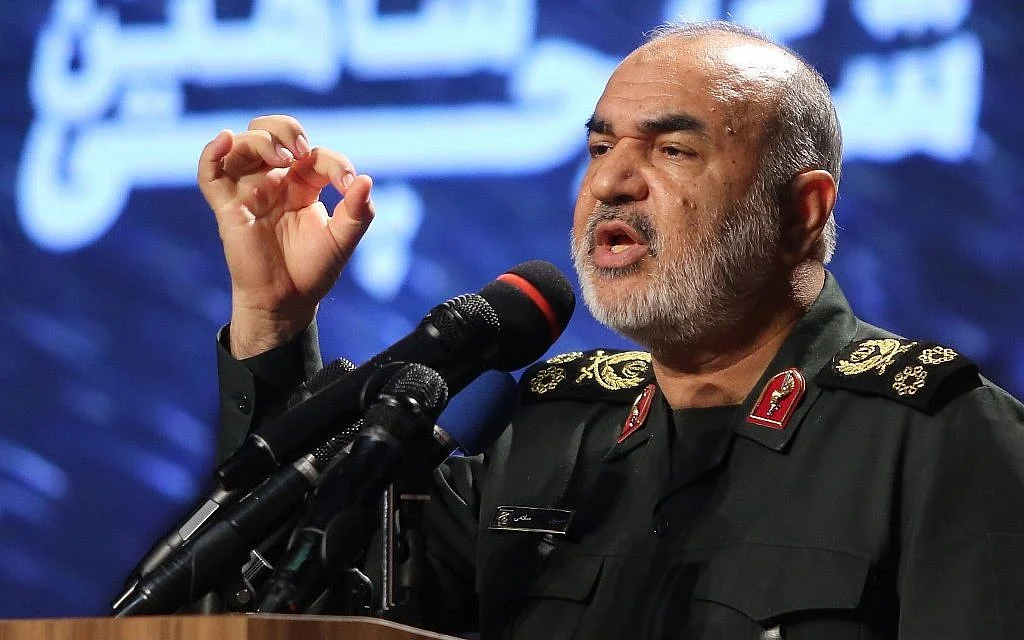
TEHRAN, Iran (BN24) — The head of Iran’s elite paramilitary force, Gen. Hossein Salami, is feared dead following an Israeli military strike that reportedly targeted multiple high-level Iranian figures, including senior officers of the Revolutionary Guard and nuclear scientists, Iranian state television announced Friday.

The brief report, which aired amid continuing Israeli attacks on Iran’s capital, offered few details about Salami’s condition but confirmed that he was unaccounted for following a direct hit on the Revolutionary Guard’s Tehran headquarters. The report also said one additional top Guard commander and two nuclear scientists were feared dead as a result of the strikes.

Iranian television described the scene at the Revolutionary Guard headquarters as chaotic and dangerous, with its reporter stating he could not get closer due to the intensity of the fire engulfing the complex.

The Israeli offensive, which began early Friday and has been dubbed Operation Rising Lion, has intensified fears of further escalation between the two long-time adversaries. Explosions were reported across multiple sites in Tehran, although the extent of the damage remains unclear.

The Islamic Revolutionary Guard Corps (IRGC), established after the 1979 Islamic Revolution, wields considerable power within Iran’s clerical leadership. It also oversees the country’s extensive ballistic missile program, which has been used in recent attacks against Israel during the current conflict centered on Gaza.

Top Israeli Military Commander Issues Dire Warning

In a parallel development, Israel’s military chief of staff, Lt. Gen. Eyal Zamir, issued a stern warning to Iran and its allied militias across the region, cautioning them against retaliatory actions.

“I warn, anyone who tries to challenge us will pay a heavy price,” Zamir said, addressing the nation from an undisclosed location amid ongoing security preparations.

The statement came as Israeli Defense Forces remained on high alert, anticipating potential missile or drone retaliation by Iran or its proxies in Lebanon, Syria, Iraq, and Yemen.

Regional Tensions Escalate

The possible death of Gen. Salami, one of Iran’s most powerful and influential military leaders, could mark a turning point in the deepening confrontation between Israel and Iran. Salami has long been regarded as a chief architect of Iran’s external military operations, including support for proxy militias and missile development programs.

His reported death — along with that of senior colleagues and nuclear scientists — would likely galvanize calls within Tehran for a significant response. Iran’s leadership had earlier vowed a “destructive” retaliation to any direct Israeli assault on its soil.

While Iranian state media confirmed the hit on the IRGC command complex, it has so far refrained from confirming the deaths of the individuals named, pending what it called “ongoing assessments.”

Ongoing Operation and International Reaction

The airstrikes come as part of Israel’s broader campaign to cripple Iran’s nuclear and military capabilities, launched just days after U.S.-backed talks on Iran’s uranium enrichment program collapsed.

The Israeli government has repeatedly stated it will not allow Iran to acquire a nuclear weapon. On Friday, Israeli Prime Minister Benjamin Netanyahu described the current phase of conflict as a “decisive moment” for national security.

Meanwhile, global leaders have urged both nations to de-escalate. The United States, while distancing itself from direct involvement in the strikes, has warned Iran not to retaliate against American personnel or bases in the region.

As of Friday evening, crude oil prices had surged and global markets reacted nervously to the possibility of broader regional war.

AP