Home Blog Page 332

 Russia Launches Largest Air Assault of War on Ukraine, Killing at Least 12 in Unrelenting Drone-and-Missile Barrage

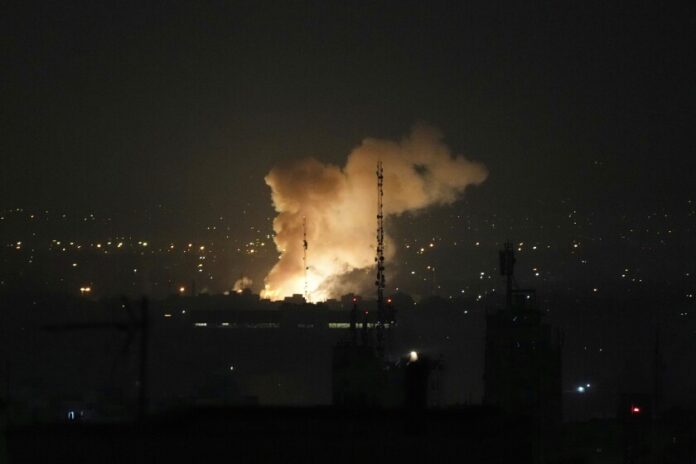
KYIV, Ukraine — Russia unleashed the largest aerial assault of its war against Ukraine over the weekend, launching an unprecedented barrage of 367 drones and missiles that killed at least 12 civilians and left dozens injured across the country, Ukrainian officials said Sunday.

The overnight attack struck the capital Kyiv and multiple regions on the second consecutive night of intensified strikes. It coincided with Kyiv Day, a national holiday commemorating the founding of the city in the 5th century.

According to Ukrainian Air Force spokesperson Yuriy Ihnat, the onslaught included 69 missiles of various types and 298 drones, many of them Iranian-designed Shahed drones.

“This was the most massive strike in terms of the number of air attack weapons on Ukraine’s territory since the full-scale invasion began in 2022,” Ihnat told the Associated Press.

Russia did not immediately comment on the attacks.

Ukrainian President Volodymyr Zelenskyy said more than 30 cities and villages were hit in the coordinated assault. Writing on X, he identified the affected regions as including Kyiv, Zhytomyr, Khmelnytskyi, Ternopil, Chernihiv, Sumy, Odesa, Poltava, Dnipro, Mykolaiv, Kharkiv, and Cherkasy.

“These were deliberate strikes on ordinary cities. Ordinary residential buildings were destroyed and damaged,” Zelenskyy said, again urging the United States and European allies to impose stronger sanctions on Russia.

He warned that without greater international pressure, Moscow’s campaign of destruction will persist.

“Determination matters now — the determination of the United States, of European countries, and of all those around the world who seek peace.”

Despite ongoing prisoner exchanges between the two nations — including the largest swap of the war — the aerial campaign underscores Russia’s continued resolve to press its military advantage through deep strikes on civilian infrastructure.

The Ukrainian Security Service confirmed at least four people were killed in Kyiv and 16 others injured. Mayor Vitali Klitschko said a drone struck a student dormitory in the Holosiivskyi district, setting part of the building ablaze. Elsewhere in the city, private homes were destroyed and windows shattered in residential complexes.

In Zhytomyr region, officials said three children — ages 8, 12, and 17 — were killed and 12 others injured in the attacks. Four fatalities were also reported in the Khmelnytskyi region, while one man died in the Mykolaiv region in the south.

“A difficult Sunday morning in Ukraine after a sleepless night,” wrote Ukrainian Foreign Minister Andrii Sybiha on X. “The most massive Russian air attack in many weeks lasted all night.”

The village of Markhalivka, just outside Kyiv, was engulfed in smoke and debris. Liubov Fedorenko, 76, surveyed the ruins of her home, comparing the scene to Bakhmut and Mariupol, cities that have come to symbolize the war’s devastation.

“Thank God my daughter didn’t come visit,” she said through tears, explaining that the rocket had struck the side of the house where her grandchildren would have slept.

Her husband, Ivan Fedorenko, 80, added that their two dogs burned to death inside the home. “I want to bury them, but I’m not allowed yet,” he said.

The attacks came during the third day of a planned prisoner swap, the largest of the war to date. On Saturday, both sides exchanged 307 captives each, following a transfer of 390 people the previous day. Ukrainian and Russian officials confirmed that the exchange — the only outcome of this month’s Istanbul peace talks — would continue.

“We expect more to come tomorrow,” Zelenskyy said on Telegram.

Still, the massive drone-and-missile barrage made clear there is no ceasefire in sight. Russian air defenses also claimed to have shot down 110 Ukrainian drones overnight, indicating intensifying aerial engagements on both sides.

The roughly 1,000-kilometer front line remains active, with deep strikes and artillery fire continuing unabated. Tens of thousands of soldiers have already died, and both Ukraine and Russia have shown no sign of scaling back operations.

One Dead, Two Injured After Explosion Aboard Sewage Barge on Hudson River During NYC Fleet Week

NEW YORK — A devastating explosion aboard a sewage barge on the Hudson River during New York City’s Fleet Week on Saturday killed one Department of Environmental Protection (DEP) worker and injured two others, triggering a multi-agency emergency response and raising new concerns about safety procedures aboard city-operated vessels.

The explosion occurred around 10:30 a.m. near West 138th Street in Manhattan, where the vessel was docked while transporting raw sewage to the North River Wastewater Treatment Plant, officials confirmed.

The blast — suspected to have been caused by a welding malfunction involving methane gas — tore through the hull of the barge, propelling a 59-year-old DEP worker into the river. Authorities said he was performing welding operations on the hull when the explosion erupted.

“Officials arrived at the scene to find a large explosion had ripped through the ship’s hull,” the NYPD said in a statement.

The victim, whose identity has not yet been publicly released, became trapped between the vessel and the dock, suffering fatal injuries. It remains unclear whether the cause of death was the explosion itself or the impact from being thrown into the water.

Two other DEP employees aboard the vessel were hospitalized with injuries; their conditions have not been disclosed.

Preliminary findings suggest the explosion may have been sparked by an ignition of methane, a highly flammable gas emitted by untreated sewage. Investigators are probing whether the volatile gas ignited during welding, a common risk associated with sewage-related maintenance.

Hazmat crews from FDNY and DEP responded immediately, working to decontaminate the vessel, measure gas concentrations, and contain sludge and oil that leaked into the Hudson River. Officials said the environmental impact is under review.

The explosion prompted a large-scale emergency deployment, including rescue boats, helicopters, and NYPD emergency units, who accessed the damaged vessel via a narrow gangway. Though Fleet Week events continued elsewhere, the scene near the North River plant was cordoned off as a full investigation began.

Authorities have not ruled out an accident, and no criminality is suspected at this time.

Despite the blast, plant operations remained uninterrupted, and no broader service impacts were reported.

In a statement, DEP Commissioner Rohit T. Aggarwala confirmed the worker who died had served over 30 years with the agency.

“The entire DEP family is grieving today. He was a valued and experienced member of the Bureau of Wastewater Treatment, and his decades of service reflect his commitment to DEP’s mission,” Aggarwala said.

Mayor Eric Adams echoed the sentiment, praising the fallen worker’s 33 years of service and promising a thorough investigation.

“This devoted public servant gave 33 years of service to New York City,” Adams said. “Our hearts go out to his family, friends, and colleagues during this painful time.”

“The safety and well-being of our city’s workforce, and all New Yorkers, is always our top priority, and we are committed to fully supporting an investigation and ensuring that every possible measure is taken to prevent such tragedies in the future.”

As the city mourns a life lost in service, officials are now focused on identifying what caused the explosion and implementing steps to prevent future incidents involving hazardous gases and high-risk maintenance operations.

Russia and Ukraine Exchange 307 POWs Each in Second Day of Largest Prisoner Swap Since 2022

KYIV, Ukraine — Russia and Ukraine exchanged 307 prisoners of war (POWs) each on Saturday, marking the second and largest phase of a coordinated swap effort that has become the most extensive exchange since the war began more than three years ago.

The Russian Defence Ministry confirmed the exchange, stating that its returning troops had been held in Ukrainian-controlled territory and would first undergo medical and psychological evaluations in Belarus before heading back to Russia.

“Another 307 members of the Russian military were returned from territory controlled by the Kyiv regime. In exchange, 307 Ukrainian prisoners of war were transferred over,” the ministry said.

The weekend swap follows Friday’s exchange of 390 prisoners per side, bringing the current total to nearly 1,400 individuals released. Ukrainian President Volodymyr Zelensky said the operation is ongoing, with 1,000 POWs expected to be exchanged on each side.

“We expect the exchange to continue tomorrow,” Zelensky noted on Saturday.

Russia has indicated it will present peace terms to Ukraine following the completion of the weekend’s prisoner releases. However, Moscow has not disclosed what conditions it intends to propose. While regular swaps have taken place since Russia’s full-scale invasion in 2022, this operation marks the largest coordinated release effort to date.

Despite mounting international pressure, Russian President Vladimir Putin has continued his military campaign, refusing calls for an unconditional truce. The war has claimed tens of thousands of lives, with no sign of a ceasefire in sight.

A Kremlin statement emphasized the “humanitarian gesture” of the swap, while also reinforcing that Russia remains committed to its strategic aims in Ukraine. Meanwhile, diplomatic efforts have intensified, although the Kremlin has shown no shift in its long-standing maximalist demands for ending the conflict.

As the newly freed Ukrainian soldiers returned to Chernigiv region in northern Ukraine, emotional reunions unfolded. A reporter from AFP witnessed emaciated but smiling soldiers stepping off buses, greeted by tearful family members, some clutching photographs in hopes of recognizing their loved ones.

Among them was Viktor Syvak, 58, who had been captured in the port city of Mariupol and held in Russian captivity for over three years.

“I didn’t expect such a welcome. It’s impossible to describe. I can’t put it into words. It’s very joyful,” he told reporters.

In Russia, returning detainees included 270 military personnel and 120 civilians, some reportedly from areas of Kursk region that had fallen under Ukrainian control and occupation for several months.

President Donald Trump welcomed news of the exchange, congratulating both countries on the large-scale release. Though Trump has made multiple attempts to broker a ceasefire in what is now Europe’s largest conflict since World War II, his efforts have yet to produce a breakthrough.

The prisoner exchange has been one of the few sustained lines of communication between the warring sides. Both Ukraine and Russia acknowledge that thousands of POWs remain in captivity, with estimates suggesting that Russia holds between 8,000 and 10,000 Ukrainian soldiers.

While both governments have previously participated in smaller exchanges, this latest effort signals a tentative diplomatic opening, albeit one still overshadowed by continued fighting and deep-seated mistrust.

Cannes 2025: Jafar Panahi’s ‘It Was Just an Accident’ Wins Palme d’Or Amid Power Outage and Political Tensions

CANNES, France — The 78th Cannes Film Festival concluded Saturday with a powerful statement, awarding the coveted Palme d’Or to Iranian director Jafar Panahi for his gripping political thriller It Was Just an Accident, a searing indictment of oppression and corruption in his home country.

Panahi, known for his defiant resistance to state censorship, made a triumphant return to Cannes in person after a 22-year absence marked by imprisonment and travel bans imposed by Iranian authorities. The victory marks a significant moment for a filmmaker once forced to smuggle his films abroad—famously on a USB stick baked into a cake.

The film, inspired by Panahi’s own time in prison, follows a group of former inmates who unexpectedly encounter their jail tormentor and contemplate revenge. Panahi’s tense, deeply personal narrative resonated with critics and jurors alike, securing the festival’s top honor.

“Let’s set aside all problems, all differences,” Panahi urged during his acceptance speech. “What matters most right now is our country—and the freedom of our country.”

A Disrupted Finale: Arson and Outage

The Cannes finale unfolded amid chaos, as a suspected arson attack triggered a major power outage that disrupted screenings and plunged a stretch of the French Riviera into darkness. Traffic lights failed, and businesses emptied into the streets, creating scenes of confusion and cinematic irony.

“It’s the beginning of the end,” quipped one salon customer, her curlers still in place, as generators whirred to life in the Palais des Festivals, allowing the closing ceremony to proceed as planned.

Award Highlights from Cannes 2025

Joachim Trier took the Grand Prix, the festival’s second-highest honor, for Sentimental Value, a subtle, emotional portrait of a fractured Norwegian family, starring Renate Reinsve and Elle Fanning. The film garnered widespread critical acclaim.

A rare joint Jury Prize was awarded to two standout films:

  • Sirat by Oliver Laxe, a pulsating road movie that journeys into Morocco’s desert rave culture, and
  • Sound of Falling by Mascha Schilinski, a multigenerational saga about four girls raised on a rural German farm.

Kleber Mendonça Filho won Best Director for The Secret Agent, a sharply stylized thriller set in the repressive political landscape of 1970s Brazil. The film’s lead, Wagner Moura, earned Best Actor, while Nadia Melliti claimed Best Actress for her vulnerable portrayal of a French-Algerian teenager confronting cultural identity and sexuality in Hafsia Herzi’s The Little Sister.

Belgium’s legendary Dardenne brothers, Jean-Pierre and Luc, secured Best Screenplay for Young Mothers, a deeply affecting depiction of teenage girls grappling with addiction, adoption pressures, and postpartum depression in a shelter. It marked their 10th competition entry, coming 26 years after their first Palme d’Or win.

Meanwhile, the Camera d’Or for best debut feature went to Hasan Hadi for The President’s Cake, a darkly satirical tale set in Saddam Hussein’s Iraq. Hadi’s film, screened in the Directors’ Fortnight, was lauded by Deadline as “head and shoulders above” many Palme contenders and seen as a potential Oscar nominee for Iraq.

Political Undercurrents and Industry Reckonings

Beyond the awards, off-screen politics dominated much of the Cannes discourse. The ongoing Israeli bombardment of Gaza cast a long shadow, referenced repeatedly in speeches and tributes. The festival opened with a powerful homage to Fatma Hassona, a 25-year-old Palestinian photojournalist killed in an Israeli airstrike, featured in the documentary Put Your Soul on Your Hand and Walk.

Hollywood icon Robert De Niro electrified opening night with a pointed rebuke of President Donald Trump, criticizing the administration’s proposed tariffs on foreign films and calling on filmmakers to defend democracy.

“We cannot be silent in the face of philistinism,” De Niro said as he accepted a career Palme d’Or.

The festival also confronted the film industry’s reckoning with sexual abuse, as French actor Gérard Depardieu was convicted of groping two women and given a suspended sentence on the very day the festival began. Organizers took a bold stance, barring a separate French actor accused of rape from the red carpet—a move widely seen as a long-overdue shift from Cannes’ past hesitance on #MeToo issues.

A controversial new rule banning red-carpet nudity sparked backlash, with critics accusing the festival of policing women’s attire instead of addressing deeper systemic problems.

Cannes 2025: Cinema, Politics, and Power

In a year shaped by power failures both literal and metaphorical, the Cannes Film Festival closed by reaffirming its commitment to bold political storytelling and global cinema. With It Was Just an Accident, Jafar Panahi’s return signaled not only a personal victory but also a cinematic act of defiance that encapsulated the spirit of a turbulent but vital edition of the world’s most prestigious film gathering.

 Israeli Airstrike in Khan Younis Kills 9 of Gaza Doctor’s Children, Hospital Confirms

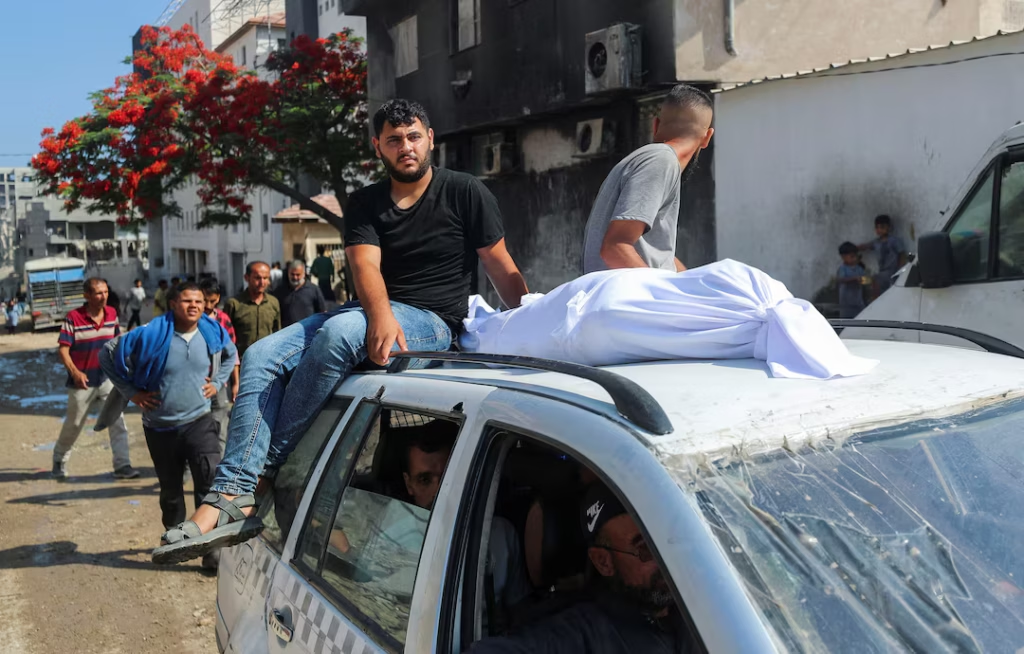
KHAN YOUNIS, Gaza Strip — A devastating Israeli airstrike in southern Gaza killed nine of the ten children of pediatrician Dr. Alaa al-Najjar, Nasser Hospital confirmed Saturday, as Israel intensified its military campaign across the enclave.

The hospital in Khan Younis, where Dr. al-Najjar works, said her husband and one child survived but sustained serious injuries. A British surgeon at the facility, Dr. Graeme Groom, who operated on the 11-year-old survivor, described the event as “unbearably cruel,” noting the tragic irony that a woman devoted to saving children had lost nearly all of her own in a single strike.

The Israel Defense Forces (IDF) acknowledged the strike in Khan Younis, saying its aircraft had targeted “a number of suspects” operating near IDF troops and stated that reports of harm to civilians were “under review.”

Footage shared by Gaza’s Hamas-run health ministry and verified by the BBC showed charred bodies of children being pulled from rubble. Health officials said the strike hit the al-Najjar family home, located near a petrol station.

Dr. Muneer Alboursh, director of the health ministry, said the house was struck minutes after Dr. al-Najjar’s husband had returned from driving her to work. The couple’s oldest child was only 12 years old.

Dr. Groom said the father, also a physician at Nasser Hospital, was “very badly injured” with a penetrating head wound, and that he had no known political or military affiliation. The surviving child, Adam, was described as “quite small” for his age and suffered fragment injuries, a nearly severed arm, and deep lacerations.

“Our little boy could survive, but we don’t know about his father,” Groom told the BBC.

Initially, the hospital reported eight children had been killed, later updating the toll to nine. Mahmoud Basal, spokesperson for the Civil Defence agency, said eight bodies and several wounded were recovered from the wreckage.

Dr. Youssef Abu al-Rish recounted arriving in the operating room to find Dr. al-Najjar anxiously awaiting news of her son. Another relative, Youssef al-Najjar, pleaded in an AFP interview,

“Enough! Have mercy on us! We plead to all countries, the international community, Hamas, and all factions — we are exhausted from displacement and hunger.”

The tragedy comes amid what UN Secretary-General António Guterres has warned may be “the cruellest phase” of the war, with escalating strikes, mass displacement, and a deepening humanitarian crisis.

The Gaza health ministry reported at least 74 Palestinians killed by Israeli forces in the 24 hours leading up to midday Saturday. The IDF said over 100 targets were struck across Gaza in the same period.

Israel’s partial lifting of the aid blockade this week allowed just 83 trucks of flour, medicine, and food into Gaza on Friday, according to Israeli officials. However, the UN says 500 to 600 trucks daily are needed to meet basic needs for Gaza’s 2.1 million residents.

Desperation has led to chaotic scenes, with looters attacking aid convoys and civilians crowding outside bakeries. A UN-backed famine risk assessment warned the population is at “critical risk” of starvation, with malnourished mothers unable to breastfeed and water supplies collapsing as fuel for desalination runs dry.

Israel launched its military offensive in Gaza following the October 7, 2023 Hamas attack that killed about 1,200 people and resulted in 251 hostages. Since then, at least 53,901 people, including more than 16,500 children, have been killed in Gaza, the health ministry reports.

Israel says the blockade and continued operations are necessary to pressure Hamas to release hostages and prevent the militant group from stealing aid — a claim Hamas denies.

 ICE Arrests Migrants at U.S. Courthouses, Opens Path to Expedited Deportations-Reuters

WASHINGTON — U.S. Immigration and Customs Enforcement (ICE) agents detained dozens of migrants at courthouses this week in several major cities, including New York City, Phoenix, Los Angeles, and Seattle, in a move that immigration advocates say targets recent arrivals and paves the way for fast-track deportations.

According to family members, attorneys, and news reports, the arrests frequently followed immigration court hearings where judges had just dismissed pending cases. The dismissals, rather than providing relief, may have left these migrants vulnerable to expedited removal, a streamlined deportation process that circumvents the typical appeals system.

The coordinated courthouse arrests mark a sharp escalation in enforcement tactics under President Donald Trump, who has vowed to deport record numbers of undocumented immigrants and blamed U.S. courts and immigration law for slowing down deportation efforts. ICE officials appear to be acting under new guidance issued earlier this year, which instructed officers to revisit cases of migrants previously released but eligible for expedited removal — particularly those who had not submitted formal asylum applications.

A senior official at the Department of Homeland Security confirmed that the operations are part of a broader effort to remove individuals allowed into the U.S. under former President Joe Biden’s immigration programs, calling the renewed focus a return to legal compliance.

“ICE is now following the law and placing these illegal aliens in expedited removal, as they always should have been,” the official said.

In Phoenix, Arizona, arrests took place on both Tuesday and Wednesday, drawing national attention. One such case involved Geovanni Francisco and his mother, who arrived from Guerrero, Mexico, in 2023 using the CBP One app, a program established under the Biden administration to manage legal entry appointments. Their immigration case was dismissed Wednesday morning — shortly before both were taken into custody by ICE, according to court records.

“They didn’t even give them a chance to gather their things,” said Hilda Ramirez, Francisco’s aunt, who accompanied her sister and nephew to their court appearance.

Advocates warn that the arrests send a chilling message to migrants engaging with the legal process and could deter participation in court proceedings. While ICE has previously made courthouse arrests, the frequency and coordination of this week’s operations mark a notable intensification of Trump’s immigration enforcement policy in 2025.

Critics argue that targeting people immediately after court proceedings undermines due process and punishes compliance with the legal system. They also point out that many migrants now facing removal had entered the country legally, following protocols set by the previous administration.

As immigration policy remains a central issue in the 2025 presidential election cycle, the courthouse arrests spotlight the growing clash between federal enforcement priorities and humanitarian concerns raised by immigrant rights groups across the country.

Venezuela Arrests Opposition Leader Juan Pablo Guanipa on Terrorism Charges Ahead of Elections

CARACAS, Venezuela — Venezuela’s political crisis deepened Friday with the arrest of Juan Pablo Guanipa, a prominent opposition figure and close ally of Maria Corina Machado, on allegations of leading a terrorist conspiracy to disrupt upcoming legislative elections. Interior Minister Diosdado Cabello announced the arrest during a nationally televised address, accusing Guanipa of inciting violence and laundering money.

Guanipa, a 60-year-old lawyer and long-standing member of the Venezuelan opposition, had been in hiding since the disputed 2024 presidential election. His dramatic arrest was captured on state television, where footage showed masked security agents detaining him while he wore a flak jacket. Cabello said Guanipa had believed he was “untouchable, invisible.”

According to the government, Guanipa is one of 70 individuals, including foreign nationals, accused of plotting attacks during Sunday’s regional and legislative elections. Authorities claim the alleged operation involved attempts to sabotage the country’s power grid and sow unrest.

These accusations follow a familiar pattern in Venezuela, where officials frequently blame the opposition and foreign powers — particularly the United States — for destabilizing the country. Both the opposition and U.S. officials have consistently denied such allegations, dismissing them as politically motivated.

Guanipa’s arrest comes at a pivotal moment, just days before Venezuelans are set to vote. The opposition accuses President Nicolás Maduro of orchestrating a campaign of repression ahead of the elections. Rights groups report an uptick in politically motivated arrests since the 2024 vote, which was widely condemned by international observers as undemocratic.

Although Venezuela’s electoral authority and Supreme Court declared Maduro the victor in last year’s presidential race, they have yet to release detailed voting tallies. The opposition maintains its candidate won decisively and has published independent tallies supporting that claim.

In a statement posted on his X (formerly Twitter) account, Guanipa said his arrest was a direct response to the government’s fear of the public’s electoral will. “Brothers, if you are reading this, it is because I have been kidnapped by the forces of the regime of Nicolás Maduro,” he wrote. “I don’t know what will happen to me in the coming hours, days, or weeks. But I am sure that we will win this long fight against the dictatorship.”

Maria Corina Machado, the opposition leader who was barred from running for president but remains one of Venezuela’s most popular political figures, expressed solidarity with her detained ally. “To Juan Pablo and all our imprisoned colleagues: every moment of our lives is dedicated to freeing you and all of Venezuela,” she wrote on X. Machado added that at least 50 activists, journalists, and human rights defenders have been arrested under Maduro’s regime in recent months.

The detention of Guanipa follows the earlier September arrest of his brother, Pedro Guanipa, who was accused of corruption during his tenure at the mayor’s office in Maracaibo. Critics say the government is using the judiciary to eliminate political threats.

As Venezuela approaches another election marked by international scrutiny and internal discontent, the arrest of one of its most recognized opposition voices signals a continuing crackdown that has drawn condemnation from human rights organizations across the globe.

 El Chapo’s Former Lawyer and Ex-Convicts Run for Judgeships in Mexico’s Controversial Judicial Elections

MEXICO CITY — Mexico is facing mounting scrutiny ahead of its first-ever judicial elections on June 1, as candidates with criminal records, past cartel ties, and histories of judicial misconduct appear on the ballot for federal judgeships — a development critics warn could severely undermine the rule of law.

Among the most controversial figures is Leopoldo Chavez, who served nearly six years in a U.S. prison after being convicted in 2015 of smuggling over four kilograms of methamphetamines. Despite his record, Chavez is now running for federal judge in Durango, part of the cartel-dominated Golden Triangle region.

“I’ve never sold myself as the perfect candidate,” Chavez said in a Facebook video, defending his right to run. He has declined interview requests from Reuters.

In Jalisco, former judge Francisco Hernandez is campaigning for a criminal magistrate post, despite having been removed from office following a federal investigation into allegations of sexual abuse and corruption. He insists the charges were “slander and defamation,” telling Reuters: “Let the people judge me.”

Fernando Escamilla, a candidate in Nuevo Leon, hopes to become a federal criminal judge. He previously provided legal counsel to attorneys for members of the notorious Los Zetas cartel. He defended his past, emphasizing his expertise in extradition law: “Does being an advisor on international law damage your reputation? I don’t think so.”

The presence of such candidates has ignited criticism from legal experts, civil rights organizations, and judicial associations. Defensorxs, a Mexican human rights group, has flagged at least 20 candidates with troubling backgrounds, including prior criminal convictions, corruption allegations, and links to organized crime. The group says many slipped through a rushed and flawed vetting process.

At the center of the controversy is Silvia Delgado, a former defense attorney for Joaquin “El Chapo” Guzman, the infamous Sinaloa Cartel leader. Delgado, now running for a criminal court judgeship in Chihuahua, represented El Chapo during his extradition proceedings and visited him regularly in prison.

“I’m not corrupt,” Delgado told Reuters during a campaign stop in Ciudad Juarez. “They can’t burn you for having represented someone.” A single mother who put herself through law school, Delgado said she took the high-profile case as a career opportunity and would do so again.

But Miguel Meza, president of Defensorxs, said Delgado’s candidacy raises serious concerns about vetting standards. “We’re not attacking candidates — we’re informing the public of the risks they represent,” Meza said, noting his organization continues to identify more problematic contenders.

The election is part of a sweeping judicial reform passed in September 2024 and championed by leftist former president Andres Manuel Lopez Obrador, with strong support from his successor, President Claudia Sheinbaum. The reform aims to eliminate corruption by letting voters choose judges, but critics argue it opens the door for cartel influence and political manipulation.

Under the new law, more than 5,000 candidates are competing for 840 federal positions, including all Supreme Court justices. The reform reduces the number of Supreme Court judges from 11 to 9, cuts term lengths to 12 years, lowers the legal experience requirement from 10 to 5 years, removes the minimum age of 35, and introduces a five-member disciplinary tribunal to oversee 50,000 judicial workers.

JUFED, Mexico’s judges’ association, has called the reform a threat to judicial independence. “What’s happening with the election is dangerous,” said JUFED director Juana Fuentes. “There is a serious risk that criminal interests could infiltrate the judiciary.”

Most sitting Supreme Court justices have chosen not to participate in the elections and plan to resign instead.

Candidates are banned from linking themselves to political parties, participating in party events, or accepting donations. However, critics argue that these restrictions are insufficient to prevent deeper systemic risks.

Senate leader Gerardo Fernandez Norona, a prominent member of the ruling Morena party, dismissed concerns as a media campaign driven by “racist, classist” bias. “It’s not important. It’s not relevant,” he said, adding that ineligible winners can be removed post-election.

The National Electoral Institute (INE) acknowledged flaws in the process and confirmed that ballots cannot be altered before the election. Claudia Zavala, an INE advisor, criticized the fragmented vetting process led by a committee of congressional, executive, and judicial appointees.

Any post-election review of a candidate’s eligibility must conclude by June 15, before results are certified. If a winner is disqualified, the position will go to the runner-up.

Despite the mounting backlash, neither Sheinbaum’s office nor the federal judiciary has commented publicly. With less than three weeks until the vote, concerns remain over whether the process will truly enhance transparency or simply deepen Mexico’s legal and political crises.

 Arsenal Stun Barcelona to Win UEFA Women’s Champions League in Historic Upset

LISBON — Arsenal delivered one of the biggest shocks in recent women’s football history by defeating reigning champions Barcelona 1-0 in the UEFA Women’s Champions League final on Saturday, ending the Spanish giants’ bid for a historic third consecutive title.

Stina Blackstenius netted the decisive goal in the 75th minute at the Estadio Jose Alvalade, finishing a composed move assisted by Beth Mead, who had come off the bench just minutes earlier. The victory handed Arsenal their second European crown, 18 years after they first lifted the trophy — still the only English club to do so.

As the final whistle sounded, Arsenal players sprinted toward the red-and-white section of the crowd, celebrating with jubilant supporters while Barcelona’s hopes of a dynasty lay dashed.

“We believed from the very start of this Champions League journey,” striker Alessia Russo told TNT Sports. “We knew we were good enough — it was just about proving it on the pitch. And we’ve done it!”

Barcelona entered the final as overwhelming favorites, having won three of the past four titles and aiming to become only the second club in history — after Lyon — to claim three straight. Boasting a star-studded lineup that included two-time Ballon d’Or winners Aitana Bonmati and Alexia Putellas, the Catalan side had steamrolled past Wolfsburg and Chelsea in the knockout stages.

But Arsenal’s tactical discipline and resilience neutralized Barcelona’s usual dominance. The English side frustrated their opponents for most of the match and capitalized when it mattered most, with Blackstenius’ winner punctuating a near-flawless performance.

The final was largely controlled by Barcelona in possession, but Arsenal remained compact and dangerous on the counter. In the second half, manager Jonas Eidevall’s substitutions made the difference, with Mead’s impact proving decisive.

Despite Barcelona’s nine-match unbeaten run heading into the final, Arsenal’s gritty performance showed the competition is far from one-sided.

Saturday’s triumph marks a major milestone for English women’s football, reinforcing Arsenal’s status as a European powerhouse and disrupting Barcelona’s continental dominance. It also adds another chapter to the club’s storied history, reigniting memories of their 2007 triumph.

Ukraine, Russia Conduct Largest-Ever Prisoner Exchange Amid Ongoing War

KYIV, Ukraine — Ukraine and Russia completed their largest prisoner exchange since the start of the war, each side returning 390 people in a landmark deal brokered during recent talks in Istanbul, leaders from both nations confirmed Friday.

Ukrainian President Volodymyr Zelenskyy said the agreement marked the first phase of a “1000-for-1000” prisoner swap arrangement. He confirmed that Ukraine handed over 390 individuals to Russia, a figure echoed by Russia’s Defense Ministry, which specified that each country released 270 soldiers and 120 civilians.

The mass exchange is expected to continue over the weekend, with additional prisoners likely to be transferred on Saturday and Sunday. “This is just the beginning,” Zelenskyy posted on X. “Further exchanges are scheduled. We bring our people home.”

U.S. President Donald Trump was the first to publicly announce the deal earlier in the day, writing on his platform Truth Social: “A major prisoners swap was just completed between Russia and Ukraine. It will go into effect shortly.” Trump congratulated both sides and asked if the move “could lead to something big,” hinting at potential progress toward peace.

The swap, however, does not appear to signal an imminent end to the conflict. Talks between Russian and Ukrainian negotiators last week in Istanbul, the first direct dialogue in over three years, produced no agreement on a ceasefire. Trump’s proposal for a 30-day halt in fighting was rejected by both sides, though the prisoner exchange emerged as a rare point of consensus.

Moscow reiterated its position that it is open to continued negotiations, but only if Ukraine agrees to cede additional territory, disarm, and abandon aspirations to join Western military alliances. Kyiv dismissed these conditions as unacceptable, calling them a de facto surrender that would leave the nation vulnerable to future Russian aggression.

Meanwhile, the prisoner swap underscores the human toll of the prolonged war. Ukraine estimates that Russia holds between 8,000 and 10,000 of its citizens captive, while Moscow has also captured thousands of Ukrainian fighters and civilians.

Despite the exchange, there are no visible signs of de-escalation. Fighting continues across multiple fronts, and the Kremlin’s core demands remain unchanged.

While Trump has shifted U.S. policy away from direct military support for Ukraine, he has not ruled out renewed sanctions against Moscow should peace talks collapse. After a recent call with Russian President Vladimir Putin, however, he announced no immediate action, signaling a cautious approach.

The Istanbul deal marks a rare diplomatic breakthrough, but analysts say any broader resolution remains distant. As long as neither side compromises on its fundamental goals, the war shows little sign of ending.