Home Blog Page 360

Militant Ambush in Indian Kashmir Kills Five Tourists, Injures Eight in Deadliest Civilian Attack in a Year

PAHALGAM, India — Suspected militants opened fire on a group of tourists in the picturesque town of Pahalgam in Indian-administered Kashmir on Tuesday, killing at least five people and wounding eight others in the region’s deadliest civilian attack in nearly a year, a senior police official told Reuters.

The attack occurred in the early evening hours near the popular tourist town nestled in the southern Anantnag district. The victims, who were visiting the region during peak summer travel, were caught in a sudden burst of gunfire, officials said. The wounded were quickly transported to a nearby hospital for emergency treatment.

Speaking on condition of anonymity due to lack of authorization to brief the media, a police source confirmed the casualties but noted that the final death toll may rise.

“This is a brutal act of terror targeting innocent civilians,” said Jammu and Kashmir Chief Minister Omar Abdullah in a post on X, formerly Twitter. “The scale of this attack is far greater than anything we’ve seen against civilians in recent years.”

A little-known militant group calling itself the “Kashmir Resistance” claimed responsibility for the shooting in a post on social media. The group accused the Indian government of orchestrating a demographic shift in the Muslim-majority territory by settling thousands of outsiders.

“Over 85,000 non-local settlers have been given domicile rights,” the message claimed, warning that future violence would target those attempting to “illegally change the identity of Kashmir.”

The authenticity of the post could not be independently verified by Reuters, and Indian authorities have not commented on the group’s claim.

Earlier this month, the Jammu and Kashmir administration told lawmakers that nearly 84,000 non-local residents had been granted domicile status in the last two years, a move that enables them to purchase property and apply for government jobs in the region.

Indian Prime Minister Narendra Modi strongly condemned the attack and promised swift action against those responsible.

“Those behind this heinous act will be brought to justice. They will not be spared!” Modi wrote on X. “Their evil agenda will never succeed. Our resolve to fight terrorism is unshakable and will only grow stronger.”

Security forces have launched a manhunt in the surrounding forests and valleys near Pahalgam, an area popular with Indian and foreign tourists alike for its hiking trails and scenic beauty.

Tuesday’s ambush is the most severe attack targeting civilians since June of last year, when a militant assault caused a bus carrying Hindu pilgrims to crash into a gorge, killing nine people and injuring 33 others.

Although violent attacks in Kashmir have declined in frequency over the past decade, recent months have seen a spike in militant activity, particularly in areas previously regarded as secure. The uptick has coincided with heightened tensions between India and Pakistan and renewed local resistance to India’s controversial 2019 decision to revoke the region’s autonomy.

That move allowed New Delhi to reorganize the former state into two federally governed territories—Jammu and Kashmir, and Ladakh—and extended property and employment rights to non-residents. Critics of the policy say it is part of a broader effort to dilute the region’s Muslim majority and shift its cultural landscape.

The dispute over Kashmir, which both India and Pakistan claim in full, has fueled decades of armed conflict and three full-scale wars between the nuclear-armed neighbors. Pakistan continues to reject India’s sovereignty over the region, and diplomatic relations between the two countries remain strained.

Indian security analysts noted the timing of the latest attack, which occurred just one day after U.S. Vice President JD Vance began a four-day visit to India. While Vance’s visit was described as primarily personal, past militant attacks in Kashmir have often coincided with the visits of high-profile international dignitaries—moves seen as attempts to draw global attention to the unresolved conflict.

As of late Tuesday, no new travel advisories had been issued, but security has been heightened across the Kashmir Valley, particularly in areas frequented by tourists.

New Ceasefire Plan Proposed in Israel-Gaza Conflict, Hamas Source Confirms

CAIRO — A new ceasefire proposal aimed at ending the war in Gaza has been submitted to Hamas by Qatari and Egyptian mediators, according to a senior Palestinian official involved in the negotiations. The proposal includes a long-term truce, the release of all hostages, and a complete Israeli withdrawal from the Gaza Strip, the official told the BBC on Tuesday.

The latest diplomatic initiative envisions a ceasefire lasting between five and seven years, during which both sides would be expected to uphold peace terms. The proposed agreement calls for the release of all Israeli hostages held in Gaza in exchange for Palestinian prisoners in Israeli custody. It also includes a formal declaration to end the war and the full withdrawal of Israeli troops from Gaza.

A high-ranking Hamas delegation, led by political chief Mohammed Darwish and senior negotiator Khalil al-Hayya, is expected to arrive in Cairo for critical talks with mediators in the coming days. These negotiations follow a failed attempt at brokering a truce last month, when Israel resumed its bombing campaign, and both parties accused the other of violating the ceasefire terms.

The Israeli government has yet to issue a formal response to the latest proposal. However, the talks come amid escalating violence across Gaza.

Since Monday evening, at least 22 Palestinians have been killed in Israeli airstrikes across multiple areas of the Gaza Strip, according to a health official from the Hamas-run health ministry. The strikes reportedly hit locations in Khan Younis, Jabalia, Beit Lahia, and Gaza City, injuring another 45 people.

Local witnesses described the airstrikes as “extremely intense,” with several neighborhoods heavily damaged. The attacks reportedly destroyed dozens of bulldozers and heavy equipment used by municipal crews to clear rubble, reopen blocked roads, and rescue people trapped under collapsed buildings.

In southern Gaza, tanks were seen maneuvering near Rafah, raising concerns about an expanded ground offensive in the densely populated area.

As talks resume, Hamas has reportedly expressed a willingness to relinquish administrative control over Gaza to a mutually agreed Palestinian body. According to the official familiar with the mediation efforts, the militant group is open to governance by the West Bank-based Palestinian Authority or another unified Palestinian body determined through national and regional consensus.

This stance represents a significant shift, as Hamas has ruled Gaza since 2007. Still, Israeli Prime Minister Benjamin Netanyahu has publicly rejected any role for the Palestinian Authority in the future governance of Gaza, deepening the uncertainty around any potential postwar political arrangement.

Netanyahu reiterated on Saturday that he would not end the war until Hamas is dismantled and all Israeli hostages are returned. Hamas, on the other hand, insists that no hostages will be freed until Israel agrees to halt its military campaign.

The Palestinian source involved in the negotiations characterized the current mediation efforts as serious and noted that Hamas had demonstrated “unprecedented flexibility.” However, the outcome remains uncertain, and no timeline has been announced for a potential agreement.

Hamas initiated the current conflict with a surprise attack on southern Israel on Oct. 7, 2023, killing approximately 1,200 people—mostly civilians—and taking 251 hostages back into Gaza. In response, Israel launched a wide-scale military operation that has killed at least 51,240 Palestinians, the majority of them civilians, according to figures released Monday by Gaza’s Hamas-run health ministry.

Meanwhile, the Palestinian Embassy in Cairo has ordered its staff and their families to relocate from the capital to the northern Egyptian city of Arish, near the Rafah border crossing. The embassy personnel had been coordinating medical evacuations from Gaza and facilitating the delivery of humanitarian aid. The relocation underscores growing concerns over security and logistical challenges in continuing relief operations as the conflict intensifies.

Russian Army Retakes Historic Monastery in Final Ukrainian-Held Kursk Village, State Media Reports

MOSCOW — Russian troops have regained control of a centuries-old monastery in the last Ukrainian-held village in the Kursk region, marking a significant territorial development in the months-long counteroffensive, according to Russian state media reports on Tuesday.

The St. Nicholas Belogorsky Monastery, located on the outskirts of the village of Gornal, was recaptured after more than a week of fighting, an anonymous Russian security source told the state-run TASS news agency. The 17th-century religious site, situated less than 30 kilometers (18.5 miles) from the Ukrainian border city of Sumy, had reportedly been fortified and used as a strategic position by Ukrainian forces.

“Our soldiers liberated the St. Nicholas Belogorsky Monastery in Gornal during fighting,” the source told TASS, claiming that Ukrainian troops had converted the site into a military outpost. “The resistance of the Ukrainian Armed Forces has been broken.”

While the report remains unverified by independent sources, the alleged retaking of the monastery signals a potential end to Ukrainian presence in the southwestern Kursk region, which lies adjacent to the active northeastern front line in Ukraine’s Sumy and Kharkiv regions. Russia’s Defense Ministry had not officially commented on the operation as of Tuesday morning.

Saturday marked another key milestone when Russia’s Defense Ministry announced the recapture of Oleshnya, the second-to-last village in the Kursk region that remained under Ukrainian control. The two villages—Oleshnya and Gornal—had been under Ukrainian occupation since Kyiv launched a surprise incursion across the Russian border several months ago, in what became the largest ground offensive on Russian soil since the Second World War.

Over the past few weeks, Russian forces have methodically reclaimed swaths of territory once held by Ukrainian units, which penetrated deep into Russian territory last year during a sudden and audacious offensive. According to battlefield monitoring platform DeepState, Ukrainian troops still hold approximately 31 square kilometers (20 square miles) of territory inside the Kursk region, down from a peak of over 1,376 square kilometers (531 square miles) seized in the initial incursion.

Russia’s Chief of the General Staff Valery Gerasimov briefed President Vladimir Putin on Saturday, stating that 99.5% of the Kursk region had been “liberated,” and that operations to fully expel Ukrainian forces from the area were ongoing. Gerasimov’s update signals the Kremlin’s desire to solidify battlefield gains before engaging in potential ceasefire negotiations.

Political analyst and Nezavisimaya Gazeta editor Konstantin Remchukov, writing in a Sunday editorial, said Putin appears determined to reclaim every inch of Russian territory in the Kursk region before considering a U.S.-mediated truce.

“President Putin is obviously seeking the full liberation of the Kursk region before entering any negotiations,” Remchukov wrote, citing unnamed government sources. “As soon as the last 0.5% is liberated, then the troops can stop where this news finds them.”

His remarks echo growing speculation that Russia is positioning itself militarily to avoid being forced into territorial concessions under any peace deal, particularly one brokered by the United States and its allies.

Russian Strikes Kill 3 in Ukraine’s Kherson Region During Easter Ceasefire Declared by Putin

KYIV, Ukraine — Russian forces killed three civilians and wounded several others in Ukraine’s southern Kherson region during a 30-hour Easter ceasefire declared unilaterally by President Vladimir Putin, regional officials said Monday. The ceasefire, which began Saturday and ended at midnight local time, was intended as a gesture of goodwill during Orthodox Easter, but quickly unraveled as both sides accused each other of violations.

Oleksandr Prokudin, head of the Ukrainian military administration in Kherson, said on Telegram that three people were killed and three others injured over a 24-hour period in Russian attacks across the region. Parts of Kherson remain under Russian occupation, while the remainder continues to be targeted by frequent shelling.

Ukrainian President Volodymyr Zelenskyy, in a statement Monday, accused Moscow of violating the Easter ceasefire more than 2,900 times, calling the truce “a façade.” According to Zelenskyy, Russian forces launched 96 ground assaults, shelled Ukrainian positions over 1,800 times, and deployed hundreds of explosive drones during the brief pause.

“The nature of Ukrainian actions will remain mirror-like: we will respond to silence with silence, and our blows will be a defense against Russian strikes. Actions always speak louder than words,” Zelenskyy said in a video posted to social media.

While Kyiv pointed to widespread violations by Moscow, the Russian Defense Ministry countered with its own accusations, alleging 4,900 Ukrainian breaches of the ceasefire. Moscow insisted its forces held their positions and strictly adhered to the ceasefire terms throughout its duration.

President Putin, speaking on state television Monday, confirmed the end of the ceasefire and said hostilities resumed after it expired at midnight Sunday. He also responded to Zelenskyy’s proposal for a broader 30-day truce or, at minimum, a halt to strikes on civilian infrastructure.

“Kyiv is trying to seize the initiative,” Putin said. “We must think about this carefully, assess the results of the ceasefire, and evaluate how to proceed.”

Putin has previously conditioned any comprehensive ceasefire on a halt to Western arms deliveries to Ukraine and a freeze on Ukraine’s mobilization—preconditions Kyiv and its Western allies have flatly rejected.

Kremlin spokesman Dmitry Peskov echoed that sentiment on Monday, stating that Russia remains open to “a peaceful settlement” and continues diplomatic engagement with Washington. “We are informing all interested parties about the Ukrainian ceasefire violations,” Peskov said, expressing hope that ongoing discussions with the U.S. would bear fruit.

Asked about speculation that the United States may be pressuring Ukraine to accept Russia’s 2014 annexation of Crimea, President Donald Trump said more details would be provided in the coming days.

“We had very good meetings on Ukraine and Russia,” Trump told reporters. “I’ll be giving you a full detail over the next three days.”

Zelenskyy has repeatedly ruled out any recognition of Russian-occupied territory, including Crimea, insisting that Ukraine’s sovereignty and territorial integrity are non-negotiable.

The Ukrainian president held talks Monday with British Prime Minister Keir Starmer ahead of a high-level diplomatic meeting in London scheduled for Wednesday, where Ukrainian, U.S., British, and French officials will discuss peace proposals.

“We are ready to move forward as constructively as before to achieve an unconditional ceasefire, followed by a real and lasting peace,” Zelenskyy said on X. “This Easter made it painfully clear that it is Russia’s actions that are prolonging the war.”

Russian forces launched a series of attacks overnight into Monday, including three missile strikes targeting Kherson and the Mykolaiv region in southern Ukraine. The Ukrainian Air Force reported that 96 Shahed drones were deployed by Russia, with 42 intercepted and 47 jammed mid-flight.

In Dnipropetrovsk, drones ignited fires at a food facility and another structure, though no injuries were reported, according to regional governor Serhii Lysak. In central Ukraine’s Cherkasy region, regional head Ihor Taburets said an unspecified piece of infrastructure sustained damage from a separate drone attack.

Meanwhile, in the eastern Donetsk region—partially occupied by Russia—four civilians were wounded as Russian forces shelled local settlements five times in the past 24 hours, regional chief Vadym Filashkin said.

Pope Francis’s Funeral Set for Saturday in St. Peter’s Square; Global Leaders Expected to Attend

VATICAN CITY — The funeral for Pope Francis will take place on Saturday in St. Peter’s Square, Roman Catholic cardinals announced Tuesday, setting in motion a series of historic rites that mark the end of his 12-year papacy and the beginning of a new chapter for the Roman Catholic Church. The service is expected to draw numerous world leaders, including U.S. President Donald Trump.

Francis, who died early Monday at age 88 following a cerebral stroke and cardiac arrest, will be laid to rest following a public ceremony beginning at 10 a.m. local time (0800 GMT) in the shadow of St. Peter’s Basilica. The Vatican confirmed the time and location after a conclave of senior cardinals convened Tuesday to finalize funeral arrangements and plan the interregnum—the period between popes.

The late pontiff’s sudden death has reverberated across the globe, ending a transformative and sometimes controversial papacy. Known as the first pope from Latin America, Francis reshaped the modern Church with his progressive stance on social justice, climate change, and LGBTQ inclusion—frequently drawing ire from conservative factions within the Vatican hierarchy.

The Vatican released images Tuesday of Francis’s body lying in repose at the chapel of the Casa Santa Marta, his longtime residence within Vatican City. Clad in traditional vestments, the late pope rests in a wooden coffin flanked by solemn Swiss Guards. His remains will be moved into St. Peter’s Basilica at 9 a.m. Wednesday (0700 GMT), where the faithful will be given the opportunity to pay their last respects.

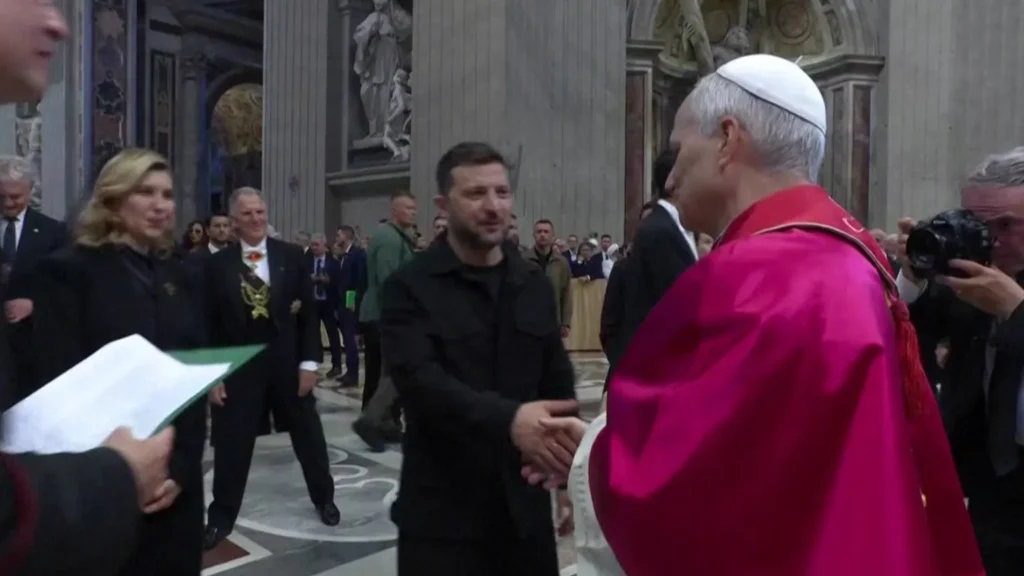
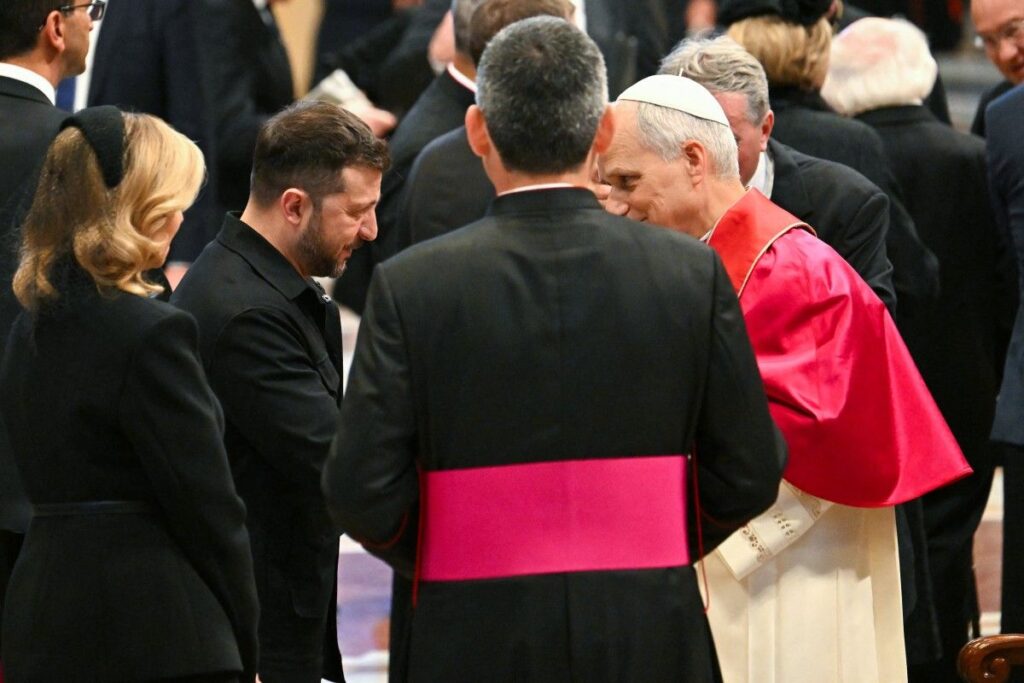
Among the dignitaries expected to attend the funeral are President Trump and First Lady Melania Trump, according to the White House. President Javier Milei of Argentina, the pope’s homeland, Brazilian President Luiz Inácio Lula da Silva, and Ukrainian President Volodymyr Zelenskyy have also confirmed plans to attend, according to sources close to their offices.

In keeping with centuries-old Vatican tradition, Pope Francis’s death has triggered the ceremonial destruction of his “Fisherman’s Ring” and lead seal, symbols of papal authority, to prevent their misuse. On Tuesday, all cardinals present in Rome were summoned to a closed-door meeting to coordinate the transition of power and maintain Church operations ahead of the papal conclave.

While the conclave to elect Francis’s successor will not begin until at least May 6, Vatican observers note the electoral process is shrouded in secrecy and can span several days. A total of 135 cardinal-electors under the age of 80 are eligible to cast votes, gathering inside the Sistine Chapel to conduct multiple ballots until a two-thirds majority is reached. The appearance of white smoke from the chapel’s chimney will signal to the world that a new pope has been chosen.

There is currently no clear frontrunner to succeed Francis. While the outgoing pontiff appointed nearly 80 percent of the cardinals eligible to vote, increasing the chances of a like-minded successor, analysts caution that ideological continuity is not guaranteed.

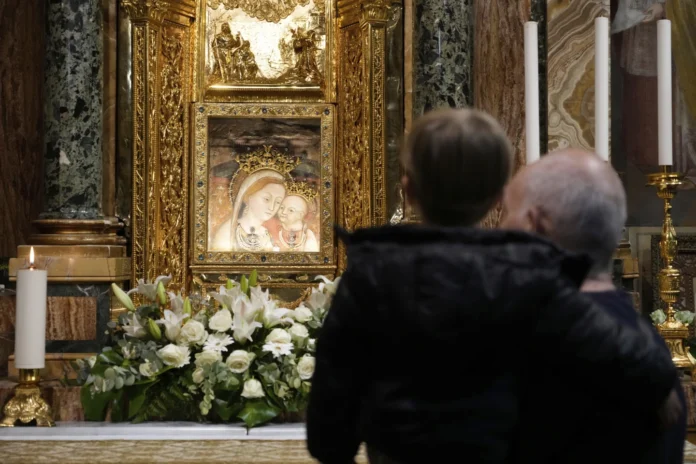
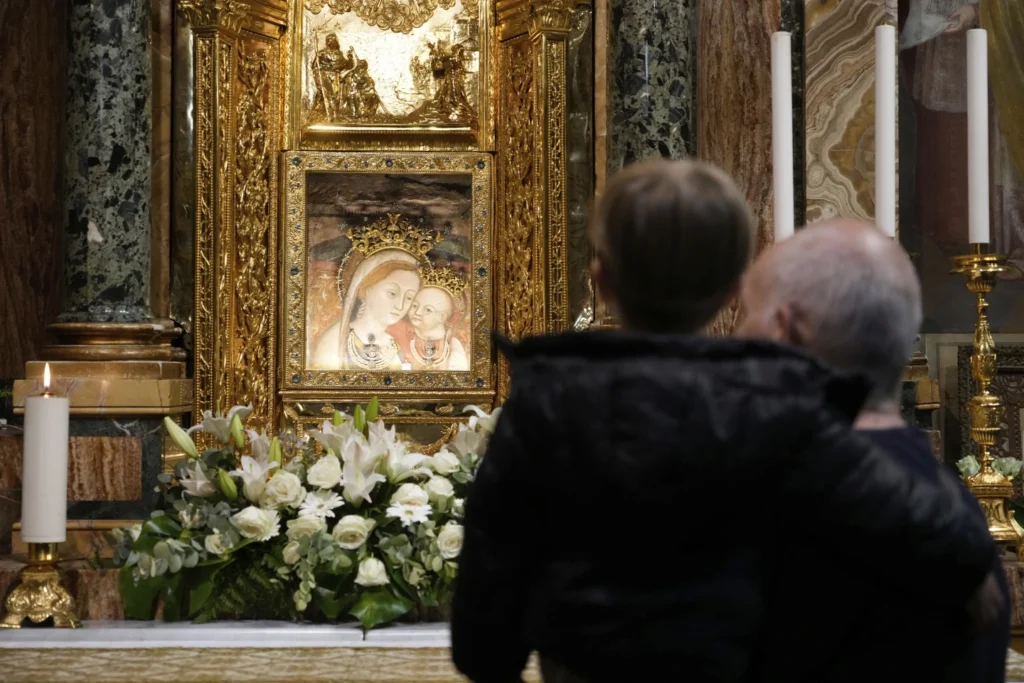
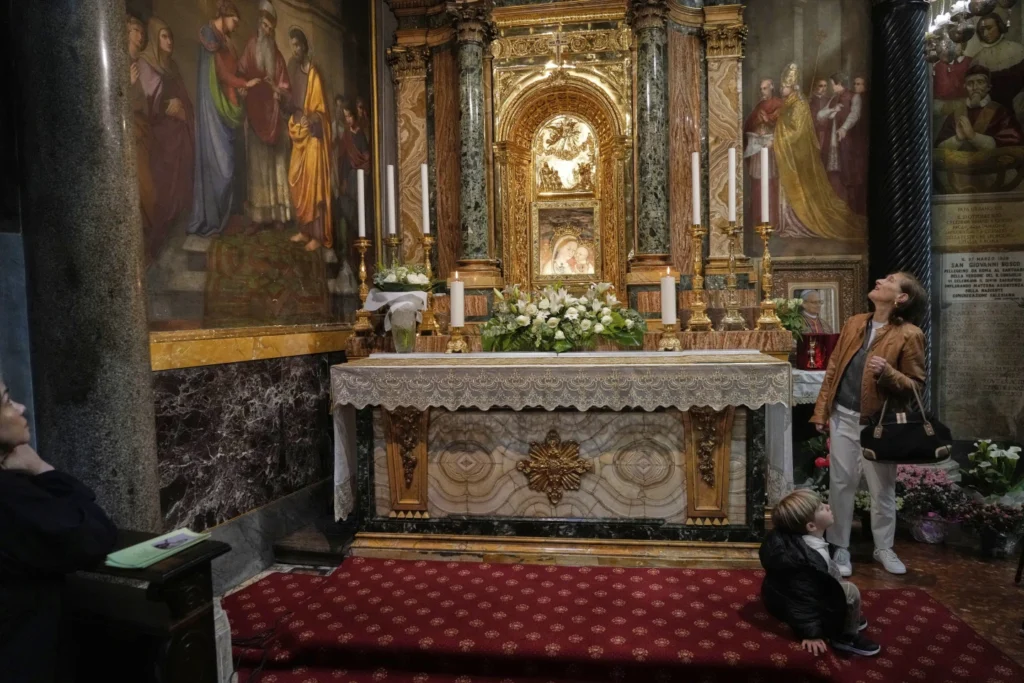
In a departure from recent papal tradition, Pope Francis requested to be buried at the Basilica of Saint Mary Major in Rome rather than in the crypts beneath St. Peter’s Basilica, where many of his predecessors rest. His final testament, released posthumously by the Vatican on Monday, emphasized humility, service, and a deep devotion to the Virgin Mary.

During his papacy, Francis undertook sweeping reforms of the Vatican’s administrative apparatus, pushed for financial transparency, and moved—albeit slowly—to confront clergy sexual abuse scandals that had plagued the Church for decades. He often clashed with traditionalists who viewed his positions as too progressive or divisive.

Still, Francis remained widely admired for his compassionate leadership style and relentless focus on society’s most vulnerable. His decision to reside in the modest Casa Santa Marta instead of the apostolic palace was emblematic of his break with tradition and preference for a simpler, more accessible papacy.

As Vatican employees began filing into the residence late Monday to offer personal farewells, the Church braced for a monumental transition in spiritual leadership for its 1.4 billion followers worldwide.

Putin Expresses Willingness for Direct Peace Talks with Ukraine as Pressure Mounts

MOSCOW — Russian President Vladimir Putin said Monday that Moscow is open to direct peace talks with Ukraine, signaling a potential shift in diplomatic posture more than three years into the war. Ukrainian President Volodymyr Zelenskyy responded by saying Kyiv remains ready for discussions aimed at halting attacks on civilian targets, as both sides face mounting international pressure to make progress toward ending the conflict.

FILE – Russian President Vladimir Putin speaks during a meeting at the Foreign Ministry in Moscow, on Friday, June 14, 2024. Putin says that Moscow isn’t seeking quick gains in Ukraine and will stick to the current strategy of slow advances as it presses a grinding summer offensive. (AP Photo/Alexander Zemlianichenko, File)

The remarks come amid renewed diplomatic activity following a 30-hour Easter ceasefire declared unilaterally by Moscow over the weekend, which was marred by mutual accusations of violations. Despite the truce’s breakdown, Russia and Ukraine have expressed openness to further limited ceasefires and a broader dialogue, underscoring growing fatigue and urgency among global stakeholders.

Talks involving Ukrainian officials, the United States, and European countries are expected to resume this week in London, building on a previous round of discussions held in Paris. The United States has warned that it may abandon its mediation efforts if tangible progress toward a truce is not made soon.

Putin’s offer of direct talks was issued during an interview with Russian state television on Monday, marking the first time in years that the Kremlin leader has publicly endorsed bilateral negotiations. “We have always spoken positively about peace initiatives,” Putin told state TV reporter Pavel Zarubin. “We hope that representatives of the Kyiv regime will adopt a similar approach.”

Kremlin spokesman Dmitry Peskov clarified the statement, telling the Interfax news agency that Putin’s comments referred specifically to the possibility of bilateral discussions on ceasing attacks on civilian infrastructure. “When the president said that it was possible to discuss not striking civilian targets, including bilaterally, he was referring to negotiations and discussions with the Ukrainian side,” Peskov said.

There have been no direct high-level talks between Russia and Ukraine since the early weeks of the war, which began in February 2022 following Russia’s full-scale invasion.

Zelenskyy, in his nightly video address, reaffirmed Ukraine’s readiness to pursue any diplomatic avenue that leads to a cessation of strikes on civilian areas. He reiterated Ukraine’s standing offer for an unconditional ceasefire and called for a clear response from Moscow. “We are ready for any conversation about how to achieve this,” he said, emphasizing that protecting civilians must be the priority.

Describing the upcoming talks in London as crucial, Zelenskyy said their “primary task” would be to secure an unconditional ceasefire — a step he called essential for establishing “real and lasting peace.” He noted that continued Russian attacks during the Easter truce suggested Moscow was not genuinely committed to de-escalation.

“Ukraine maintains its proposal not to strike at the very least civilian targets,” Zelenskyy said. “And we are expecting a clear response from Moscow.”

The Ukrainian president also stated that his military would continue mirroring Russia’s battlefield behavior. “Ceasefire will be met with ceasefire, and Russian strikes will be met with our own in defense,” he wrote on X, formerly Twitter. “Actions always speak louder than words.”

U.S. President Donald Trump and Secretary of State Marco Rubio warned Friday that Washington may walk away from the diplomatic process if both sides fail to make meaningful progress. However, Trump sounded more hopeful on Sunday, saying he believed a deal could still be reached “this week.”

While Moscow has maintained that it remains open to peace, its demands — including Ukraine’s recognition of Russia’s annexation claims and a commitment to permanent neutrality — remain sticking points. Kyiv has rejected those terms as tantamount to surrender, saying they would leave the country vulnerable to future aggression.

“President Putin and the Russian side remain open to seeking a peaceful settlement,” Peskov said Monday. “We are continuing to work with the American side and, of course, we hope that this work will yield results.”

Harvard Sues Federal Government Over Trump Administration’s $2.2 Billion Research Funding Freeze

CAMBRIDGE, Mass. — Harvard University filed a federal lawsuit Monday against the Trump administration after the government halted $2.2 billion in research grants, a move the Ivy League institution called unconstitutional and an unlawful overreach of federal authority.

The funding freeze, announced last week, targets a broad range of federally supported research initiatives and stems from what the White House claims are Harvard’s failures to adequately address antisemitism on campus. But in its complaint filed in U.S. District Court in Massachusetts, the university accuses the administration of using unfounded allegations as a pretext to exert political control over the institution’s academic independence.

Harvard President Alan Garber called the federal action “unprecedented and improper,” warning in a public statement that the decision would have “severe and long-lasting consequences” for both the university and the national interest in scientific and technological innovation.

“The government’s actions are not only unlawful and beyond its statutory authority, but they also violate core constitutional principles, including the First Amendment,” Garber said Monday.

The Trump administration’s move to freeze federal grants came after Harvard declined to implement a set of demands from the White House, which included sweeping measures such as a mandatory audit of student body attitudes and a ban on international students perceived as “hostile to American values and institutions.”

In its legal filing, Harvard argued that the administration has failed to demonstrate any legitimate connection between the antisemitism concerns it cited and the broad scope of federally funded research now in jeopardy — much of which has no relationship to campus culture or student conduct.

“The Government has not — and cannot — identify any rational connection between antisemitism concerns and the medical, scientific, technological, and other research it has frozen that aims to save American lives, foster American success, preserve American security, and maintain America’s position as a global leader in innovation,” the lawsuit states.

The university is urging the federal court to declare the president’s freeze order unconstitutional and to compel the government to immediately restore funding and reverse any associated terminations. As of Monday evening, the White House had not responded to requests for comment.

The legal battle marks an extraordinary escalation in tensions between one of the world’s most prestigious academic institutions and President Donald Trump’s administration, which has increasingly scrutinized elite universities over issues ranging from campus speech to foreign influence and political ideology.

The outcome of the case could have sweeping implications for the relationship between federal power and academic independence, especially in the realm of research funding. Harvard’s lawsuit warns that allowing such a freeze to stand would not only imperil vital research across disciplines — including medicine, energy, and national defense — but would also set a dangerous precedent for political interference in higher education.

Pope Francis Dies at 88 After Stroke and Heart Failure, Vatican Confirms

VATICAN CITY — Pope Francis has died at age 88 following a cerebral stroke that led to coma and irreversible heart failure, the Vatican confirmed Monday morning. The death of the 266th leader of the Roman Catholic Church marks the end of a historic papacy defined by bold reforms, progressive outreach, and deep polarization.

The Vatican’s chief medical officer, Professor Andrea Arcangeli, issued a formal statement identifying the official cause of death as a stroke resulting in “irreversible cardiocirculatory collapse.” The pontiff passed away at 7:35 a.m. local time at the Domus Sanctae Marthae, the Vatican residence where he had lived since the beginning of his papacy in 2013.

Dr. Arcangeli noted that Pope Francis, born Jorge Mario Bergoglio in Buenos Aires, Argentina, had long suffered from chronic respiratory and cardiovascular conditions, including type 2 diabetes, hypertension, and episodes of acute respiratory failure. The Pope had recently recovered from a 38-day hospitalization earlier this year after developing double pneumonia.

Despite his fragile health, Francis made a surprise appearance on Easter Sunday, blessing a crowd of thousands in St. Peter’s Square and briefly riding through the piazza in his popemobile. It was his final public appearance.

According to the Vatican health department, an electrocardio-anatomical test confirmed his death. A full declaration released by Arcangeli detailed underlying conditions including multimicrobial pneumonia and multiple bronchiectasis, in addition to the stroke and coma that ultimately claimed his life.

Francis, the first Latin American and Jesuit pope, leaves behind a complex legacy. Elected in 2013 after the unprecedented resignation of Pope Benedict XVI, he quickly became a global moral authority, renowned for his humble demeanor and focus on the marginalized. He chose to live in a modest guesthouse rather than the traditional Apostolic Palace and regularly criticized excess within the Church and broader society.

Yet his papacy was not without controversy. His sharp critiques of capitalism, environmental degradation, and Church tradition unsettled many conservatives. His openness to LGBTQ+ Catholics and his firm stance against clerical abuse redefined Catholic leadership for a new era, even as he clashed with traditionalists over issues like liturgy and doctrine.

With Francis’s passing, the Vatican has now entered the traditional mourning and transition period. The College of Cardinals will convene in a conclave within the Sistine Chapel to elect his successor—a process steeped in secrecy, ritual, and global anticipation.

Reaction to Francis’s death has poured in from religious leaders and heads of state around the world. Flags were lowered to half-staff at the Vatican, and St. Peter’s Basilica began preparations for what is expected to be a major public funeral attended by dignitaries from across the globe.

As the world remembers a pope who sought to reshape a centuries-old institution, the Catholic Church now looks ahead to a new chapter—one likely to be influenced by the dramatic and often divisive impact of the late pontiff.

Delta Jet Catches Fire on Runway in Orlando, Prompting Emergency Evacuation

ORLANDO, Fla. — Passengers aboard a Delta Air Lines flight were forced to evacuate Monday morning after the aircraft’s engine caught fire while preparing for departure at Orlando International Airport, officials confirmed.

The incident occurred around 11:15 a.m. ET as the jet was pushing back from the gate en route to Atlanta. According to the Federal Aviation Administration, flames were seen shooting from one of the aircraft’s engines, sending thick black smoke into the air and sparking panic on board. Passengers were quickly evacuated using emergency slides as first responders rushed to the scene.

Airport officials said that the Aircraft Rescue and Fire Fighting (ARFF) team responded immediately to the blaze, containing the situation without any reported injuries. The cause of the engine fire has not yet been determined, and the FAA has opened an investigation into the incident.

The scheduled flight was delayed for several hours, with travelers now expected to depart Orlando by 5 p.m. ET and arrive in Atlanta shortly before 7 p.m. The disruption comes amid heightened concerns about aviation safety following a string of recent high-profile air travel incidents.

Delta has not released an official comment regarding the Orlando runway fire.

This latest scare follows a series of troubling events for Delta in recent months. In February, a Delta flight crash-landed and flipped at Toronto Pearson International Airport after arriving from Minneapolis. The aircraft burst into flames, forcing passengers to crawl along the ceiling to escape. Over two dozen people were injured, with two critically hurt and transported to trauma centers. A child was also hospitalized.

In a statement at the time, Delta emphasized that its primary concern was assisting affected passengers.

The Orlando engine fire also comes in the shadow of broader concerns across the aviation industry. In January, a deadly midair collision over Washington, D.C., involving a Black Hawk helicopter and an American Airlines jet killed 67 people. That tragedy has since been followed by additional fatal incidents, including the crash of a private jet in Copake, New York, which killed six members of a family en route to a Passover celebration.

Among the victims of the Copake crash were Dr. Michael Groff, a prominent neurosurgeon and the pilot, his wife Dr. Joy Saini, a leading urogynecologist, their daughter Karena Groff, her partner James Santoro, the couple’s son Jared Groff, and his partner Alexia Couyutas Duarte, who was preparing to attend Harvard Law School.

As federal investigators review the circumstances surrounding the Orlando Delta fire, questions continue to mount over mechanical reliability and airline safety protocols amid rising flight volume nationwide.