Home Blog Page 361

Trump Reaffirms Support for Defense Secretary Pete Hegseth Amid Fallout Over Leaked Yemen Strike Plans

President Donald Trump publicly reaffirmed his full confidence in Defense Secretary Pete Hegseth on Monday, despite growing controversy over Hegseth’s use of the unclassified Signal messaging app to share sensitive details about a U.S. military strike on Iran-backed Houthi rebels in Yemen.

Trump’s remarks followed a report revealing that this was the second instance in which Hegseth used Signal to discuss classified operations. The most recent incident involved a private message thread that included his wife, brother, personal attorney, and other close associates—raising serious concerns about the security of high-level military communications.

“Pete’s doing a great job. Everybody’s happy with him,” Trump told reporters. When asked if he still had confidence in Hegseth despite the disclosure, the President responded: “Oh, totally.”

According to a Reuters investigation, Hegseth’s latest Signal chat included approximately a dozen participants and was initially created to coordinate administrative matters during his confirmation process. Nonetheless, it eventually included sensitive details about a planned U.S. strike on the Houthis in March—details that mirrored those leaked in April in a separate Signal thread involving journalist Jeffrey Goldberg, who was reportedly added by mistake.

Among those in the second chat was Hegseth’s brother, a current Department of Homeland Security liaison to the Pentagon. A source familiar with the matter said Hegseth had previously been cautioned about the use of unsecured platforms like Signal to share classified or operationally sensitive information.

Despite the warnings, the Defense Secretary again used Signal—this time, while under confirmation scrutiny—adding further pressure to a Pentagon already reeling from a high-profile internal leak investigation.

Speaking outside the White House, Hegseth brushed off calls for his resignation and accused both the media and former Pentagon staff of orchestrating a smear campaign.

“I have spoken to the President, and we are going to continue fighting on the same page all the way,” he said, emphasizing that his commitment to Trump’s defense priorities remains unshaken.

Although Hegseth narrowly won Senate confirmation—amid opposition from Democrats and skepticism from some Republicans—calls for his resignation have escalated. At least seven Senate Democrats have publicly stated he is unfit for office given the recurrence of his misuse of unsecured messaging platforms.

Republicans, however, have remained largely silent. With the GOP maintaining control of both the House and Senate, no Republican lawmakers have yet called for Hegseth to step down.

The latest revelations follow a dramatic week of upheaval within the Department of Defense. Dan Caldwell, one of Hegseth’s closest advisers and the designated point man in the initial Signal group, was escorted from the Pentagon after being implicated in the internal leak investigation.

“We are incredibly disappointed by the manner in which our service at the Department of Defense ended,” Caldwell posted on X, formerly Twitter, on Saturday. “Unnamed Pentagon officials have slandered our character with baseless attacks on our way out the door.”

Caldwell’s departure triggered a chain reaction. Darin Selnick, who had recently been promoted to deputy chief of staff, and Colin Carroll, who served as chief of staff to Deputy Defense Secretary Steve Feinberg, were both placed on administrative leave and fired Friday.

Adding fuel to the controversy, former Pentagon spokesperson John Ullyot authored an op-ed in POLITICO Magazine condemning Hegseth’s leadership. Ullyot accused Hegseth’s inner circle of spreading unverified and damaging rumors about three top officials who were dismissed last week, suggesting the Pentagon was increasingly divided under his leadership.

Despite the turmoil, Hegseth remains closely aligned with Trump’s defense agenda. He has advocated for aggressive troop deployments to the southern border, pushed NATO allies to boost defense spending, and criticized what he calls the “woke agenda” in military training and recruitment.

Trump, known for demanding unwavering loyalty from his defense chiefs, has replaced several secretaries during his two administrations. Yet Hegseth, viewed as ideologically aligned and politically reliable, appears to have retained the President’s backing for now—even as scrutiny intensifies.

As the Pentagon leak probe continues and public pressure mounts, it remains to be seen whether Hegseth can weather the storm—especially with his own digital footprint at the center of national security concerns.

China Warns Nations Against ‘Appeasing’ U.S. in Trade Deals as Global Tariff Tensions Rise

China issued a sharp warning to the international community, cautioning that it will retaliate against any nation that enters into trade agreements with the United States that undermine Chinese interests. The statement, released by the Chinese Commerce Ministry, reflects Beijing’s growing alarm over Trump’s intensified tariff campaign, which has reverberated across global markets and drawn in a host of U.S. trading partners.

The warning comes amid reports that the U.S. is leveraging its newly implemented tariffs to pressure foreign governments into limiting trade with China in exchange for preferential treatment or exemptions from American import taxes. According to multiple sources, Washington is engaged in behind-the-scenes negotiations with dozens of countries, urging them to reduce economic engagement with Beijing as a condition for trade relief.

“Appeasement cannot bring peace, and compromise cannot earn one respect,” said a spokesperson from the Chinese Ministry of Commerce. “China firmly opposes any party reaching a deal at the expense of China’s interests. If this happens, China will never accept it and will resolutely take countermeasures.”

The strongly worded remarks echoed a recent editorial in the state-run China Daily, which specifically warned the European Union against making concessions to the United States. The publication accused Washington of manipulating global economic alliances for its own strategic advantage, and urged nations not to fall prey to what it characterized as coercive diplomacy.

Global Negotiations Underway

The Trump administration has launched an ambitious campaign to renegotiate trade deals in line with the president’s “America First” economic agenda. Since his return to the White House in January, President Trump has imposed sweeping tariffs on Chinese imports — with some rates as high as 145% — as well as blanket 10% levies on goods from dozens of other countries. While many of those tariffs were briefly paused for a 90-day period (excluding China), the administration has warned that further increases may follow.

Japanese officials were among the first to respond to Washington’s outreach. Last week, Ryosei Akazawa, Tokyo’s top tariff negotiator, visited Trump in Washington to begin formal trade talks. South Korea is expected to follow suit, with acting President Han Duck-soo confirming that negotiations with the United States will begin later this week.

Meanwhile, U.S. Vice President JD Vance is scheduled to meet with Indian Prime Minister Narendra Modi in New Delhi, where high-stakes trade discussions are on the agenda. India could face tariffs of up to 26% if a deal isn’t reached with the Trump administration.

“There’s a good chance we’ll reach an agreement with the UK as well,” Vance said in an interview with UnHerd, referencing ongoing discussions with Prime Minister Keir Starmer’s government. “We’re certainly working very hard.”

A Trade War That’s Reshaping Global Alliances

President Donald Trump has justified the tariffs as a strategic move to bring manufacturing back to the United States, boost domestic consumption of American-made products, and generate billions in tax revenue. However, critics argue that reshoring industrial capacity is a long-term effort, and that the immediate effect of the tariffs may be economic disruption and inflationary pressures.

The administration’s hardline stance on China has triggered a ferocious response from Beijing. China has retaliated with tariffs of up to 125% on American goods and vowed to “fight to the end” in what it calls an economic war of attrition. Some reports suggest that when all U.S. tariffs — new and existing — are combined, certain Chinese goods could face import taxes as high as 245%.

The trade standoff has already affected global supply chains and sent shockwaves through financial markets. According to analysts, countries like Japan — whose economy is heavily dependent on both Chinese and American markets — now face the difficult task of balancing their relationships with the two economic superpowers.

“About 20% of Japan’s profitability comes from the United States, and 15% from the People’s Republic of China,” noted Jesper Koll, director at Monex Group. “Certainly, Japan doesn’t want to be forced to choose between the two.”

As the world’s two largest economies clash, middle-ground countries are being drawn into a volatile new landscape — one in which neutrality may no longer be an option.

12 Dead in U.S. Airstrikes on Yemen’s Capital, Houthi Rebels Report

Sanaa, Yemen – U.S. airstrikes targeting the Yemeni capital of Sanaa killed at least 12 people and injured 30 others, the Iran-backed Houthi rebels claimed early Monday, in what appears to be one of the deadliest incidents yet in Washington’s ongoing military campaign against the group.

The strikes hit Farwa Market in the Shuub district of central Sanaa, a densely populated neighborhood that has been struck before by U.S. forces. Footage broadcast by the Houthi-run al-Masirah satellite channel showed charred vehicles, damaged buildings, and graphic scenes of casualties, including what appeared to be a deceased child being carried by distraught onlookers.

Other images showed bloodied civilians on stretchers being rushed into a local hospital, with the sounds of wailing and chaos underscoring the intensity of the strike.

The airstrikes extended beyond the capital. According to Houthi reports, additional bombings took place overnight in Amran, Hodeida, Marib, and Saada governorates, all known areas of Houthi control and military infrastructure.

While the U.S. Central Command (CENTCOM) confirmed ongoing operations in Yemen, it declined to provide details about the latest strikes or to address reports of civilian casualties.

This latest round of airstrikes follows a particularly deadly assault on the Ras Isa fuel port last week, where at least 74 people were killed and 171 others wounded, according to Houthi officials. The escalating death toll has raised alarm among humanitarian groups and prompted renewed scrutiny of the U.S. air campaign.

The U.S. has dramatically increased airstrikes against the Houthis in recent months in response to the group’s persistent attacks on commercial vessels in the Red Sea, a vital maritime corridor for global trade. The Houthis have claimed their actions are in retaliation for Israeli actions in Gaza and restrictions on humanitarian aid.

From November 2023 to January 2024, the Houthis launched attacks on over 100 commercial ships, using missiles and drones. Two vessels were sunk, and four international sailors lost their lives. The attacks have significantly disrupted shipping through the Red Sea, which typically handles over $1 trillion in annual trade.

The Houthis also attempted to target U.S. warships, though those assaults were unsuccessful.

The Houthis are the last active member of Iran’s “Axis of Resistance”—a network of militant groups aligned with Tehran and opposed to Israel and U.S. influence in the Middle East—still carrying out regular attacks on Israeli-linked and U.S.-allied interests.

The renewed U.S. strikes come amid ongoing nuclear negotiations in Rome between Iran and the United States. American officials have increasingly linked Houthi aggression to Tehran’s broader strategic posture in the region.

According to U.S. intelligence, Iran provides military and technical support to the Houthis, including missile and drone technology, which the group has used to disrupt maritime navigation and target Israeli-linked vessels.

An investigation by the Associated Press suggests that the Biden administration took a more restrained military approach toward the Houthis. However, the current air campaign, believed to be conducted under directives from President Donald Trump’s influence in policy circles, appears broader and more aggressive.

The Houthi leadership recently threatened to resume attacks on ships they deemed “Israeli” in retaliation for Israel’s continued blockade of aid to Gaza. This declaration seems to have been the trigger for the latest wave of U.S. strikes.

The true toll of the U.S. campaign remains difficult to verify. The Pentagon has not released full data on the number of strikes conducted or their targets, and the Houthis control access to many of the impacted areas, limiting independent verification.

Many strikes are believed to target military storage depots, drone launch sites, and radar installations, but civilian areas have also been repeatedly hit, prompting growing concern among international observers.

Yemen remains one of the most impoverished and war-ravaged nations in the world, and the renewed air campaign only exacerbates the country’s fragile humanitarian situation. Civilian casualties and damage to civilian infrastructure risk pushing more communities into crisis as food, medicine, and fuel supplies remain strained.

Aid agencies have called for greater transparency from all parties and have urged the U.S. to ensure strict target discrimination in future operations.

What Happens When a Pope Dies? The Sacred Rituals of Papal Death and the Election of a New Pope

The Death of a Pope: What Happens Next in the Vatican?

The death of a pope initiates one of the most sacred and time-honored rituals in the Catholic Church—a process steeped in centuries of tradition, secrecy, and symbolism. From sealing the papal apartment to the iconic white smoke of the Sistine Chapel, these rites ensure the smooth transition of leadership for the world’s 1.3 billion Catholics.

This period, known in Latin as the “sede vacante” or “vacant see,” marks the end of one papacy and the careful, prayerful election of another.

Who Takes Charge After the Pope Dies?

The Vatican follows strict protocol when a pope dies. The camerlengo (chamberlain of the Holy Roman Church) is immediately responsible for certifying the pope’s death and overseeing the transition. He formally seals the papal apartment and assumes temporary control over the Vatican’s administrative and financial matters until a new pontiff is elected.

Currently, the office of camerlengo is held by Cardinal Kevin Farrell, an Irish-born American who heads the Vatican’s laity office.

Most Vatican officials lose their positions upon a pope’s death, with key exceptions such as the Vatican’s foreign minister and the master of liturgical ceremonies—the official tasked with organizing the funeral rites and preparing the Sistine Chapel for the conclave.

The Dean of the College of Cardinals, presently Cardinal Giovanni Battista Re, is responsible for presiding over the funeral Mass and summoning cardinals to Rome for the election.

Pope Francis’ Funeral Rites: A Simpler Ceremony

In 2024, Pope Francis revised the rites to be used for his funeral, opting for a simplified ceremony that reflects his personal humility and pastoral identity. Rather than being buried in the traditional tombs beneath St. Peter’s Basilica, Francis chose St. Mary Major Basilica, home to the revered icon of the Virgin Mary, Salus Populi Romani.

What’s the Timeline After a Pope’s Death?

The death of a pope follows a well-orchestrated timeline:

  1. Confirmation and Public Viewing: After the pope’s death is verified, his body is moved to St. Peter’s Basilica for public veneration.
  2. Funeral and Burial: A funeral Mass is celebrated, with the burial occurring between the fourth and sixth day after death.
  3. Novendiali: This nine-day mourning period allows time for prayer, reflection, and the arrival of cardinals from around the globe.
  4. Conclave Start: The conclave, or papal election, must begin 15 to 20 days after the pope’s death, though it can start sooner if all eligible cardinals are present.

Who Can Vote for the Next Pope?

Only cardinals under the age of 80 are eligible to vote in the conclave. The current number of eligible electors is capped at 120, though this figure can fluctuate. As of the latest Vatican data, 135 cardinals are under 80 and thus eligible to vote.

Those over 80 may not vote but are allowed to participate in pre-conclave general congregations, where the state of the Church is discussed—often influencing voting priorities.

It was in such a gathering in 2013 that then-Cardinal Jorge Mario Bergoglio gave a speech about reaching the Church’s “existential peripheries,” a message that resonated and helped secure his election as Pope Francis.

Who Are the Leading Candidates for Pope?

Though technically any baptized male Catholic is eligible, since 1378, all popes have been chosen from among cardinals. Leading contenders often reflect different theological and geopolitical leanings within the Church. Notable papabile (“pope-ables”) include:

  • Cardinal Pietro Parolin (Italy, age 70): Vatican Secretary of State and seasoned diplomat.
  • Cardinal Marc Ouellet (Canada, age 80): Former head of the Congregation for Bishops.
  • Cardinal Christoph Schönborn (Austria, age 80): Theological conservative and protégé of Benedict XVI.
  • Cardinal Luis Antonio Tagle (Philippines, age 67): Advocate for the poor and head of the Church’s missionary efforts.
  • Cardinal Matteo Zuppi (Italy, age 69): Francis protégé and president of the Italian bishops conference.

The Conclave: How Is a New Pope Elected?

The conclave takes place inside the Sistine Chapel, sealed off from the outside world. The process is intensely secret, with cardinals taking solemn oaths never to disclose what happens within.

Voting begins with a Mass called “Pro Eligendo Papa” (“For the Election of the Pope”), followed by the first ballot that same afternoon. If no pope is elected, the cardinals vote four times daily—two ballots in the morning, two in the afternoon—until a candidate receives a two-thirds majority.

Each ballot is inscribed with the Latin phrase “Eligo in Summum Pontificem” (“I elect as Supreme Pontiff”). After writing a name, the cardinal folds the ballot, walks to the altar, and swears before Christ that his vote is sincere.

The ballots are then read aloud by three designated scrutineers. If no winner emerges, the ballots are threaded together with a needle, burned, and the process repeats.

The Iconic Smoke Signals: White or Black?

The burning of the ballots produces the world-famous smoke signals from the Sistine Chapel chimney:

  • Black smoke (fumata nera) means no pope has been elected.
  • White smoke (fumata bianca) signals that a new pope has been chosen and accepted.

Chemical cartridges ensure the colors are clear—black smoke is produced with potassium perchlorate, anthracene, and sulfur; white smoke uses potassium chlorate, lactose, and chloroform resin. Bells are also rung to confirm the election.

Secrecy and Oaths of Silence

Pope Benedict XVI significantly tightened the rules of secrecy. All participants in the conclave, from cardinals to assistants, must swear an oath of “absolute and perpetual secrecy.” Violators face automatic excommunication, especially if they use recording devices or reveal election details.

Cardinals face additional penalties if found to have accepted bribes, collaborated with secular authorities, or made secret pacts.

“Habemus Papam”: The Announcement

Once a candidate is elected and accepts the papacy, he chooses a papal name, dons the white cassock, and appears on the balcony overlooking St. Peter’s Square.

The cardinal protodeacon declares: “Habemus Papam!” (“We have a pope!”), and the new pontiff offers his first apostolic blessing to the world.

The Life and Legacy of Pope Francis: Humble Reformer and Voice for the Marginalized

Pope Francis, born Jorge Mario Bergoglio in Buenos Aires, Argentina, and known worldwide as the first Latin American pope, has died at age 88. His death on April 14, 2025, marked the end of a 12-year papacy defined by humility, social justice, and groundbreaking reforms. He passed away at the Vatican following complications from double pneumonia, a condition worsened by chronic lung issues that had followed him since youth.

His passing was formally announced by Cardinal Kevin Farrell from the chapel of Domus Santa Marta, Francis’ humble residence within Vatican City. Bells rang solemnly across Rome, honoring a man who reshaped the image of the Catholic Church.

From the moment he greeted the world with a simple “Buonasera” after being elected on March 13, 2013, Pope Francis made it clear his leadership would diverge from tradition. Rejecting the grandeur associated with the papacy, he chose modest dress, simple living quarters, and direct engagement with society’s most marginalized.

He was elected to bring reform to the Vatican bureaucracy and finances following scandals that marred the final years of Pope Benedict XVI. But Francis quickly expanded that mission to address deeper societal and theological issues.

Francis’ commitment to social justice became a hallmark of his papacy. He called for a Church “of the poor and for the poor,” often visiting impoverished communities, refugee camps, and war-torn regions. He emphasized inclusivity, famously saying, “Who am I to judge?” when asked about LGBTQ+ Catholics—signaling a more compassionate stance.

He decried economic inequality, climate inaction, and exclusionary nationalism. His critiques of capitalism and global markets earned praise from progressives and condemnation from conservatives, who labeled him a “Marxist” or worse.

Francis’ global influence was tested during the COVID-19 pandemic. Alone in a rain-soaked St. Peter’s Square in March 2020, he offered a powerful message of shared vulnerability: “We are all in the same boat.” He used the moment to challenge world leaders to rethink global inequality and environmental degradation.

His pastoral style remained personal and present. Despite his declining health, he appeared publicly for Easter Mass 2025—just one day before his death—blessing crowds in St. Peter’s Square with a final popemobile ride that drew roaring applause.

Francis undertook institutional reforms, including financial transparency measures, restructuring the Vatican bank, and curbing internal corruption. He approved a landmark—though secretive—accord with China on bishop appointments and engaged in dialogue with the Muslim world.

Though he upheld the Church’s traditional stance on abortion and male-only priesthood, he gave women more prominent roles within the Vatican, including voting rights at synods. Sister Nathalie Becquart, the first woman to vote in a synod, called his vision “a shift from domination to cooperation.”

Despite these advances, groups like the Women’s Ordination Conference criticized his refusal to ordain women, calling it a painful contradiction to his otherwise inclusive approach.

One of the darkest episodes of his papacy was his mishandling of a clerical sexual abuse case in Chile. Initially dismissive of survivors’ testimonies, Francis later admitted his mistake, invited victims to the Vatican, and demanded mass resignations from Chilean bishops.

He created a sex abuse commission and later rewrote Church law to ensure greater accountability. Still, critics argued he didn’t go far enough, especially in prosecuting complicit bishops. Yet survivors like Juan Carlos Cruz eventually formed close bonds with him, affirming his sincere commitment to change.

Francis’ openness to same-sex blessings, easing of annulment procedures, and call for pastoral flexibility on divorce stirred backlash from conservative factions within the Church. Cardinals, including U.S. Cardinal Raymond Burke, openly challenged his decisions, branding him divisive and even heretical.

Francis responded with silence and reforms. He stripped Burke of Vatican privileges, insisting that Church leaders must carry the “odor of their flock” rather than cling to power or tradition.

Choosing the name Francis in honor of St. Francis of Assisi, the pope modeled his life on simplicity, compassion, and environmental stewardship. He wore orthotic shoes, lived in a modest Vatican guesthouse, and used compact vehicles instead of luxury cars.

He embraced lepers, prisoners, and the disabled. He kissed the tattoo of a Holocaust survivor and invited waste pickers from Buenos Aires to stand with him on stage in Rio. To Francis, every life held divine value.

Francis prioritized visits to the fringes—Lampedusa, the Arabian Peninsula, Iraq—rather than the power centers of global Catholicism. He apologized to Indigenous peoples for colonial crimes and emphasized reconciliation and justice.

His focus on the Beatitudes grounded his theology in mercy, humility, and service to the least among us. “The church is a field hospital after battle,” he often said, underscoring his mission to heal rather than judge.

Even as age and illness overtook him, Francis remained a powerful spiritual figure. His final public moments, blessing crowds in St. Peter’s Square and meeting briefly with U.S. Vice President JD Vance, encapsulated his enduring pastoral energy.

With his death, a new papal conclave will be convened. But his legacy is already assured: Pope Francis was a revolutionary leader who opened the doors of the Catholic Church wider than ever before, even as he faced resistance from within.He leaves behind a global community forever changed by his courage, simplicity, and unwavering belief in a Church for todos, todos, todos—everyone.

Pope Francis, Beloved Reformist and First Latin American Pontiff, Dies at 88 After Prolonged Illness

Vatican City, April 21, 2025 — Pope Francis, the first pontiff from Latin America and a spiritual leader who redefined the role of the papacy with compassion, simplicity, and progressive calls for justice, died Monday morning in Rome. He was 88.

The official announcement of his death was delivered solemnly by Cardinal Kevin Farrell, the Vatican’s camerlengo, during a service at the Domus Santa Marta, the papal residence where Francis lived throughout his 12-year papacy. “At 7:35 this morning, the Bishop of Rome, Francis, returned to the home of the Father. His entire life was dedicated to the service of the Lord and of his Church,” said Cardinal Farrell, as bells rang out from churches across Rome in tribute.

Pope Francis, born Jorge Mario Bergoglio in Buenos Aires, Argentina, had long contended with chronic lung issues and had part of his right lung removed as a young man. In mid-February, he was hospitalized at Rome’s Gemelli Polyclinic after suffering a severe respiratory crisis that quickly developed into double pneumonia. He remained under intensive medical care for 38 days—the longest hospital stay of any pontiff in modern history—before returning briefly to public life.

On Easter Sunday, just one day before his death, Francis made a final public appearance from the balcony of St. Peter’s Basilica. Frail but smiling, he delivered a blessing to thousands gathered in the square below, then surprised onlookers with an impromptu ride through the piazza in the popemobile. The gesture, met with applause and emotional cheers, encapsulated the warm, human touch that defined his papacy. Moments before his public appearance, he met briefly with U.S. Vice President JD Vance—a meeting now noted as one of his final acts of diplomatic engagement.

Elected in March 2013 following the resignation of Pope Benedict XVI, Francis broke centuries of tradition, becoming the first Jesuit pope, the first from the Southern Hemisphere, and the first non-European pontiff in over 1,200 years. His approach to the papacy stood in stark contrast to many of his predecessors. From declining the papal palace in favor of modest quarters at Santa Marta, to washing the feet of prisoners and refugees during Holy Week, Francis cultivated a reputation for humility, accessibility, and concern for society’s marginalized.

Throughout his tenure, Francis made headlines with bold critiques of unregulated capitalism, environmental degradation, and global indifference to poverty. His 2015 encyclical Laudato Si’ was hailed as a groundbreaking theological document on climate change, urging global action and personal responsibility. He often clashed with more conservative factions within the Church over issues such as LGBTQ+ inclusion, interfaith dialogue, and clerical celibacy—positions that made him a beloved figure among progressives but a polarizing one within the Vatican hierarchy.

Despite his ailing health in later years, Francis remained deeply engaged with global issues and international diplomacy. He played a pivotal role in brokering the 2014 thaw in relations between the United States and Cuba, and consistently called for peace in conflict zones, including Syria, Ukraine, and the Holy Land.

As tributes pour in from world leaders, religious figures, and millions of faithful across the globe, preparations are now underway for the funeral rites of a pope whose tenure is widely seen as one of the most transformative in recent memory. The College of Cardinals is expected to convene in the coming weeks for a papal conclave to elect Francis’s successor.

The Vatican has confirmed that the late pontiff will lie in state at St. Peter’s Basilica later this week, with details of funeral arrangements to be announced shortly.

US Defense Secretary Accused of Leaking War Plans in Second Signal Chat, Raising Alarms Over National Security

Washington, D.C., April 20, 2025 — U.S. Defense Secretary Pete Hegseth is at the center of a growing scandal after reportedly sharing classified war plans in a second private Signal message group that included his wife, brother, and personal attorney. According to a detailed investigation by The New York Times, the incident marks the second time Hegseth is accused of exposing sensitive military information through an unclassified messaging platform, intensifying concerns within the Department of Defense and on Capitol Hill.

The newly revealed Signal chat reportedly contained operational details of a U.S. military airstrike carried out in March against Houthi targets in Yemen—an Iran-aligned militia group that has clashed repeatedly with U.S. forces and allies in the region. The leaked information allegedly included specific scheduling details of the airstrike campaign, which should have been closely held within secure government communication channels.

This latest breach follows a similar high-profile misstep in which The Atlantic magazine obtained classified details of the same military operation. That revelation was traced to a separate Signal group chat that, according to reports, mistakenly included the publication’s editor-in-chief, Jeffrey Goldberg. Both incidents now raise serious questions about how deeply classified information has been compromised within Secretary Hegseth’s inner circle.

Sources cited by The Times—described as having direct knowledge of the private message group—confirmed that Hegseth’s wife, Jennifer, a former Fox News producer, was an active participant in the Signal chat. Separate reporting from The Wall Street Journal revealed that Jennifer Hegseth had also attended confidential meetings involving foreign military officials, further highlighting the blurred lines between official government protocol and informal access within the secretary’s personal network.

The revelations come amid a broader internal probe into leaks at the Pentagon. One of Hegseth’s top advisers, Dan Caldwell, was escorted from the building last week after being named as part of the leak investigation. In the aftermath, two additional officials—Darin Selnick, recently promoted to deputy chief of staff, and Colin Carroll, who served under Deputy Defense Secretary Steve Feinberg—were placed on administrative leave, indicating a widening circle of scrutiny.

Political backlash has been swift. Senate Minority Leader Chuck Schumer issued a blistering statement on social media platform X, accusing Hegseth of jeopardizing national security and demanding his immediate removal. “We keep learning how Pete Hegseth put lives at risk,” Schumer posted. “But Trump is still too weak to fire him. Pete Hegseth must be fired.”

The controversy adds to the already charged atmosphere surrounding President Donald Trump’s Pentagon leadership, which has faced repeated allegations of politicization, loyalty-based appointments, and lax operational discipline. Although the Trump administration has long championed a tough stance on national security leaks, Hegseth’s own handling of sensitive information appears to run counter to that directive, drawing accusations of hypocrisy and endangerment.

As of Monday, the Pentagon declined to provide an official comment on the situation. The White House also has not responded to media inquiries regarding Hegseth’s future or whether an investigation will be escalated.

With growing calls for accountability and mounting evidence of protocol violations, the fate of Secretary Hegseth could rest not only on legal or administrative findings, but on whether the political fallout becomes too severe for the White House to ignore.

REUTERS

El Salvador Offers to Exchange U.S.-Deported Venezuelans for Political Prisoners Held by Maduro

San Salvador, April 20, 2025 — El Salvador’s President Nayib Bukele has made a provocative diplomatic overture to Venezuelan President Nicolás Maduro, proposing a direct prisoner exchange that could reshape the narrative around deportations and political repression in the region. In a post published Sunday on X (formerly Twitter), Bukele stated his willingness to transfer 252 Venezuelans currently incarcerated in El Salvador after being deported from the United States—if Venezuela, in return, releases an equal number of political prisoners currently held under the Maduro administration.

Bukele’s message was clear and assertive, calling on Maduro to release dozens of individuals considered political detainees by human rights organizations. Among them are prominent journalists, lawyers, and family members of Venezuelan opposition leaders, many of whom have been imprisoned or harassed for their perceived affiliations. Bukele also referenced foreign nationals detained in Venezuela, including American, German, and French citizens, indicating that the proposed exchange could extend beyond the usual bilateral parameters and touch on wider international concerns.

The Salvadoran leader confirmed that his Foreign Ministry would formally submit the proposal through diplomatic channels, though he did not specify whether the individuals sent to Venezuela would face continued detention or be granted freedom. The Venezuelan government has yet to respond to the proposal, and its Ministry of Communication declined requests for comment as of Monday morning.

This bold proposal comes amid rising scrutiny over the fate of Venezuelans deported from the United States in recent weeks. In March, the Trump administration orchestrated the deportation of at least 200 Venezuelans, many of whom were accused of ties to the Tren de Aragua gang, a powerful transnational criminal organization originating in Venezuela. Instead of being returned to their home country, these individuals were rerouted to El Salvador, where they are now being held in the country’s high-security Terrorism Confinement Center, a facility known for housing gang members and national security threats. The United States reportedly paid El Salvador $6 million to accept and detain the migrants.

However, questions surrounding the deportees’ alleged gang affiliations remain unresolved. The Venezuelan government has publicly denied any such links, insisting the deported individuals are not criminals. Lawyers and relatives of the detainees have echoed that claim, saying the deportees were wrongfully targeted and have no ties to organized crime. Human rights organizations have expressed concern that the deportation and detention practices may violate international legal norms, especially without adequate evidence or fair judicial review.

Venezuela continues to deny the existence of political prisoners within its borders, asserting that those incarcerated have been convicted of crimes under national law. Yet international human rights monitors and NGOs maintain that over 800 people are currently imprisoned in Venezuela for political reasons. These include activists, journalists, relatives of opposition figures, and dissidents whose only “crime” appears to be standing in opposition to the Maduro government.

The situation is further complicated by a recent intervention from the U.S. Supreme Court, which temporarily blocked the deportation of another group of Venezuelan migrants accused of criminal affiliations. This emergency stay followed a petition from the American Civil Liberties Union (ACLU), which argued that the use of a rarely invoked wartime law to justify the expulsions violates constitutional and international human rights protections. While the Trump administration urged the court to allow the deportations to proceed, it ultimately deferred to the Supreme Court’s decision to review the matter more closely.

Bukele’s proposed exchange adds a dramatic twist to an already contentious geopolitical issue, blending humanitarian appeals with hardline immigration policy and political maneuvering. While the success of the proposal remains uncertain, it underscores the rising influence of El Salvador in regional diplomacy and Bukele’s willingness to engage directly in issues that intersect with human rights, immigration, and transnational justice.

This diplomatic gambit, if accepted, could set a new precedent for how governments deal with politically sensitive detentions across borders. But it also raises complex questions about the ethics of linking humanitarian concerns to the fate of individuals caught in the crosshairs of migration crises and authoritarian governance.

14-Year-Old Girl Mauled to Death by Lion Near Nairobi National Park, Kenya Wildlife Service Launches Hunt

Nairobi, Kenya – April 20, 2025 — A 14-year-old girl has been tragically killed by a lion on the outskirts of Nairobi, in an incident that has reignited concerns about wildlife-human conflict in Kenya. The Kenya Wildlife Service (KWS) confirmed that the fatal attack occurred near a residential compound on a ranch adjacent to Nairobi National Park, one of Africa’s few protected areas located within a major urban environment.

According to the KWS, the girl, a primary school student, was reportedly snatched by the lion during the early morning hours, prompting an immediate search. Another teenager raised the alarm, and KWS rangers quickly responded, tracking the predator’s footprints to the Mbagathi River, where they discovered the girl’s remains.

As of Monday, the lion responsible for the attack remains at large. The KWS has confirmed that they have set traps and deployed dedicated search teams to locate and capture the animal.

“We are doing everything possible to locate the lion and prevent any additional harm,” the agency said in a statement. “We have intensified patrols and set up additional security measures around human settlements bordering the park.”

The KWS emphasized that enhanced surveillance and monitoring systems have been deployed in areas considered high-risk for wildlife encroachment.

Nairobi National Park, located just 10 kilometers (6 miles) from Nairobi’s city center, is a unique ecosystem that houses lions, giraffes, buffalos, cheetahs, and leopards, among other species. While it is fenced on three sides to prevent animals from straying into human settlements, the park remains open to the south to facilitate natural wildlife migration—a necessity for maintaining ecological balance.

However, this southern openness also leaves nearby communities vulnerable to wildlife attacks, especially when animals stray into ranches and residential areas in search of food or territory.

Though livestock losses due to predators are relatively common in Kenya, fatal attacks on humans are rare. Nonetheless, such incidents are becoming more frequent as urban development encroaches on animal habitats.

Dr. Paula Kahumbu, CEO of WildlifeDirect, a leading conservation organization, expressed concern over the incident and stressed the need for enhanced safety protocols in areas bordering wildlife habitats.

“These deaths are not isolated cases,” she said. “We urgently need improved risk assessments, real-time wildlife tracking, and public alerts, particularly in high-risk zones like Savannah Ranch, where this tragedy occurred.”

She also urged that lodges, residential estates, and community developments near wildlife zones be outfitted with anti-predator deterrent systems, such as motion-activated lights, alarms, reinforced fencing, and non-lethal repellent sprays.

“Prevention is our first and best line of defense,” she emphasized.

Just hours before the lion attack, KWS also reported a separate fatal encounter with an elephant in Nyeri County, approximately 130 kilometers (80 miles) north of Nairobi. A 54-year-old man was fatally injured while the elephant was grazing in Mere Forest.

The victim sustained multiple fractures, internal trauma, and severe chest injuries after the animal charged. He was transported to a nearby hospital but succumbed to his injuries shortly after.

KWS is investigating both incidents and reassessing security measures in known wildlife corridors across the country.

As Kenya continues to grapple with the balance between conservation and human safety, these tragic events underscore the urgency of implementing proactive wildlife management strategies. While Nairobi National Park remains a national treasure and a beacon of conservation, authorities face increasing pressure to find sustainable solutions that protect both wildlife and local communities.

Fiery Plane Crash in Trilla, Illinois Leaves Four Dead After Collision With Power Lines

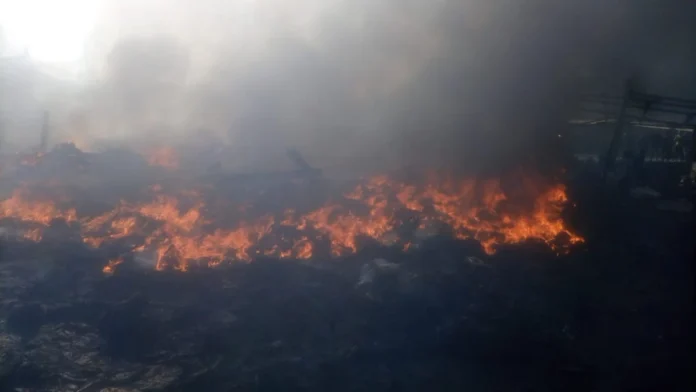
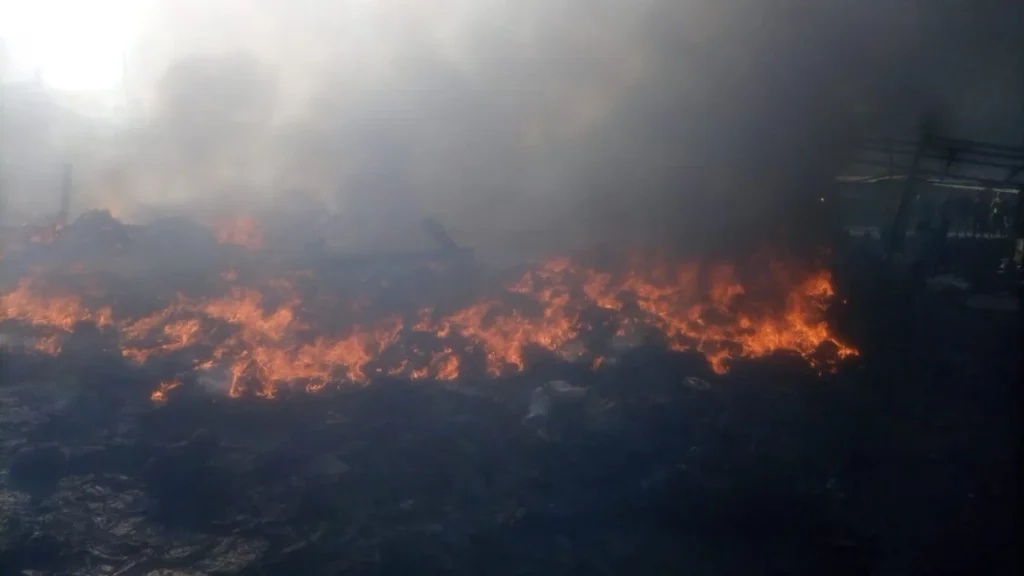
Trilla, IL – April 20, 2025 — A devastating aviation accident in Trilla, Illinois, has claimed the lives of four people after a single-engine Cessna 180 aircraft collided with power lines and crashed onto a roadway, erupting into a fireball. Authorities confirmed that all occupants were pronounced dead at the scene.

The crash occurred around 10:15 a.m. Saturday, approximately 200 miles south of Chicago, and sent shockwaves through the rural community of Coles County. Video footage circulating online showed the aircraft’s wreckage engulfed in flames, scattered across a road and an adjacent field.

The Illinois State Police (ISP) identified the victims as two men and two women from Menomonie, Wisconsin, though their names have not yet been released pending family notifications.

“All four occupants were pronounced deceased at the scene. The aircraft remains in the roadway, and the road will be closed until further notice,” ISP stated in an official release. “This is an active and ongoing investigation.”

According to CBS News and the Federal Aviation Administration (FAA), the Cessna 180 crashed southeast of Coles County Memorial Airport after striking overhead power lines, triggering a fiery explosion on impact. The blaze continued to smolder for hours until emergency crews managed to secure the area.

The FAA and the National Transportation Safety Board (NTSB) have launched a joint investigation into the cause of the crash. NTSB officials are expected to arrive on site by Sunday to begin a full probe, including analysis of the aircraft’s flight path, maintenance records, and pilot qualifications.

At this time, authorities have not disclosed the plane’s origin or intended destination.

Nearby resident Kynnedi Goldstein described the terrifying moment of the crash:

“I was getting ready to turn on a show, and all of a sudden I hear this loud boom,” she told CBS News Chicago. “Our power went out for a second, and then our generator kicked in. I ran to the sunroom and saw a huge plume of smoke rising.”

The downed aircraft disrupted electrical service in the area and prompted a heavy response from local fire departments, state police, and emergency management teams.

Illinois Governor J.B. Pritzker issued a statement on social media platform X (formerly Twitter), calling the crash “a terrible tragedy,” and commending the swift actions of first responders who rushed to the site.

This latest crash in Illinois is part of a troubling trend of fatal air incidents across the United States in recent days:

  • On Friday, three people were killed when a small aircraft crashed into a river in Nebraska.
  • Earlier in the week, a helicopter crash over the Hudson River claimed six lives, including an 8-year-old girl and Siemens executive Agustin Escobar with his family.
  • A separate crash last weekend killed a family of top doctors as they flew to the Catskills for a birthday and Passover celebration. The plane disintegrated in a muddy field near Copake, New York, just 10 miles from their destination.

Aviation authorities are facing increased scrutiny over safety protocols as investigations continue into each of these devastating incidents.