Home Blog Page 363

Israeli Airstrikes Kill 25 in Gaza Amid Ongoing Conflict; U.S. Ambassador Mike Huckabee Makes Debut in Jerusalem

At least 25 Palestinians, including children, were killed in a fresh wave of Israeli airstrikes across Gaza on Friday, according to hospital officials, intensifying an already dire humanitarian crisis and dimming hopes for renewed ceasefire talks. The latest bombardments came as newly appointed U.S. Ambassador to Israel Mike Huckabee made his first public appearance in Jerusalem, marking a symbolic step in the Biden administration’s deepening diplomatic engagement amid the war.

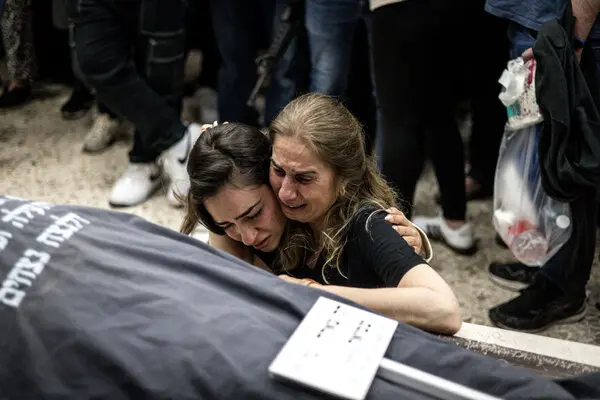
Medical officials at Nasser Hospital in Khan Younis reported receiving 15 bodies following three separate Israeli strikes on the southern city. In northern Gaza, another 10 people were killed in Jabaliya, including eight members of a single family, according to the Indonesian Hospital. The total number of casualties may rise as rescue efforts continue.

These latest strikes follow Thursday’s deadly bombings that killed more than two dozen people across the enclave. Israeli forces have intensified operations as pressure mounts on Hamas to disarm and return hostages abducted during the 

Meanwhile, U.S. Ambassador Mike Huckabee made his first official appearance in Jerusalem, visiting the Western Wall—the holiest prayer site in Judaism. Huckabee, a former governor and presidential candidate, placed a handwritten note in the Wall, which he said was penned by U.S. President Donald Trump and signed with his initials “D.T.”

Speaking to reporters, Huckabee said President Trump had instructed him to “pray for the peace of Jerusalem.” He reaffirmed the U.S. commitment to securing the release of the remaining hostages held by Hamas and emphasized that efforts were underway to facilitate new negotiations. While Huckabee has previously voiced support for controversial Israeli policies, including annexation of the West Bank, he stated that it would not be his role to push those agendas as ambassador.

His appointment comes at a critical juncture in the 18-month conflict, as international mediators, led by the U.S., attempt to revive a collapsed ceasefire agreement reached earlier this year.

The core of the ceasefire negotiations remains the return of hostages taken by Hamas during its Oct. 7, 2023 cross-border assault, which left approximately 1,200 people dead and 251 abducted. Israel insists any new truce must begin with the release of remaining hostages and culminate in Hamas’ disarmament and withdrawal from Gaza.

However, Hamas has rejected the latest Israeli proposal. Speaking Thursday, senior Hamas negotiator Khalil al-Hayya reiterated the group’s conditions: a full Israeli withdrawal, a permanent ceasefire, and a large-scale prisoner exchange. Hamas currently holds 59 hostages, 24 of whom are believed to still be alive.

Friday’s bombings came amid heightened warnings from humanitarian organizations over Israel’s six-week-long blockade of Gaza, which has effectively halted the flow of food, medicine, and fuel into the territory. The United Nations has sounded alarms over rapidly increasing child malnutrition rates, with many families surviving on one sparse meal per day as supplies dwindle.

Israel’s Defense Minister has defended the blockade as a strategic pressure tactic aimed at cutting off Hamas’ lifelines. However, aid agencies dispute allegations that humanitarian aid is being diverted by militants, insisting that U.N. distribution is closely monitored. Rights groups have denounced the blockade as a “starvation tactic” in violation of international law.

Despite the ongoing war, Gaza’s Christian minority gathered on Friday to commemorate Good Friday inside the Greek Orthodox Church of St. Porphyrios—believed to be the third-oldest church in the world. Worshippers lit candles and prayed in solemn remembrance of Jesus’ crucifixion. The church compound itself was damaged in an October 2023 strike that killed more than a dozen civilians sheltering inside.

Before the war, Gaza was home to around 1,300 Christians, according to the U.S. State Department. Their numbers have since dwindled amid displacement and destruction.

Since Israel launched its retaliatory offensive in October 2023, more than 51,000 Palestinians—primarily women and children—have been killed, according to Gaza’s Health Ministry. The conflict has razed vast swaths of the territory, destroyed much of its agricultural infrastructure, and displaced roughly 90% of the population. Hundreds of thousands of residents now live in makeshift tent camps and bombed-out buildings, dependent on dwindling aid supplies and uncertain international relief.

With ceasefire negotiations once again at a standstill and casualties mounting by the day, diplomatic observers warn the window for peace may be closing fast. The arrival of Ambassador Huckabee signals renewed U.S. involvement—but whether it will bring about meaningful progress remains to be seen.

Deadliest U.S. Strike in Yemen Kills 74 at Red Sea Fuel Terminal, Houthis Say

The United States carried out its deadliest airstrike in Yemen to date on Thursday, killing at least 74 people and injuring 171 more in a targeted attack on the Ras Isa fuel terminal, according to the Houthi-run health ministry. The Red Sea port facility, located roughly 55 kilometers north of the city of Hodeidah, was heavily damaged in what has become the most lethal single strike in Washington’s campaign against the Iran-aligned Houthi movement.

The airstrike was part of a broader military escalation ordered by President Donald Trump last month—marking the largest U.S. military operation in the Middle East since he assumed office in January. The Trump administration has vowed to keep up the pressure on the Houthis until they fully halt their attacks on international shipping lanes in the Red Sea.

The U.S. military confirmed the strike but did not comment on the casualty figures released by the Houthis. In a brief statement posted on X, U.S. Central Command said the strike was aimed at degrading “the economic source of power of the Houthis, who continue to exploit and bring great pain upon their fellow countrymen.” The Ras Isa terminal is a critical node in the Houthi-controlled economy, generating hundreds of millions of dollars in revenue annually through fuel import taxes.

According to Yemeni sources, the port serves not only as a commercial fuel hub but also hosts a substantial military presence. The strike reportedly killed employees of both the Safer Oil Company, which operates the terminal, and the Yemen Petroleum Company, which oversees the distribution of imported fuel.

Health ministry spokesman Anees al-Asbahi described the bombing as “a massacre,” stating that emergency crews were still working to extract bodies from the rubble as of Friday morning. He warned that the death toll could rise significantly as search and rescue efforts continue.

Washington and its allies, including Israel, have previously targeted the Ras Isa facility, which they believe has been used by the Houthis to launch drones and missiles aimed at commercial and military vessels in the Red Sea. Since November 2023, the Houthis have launched dozens of such attacks, claiming they were targeting ships linked to Israel in protest of the war in Gaza.

Although the group observed a temporary ceasefire during a two-month pause in Israeli operations, they pledged to resume attacks following Israel’s renewed assault on Gaza in March. Despite that vow, no new Red Sea attacks have been confirmed in recent weeks, prompting questions about the Houthis’ current military capabilities or strategy.

U.S. officials maintain that the Ras Isa strike was necessary to sever a key logistical and financial artery sustaining the group’s military operations. With a storage capacity of around 3 million barrels, the facility is one of Yemen’s largest and most strategically significant fuel terminals.

The deadly strike underscores the Trump administration’s increasingly aggressive posture toward the Houthis and their Iranian backers. While the U.S. has focused its diplomatic efforts on resolving the conflict in Ukraine, its military attention in the Middle East is expanding—particularly in response to the Houthis’ growing influence and disruption of global trade routes through the Red Sea.

In March, a similar two-day barrage of U.S. airstrikes killed more than 50 people, according to Houthi officials. Thursday’s bombing now surpasses that in both scale and impact, drawing international scrutiny amid escalating regional tensions.

President Trump has defended the strikes as necessary to protect global commerce and U.S. interests in the region. Critics, however, warn that such operations risk deepening Yemen’s humanitarian crisis and further destabilizing the war-torn country.

As images of the destroyed terminal and mangled debris circulated on social media, humanitarian organizations urged restraint and called for independent investigations into the attack. The U.N. has yet to issue an official response but has repeatedly warned that targeting civilian infrastructure could constitute a violation of international law.

Regional observers say the strikes may signal a shift in U.S. tactics from containment to crippling economic warfare, aimed at forcing the Houthis into submission or to the negotiating table. Yet, with the group still in control of large swathes of northern Yemen and significant military assets, the long-term effectiveness of such strikes remains uncertain.

For now, Ras Isa lies in ruins, its port operations halted, and dozens of families left mourning. As the U.S. continues its campaign, the question looms: will this intensification bring peace to the Red Sea—or ignite a broader, more dangerous conflict in the Middle East?

US Threatens to Abandon Ukraine Peace Talks Amid Stalled Progress, Trump and Rubio Warn

The United States is poised to withdraw from its push to broker peace between Russia and Ukraine unless there is immediate and tangible progress, President Donald Trump and Secretary of State Marco Rubio signaled Friday. Their statements reflect rising frustration in Washington over stalled negotiations and the growing belief that diplomatic momentum is fading fast.

Speaking from the White House, Trump made clear that while he remains committed to ending the war, patience is wearing thin. “Quickly, we want to get it done,” he told reporters. “If one of the parties makes it very difficult, we’re going to say, ‘You’re foolish, you’re fools, you’re horrible people,’ and we’re going to just take a pass. But hopefully we won’t have to do that.”

Rubio echoed this urgency during remarks in Paris following high-level talks with European and Ukrainian leaders, emphasizing that Washington will not allow negotiations to drag on indefinitely. “We’re not going to continue with this endeavour for weeks and months on end,” he said. “We need to determine very quickly—within days—whether or not this is doable in the next few weeks. If it’s not, I think the president is at a point where he’s going to say, ‘We’re done.’”

While Trump declined to name a firm deadline, he reinforced Rubio’s stance. “Marco’s right… we want to see it end,” Trump said. When asked whether Russian President Vladimir Putin was intentionally delaying peace, Trump replied, “I hope not.”

According to multiple diplomatic sources, White House frustration has been mounting over what officials perceive as Russia’s reluctance to negotiate in good faith. Recent attempts to reignite talks—including high-level discussions in Saudi Arabia and now in Paris—have produced only limited outcomes, such as partial ceasefires, without resolving broader territorial and political disputes.

Kremlin spokesman Dmitry Peskov acknowledged “some progress” had been made, but noted that discussions with Washington remained “difficult.” He reiterated that Moscow remained open to dialogue but insisted Russia’s national interests must be preserved in any resolution.

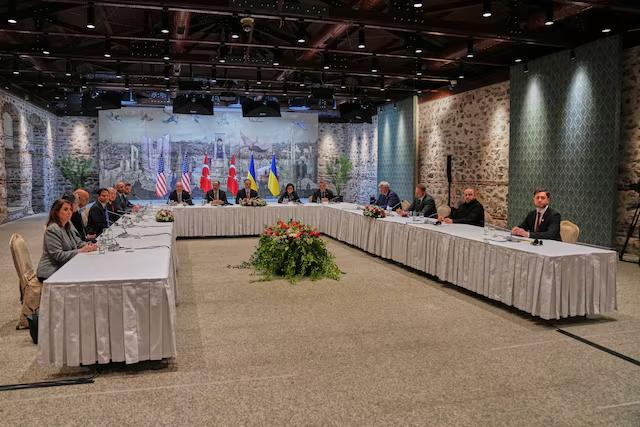
The most recent Paris meeting marked the first in-person talks involving the US, Ukraine, and key European powers under the Trump administration’s peace initiative. Rubio said the US proposal for a ceasefire and roadmap toward broader peace received an “encouraging reception.” Ukrainian President Volodymyr Zelenskiy’s office described the discussions as “constructive and positive.”

Vice President JD Vance, speaking from Rome after meetings with Italian Prime Minister Giorgia Meloni, said he remained “optimistic” that the US could help end the war, which he called a “very brutal conflict.” A US official confirmed that the next round of talks is scheduled to take place in London next week, with hopes that Ukraine will agree to a preliminary “term sheet” including a 30-day comprehensive ceasefire over land, sea, and air.

Trump initially promised during his campaign to end the Ukraine war within 24 hours of taking office. After assuming the presidency, he extended that timeline, aiming for a peace agreement by April or May. As military and political complications mounted, however, that ambition has met significant resistance.

The president has applied pressure on both Kyiv and Moscow to return to the negotiating table—threatening tighter sanctions on Russia while also warning of a potential end to the flow of US military aid to Ukraine if talks continue to stall.

Despite earlier hopes raised by the US-led meeting in Saudi Arabia, the outcome has been limited. The conflict rages on, punctuated by continued violence, including a deadly missile strike on Sumy in northeastern Ukraine that killed 35 civilians—an incident Trump called “a mistake.”

A source familiar with internal White House deliberations said Trump has begun to question whether remaining in the peace process is worthwhile, given the lack of traction and the risk of the conflict becoming “Trump’s war.” Rubio’s statements, the source added, were designed to publicly reflect Trump’s growing impatience.

Should the US withdraw from its role in negotiations, the peace process could falter altogether. With no other global power capable of exerting similar leverage over both Moscow and Kyiv, Washington’s exit would leave a dangerous vacuum.

Still, what follows remains unclear. The US could choose to maintain its current posture—enforcing sanctions on Russia and continuing aid to Ukraine—or pivot more drastically, cutting off military support and reshaping its entire Ukraine strategy.

In a separate development, Trump mentioned plans to sign a mineral rights deal with Ukraine next week—reviving a proposal that collapsed in February following tensions between Zelenskiy, Vice President Vance, and other Republican leaders.

Meanwhile, Rubio confirmed that he spoke directly with Russian Foreign Minister Sergei Lavrov following the Paris talks to brief him on the US peace framework. However, significant divides remain.

Putin has demanded that Ukraine relinquish its bid for NATO membership, formally cede four contested regions to Russia, and drastically reduce the size of its military—terms that Kyiv considers unacceptable and tantamount to surrender.

Rubio acknowledged that European nations would play a key role in any final agreement, particularly when it comes to lifting sanctions on Russia as part of a settlement. Discussions also touched on potential US security guarantees, which he said could be addressed in ways “acceptable to everyone.” But he warned that these were secondary to more urgent obstacles facing the peace effort.

As the clock ticks, the White House is sending a clear message: without rapid and meaningful progress, the US is prepared to walk away from the negotiating table—leaving the fate of the Russia-Ukraine conflict in even deeper uncertainty.

Russia Removes Taliban from Terror List in Strategic Shift Toward Engagement

In a significant geopolitical move, Russia’s Supreme Court on Thursday formally lifted the long-standing designation of Afghanistan’s Taliban as a terrorist organization—ending more than two decades of official restrictions on engagement with the group.

The ruling, requested by Russia’s Prosecutor General’s Office, clears a major legal hurdle for future diplomatic, political, and economic relations between Moscow and Kabul. The Taliban had been labeled a terrorist entity by the Russian government in 2003, making any interaction with the group a prosecutable offense under Russian law. That label, however, stood increasingly at odds with Russia’s evolving foreign policy priorities in the region.

The Taliban’s resurgence in August 2021, following the chaotic U.S. and NATO withdrawal from Afghanistan, prompted a reconsideration of Moscow’s stance. While Russia never formally recognized the Taliban as Afghanistan’s legitimate government, it has hosted Taliban delegations at various forums and treated the group as the de facto rulers of the country. Thursday’s court decision now aligns Russia’s legal framework with its pragmatic diplomacy.

“This is a legal correction that matches political reality,” said Ibraheem Bahiss, a senior analyst with Crisis Group’s Asia Program. He explained that the former terrorist designation had created “a legal impairment for trade and political ties with Kabul,” which are now easier to pursue.

Russia is not alone in changing its stance. In recent years, Central Asian neighbors Kazakhstan and Kyrgyzstan have also removed the Taliban from their national terror lists. These shifts reflect a growing regional consensus that some level of engagement with the Taliban is necessary to maintain stability in Central Asia, particularly in light of concerns about extremist offshoots like Islamic State-Khorasan (ISIS-K), which has openly threatened both Taliban rule and Russian interests.

Michael Kugelman, a South Asia expert, characterized the decision as “not groundbreaking,” noting that many countries—including some in the West—never officially designated the Taliban as a terrorist group. Still, he said the ruling is a “win-win” that allows Russia to deepen its regional influence while offering the Taliban a much-needed boost in international legitimacy.

Despite this diplomatic success, the Taliban continue to face heavy criticism over their human rights record, especially regarding the treatment of women and girls. Since taking control in 2021, the group has reimposed draconian policies reminiscent of their first regime (1996–2001), banning girls from attending school beyond the sixth grade and restricting women from most forms of employment and public life.

These restrictions have severely limited international recognition and foreign aid to Afghanistan. While some Taliban factions reportedly support softening these policies to attract global assistance and investments, the leadership has thus far remained largely uncompromising.

The United Nations has repeatedly urged the Taliban to reverse their bans, while major donor nations have tied financial aid to the restoration of basic rights and freedoms. Yet, Taliban leaders have instead leaned on alternative diplomatic relationships with countries like China, Qatar, and the United Arab Emirates.

Russia’s interest in Afghanistan is deeply rooted in its historical ties. The former Soviet Union waged a brutal ten-year war in Afghanistan beginning in 1979, ultimately withdrawing in 1989 after suffering major losses. Since then, Russian policymakers have viewed the country as a volatile yet strategically critical neighbor.

With the new ruling, Moscow appears poised to expand its influence in Afghanistan, not through military intervention, but through diplomacy, trade, and regional security cooperation. As Bahiss noted, “Beyond making it easier for individuals and businesses to engage with Afghanistan, I am not sure what other major benefit this will have.” Still, the move represents a symbolic and practical shift that could reshape regional dynamics.

The court’s decision does not signal full diplomatic recognition of the Taliban, but it paves the way for deeper political engagement and potentially greater economic cooperation—at a time when both Russia and Afghanistan are seeking new allies in a rapidly evolving global order.

Man,20, Charged in High-Speed A1 Police Chase Crash That Injured Seven Officers

A 20-year-old man has been formally charged following a high-speed police pursuit that ended in a multi-vehicle crash on the A1 in Tyneside, Northern England, leaving seven police officers injured and causing significant damage to law enforcement vehicles. The dramatic early-morning incident on April 9 led to the closure of the northbound carriageway near the Derwent Haugh Road junction, straddling the Gateshead and Newcastle border.

Northumbria Police identified the suspect as Mazyar Azarbonyad, of Sylvia Terrace in Durham. He is facing a series of serious charges, including dangerous driving, two counts of failing to stop for police, two counts of driving without a licence, and two counts of driving without insurance. Azarbonyad is scheduled to appear before Newcastle Magistrates’ Court on Saturday.

The crash, which occurred around 2:25 a.m., involved a total of five police vehicles and a BMW, the latter believed to have been driven by the suspect. Graphic images from the scene showed extensive damage to several of the police units, with debris scattered across the roadway and one patrol car’s roof completely torn off in the collision.

Seven police officers were injured in the crash, though they have since been discharged from hospital. Fortunately, both occupants of the BMW, including Azarbonyad, were reported to have escaped physical harm.

A Northumbria Police spokesperson confirmed that the incident began after officers attempted to stop a vehicle in the Whickham area of Gateshead due to concerns over its erratic driving. The driver failed to comply, and the vehicle was later spotted in the Swalwell area, prompting a coordinated pursuit by specially trained traffic officers.

A woman in her 20s, who was arrested on suspicion of aiding and abetting dangerous driving, will not face charges in relation to the crash itself. However, she remains under investigation for alleged drug possession and has been released on bail pending further inquiries.

The chase and subsequent crash have raised concerns over driver safety and the risks officers face during high-speed pursuits. Authorities are now piecing together the sequence of events that led to the collision, which caused extensive damage to police property and disrupted traffic in the early morning hours.

Following the crash, the northbound A1 was closed for several hours as emergency services responded to the scene and accident investigators examined the wreckage. Cleanup crews later worked to clear the debris and restore traffic flow.

Mazyar Azarbonyad remains in custody and is expected to face court proceedings that could result in substantial penalties if convicted on all charges. Dangerous driving, particularly in connection with fleeing law enforcement, is treated as a serious offence in the UK and can carry lengthy custodial sentences, alongside driving bans and financial penalties.

Northumbria Police have reiterated their commitment to holding dangerous drivers accountable and emphasized the dedication of their officers who put themselves at risk to protect the public.

As the legal process unfolds, further updates are expected on the investigation and the suspect’s court appearance. The force is also reviewing the incident to determine whether any procedural changes are needed to improve safety during future vehicle pursuits.

UPDATED: FSU Campus Shooting Suspect Identified as Deputy’s Son; Two Dead, Six Injured in Tragic Attack

The gunman behind the deadly shooting at Florida State University’s Tallahassee campus has been identified as Phoenix Ikner, the 20-year-old son of Leon County Sheriff’s Deputy Jessica Ikner. The devastating attack on Thursday left two people dead and six others injured, plunging the campus into chaos and triggering an intensive multi-agency response.

Authorities say Ikner used a handgun once issued to his mother as part of her law enforcement duties—a weapon she later retained as a private firearm. The incident, which unfolded near FSU’s bustling Student Union, is now being investigated by the FBI, the Tallahassee Police Department, the Leon County Sheriff’s Office, and federal authorities.

Tallahassee Police Chief Lawrence Revell confirmed that the firearm recovered at the scene had previously been issued to Ikner’s mother but had become her private weapon at the time of the shooting. Ikner was described as “steeped in the Leon County Sheriff’s Office family” and had previously participated in the agency’s youth programs and law enforcement training initiatives.

Leon County Sheriff Walt McNeil, speaking at a press conference, acknowledged Ikner’s ties to the department and expressed sorrow over the tragedy. “This is someone who grew up connected to our office,” he said. “It’s devastating for everyone involved.”

Ikner was injured during the incident and is currently hospitalized in custody. Police say they recovered multiple firearms, including a shotgun and pistol, and located a grey sedan near campus that may be linked to the attack.

Social media posts and prior interviews are painting a disturbing picture of the suspect’s mindset. In one cryptic message posted online, Ikner quoted the Book of Jeremiah: “You are my war club, my weapons for battle, with you I shatter nations, with you I destroy kingdoms.” The biblical reference has raised concerns that he may have been planning the attack with apocalyptic undertones.

Ikner had also mocked student protests following the 2024 presidential election. In a quote published in the FSU student magazine, he said of protestors: “These people are usually pretty entertaining, usually not for good reasons. I think it’s a little too late… unless you outright revolt, and I don’t think anyone wants that.” Ikner was studying political science at the university.

Witnesses described the moment violence broke out on campus as sudden and terrifying. Students were seen fleeing the Student Union, some dropping food, bags, and belongings in the scramble for safety. In one harrowing video, students hid under desks while someone outside the door repeatedly pounded and shouted, “Open up!” The classroom remained silent, filled with fear.

Paramedics rushed to the scene as emergency alerts locked down the university. One viral image captured a shooting victim being carried to safety on the shoulders of emergency personnel. The chaos continued as multiple agencies secured the area, evacuating buildings one by one and locking down nearby schools.

Tallahassee Memorial Healthcare confirmed it was treating six victims from the shooting—one in critical condition and the others in serious condition. The names of the victims have not yet been released.

Florida State University canceled all classes and events for the remainder of the day. Authorities later announced that students could return to their residence halls, though the Student Union remained an active crime scene. Personal belongings left in the area were temporarily inaccessible as investigators processed the scene.

Florida Governor Ron DeSantis and President Donald Trump both issued statements following the attack, offering condolences and confirming that law enforcement was fully engaged in the response. “Our prayers are with our FSU family,” DeSantis stated, echoing the sorrow felt across the state.

This is not the first time FSU’s Tallahassee campus has faced a deadly shooting. In 2014, a former student opened fire inside the Strozier Library, wounding three before being killed by police. Thursday’s shooting marks another dark chapter for a university community known for its vibrant academic life and alumni that include icons like actor Burt Reynolds and musician Jim Morrison.

The tragedy has reignited urgent conversations around firearm access—particularly within law enforcement households. Investigators are examining how Ikner gained access to the weapon and whether any lapses in storage protocols may have played a role.

As the investigation continues, FSU students, faculty, and families are left grappling with the trauma of a day that began like any other but ended in unthinkable violence. The university and local leaders are now working to provide mental health support and healing resources to those affected, while the search for answers presses on.

Florida State University remains under heightened security as officials vow to bring clarity and accountability in the wake of one of the most devastating campus attacks in recent memory.

Cocaine Valued at £100,000 Discovered Hidden in British Airways Plane Toilet During Routine Maintenance at Gatwick

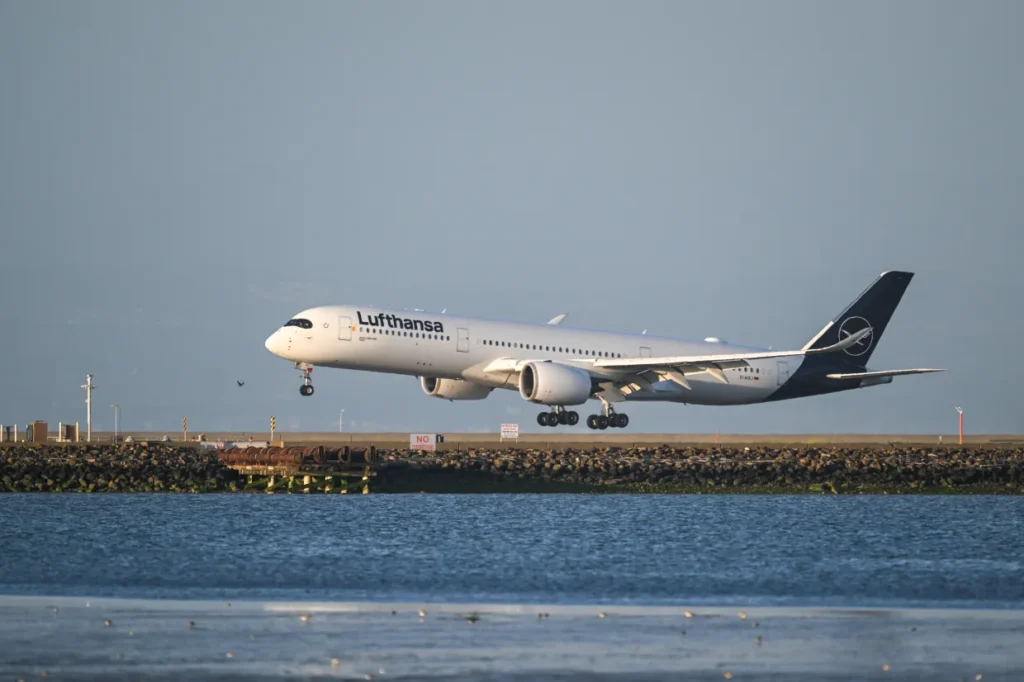
A major drug smuggling attempt was thwarted at London’s Gatwick Airport after a British Airways aircraft undergoing routine maintenance was found to have £100,000 worth of cocaine hidden in one of its lavatories.

The discovery was made by a service engineer who was carrying out standard checks on the Boeing aircraft after it arrived from Orlando, Florida. The plane had been taken into a hangar for scheduled maintenance when the illicit stash was discovered tucked behind a panel in a lavatory, hidden discreetly behind a waste bin.

Upon finding the suspicious package, the engineer immediately alerted authorities. The National Crime Agency (NCA) and Border Force have since launched a full-scale investigation into what officials are calling a “serious security breach.”

A source close to the investigation described the find as “an astonishing discovery”, emphasizing how concerning it is that such a large quantity of illegal drugs managed to get onboard an international flight.

“This is a serious breach in airport and airline security,” the source said. “Someone managed to smuggle a significant quantity of Class A drugs onto a transatlantic flight. It’s deeply troubling, especially considering the potential for even more dangerous substances to have been transported the same way.”

According to the source, the cocaine was expertly hidden with the clear intention of being retrieved once the aircraft had landed in the UK. However, the timing of the routine checkup thwarted the operation. “Whoever planted it didn’t count on the aircraft going into maintenance straight after landing,” the source explained. “They got very unlucky.”

Due to the secure nature of aircraft cabins and the specific location of the hidden cocaine—within a concealed panel behind a lavatory bin—investigators suspect that an insider may have been involved in placing the drugs onboard. “It’s unlikely that a passenger would have had the access or time to hide something so precisely,” the source added.

“This kind of placement suggests someone with knowledge of the aircraft’s layout and access to restricted areas, such as a crew member, baggage handler, or cleaner. These are people who can move around discreetly and without raising suspicion.”

The insider added ominously, “Whoever was responsible will be in serious trouble. That kind of product isn’t lost without consequence—criminal groups don’t take these things lightly.”

The NCA and Border Force are currently analyzing surveillance footage, flight records, and crew logs to trace who might have been responsible. Both agencies are also working to determine whether the case is linked to a larger international drug smuggling network.

A spokesperson for the Home Office issued a strong warning to those involved in drug trafficking: “Those who attempt to smuggle illegal drugs into the UK should be in no doubt—Border Force will find them. We are committed to dismantling the criminal operations that threaten the safety of our communities.”

British Airways has declined to comment publicly while the investigation remains ongoing.

The incident comes amid heightened concerns over the use of commercial aircraft for drug trafficking, particularly involving insider threats. Airport and airline staff across the UK have faced increasing scrutiny in recent years as organized crime groups seek new methods to bypass traditional border checks.

This latest bust highlights the critical importance of rigorous post-flight inspections and inter-agency cooperation in identifying and disrupting smuggling operations.

As investigators continue to piece together the details, the incident serves as a stark reminder of the evolving tactics used by criminal enterprises—and the vigilance required to stay one step ahead.

Trump Criticizes Fed Chair Jerome Powell, Suggests He Could Be Removed Over Interest Rate Dispute

President Donald Trump sharply criticized Federal Reserve Chair Jerome Powell on Thursday, accusing him of playing politics with interest rates and openly suggesting that he could be removed from his position—remarks that have reignited debates over the independence of the central bank and the potential for a legal battle with sweeping economic implications.

Speaking during a press conference in the Oval Office alongside Italian Prime Minister Giorgia Meloni, Trump expressed deep dissatisfaction with Powell’s handling of monetary policy, saying, “If I want him out, he’ll be out of there real fast, believe me. I’m not happy with him.” The comment followed an earlier post on Trump’s social media platform in which he demanded an interest rate cut and declared that “Powell’s termination cannot come fast enough!” Though Powell’s current term as Fed chair does not expire until May 2026, Trump’s renewed hostility raises questions about the legal boundaries of presidential authority over the Federal Reserve.

Powell, originally appointed by Trump in 2017 and later reappointed to a second term by President Joe Biden in 2022, has repeatedly emphasized the legal protections that insulate the Fed from political interference. Just a day prior to Trump’s comments, Powell reaffirmed that the Federal Reserve’s independence is mandated by law. “We’re not removable except for cause. We serve very long terms—seemingly endless terms,” he remarked during a speech in Chicago. He also reiterated that the central bank’s policy decisions are guided solely by the goal of supporting the broader American economy, stating, “That’s the only thing we’re ever going to do. We’re never going to be influenced by any political pressure.”

Trump’s latest attacks are rooted in his belief that interest rates should be falling, not holding steady or rising. He has insisted that inflation is no longer a pressing issue, describing the current environment as one where “we have essentially no inflation.” Yet official data tells a different story. Inflation, which spiked to 9.1% in 2022, has since eased significantly, falling to 2.4%—just above the Fed’s long-standing 2% target. Nevertheless, Powell and other Fed officials have indicated that they are maintaining the current rate levels in response to uncertainties surrounding the economic impact of Trump’s proposed tariffs and tax policies.

The president has called for sweeping tariffs, including a 10% blanket tax on all imports and a staggering 145% tariff on goods from China. Economists and central bankers alike have warned that such measures are likely to increase inflationary pressure by driving up costs for consumers and businesses. Powell has explicitly stated that the Fed is holding off on any further rate cuts until it gains more clarity on how these trade policies will affect the economy, cautioning that tariffs may further complicate the Fed’s task of controlling inflation.

The ongoing tension between Trump and Powell has once again underscored the importance of the Fed’s autonomy. Economists widely agree that an independent central bank is better positioned to make difficult but necessary policy decisions without succumbing to short-term political agendas. Historical examples—such as President Nixon’s influence on the Fed to keep rates low ahead of the 1972 election, which contributed to runaway inflation—serve as cautionary tales.

Despite Trump’s criticism, Wall Street markets appeared relatively unfazed by his comments, a possible indication that investors still believe in the institutional strength and independence of the Federal Reserve. Still, analysts are watching closely, particularly in light of a case pending before the Supreme Court that could alter the legal standards for how presidents may dismiss top officials from independent federal agencies. While it’s unclear whether the outcome of that case would directly affect the Federal Reserve, it could set a precedent with serious ramifications.

In a past interview with Bloomberg News, Trump had suggested that he would allow Powell to finish his term if reelected. However, his recent statements and social media rhetoric indicate a dramatic shift in tone. One of Trump’s top economic advisers, Kevin Hassett, recently said in a televised interview that “there’s not going to be any political coercion over the Fed, for sure.” But the president’s escalating criticism of Powell may cast doubt over that assurance.

Trump’s economic policies—particularly the proposed tariff hikes—have already had a measurable impact. Following the announcement of new import taxes on April 2, financial markets reacted swiftly, prompting Trump to declare a 90-day pause on implementation. Analysts at Goldman Sachs have since increased the probability of a recession, citing the inflationary effects of the tariffs and slowing economic growth. Consumer sentiment has also dipped, with more Americans expressing concern over job security and rising costs of goods and services.

An analysis by Yale University’s Budget Lab estimated that the inflationary burden of Trump’s proposed trade policies would effectively cost the average U.S. household nearly $4,900 annually. As economic conditions grow more uncertain, Powell’s role as a stabilizing force has come under increasing scrutiny from political leaders—especially Trump, who appears eager to shift the narrative ahead of the 2024 election.

The standoff between Trump and Powell is not just a political dispute; it represents a broader ideological clash over how monetary policy should be conducted in a volatile global economy. As the Federal Reserve prepares for future decisions, its commitment to independence will likely be tested again and again, especially if the rhetoric from Trump’s camp continues to intensify.

Tragedy Strikes Florida State University as Campus Shooting Leaves One Dead, Several Injured

A routine day on the Florida State University (FSU) campus in Tallahassee descended into chaos on Thursday after a mass shooting near the Student Union left one person dead and at least six others injured. According to multiple law enforcement sources and a statement from Tallahassee Memorial HealthCare, one of the injured victims remains in critical condition while five others are being treated for serious injuries. Authorities have warned that the number of casualties could increase as investigations continue and more information becomes available.

The shooting unfolded shortly after midday, triggering a campus-wide emergency alert instructing students and faculty to shelter in place. The threat, officials later confirmed, was “neutralized,” and the area surrounding the Student Union has since been secured by law enforcement. However, the psychological toll remains high as the university community grapples with yet another mass shooting in a country plagued by gun violence.

Sophomore Paula Maldonado, who was attending a class just steps away from the Student Union, described a terrifying scene to ABC News. She recalled hearing loud shouting outside the classroom shortly before the university’s active threat alarm system blared through the building. “Everyone in my class quickly turned off the lights, put desks to block off the door and hid by the front of the classroom,” she said. Maldonado recounted the fear and confusion as students whispered and some cried, attempting to comfort each other in the dark. “A student next to me told me to put my backpack in front of me to protect myself,” she added, describing the surreal moment when a police officer entered the room. “I thought it was the shooter. It was very scary.”

Another student, Daniella Streety, shared a similarly jarring experience. She was in a building just across the street from the Student Union when sirens began to wail and a crowd of people suddenly rushed inside seeking shelter. She watched as students fled the Student Union building while law enforcement swarmed the area, forming a perimeter and checking buildings for potential threats.

In the wake of the violence, FSU officials announced that all classes would be canceled through Friday. Leon County public schools were also placed on lockout “as a precaution,” according to district officials.

The national response to the shooting was swift. Fred Guttenberg, whose daughter Jaime was one of the 17 students killed in the 2018 Marjory Stoneman Douglas High School shooting in Parkland, expressed his heartbreak over the fact that some of Jaime’s former classmates—now FSU students—experienced a second school shooting. “Incredibly, some of them were just a part of their second school shooting and some were in the Student Union today,” he wrote in an emotional post on social media. “As a father, all I ever wanted after the Parkland shooting was to help our children be safe. Sadly, because of the many people who refuse to do the right things about reducing gun violence, I am not surprised by what happened today.”

Government officials echoed the sentiment. Department of Homeland Security Secretary Kristi Noem issued a statement expressing sorrow and solidarity: “My heart breaks for the students, their families, and faculty at Florida State University. There is no place in American society for violence. Our entire nation is praying for the victims and their families.” White House Press Secretary Karoline Leavitt confirmed that President Donald Trump had been briefed on the situation.

Thursday’s tragedy has reignited calls for serious national discourse around gun violence, particularly in educational institutions. Florida State University now joins the long list of American campuses scarred by shootings, while students, faculty, and families confront the emotional aftermath of yet another senseless act of violence.

As investigations into the motive and identity of the shooter continue, the FSU community remains united in grief and resilience, determined to support one another through this traumatic event.

American Pastor Rescued in South Africa After Dramatic Police Shootout with Kidnappers

In a harrowing ordeal that gripped both South Africa and the United States, a 45-year-old American pastor who was kidnapped during a live sermon in the Eastern Cape province has been rescued unharmed after a deadly confrontation between South African police and his abductors.

Josh Sullivan, a Tennessee native and long-serving missionary with the Fellowship Baptist Church in Motherwell, was seized on Thursday evening during a church service when four armed and masked men stormed the sanctuary. Congregants were left stunned as the attackers not only stole mobile phones from church members but forcefully abducted Sullivan from the pulpit. Witnesses reported that the attackers displayed aggressive behavior before bundling him into a vehicle. His truck was later found abandoned, raising concerns that his captors had relocated him.

The kidnapping triggered an urgent, multi-agency investigation led by South Africa’s Anti-Gang Unit and the Serious Organised Crime Unit. After days of intense tracking, authorities narrowed down Sullivan’s location to a residence in KwaMagxaki, a suburb of Gqeberha located roughly 20 minutes from the scene of the abduction. Acting on intelligence, police moved in on Tuesday night.

What followed was a tense and violent confrontation. As police surrounded the targeted house, a car parked outside suddenly sprang to life. The occupants attempted to flee, opening fire on law enforcement officers. A fierce shootout ensued, resulting in the deaths of three suspects, all of whom remain unidentified at this time.

In the aftermath of the gunfire, officers discovered Sullivan inside the very vehicle from which the attack had been launched. According to police spokesperson Lieutenant Colonel Avele Fumba, the missionary was miraculously unharmed despite the violent confrontation. Medical personnel on the scene conducted a preliminary assessment and confirmed that Sullivan was in excellent physical condition.

The news of his safe recovery has brought immense relief to his family and church community. Sullivan, who has served in South Africa since 2018 with his wife Meagan and their two children, describes himself on his website as a “church-planting missionary.” Known for his close-knit connection with both local and American Baptist communities, his sudden disappearance sent shockwaves through both his congregation and those following his work abroad.

Tom Hatley, a longtime mentor and the pastor who oversaw Sullivan’s training in the U.S., confirmed the good news in a Facebook post. Sharing a photograph of Sullivan reunited with his family, Hatley wrote, “Josh has been released. Thank you for your support and prayers. Please do not stop praying for The Sullivans.” He also appealed for privacy on behalf of the family, urging supporters to allow them time to recover emotionally from the traumatic experience.

The rescue operation has drawn renewed attention to South Africa’s alarming rise in abductions. According to police data, kidnapping incidents have surged by a staggering 264% over the last ten years. Analysts from the Institute for Security Studies (ISS), an Africa-focused think tank, note that many of these abductions are linked to armed robberies and hijackings rather than ransom demands. In fact, only a small percentage—less than 5%—involve traditional ransom scenarios.

Though details remain scarce about the specific motives behind Sullivan’s kidnapping, authorities are continuing their investigation into the group responsible, including whether they were part of a broader criminal network operating in the region.

For now, the safe return of Josh Sullivan has offered a rare moment of triumph in a country grappling with rising violent crime. It has also underscored the risks faced by foreign nationals living and working in regions affected by organized criminal activity. As the Fellowship Baptist Church resumes its mission work, the Sullivans and their community are holding tight to faith—and to one another—after a brush with unimaginable danger.