Home Blog Page 364

Puerto Rico Plunged into Island-Wide Blackout Again Amid Mounting Frustration Over Power Grid Failures

Puerto Rico has once again been plunged into darkness following a complete island-wide power outage, impacting all 1.4 million customers across the territory. The blackout, which began around 12:40 p.m. local time on Wednesday, comes only a few months after a two-day blackout on New Year’s Eve that left the island grappling with massive disruptions during the holiday period.

Luma Energy, the private consortium managing the island’s power transmission and distribution, confirmed the widespread failure, stating that an “unexpected shutdown at all generating plants” triggered the massive outage. The exact cause remains under investigation, but the implications were immediate and far-reaching.

As the blackout stretched across the island, essential services came under strain. At least 78,000 residents were reported to be without access to running water, as water systems dependent on electricity also went offline. Officials warned that full power restoration could take anywhere from 48 to 72 hours, leaving Puerto Ricans bracing for another prolonged period of uncertainty.

The outage disrupted daily life in significant ways. In the capital city of San Juan, the rapid transit system ground to a halt, forcing commuters to walk along train tracks to reach their destinations. The blackout also led to the closure of numerous businesses, including Plaza Las Américas, the Caribbean’s largest shopping mall, while sporting events, such as professional basketball and baseball games, were abruptly canceled.

The hum of diesel generators and the heavy scent of exhaust fumes filled the air as homes and businesses scrambled to maintain operations. Traffic congestion snarled major roadways as police officers were deployed to direct vehicles at intersections where traffic lights failed.

Josué Colón, the island’s energy commissioner and a former executive director of the Puerto Rico Electric Power Authority (PREPA), expressed deep frustration, calling the situation “unacceptable.” His comments reflect the growing public outrage over the island’s fragile electrical infrastructure, which has suffered repeated failures in recent years.

Genera PR, a private company responsible for the operation of several of the island’s power generation units, described the event as a “massive power outage across the island.” The company, alongside Luma Energy, is now working with Puerto Rico’s Emergency Management Agency to restore services and coordinate emergency responses.

The Luis Muñoz Marín International Airport in San Juan continued operating on backup generators, although officials acknowledged that some services were limited. In a statement posted to social media, the airport urged travelers to arrive early and prepare for potential delays. “Flights are operating normally and are uninterrupted,” officials confirmed, though airport operations remain constrained by the ongoing outage.

The latest blackout is only the most recent chapter in Puerto Rico’s long and troubled history with its power grid. Since Hurricane Maria devastated the island in 2017, efforts to modernize the system have faced repeated delays, mismanagement, and controversy. Despite privatization efforts intended to improve service, outages have become more frequent and prolonged.

In January, Luma blamed the New Year’s Eve blackout on a malfunctioning underground cable. At that time, the company promised to improve the reliability of the grid — a promise now under heavy scrutiny. Residents across the island are growing increasingly impatient, particularly given that Puerto Ricans pay nearly double the rates for electricity compared to customers on the U.S. mainland, despite the chronically unreliable service.

Calls for accountability are growing louder as families, businesses, and public services suffer the consequences of yet another power failure. For many on the island, this blackout is not just an inconvenience but a symbol of systemic dysfunction — one that underscores the urgent need for a resilient, modernized power system that meets the basic needs of Puerto Rico’s 3.2 million residents.

Arsenal Stun Real Madrid to Reach Champions League Semi-Final

Arsenal produced a sensational performance to defeat Real Madrid 2-1 at the Santiago Bernabéu, securing their place in the Champions League semi-finals with a commanding 5-1 aggregate victory. The Gunners arrived in Madrid with a comfortable 3-0 lead from the first leg and never looked in serious danger of letting it slip, despite moments of pressure from the home side.

The match got off to a dramatic start when Arsenal were awarded a penalty after Mikel Merino was dragged down inside the area by Real Madrid defender Raul Asencio. Bukayo Saka stepped up to take the spot-kick but his effort lacked conviction and Thibaut Courtois guessed correctly to keep Madrid’s hopes alive. Shortly after, the hosts thought they had a penalty of their own when Kylian Mbappé went down under a challenge from Declan Rice, but a VAR review correctly overturned the decision, confirming minimal contact.

Arsenal remained composed and tactically disciplined throughout the opening half, keeping Madrid’s attacking threats largely at bay. The breakthrough came midway through the second half when Saka atoned for his earlier miss, calmly finishing off a rapid counter-attack to make it 4-0 on aggregate. His goal silenced the crowd and underlined Arsenal’s control over the tie.

Real Madrid responded quickly, with Vinícius Júnior capitalising on a rare mistake from William Saliba. The Brazilian intercepted a loose back pass and found the net to bring the score level on the night. The Bernabéu roared to life as Madrid briefly sensed a possible comeback, but Arsenal’s composure never wavered.

Gabriel Martinelli, coming off the bench with fresh legs and sharp intent, delivered the decisive blow late in the game. A clever through ball from Martin Ødegaard found Martinelli in stride, and the Brazilian forward made no mistake, slipping the ball past Courtois to give Arsenal the win on the night and seal the tie in dominant fashion.

This result marks Arsenal’s first Champions League semi-final appearance since 2009 and only the third in their history. Over both legs, Mikel Arteta’s side were clearly the superior team, tactically astute, defensively solid, and lethal on the break. Real Madrid, meanwhile, struggled to find fluency, relying heavily on individual brilliance rather than collective strength, a theme that has plagued much of their European campaign.

While the absence of a first-half penalty might have shifted momentum for Madrid, the overall quality and execution from Arsenal left no room for doubt. Arteta’s men have demonstrated that they are not just Premier League contenders, but a rising European force to be reckoned with.

Their reward is a semi-final clash with Paris Saint-Germain, another side brimming with attacking talent. It will be a true test of Arsenal’s European ambitions, but on current form, they have every reason to believe they can go all the way.

For Real Madrid, the defeat is a bitter one, especially at home, and it marks the end of another European campaign that failed to live up to their high standards. With a domestic double still within reach, attention will now turn to La Liga and the Copa del Rey. For Arsenal, however, this night will be remembered as a statement of intent—Europe, take notice.

United Airlines Plane Erupts in Flames After Allegedly Striking Rabbit During Takeoff

DENVER, CO — A United Airlines flight was forced to make an emergency landing after a suspected collision with a rabbit caused the aircraft’s engine to catch fire mid-flight, sending terrified passengers into a frenzy. The bizarre and frightening incident unfolded shortly after the Boeing 737 took off from Denver International Airport en route to Edmonton, Alberta.

According to initial reports and passenger accounts, the plane experienced a loud explosion followed by visible flames erupting from its right engine, prompting a mayday call from the cockpit and a rapid return to Denver.

The aircraft, carrying 159 passengers, had only just taken off when chaos ensued. Passenger Scott Wolff described the terrifying moment:

“There was a loud bang and a significant vibration in the plane, but we kept climbing. Then every few moments, there was a backfire from the engine—huge fireballs were coming out behind the wing. That’s when people began to panic.”

Footage captured inside the cabin shows passengers leaping from their seats to look out the windows, their faces filled with fear. Cries and screams echoed through the cabin as flames became visible trailing from the aircraft’s right wing. A woman’s voice is repeatedly heard alerting flight attendants about the fire, while distressed babies added to the growing tension onboard.

Separate video filmed from the ground captured the plane trailing a dark column of smoke across the sky, further confirming the seriousness of the engine failure.

Despite the terrifying scene, the flight crew managed to keep the situation under control for over an hour. The plane remained airborne for approximately 75 minutes, during which the right engine was eventually shut down following a mayday alert to air traffic control.

Audio later released from the cockpit captured the pilot’s calm yet startling transmission:

“Rabbit through the number two. That’ll do it alright.”

The aircraft made a safe emergency landing back at Denver International Airport, where emergency personnel were waiting on the tarmac. No injuries were reported, and all passengers were safely evacuated.

Investigators now believe the incident was caused by a rabbit that may have been struck during the plane’s high-speed acceleration on the runway, becoming lodged in the engine. While such animal collisions—commonly referred to as “wildlife strikes”—are more frequently associated with birds, ground-based animals such as rabbits and foxes have been known to cause mechanical damage in rare cases.

A United Airlines spokesperson issued a brief statement following the emergency landing:

“The aircraft returned to the gate, and we’ve lined up a new aircraft to get our customers on their way.”

The Federal Aviation Administration (FAA) is currently reviewing the incident to determine the exact cause of the engine malfunction and evaluate whether wildlife hazards at Denver International Airport need to be addressed.

This bizarre midair emergency adds to a troubling series of recent aviation accidents that have left many travelers on edge.

Just days prior, six individuals—including an eight-year-old girl—lost their lives in a tragic helicopter crash over the Hudson River. The victims included Siemens executive Agustin Escobar, his wife, their three children, and the pilot.

In another devastating incident, a private plane carrying a family of medical professionals crashed near Copake, New York. The aircraft was en route to the Catskills for a birthday and Passover celebration when it went down just 10 miles from its intended destination. Authorities later released disturbing footage of the wreckage strewn across a muddy field.

Though the United Airlines engine fire did not result in casualties, the dramatic events onboard and the unusual cause have reignited concerns over airline safety, maintenance protocols, and runway wildlife management.

As investigators piece together more information, passengers aboard Flight UA‑1401 are left with a harrowing story—and a renewed appreciation for the professionalism of the flight crew that brought them safely back to earth.

UK Supreme Court Rules ‘Woman’ in Equality Law Refers to Biological Sex Only

LONDON — In a landmark legal decision, the United Kingdom’s Supreme Court ruled on Wednesday that the legal definition of “woman” under the Equality Act 2010 refers exclusively to biological sex, not gender identity. The ruling has major implications for how single-sex spaces and services operate across the country, sparking both praise and concern from various communities and legal experts.

The unanimous judgment concluded that trans women, even those with a Gender Recognition Certificate (GRC) that legally affirms their gender identity, do not meet the definition of “woman” in the context of sex-based protections outlined in the Equality Act.

“The unanimous decision of this court is that the terms ‘woman’ and ‘sex’ in the Equality Act 2010 refer to a biological woman and biological sex,” said Deputy President of the Supreme Court, Lord Patrick Hodge, delivering the verdict. “But we counsel against reading this judgment as a triumph for one or more groups in our society at the expense of another — it is not.”

The case was brought forward by the campaign group For Women Scotland (FWS) in response to guidance issued by the Scottish government as part of a 2018 law intended to improve female representation on public sector boards. That guidance stated that trans women with a GRC should be counted as women.

FWS, supported by several lesbian rights organizations, challenged the guidance, arguing that it misrepresented the legal definition of sex and compromised the integrity of female-only spaces. Although they initially lost the case in Scottish courts, the Supreme Court ruled in their favor, stating that the Scottish guidance unlawfully redefined “woman” beyond the scope intended by the Equality Act.

“Today the judges have said what we always believed to be the case: that women are protected by their biological sex, that sex is real, and that women can now feel safe that services and spaces designated for women are for women,” said Susan Smith, co-director of FWS, addressing a group of cheering supporters outside the court.

The ruling provides a definitive legal foundation for organizations offering single-sex services—such as women’s refuges, hospital wards, changing rooms, and sports clubs—to lawfully exclude trans women without violating anti-discrimination laws.

The UK government welcomed the decision, calling it a “clarifying moment” for institutions grappling with the complexities of gender identity in policy-making.
“Single-sex spaces are protected in law and will always be protected by this government,” a spokesperson said.

One organization directly affected is NHS Fife, a Scottish health authority currently involved in a lawsuit brought by a nurse who was suspended for objecting to a trans woman using a women-only changing facility. NHS Fife acknowledged the ruling and stated, “We will now take time to carefully consider the judgment and its implications.”

Reactions to the ruling have been sharply divided. Celebrated author J.K. Rowling, known for her critical views on gender identity legislation, praised the decision on social media:
“It took three extraordinary, tenacious Scottish women with an army behind them to get this case heard by the Supreme Court and, in winning, they’ve protected the rights of women and girls across the UK,” she posted on X (formerly Twitter).

On the other hand, LGBTQ+ rights advocates and trans campaigners expressed serious concerns over the potential for discrimination and marginalization.
“Today is a challenging day, and we are deeply concerned at the widespread, harmful implications of today’s Supreme Court ruling,” read a joint statement from several LGBTQ+ organizations, including Stonewall.
They emphasized that while the ruling narrows the interpretation of ‘woman’ under the Equality Act, the law still offers trans people protection against discrimination and harassment.

Trans rights activist and campaigner Ellie Gomersall condemned the ruling as “another attack on the rights of trans people to live our lives in peace.”

Legal experts warned that the ruling could necessitate urgent updates to Britain’s equality laws to address the growing complexities surrounding gender identity and legal recognition.
“This ruling underscores the need for Parliament to revisit and potentially reform equality legislation to ensure that it offers coherent and comprehensive protections,” said Phillip Pepper, employment partner at the law firm Shakespeare Martineau.

While Pepper acknowledged that the ruling brings long-awaited clarity for businesses and institutions previously navigating conflicting legal interpretations, he also cautioned that it could deepen social divides in the short term. “This could create further division and increase tensions,” he said, “but it will offer long-term clarity for businesses that have been left in legal limbo.”

The UK ruling comes amid a wider global debate over transgender rights. In the United States, legal battles continue over executive orders issued during Donald Trump’s presidency, including bans on transgender individuals serving in the military. Advocates worldwide argue that conservative movements have weaponized identity politics, while critics on the other side claim that expanding trans rights can undermine protections for biological women.

As Britain navigates this contentious issue, the Supreme Court’s judgment has firmly reasserted biological sex as the legal basis for defining ‘woman’ under existing equality law, ensuring lasting consequences for policy, activism, and the daily lives of both cisgender and transgender individuals in the UK.

Israeli Defense Minister Declares Indefinite Military Presence in Gaza, Lebanon, and Syria Amid Ongoing Strikes

JERUSALEM — Israeli Defense Minister Israel Katz announced Wednesday that Israeli forces will maintain indefinite control over designated “security zones” in Gaza, Lebanon, and Syria, signaling a hardened military stance that could derail fragile ceasefire negotiations with Hamas and deepen regional tensions.

Katz’s statement reflects a significant shift in Israel’s military posture, as the country faces mounting international criticism over its ongoing operations in Gaza and beyond. “Unlike in the past, the [Israeli military] is not evacuating areas that have been cleared and seized,” Katz said. “The military will remain in the security zones as a buffer between the enemy and Israeli communities — in Gaza, as well as in Lebanon and Syria — whether the situation is temporary or permanent.”

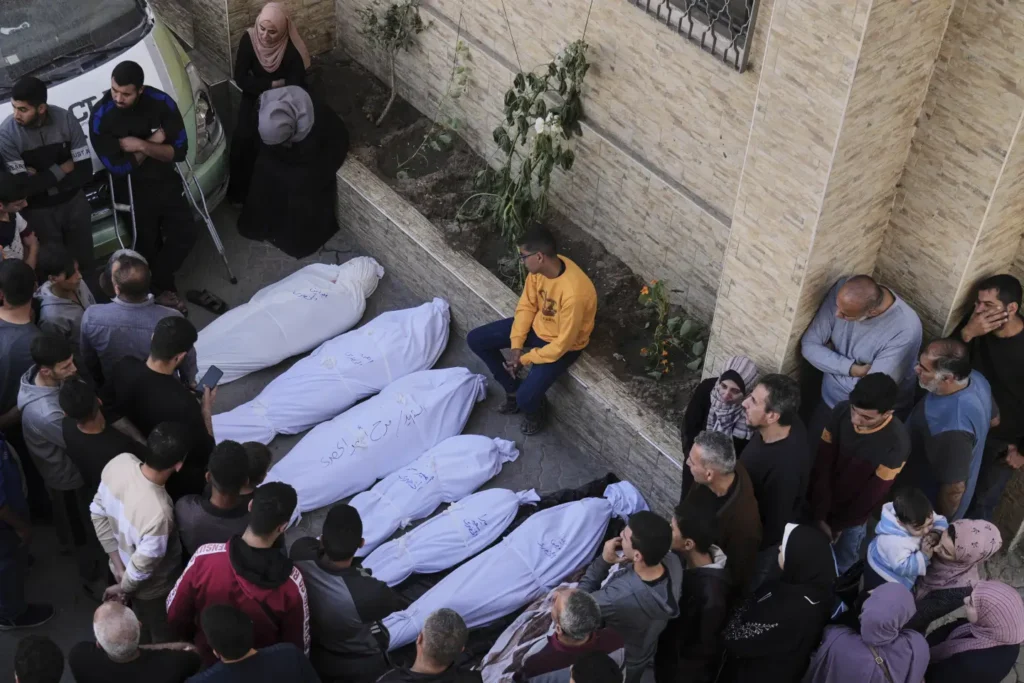
The declaration follows a surge in Israeli airstrikes across the Gaza Strip that killed 22 Palestinians on Wednesday, including an infant girl who was just weeks away from her first birthday. Her mother, wounded in the same strike, was seen embracing her daughter’s lifeless body, clad in a bloodstained blue dress, before the child was buried.

The renewed Israeli offensive comes in response to the collapse of a previous ceasefire and is aimed at pressuring Hamas to release the remaining hostages taken during the October 7, 2023, attack. That assault left 1,200 Israelis dead, mostly civilians, and 251 taken hostage. Israel says 59 hostages remain in Gaza, of whom 24 are believed to be alive.

Hamas has stated it will not agree to any further releases without a total Israeli withdrawal from Gaza and a lasting ceasefire. In response, families of the hostages have issued a statement criticizing the government’s strategy: “They promised that the hostages come first. In practice, Israel is choosing to seize territory before the hostages.”

Israeli forces have seized control of more than half of Gaza’s territory. The military maintains that holding ground is essential to preventing future attacks similar to the one launched by Hamas last year. Prime Minister Benjamin Netanyahu has vowed to “eliminate Hamas” and enforce a new regional security strategy, which includes keeping troops stationed in Lebanon and Syria as well.

The move has drawn sharp condemnation from neighboring countries. Lebanese President Joseph Aoun said Israel’s continued presence in parts of Lebanon is obstructing full Lebanese army deployment, as outlined in a previous ceasefire. On Wednesday, two Israeli drone strikes in southern Lebanon killed two people, pushing the civilian death toll in Lebanon since November to more than 70, according to the United Nations.

In southern Syria, Israeli forces have retained a buffer zone following the ousting of President Bashar al-Assad in December, citing similar security concerns.

The humanitarian situation in Gaza has worsened dramatically amid continued bombings and a blockade that has entered its seventh week. The United Nations Office for the Coordination of Humanitarian Affairs (OCHA) reports a sharp rise in acute malnutrition across the Gaza Strip. Nearly 90% of Gaza’s 2 million residents are now displaced, many of them forced to move multiple times and currently living in overcrowded tent camps with dwindling food and water supplies.

Water scarcity is a growing crisis. Gaza’s Coastal Water Utility says each person receives just six to seven liters of potable water daily — a situation Deputy Director Omar Shatat describes as a “catastrophe.” Displaced residents queue for hours with plastic containers, hoping for a turn at a water truck.

Israeli airstrikes continue to take a devastating toll on civilians. Footage from the latest attack shows the mother of one-year-old Ahlam Seiam, heavily bandaged, cradling her daughter’s body in a hospital bed. Her family had relocated to Khan Younis from Rafah just weeks earlier. “Wherever you go, death will catch up with you,” said Ahlam’s grandfather, Nashat Seiam.

Palestinian health authorities report more than 51,000 deaths in Gaza since the start of the conflict, with women and children accounting for over half. Israel claims it has killed around 20,000 militants but has yet to provide evidence supporting that number.

Meanwhile, Netanyahu’s government is also facing backlash for its support of a controversial proposal by U.S. President Donald Trump to facilitate the “voluntary emigration” of Palestinians from Gaza to other countries. Palestinians and Arab nations have widely condemned the plan as a veiled attempt at ethnic displacement, likening it to the mass expulsions that occurred during Israel’s founding in 1948.

On Wednesday, Palestinian Islamic Jihad released a video of Israeli hostage Rom Braslavski, the first sign of life since his capture. Filmed under duress, he pleads with Netanyahu to end the war and allow humanitarian aid into Gaza.

Despite growing international concern, Netanyahu’s far-right coalition remains firm in its military and political objectives, with some partners calling for the reestablishment of Israeli settlements in Gaza — a move considered illegal under international law.

As ceasefire talks stagnate and civilian casualties rise, Israel’s insistence on indefinite troop presence across multiple fronts has raised new questions about the long-term prospects for regional stability and humanitarian relief.

Judge Finds Probable Cause to Hold Trump Administration in Criminal Contempt Over Deportation Order Violation

WASHINGTON, D.C. — In a high-profile legal escalation, U.S. District Judge James E. Boasberg said Wednesday that there is probable cause to hold the Trump administration in criminal contempt of court, accusing it of willfully violating an order to reverse deportation flights bound for El Salvador. The ruling intensifies an already volatile standoff between the judiciary and the executive branch over the extent of presidential authority on immigration enforcement.

Boasberg, who serves as chief judge of the federal court in Washington, issued the ruling after determining that administration officials acted in defiance of his directive to halt deportations under the Alien Enemies Act. The deportees, including individuals like Kilmar Abrego Garcia, were removed before they had the chance to challenge their deportations in court—some ultimately transferred to a notorious Salvadoran prison.

The judge emphasized the seriousness of the violation, stating, “The Constitution does not tolerate willful disobedience of judicial orders—especially by officials of a coordinate branch who have sworn an oath to uphold it.” He further warned that unless the administration rectifies the breach, contempt hearings may proceed, and a special prosecutor could be appointed if the Justice Department declines to act.

Boasberg’s order comes as tensions rise between Trump allies and the judiciary. President Trump and members of his party have openly criticized federal judges, even calling for Boasberg’s impeachment—prompting a rare defense from Chief Justice John Roberts, who insisted judicial disagreement does not warrant removal from office.

According to court records, Boasberg had ordered a halt to all deportations under the centuries-old Alien Enemies Act, which Trump invoked in response to what he called an “invasion” by members of the Venezuelan gang Tren de Aragua. The judge explicitly told officials to reroute planes already en route to El Salvador. Despite the order, El Salvador’s President Nayib Bukele confirmed the deportees’ arrival with a dismissive post on social media reading, “Oopsie… too late.”

The administration later argued the judge’s turnaround instruction was not part of his formal written order and that the planes had already departed U.S. airspace when the verbal directive was issued. However, Boasberg dismissed that defense, stating that the administration’s actions “betrayed a desire to outrun the equitable reach of the Judiciary.”

Although the Supreme Court has since overturned Boasberg’s temporary injunction on constitutional grounds—finding that deportation challenges must proceed in Texas rather than Washington—it upheld the requirement that deportees be allowed to contest their removal before being sent out of the country. The judge made clear that the Supreme Court’s decision did not absolve the administration of the responsibility to follow his original order at the time it was issued.

In another related case, the administration admitted to deporting Abrego Garcia despite a Supreme Court ruling that required officials to facilitate his release. So far, officials have made no moves to bring him back to the United States, and a separate judge is weighing potential contempt charges.

Boasberg stated that the government could still avoid criminal proceedings if it takes custody of the deportees in El Salvador to allow them access to the U.S. legal system. However, he acknowledged that how this could be accomplished remains unclear.

The White House has maintained a firm stance, with communications director Steven Cheung posting on X (formerly Twitter) that President Trump remains committed to removing “terrorists and criminal illegal migrants” from American communities.

This case has become emblematic of the broader legal war between the Trump administration and the federal judiciary, as courts continue to challenge the boundaries of executive power, particularly over immigration policy. Boasberg concluded his ruling by stating that despite multiple chances to comply or justify their conduct, the administration failed to offer any satisfactory explanation for defying the court’s authority.

Protests Erupt in Tunisia After School Wall Collapse Kills Three Students

MAZZOUNA, Tunisia — April 16, 2025 — Widespread protests have broken out across Tunisia following the tragic deaths of three teenage students in the central town of Mazzouna after a school wall collapsed. The fatal incident, which occurred on Monday, has sparked a national outcry over government negligence, deepening public frustration over deteriorating infrastructure and perceived official indifference.

According to the Tunisian Civil Defense, the three students — all of whom were preparing for their crucial baccalaureate exams — lost their lives when a crumbling wall at their school gave way. Two additional students were seriously injured in the collapse and remain in critical condition. The wall, described by locals as visibly decayed and long overdue for repairs, stood as a grim symbol of Tunisia’s worsening public service crisis.

By Tuesday, Mazzouna had erupted in grief and anger. Hundreds of residents took to the streets, expressing their fury over what they see as systemic neglect by government authorities. Protesters blocked roads with burning tires, vandalized a government vehicle, and rallied near the local National Guard headquarters. Chants denouncing the marginalization of Tunisia’s interior regions echoed through the town, with demonstrators calling for the dismissal of officials they hold responsible for the tragedy.

Shops and schools across Mazzouna shut down in solidarity, transforming the town into a center of mourning and protest. The collective action was not limited to the immediate area; in the capital city of Tunis, hundreds of young people joined the demonstrations, raising slogans that demanded the government’s resignation. Many carried banners in solidarity with the victims and decried what they described as a long-standing pattern of negligence and decay afflicting public institutions.

Witnesses at the scene described the mood as one of both sorrow and defiance. “This wasn’t just an accident,” said one protester. “It was the result of years of official indifference. Our children are dying in schools that are falling apart.”

The collapse has become a flashpoint in a country already grappling with an economic and social crisis that has only deepened in recent years. Inflation, unemployment, and widespread corruption have eroded public trust in state institutions. For many, the wall collapse is not an isolated event but rather the consequence of a state apparatus that has failed to maintain even the most basic standards of safety and infrastructure, especially in underserved regions like Mazzouna.

Authorities moved quickly to contain the public anger. A judicial spokesperson confirmed that an investigation had been launched into the incident. As a first step, the principal of the school where the wall collapsed has been arrested, though critics say accountability must extend far beyond local officials.

In a statement released late Tuesday, Tunisia’s Ministry of Education expressed condolences to the victims’ families and promised “a thorough and transparent investigation.” However, the ministry’s words have done little to calm the unrest, as demands for deeper reforms continue to grow louder.

Calls for accountability have now expanded into broader critiques of Tunisia’s governance. Activists and civil society leaders argue that the state’s neglect of infrastructure in poorer towns is not just a policy failure but a violation of citizens’ rights. “This is a nation that has seen revolution, that has fought for dignity,” said a demonstrator in Tunis. “Yet we are still burying our children because our schools are collapsing.”

As Tunisia marks another tragic chapter in its post-revolution era, the protests in Mazzouna and beyond serve as a stark reminder of the mounting tensions simmering beneath the surface — tensions fueled by a citizenry no longer willing to accept decay and disregard as the status quo. Whether the government can regain the public’s trust remains uncertain, but what is clear is that the wall that fell in Mazzouna has shaken the entire nation.

Hamas Rejects Israeli Ceasefire Proposal Demanding Disarmament

GAZA CITY — April 15, 2025 — In a significant development that could prolong the ongoing conflict in Gaza, Hamas has formally rejected an Israeli proposal for a six-week ceasefire. The plan, delivered through Egyptian mediators, called for the disarmament of Hamas in exchange for the partial release of hostages. However, it offered no concrete commitment to ending the war or withdrawing Israeli forces from Gaza — demands that Hamas has repeatedly underscored as non-negotiable.

A senior Palestinian official familiar with the mediation efforts confirmed that the proposal, which originated shortly after a high-level meeting between Israeli Prime Minister Benjamin Netanyahu and U.S. President Donald Trump in Washington, was dismissed outright by Hamas negotiators. The disarmament clause, introduced for the first time as a condition for ceasefire talks, was described as a red line the group would not cross.

The same official accused Israel of leveraging the talks to delay meaningful diplomatic progress while focusing solely on recovering hostages. Israel is believed to be seeking the release of 19 of the remaining 59 hostages held in Gaza. According to reports, only 24 of the hostages are confirmed to be alive.

Tensions were further exacerbated on Tuesday when Hamas’s military wing claimed it had lost contact with the group responsible for holding Israeli-American soldier Edan Alexander. The group alleged that the loss followed an Israeli airstrike, though no evidence was provided. Israel has denied targeting known hostage locations and maintains that such operations are avoided where possible.

Meanwhile, Israeli military operations have intensified across the Gaza Strip. On Tuesday morning, warplanes struck near the gates of the Kuwaiti Field Hospital in Khan Younis, killing a security guard and injuring nine others, including hospital staff and patients. Footage from the site showed graphic scenes of chaos, with wounded individuals being rushed for treatment amid destroyed tents and damaged ambulances. The Israel Defense Forces claimed responsibility for the strike, stating it targeted a Hamas combat commander near the hospital and used precision munitions to minimize civilian harm.

The attack came just days after another controversial Israeli strike on Gaza City’s al-Ahli Arab Hospital, prompting condemnation from the United Nations. Secretary-General António Guterres warned the strike had severely impacted Gaza’s already crippled healthcare infrastructure and underscored that international humanitarian law requires the protection of medical facilities and personnel. He emphasized the responsibility of occupying powers to ensure humanitarian relief for civilian populations.

The humanitarian situation in Gaza has reached alarming new levels, according to the UN. Agencies report that food, water, and medical supplies are rapidly dwindling, with Israel having blocked aid for six consecutive weeks — the longest such stoppage since the war began 18 months ago. Despite Israeli claims that adequate food remains available in the territory, UN officials warn the blockade may constitute a breach of international humanitarian law. Civilian casualties continue to mount as Israeli operations resume, with the Gaza Health Ministry — administered by Hamas — reporting that over 1,630 Palestinians have been killed since March 18 alone, bringing the total death toll to more than 51,000.

Inside Israel, public opinion appears increasingly supportive of a negotiated ceasefire, with most prioritizing the safe return of hostages over the elimination of Hamas’s military capabilities. However, Prime Minister Netanyahu’s governing coalition is underpinned by hardline ultranationalist factions who have threatened to dissolve the government if the war ends prematurely. These political dynamics have contributed to a cautious and fragmented approach to negotiations, even as international mediators such as Egypt present modified ceasefire proposals to both sides.

The conflict was initially triggered by the Hamas-led attack on October 7, which killed 1,200 people and resulted in the capture of 251 hostages, according to Israeli sources. Following a short-lived ceasefire in January, which facilitated the release of 33 hostages in exchange for 1,800 Palestinian detainees, further negotiations have repeatedly stalled.

Grassroots discontent is also rising within Israel. A number of reservists and veterans have recently signed open letters condemning the prolonged conflict and questioning the government’s handling of both the war and its treatment of military personnel. The Israel Defense Forces (IDF) have also faced backlash over the dismissal of air force reservists who voiced opposition to the war. This dissent comes amid concerns about resource strain and the government’s reluctance to conscript ultra-Orthodox Jews, despite mounting personnel shortages.

In the absence of a ceasefire, widespread displacement continues across Gaza. The UN estimates that nearly 70% of the strip is either under active evacuation orders or considered “no-go” zones, severely hampering humanitarian operations. International aid organizations report difficulties in coordinating safe passage, and fears are growing that basic infrastructure — including medical systems and food distribution channels — may soon collapse entirely under the weight of continued bombardment and supply restrictions.

As regional and international actors continue to push for a diplomatic breakthrough, the chasm between Hamas’s demands and Israel’s conditions remains wide. For now, hopes for a resolution appear dim, and the people of Gaza remain caught in the crossfire of a grinding, seemingly intractable war.

Judge Demands Testimony from Trump Officials Over Wrongful Deportation of Kilmar Abrego Garcia

WASHINGTON, D.C. (April 15, 2025) — A federal judge has intensified scrutiny of the Trump administration’s handling of immigration enforcement by ordering senior U.S. officials to testify and provide documents under oath regarding the wrongful deportation of Kilmar Abrego Garcia, a man removed from the U.S. to El Salvador in violation of a court order.

At a hearing in Greenbelt, Maryland, U.S. District Judge Paula Xinis expressed frustration over what she described as the government’s lack of transparency and action, noting that despite her prior directive to “facilitate” Abrego Garcia’s return, there has been no substantive effort made to comply.

“There will be no tolerance for gamesmanship or grandstanding,” Xinis declared. “To date, what the record shows is that nothing has been done. Nothing.”

Xinis directed that four officials from the Department of Homeland Security (DHS) and U.S. Immigration and Customs Enforcement (ICE) — all of whom previously submitted sworn declarations — must sit for depositions by April 23. This move marks a significant escalation in the judge’s efforts to assess whether the administration actively defied a judicial mandate.

Government attorney Drew Ensign stated the officials may invoke attorney-client privilege during their depositions. However, he also claimed the government interpreted the judge’s order to mean that it merely had to remove any U.S. barriers to Abrego Garcia’s return, not actively coordinate his repatriation.

That interpretation was swiftly rejected by Judge Xinis:

“That is not the plain meaning of ‘facilitate,’” she said, criticizing what she saw as an intentional misreading of the court’s order.

Abrego Garcia was deported on March 15, despite a standing judicial order blocking his removal to El Salvador. His forced deportation — followed by his detention at El Salvador’s Terrorism Confinement Center, a notorious facility housing criminal suspects — has drawn sharp criticism from legal advocates and renewed concerns over Trump-era immigration tactics.

His case has become a flashpoint in broader allegations that the Trump administration is testing the limits of judicial authority, particularly in immigration enforcement.

Xinis had previously required the government to provide daily updates on efforts to comply with her order. As of this week’s hearing, no such meaningful updates were delivered.

The hearing came just one day after a controversial White House meeting between President Donald Trump, El Salvador’s President Nayib Bukele, and Secretary of State Marco Rubio. In remarks afterward, Bukele stated that he did not have the authority to repatriate Abrego Garcia.

Rubio echoed Trump’s long-standing stance that U.S. foreign policy is the domain of the Executive Branch, asserting that courts should not dictate diplomatic actions.

Judge Xinis, however, made it clear that while she was not yet ordering the administration to demand Abrego Garcia’s return from El Salvador, she found the refusal to do so “stunning.”

“I’m not ordering you to do that,” she said. “I don’t know if I’ll ever be there.”

Outside the courthouse, Jennifer Vasquez Sura, Abrego Garcia’s wife, made a public plea to both the Trump and Bukele administrations.

“I find myself pleading with the Trump administration and the Bukele administration to stop playing political games with the life of Kilmar,” she said to demonstrators gathered in support.

Senator Chris Van Hollen (D-MD) also weighed in, announcing plans to travel to El Salvador on Wednesday to personally check on Abrego Garcia’s health and wellbeing and engage in diplomatic discussions regarding his potential return.

This case is part of a pattern under Trump’s renewed presidency in which the administration is aggressively pursuing deportations, often invoking obscure legal authorities. Abrego Garcia, along with hundreds of Venezuelan migrants, was deported under the Alien Enemies Act of 1798, a law historically used during times of war. Multiple courts have since blocked further deportations under that statute.

Separately, judges have temporarily halted attempts to deport university students legally residing in the U.S. over their participation in pro-Palestinian protests, suggesting a legal reckoning is underway over the administration’s immigration strategy.

Earlier this week, Columbia University student Mohsen Mahdawi was arrested in Vermont while attending a citizenship interview — another example of what critics say is a coordinated crackdown on dissent and non-citizen residents.

With the U.S. Supreme Court recently upholding part of Xinis’ order — specifically the mandate to “facilitate” but not necessarily “effectuate” the return of Abrego Garcia — the case now hinges on the testimonies of DHS and ICE officials.

Judge Xinis has not ruled out holding the government in contempt of court, depending on the outcome of these depositions and additional evidence submitted.

The broader implications of this case extend beyond one man’s deportation, as it tests the limits of executive power, the independence of the judiciary, and the future of immigration policy under one of the most contentious presidencies in recent memory.

Dallas High School Shooting Injures 4 Students, Police Identify Suspect

DALLAS, TX (April 15, 2025) — A violent incident at Wilmer-Hutchins High School, Dallas, Texas, Tuesday afternoon has left four male students injured, three of whom were shot, sparking renewed fears about student safety and prompting a massive law enforcement response. Authorities have confirmed that a suspect has been identified but has not yet been apprehended.

According to the Dallas Fire-Rescue Department, the shooting occurred just after 1 p.m., prompting immediate dispatch of emergency units to the high school, which enrolls roughly 1,000 students. The four injured students were swiftly transported to local hospitals with injuries ranging from serious to non-life-threatening.

Three students sustained gunshot wounds while one student suffered a musculoskeletal injury, though it remains unclear whether this was due to a fall or another cause during the chaos.

All four victims are male, and three of them are reportedly between the ages of 15 and 18. No fatalities have been reported.

Aerial footage captured shortly after the incident showed a heavy police presence surrounding the school. Officers from multiple agencies, including the Dallas Independent School District Police Department, secured the area and began evacuating students.

Assistant Police Chief Christina Smith, speaking during a press conference, described the investigation as “fluid.” She confirmed that a suspect had been identified, but no arrest had been made. Details such as the suspect’s identity or potential motive were withheld, citing the ongoing nature of the investigation.

Smith also clarified that the firearm used in the shooting did not enter the school during regular intake hours, suggesting it may have been brought in later in the day. She emphasized, “This was not a failure of our staff, of our protocols, or of the machinery we have in place,” but declined to offer further explanation.

Dallas ISD Superintendent Stephanie Elizalde expressed deep frustration and sadness during the press conference, stating:

“Quite frankly, this is just becoming way too familiar. And it should not be familiar.”

Elizalde confirmed that Wilmer-Hutchins High School will be closed for the remainder of the week. Grief counselors will be available to support students and staff in the aftermath of the trauma.

All students were safely reunited with their families after the evacuation. Despite this, fear and uncertainty linger in the community.

Shauna Williams, a parent of two students enrolled at the school, voiced concern and frustration following the incident:

“I can’t keep going through this as a parent. I’m telling you, it’s very frightening to think about losing your child, your kids,” she told local news outlet KDFW.

Williams noted that this was not the first violent incident at the school. In April 2024, one student reportedly shot another in the leg during an on-campus altercation.

Texas Governor Greg Abbott issued a statement extending support to those impacted by the violence:

“Our hearts go out to the victims of this senseless act of violence.”

He did not comment on potential legislative responses or school safety initiatives.

The incident at Wilmer-Hutchins is part of a broader trend of school-related gun violence in the United States, reigniting debates about school security protocols, student mental health, and gun control.

Authorities have not released further details regarding whether the shooting occurred in a classroom, hallway, or outside on school grounds. The motive and whether the shooting was targeted or random also remain unknown.

As the investigation continues, Dallas ISD and law enforcement officials are urging the public to remain patient and avoid speculation. More updates are expected as the suspect search progresses and further facts are confirmed.