Direct peace talks between the Democratic Republic of Congo and M23 rebels are set to commence on March 18 in Angola’s capital, Luanda, according to a statement from Angola’s presidency on Wednesday.
Angola has been actively mediating to establish a lasting ceasefire and reduce tensions between the DRC and neighboring Rwanda, which has been accused of supporting the Tutsi-led rebel group. Rwanda has repeatedly denied these allegations.
On Tuesday, Angola announced its initiative to facilitate direct negotiations between the conflicting parties.
Congo’s government has consistently refused to engage in talks with M23 and, in response to Angola’s announcement, stated only that it had acknowledged the initiative.
As of Wednesday, there was no immediate comment from Kinshasa regarding the planned discussions.
A federal judge ruled that President Donald Trump exceeded his constitutional authority by freezing nearly all U.S. humanitarian and development spending abroad, declaring that the administration cannot withhold tens of billions of dollars appropriated by Congress for foreign aid.
Judge Amir H. Ali stopped short of mandating the administration to reinstate thousands of abruptly terminated contracts supporting U.S. aid and development initiatives worldwide.
The ruling came hours after Secretary of State Marco Rubio announced the completion of a six-week purge of the U.S. Agency for International Development (USAID) programs, cutting 83% of them. Rubio stated that the remaining aid programs would be transferred to the State Department.
Rubio, in a post on X, praised the Department of Government Efficiency (DOGE) and State Department staff for executing what he called a long-overdue reform of U.S. foreign aid. The move marks a significant shift in the country’s international assistance strategy, driven by Trump administration political appointees.
Trump’s executive order on Jan. 20 directed a freeze on foreign assistance funding, citing concerns over waste and an alleged liberal agenda in U.S. aid programs. Rubio’s post indicated that the review was now complete, eliminating 5,200 out of USAID’s 6,200 programs, which he argued had failed to serve national interests.
Democratic lawmakers and advocacy groups contend that the shutdown of congressionally funded programs is unlawful, requiring legislative approval.
Ali, in his preliminary injunction, asserted that Trump cannot disregard the nearly $60 billion allocated by Congress for USAID and the State Department, emphasizing that under the U.S. Constitution, spending authority resides with Congress.
“The constitutional power over whether to spend foreign aid is not the President’s own — it is Congress’s own,” Ali wrote, rejecting the administration’s expansive claims of executive power.
Ali declined requests from nonprofit organizations and businesses to reinstate terminated contracts, stating that such decisions fall under the administration’s discretion. However, he ordered the government to disburse approximately $2 billion owed to aid organizations and contractors by mid-February, mandating at least 300 back payments per day.
Despite administration assurances that life-saving programs would continue during the freeze, USAID staff and partners reported that all payments had been halted, with USAID’s payment system disabled by DOGE under Elon Musk’s leadership.
The ruling follows the Supreme Court’s rejection of the Trump administration’s appeal in the case.
Critics say the cuts have obscured the administration’s stance on U.S. foreign aid priorities.
“The patterns that are emerging show the administration does not support democracy programs, civil society, NGOs, or even health and emergency response,” said Andrew Natsios, former USAID administrator under President George W. Bush. “So what’s left?”
Republican leaders have advocated for a narrower foreign aid strategy, aligning spending with a more restrictive interpretation of national interests. The dismantling of USAID upended decades of policy that framed humanitarian and development assistance as vital to U.S. national security.
The State Department, in a recent court filing, indicated that more than 90% of USAID programs would be terminated, though Rubio provided a lower figure.
Following Trump’s order, his appointee Pete Marocco, alongside Musk, implemented mass firings, forced leaves, and immediate terminations of USAID contracts. The shutdown left many USAID employees and contractors stranded overseas, awaiting unpaid salaries and travel expenses.
The administration has given overseas USAID staff until April 6 to return to the U.S. at government expense, according to an agency-wide email obtained by The Associated Press. Employees say the deadline leaves little time to arrange personal affairs, including school withdrawals for children, property sales, and securing housing after years abroad.
Authorities have identified Joshua Riibe, a 24-year-old former high school wrestler, as a person of interest in the disappearance of Sudiksha Konanki, a 20-year-old U.S. student who went missing on March 6 during a break in Punta Cana.
The Loudoun County Sheriff’s Office in Virginia is investigating Riibe, though officials have stated, “This is not at this time a criminal case, which would be different.” Dominican authorities do not consider Riibe a suspect and believe Konanki may have drowned.
A source close to the investigation told DailyMail.com that Riibe remains in Punta Cana and is cooperating with authorities. While his passport is currently in the possession of Dominican officials, he is legally able to retrieve it and return to the United States. Investigators are also in possession of his phone but require legal authorization to examine its contents.
Surveillance footage reportedly captured Riibe and Konanki walking toward the beach at approximately 4 a.m. on March 6. They were with a larger group of friends, who later returned to their rooms at 5:55 a.m., leaving the pair alone. Riibe told investigators they entered the water and were caught by a wave. He claimed he later fell asleep on the beach and eventually walked back to his room.
Security cameras recorded Riibe returning to his room barefoot and shirtless at 8:54 a.m., nearly five hours after he and Konanki went to the beach. Konanki’s friends, who left the hotel for an excursion that morning, noticed her disappearance upon returning at 4 p.m. and reported her missing.
Riibe, a senior at St. Cloud State University in Minnesota, resides in Rock Rapids, Iowa. His relatives described him as a “good kid” who prioritizes his studies.
The U.S. State Department is working with the Indian embassy in the Dominican Republic, which is leading the investigation, as Konanki was an Indian citizen and a U.S. permanent resident.
Authorities suspect drowning due to rough ocean conditions, but Konanki’s family is urging investigators to explore all possibilities. Her father, Subbarayudu Konanki, filed a complaint, stating, “It’s been four days, and if she was in the water, she would likely have washed ashore. She hasn’t been found, so we are asking them to investigate all possible scenarios, including kidnapping or abduction.”
A Nigerian woman who was officially recorded as deceased in 2019 has appeared in court via videolink from Nigeria to prove she is alive and reclaim her £350,000 London home from a convicted fraudster.
June Ashimola, 55, was legally declared dead in February 2019, leading to a lengthy legal battle over her estate. However, she shocked the High Court by appearing before Deputy Master John Linwood to confirm she was very much alive.
The court heard that Power of Attorney over her estate had been fraudulently granted to associates of Tony Ashikodi, a convicted fraudster. In 2022, control of the estate was transferred to a Ms. Ruth Samuel on behalf of one “Mr. Bakare Lasisi,” who claimed to have married Ashimola in 1993.
However, the judge ruled that Lasisi did not exist and that Ashimola had been the victim of an elaborate scam.
Ashimola, who left the UK for Nigeria in 2018 and had not returned, told the court that reports of her death were fabricated. A false death certificate had been produced, and there were allegations that another woman had been impersonating her.
“This is an unusual probate claim in that the deceased says she is very much alive,” Deputy Master Linwood remarked.
The judge ruled in Ashimola’s favor, concluding that Ashikodi orchestrated the fraud and attempted to mislead the court.
Despite visa issues preventing her from attending in person, the judge accepted Ashimola’s identity, confirming it with passport photos.
The ruling nullifies the fraudulent claim over her London home, restoring her rightful ownership.
According to court documents, one of the most startling revelations was that Ashimola’s supposed husband, Mr. Lasisi, did not actually exist—despite multiple emails allegedly sent in his name.
“I find that Ms. Ashimola is alive and that the death certificate was forged and/or fraudulently obtained, produced, or fabricated,” the judge stated.
He further ruled that her alleged death was part of Ashikodi’s scheme to seize control of the property.
“The person who appeared before me and identified herself as Ms. Ashimola bore a strong physical resemblance to the photographs in her passports,” the judge noted.
The court also determined that Ashimola was never married to Lasisi and that the marriage certificate was a fraudulent document.
“I do not accept that Mr. Lasisi exists—or, if he does, that he was aware his identity was being used. I also do not accept that the emails purportedly from him were actually sent by him,” the judge stated.
The probate Power of Attorney, supposedly issued by Lasisi and Samuel, was deemed fraudulent.
“The death certificate was not proven to the required standard, as only a copy was presented with no known provenance. There was no evidence before me that it was a genuine document representing a real event. I find it was forged and/or fraudulently produced. Those who relied on it—Mr. Tony Ashikodi and Ms. Samuel—were either directly involved in its creation or knew it was false,” he concluded.
As a result, Deputy Master Linwood revoked the fraudulent Power of Attorney.
The court also heard that the legal battle had already resulted in “disproportionate” costs exceeding £150,000—an amount that may surpass the property’s equity.
Nigerian woman declared dead, London home fraud case, June Ashimola legal battle, UK property fraud, Tony Ashikodi fraud case, fake death certificate scam, High Court ruling London, probate fraud UK, Power of Attorney fraud, London estate dispute.
Kenya’s President William Ruto has come under fire after pledging to purchase a chapati-making machine capable of producing one million chapatis daily for Nairobi high school students. The announcement, made during his development tour in Nairobi, has been widely criticized as a misplaced priority.
While visiting St. Teresa Girls Secondary School in Mathare, Ruto responded to an appeal from Nairobi Governor Johnson Sakaja, who requested assistance in acquiring the machine to support the Dishi Na County school feeding program.
Over 300,000 children are benefiting from the program; that means we need a machine to produce a million chapatis every day. I have asked the President for it, Sakaja said.
Ruto assured the enthusiastic students, I have agreed to buy a chapati-making machine. Governor, your work is now finding where to buy it.
However, many Kenyans criticized the promise, arguing that it does not address urgent economic challenges, education funding shortages, or healthcare issues. Critics on social media dismissed the pledge as an unnecessary diversion from key national priorities.
Many Kenyans took to X (formerly Twitter) to ridicule the announcement. Some sarcastically compared Ruto’s promise to global technological advancements, while others branded him “El Chapo,” a play on chapati’s street name “chapo” and the infamous Mexican drug lord.
One user wrote:
Chinese president launches 20 bullet trains, 3 space stations, and 5,000 km of expressway… Japan opens a nuclear power plant… Ibrahim Traore builds 50 hospitals in a year. William Ruto: I’ll buy a machine that makes 1 million chapatis a day.
Another post read:
How has Kenya sunk so low? While serious nations discuss AI, infrastructure, and disease eradication, our president is lying to high school students about chapatis!
A Citizen Digital financial analysis estimated that producing one million chapatis daily would cost taxpayers up to Ksh 10 million per day, or Ksh 2.5 billion annually, excluding transport, labor, and distribution expenses.
Despite growing public frustration and previous appeals from clergy and civil leaders urging the president to focus on governance rather than roadside promises, Ruto continues to make pledges that have yet to materialize.
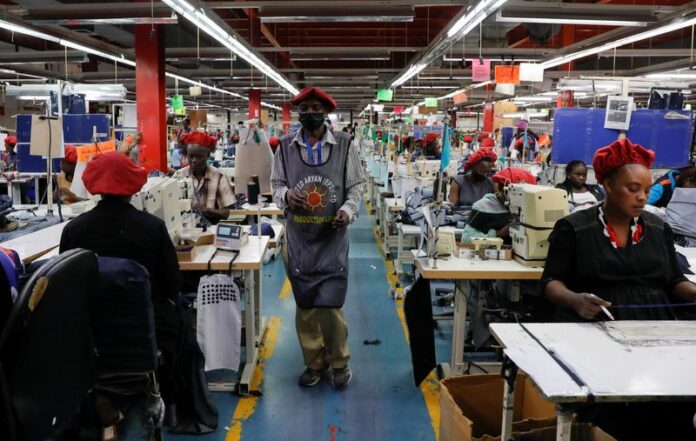
Protests have erupted following the death of Ladi Anzaki Olubunmi, a Nigerian woman working as a content moderator for TikTok in Nairobi. Olubunmi was found dead in her Lower Kabete apartment on Friday after being missing from work for three days.
According to CNN journalist Larry Madowo, Olubunmi moved to Kenya in 2022 to work for French outsourcing firm Teleperformance, a subsidiary of TikTok. During her time in Kenya, she had not seen her family. She was among many African workers recruited by outsourcing companies to work in Nairobi, but reports indicate that several moderators lacked work permits, restricting their ability to travel home.
A colleague, who spoke anonymously to *The Nigerian Guardian Newspaper*, alleged that Teleperformance denied Olubunmi her leave days and a work permit, making it impossible for her to return home. The source claimed Olubunmi had repeatedly pleaded with managers for permission to visit her family but was ignored.
“The deceased was entitled to a return ticket every year under her contract, but she only went home once after begging and crying to the management,” the colleague said. “She went to her managers in tears, but they laughed at her and recorded her.”
Her sudden death has sparked a strike among her colleagues, who accuse Teleperformance of failing to check on her well-being when she did not report to work. They claim that only after she was unreachable for days did coworkers visit her apartment and discover her body.
Teleperformance has denied any wrongdoing, stating it has been in contact with Olubunmi’s family and local authorities to determine the cause of death. The company has yet to release an official statement addressing the allegations regarding work permits and employee welfare.
Mophat Okinyi, a Kenyan content moderator recognized by *TIME100 AI* for his work in the industry, confirmed the incident and said a vigil would be held in Nairobi in Olubunmi’s honor. Okinyi has been a vocal advocate for improved working conditions for content moderators and is among a group that petitioned the government to investigate the industry’s labor practices.
Olubunmi’s death has drawn attention to the challenges faced by content moderators in Kenya, where many work under high-pressure conditions with limited labor protections. The case has reignited concerns over the treatment of outsourced workers in the global tech industry.
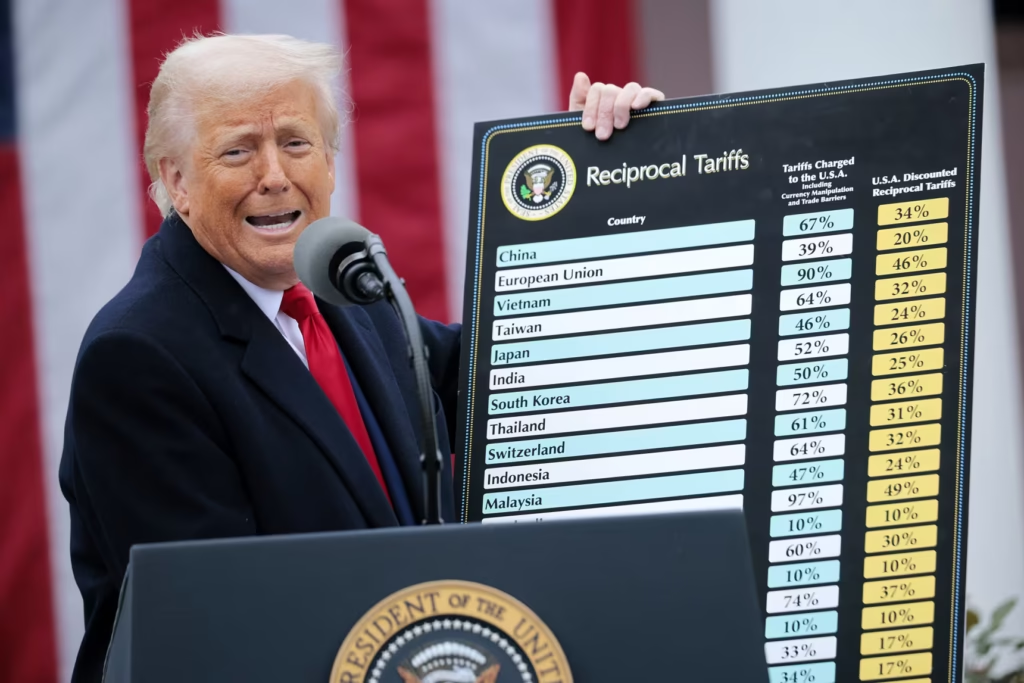
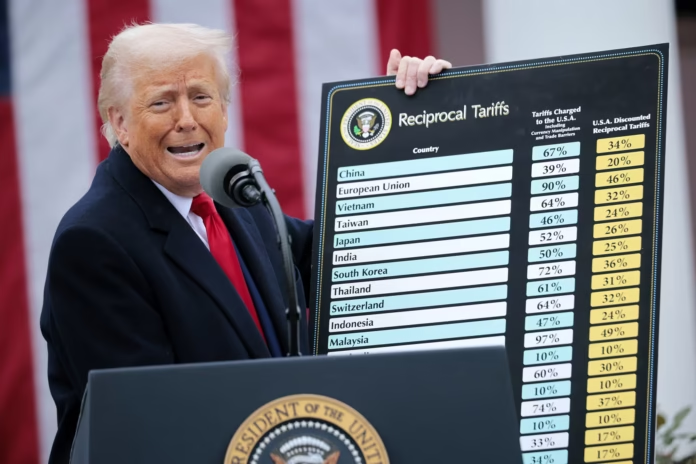
The European Union has announced retaliatory tariffs on a range of U.S. industrial and agricultural products in response to the Trump administration’s decision to impose 25% tariffs on all steel and aluminum imports. The countermeasures, worth approximately 26 billion euros ($28 billion), aim to put economic pressure on key Republican-held states while attempting to limit further damage to European businesses.
The EU’s response was swift, coming just hours after Washington unveiled its new tariffs. The move escalates already tense transatlantic trade relations, which have been under strain following recent U.S. warnings that Europe must take greater responsibility for its own security.
The EU’s countermeasures include tariffs not just on steel and aluminum but also on textiles, home appliances, and agricultural goods. The measures are designed to impact industries in Republican-dominated states, particularly those with strong farming sectors.
Among the affected products are soybeans from Louisiana, home to House Speaker Mike Johnson, as well as beef and poultry from Kansas and Nebraska. Agricultural goods from Alabama, Georgia, and Virginia are also included on the list, mirroring a strategy used during Trump’s first term when the EU targeted bourbon, motorcycles, peanut butter, and jeans.
European Commission President Ursula von der Leyen stated that while the EU remains open to negotiations, it will not stand idly by in the face of U.S. protectionism.
“As the U.S. applies tariffs worth $28 billion, we are responding with countermeasures worth 26 billion euros,” von der Leyen said. “We firmly believe that in a world fraught with geopolitical and economic uncertainties, it is not in our common interest to burden our economies with tariffs.”
Von der Leyen warned that Trump’s tariffs would ultimately harm both sides of the Atlantic, increasing costs for consumers and disrupting supply chains.
The American Chamber of Commerce to the EU criticized both the U.S. tariffs and the EU’s retaliatory measures, arguing that the escalating trade conflict would harm jobs, economic prosperity, and security on both sides.
“The two sides must de-escalate and find a negotiated outcome urgently,” the chamber said in a statement.
This is not the first time the EU has responded to Trump’s aggressive trade policies. During his first term, the administration imposed similar steel and aluminum tariffs, prompting European countermeasures that targeted U.S.-made products such as bourbon and motorcycles.
This time, the EU’s response will unfold in two phases. On April 1, the bloc will reinstate previous “rebalancing measures” that had been suspended under the Biden administration. Then, on April 13, additional duties will take effect, targeting 18 billion euros ($19.6 billion) worth of U.S. exports to Europe.
EU Trade Commissioner Maroš Šefčovič, who traveled to Washington last month to discuss trade concerns, expressed frustration over the U.S. position.
“I argued to avoid the unnecessary burden of measures and countermeasures, but you need a partner for that. You need both hands to clap,” Šefčovič said in Strasbourg.
The European steel sector is expected to be among the hardest hit by Trump’s tariffs, with industry group Eurofer estimating potential losses of up to 3.7 million tons of steel exports. The U.S. represents the second-largest market for EU steel producers, accounting for 16% of total exports.
With transatlantic trade valued at around $1.5 trillion annually—roughly 30% of global trade—both sides have much to lose from prolonged economic conflict. While the EU maintains a goods trade surplus with the U.S., it argues that this is counterbalanced by an American surplus in service exports.
Unlike the EU, the United Kingdom has decided against immediate retaliatory tariffs, with British Business Secretary Jonathan Reynolds stating that London will “continue to engage closely and productively with the U.S. to press the case for U.K. business interests.”
However, Reynolds did not rule out future trade action, emphasizing that “all options remain on the table, and we won’t hesitate to respond in the national interest.”
As tensions rise, it remains to be seen whether Washington and Brussels can find a compromise—or whether this latest trade dispute will escalate into a full-blown economic conflict.
Greenland’s center-right opposition party has won an unexpected victory in the country’s general election, a race shaped by the debate over independence and renewed interest from U.S. President Donald Trump in acquiring the semi-autonomous Arctic territory.
The Democratic Party, which supports a gradual approach to breaking away from Denmark, secured approximately 30% of the vote, according to near-final results.
“Greenland needs us to stand together in a time of great interest from outside,” Democratic leader Jens Frederik Nielsen told local media. “There is a need for unity, so we will enter into negotiations with everyone.”
With no party winning an outright majority, the Democrats will now have to negotiate with other parties to form a coalition government.
Greenland, the world’s largest island, has been under Danish control for about 300 years, despite being nearly 3,000 km (1,860 miles) away from Copenhagen. While the territory has autonomy over domestic affairs, foreign and defense policy remain under Denmark’s authority.
Of the six main parties in the election, five advocate for full independence, though they disagree on how quickly to pursue it.
The Democratic Party, which gained more than 20% in support compared to 2021, is considered moderate on independence. Meanwhile, the nationalist Naleraq party, which calls for an immediate break from Denmark and closer ties with the U.S., finished in second place with nearly a quarter of the vote.
The governing coalition parties, Inuit Ataqatigiit (IA) and Siumut, fell to third and fourth place, signaling a major political shake-up and an upset for Prime Minister Mute B. Egede.
Around 44,000 Greenlanders were eligible to vote, choosing 31 members of parliament as well as local government officials. The election was held at 72 polling stations across the vast island.
Greenland’s strategic Arctic position and vast, untapped mineral reserves have long attracted international attention, particularly from the U.S. Trump first floated the idea of purchasing Greenland in 2019 during his first term, a proposal dismissed by Greenlandic and Danish leaders.
Since returning to office in January, Trump has renewed his push.
“We need Greenland for national security. One way or another, we’re gonna get it,” he declared in a recent address to the U.S. Congress.
Leaders in both Greenland and Denmark have firmly rejected Trump’s demands. Outgoing Prime Minister Egede reiterated that Greenland is “not for sale” and deserves to be “treated with respect.”
An Indonesian social media influencer has been sentenced to two years and 10 months in prison for blasphemy after making comments about Jesus Christ’s hair. The court in North Sumatra found Ratu Thalisa, a Muslim transgender woman with nearly 450,000 TikTok followers, guilty of spreading hate speech against Christianity, according to Amnesty International and local media reports.
Thalisa, known online as Ratu Entok, made the remarks during a live broadcast on October 2, 2024, while holding up an image of Christ. In response to a viewer’s comment suggesting she should cut her hair to appear more masculine, she said: “You should not look like a woman. You should cut your hair so that you will look like his father.”
Her remarks prompted five Christian groups to file police complaints, leading to her arrest on October 8.
In addition to her prison sentence, the court fined Thalisa approximately $6,200. She was convicted under Indonesia’s Electronic Information and Transactions (EIT) law, with the court ruling that her comments could disturb “public order” and “religious harmony.”
Amnesty International Indonesia has strongly criticized the ruling, calling it a “shocking attack” on freedom of expression.
“The EIT law should not be used to punish people for social media comments,” said Usman Hamid, Executive Director of Amnesty International Indonesia, on Monday.
“While Indonesia should prohibit the advocacy of religious hatred that constitutes incitement to discrimination, hostility, or violence, Ratu Thalisa’s speech does not meet that threshold,” he said.
According to Amnesty, at least 560 people were charged under the EIT Law from 2019 to 2024, with offenses ranging from defamation to hate speech.
“This sentence highlights the increasingly arbitrary and repressive application of Indonesia’s EIT law to silence free speech,” Hamid added. “The authorities must quash Ratu Thalisa’s conviction, ensure her immediate and unconditional release, and revise problematic provisions of the EIT Law that criminalize ‘immorality,’ defamation, and hate speech.”
Thalisa is one of several individuals recently convicted under Indonesia’s blasphemy laws, which critics argue disproportionately target religious minorities and those perceived to have insulted Islam.
Indonesia, the world’s largest Muslim-majority nation, has a population of 231 million, with at least 93% identifying as Muslim. In recent years, religious conservatism has been on the rise, and rights groups warn that blasphemy laws are being increasingly “weaponized” to suppress dissent.
In September 2023, Muslim social media influencer Lina Lutfiawati, known as Lina Mukherjee, was sentenced to two years in prison after posting a TikTok video in which she recited an Islamic prayer before eating pork.
One of Indonesia’s most high-profile blasphemy cases involved Basuki Tjahaja Purnama, widely known as Ahok, Jakarta’s first non-Muslim governor in 50 years. In 2017, he was sentenced to two years in prison for blasphemy after referencing a Quranic verse during his re-election campaign, despite issuing a public apology.
Former Philippines President Rodrigo Duterte has been “forcibly taken” onto a plane bound for The Hague, his daughter said Tuesday, following his dramatic arrest on an International Criminal Court (ICC) warrant. Duterte faces charges related to his brutal anti-drug crackdown, which resulted in thousands of deaths.
The 79-year-old ex-leader was placed on a flight late Tuesday, according to the current government. “They are taking him out on a plane by force without considering his health conditions,” his youngest daughter, Veronica Duterte, wrote on Instagram.
In a separate statement to The Philippine Star, Duterte’s elder daughter, Vice President Sara Duterte, confirmed the destination. “As I write this, he is being forcibly taken to The Hague tonight. This is not justice – this is oppression and persecution,” she said.
Duterte’s plane made a layover in Dubai for several hours before continuing to the Netherlands on Wednesday, according to flight tracking websites. Initially scheduled to land at 7:00 a.m. local time, tracking service Flightradar24 now estimates arrival at 5:00 p.m. local time. Duterte received medical attention during the layover, Reuters reported.
Following the departure, Sara Duterte told reporters she would travel to the Netherlands on Wednesday.
Duterte was taken into custody at Manila’s main airport upon returning from Hong Kong on Tuesday. The ICC confirmed the arrest warrant was issued for Duterte on charges of murder as a crime against humanity, covering actions allegedly committed between November 1, 2011, and March 16, 2019.
President Ferdinand “Bongbong” Marcos Jr., Duterte’s successor, acknowledged receiving an Interpol notice for Duterte’s arrest warrant at 3 a.m. local time.
“Interpol asked for help and we obliged because we have commitments to the Interpol which we have to fulfill,” Marcos said during a Tuesday night press conference.
Duterte, known for his harsh anti-drug campaign, led an aggressive crackdown on drug dealers, targeting the illegal trade with relentless and violent tactics. While police data confirms more than 6,000 fatalities, independent monitors estimate the number of extrajudicial killings is significantly higher.
The ICC’s ongoing investigation into Duterte was well known, but his arrest nonetheless sent shockwaves across the country. His loyal supporters mobilized immediately, with some angrily confronting police outside the airbase where he was held for several hours.
“I’m sad because I didn’t think it would come to a point where he would be arrested. For me, he did a lot for our country, and this is what they did to him,” said Aikko Valdon, a 31-year-old overseas Filipino worker, speaking to Reuters.
Duterte’s arrest marks a dramatic conclusion to his turbulent and controversial reign over the Philippines. He ruled the nation of 115 million for six years, leaving behind a legacy of violence. However, he remains widely revered in Davao City, where he served as mayor for two decades before becoming president.
His drug war resulted in thousands of deaths, disproportionately affecting young men from impoverished communities. Many were shot by police and vigilantes as part of the campaign against drug dealers, leading to domestic inquiries and the ICC investigation that culminated in his arrest.
Duterte has consistently denied ordering extrajudicial killings, though he has publicly admitted instructing police to shoot suspects who resisted arrest.
For the families of those killed in Duterte’s drug war, his arrest represents long-awaited justice.
Christine Pascual, whose son was among the victims, told Reuters, “Through our prayers and the years we fought for justice, we did not expect this moment to come. Finally, an arrest warrant was issued against Duterte.”
Other victims’ relatives see the arrest as just the beginning of a longer fight. “The fight has just started, but we will make sure to see this through. We will not stop,” said Llore Pasco, a mother of two victims.
Duterte withdrew the Philippines from the ICC in 2019, a move widely criticized as an attempt to shield himself from accountability. However, under the ICC’s jurisdiction rules, the court retains authority over crimes committed while a country was still a member—in this case, between 2016, when Duterte took office, and 2019, when the withdrawal took effect.
The ICC announced that Duterte will face an initial appearance hearing once in its custody.
At an event in Hong Kong on Sunday, Duterte appeared to anticipate his fate, lashing out at the ICC. “I have a warrant … from the ICC or something,” he told supporters. “What did I do wrong? I did everything that I could in my time so that there is a little bit of quiet and peace for the lives of the Filipinos.”
Despite leaving office, Duterte remained politically active. He registered in October to run for mayor of Davao once again. His family continues to wield considerable political influence across the country.
Sara Duterte, his daughter, was impeached last month on allegations including plotting to assassinate President Marcos. Meanwhile, Duterte’s son, Sebastian Duterte, serves as Davao’s current mayor and had planned to run as his father’s vice mayor in the upcoming mid-term elections.