Home Blog Page 423

Musk Makes $97 Billion Bid for OpenAI, Escalating Feud with Former Partners

0

Elon Musk has launched a $97.4 billion bid to acquire OpenAI, the artificial intelligence company he co-founded, marking a dramatic escalation in his ongoing dispute with the ChatGPT maker.

The takeover attempt comes as Musk, who co-founded OpenAI with Sam Altman in 2015, remains locked in a legal battle with the company over its transition from a non-profit to a for-profit model.

“It’s time for OpenAI to return to the open-source, safety-focused force for good it once was,” Musk said in a press release announcing the bid. “We will make sure that happens.”

The Wall Street Journal reports that Musk’s artificial intelligence company xAI is backing the offer, with potential plans to merge with OpenAI following a successful acquisition. The bid represents a significant discount to OpenAI’s most recent valuation of $157 billion from October 2023.

Altman, OpenAI’s chief executive, responded dismissively to the offer on X, writing: “no thank you but we will buy twitter for $9.74 billion if you want.” Musk acquired Twitter, now X, for $44 billion in 2022.

The tensions between Musk and Altman, which began after Musk’s departure from OpenAI’s board in 2018, recently played out in a California federal court. Musk’s lawsuit alleges OpenAI breached its original mission by prioritizing profit over its commitment to developing AI responsibly and making it freely available.

U.S. District Judge Yvonne Gonzalez Rogers is currently considering Musk’s request for a court order to block OpenAI’s for-profit transition, while indicating the case could proceed to a jury trial.

OpenAI maintains that its shift to a for-profit model is necessary to fund the development of advanced AI models.

Trump’s Gaza Plan Excludes Palestinian Right of Return, Sparks International Concern

Former U.S. President Donald Trump has confirmed that his proposal for Gaza explicitly excludes allowing Palestinians to return to the territory, sparking widespread international concern and rejection from regional allies.

In a Fox News interview aired Monday, Trump outlined his vision for Gaza’s future, stating definitively “No, they wouldn’t” when asked if Palestinians would be permitted to return to their territory. He suggested the United States would “own” Gaza, comparing it to “a real estate development for the future.”

The proposal contradicts recent statements from Trump administration officials, including White House spokesperson Karoline Leavitt, who had described the displacement as “temporary,” and Secretary of State Marco Rubio, who characterized it as an “interim” measure.

Trump suggested leveraging U.S. foreign aid to pressure regional allies into accepting displaced Palestinians. “I think I could make a deal with Jordan. I think I could make a deal with Egypt. You know, we give them billions and billions of dollars a year,” he said.

Both Egypt and Jordan have forcefully rejected the proposal. Rights organizations, including Amnesty International, have warned that systematic expulsion of Palestinians could constitute a crime against humanity.

The plan faces significant legal hurdles, as the United Nations charter prohibits the acquisition of territory by force. According to Gaza’s Health Ministry, the ongoing conflict has resulted in more than 48,000 Palestinian casualties, with the Gaza Government Media Office reporting a higher toll of 61,700, including thousands presumed dead among the missing.

Local authorities continue seeking emergency shelter solutions while accusing Israel of impeding aid delivery despite ceasefire agreements. The UN defined ethnic cleansing in 1994 as “a purposeful policy designed by one ethnic or religious group to remove by violent and terror-inspiring means the civilian population of another ethnic or religious group from certain geographic areas.”

Passenger Jumps from Iberia Flight After Attacking Crew in Paris

A passenger forced open an emergency exit and jumped from an Iberia aircraft at Paris Orly Airport on Friday evening, following an alleged assault on a flight attendant.

The incident occurred aboard Iberia flight IB578 around 5:20 p.m. as the aircraft was taxiing for departure to Madrid. The passenger rose from his seat, proceeded to the front cabin, and attempted to open the emergency exit, authorities reported.

When a flight attendant intervened, the passenger allegedly assaulted the crew member before successfully opening the door and jumping approximately 11.5 feet to the tarmac while the Airbus’s engines were still running.

Emergency crews responded immediately, with police vehicles rushing to the scene as captured in passenger video footage. The individual was detained on the tarmac. Officials have not released information about the passenger’s condition or motives.

Despite the disruption, the flight eventually departed for Madrid’s Barajas Airport, arriving just before midnight after a four-and-a-half-hour delay. The three-year-old aircraft resumed operations Saturday afternoon following a brief service check.

This marks the second emergency exit incident for Iberia in three months. In December, a nervous passenger deployed an emergency slide before takeoff on an Iberia Express flight from Ibiza to Madrid, though crew members prevented that individual from exiting.

Authorities have launched an investigation into the incident.

Guatemala Bus Crash Claims 51 Lives in Devastating Highway Accident

A bus plunged into a ravine early Monday near Guatemala City, killing at least 51 passengers and leaving 20 others seriously injured, officials reported.

The incident occurred when the vehicle veered off a highway and plummeted into the ravine, according to city officials. Fire department photographs showed rescue workers extracting passengers from the overturned bus at the bottom of the ravine.

Guatemalan President Bernardo Arevalo immediately mobilized the army and national disaster relief agency to assist with rescue operations. The president announced plans to declare a period of national mourning in response to the tragedy.

“I stand in solidarity with the families of the victims who today woke up to heartbreaking news. Their pain is my pain,” Arevalo said in an official statement.

Emergency services continue their response efforts at the crash site, with authorities working to identify victims and notify families.

The accident marks one of the deadliest transportation disasters in recent Guatemalan history.

Hamas Suspends Release of Israeli Captives Over Ceasefire Violations

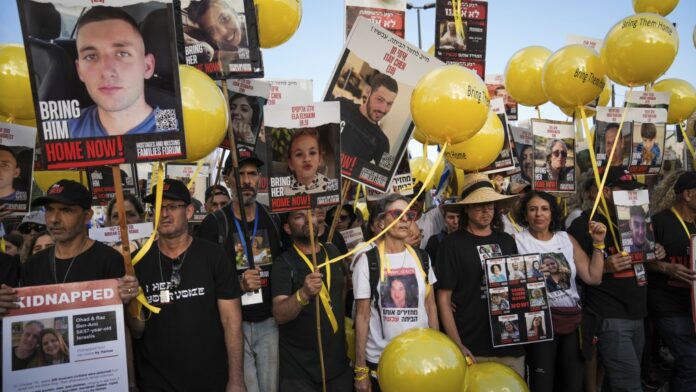
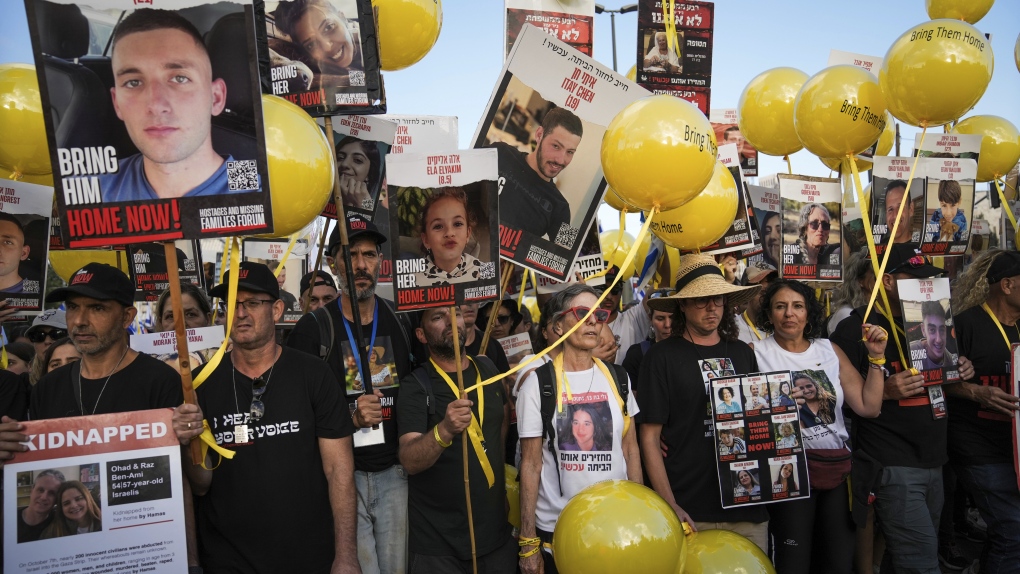
Hamas announced it will delay the scheduled release of more Israeli captives planned for Saturday “until further notice,” citing Israeli violations of the ceasefire in Gaza. 

Abu Obeida, spokesperson for Hamas’s armed wing, the Qassam Brigades, said Monday that the captives will “remain in place until the occupying entity complies with past obligations and compensates retroactively.” 

Israel and Hamas are currently observing a six-week ceasefire during which Hamas has been releasing captives taken during its October 7, 2023, attack in exchange for nearly 2,000 Palestinian prisoners. 

Abu Obeida accused Israel of violating multiple aspects of the truce brokered between the two sides. 

“Over the past three weeks, the resistance leadership monitored the enemy’s violations and their non-compliance with the terms of the agreement,” he said. 

“These violations include delaying the return of displaced persons to northern Gaza, targeting them with shelling and gunfire in various areas of the Gaza Strip, and failing to allow the entry of relief materials in all forms as agreed upon. Meanwhile, the resistance has fulfilled all its obligations.” 

The Qassam Brigades spokesperson reaffirmed the group’s “commitment to the terms of the agreement as long as the occupation adheres to them.” 

Israel’s Defense Minister Israel Katz responded swiftly, calling Hamas’s decision a “complete violation of the ceasefire agreement.” 

“I have instructed [the military] to prepare at the highest level of alert for any possible scenario in Gaza,” Katz said. 

The two sides have carried out five exchanges since the ceasefire went into effect last month, freeing 21 Israelis and more than 730 Palestinians. The next exchange, scheduled for Saturday, was set to release three Israeli captives in exchange for hundreds of Palestinian prisoners. 

Several Palestinian civilians have been shot and killed by Israeli forces as they attempted to return to their homes. Meanwhile, the number of wounded Palestinian patients evacuated from Gaza, as well as humanitarian aid trucks entering the territory, has been lower than what was promised in the ceasefire agreement. 

The Qassam Brigades’ announcement follows recent remarks by U.S. President Donald Trump, who raised concerns about the sustainability of the ceasefire agreement. Trump has repeatedly suggested relocating Gaza’s population and stated that the U.S. would take “ownership” of the territory. 

The first stage of the ceasefire deal is set to expire on March 1. The second phase, which would see the release of all captives and a permanent ceasefire, has yet to be finalized. The third stage is intended to usher in a multi-year plan for Gaza’s reconstruction. 

Palestinian politician Mustafa Barghouti accused Israel of violating the agreement in three ways: obstructing temporary housing and humanitarian aid, shooting at civilians in Gaza, and supporting Trump’s proposal to relocate Palestinians. 

“More than that, now Netanyahu is threatening to go back to war, and he’s declaring that he will never stop the war,” Barghouti told Al Jazeera. 

Israeli Prime Minister Benjamin Netanyahu reiterated last week that he remains committed to the war’s objectives, including dismantling Hamas’s military and governing capabilities. 

Before Abu Obeida’s statement Monday, senior Hamas official Basem Naim told Al Jazeera that Israel has not upheld its obligations under the agreement. 

“In the last three weeks after signing the deal, we have been in very serious talks and negotiations with the mediators—the Egyptians, the Qataris, and the United States—about the daily violations by the Israelis of the deal,” Naim said. 

He added that 25 Palestinians have been killed and dozens wounded by Israeli forces since the ceasefire began. 

Trump Says U.S. ‘Committed to Buying and Owning Gaza’ Amid Global Criticism

President Donald Trump declared that the United States is “committed to buying and owning” the Gaza Strip, proposing the relocation of its two million Palestinian residents. The controversial plan, unveiled last week, has drawn widespread international condemnation.

Speaking to reporters, Trump suggested that Middle Eastern nations could participate in rebuilding Gaza but insisted that Palestinian refugees would “live beautifully” under the plan.

Both the Palestinian Authority and the armed group Hamas, currently engaged in a 16-month war with Israel, rejected the proposal, reaffirming that “Palestinian land is not for sale.” However, Israeli Prime Minister Benjamin Netanyahu hailed the plan as “revolutionary and creative.”

The proposal comes amid a fragile ceasefire in Gaza, where Hamas has released some Israeli hostages in exchange for Palestinian prisoners.

Israel launched a military campaign to dismantle Hamas following a cross-border attack on October 7, 2023, which resulted in about 1,200 deaths and 251 hostages. Since then, over 48,180 people have been killed in Gaza, according to Gaza’s Hamas-run health ministry.

The humanitarian situation remains dire, with 70% of Gaza’s infrastructure damaged or destroyed, severe shortages of food, medicine, and shelter, and millions displaced multiple times.

Trump’s Vision for Post-War Gaza

During a flight to New Orleans for the Super Bowl, Trump reaffirmed his plan.

“I’m committed to buying and owning Gaza. Other Middle Eastern states may rebuild parts of it under our guidance. But we will own it, ensuring Hamas never returns,” Trump stated, though he did not clarify who the U.S. would buy Gaza from or how ownership would work.

Trump also said Gaza’s “remainder will be demolished,” but promised future development, suggesting global migration to the territory.

“We’re going to make sure the Palestinians live beautifully, in peace and harmony,” he added, claiming many do not want to return to Gaza but lack alternatives.

International Reactions

Jordan and Egypt, both previously rejecting calls to relocate Palestinian refugees, remain opposed. Jordan’s King Abdullah is scheduled to meet Trump in Washington on Tuesday, while Trump is also set to discuss the plan with Egyptian President Abdul Fattah al-Sisi and Saudi Crown Prince Mohammed bin Salman.

Netanyahu praised Trump’s initiative, contrasting it with proposals favoring Palestinian Authority control over Gaza. “President Trump offers a vision much better for Israel—revolutionary and creative,” he said during a cabinet meeting.

Meanwhile, the Palestinian Authority Foreign Ministry condemned the proposal, stating:

“Our land and our people’s rights are not for sale, exchange, or bargaining.”

Hamas official Izzat al-Rishq called the remarks “absurd,” asserting, “Gaza is not property to be sold. It is an integral part of our occupied land.”

The United Nations human rights office warned that any forcible transfer or deportation of Palestinians would violate international law.

Germany’s Chancellor Olaf Scholz criticized Trump’s plan as a “scandal,” declaring that forced relocation is “unacceptable and illegal under international law.”

Saudi Arabia also condemned recent displacement rhetoric, particularly Netanyahu’s remarks suggesting a Palestinian state in Saudi Arabia. Egypt called the comments “reckless,” while Jordan said they violated international law.

With diplomatic tensions rising, Trump’s plan has sparked regional and global opposition, raising questions about the future of Gaza and U.S. foreign policy in the Middle East.

Trump Signals U.S. May Lose Patience With Israel-Hamas Ceasefire Deal

President Donald Trump said Sunday he was losing patience with the ceasefire deal between Israel and Hamas after seeing images of recently released Israeli hostages, comparing their condition to Holocaust survivors. 

Speaking to reporters aboard Air Force One en route to New Orleans for the Super Bowl, Trump said the appearance of the hostages raised concerns about the ongoing truce, which remains in place as 76 Israeli hostages are still held by Hamas. 

“They look like Holocaust survivors. They were in horrible condition. They were emaciated,” Trump said. “I don’t know how much longer we can take that … at some point, we’re going to lose our patience.” 

“I know we have a deal … they dribble in and keep dribbling in … but they are in really bad shape,” he added. 

The comments came after Hamas released three Israeli hostages—Ohad Ben Ami and Eli Sharabi, who were abducted from Kibbutz Be’eri during Hamas’s October 7 attack on southern Israel, and Or Levy, who was taken from the Nova music festival that day. The men, who appeared frail and malnourished, were led onto a Hamas podium by gunmen before being handed over to Israeli authorities. 

Their condition appeared worse than that of the 18 hostages previously released under the ceasefire agreement, which was brokered on January 15 amid months of conflict. Many Palestinian prisoners freed by Israel in exchange for hostages have also appeared visibly weakened. 

Israeli Prime Minister Benjamin Netanyahu called the sight of the released hostages “shocking” and vowed to address the situation. On Saturday, Israel released 183 Palestinian prisoners in exchange for the three Israelis. 

Trump also reiterated his proposal for the U.S. to take ownership of Gaza following the removal of Palestinians from the enclave, a plan he first announced on February 4 during talks with Netanyahu. 

“As far as us rebuilding it, we may give it to other states in the Middle East to build sections of it, other people may do it, through our auspices,” Trump said. “But we’re committed to owning it, taking it, and making sure that Hamas doesn’t move back.” 

Court Blocks Trump Administration from Sending Venezuelan Migrants to Guantanamo

A federal court on Sunday blocked the Trump administration from transferring three Venezuelan immigrants held in New Mexico to Guantanamo Bay Naval Base, a move tied to the president’s ongoing immigration crackdown. 

In a legal filing earlier in the day, attorneys representing the men argued that the detainees “fit the profile” of those targeted for detention in Guantanamo—Venezuelan nationals detained in the El Paso region and falsely accused of ties to the Tren de Aragua gang. 

The motion, filed in U.S. District Court in New Mexico, sought a temporary restraining order, citing concerns over the lack of legal process and counsel access for detainees. 

During a brief hearing, Judge Kenneth J. Gonzales granted the order, temporarily preventing the transfer. Jessica Vosburgh, an attorney for the three men, said the decision provides a short-term solution while the case is further examined. 

“It’s short-term. This will get revisited and further fleshed out in the weeks to come,” Vosburgh told The Associated Press. 

A request for comment from U.S. Customs and Immigration Enforcement was not immediately returned. 

The lawsuit was filed by the Center for Constitutional Rights, the American Civil Liberties Union of New Mexico, and Las Americas Immigrant Advocacy Center on behalf of the detained migrants. 

The Tren de Aragua, a criminal network that originated in Venezuela’s prison system, has expanded across Latin America in recent years. Millions of Venezuelans fleeing President Nicolás Maduro’s government have migrated to other countries, including the United States. 

Homeland Security Secretary Kristi Noem confirmed last week that detainee flights to Guantanamo Bay had occurred. Immigrant rights organizations sent a letter Friday urging access to detainees and opposing the use of the base as a “legal black hole.” 

White House Press Secretary Karoline Leavitt stated Wednesday that over 8,000 people have been arrested in immigration enforcement operations since Trump’s Jan. 20 inauguration. The president has pledged to deport millions of undocumented immigrants currently in the United States. 

Romanian President Klaus Iohannis Resigns Amid Pressure From Populist Opposition

0

Romanian President Klaus Iohannis announced his resignation on Monday following mounting pressure from populist opposition groups, two months after the country’s top court annulled a presidential election. 

“To spare Romania from this crisis, I am resigning as president of Romania,” Iohannis said in a televised address, stating that he will leave office on Feb. 12. 

Iohannis, 65, has served as president since 2014, completing the maximum two five-year terms. His tenure was extended in December after the Constitutional Court canceled the presidential election just days before a Dec. 8 runoff. The decision followed allegations of Russian interference and electoral violations after far-right candidate Calin Georgescu unexpectedly won the first round. 

Several opposition parties, including the far-right Alliance for the Unity of Romanians (AUR), the nationalist S.O.S. Party, and the Party of Young People, alongside some members of the reformist Save Romania Union, pushed for Iohannis’ removal through a parliamentary motion. Lawmakers from the ruling coalition were also expected to support the effort. 

“This is a useless endeavor because, in any case, I will leave office in a few months after the election of the new president,” Iohannis said. “It is an unfounded move because I have never— I repeat, never—violated the constitution. And it is a harmful endeavor because … everyone loses, and no one gains.” 

He warned that his removal would have “long-lasting and highly negative” consequences for Romania, a European Union member since 2007 and a NATO member since 2004. 

New dates have been set for the presidential election rerun, with the first round scheduled for May 4. A runoff will take place on May 18 if no candidate secures more than 50% of the vote. It remains unclear whether Georgescu will be allowed to run. 

Following Iohannis’ resignation announcement, clashes erupted between Georgescu supporters and police outside the government headquarters in Bucharest. 

Libya Uncovers 2 Mass Graves With Nearly 50 Migrants’ Bodies 

Authorities in Libya have discovered nearly 50 bodies in two mass graves in the southeastern desert city of Kufra, the latest grim reminder of the dangers facing migrants and refugees seeking passage to Europe through the North African nation. 

The security directorate announced Sunday that a mass grave found Friday on a farm contained 19 bodies, which have been taken for autopsy. 

Mohamed al-Fadeil, head of the security chamber in Kufra, said a second mass grave with at least 30 bodies was uncovered after authorities raided a migrant detention center. Survivors indicated that nearly 70 people were buried there, and officials continue searching the area. 

The Libyan charity Al-Abreen, which assists migrants and refugees, reported that some victims had been shot before burial. Libya, a key transit hub for migrants from Africa and the Middle East, has seen similar mass graves in the past. In 2023, authorities unearthed at least 65 bodies in the Shuayrif region, south of Tripoli. 

For over a decade, Libya’s political instability has fueled human trafficking. Smugglers exploit porous borders with Chad, Niger, Sudan, Egypt, Algeria, and Tunisia, moving migrants across the country in often brutal conditions. 

Rights groups and UN agencies have documented systematic abuse of migrants in Libya, including forced labor, torture, sexual violence, and extortion. Many migrants are detained in government-run centers, where they suffer severe mistreatment, including beatings and starvation, as traffickers demand ransom from their families. 

Those who attempt to cross the Mediterranean and are intercepted at sea are often sent back to Libya, where they face further abuse. 

Since the NATO-backed uprising that toppled and killed longtime leader Muammar Gaddafi in 2011, Libya has been mired in conflict. Rival governments in the east and west, backed by armed militias and foreign powers, have struggled for control, allowing trafficking networks to thrive. 

As authorities continue investigating the mass graves, the discovery underscores the persistent dangers migrants face in Libya and the urgent need for international intervention.