Home Blog Page 424

Ecuador Votes in Presidential Election Amid Rising Drug Violence 

Ecuadorans voted Sunday in a high-stakes presidential election overshadowed by escalating drug-related violence and economic instability. The race pits conservative incumbent Daniel Noboa against leftist challenger Luisa Gonzalez, as the nation grapples with its worst security crisis in decades. 

More than 13.7 million people are eligible to vote in the mandatory election. Early voting took place Thursday for thousands of inmates awaiting sentencing at over 40 prison polling stations. Polls opened at 7 a.m. local time and will close at 5 p.m. 

Ecuador, once considered one of South America’s safest nations, has seen a sharp rise in cartel turf wars, tied to cocaine trafficking from neighboring Colombia and Peru. The country’s murder rate surged from 6.85 per 100,000 people in 2019 to 46.18 per 100,000 in 2023 before declining slightly last year under Noboa’s leadership. 

Security concerns have dominated the campaign, with both candidates heavily guarded to prevent a repeat of last year’s assassination of a presidential contender. 

“We’re only human, of course, you feel afraid,” Gonzalez, 47, said Saturday. “But there is a bigger challenge here—to transform the country.” 

Noboa, 37, an heir to a banana trade empire, declared a state of emergency in response to rising violence, deploying the military to combat gangs. He also ordered the closure of Ecuador’s borders with Colombia and Peru during the election period. 

Human rights groups have raised concerns over alleged abuses linked to military operations, including the recent killing of four boys whose charred bodies were found near an army base. 

Beyond security, Ecuador faces mounting economic challenges. The country likely entered a recession last year, forcing Noboa to seek a $4 billion financial package from the International Monetary Fund (IMF). 

Gonzalez, a protégé of former President Rafael Correa, has reassured voters she will maintain IMF relations but warned against policies that burden working families. Correa’s 2008 decision to default on foreign debt continues to impact Ecuador’s borrowing costs. 

Adding to economic concerns, thousands of Ecuadorans face deportation from the United States under expected policy changes, threatening a reduction in remittances, which account for $6 billion annually. 

“Our compatriots are returning, and that means more unemployment, more insecurity, more problems,” said Vinicio Colcha, a 45-year-old merchant. “The outlook is dark.” 

If no candidate secures over 50% of the vote—or 40% with a 10-point lead—a second-round runoff is scheduled for April 13. 

The results will determine whether Ecuador stays its current course under Noboa or shifts toward Gonzalez’s leftist platform, amid ongoing instability in the country.

2 Palestinian Women, Including Pregnant Woman, Killed in Israeli West Bank Raid 

Two Palestinian women, including one who was eight months pregnant, were killed by Israeli forces in the occupied West Bank on Sunday as Israel expanded its military operations in the region, the Palestinian Health Ministry said. 

The ministry identified one of the victims as 23-year-old Sundos Jamal Mohammed Shalabi, who was shot in Nur Shams, a refugee camp near Tulkarm. Her unborn child did not survive. Her husband was critically wounded. 

A second woman, 21, was killed in a separate incident, the ministry said. 

The Israeli military confirmed an ongoing investigation into Shalabi’s death. In a statement, the military said forces were conducting a counter-terrorism raid and had ordered all occupants of a house to exit. According to the military, the second woman did not leave the building and was fatally wounded when soldiers used force to breach the door. 

“We regret any harm to civilians and take measures to prevent it,” the military said. 

The Israeli military announced Sunday it was expanding its counter-terrorism operations in the northern West Bank, moving into Nur Shams following previous raids in Jenin, Tulkarm, Al Faraa, and Tamun. The military said the campaign is targeting armed groups accused of planning attacks against Israeli forces and civilians. 

The escalation comes after a ceasefire in Gaza between Israel and Hamas. Israeli officials have described the West Bank as part of a broader conflict with Iranian-backed militant groups. 

The expanded military operations have led to widespread displacement, with thousands of Palestinians fleeing their homes. The Palestinian Authority’s Health Ministry reports that dozens of Palestinians have been killed in recent Israeli raids. 

Israeli officials say their operations target militants but accuse armed groups of operating within civilian areas. 

The situation remains tense as military activity continues across the region.

President Trump Reiterates Aspiration to Make Canada the 51st State in Super Bowl Interview

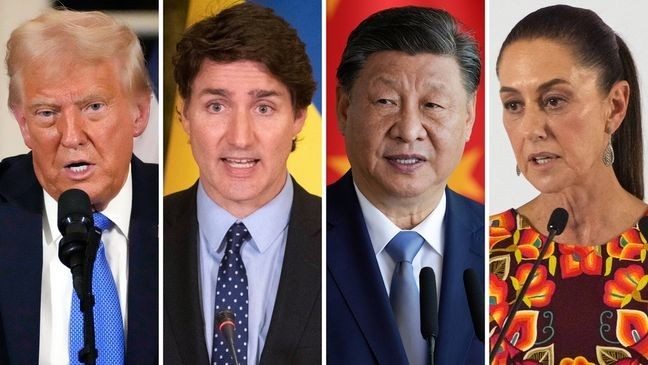
President Donald Trump doubled down on his proposal for Canada to become the 51st U.S. state in a Fox News interview aired Sunday during the Super Bowl pregame show. 

When asked by host Bret Baier whether his talk of annexing Canada was serious, Trump replied, “Yeah, it is.” 

“I think Canada would be much better off being the 51st state because we lose $200 billion a year with Canada. And I’m not going to let that happen,” Trump said. “Why are we paying $200 billion a year, essentially a subsidy to Canada?” 

The U.S. does not subsidize Canada, but imports Canadian goods, including oil and natural resources. The U.S. trade deficit with Canada reached $72 billion in 2023, largely due to energy imports. 

Trump’s repeated suggestions that Canada would benefit from becoming a U.S. state have been met with widespread opposition in Canada. 

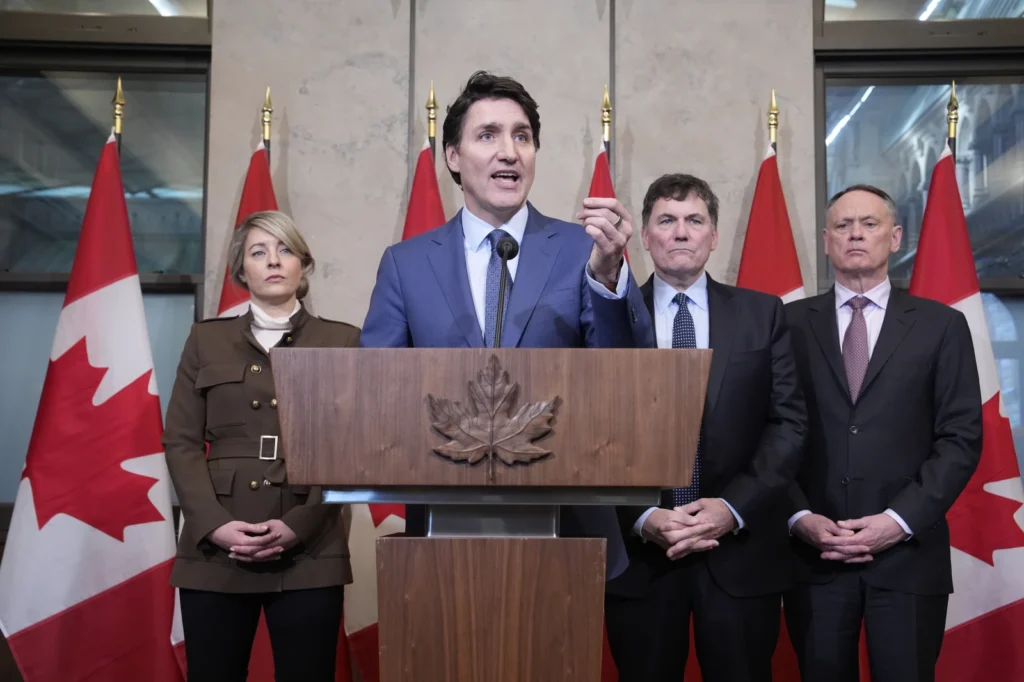
During a closed-door session with business and labor leaders on Friday, Canadian Prime Minister Justin Trudeau described Trump’s comments as a serious matter linked to U.S. interests in Canada’s natural resources. 

“Mr. Trump has it in mind that the easiest way to do it is absorbing our country, and it is a real thing,” Trudeau said, according to CBC, Canada’s public broadcaster. “They’re very aware of our resources and they very much want to be able to benefit from those.” 

During the interview, which was pre-recorded in Florida, Trump expressed dissatisfaction with Canada and Mexico’s efforts to avoid tariffs he has threatened to impose. 

“No, it’s not good enough,” he said. “Something has to happen. It’s not sustainable. And I’m changing it.” 

Last week, Trump agreed to delay imposing a 25% tariff on all imports from Mexico and Canada—except Canadian oil, natural gas, and electricity, which would be taxed at 10%—for 30 days after both countries took steps to address his concerns over border security and drug trafficking. 

While traveling to the Super Bowl in New Orleans on Air Force One, Trump announced plans to implement a 25% tariff on all steel and aluminum imports, including those from Canada and Mexico. He also teased a forthcoming announcement on reciprocal tariffs. 

“Very simply, if they charge us, we charge them,” he said. 

Trump’s interview marked a return to the presidential tradition of speaking with the network broadcasting the Super Bowl. His predecessor, Joe Biden, declined to participate in 2023 and 2024. During his first term, Trump participated in three out of four years. 

Trump also became the first sitting U.S. president to attend the Super Bowl in person, a fact that surprised him. 

“I thought it would be a good thing for the country to have the president at the game,” he said. 

During his flight to New Orleans, Trump signed a proclamation renaming the Gulf of Mexico as the “Gulf of America” and declared Feb. 9 as the first-ever “Gulf of America Day.” 

Trump also defended billionaire Elon Musk, whose Department of Government Efficiency (DOGE) has come under scrutiny for shutting down federal agencies and mass layoffs. 

“Musk has been terrific,” Trump said, adding that DOGE’s next targets would be the Department of Education and the military. 

“We’re going to find billions, hundreds of billions of dollars of fraud and abuse,” Trump claimed. “I campaigned on this.” 

Toward the end of the interview, Trump was asked about his signature dance moves, which have become a social media sensation. 

“I don’t know what it is. I try and walk off sometimes without dancing, and I can’t. I have to dance because—it’s just that—something special about it,” Trump said. 

Vance and Musk Challenge Judicial Authority as Trump’s Agenda Faces Legal Hurdles

Prominent figures in the Trump administration, including Vice President JD Vance and billionaire Elon Musk, are openly questioning the judiciary’s role in checking executive power as courts block key parts of the president’s sweeping agenda. 

In the past 24 hours, criticism has mounted over a federal judge’s decision early Saturday to prevent Musk’s Department of Government Efficiency from accessing Treasury Department records. The ruling has sparked a broader debate over judicial oversight, a cornerstone of the U.S. government’s separation of powers. 

Vice President Vance took to X on Sunday morning to challenge the ruling, arguing that judges should not have the authority to interfere with executive actions. 

“If a judge tried to tell a general how to conduct a military operation, that would be illegal. If a judge tried to command the attorney general in how to use her discretion as a prosecutor, that’s also illegal. Judges aren’t allowed to control the executive’s legitimate power,” Vance wrote. 

Musk, tasked by President Donald Trump with eliminating government waste, went even further, calling for the judge’s impeachment. 

“A corrupt judge protecting corruption. He needs to be impeached NOW!” Musk wrote, sharing a post from a user suggesting the administration should ignore the court order. 

The ruling temporarily bars Musk’s team from accessing a Treasury system containing sensitive personal data, including Social Security and bank account numbers for millions of Americans. The Trump administration argues that Musk’s team is simply working to root out waste and abuse. 

Deputy White House Chief of Staff Stephen Miller called the decision “an assault on the very idea of democracy itself.” 

“What we continue to see is rogue bureaucrats—unelected, unaccountable, with lifetime tenure—amassing power and running the country from the shadows,” Miller said on Fox News Channel’s *Sunday Morning Futures*. 

The administration’s efforts to dismantle federal agencies and reduce the workforce have faced significant legal pushback. Judges have blocked Trump’s plans to implement mass federal buyouts, place thousands of USAID workers on leave, and enforce an executive order ending birthright citizenship. 

On Saturday, U.S. District Judge Paul A. Engelmayer issued a preliminary injunction after 19 Democratic attorneys general sued, arguing that the Trump administration unlawfully granted Musk’s team access to the Treasury Department’s payment system. 

Trump expressed frustration with the ruling while speaking aboard Air Force One. 

“We’re very disappointed with the judges that would make such a ruling, but we have a long way to go,” Trump said. “No judge should frankly be allowed to make that kind of a decision.” 

The disputed payment system processes tax refunds, Social Security benefits, and veterans’ payments, handling trillions of dollars annually. A hearing is scheduled for Feb. 14. 

Democratic leaders have raised alarms over Trump and Musk’s moves, including attempts to halt spending already approved by Congress. Under the U.S. Constitution, Congress controls government spending. 

“This is the most serious constitutional crisis since Watergate,” Sen. Chris Murphy (D-Conn.) said on ABC’s *This Week*. “This is a red alert moment when this entire country has to understand that our democracy is at risk.” 

Murphy expressed concern that the judiciary may be overwhelmed by the administration’s rapid-fire legal challenges. 

“The pace of this assault on the Constitution in order to serve the billionaire class is absolutely dizzying,” Murphy said. “You cannot just rely on the court system. You need public pressure and bipartisan opposition.” 

Despite the legal setbacks, Republicans have remained firmly behind Trump’s agenda. 

Ohio Rep. Jim Jordan criticized the ruling on CNN’s *Inside Politics*, arguing that the courts should not obstruct the president’s ability to govern. 

“I assume we will argue this out in court, like the other 17 or 18 decisions we have seen in the last several days. But we knew the left, we knew the Democrats were going to do this,” Jordan said. 

With legal battles mounting, the fight over executive power, judicial oversight, and the scope of Trump’s agenda is far from over. 

Freed Israeli Hostage Unaware of Family’s Death Until After Release, Relatives Say

An Israeli hostage released from Gaza did not know his wife and two daughters were killed in the Oct. 7 attack until after his release on Saturday, his British relatives said. 

Eli Sharabi was taken captive by Hamas and freed in Deir al-Balah, Gaza, as part of an internationally brokered ceasefire deal. His wife, Lianne Sharabi, originally from Bristol, England, and their daughters, Noiya and Yahel, were found murdered in their safe house in 2023, “cuddled together,” according to family members. 

Lianne’s parents, Gill and Pete Brisley, told the BBC that an Israeli Defense Forces (IDF) soldier informed Sharabi of his family’s fate after his release. Before that, relatives were unsure whether he knew that his wife and daughters had been killed. 

Sharabi was one of three hostages handed over to the Red Cross by Hamas on Saturday. Speaking after his release, he said he was “very happy today to return to… my wife and daughters,” raising concerns that he was unaware of their deaths. 

The Brisleys, who live in Bridgend, Wales, said they cried while watching their son-in-law’s release via livestream. They described Sharabi’s appearance as “gaunt” and were struck by his emaciated state. 

“When we saw Eli, it was shocking—the hollow eyes, sunken cheeks, his wrists like sticks,” Pete Brisley said. 

The couple spoke to Sharabi in a video call after his release. “He got choked up a couple of times but managed a small smile for us. Such a brave man,” they said. 

Lianne Sharabi had moved to Israel as a volunteer on a kibbutz at 19 and later settled there permanently. She met Eli three months after arriving, and they had two daughters, Noiya, 16, and Yahel, 13. 

Sharabi’s release came as part of a ceasefire agreement between Hamas and Israel, which took effect on Jan. 19. On Saturday, Israel released 183 Palestinian prisoners in exchange for three Israeli hostages. The deal stipulates that 33 hostages taken on Oct. 7 will be freed in weekly handovers in exchange for 1,900 Palestinian prisoners. 

So far, 16 Israeli hostages have been freed, and 566 Palestinian prisoners have been released since the ceasefire began. 

Hamas took 251 hostages and killed about 1,200 people during the Oct. 7 attack on Israel, sparking the ongoing war. Since then, Israel’s offensive has killed at least 47,500 Palestinians, according to Gaza’s Hamas-run health ministry. The United Nations estimates that two-thirds of Gaza’s buildings have been damaged or destroyed. 

Man Arrested After Multiple Stabbings in Dublin’s Stoneybatter Area

A man has been arrested in Dublin following a series of stabbing attacks that left three men injured in the Stoneybatter area, near the city center, on Sunday afternoon. 

The attacks occurred around 3 p.m. across multiple streets in the Arbour Hill section of Stoneybatter. Gardaí, Ireland’s national police force, confirmed the suspect is in custody and being held at a station in North City. 

Authorities said the three victims were taken to the hospital for treatment. Two men sustained serious but non-life-threatening injuries, while a third suffered less severe wounds. 

“A number of scenes are currently being preserved for technical examination in the Stoneybatter area,” a Garda spokesperson said. “All traffic restrictions have been lifted.” 

Local Fine Gael Councillor Ray McAdam said residents were instructed to lock their doors and remain indoors as officers responded swiftly to the incident. 

“There’s a level of shock and concern,” McAdam said. “But the overriding sentiment in Stoneybatter is hope that those injured will make a full recovery.” 

Authorities have not disclosed the suspect’s identity or a potential motive. The investigation remains ongoing. 

Trump Says He Spoke With Putin About Ending Ukraine War

U.S. President Donald Trump said he has spoken by phone with Russian President Vladimir Putin about ending the war in Ukraine, according to a report by the New York Post. The conversation is the first confirmed contact between Putin and a U.S. president or former president since the war escalated in early 2022. 

Trump, who has repeatedly vowed to broker a resolution to the war but has not publicly detailed his plan, described the conflict as a “bloodbath” and said his team has engaged in “some very good talks.” 

In an interview aboard Air Force One on Friday, Trump declined to specify the number of times he had spoken with Putin. “I better not say,” he told the New York Post. 

“He (Putin) wants to see people stop dying,” Trump said. The White House has not commented on the report. 

Kremlin spokesman Dmitry Peskov, when asked by Russia’s TASS news agency about Trump’s remarks, neither confirmed nor denied the conversation. “Many different communications are emerging,” Peskov said, adding that some discussions occur through “different channels.” 

The conflict in Ukraine began in 2014 after a pro-Russian president was ousted in Ukraine’s Maidan Revolution, prompting Russia to annex Crimea. The war escalated in February 2022 when Putin sent thousands of troops into Ukraine, calling it a “special military operation.” Russia claims the invasion was necessary to protect Russian-speaking populations and counter what it sees as a NATO threat, while Ukraine and its Western allies call it an illegal land grab. 

Moscow currently controls a territory in Ukraine roughly the size of Virginia and is advancing at its fastest pace since the early days of the war. 

Trump, the author of The Art of the Deal, has repeatedly stated his intention to meet with Putin to negotiate an end to the war, though no official date or location has been set. Reuters previously reported that Russia views Saudi Arabia and the United Arab Emirates as possible venues for peace talks. 

On June 14, Putin laid out his conditions for an immediate ceasefire, demanding Ukraine renounce its NATO ambitions and withdraw from four regions claimed by Russia. In November, Reuters reported that Putin was open to discussing a peace deal with Trump but refused to make major territorial concessions. 

Russian officials have urged caution regarding speculation on negotiations with Trump’s team. Leonid Slutsky, head of Russia’s parliamentary international affairs committee, told state media that preparations for a meeting were at an “advanced stage” and that it could take place as early as February or March. 

Putin last spoke to then-U.S. President Joe Biden in February 2022, just before launching the full-scale invasion. The Kremlin said that conversation lasted about an hour. 

Washington Post journalist Bob Woodward, in his 2024 book War, reported that Trump had multiple direct conversations with Putin after leaving office. Trump did not deny the claims in a Bloomberg interview, saying, “If I did, it’s a smart thing.” The Kremlin has denied Woodward’s report. 

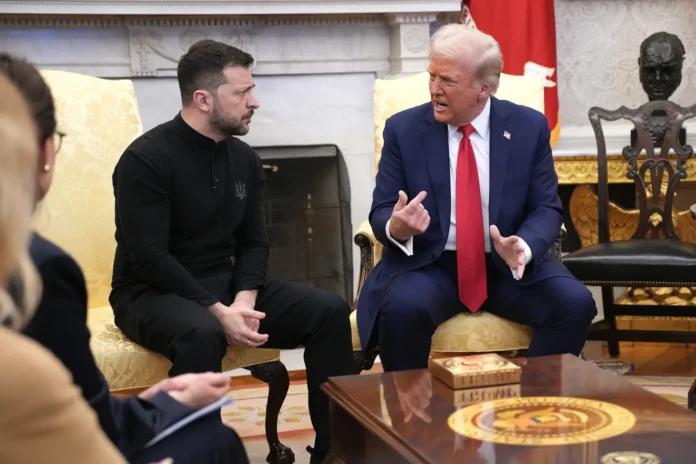
Trump also stated that he plans to meet Ukrainian President Volodymyr Zelenskyy next week to discuss potential solutions to the war. Zelenskyy recently told Reuters that Ukraine is exploring deals to supply the U.S. with rare earth minerals in exchange for continued financial and military aid.  Trump maintained that he has a concrete plan to end the conflict but did not disclose specifics. “I hope it’s fast,” he said. “Every day, people are dying. This war is so bad in Ukraine. I want to end this damn thing.” 

Israeli Forces Withdraw From Key Gaza Corridor Amid Fragile Ceasefire

Israeli forces withdrew from a strategic corridor in Gaza on Sunday, marking a significant step in a ceasefire agreement with Hamas that remains fragile as talks on extending the truce face obstacles. 

The withdrawal from the 4-mile (6-kilometer) Netzarim corridor, which bisects northern and southern Gaza, was part of Israel’s commitments under the ceasefire deal. The move allows for increased movement between the regions, where hundreds of thousands of Palestinians have returned to homes devastated by months of war. 

Despite this development, negotiations on the second phase of the ceasefire—which aims to extend the truce and facilitate the release of more Israeli hostages—have stalled. Israeli Prime Minister Benjamin Netanyahu dispatched a delegation to Qatar, a key mediator in the talks. However, the inclusion of lower-level officials has raised doubts about the likelihood of a breakthrough. Netanyahu is also set to convene a Cabinet meeting this week to discuss the next steps. 

The truce, which began on Jan. 19, has faced repeated challenges but has largely held. Under the agreement’s initial phase, Hamas is gradually releasing 33 Israeli hostages in exchange for a pause in fighting, the release of Palestinian prisoners, and increased humanitarian aid to Gaza. Israeli forces have also pulled back from populated areas, fulfilling another condition of the deal. 

The second phase of the agreement calls for the release of all remaining hostages in exchange for a full Israeli withdrawal and a “sustainable calm.” However, deep mistrust between the sides and unresolved disagreements cast doubt on the feasibility of extending the ceasefire. 

Netanyahu faces pressure from hardline allies who demand a resumption of military operations to dismantle Hamas completely. Meanwhile, Israeli citizens advocating for the return of hostages are pushing for continued diplomacy. 

Amid the Gaza ceasefire, violence has surged in the occupied West Bank. The Palestinian Health Ministry reported that two Palestinian women in their 20s, including an eight-month pregnant woman, were fatally shot in the Nur Shams refugee camp. Israeli forces have been conducting a broad military operation in the area targeting militants. 

Israeli Defense Minister Yoav Gallant announced an expansion of operations in the West Bank, citing efforts to prevent Iran from gaining influence in the region. The Israeli military has not commented on the latest incident. 

The ceasefire negotiations come as former U.S. President Donald Trump proposed relocating Gaza’s population, a suggestion widely rejected by Palestinians and Arab nations. While Israel has not dismissed the idea outright, Hamas and regional leaders have condemned it as unfeasible and morally questionable. 

Netanyahu further stirred tensions by suggesting that Palestinians could establish a state in Saudi Arabia, a remark Saudi officials denounced as an attempt to deflect from alleged Israeli war crimes in Gaza. 

The war, triggered by Hamas’ Oct. 7 attack that killed 1,200 Israelis and resulted in 250 hostages, has devastated Gaza. More than 47,000 Palestinians have died, according to local health authorities, who do not distinguish between combatants and civilians in their count. Large swaths of the territory remain in ruins, leaving displaced Palestinians struggling to rebuild their lives. 

As cars laden with belongings moved through the now-unoccupied Netzarim corridor, the fate of the ceasefire remains uncertain. Whether negotiations can produce a lasting resolution—or if conflict will resume—remains a pressing question for both sides. 

Mexico Bus Crash: At Least 41 Dead After Collision With Truck Near Escárcega

At least 41 people were killed early Saturday when a passenger bus collided with a truck in southern Mexico, authorities said. 

The bus, carrying 48 people, was traveling between Cancún and Tabasco when the crash occurred near the city of Escárcega, according to officials in Tabasco state. Thirty-eight passengers, two bus drivers, and the truck driver died in the accident. 

Authorities said recovery efforts were ongoing. 

Images from the scene showed the bus completely burned out following a fire caused by the collision, with only the metal frame remaining. 

Tours Acosta, the bus operator, expressed condolences in a statement on Facebook, saying it was “profoundly sorry” and working with authorities to determine the cause of the crash, including whether speed limits were followed. 

Tabasco Governor Javier May Rodríguez said on social media that the incident happened near Escárcega and that local, federal, and Campeche state authorities were coordinating assistance efforts. 

“The secretary of government is closely monitoring the situation,” Rodríguez said. 

All 10 Confirmed Dead in Alaska Plane Crash, Recovery Efforts Underway 

Authorities have confirmed the deaths of all 10 people aboard a Cessna Grand Caravan aircraft that crashed into Norton Sound near Nome, Alaska. Recovery teams continue efforts to retrieve the victims as investigators examine the cause of the crash. 

The aircraft, operated by regional carrier Bering Air, was en route from Unalakleet to Nome on Thursday when it lost radar contact. The plane, carrying nine passengers and a pilot, went down about 34 miles (55 km) southeast of Nome, according to the National Transportation Safety Board (NTSB). 

Among the victims were Rhone Baumgartner and Kameron Hartvigson, employees of the Alaska Native Tribal Health Consortium. They had been traveling for maintenance work on a water plant, the organization confirmed Friday. 

NTSB Chair Jennifer Homendy said nine investigators are on-site, supported by specialists in Washington, D.C. She stated that recovery efforts remain the priority, complicated by deteriorating weather conditions and the wreckage drifting on an ice floe moving five miles per day. 

Bering Air issued a statement expressing condolences and pledging full cooperation with the investigation. Alaska State Troopers said they were alerted at 4 p.m. local time Thursday about an “overdue” aircraft. The Nome Volunteer Fire Department reported that the pilot had communicated intentions to hold until the runway was clear. 

The U.S. Coast Guard later reported a rapid loss of altitude and speed before contact was lost. Visibility in the area was low at the time of the crash. 

Alaska Sen. Lisa Murkowski and Gov. Mike Dunleavy shared condolences, with Dunleavy calling the incident “heartbreaking” and offering prayers for the victims’ families. 

Unalakleet and Nome are about 150 miles apart across Norton Sound, an inlet of the Bering Sea. Officials continue working to recover the bodies and determine the cause of the crash.