Home Blog Page 467

Zimbabwe Leads Global Alcohol Consumption Rankings by Wide Margin

Zimbabwe has topped the global rankings for alcohol consumption per capita, consuming an average of 62.8 liters annually—nearly four times the global average of 16 liters—according to a report by Wisevoter. The figures put Zimbabwe significantly ahead of second-place Tunisia, which reports an average of 36.6 liters per capita. 

The top 10 alcohol-consuming countries, as listed in the report, are: 

1. Zimbabwe – 62.8 liters 

2. Tunisia – 36.6 liters 

3. Eswatini – 34.4 liters 

4. Maldives – 33.7 liters 

5. Afghanistan – 33.5 liters 

6. Namibia – 32.4 liters 

7. South Africa – 29.9 liters 

8. Algeria – 29.1 liters 

9. Turkey – 28.5 liters 

10. Iran – 28.4 liters 

Wisevoter detailed its methodology, defining “a drink” as 0.6 fluid ounces of alcohol, corresponding to one 12-ounce beer, a five-ounce glass of wine, or a 1.5-ounce shot of liquor. The rankings were based on consumption of pure alcohol through beer, wine, and spirits. 

The report’s findings have sparked significant debate and concern, particularly in Zimbabwe, where the data highlights troubling trends. 

Economist and podcast host Tinashe Murapata, also known as Baba Nyenyedzi, called the statistics alarming: 

“The average Zimbabwean consumes a staggering 62.8 liters of pure alcohol annually. If this is true, then we have a national disaster!” 

Other commentators raised concerns about the proliferation of unregulated alcohol in Zimbabwe. Social media user @CeeeClef criticized the ease of access to cheap, unregulated alcohol, saying: 

“Anyone can buy ethanol, mix it with water, add color and flavor, and sell it as brandy or gin. These products are everywhere and destroying the youth and the poor.” 

Opinions on the report’s accuracy and implications were divided. Some questioned the methodology, while others doubted Zimbabwe’s ranking. Twitter user @SaChiri__ wrote: 

“Is the data free of confounding variables? Our unique economic situation may skew the measurements.” 

Others expressed skepticism about Zimbabwe surpassing South Africa in alcohol consumption. User @sm_chauke commented: 

“No way Zimbabweans can outdrink South Africans.” 

Meanwhile, some attributed the findings to broader socioeconomic factors. User @jqsh4 remarked: 

“Alcohol is always affordable and available because it keeps the masses docile.” 

The report also highlighted surprising entries like Afghanistan and Iran, both predominantly Muslim nations with strict alcohol bans, ranking in the top 10. This sparked curiosity online, with user @enza2363 asking: 

“How is Afghanistan fifth, ahead of the UK and Ireland?” 

Wisevoter emphasized the dangers of excessive alcohol consumption, warning of risks such as liver damage, cancer, and impaired motor skills. The findings have raised questions about the accessibility and regulation of alcohol, as well as the societal factors driving high consumption rates. 

Source: Iharare.com

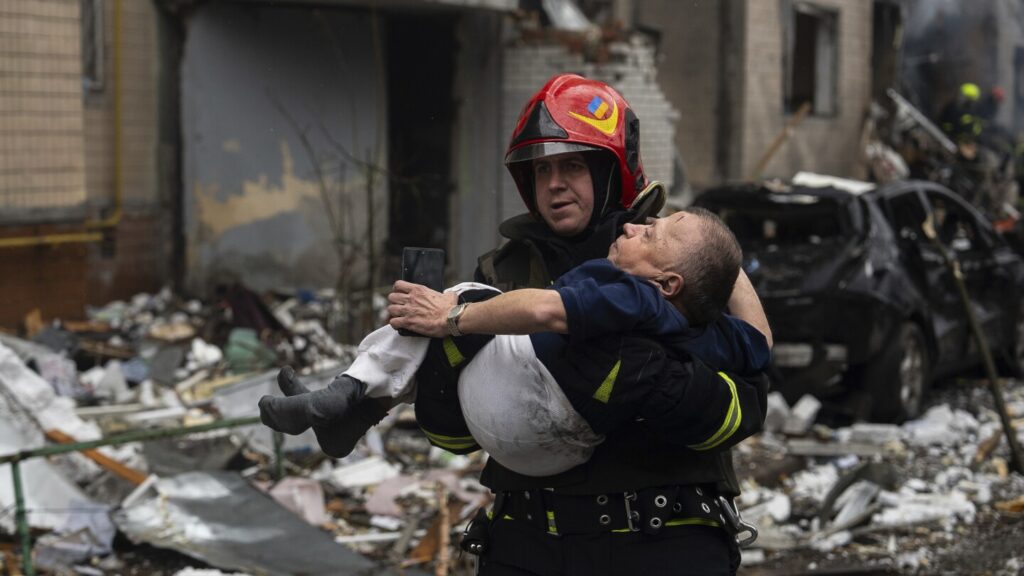
Ukraine Launches Counterattack in Russia’s Kursk Region, Moscow Says

Russia claimed on Sunday that Ukraine had launched a counterattack in the Kursk region, a western Russian area where fighting has persisted for months. Ukrainian forces reportedly crossed into the region in August, holding ground that could serve as leverage in potential peace talks. 

The Russian Defense Ministry stated that Ukrainian troops initiated the assault around 9:00 a.m. Moscow time (0600 GMT) near the village of Berdin. The attack involved two tanks, a mine-clearing vehicle, and twelve armored combat vehicles carrying paratroopers. 

“Artillery and aviation of the North group of Russian forces defeated the assault group of the Ukrainian Armed Forces,” the ministry said in a statement, adding that two Ukrainian attacks had been repelled. 

The claims could not be independently verified by Reuters. 

Prominent Russian military bloggers reported that Ukraine’s latest offensive has placed Russian troops on the defensive. The Operativnye Svodki (Operational Reports) channel noted intense artillery and small-arms battles, with Ukrainian forces employing Western-supplied armored vehicles to mobilize infantry. 

Fighting is reportedly concentrated north of a highway connecting Sudzha, near the border, to Kursk, the regional capital. However, Yuri Podolyak, an influential Russian blogger, suggested the attack could be a diversion to mask preparations for a strike on Glushkovo, further west. Podolyak urged civilians in Glushkovo and Korenevo to evacuate. 

This development comes as both sides remain locked in a protracted conflict, with no immediate signs of resolution. 

Myanmar Junta to Release 5,864 Prisoners in Independence Day Amnesty

Myanmar’s military government announced on Saturday it will release 5,864 prisoners, including 180 foreign nationals, as part of an amnesty to mark the country’s Independence Day. 

The Southeast Asian nation has been in political turmoil since the military seized power in a February 2021 coup, ousting an elected civilian government. The takeover triggered widespread pro-democracy protests that were met with a violent crackdown, leading to a nationwide armed rebellion. 

The junta has stated its intention to hold elections later this year, but opposition groups and international observers have dismissed the plans as illegitimate. 

Among those excluded from the amnesty is Nobel laureate and former leader Aung San Suu Kyi. The 79-year-old remains imprisoned after being convicted on 14 charges, including incitement, election fraud, and corruption. Suu Kyi, who denies all the allegations, is currently serving a 27-year sentence. 

The announcement of the prisoner release follows previous amnesties granted by the military government during significant national events. The junta has yet to provide details on the identities of those to be freed or the criteria for their release. 

Myanmar’s Independence Day, celebrated on January 4, commemorates the nation’s liberation from British colonial rule in 1948. 

Malaysia Turns Back Boats Carrying Nearly 300 Myanmar Migrants

Malaysia’s coast guard intercepted and turned back two boats carrying nearly 300 undocumented Myanmar migrants, many of whom were found in an exhausted state due to a lack of food and water, a senior official reported. 

The boats were discovered on Friday approximately two nautical miles southwest of Langkawi, a popular Malaysian resort island. Authorities provided the migrants with food and clean drinking water before escorting the vessels out of Malaysian waters, according to a statement from Director-General Mohd Rosli Abdullah on Saturday. 

“We are closely cooperating with Thai enforcement agencies to gather further information on the movement of these boats,” Mohd Rosli added. 

The coast guard did not confirm whether the migrants belonged to the Rohingya, a predominantly Muslim minority group in Myanmar. Members of the Rohingya often flee persecution in Myanmar, where they are denied citizenship and face systemic abuse. 

On the same day, Malaysian police detained 196 undocumented Myanmar migrants after their boat landed on a Langkawi beach. Among those detained were 71 children and 57 women, believed to be ethnic Rohingya, according to a police statement. 

The migrants were taken for documentation and health checks. Authorities did not provide further details on their next steps. 

For years, Rohingya refugees have risked dangerous journeys on makeshift wooden boats to escape persecution in Myanmar. Many aim to reach neighboring Muslim-majority countries like Malaysia, Indonesia, and Bangladesh, as well as Thailand, particularly during the calmer seas from October to April. 

Malaysia, however, does not recognize refugee status. In recent years, the country has taken a hardline stance, turning away boats carrying Rohingya refugees and detaining thousands in overcrowded detention centers as part of a broader crackdown on undocumented migrants. 

The situation highlights the continued plight of the Rohingya people, who remain one of the most persecuted minorities in the world, and the challenges faced by countries in the region in addressing the humanitarian crisis. 

Heavy Snow Causes Widespread Disruption in the UK and Germany

Heavy snow and freezing rain wreaked havoc across Europe on Sunday, with significant disruption reported in the U.K. and Germany. Flights were suspended at major airports, roads became treacherous, and power outages left many without electricity. 

In the U.K., heavy snow of up to 40 centimeters (15 inches) in higher areas—especially in northern England—raised concerns that rural communities could be cut off. The National Grid, responsible for the country’s electricity supply, reported outages across central and western England and Wales, with power restoration efforts underway in Birmingham, Bristol, and Cardiff. 

Transport networks bore the brunt of the severe weather. Liverpool’s John Lennon Airport and Manchester Airport temporarily closed their runways, although they expected to reopen by late Sunday morning. Leeds Bradford Airport, however, remained closed. 

Road travel was similarly affected, with local authorities preemptively closing several roads. Stranded vehicles and collisions caused further disruption as families and students attempted to return home after the holiday break. Rail services also faced cancellations, with National Rail warning that disruptions could extend into the workweek. 

The Met Office, Britain’s weather agency, forecasted continued sleet and snow for northern England and southern Scotland. Meanwhile, the south of England, which experienced freezing rain earlier, was expected to see milder conditions later in the day. 

Flood warnings were also issued by the Environment Agency for southern England, affecting areas around the River Taw and River Avon. 

In Germany, snow and ice created hazardous conditions, particularly in the southwest. Authorities issued black ice warnings for drivers and pedestrians, advising people to avoid travel unless necessary. 

At Frankfurt Airport, 120 of the 1,090 scheduled flights were canceled due to the weather. Munich Airport operated with only one runway while the other was cleared of snow and ice. 

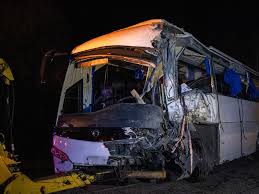
The road network faced its share of challenges, with accidents reported across the country. In Baden-Württemberg, a bus skidded off the road near Hemmingen, injuring eight people. Long-distance train services in the Frankfurt area also experienced irregularities. 

Both countries continue to grapple with the effects of the heavy snow, as emergency services work to restore normalcy. While milder conditions are expected in some areas, the aftermath of the snow and freezing rain is likely to linger into the coming week. 

How Congress Will Certify Trump’s Electoral College Victory on Jan. 6 

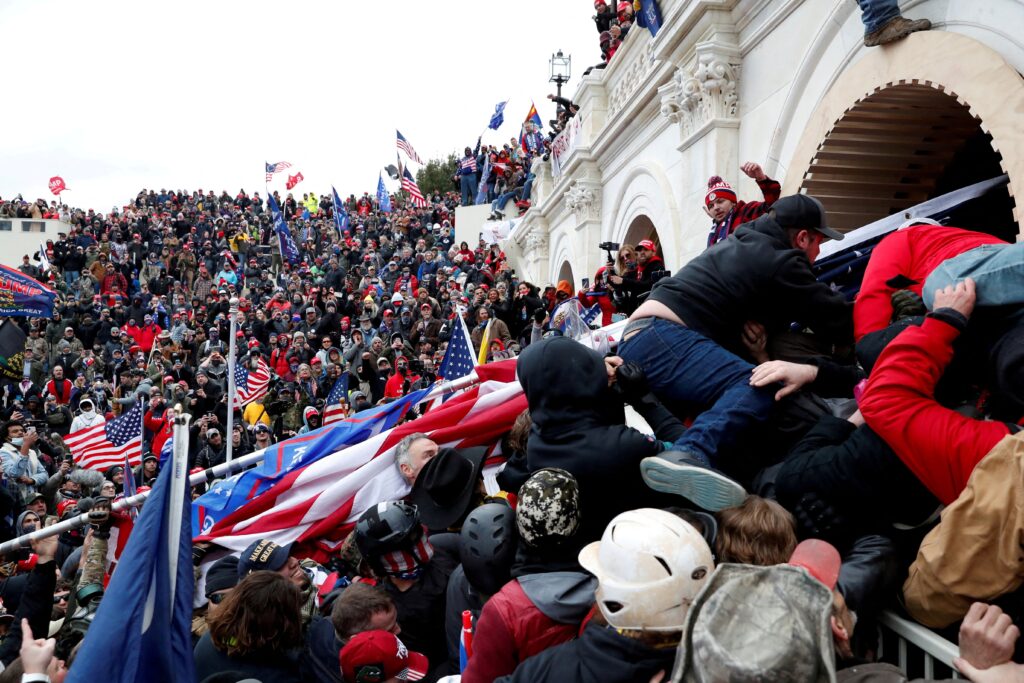
The joint session of Congress to certify the Electoral College votes on Jan. 6 is expected to be a smoother process compared to the session four years ago, which was disrupted by rioters seeking to overturn the 2020 presidential election results. 

This time, former President Donald Trump returns to the White House after winning the 2024 election, defeating Vice President Kamala Harris. Harris will preside over the certification process, fulfilling her constitutional duty in a manner similar to how then-Vice President Mike Pence certified Trump’s loss in 2021. 

The Jan. 6 session is a constitutionally required step following the Electoral College’s formal vote in December. Here’s how the process will unfold: 

What Happens When Congress Meets? 

Congress convenes on Jan. 6 to count and certify the electoral votes. Sealed certificates from each state are brought to the session in traditional mahogany boxes. Representatives from both parties read the results aloud, and the votes are tallied. 

The vice president, serving as the president of the Senate, presides over the session and formally announces the winner. Trump’s 312-226 Electoral College victory means no tie-breaking measures are necessary. 

Congress revised the Electoral Count Act in 2022, defining the vice president’s role as strictly ceremonial. This came in response to the events of 2021, when Trump pressured Pence to reject the certified results—a request Pence declined. 

The updated law also raised the threshold for objections, requiring support from at least one-fifth of members in both the House and Senate. 

The presiding officer presents state-by-state electoral certificates, read aloud by appointed tellers from both chambers. After tallying the votes, the presiding officer announces the president and vice president-elect. 

Objections and Their Thresholds 

Lawmakers can object to a state’s vote, but such objections must be written and signed by one-fifth of each chamber. If an objection meets this threshold, the House and Senate debate it separately. Both chambers must agree for the objection to succeed; otherwise, the original votes are counted. 

Historically, objections are rare and often unsuccessful. The most recent occurred in 2021, with both chambers rejecting challenges to the Arizona and Pennsylvania results. 

Once certified, the president-elect is inaugurated on Jan. 20. With Harris conceding her defeat, no further challenges are anticipated. 

Man Arrested in Nigeria for Stealing Goat for Daughter’s Naming Ceremony

Police in Ogun State, south west of Nigeria,  have arrested Akintoye Waris and an alleged accomplice, Ajayi Yusuf, for reportedly stealing and slaughtering a Savannah he-goat valued at N200,000 to celebrate Waris’ daughter’s naming ceremony. 

The Ogun State Police Command spokesperson, Omolola Odutola, said on Saturday that the suspects were apprehended on January 2, 2025, following a report by the goat’s owner, identified only as Mark. 

According to the report, the suspects targeted Mark’s farm on December 25, 2024, while he was out grazing his livestock. Villagers later informed the police they had seen Waris and Yusuf transporting the goat on a motorcycle toward Olodo town. 

Suspects Confess to Crime

Acting on a tip-off, police detectives arrested the suspects in the early hours of January 2. During interrogation, they confessed to stealing and slaughtering the goat on December 27. Waris admitted using the meat to prepare food for his daughter’s naming ceremony in Olodo. 

“The suspects explained how they planned, executed, and transported the stolen goat before using it for the event,” Odutola said. 

Odutola confirmed that the suspects are in custody at the Divisional Crime Branch for further investigation. She assured residents that they would be prosecuted once the investigation is complete. 

“We are committed to ensuring justice is served and will provide updates as the case progresses,” she added. 

Israeli Strikes Kill 26 in Gaza, Including Eight Children, Says Civil Defense

Israeli airstrikes across the Gaza Strip killed at least 26 people on Saturday, including eight children, according to Gaza’s civil defense agency. The strikes come amid ongoing hostilities in the Israel-Hamas war, which has claimed the lives of approximately 45,717 people in Gaza, according to the territory’s health ministry. 

Among the casualties, 11 members of the al-Ghoula family, seven of them children, were killed in a dawn airstrike that destroyed their home in Gaza City, civil defense officials reported. Rescuers and residents in the Shujaiya neighborhood combed through smoking rubble to recover victims. Images showed bodies of children shrouded in white sheets. 

Hamas announced Friday that indirect talks with Israel, mediated by Qatar, Egypt, and the United States, had resumed in Doha. These discussions aim to establish a ceasefire and secure the release of hostages. However, no updates on the negotiations have been reported. 

Israeli Prime Minister Benjamin Netanyahu authorized negotiators to continue the dialogue, though Israel has expressed reluctance to agree to a lasting ceasefire. Defense Minister Israel Katz recently warned of intensified strikes if rocket fire from Gaza persists and hostages are not released. 

The conflict, which began in October 2023 following a Hamas attack on Israel that killed 1,208 people, has intensified in recent months. Israel’s ongoing military campaign in Gaza has resulted in significant civilian casualties, with many families losing loved ones in airstrikes. 

A strike in Khan Yunis on Saturday killed five security officers escorting aid convoys, further straining the humanitarian supply chain, according to civil defense spokesperson Mahmud Bassal. The Israeli military has not commented on the incident. 

The United Nations has raised concerns about the humanitarian crisis, describing the siege of northern Gaza as a potential effort to permanently displace the population. 

Syria to Resume International Flights to Damascus on Tuesday 

Syria announced on Saturday that international flights to and from Damascus International Airport will resume on Tuesday, marking the first such commercial operations since the ouster of former President Bashar al-Assad last month. 

Ashhad al-Salibi, head of the General Authority of Civil Aviation and Air Transport, confirmed the decision, stating, “We announce we will start receiving international flights to and from Damascus International Airport starting Tuesday.” 

Al-Salibi also reassured international carriers, noting efforts to rehabilitate airports in Damascus and Aleppo with assistance from international partners. “We are working to ensure our airports are ready to welcome flights from around the world,” he added. 

Qatar Airways announced plans to resume flights to Damascus after nearly 13 years, beginning with three weekly flights starting Tuesday. A Qatari official told AFP last month that Doha had extended assistance to the new Syrian authorities to facilitate the resumption of operations at Damascus airport. 

In addition to international aid planes and diplomatic delegations landing in Syria, domestic flights between Damascus and Aleppo resumed on December 18. This marked the first flight operations following opposition forces’ removal of al-Assad on December 8. 

Lionel Messi, Bono, Soros Among Recipients of Presidential Medal of Freedom from Biden

President Joe Biden awarded the Presidential Medal of Freedom, the nation’s highest civilian honor, to 19 individuals on Saturday, recognizing their contributions to sports, entertainment, politics, and humanitarian efforts. 

Among the honorees were football icon Lionel Messi, singer and activist Bono, basketball legend Earvin “Magic” Johnson, actor Denzel Washington, actor Michael J. Fox, and fashion designer Ralph Lauren. Longtime fashion editor Anna Wintour and chef José Andrés, founder of World Central Kitchen, also received the prestigious medal. 

“These honorees are remarkable leaders whose extraordinary contributions have shaped their country and the world,” the White House said in a statement. 

US-Präsident Joe Biden überreicht Michael J. Fox die Freiheitsmedaille, die höchste zivile Auszeichnung der USA, im East Room des Weißen Hauses. (zu dpa: «Von Bono bis Messi: Biden ehrt Promis mit Freiheitsmedaille»)

The list also included renowned primate researcher and environmentalist Jane Goodall, former first lady and Secretary of State Hillary Clinton, and financier George Soros. Soros was recognized for his global advocacy for democracy, human rights, and social justice, while Clinton was acknowledged for her groundbreaking career in public service, including being the first woman nominated by a major party for the U.S. presidency. 

Posthumous Honors and Political Recognition

Biden posthumously awarded the Medal of Freedom to Robert Francis “Bobby” Kennedy, who served as U.S. Attorney General under his brother President John F. Kennedy and was assassinated in 1968 while campaigning for the Democratic presidential nomination. “His legacy continues to inspire those committed to justice, equality, and public service,” Biden stated. 

In another move earlier this week, Biden awarded the Presidential Citizens Medal to former Republican congresswoman Liz Cheney, lauding her role in investigating the January 6, 2021, Capitol insurrection. 

Former President Donald Trump criticized the award, calling Cheney “totally corrupt” and alleging that Biden’s decision was based on her opposition to him. 

Biden’s selection of honorees reflects his efforts to highlight contributions to American society and democracy as his administration seeks to leave its mark on the nation’s history.