At least three people were killed and 17 others were wounded early Sunday when a gunman opened fire outside a downtown Austin bar before being fatally shot by police, authorities said.
The shooting erupted just before 2 a.m. near Buford’s bar on West Sixth Street, one of the city’s busiest nightlife corridors. Among the dead was the suspected shooter, who police said was killed after officers returned fire.
Austin Police Chief Lisa Davis said officers responding to reports of an active shooter encountered a man armed with a firearm outside the venue in the 600 block of Rio Grande Street.
“Three of our officers returned fire, killing the suspect,” Davis said at a Sunday morning news conference, calling the violence a “tragic, tragic incident.”
Authorities said 17 people were shot during the chaos. Austin-Travis County EMS Chief Rob Luckritz said 14 victims were transported to area hospitals, while three were pronounced dead at the scene. Of those hospitalized, three remained in critical condition as of Sunday morning. Officials indicated that all of the injured were expected to survive.
Police have not released the names of the victims or the suspect. Investigators have not yet said whether the gunman had any known connection to the bar or to those who were shot.
Davis said officers were already stationed in the Sixth Street entertainment district as part of routine weekend patrol operations when the shooting began, allowing for a swift response.
Paramedics arrived within 57 seconds of the first reports of gunfire, officials said.
Austin Mayor Kirk Watson credited the quick action of law enforcement and emergency responders with preventing further loss of life.
“I’m very thankful for the speed with which our public safety officials responded to this,” Watson said. “I don’t think there’s any question that it saved lives.”
Video shared on social media showed a heavy police presence flooding the area shortly after the shooting. Other clips appeared to capture terrified patrons crouching inside the bar as gunshots rang out, with additional shots audible as officers confronted the suspect.
Authorities said officers were still securing and processing the extensive crime scene hours after the incident. By 5:30 a.m., investigators continued collecting surveillance footage from nearby businesses and interviewing witnesses both inside and outside the venue.
Law enforcement officials familiar with the investigation said preliminary evidence indicates the suspect may have used both a handgun and an assault-style rifle. Police have not publicly confirmed those details.
The FBI has joined the Austin Police Department in the investigation. Authorities said the bureau’s Joint Terrorism Task Force is assisting based on evidence recovered at the scene, though officials have not indicated whether terrorism is suspected.
Investigators have not yet provided a detailed timeline of how the attack unfolded or whether the suspect acted alone.
The shooting occurred in the heart of Austin’s nightlife district, which routinely draws large crowds on weekends. West Sixth Street is known for its concentration of bars, live music venues and restaurants.
Officials said police and paramedics were deployed nearby as part of standard public safety measures for high-traffic evenings.
The area remained partially cordoned off Sunday morning as authorities continued examining shell casings and documenting the scene.
City leaders urged calm and asked anyone with video footage or additional information to contact investigators.
“This is a devastating morning for Austin,” Davis said. “We are committed to determining exactly what happened and ensuring accountability.”
The identities of those killed and injured are expected to be released after families are notified.
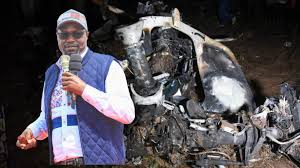
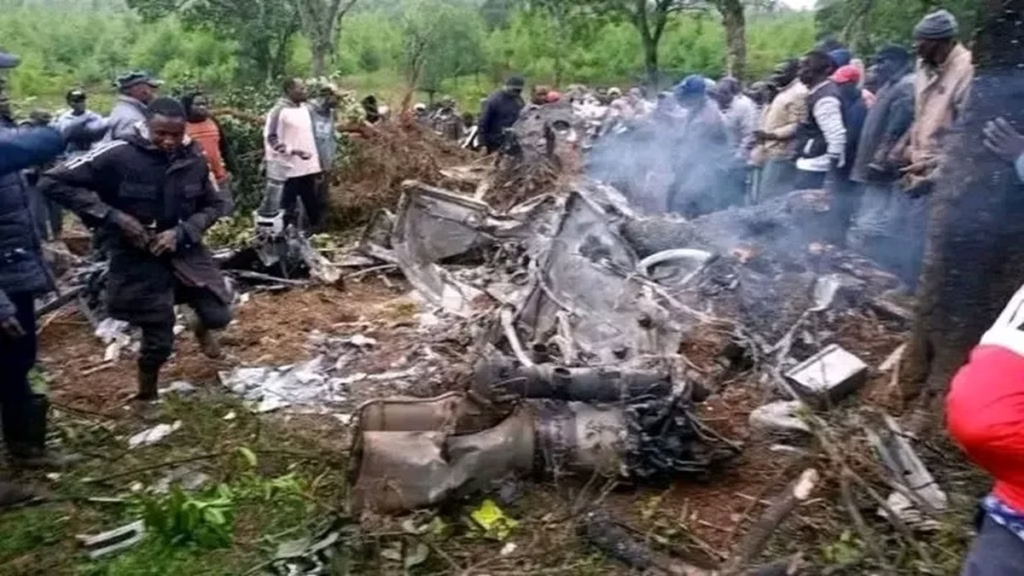
A Kenyan member of parliament was among six people killed Saturday after a helicopter crashed and burst into flames shortly after takeoff in western Kenya, police said, in an accident that occurred amid poor weather conditions.
The aircraft went down in a hilly area on the edge of Chepkieb Forest in Mosop, Nandi County, at approximately 4:45 p.m., according to local authorities. All six people on board, including the pilot, died at the scene.
Police chief Samuel Mukuusi told The Associated Press that the helicopter had lifted off minutes earlier before it crashed and ignited. Among the victims was Johana Ng’eno, the lawmaker representing Emurua Dikirr constituency.
Mukuusi said investigators had launched an inquiry into the cause of the crash. Kenya’s Civil Aviation Authority had not issued a statement as of Sunday.
Witnesses in the area described deteriorating weather conditions, including heavy rainfall and poor visibility, around the time of the accident. Residents said the helicopter had earlier made an emergency landing at about 4 p.m. as conditions worsened. The pilot was seen speaking briefly with herders near a makeshift landing site while assessing the situation before attempting to take off again, according to accounts from locals.
The aircraft, which reportedly had departed from Endebess carrying five passengers, crashed moments after becoming airborne.
The remains of the six victims were transferred to the Moi Teaching and Referral Hospital (MTRH) morgue in Eldoret County.
MTRH Chief Executive Officer Dr. Philip Kirwa confirmed the hospital had received the bodies. He said they were severely burned and urged families to remain patient as forensic teams work to complete identification and preparation procedures.
Leaders from across the North Rift region gathered at the hospital to mourn and to call for calm as authorities began investigating the incident.
Nandi County Senator Samson Cherargei appealed to the public to avoid speculation about the cause of the crash and urged pilots to exercise heightened caution during the ongoing rainy season.
Parliament Speaker Moses Wetang’ula praised Ng’eno as a “devoted legislator and a committed servant of the people.”
Ng’eno, 54, was serving his third term in parliament and had secured re-election in 2022 under the ruling party. He was widely regarded as an outspoken representative of his constituency.
President William Ruto described the late lawmaker as focused and fearless, saying he consistently advocated for justice and equitable development. Ruto noted that Ng’eno would be remembered for development initiatives in Emurua Dikirr and for championing local talent, particularly in the music sector.
“My friend, Mheshimiwa Ng’eno, was a progressive and devoted servant of the people who worked tirelessly on behalf of the residents of Emurua Dikirr, Narok County,” the president said.
Deputy President Kindiki also issued a statement mourning Ng’eno, referring to him as a courageous leader and loyal member of the ruling party.
“My prayers go to the family and constituents of my dear friend Johana Ng’eno following his demise in a tragic helicopter crash earlier this evening,” Kindiki said.
Narok Governor Patrick Ole Ntutu said he had spoken with Ng’eno earlier in the day. According to Ntutu, the lawmaker mentioned he was heading out and that they planned to meet later. The governor called on residents to remain calm and expressed confidence that investigators would determine what led to the crash.
Governors Jonathan Bii of Uasin Gishu, Wesley Rotich of Elgeyo Marakwet, and Stephen Sang of Nandi County also conveyed condolences to the victims’ families and communities.
The crash occurred during Kenya’s rainy season, when aviation experts often warn of heightened risks due to reduced visibility and unstable atmospheric conditions.
Residents near Chepkieb Forest said thick clouds and steady rainfall had limited visibility in the area Saturday afternoon. While officials have not confirmed weather as the definitive cause, authorities acknowledged that conditions were unfavorable at the time of the attempted departure.
Kenya has experienced several aviation accidents in recent years, often linked to weather challenges and difficult terrain, particularly in rural and highland regions.
Investigators are expected to examine flight records, maintenance logs and meteorological data as part of the probe. Aviation specialists typically assess pilot decision-making, aircraft condition and environmental factors when determining the cause of such incidents.
The deaths have sent shockwaves through Narok County and the broader North Rift region, where Ng’eno was a prominent political figure.
Local leaders at MTRH urged unity and patience as forensic teams carry out identification procedures. The hospital administration said further information would be released once the process is complete.
As families await answers, authorities emphasized that a comprehensive investigation is underway to establish what caused the helicopter to crash moments after takeoff.
At least nine people were wounded early Sunday when gunfire erupted during a live music event at a riverfront venue in Cincinnati, prompting a heavy police response and sending victims to nearby hospitals, authorities said.
The shooting occurred shortly before 1 a.m. at Riverfront Live, a concert and event space located in the 4300 block of Kellogg Avenue along the Ohio River in the city’s East End neighborhood.
Interim Cincinnati Police Chief Adam Hennie told ABC affiliate WCPO that all nine people injured sustained wounds described as non-life-threatening. Emergency crews transported victims to UC Medical Center and Good Samaritan Hospital for treatment. Police indicated they expect all of the injured to recover.
Officials have not yet released details about a suspect, possible arrests or what may have triggered the violence. Authorities also have not confirmed whether the shooting occurred inside the venue, outside in a parking area or in another section of the property.
Video clips circulating on social media showed flashing police lights and a significant law enforcement presence surrounding the venue in the hours after the shooting. Some unverified posts suggested a higher number of casualties, but police have not corroborated those claims.
Riverfront Live was hosting a late-night music event that began Saturday evening. Promotional material shared online ahead of the show advertised a party featuring multiple DJs starting at 10 p.m. DJ Fresh, an English electronic music artist, was listed among the scheduled performers.
An Instagram post from DJ Fresh indicated the venue was hosting a birthday celebration in conjunction with the event. Riverfront Live’s website describes the facility as a 16-and-over music venue with an indoor capacity of approximately 1,200 guests and the ability to accommodate up to 3,500 attendees in its outdoor areas.
The scale of attendance at the time of the shooting was not immediately disclosed.
Cincinnati police have not said whether the gunfire was targeted or random. Investigators were seen canvassing the area and interviewing witnesses in the early morning hours. Authorities urged anyone with information to come forward.
The shooting unfolded amid heightened public concern about gun violence at entertainment venues across the United States. Incidents at concerts, nightclubs and festivals have prompted increased scrutiny of security measures, including bag checks, metal detectors and the presence of off-duty officers.
Law enforcement agencies in Cincinnati have previously coordinated with venue operators for large-scale events along the Ohio River corridor, a popular destination for nightlife and seasonal gatherings.
Sunday’s violence rattled residents in the East End and raised fresh questions about safety at large public gatherings. The Riverfront Live complex sits near other recreational spaces and draws crowds from across the region, particularly during warmer months.
Although authorities emphasized that the injuries were not life-threatening, the psychological toll on attendees and staff may linger. Witnesses described scenes of confusion and panic as people scrambled for safety when shots rang out.
City officials have not yet announced whether additional security measures will be implemented at upcoming events.
Mass shootings at entertainment venues have become an alarming pattern in recent years, from nightclubs to outdoor concerts. Experts note that such settings present challenges for crowd management and rapid law enforcement response, particularly when events are crowded and alcohol is served.
Cincinnati has experienced episodic gun violence, though shootings at major music venues remain relatively uncommon. The fact that all victims are expected to survive may temper immediate fears, but the incident underscores ongoing concerns about firearms in public spaces.
As of Sunday afternoon, investigators had not released further updates. Police said more information would be shared as the investigation develops.
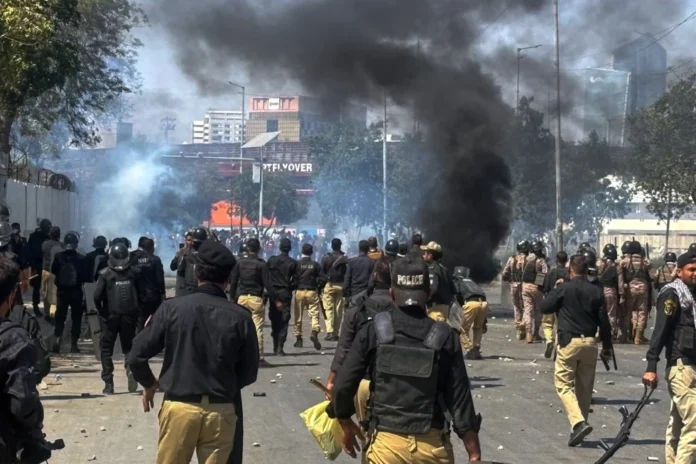
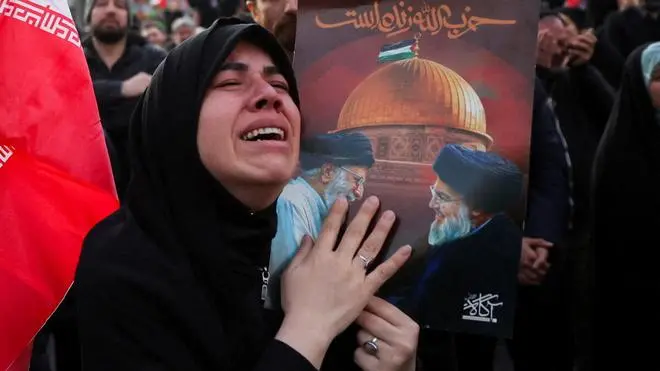
(AP) — At least nine people were killed and about two dozen others wounded Sunday after hundreds of demonstrators tried to breach the U.S. Consulate in Pakistan’s largest city, authorities said, in unrest triggered by the killing of Iran’s Supreme Leader Ayatollah Ali Khamenei in joint U.S.-Israeli strikes.
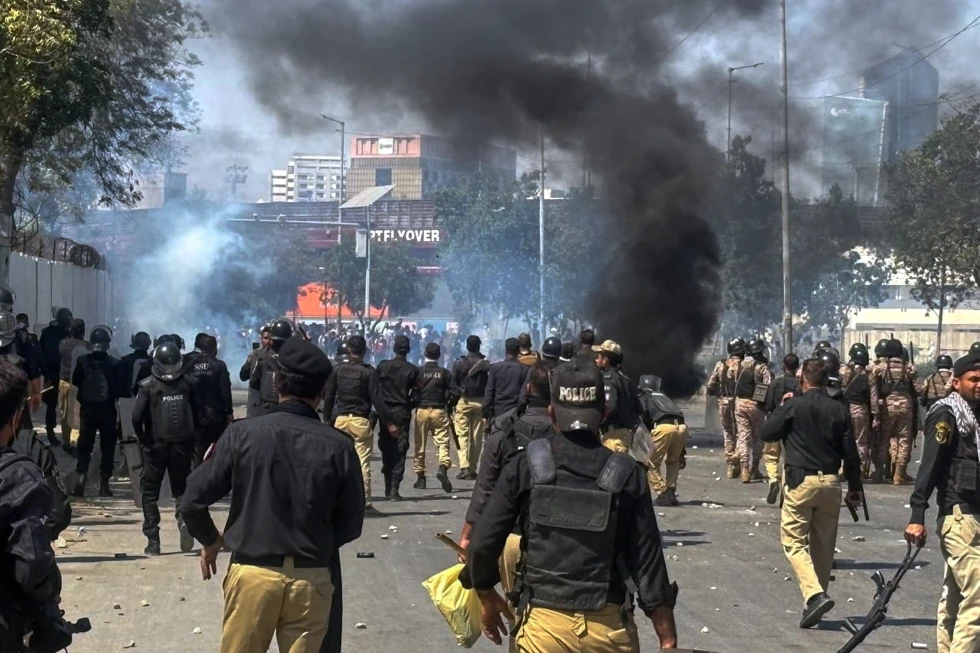
Clashes erupted before dawn in Karachi when protesters, many identifying with Pakistan’s Shiite community, converged on the diplomatic compound on Mai Kolachi Road. Security forces responded with force after crowds hurled stones, torched a nearby police post and attempted to damage the outer security perimeter, senior police official Irfan Baloch said.
Hospital officials confirmed the mounting toll. Dr. Summaiya Syed Tariq, a police surgeon at Karachi’s main government hospital, said six bodies were initially brought to the facility. Three critically injured people later died of their wounds, raising the death toll to nine. At least 25 others were treated for injuries, several in critical condition, The Associated Press reported.
The violence followed confirmation from Iranian state media that Khamenei had been killed in airstrikes on Tehran. The United States and Israel have acknowledged carrying out coordinated operations targeting Iranian military and leadership sites. Khamenei’s death has sparked demonstrations across parts of the Muslim world.
The U.S. Embassy in Pakistan said in a message posted on X that it was monitoring reports of demonstrations near consulates in Karachi and Lahore and noted calls for additional protests outside the U.S. Embassy in Islamabad and the consulate in Peshawar. The embassy urged American citizens to remain vigilant, avoid large gatherings and keep travel registrations current.
Karachi, capital of southern Sindh province and home to more than 20 million people, saw streets around the consulate transformed into what witnesses described as a conflict zone. Dozens of young men, some with faces covered, threw stones at law enforcement officers and chanted slogans condemning Washington and Israel. Rangers and paramilitary forces were deployed in large numbers to secure the diplomatic enclave.
Authorities rejected online claims that the consulate building had been set ablaze. Baloch said no part of the main structure was damaged, though protesters set fire to a nearby police post and shattered windows along the compound’s perimeter before security forces restored control.
Interior Minister Mohsin Naqvi appealed for restraint, calling Khamenei’s death “a day of mourning for the Muslim Ummah” while urging citizens to protest peacefully and refrain from taking the law into their own hands. The Sindh provincial government issued a similar appeal, warning that violence would not be tolerated.
Elsewhere in Pakistan, rallies ranged from peaceful to volatile. In Multan, in Punjab province, Shiite demonstrators gathered without incident, chanting anti-Israel and anti-U.S. slogans. Mamoona Sherazi, who attended the rally, described Khamenei as a spiritual leader and voiced solidarity with Iran.
In Lahore, hundreds assembled outside the U.S. Consulate, though police prevented demonstrators from breaching security barriers. Witness Aqeel Raza told Reuters that officers stopped some protesters from damaging a security gate without using force.
Protests also flared in the northern Gilgit-Baltistan region, where demonstrators set fire to a United Nations office building in Skardu. Local government spokesperson Shabbir Mir told Reuters that the structure was burned but no casualties were reported.
Beyond Pakistan, demonstrations spread across the region. In Baghdad, hundreds attempted to approach the U.S. Embassy compound despite heavy security deployment. Iraq’s top Shiite cleric, Grand Ayatollah Ali Sistani, urged unity and calm as Iraq declared a three-day mourning period. In Indian-administered Kashmir, thousands joined emotionally charged but largely peaceful marches in Srinagar, chanting slogans critical of Washington and Israel.
Pakistan’s Shiites, who constitute roughly 15% of the country’s population of 250 million, have historically staged demonstrations against perceived injustices toward Shiite communities abroad. However, confrontations resulting in multiple fatalities at diplomatic sites are rare.
The scale of Sunday’s violence reflects the intense emotions surrounding Khamenei’s killing, which Iranian state media characterized as martyrdom. Analysts note that Pakistan’s complex sectarian landscape and its strategic ties with both the United States and regional Muslim-majority countries make such incidents particularly sensitive.
Security has been heightened around American diplomatic facilities nationwide. Pakistani officials said additional police and paramilitary units have been deployed to prevent further unrest.
The unrest underscores how the fallout from the strikes in Iran extends far beyond Tehran. Pakistan maintains diplomatic and economic ties with both Washington and Tehran, and its leadership faces the delicate task of balancing domestic sentiment with international obligations.
Public anger in Karachi and other cities signals potential diplomatic strain. While Pakistan’s federal government has not directly condemned the United States, officials have framed Khamenei’s death as a moment of shared grief with Iran, reflecting domestic pressures.
The protests also illustrate the symbolic weight Khamenei carried among segments of Shiite communities beyond Iran’s borders. His role as a leading Shiite cleric for more than three decades elevated him to a figure of transnational religious authority.
From a security perspective, the storming of a U.S. diplomatic compound raises concerns about the vulnerability of foreign missions amid rapidly escalating regional tensions. Diplomatic facilities often become focal points for demonstrations during geopolitical crises, but the lethal clashes in Karachi highlight the risk of spontaneous violence.
Economically, sustained unrest in Pakistan’s commercial capital could disrupt business activity and further strain a fragile economy already grappling with inflation and fiscal challenges. International observers are closely watching whether protests subside or intensify in the coming days.
As night fell Sunday, security forces maintained a heavy presence around the Karachi consulate and other diplomatic sites. Authorities said investigations were underway into the circumstances surrounding the deaths, including the use of force by police.
The events mark one of the deadliest protests at a U.S. diplomatic facility in Pakistan in recent years and underscore how the reverberations of the Iran conflict are rapidly reshaping the security landscape across South Asia.
(AP) — Iranian state media reported Sunday that members of Supreme Leader Ayatollah Ali Khamenei’s immediate family, including a daughter and grandchild, were killed in coordinated U.S.-Israeli airstrikes that also claimed the life of the country’s longtime leader, marking a dramatic escalation in a conflict already reshaping the Middle East.
The semiofficial Fars News Agency said Khamenei’s daughter, son-in-law, grandchild and a daughter-in-law died during strikes that hit the supreme leader’s compound in central Tehran early Saturday. The confirmation followed earlier announcements that the 86-year-old cleric had been killed in the bombardment. Iranian state television delivered the news in a tearful broadcast and declared a 40-day national mourning period.
Iranian outlets, including Fars and other state-affiliated agencies, stated that the family members were inside the compound when it was struck and that their deaths were verified after communication with sources at the residence. The reports did not detail the precise circumstances of each death or clarify whether additional relatives were present.
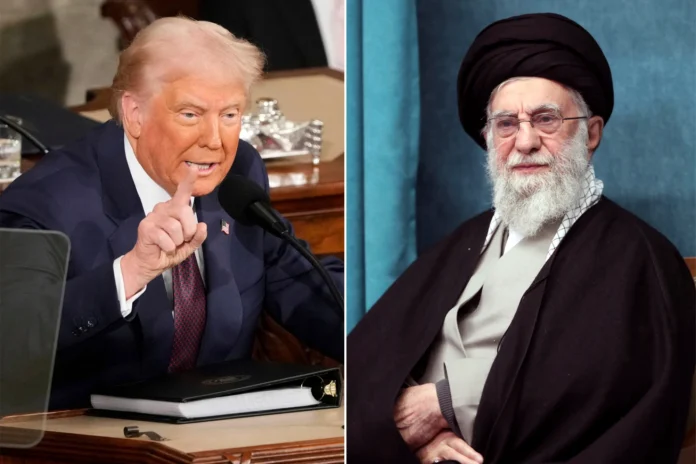
The United States and Israel have not publicly addressed the reported deaths of Khamenei’s relatives. President Donald Trump announced Saturday on Truth Social that Khamenei had been killed in what he described as a sweeping military operation conducted jointly with Israel. Trump wrote that the Iranian leader had been unable to evade “Highly Sophisticated Tracking Systems” and characterized the moment as an opportunity for the Iranian public to reclaim political control.
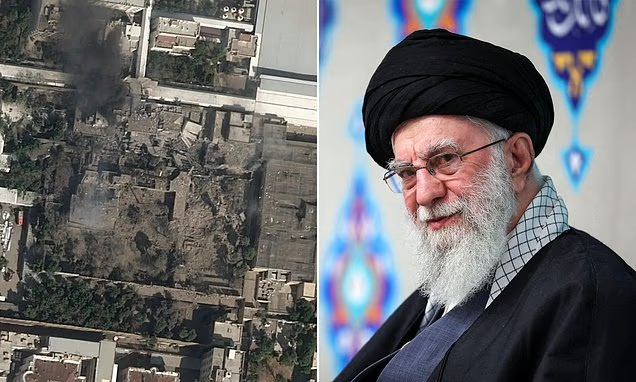
Iranian authorities confirmed Khamenei’s death hours after Trump’s statement. State television described the supreme leader as having been at his office “performing his assigned duties” when the strike occurred. Satellite imagery published by international outlets showed significant structural damage within the Tehran compound.
The reported deaths of Khamenei’s daughter and grandchild add a deeply personal dimension to an operation that Iranian officials have portrayed as a broad assault on the country’s leadership. Iranian government statements have framed the strike as an act of aggression aimed not only at military infrastructure but at the political core of the Islamic Republic.
The strikes unfolded amid escalating hostilities between Tehran, Washington and Jerusalem following stalled negotiations over Iran’s nuclear program. Iranian officials had previously warned that any direct military action against the country’s leadership would trigger retaliation. In the hours after the attack, Iran launched missiles and drones toward Israeli territory and U.S. installations in the Gulf, according to statements from regional governments and military officials.
The violence has coincided with reports of heavy civilian casualties elsewhere in Iran. A separate airstrike on a girls’ school in Minab during the opening day of operations reportedly killed more than 100 people, most of them students, according to Iranian accounts. U.S. Central Command said it was reviewing allegations of civilian harm but did not confirm responsibility.
The killing of Khamenei’s immediate relatives intensifies uncertainty over Iran’s political succession. The supreme leader held ultimate authority over Iran’s armed forces, judiciary and key state institutions. While Iran’s constitution outlines procedures for selecting a successor, no publicly designated heir had been confirmed before his death. Iranian officials have indicated that interim authority will rest with senior state figures pending deliberations by the Assembly of Experts.
Beyond succession questions, the reported deaths within Khamenei’s family may deepen public emotion and nationalist sentiment inside Iran. Historically, external attacks that result in civilian casualties — particularly those involving children — have rallied segments of Iranian society around the state, even among citizens critical of its policies. Analysts note that such events can complicate any expectation that leadership losses alone will weaken regime cohesion.
At the same time, internal pressures remain. Iran has endured years of economic strain under international sanctions and widespread protests. Human rights monitors have documented thousands of deaths during security crackdowns in recent years. The removal of the country’s most powerful figure, combined with the loss of close relatives in a high-profile strike, introduces both instability and the possibility of intensified internal power struggles.
International reaction has been swift but measured. Several Gulf states have urged restraint, warning that continued escalation could endanger maritime traffic through the Strait of Hormuz, a corridor that carries a significant share of global oil exports. Markets in Asia and Europe showed volatility Sunday amid fears that further strikes or retaliatory attacks could disrupt energy supplies.
From Washington’s perspective, the administration has characterized the operation as a targeted effort to dismantle Iran’s military and nuclear command structure. U.S. officials have emphasized that the objective was to neutralize perceived threats, not to target civilians. Yet the confirmed deaths of Khamenei’s family members are likely to prompt scrutiny from international bodies and human rights organizations.
For Israel, the operation reflects a long-standing strategy of preemptive action against what it views as existential threats. Israeli leaders have argued for years that Iran’s nuclear ambitions and regional proxy network pose direct risks to Israeli security. The reported elimination of senior Iranian figures — now including family members of the supreme leader — signals a willingness to escalate beyond conventional military targets.
The broader implications remain uncertain. Leadership decapitation can sometimes fragment centralized authority, but it can also consolidate power among hardline factions. Iran’s Revolutionary Guard, a powerful military and economic force, may assert a more dominant role during the transition. Such a shift could harden Tehran’s posture in ongoing regional confrontations.
Meanwhile, the symbolism of a 40-day mourning period underscores the weight of the moment within Iran’s political culture. In Shiite tradition, the 40th day after death carries religious significance, often serving as a focal point for public gatherings and expressions of collective grief. Observers say these commemorations could become flashpoints for either unity or dissent, depending on how events unfold.
As of Sunday, no independent international investigation had verified the precise circumstances surrounding the deaths of Khamenei’s daughter, grandchild and other relatives. Iranian state media accounts remain the primary source of information . The coming days are expected to bring additional disclosures as foreign governments and international agencies assess the scale of the strikes and their consequences.
What is clear is that the loss of Khamenei and members of his family marks one of the most consequential episodes in Iran’s post-revolutionary history. The event intertwines military escalation, political transition and deeply personal tragedy — elements that together could reshape the trajectory of the Islamic Republic and the balance of power across the Middle East.
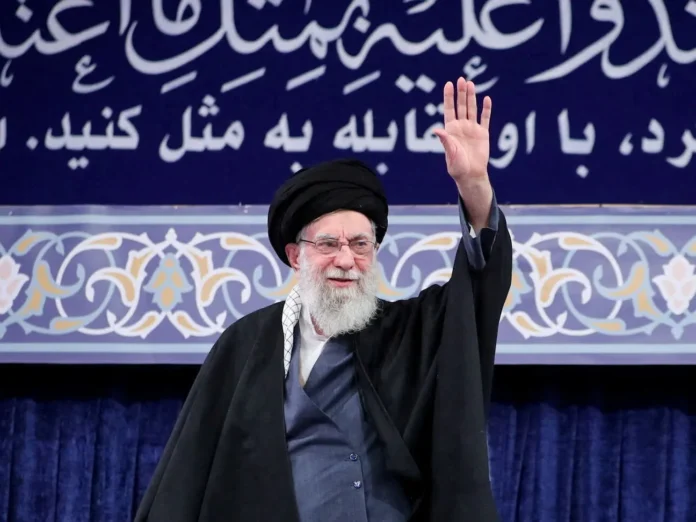
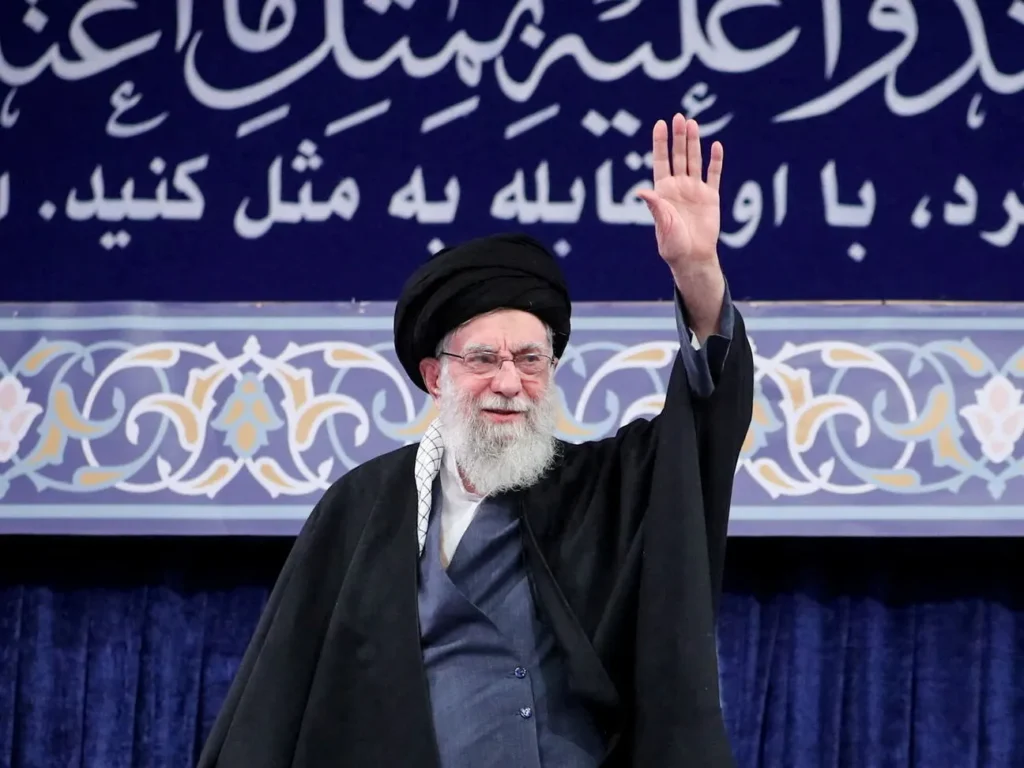
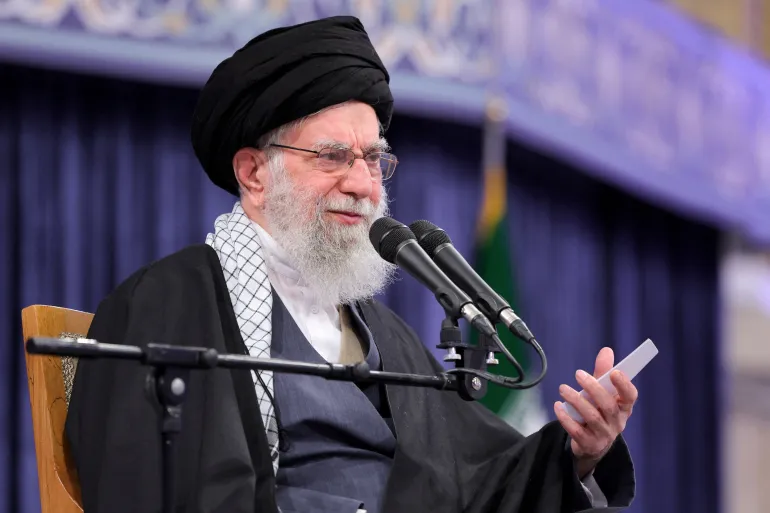
Iran confirmed early Sunday that Supreme Leader Ayatollah Ali Khamenei was killed in a sweeping joint assault by the United States and Israel, a development that shakes the foundation of the Islamic Republic and raises the specter of a broader regional war.
State television and multiple state-affiliated news agencies announced the death hours after President Donald Trump declared on social media that Khamenei had been killed in predawn strikes on Tehran. Iranian outlets Tasnim, Fars and IRIB carried statements confirming that the 86-year-old leader died at his compound in the capital.
“The Supreme Leader of Iran has reached martyrdom,” state broadcaster IRIB announced Sunday morning. The state-affiliated Mehr news outlet described Khamenei as a scholar and fighter who “sacrificed his life” in service to the nation.
Iranian authorities declared 40 days of public mourning and seven days of national holidays following his death.
Neither state television nor the official IRNA news agency initially specified the precise cause of death. However, Fars News Agency said Khamenei was killed “in his office in the household of the leader” while “carrying out his duties” during the early stages of Saturday’s attack.
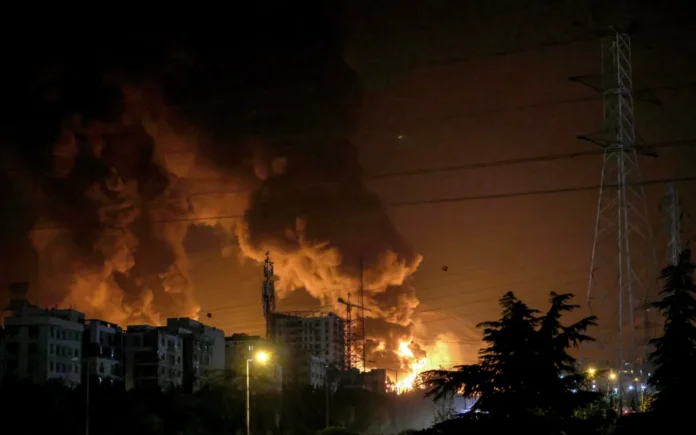
Satellite imagery from Airbus showed thick black smoke rising from the compound in central Tehran, near the university district. The images appeared to indicate that several structures inside the heavily fortified complex sustained significant damage.
The compound has long functioned as a central nerve center for Iran’s theocratic leadership, housing offices integral to military, political and religious decision-making.
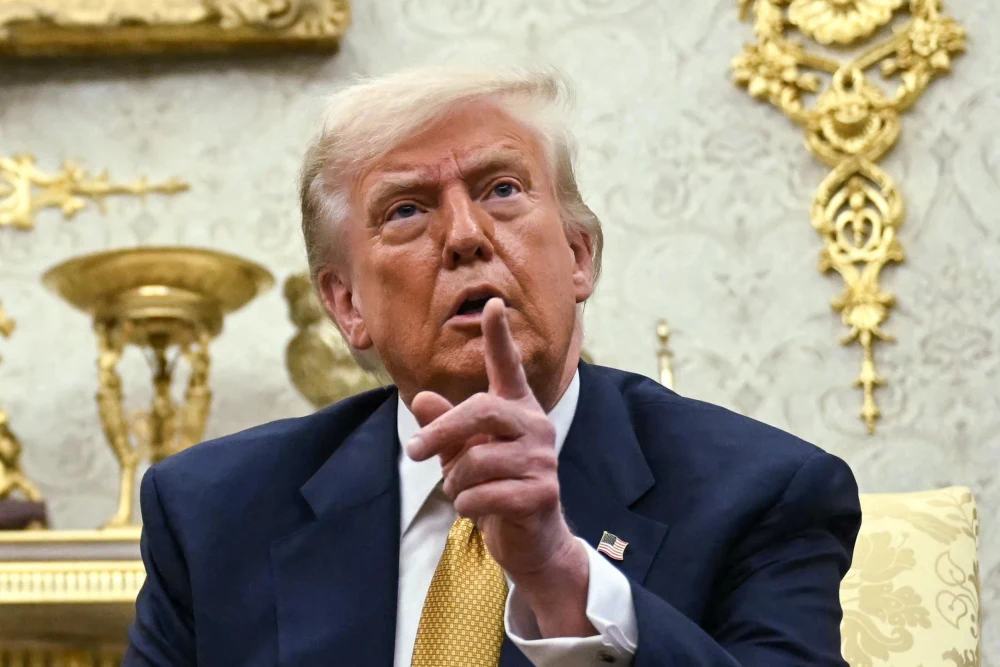
Trump had announced the death several hours earlier, writing on social media that Khamenei was “one of the most evil people in history.” He warned that “heavy and pinpoint bombing” would continue in the days ahead as part of what he described as a campaign to dismantle Iran’s nuclear capabilities.
The president characterized the killing as a pivotal moment for the Iranian public, asserting that it represented their “greatest chance” to reclaim their country.
The joint U.S.-Israel operation unfolded during the Muslim holy month of Ramadan and followed months of rising tensions and faltering nuclear negotiations. Israeli officials said the assault had been planned in coordination with Washington for months.
Lt. Gen. Eyal Zamir, Israel’s military chief of staff, said Air Force pilots struck “hundreds of targets across Iran.” An Israeli official briefed on the campaign indicated that targets included military installations, intelligence hubs and symbols of government authority.
The U.S. military stated that it had faced “hundreds of Iranian missile and drone attacks” in retaliation but sustained no American casualties and only minimal damage to its regional bases. Iranian officials, meanwhile, informed the United Nations Security Council that hundreds of civilians had been killed or wounded in the strikes.
Iran responded by launching missiles and drones toward Israel and targeting U.S. military facilities in Bahrain, Kuwait and Qatar. The Israeli military said dozens of missiles were fired toward Israel, many of which were intercepted. Magen David Adom, Israel’s emergency response service, said a woman died in the Tel Aviv area after sustaining injuries from an Iranian missile.
In southern Iran, at least 115 people were reported killed when a girls’ school was struck, according to a local governor speaking on state television. U.S. Central Command spokesperson Capt. Tim Hawkins said he was aware of the claims and that officials were reviewing them.
IRNA reported at least 15 fatalities in southwestern Iran, citing Lamerd governor Ali Alizadeh, who said a sports hall, residential areas and a structure near a school were hit.
Flights across the Middle East were disrupted as air defense systems roared across regional skies. Shrapnel from an Iranian missile strike killed one person in the United Arab Emirates, state media there said.
Iran’s National Security Council secretary, Ali Larijani, warned that Israel and the United States would “regret their actions,” writing on X that Iran would deliver “an unforgettable lesson.”
Khamenei’s death leaves a profound leadership vacuum. Since succeeding Ayatollah Ruhollah Khomeini in 1989, he exercised final authority over all major state decisions, overseeing Iran’s clerical establishment and the Revolutionary Guard — the twin pillars of power in the Islamic Republic.
No successor has been publicly designated. Under Iran’s constitution, the Assembly of Experts is responsible for selecting a new supreme leader, but the sudden nature of the killing may complicate succession amid ongoing military conflict.
The strikes occurred after unsuccessful nuclear talks and amid U.S. intelligence assessments that Iran had rebuilt portions of its nuclear infrastructure. A senior U.S. official, speaking on condition of anonymity to discuss internal deliberations, indicated that Iran had developed advanced centrifuge capabilities essential for enriching uranium to weapons-grade levels.
Iran has maintained that it had not resumed enrichment since June, though it has restricted international inspectors’ access to bombed sites. Satellite imagery previously analyzed by The Associated Press showed renewed activity at certain facilities.
The conflict also threatens global markets, particularly if hostilities disrupt the Strait of Hormuz, through which roughly one-third of global seaborne oil exports passed in 2025. Saudi Arabia said it repelled Iranian attacks targeting its capital and eastern region. Bahrain confirmed a missile strike near the U.S. Navy’s Fifth Fleet headquarters, while Kuwait reported a drone strike on its main airport and injuries at Ali Al-Salem air base. Jordan said it intercepted dozens of drones and ballistic missiles.
Khamenei’s death represents one of the most consequential geopolitical shocks in the Middle East in decades. Unlike previous targeted killings of military commanders, this strike eliminated the central authority of Iran’s political-religious system. The absence of a designated successor creates uncertainty within the clerical establishment and the Revolutionary Guard, potentially intensifying internal power struggles at a moment of external confrontation.
Historically, external military pressure has consolidated nationalist sentiment within Iran rather than fragmented it. While some eyewitnesses in Tehran described celebratory reactions, sustained public mobilization remains uncertain given the state’s record of suppressing dissent. The Human Rights Activists News Agency has documented thousands of deaths during previous crackdowns, underscoring the risks for any renewed protest movement.
Regionally, the likelihood of prolonged proxy conflict is high. Iran’s allied militias in Lebanon, Iraq, Syria and Yemen retain capabilities that could draw neighboring states deeper into confrontation. Even limited disruption to oil shipping lanes could reverberate through global markets, raising energy prices and intensifying economic volatility.
For Washington, the operation marks a dramatic escalation from deterrence to direct decapitation strategy. It also tests the durability of an “America First” doctrine that pledged to avoid prolonged foreign entanglements. Whether the strike leads to regime transformation, prolonged insurgency or negotiated settlement will shape the trajectory of Middle Eastern politics for years to come.
Iran’s confirmation of Khamenei’s death closes one chapter in the Islamic Republic’s history. What follows remains uncertain.
BARCELONA, Spain (BN24) — Barcelona marked Hansi Flick’s 100th match in charge with a dominant 4-1 victory over Villarreal on Saturday, powered by a dazzling first career hat-trick from teenage forward Lamine Yamal.
The win strengthened Barcelona’s position at the top of La Liga and extended a remarkable home record that could prove vital as the club prepares for a daunting Copa del Rey semifinal second leg against Atletico Madrid.
Flick, who has overseen a transformative period at the Catalan club, praised his players’ intensity and discipline following the victory.
“Of course we can improve,” Flick said after the match. “But I really liked what I saw today. We played very well. Tuesday will be a different challenge, and we must perform at this same level. We pressed quickly and effectively and won our duels. I’m very satisfied with the performance.”
The German manager has won 75 of his first 100 matches in charge, a return bettered at this stage only by former Barcelona coach Luis Enrique. Since taking over, Flick has guided the club to multiple domestic trophies, with the Champions League the only major title yet to be secured under his leadership.
Saturday’s performance against one of La Liga’s strongest sides underscored the progress Barcelona has made. Villarreal, widely regarded as one of the league’s most technically capable teams, struggled to contain Barcelona’s pressing and attacking fluidity.
Yamal, 17, delivered the standout display. His three goals each showcasing composure and clinical finishing marked his first senior hat-trick for Barcelona and added another milestone to a rapidly growing résumé.
Flick emphasized the teenager’s impact but cautioned that consistency will be key.
“His level is fantastic, and I want to see him at this level again on Tuesday,” Flick said. “We pressed Villarreal well and won our individual battles. That was decisive.”
Yamal has become one of Barcelona’s central attacking threats this season. After an early-season dip in form, he appears rejuvenated, playing with renewed confidence and freedom. His movement off the ball and sharp decision-making repeatedly unsettled Villarreal’s defense.
The forward’s social media message after the match “1% chance, 99% faith” reflected the belief coursing through the squad ahead of their next test.
While Yamal stole the headlines, the match also offered encouraging signs elsewhere. Midfielder Pedri returned from injury and immediately imposed control, dictating tempo and stabilizing possession upon entering the game. His presence provided balance and vision in the midfield, a crucial element as the fixture schedule intensifies.
Flick was able to rotate portions of his squad with one eye on Tuesday’s Copa del Rey clash against Atletico Madrid. Barcelona trail 4-0 from the first leg of the semifinal, leaving them with a monumental task if they are to reach the final.
“We know it won’t be easy to come back against Atlético,” Flick said. “But we will fight. We’ll see what happens.”
Barcelona’s home form provides some grounds for optimism. The club has won all 13 of its La Liga matches at home this season, scoring 41 goals while conceding just six. In contrast, Atletico Madrid has struggled away from home in league play during the 2025-26 campaign, securing only three road victories.
Yamal echoed the manager’s call for belief, urging supporters to create an electric atmosphere.
“It was time to react and push,” he said. “Now I tell our fans: come to the stadium against Atlético magic can happen.”
Beyond the emotional significance of Flick’s milestone and Yamal’s breakthrough, the victory may carry broader implications in the title race. Barcelona’s ability to maintain composure and intensity against high-level opposition signals a maturity that was inconsistent in previous seasons.
The team’s pressing structure under Flick has become more synchronized, compressing space in midfield and forcing turnovers high up the pitch. Against Villarreal, Barcelona repeatedly regained possession in dangerous areas, leading to sustained pressure and goal-scoring opportunities.
This tactical evolution suggests a side increasingly comfortable with Flick’s philosophy. The German coach has emphasized verticality and aggressive ball recovery, and the statistical output both in victories and goals scored reflects that commitment.
However, the looming Copa del Rey semifinal poses psychological and tactical challenges. Overturning a four-goal deficit against Atletico would require both defensive resilience and attacking ruthlessness. Barcelona must strike early while guarding against the counterattacking threat Atletico typically deploys in knockout fixtures.
Pedri’s fitness could be decisive. His ability to control transitions and distribute under pressure may allow Barcelona to sustain attacks without exposing themselves defensively. Meanwhile, Yamal’s form injects unpredictability and momentum into the forward line.
The atmosphere at home could also influence the outcome. Barcelona’s perfect domestic home record illustrates not only tactical efficiency but also a psychological edge. Confidence tends to amplify in familiar surroundings, particularly when reinforced by crowd support.
Still, history suggests caution. Comebacks of this magnitude are rare at the highest level, particularly against disciplined opponents.
Saturday’s win, though, provided exactly what Barcelona needed: momentum, belief and proof of attacking potency.
For Flick, the 100-game milestone was less about personal achievement and more about continuity. His tenure has combined youth development with tactical structure, and Yamal’s hat-trick symbolized that blend a young talent flourishing within a cohesive system.
As Barcelona shifts focus to Atletico, the message from both coach and players remains consistent: belief, intensity and collective effort.
Whether that will be enough to script another dramatic chapter remains uncertain. But after a night that celebrated both history and promise, Barcelona heads into its next challenge energized and united.
DORTMUND, Germany (BN24) — Bayern Munich overturned a halftime deficit to defeat Borussia Dortmund 3-2 in a dramatic Bundesliga Klassiker at Signal Iduna Park on Saturday, with Harry Kane scoring twice and Joshua Kimmich delivering a late winner in a five-goal spectacle.
The match, one of Germany’s fiercest rivalries, shifted sharply after the break following a tense and tactical first half in which Dortmund capitalized on limited opportunities while Bayern controlled possession.
Dortmund struck first in the 26th minute through Nico Schlotterbeck, who headed home from a set piece despite having earlier escaped a potential red card for a high challenge on Josip Stanišić. The referee opted for a yellow card after reviewing the incident, a decision that left Bayern players visibly frustrated.
Schlotterbeck’s goal came against the run of play. Bayern had dominated the opening exchanges, pressing aggressively and circulating the ball quickly. Dortmund struggled to gain sustained possession but relied on rapid transitions and the energy of the home crowd to remain competitive.
The home side also faced an early setback when captain Emre Can was forced off before halftime with a left knee issue after requiring multiple treatments. Ramy Bensebaini replaced him. Coach Niko Kovač had initially left Bensebaini and Serhou Guirassy on the bench, managing their workload during Ramadan.
Despite their territorial advantage, Bayern created few clear chances before the interval. Joshua Kimmich tested goalkeeper Gregor Kobel from distance, but Dortmund maintained their narrow lead at halftime.
The contest changed dramatically after the restart.
Bayern equalized in the 54th minute when sustained attacking pressure finally broke Dortmund’s defensive resistance. Kane, largely quiet in the first half, positioned himself perfectly to tap home from close range and make it 1-1.
Momentum shifted decisively in Bayern’s favor in the 64th minute. Stanišić was brought down inside the penalty area by Schlotterbeck, and the referee pointed to the spot. Amid loud protests from the home supporters, Kane stepped up and converted. Kobel got a hand to the shot, but the strike had enough power to find the net.
It marked Kane’s second goal of the evening and continued a prolific run for the England captain, who has now scored multiple goals in four consecutive matches.
As Bayern seized control, tension inside Signal Iduna Park intensified. Every tackle drew loud reactions from the crowd, and the tempo remained relentless.
Dortmund found a late response in the 83rd minute. A cross from Marcel Sabitzer evaded its intended target and reached Daniel Svensson, who struck a first-time volley into the net to level the match at 2-2 and reignite the stadium.
However, Bayern delivered the decisive blow just four minutes later. A rebound fell to Kimmich at the edge of the penalty area, and the midfielder struck a left-footed volley into the net to restore Bayern’s lead at 3-2.
Dortmund pushed forward in the closing minutes, but Bayern’s defense held firm to secure all three points.
The match illustrated two contrasting halves. In the first, Bayern’s possession dominance lacked penetration. Dortmund absorbed pressure effectively and capitalized on a set-piece opportunity.
After the interval, Bayern increased the tempo and committed more players forward, stretching Dortmund’s defensive shape. The introduction of quicker transitions and more aggressive positioning around the penalty area created space for Kane and others to exploit.
Kane’s performance was pivotal. While he touched the ball sparingly in the opening 45 minutes, his movement improved significantly after the break. His ability to occupy defenders and anticipate second balls changed the dynamic of Bayern’s attack.
Kimmich’s late winner reflected Bayern’s persistence. Often tasked with controlling the rhythm in midfield, he demonstrated attacking composure at a critical moment.
The victory could have meaningful consequences in the Bundesliga title race. Matches between these two clubs often influence the psychological balance of the season, and Bayern’s ability to respond under pressure reinforced their championship credentials.
For Dortmund, defensive lapses proved costly. Despite disciplined stretches and clinical finishing from limited chances, the inability to maintain composure late in the game underscored ongoing inconsistencies.
The contest also highlighted the razor-thin margins in elite fixtures. Schlotterbeck’s early disciplinary escape loomed large, as he later both scored and conceded the penalty that shifted momentum.
Beyond the tactical and statistical dimensions, the Klassiker once again delivered high drama. With five goals, a penalty, controversial officiating decisions and a late winner, the match lived up to its reputation as one of Europe’s marquee domestic rivalries.
Bayern’s comeback underscored their depth and resilience. Dortmund’s response, though spirited, ultimately fell short.
As the Bundesliga season enters its decisive phase, this result may resonate far beyond Signal Iduna Park.
(NBC) — President Donald Trump declared Saturday that Iran’s Supreme Leader, Ayatollah Ali Khamenei, is dead following coordinated U.S. and Israeli strikes carried out before dawn, a claim that had not been confirmed by Iranian authorities.
In a post on Truth Social, Trump described Khamenei as “one of the most evil people in history” and framed the reported killing as a decisive blow against Iran’s leadership.
“This is not only Justice for the people of Iran, but for all Great Americans, and those people from many Countries throughout the World, that have been killed or mutilated by Khamenei and his gang of bloodthirsty THUGS,” Trump wrote.
Khamenei, who had served as Iran’s highest political and religious authority since 1989, oversaw the country’s military posture and nuclear strategy for more than three decades. As supreme leader, he wielded final authority over the Islamic Revolutionary Guard Corps and maintained decisive influence across Iran’s government.
Earlier Saturday, Trump addressed emerging accounts that Khamenei had been killed in airstrikes, telling reporters, “We feel that that is a correct story.” He asserted that “most” of Iran’s senior leadership was “gone,” adding, “The people that make all the decisions, most of them are gone.”
Iranian officials did not immediately confirm the report.
An Israeli official told NBC News that Israel was “99% sure” Khamenei had been killed in an earlier strike and was completing final verification procedures. A senior U.S. official familiar with the situation said Washington believes Khamenei is dead based on communications from Israeli authorities. Another senior official briefed on military operations and intelligence assessments told NBC News that Khamenei is “almost certainly dead.”
In a separate interview with NBC News, Trump said the strikes extended beyond a single operation.
“There were three attacks,” Trump said. “And you know about the one that was covered, but there were two other attacks, which inflicted very great losses on their leadership.”
When asked about the timing, Trump indicated the strikes occurred “over the last 24 hours.” Speaking by phone with NBC News, he characterized the impact as extensive.
“A large amount of leadership” had been killed, Trump said. “I don’t mean like two people,” he added, without offering specific figures.
Pressed on who might succeed Khamenei, Trump responded, “I don’t know, but at some point they’ll be calling me to ask who I’d like.” He quickly added that he was “only being a little sarcastic.”
The comments came after weeks of escalating rhetoric from the White House as the administration pursued negotiations aimed at constraining Iran’s nuclear and missile programs. Trump had repeatedly suggested that military action remained under consideration if diplomacy failed.
“We have a big decision to make. You know that. Not easy, not easy. We have a very big decision to make,” Trump said during a visit Friday to Corpus Christi, Texas. “I’d rather do it the peaceful way. But they’re very difficult people, I want to tell you that, they’re very dangerous people, very difficult people.”
Khamenei’s reported death, if confirmed, would mark one of the most consequential leadership losses in Iran since the 1979 Islamic Revolution. He succeeded Ayatollah Ruhollah Khomeini and consolidated power over decades, guiding Iran through regional conflicts, economic sanctions and contentious nuclear negotiations with Western powers.
The potential elimination of Iran’s top cleric raises immediate questions about succession and stability within the Islamic Republic. Iran’s constitution assigns the Assembly of Experts the responsibility of appointing a new supreme leader, but no publicly acknowledged successor had been formally designated. Analysts say the absence of a clear transition plan could heighten tensions within the clerical establishment and among security forces.
At the same time, Iran has historically responded to external military pressure by rallying nationalist sentiment. While Trump portrayed the strikes as a turning point for the Iranian public, it remains unclear whether domestic unrest would follow or whether state institutions would tighten their grip.
The broader regional implications are also uncertain. Iran maintains a network of allied militias across the Middle East, and retaliation could extend beyond direct missile exchanges. Oil markets and global shipping lanes, particularly the Strait of Hormuz, are closely watched amid fears of further escalation.
As of Saturday evening, Iranian state media had not acknowledged Khamenei’s death. Without confirmation from Tehran, Trump’s declaration leaves a significant gap between U.S. assertions and official Iranian statements.
The situation remains fluid, with military operations and diplomatic responses still unfolding across the region.
Explosions tore through the heart of the Middle East’s most stable and prosperous capitals Saturday, transforming the glittering skylines of Dubai, the strategic facilities of Bahrain, the transportation hubs of Kuwait, and the northern territories of Jordan into smoking battlegrounds as Iranian retaliation for U.S.-Israeli strikes dragged previously insulated Gulf nations into a rapidly metastasizing regional war.
The thunderous detonations shattered decades of carefully maintained neutrality and security across Gulf monarchies that had invested fortunes building reputations as safe havens for international business, tourism, and financial services. Within hours, those investments lay threatened as missiles and drones struck civilian hotels, military installations, airports, and residential towers in coordinated Iranian attacks that crossed red lines Tehran had historically respected.
Iranian missiles slammed into Dubai’s world-renowned Fairmont hotel on the opulent Palm Jumeirah peninsula shortly after midday, setting the five-star luxury property ablaze and sending terrified residents scrambling for safety as their gleaming metropolis became a war zone. Social media footage captured flames erupting near the hotel’s entrance as four people sustained injuries—images that instantly circulated globally, demolishing Dubai’s carefully cultivated image as an oasis of stability surrounded by Middle Eastern chaos.
“Everyone is very scared,” one Dubai resident conveyed as explosions echoed across the city and air defense systems struggled to intercept incoming projectiles. “There is footage of missile interceptions all over the city. I am packing a suitcase just in case … not that we can leave, because airspace is closed. It is the thing we have all been frightened about happening, and now it has.”
The scenes represented nightmares Gulf leaders had worked desperately to prevent—their modern cities transformed overnight from showcases of development and prosperity into targets in conflicts they had attempted remaining neutral within. The attacks exposed the vulnerability of nations that had bet their futures on economic diversification and international engagement while wars raged around them.
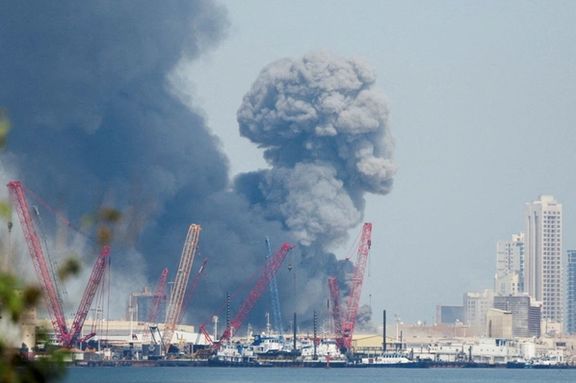
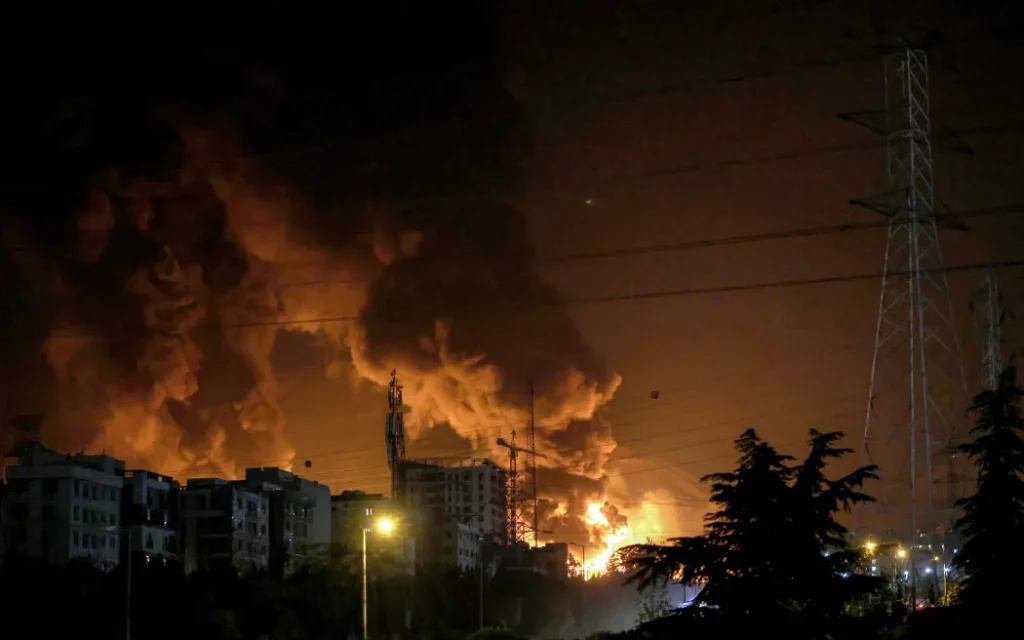
In Bahrain, the small island nation hosting America’s Fifth Fleet headquarters, an Iranian drone deliberately flew into a high-rise building in what appeared to be a targeted strike, detonating and engulfing the skyscraper in flames that illuminated Manama’s skyline. The spectacular explosion sent residents fleeing as burning debris rained onto streets below, creating panic in a capital unaccustomed to combat.
Earlier strikes had hit Bahrain’s national security agency headquarters with missiles, demonstrating Iran’s capability to strike sensitive government facilities across the tiny nation whose strategic location in the Persian Gulf has made it invaluable to American military operations for decades. Social media footage appeared to show projectiles impacting the massive U.S. Naval Forces Central Command installation—headquarters of the Fifth Fleet that patrols vital shipping lanes through which one-fifth of global petroleum supplies transit daily.
While U.S. officials acknowledged some infrastructure damage at the Fifth Fleet headquarters, they maintained that no American casualties resulted from the Iranian bombardment. However, the successful strikes on the heavily fortified naval facility demonstrated that even America’s most protected Middle Eastern installations remained vulnerable to Iranian missile and drone capabilities that have advanced substantially over recent years.
Kuwait experienced its own trauma as a drone crashed into the nation’s primary airport, wounding several employees and damaging critical aviation infrastructure that serves as a vital hub connecting the Arabian Peninsula to global air routes. The assault forced immediate flight cancellations and sent travelers fleeing terminal buildings as sirens wailed and emergency responders converged on the facility.
The airport strike represented particularly ominous escalation, targeting civilian transportation infrastructure rather than military installations and raising prospects that commercial aviation across the Gulf region could become collateral damage in the expanding conflict. Airlines immediately began reassessing whether Gulf airports remained safe for operations, threatening economic disruption far beyond immediate combat effects.
Jordan, the Hashemite Kingdom that has maintained delicate balancing acts between Western allies and regional powers throughout decades of Middle Eastern turbulence, found itself caught in the crossfire as explosions rocked its territory. Fires blazed across the northern city of Irbid as missile debris from Iranian projectiles intercepted by Jordanian and Israeli air defenses fell from the sky and ignited, transforming residential neighborhoods into danger zones.
Jordan’s General Command military source told NBC News that two Iranian ballistic missiles targeting Israel or U.S. facilities had been shot down over Jordanian airspace, with flaming wreckage scattering across populated areas. The kingdom—which shares borders with Israel, Syria, Iraq, and Saudi Arabia—suddenly confronted the reality of becoming a battlefield in conflicts it had worked assiduously to avoid.
The attacks on Dubai, Bahrain, Kuwait, and Jordan represented a dramatic expansion of Iranian military operations beyond historical boundaries. In previous confrontations between Tehran and Western powers or Israel, Iran had generally refrained from directly striking Gulf Arab nations despite hosting substantial American military presence, apparently calculating that attacking oil-rich monarchies risked alienating potential diplomatic intermediaries and provoking military responses the Islamic Republic preferred avoiding.
Saturday’s violence demolished that restraint as Iranian missiles and drones struck multiple Gulf capitals in what Tehran characterized as self-defense against American bases but which inevitably endangered civilian populations and infrastructure across nations that had attempted maintaining cordial relations with both Iran and the United States.
The United Arab Emirates, which includes Dubai among its seven emirates, announced that at least one person died in Abu Dhabi from falling debris following an Iranian strike—the first confirmed civilian fatality from attacks on Gulf territories. The death underscored how rapidly the expanding conflict was producing casualties among populations far from the epicenters of U.S.-Israeli-Iranian confrontation.
Iran’s Islamic Revolutionary Guard Corps declared via state television that it had targeted “the headquarters of the U.S. Navy’s Fifth Fleet in Bahrain, other U.S. bases in Qatar and the UAE, as well as military and security centers.” The announcement confirmed that Iranian military planners had deliberately selected targets across multiple Gulf nations rather than concentrating retaliation exclusively on Israel or specific American installations.
Iranian Foreign Minister Abbas Araghchi told Gulf governments “we have no intention to attack them but we are actually attacking the American bases in the act of self-defence.” However, the strikes on Dubai’s Fairmont hotel—a civilian luxury property far from military facilities—and Kuwait’s commercial airport directly contradicted claims of limiting attacks to military targets, exposing the hollowness of Iranian assurances.
Qatar’s Ministry of Defense confirmed intercepting a third wave of Iranian attacks targeting its territory, while Bahraini authorities reported multiple strikes against both military and civilian locations. The small Gulf nations found their sophisticated air defense systems—purchased at enormous expense from Western suppliers precisely to prevent such scenarios—struggling to intercept the volume of incoming projectiles as Iran demonstrated capabilities exceeding previous assessments.
The attacks drew immediate condemnation from Gulf governments unaccustomed to foreign powers treating their territories as combat zones. Qatar characterized Iranian strikes as a “direct assault on national security,” while multiple Gulf states warned they possessed rights to respond militarily to sovereignty violations—raising the terrifying prospect of direct Gulf-Iranian warfare that could engulf the world’s most critical energy-producing region.
“The information and material circulating on social media do not correspond with any danger at the terminals, rather to the panic among passengers,” the Pacific Airport Group insisted regarding chaos at other regional airports, though their statement did little to calm populations watching explosions light up their cities’ skylines.
For residents across the Gulf, the violence represented the materialization of long-dreaded scenarios. Dubai residents who had spent Saturday morning enjoying beach clubs and shopping in air-conditioned malls found themselves by afternoon watching missile interceptions streak across skies they had always assumed remained safe. Bahraini families accustomed to evening strolls along Manama’s waterfront corniche instead huddled indoors as explosions echoed across their tiny island. Kuwaitis who had planned weekend travel suddenly confronted a disabled airport and closed airspace that trapped them in a conflict zone.
Gas stations across the region developed long lines within hours as residents rushed to fuel vehicles for potential evacuation, while grocery stores experienced runs on bottled water, canned goods, and other essentials as populations prepared for extended conflict. Banks witnessed increased activity as customers withdrew cash against possibilities that electronic payment systems might fail if infrastructure sustained additional damage.
The psychological impact extended beyond immediate danger. Generations of Gulf residents who had grown up insulated from the wars, revolutions, and violence that plagued surrounding regions suddenly confronted the reality that their wealth and modernity provided no immunity from conflicts sweeping the broader Middle East. The carefully constructed narrative that economic development and diplomatic engagement could maintain security collapsed as missiles fell on luxury hotels and commercial airports.
Gulf leaders faced catastrophic policy failures as explosions demonstrated that attempts remaining neutral in intensifying U.S.-Iranian confrontation had proven futile. Despite hosting substantial American military presence while maintaining economic ties with Iran and attempting to mediate between adversaries, the monarchies found themselves targeted anyway—suffering attacks that threatened their fundamental development models predicated on stability and security.
The economic implications stretched far beyond immediate damage costs. International corporations with regional headquarters in Dubai would reassess whether the city remained suitable for operations if missile attacks could occur without warning. Tourism industries that generated billions in revenue for Gulf economies faced potential collapse if travelers viewed the region as a war zone. Financial services sectors built on perceptions of Gulf stability confronted questions about whether markets could function normally amid armed conflict.
Energy markets reacted nervously to violence in the Persian Gulf region that produces approximately one-third of global petroleum supplies. While no strikes had yet targeted oil infrastructure—Gulf states’ most critical economic assets—traders recognized that if the conflict persisted or intensified, energy facilities could become targets either deliberately or accidentally, potentially disrupting supplies and spiking prices globally.
The attacks also exposed military vulnerabilities that Gulf nations had spent billions attempting to eliminate. Despite purchasing cutting-edge air defense systems, advanced fighter aircraft, and sophisticated radar networks, the small kingdoms discovered that determined adversaries could still penetrate their defenses and strike targets across their territories. The realization that massive defense expenditures could not guarantee security would force fundamental reassessments of Gulf military strategies.
Diplomatically, the explosions placed Gulf leaders in impossible positions. They faced pressure from Washington to support American operations against Iran while simultaneously needing to avoid further Iranian retaliation that could devastate their economies and threaten regime stability. Some Gulf ruling families maintain close relationships with figures like Jared Kushner, President Trump’s son-in-law who exercises substantial influence over Middle East policy, potentially giving them channels to advocate for de-escalation.
However, analysts cautioned that attacking Gulf territories might backfire for Iran by transforming previously sympathetic voices into adversaries demanding military responses. Gulf states that had attempted mediating between Washington and Tehran might instead join international coalitions against Iran if their populations demanded retaliation for sovereignty violations and civilian casualties.
As darkness fell Saturday across smoking Gulf capitals, residents confronted uncertain futures. Whether the explosions represented isolated incidents in a conflict that might quickly resolve or opening salvos in extended warfare that would transform the region remained unclear. Air raid sirens, burning buildings, and closed airspace had replaced the normalcy that Gulf populations had assumed represented permanent conditions rather than temporary privileges that could evaporate when great powers chose warfare over diplomacy.
The psychological transformation from security to vulnerability, from confidence to fear, from certainty about futures to doubts about survival marked Saturday as a historical turning point for Gulf societies. The explosions that rocked Bahrain, Dubai, Jordan, and Kuwait not only damaged buildings and killed people—they shattered illusions about immunity from Middle Eastern violence that had shaped Gulf identities and ambitions for generations.