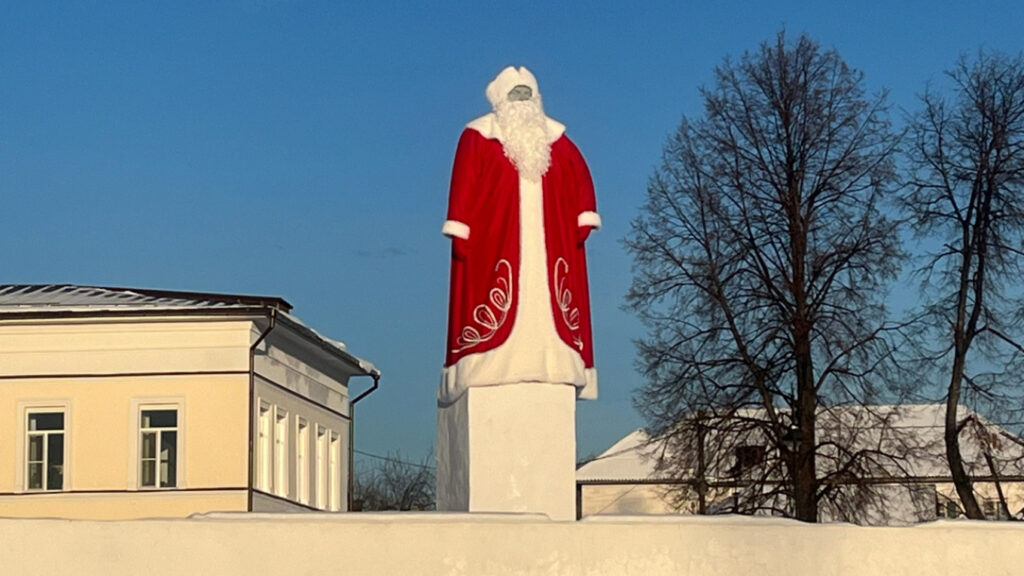
A festive decoration decision in the small Russian town of Irbit has sparked public outrage after officials dressed statues of Vladimir Lenin and Empress Catherine the Great as traditional New Year’s characters. The Lenin monument was attired as Ded Moroz (Russian Santa Claus), while Catherine wore the blue dress of his helper Snegurochka.
Local residents of the Sverdlovsk region town, population under 40,000, condemned the decorations as “disrespectful” and “stupid,” with some calling for the mayor’s resignation and suggesting vandalism charges. The Telegram channel Irbit Incident quoted one resident lamenting society’s degradation and the poor example set for future generations.
Town council officials defended the decoration as an attempt to create festive atmosphere, promising removal after the holiday season. They emphasized no intention to offend residents or their political views.
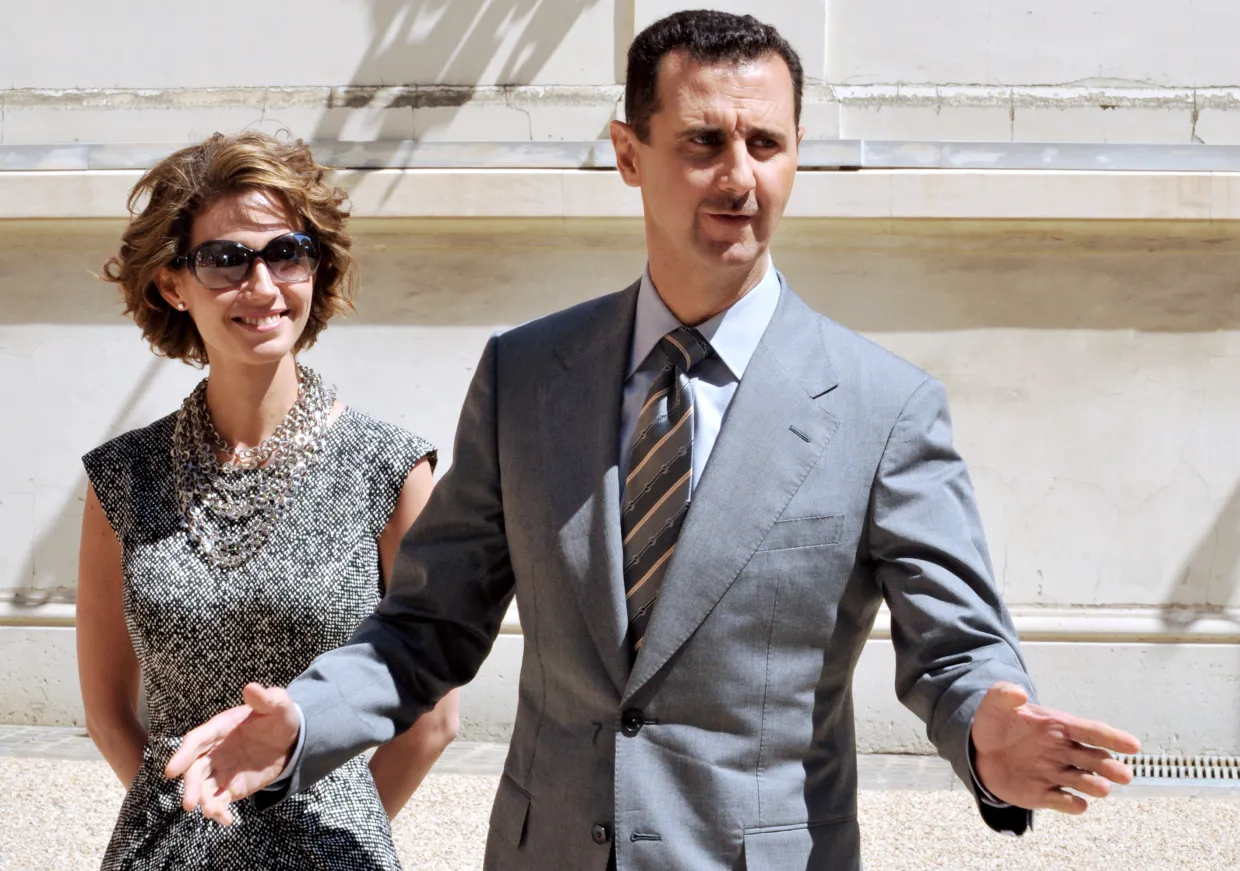
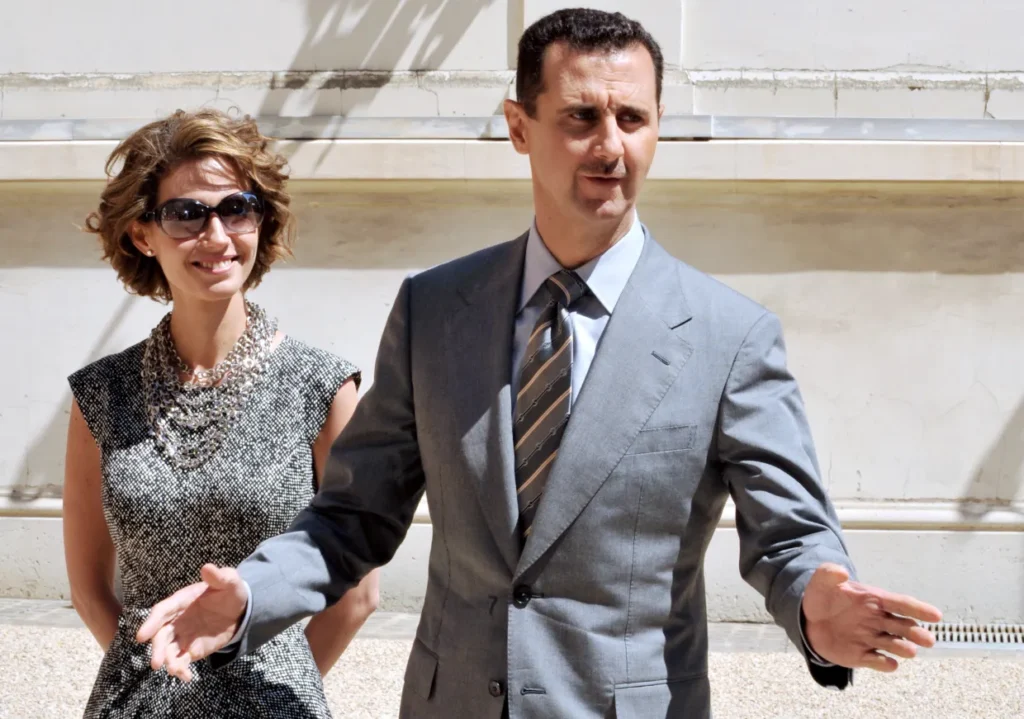
Asma al-Assad, the British-born wife of deposed Syrian leader Bashar al-Assad, is reportedly fighting an aggressive form of myeloid leukemia in Moscow with doctors giving her a 50/50 chance of survival. The 49-year-old former first lady is being treated in isolation due to infection risks, according to The Telegraph.
Sources close to the family report that Asma, once dubbed the “Rose of the Desert,” is seeking treatment in London and has reportedly filed for divorce from Assad, whom she married in 2000. Her father, Harley Street doctor Fawaz Akhras, is currently overseeing her care, though her family denies divorce claims.
The former investment banker’s cancer battle follows a previous successful treatment for breast cancer. Now in Moscow following Syria’s regime change, she reportedly seeks to return to the UK despite facing significant political and legal barriers. British Foreign Secretary David Lammy has emphasized she remains unwelcome in Britain due to her association with the Assad regime.
Asma, who met Assad in the early 1990s while he studied ophthalmology in London, faces continued international sanctions that complicate any potential return to the West. Her current situation in Moscow has been described as a “golden cage,” marking a dramatic shift from her former role as Syria’s First Lady.
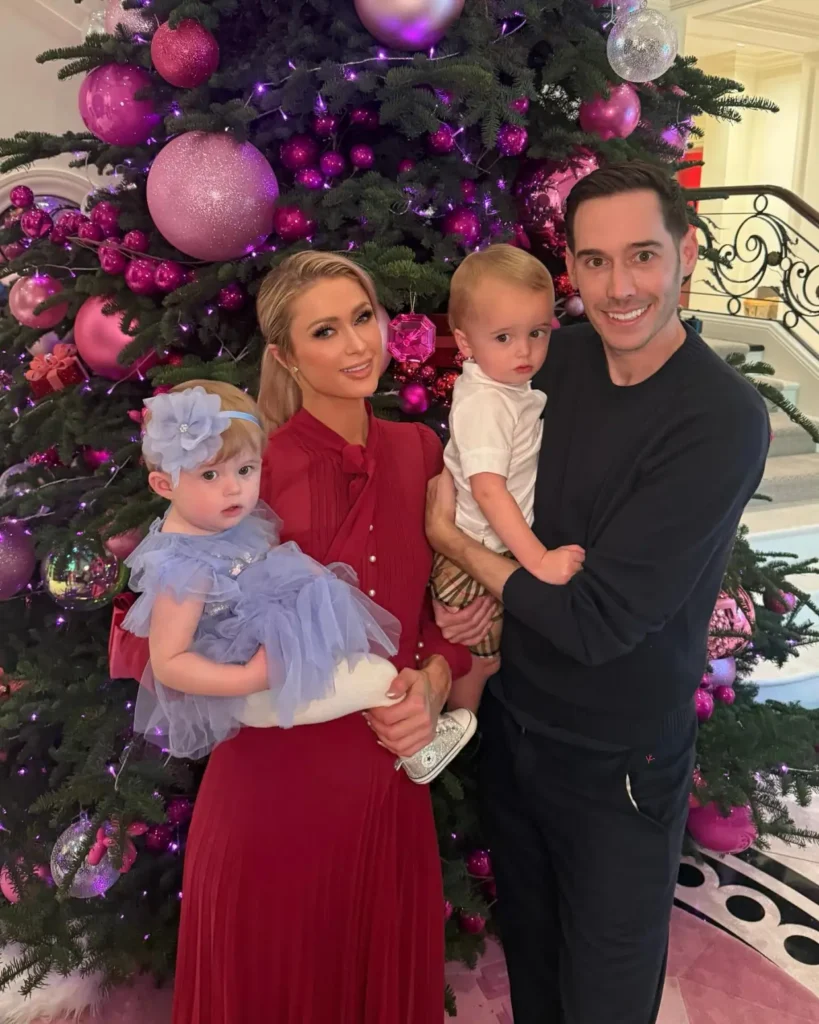
Paris Hilton, 43, brought festive cheer to her fans with a daring Christmas-themed photoshoot, showcasing her signature glam. The Hollywood icon posed nude, using a large red bow to maintain her modesty, as she celebrated the holiday season.
Hilton shared the festive clip on social media, captioning it, “My presence is a present,” and adding her famous catchphrase, “That’s Hot.” She danced to Ariana Grande’s holiday hit “Santa Tell Me” in the video, wearing the bow and a pair of matching red heels.
Set in her luxurious Los Angeles mansion, the shoot featured a towering Christmas tree adorned with pink and purple baubles. Oversized pink gift boxes were arranged in front of the tree, creating a vibrant holiday display that matched Hilton’s signature extravagant style.
Hilton plans to spend Christmas with her husband, Carter Reum, and their two children, Phoenix and London.
This festive celebration comes as Hilton marks the success of her latest reality TV venture, Paris and Nicole: The Encore, a reunion special with childhood friend Nicole Richie. The three-part series revisits the duo’s time on their original hit show, The Simple Life, which debuted in 2003.
The reunion special saw Hilton and Richie return to Altus, Arkansas, reconnecting with locals they had lived and worked with two decades ago. Fans were thrilled to see the pair back on-screen together after years apart.
Speaking about the original series, Richie reflected on its unexpected success. “We said yes for the sole purpose of having fun,” she told Vanity Fair. “It was a real experiment. They didn’t tell us anything about the show, period.”
Hilton’s photoshoot and her reality TV comeback remind fans why she remains a beloved pop culture figure, blending luxury, nostalgia, and bold individuality.
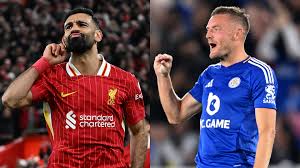
Premier League leaders Liverpool continue their title charge on Boxing Day with a home fixture against Leicester City, kicking off at 8 p.m. at Anfield.
Liverpool enters the match fresh from a thrilling 6-3 victory over Tottenham Hotspur on December 22. The Reds’ attacking prowess, led by Mohamed Salah, overwhelmed Spurs, who struggled with a depleted defense. Salah’s contributions in the game cemented his place in both club and Premier League history, as he played a key role in securing the three points.
Liverpool sits atop the Premier League standings, four points ahead of Chelsea and six ahead of Arsenal. Arne Slot’s team is unbeaten in their last 21 matches across all competitions, scoring at least two goals in 12 of their last 13 games. Despite their dominance, Liverpool’s recent defensive performances have raised questions, with the team conceding multiple goals in their last three league games.
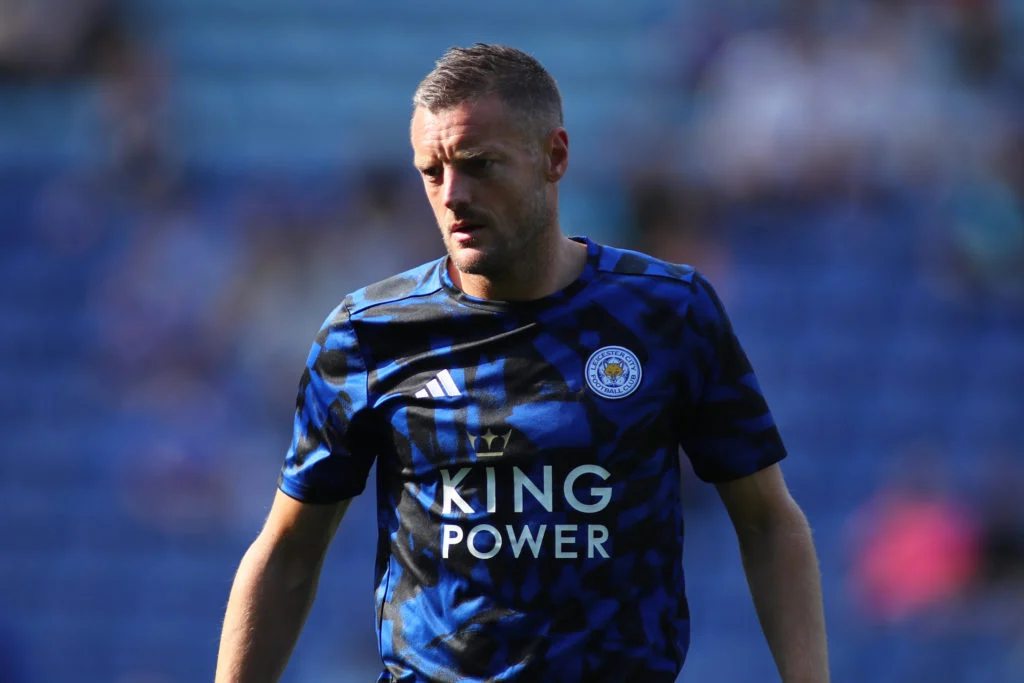
Leicester City, managed by Ruud van Nistelrooy, faces a daunting challenge at Anfield. The Foxes suffered a heavy 3-0 home defeat to Wolverhampton Wanderers in their last Premier League outing, marking their second consecutive loss. Earlier in December, Leicester endured a similar result at Newcastle United. The team’s defensive frailties have been a consistent issue, with no clean sheets in their last 11 matches and at least three goals conceded in their previous three away games.
The Foxes currently sit in 17th place, just two points above the relegation zone. Van Nistelrooy has struggled to stabilize his side’s defense, and their recent record against Liverpool does not bode well. Leicester has lost their last four matches against the Reds, including a 3-1 defeat in the EFL Cup earlier this season. Their last league win at Anfield dates back to the year 2000.
Liverpool’s strong Boxing Day record and attacking firepower make them clear favorites, while Leicester will need to deliver a disciplined defensive performance to stand any chance of an upset.
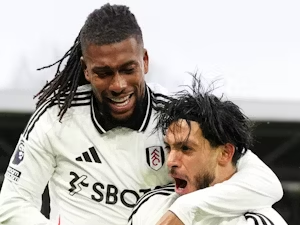
Chelsea and Fulham are set to clash in a highly anticipated West London derby at Stamford Bridge on Boxing Day in the Premier League. This showdown promises excitement as Chelsea looks to bounce back from a draw, while Fulham aims to improve their recent form.
The home side recently saw their impressive winning streak halted by a resilient Everton in a goalless draw on Sunday. Meanwhile, Fulham was also held to a 0-0 stalemate by relegation contenders Southampton, leaving both teams with points to prove.
Chelsea’s Strong Season So Far
After winning five consecutive Premier League matches, the longest streak by any team this season, Chelsea’s momentum was unexpectedly disrupted by Everton. This marked the first time Enzo Maresca’s squad failed to score in a league game since the opening day of the season. Despite falling four points behind Liverpool at the top of the Premier League table, Chelsea remains unbeaten in 12 matches, setting up a favorable run of fixtures.
Chelsea’s upcoming games include matchups against Fulham, Ipswich Town, Crystal Palace, Bournemouth, and Wolves—an opportunity to close the gap with Liverpool. However, any missteps could be costly in this tightly contested league season.
While Chelsea’s current tally of 35 points reflects consistency, it’s the lowest for a second-placed team at Christmas since 2010, showcasing the competitive nature of this year’s Premier League.
Fulham’s Struggles in Recent Games
Fulham enters this derby after a string of underwhelming performances, with just one win in their last six matches. Despite coming close to scoring through Harry Wilson and Adama Traoré against Southampton, Marco Silva’s side remains just two points off the European qualification spots.
Draws have become a recurring issue for Fulham, making Chelsea a challenging opponent to overcome. In 34 Premier League encounters, Fulham has managed only two victories over Chelsea—a mere 6% win rate, the lowest of any club against another in the league’s history.
Head-to-Head Record
Chelsea has an impeccable record against Fulham at Stamford Bridge, remaining unbeaten in 19 matches at home since 1979. On Boxing Day, Chelsea has also won two crucial matches against London rivals during title-winning seasons in 2005-06 and 2014-15.
Team News and Predicted Lineups
Chelsea:
– Enzo Maresca will look to rotate his squad after their grueling draw against Everton.
Given Chelsea’s dominance at Stamford Bridge and Fulham’s ongoing scoring troubles, a straightforward home win seems likely. Fulham’s record against Chelsea leaves little room for optimism, especially in such a competitive season.
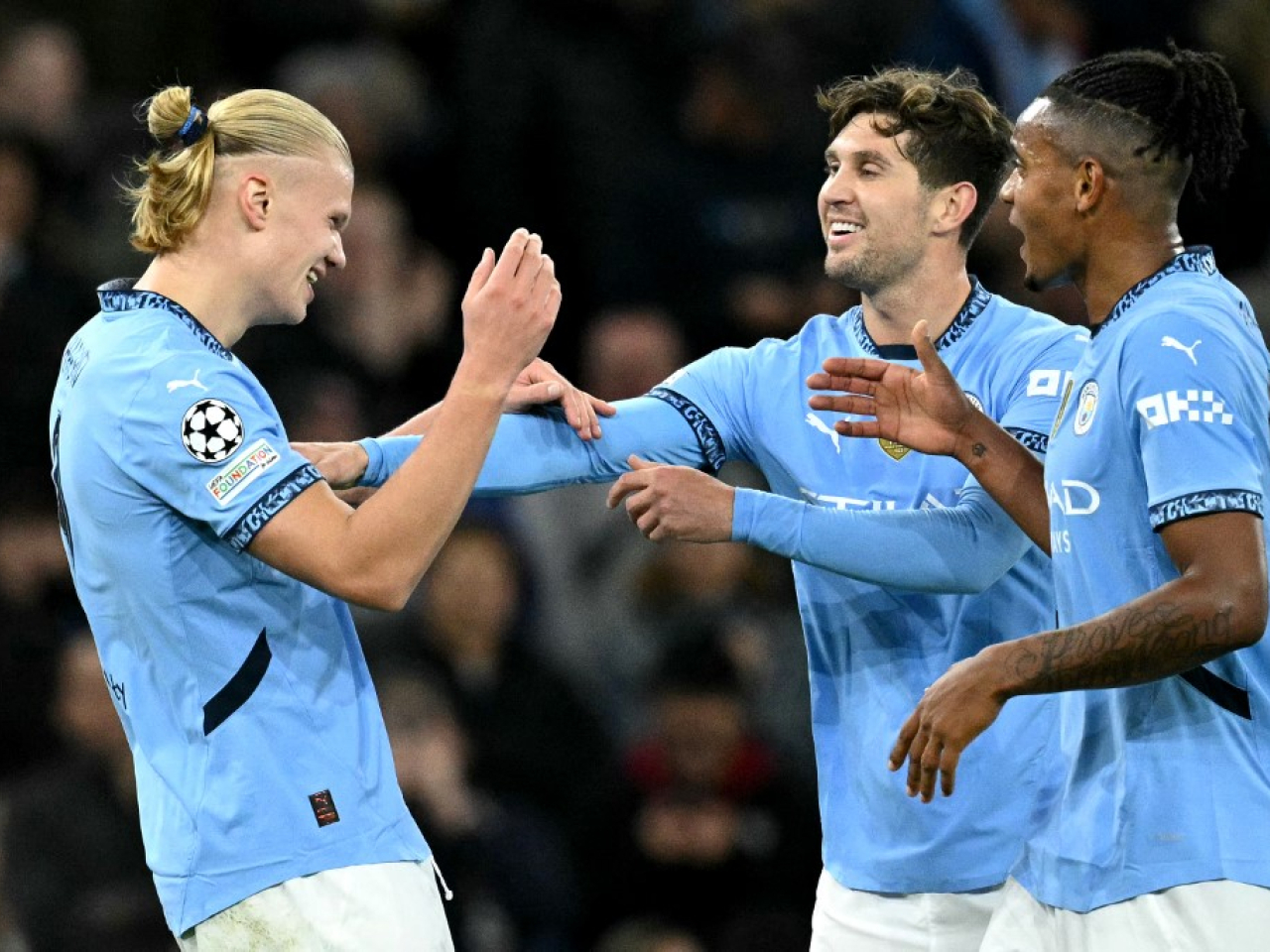
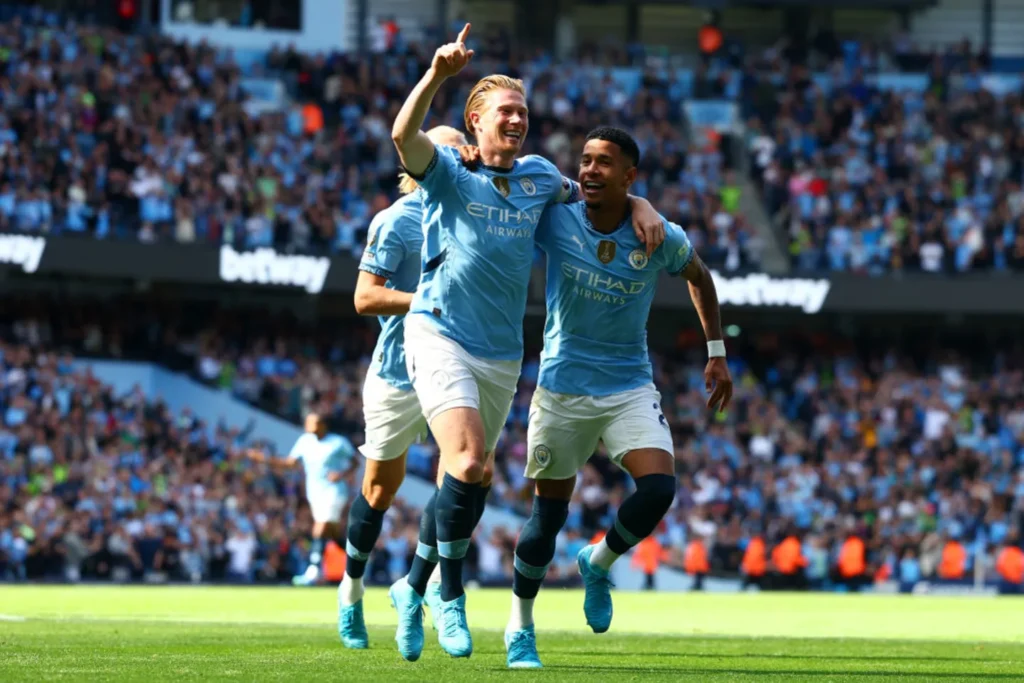
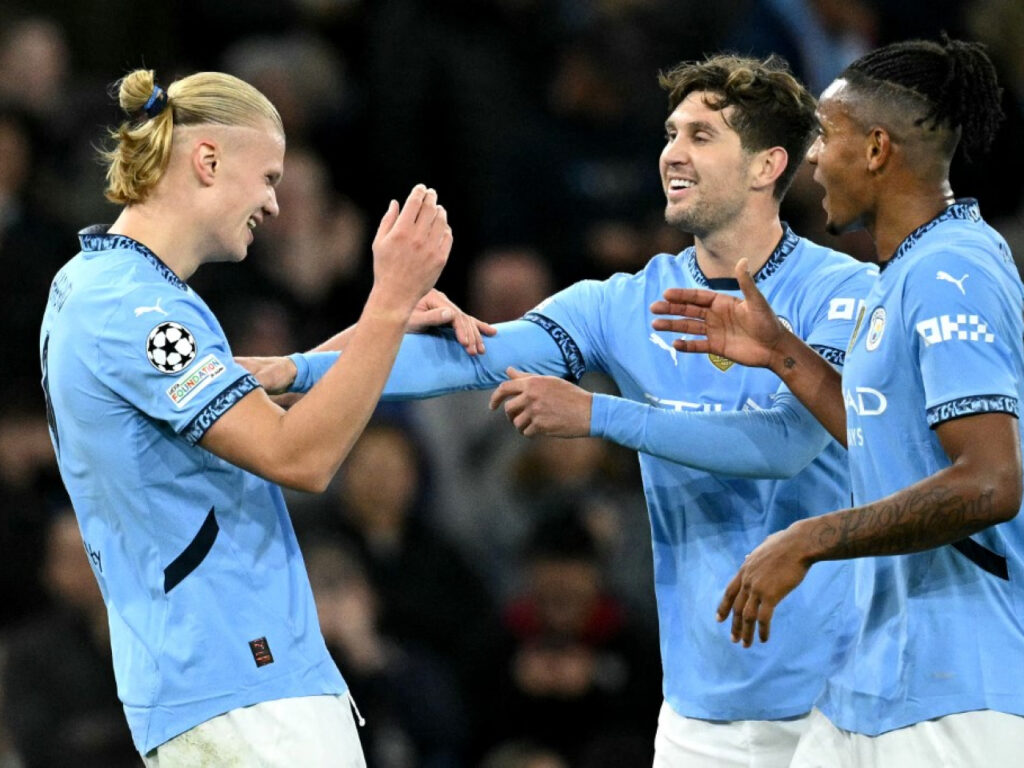
The first Premier League fixture after Christmas will feature Everton making the short trip down the M62 to face reigning champions Manchester City at the Etihad Stadium on Boxing Day.
Pep Guardiola’s Manchester City has faced an uncharacteristic dip in form this season. With the team now effectively out of the title race and managing only one win in their last 12 games, this season has arguably been one of the biggest stories in European football.
Meanwhile, Everton comes into this clash with an impressive Boxing Day record. They are undefeated in their last eight away matches on December 26, a streak that dates back to 2005. Notably, their last victory against reigning champions on Boxing Day occurred in 2016 when they defeated Leicester City.
Sean Dyche’s Everton has enjoyed a strong run of results recently, easing the pressure on their manager following a crushing 4-0 defeat to Manchester United less than a month ago. They bounced back with a 4-0 win over Wolves and held both Arsenal and Chelsea to goalless draws, indirectly aiding their rivals Liverpool in the title race.
This week also marked significant off-the-pitch progress for Everton, with the club being taken over by the Friedkin Group and gaining access to their new stadium at Bramley-Moore Dock. Spirits among fans are higher than they have been in months.
Everton has shown remarkable defensive resilience, registering three consecutive clean sheets. They now boast the most clean sheets across Europe’s top-five leagues since October, totaling seven. However, their attacking performance remains a concern. Players like Jack Harrison have struggled to convert opportunities, and Everton’s tally of 14 goals scored is only marginally better than Southampton’s, the league’s lowest.
Manchester City faces a growing list of injury concerns:
– John Stones may miss the clash after sustaining a foot injury at Villa Park.
– Goalkeeper Ederson remains a doubt due to illness.
– Matheus Nunes missed the last match with a knock, but reinforcements such as Mateo Kovacic and Nathan Ake are expected to return.
– Long-term absentees include Ruben Dias (muscle injury), Oscar Bobb, and Rodri, who is recovering from an ACL tear.
Everton is set to be without Ashley Young, who is suspended after picking up his fifth yellow card of the season. Club captain Seamus Coleman is expected to step in. Dwight McNeil remains a doubt after failing a late fitness test, while Dominic Calvert-Lewin is likely to lead the attack despite his ongoing 12-game scoring drought.
While Manchester City’s recent form has been shockingly poor, they are expected to rebound with a favorable run of fixtures, starting with this one. Everton has only managed one Premier League away win in the last 365 days, and a victory at the Etihad — where they haven’t won in nearly 15 years — seems unlikely.
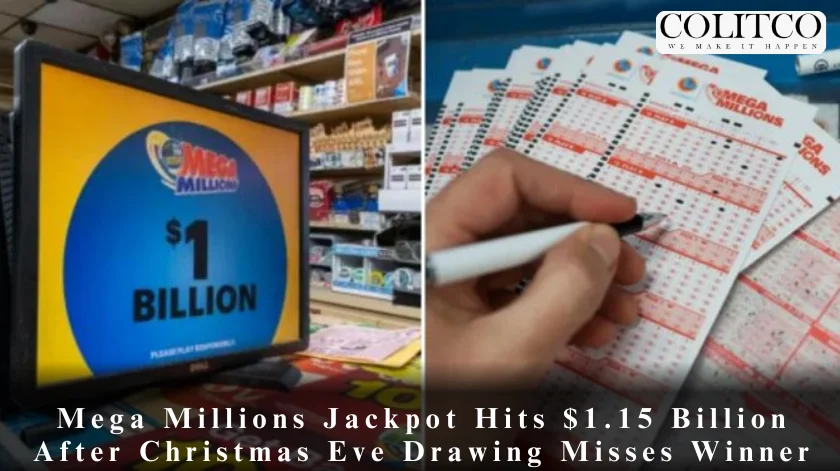
The Mega Millions Christmas Eve drawing left ticket holders without a jackpot winner, but the grand prize has now risen to a staggering $1.15 billion. The next drawing is set for Friday at 11 p.m. ET, offering yet another chance to win one of the largest jackpots in history.
Winning Numbers and Secondary Prizes
Tuesday’s numbers were 11, 14, 38, 45, 46, with a Mega Ball of 3 and a 3X Megaplier.
While the jackpot went unclaimed, four lucky players from California, Missouri, Pennsylvania, and Wyoming matched five numbers. Thanks to the Megaplier, their $1 million prizes tripled to $3 million each.
Growing Jackpot History
The current jackpot has been climbing since its last win on September 10, when a Texas ticket holder scooped up an $810 million prize. Should someone claim the current jackpot in the final two drawings of the year, it would set a record as the largest Mega Millions prize ever won in December.
For those opting for the lump sum payout, the prize would amount to $516.1 million—still an incredible windfall.
Mega Millions Records
The Mega Millions has seen massive wins in recent years. The largest jackpot ever was $1.6 billion, claimed by a single ticket holder from Florida in 2022.
Statement from Mega Millions Consortium
Joshua Johnston, lead director for the Mega Millions Consortium, highlighted the holiday excitement:
“We know that many people will likely receive tickets to Friday’s drawing as holiday gifts, and what a gift that would turn out to be if you ended up with a ticket worth a $1.15 billion jackpot.”
Responsible Gambling Reminder
If you or someone you know struggles with gambling, help is available. Contact the National Council on Problem Gambling at 1-800-522-4700 or visit ncpgambling.org/chat.
Next Drawing Details
Mark your calendars: The next Mega Millions drawing takes place on Friday at 11 p.m. ET. Will the jackpot finally find a winner? Stay tuned!
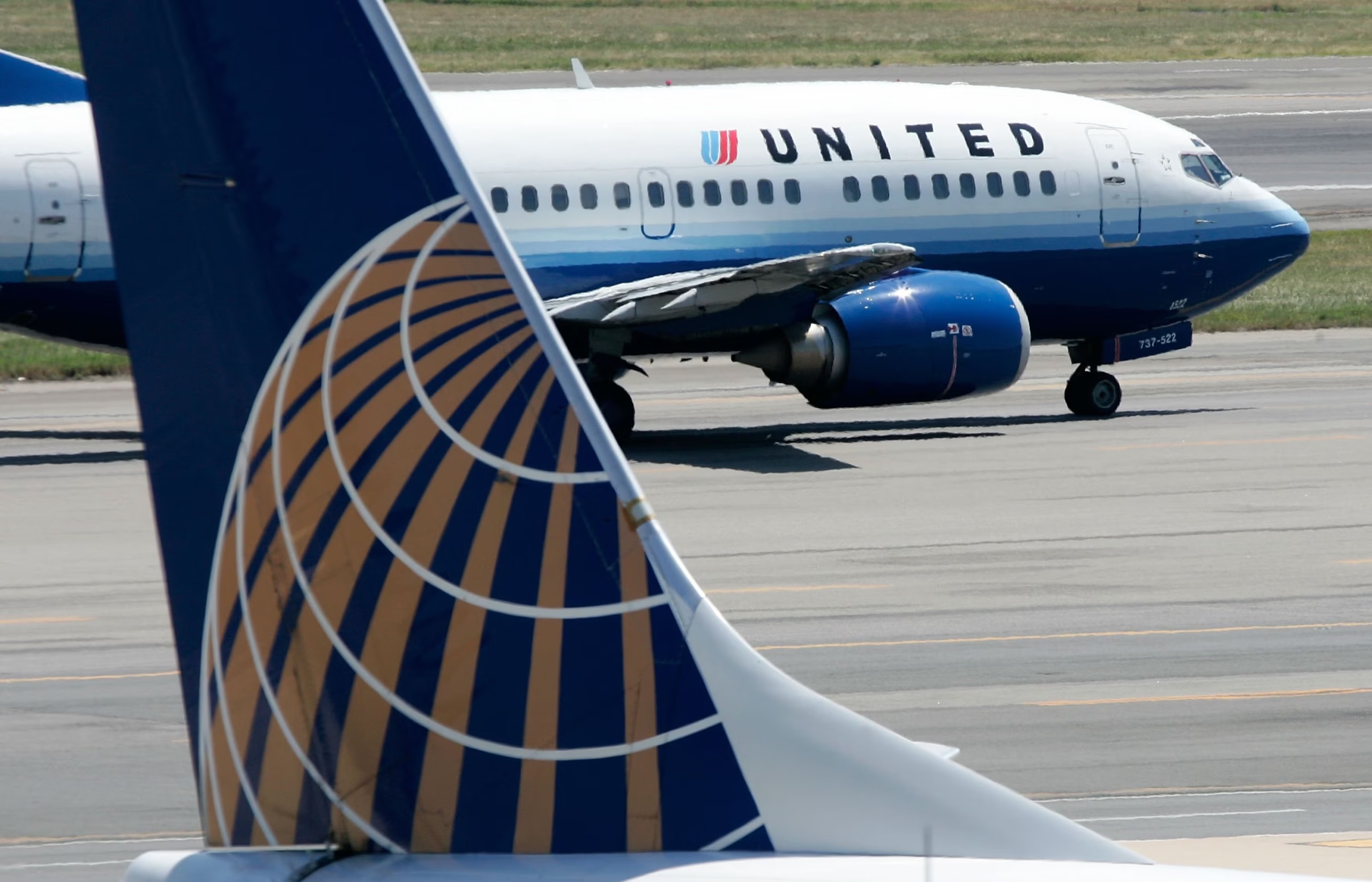
A body was discovered Tuesday in the main landing gear wheel well of a United Airlines Boeing 787-10 after landing at Kahului Airport, Maui. The flight had departed from Chicago on Christmas Eve.
United Airlines confirmed the discovery, noting the area where the body was found is only accessible from outside the aircraft. The airline has not determined how or when the person gained access to the wheel well.
Law enforcement is investigating the incident, with the Maui Police Department leading the inquiry. United Airlines stated it is cooperating with authorities, though further details remain unavailable.
Mozambique is grappling with intensifying unrest linked to October’s controversial election, which extended the Frelimo party’s decades-long hold on power.
In Maputo, a violent riot at a prison resulted in 33 fatalities and 15 injuries, according to Police General Commander Bernardino Rafael. The unrest unfolded as protests erupted nationwide after the country’s highest court upheld Frelimo’s election victory on Monday, a decision fiercely contested by opposition groups.
Police blame the riot on external protests inciting unrest, but Justice Minister Helena Kida offered a differing account. Speaking to local broadcaster Miramar TV, Kida stated that the turmoil began within the prison and was unrelated to external demonstrations.
“The confrontations led to 33 deaths and 15 injuries near the prison,” Rafael reported. The identities of the victims remain unclear.
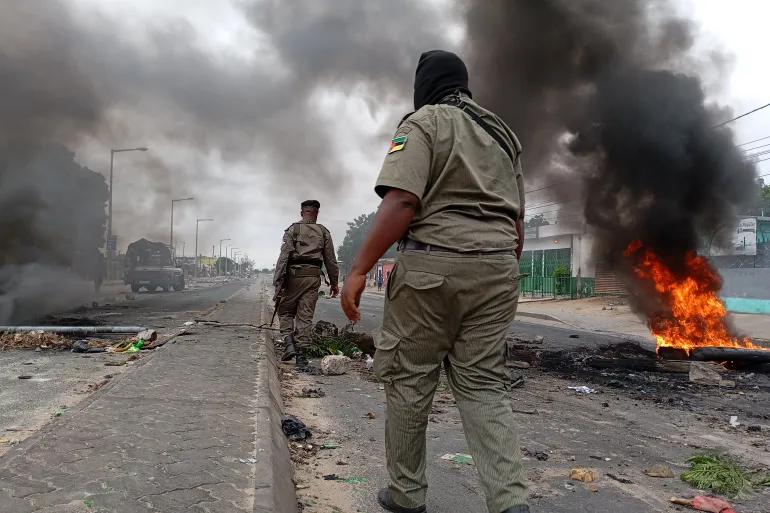
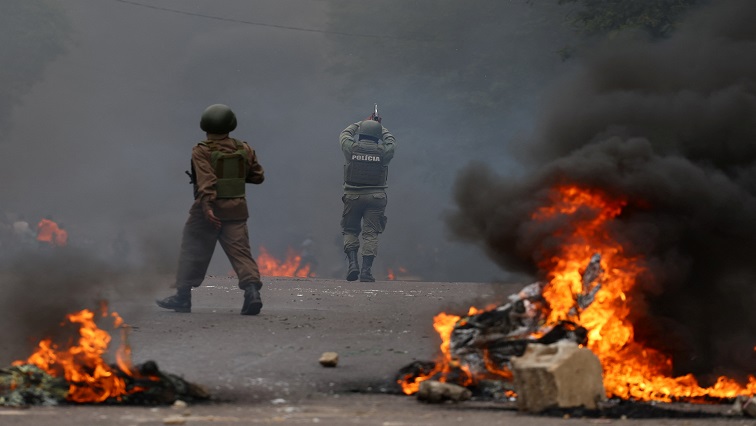
A Police officer fires at protesters near a burning barricade during a “national shutdown” against the election outcome, at Luis Cabral township in Maputo, Mozambique, November 7, 2024. REUTERS/Siphiwe Sibeko
Approximately 1,534 inmates escaped during the chaos, though authorities have recaptured 150 individuals. Rafael expressed concern about a potential surge in crime, warning that the next 48 hours could see heightened criminal activity.
The prison riot is the latest incident in a wave of violence following the court’s election ruling. Interior Minister Amade Miquidade confirmed 21 deaths in Tuesday’s protests alone.
Since the unrest began, at least 130 people have died in clashes with police, according to civil society group Plataforma Decide.
Mozambique faces mounting challenges as opposition groups and civil society continue to contest the legitimacy of the election results. Authorities are working to manage escalating tensions while addressing the humanitarian and security concerns stemming from the unrest.
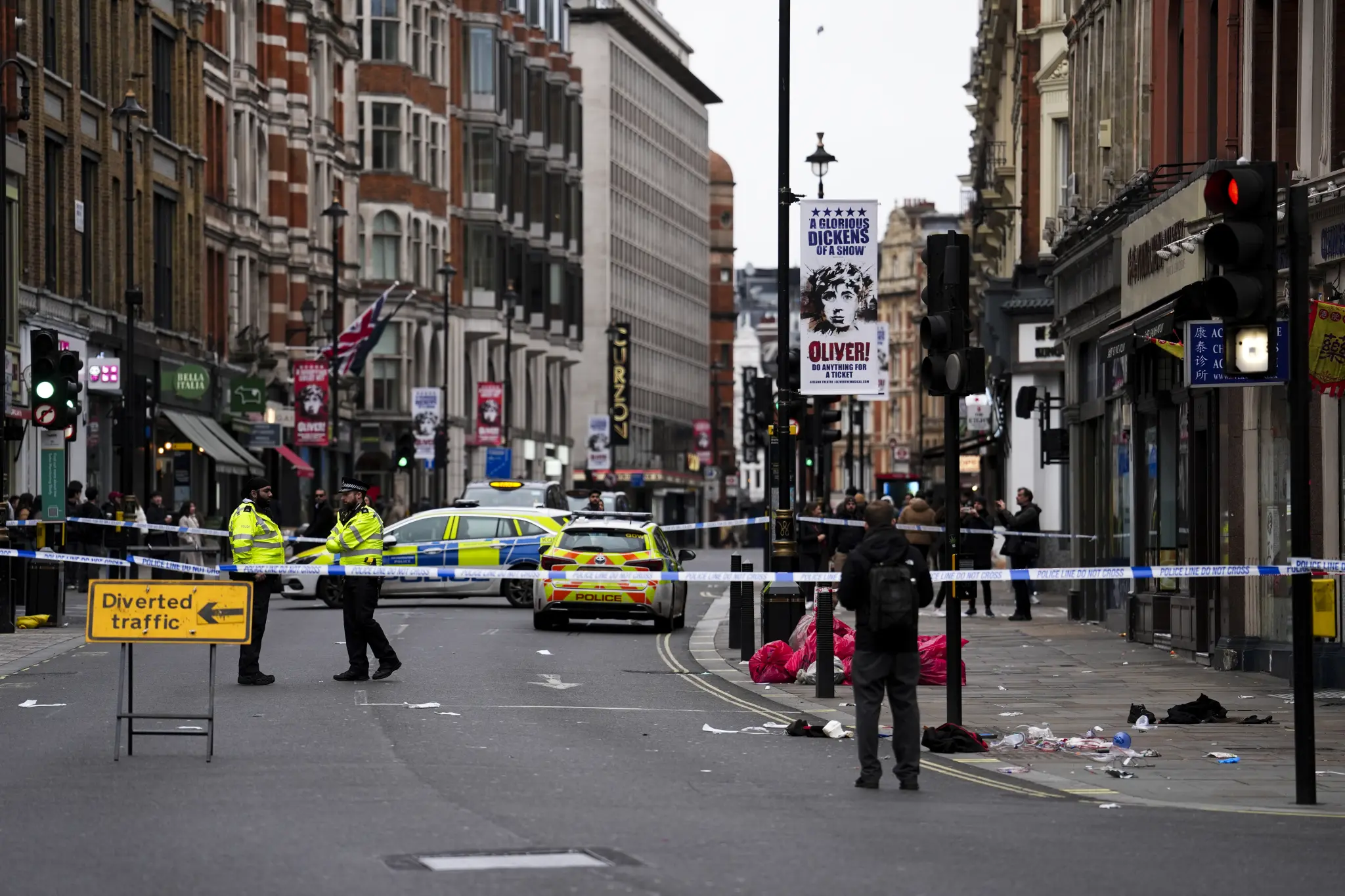
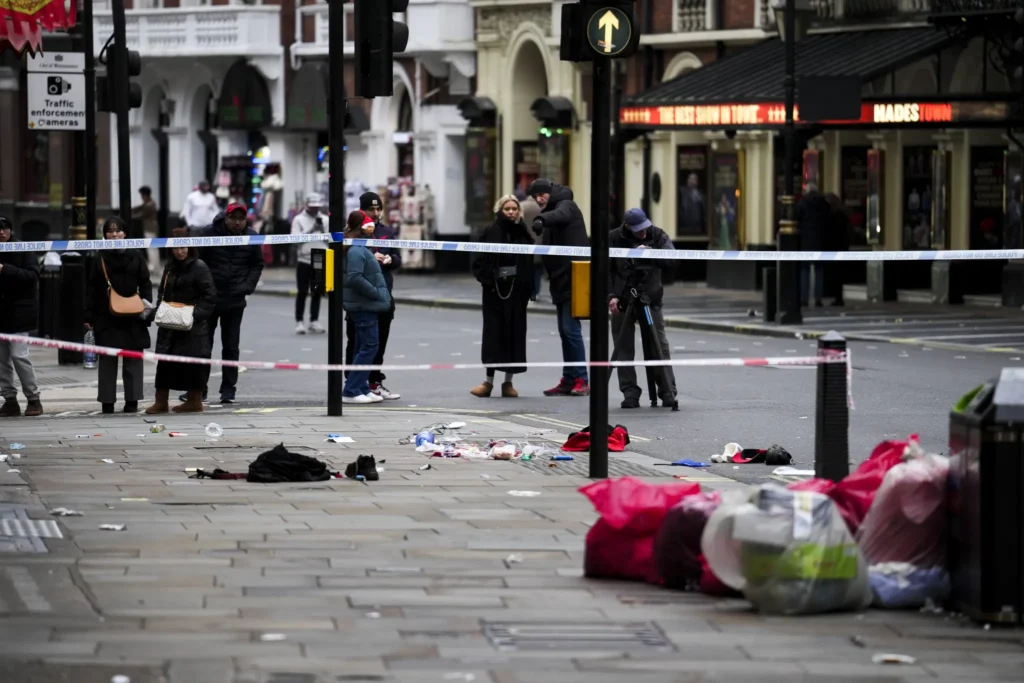
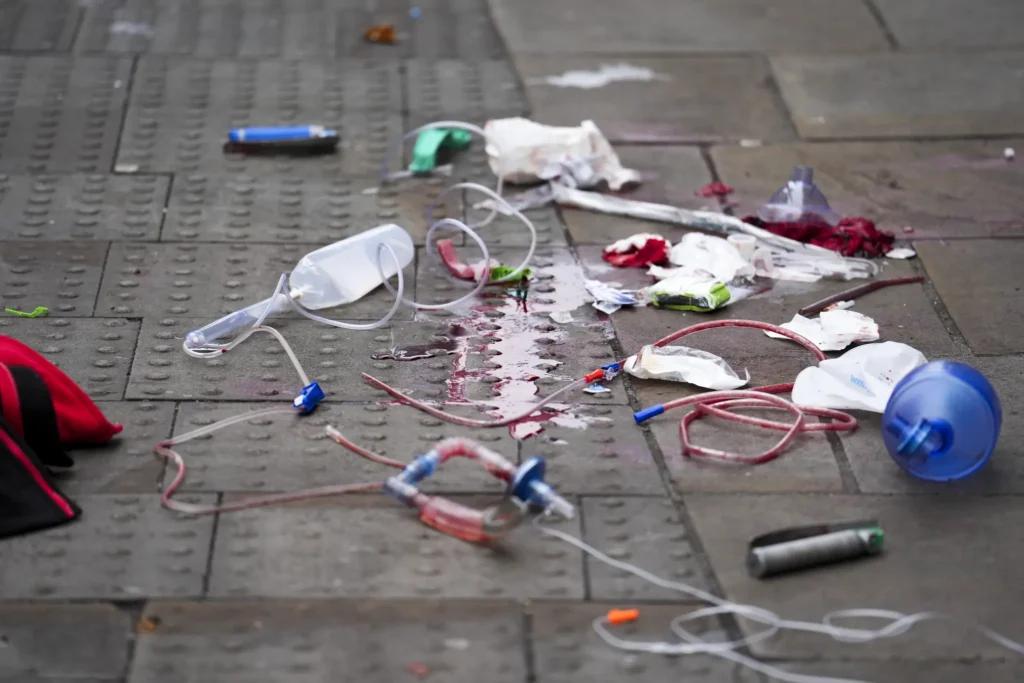
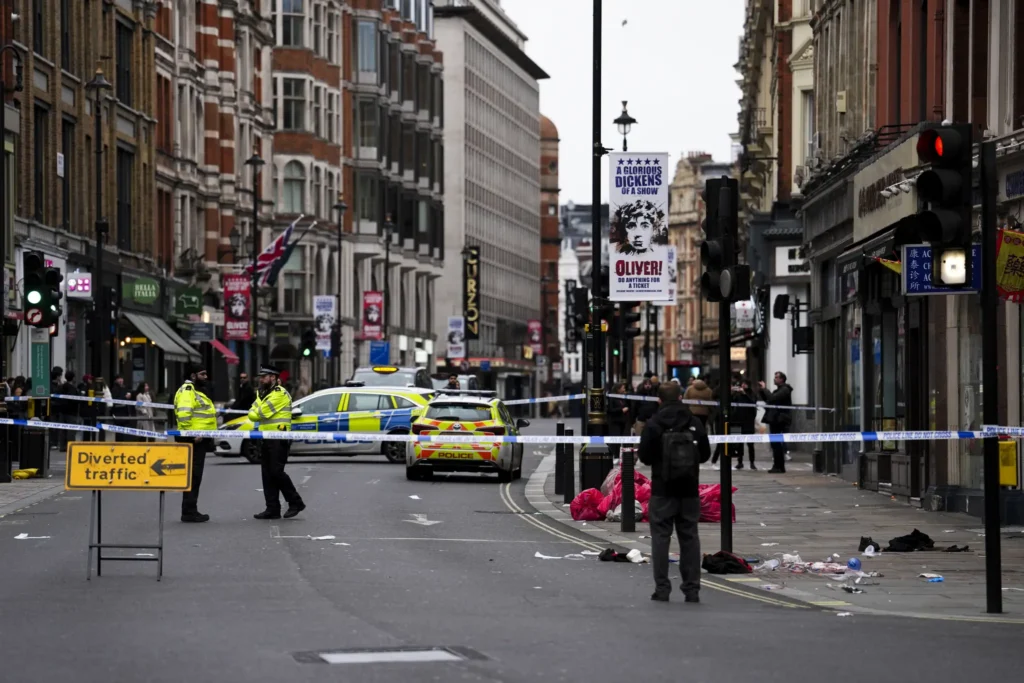
A 31-year-old driver was arrested for attempted murder after he drove onto a sidewalk and struck a crowd of people early Christmas morning in London, leaving four injured.
The incident occurred around 12:45 AM on Shaftesbury Avenue, located in London’s bustling West End theater district. The driver, reportedly traveling on the wrong side of the road, plowed into pedestrians near the Sondheim Theater, where the musical *Les Misérables* is currently showing.
The Metropolitan Police reported that one victim sustained life-threatening injuries, while three others were hospitalized with less severe injuries. Authorities have stated that this was an isolated incident and confirmed it was not terror-related.
Deputy Assistant Commissioner Stuart Cundy indicated that the suspect had been involved in an altercation at a nightclub before the crash. Shortly afterward, he got into his vehicle and mounted the pavement, striking pedestrians.
Police cordoned off the area around the theater to investigate the scene. Officers reassured the public that the incident was contained and that additional safety measures were in place.
Authorities are urging anyone with information or who witnessed the incident to come forward as the investigation continues.