

KARACHI, Pakistan — Pakistani search and rescue teams have recovered wreckage from a cargo aircraft that disappeared off the country’s southern coast while approaching Karachi, as authorities continue an extensive operation to locate the five crew members who remain missing.
The Boeing 737 cargo aircraft, operated by private carrier K2 Airways, was traveling from Sharjah in the United Arab Emirates when it reported a navigation system malfunction before losing contact with air traffic controllers late Tuesday. Civilian and naval search teams located floating debris in the Arabian Sea after nearly 12 hours of coordinated air and sea operations, Pakistan’s Airports Authority announced Wednesday.
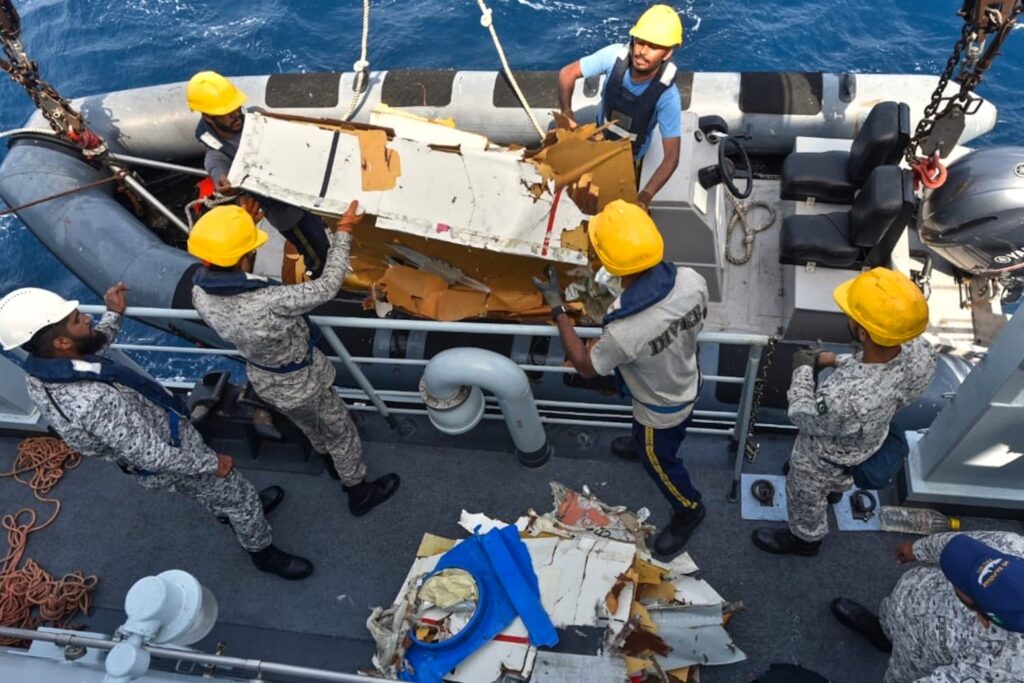
The discovery marks the first confirmed evidence of the aircraft’s fate, although officials cautioned that the main fuselage has not yet been found.
Reuters also confirmed that authorities recovered wreckage approximately 53 nautical miles south of Ormara Port, while rescue teams continue searching for the missing crew. The exact location of the aircraft’s main crash site has yet to be established.
Retired Rear Admiral Faisal Shah said difficult sea conditions continue to hamper recovery efforts. He explained that locating the aircraft’s primary wreckage presents a far greater challenge because the seabed in the suspected impact area is estimated to be about 3,000 meters deep, requiring specialized underwater recovery equipment.
He added that floating debris alone cannot accurately determine where the aircraft entered the water because ocean currents, wind and waves often carry wreckage significant distances from the point of impact.
K2 Airways identified the missing crew members as Captain Muhammad Rizwan Idris, First Officer Faisal Jatoi, flight engineers Muhammad Hamid and Muhammad Arif Siddiqui, and aircraft loader Muhammad Taufiq Khan.
In a statement, the airline expressed hope that the crew would be found, saying it continues to pray for their safety while cooperating fully with aviation authorities conducting the investigation.
The family of First Officer Faisal Jatoi remains hopeful despite the difficult circumstances. His father in law, Ghulam Nabi Bahrani, said relatives had remained in close contact with him during his stay in Sharjah and that he had spoken with his wife shortly before the flight departed.
“We can only continue praying and hoping for a miracle,” Bahrani said.
Prime Minister Shehbaz Sharif also extended condolences to the families and instructed government agencies to deploy every available resource to support the ongoing search operation.
Earlier information released by Pakistan’s Airports Authority showed radar tracking data indicating that the aircraft made a sudden change in direction before descending rapidly. Air traffic controllers lost both radio and radar contact at about 9:21 p.m. local time while the aircraft was approximately 155 nautical miles west of Karachi.
Aviation analyst Imran Aslam told ARY News that investigators have not yet determined what caused the aircraft to disappear. He noted that even after an engine failure, aircraft are generally capable of gliding for some distance rather than descending abruptly, making the sequence of events particularly unusual. He said investigators would require physical evidence and flight data before reaching any conclusions.
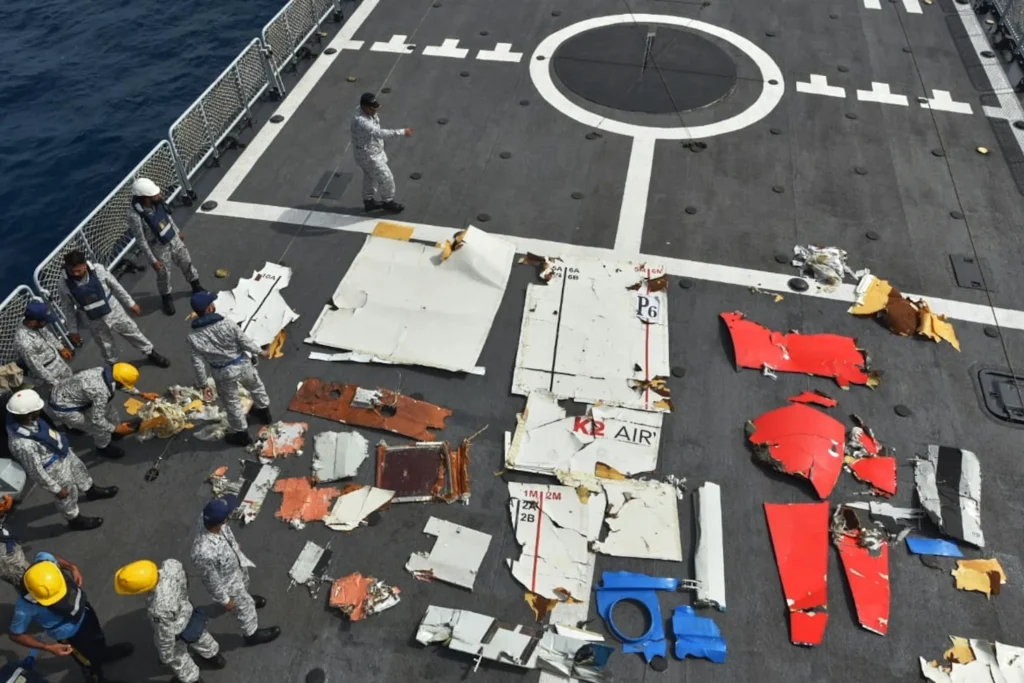
What We Know So Far
Recovery teams have located floating wreckage believed to be from the missing K2 Airways Boeing 737 cargo aircraft in the Arabian Sea.
The five crew members remain unaccounted for, and rescue operations involving the Pakistan Navy, aviation authorities and civilian agencies are continuing.
Authorities confirmed the aircraft experienced a reported navigation system problem shortly before losing communication with air traffic control while en route from Sharjah to Karachi.
The cause of the disappearance has not been determined, and investigators have not released any preliminary findings.
What Authorities Are Saying
Pakistan’s Airports Authority said search operations remain active following the recovery of aircraft debris and emphasized that locating the main wreckage remains the immediate priority.
Prime Minister Shehbaz Sharif directed all relevant government agencies to provide maximum support to rescue teams and offered condolences to the families awaiting news of their loved ones.
K2 Airways said it is cooperating with investigators and pledged full support throughout the search and accident investigation.
Why This Matters
The disappearance has renewed attention on aviation safety involving cargo operations across South Asia and the Middle East. Although commercial cargo flights generally receive less public attention than passenger services, they remain a critical part of international trade and regional supply chains.
Finding the aircraft’s flight data recorder and cockpit voice recorder will be essential for determining whether mechanical failure, equipment malfunction, weather conditions or another factor contributed to the aircraft’s disappearance. Aviation investigators typically rely on these devices to reconstruct the aircraft’s final moments and identify safety improvements that could prevent similar accidents.
The accident also highlights the challenges of conducting search and recovery operations in deep ocean waters, where strong currents, limited visibility and significant depths can delay recovery efforts for days or even weeks.
What Happens Next
Search teams are expected to continue surveying the Arabian Sea using naval vessels, aircraft and specialized equipment in an effort to locate the aircraft’s main wreckage and the missing crew.
Once the flight recorders are recovered, aviation investigators will begin a detailed examination to determine what caused the aircraft to lose contact with controllers and descend into the sea.
Officials have urged the public to await verified findings as the investigation remains in its early stages.
Sources: The Associated Press, Reuters





