The United Kingdom has sanctioned Isabel dos Santos, a billionaire businesswoman from Angola and the daughter of a former president, as part of a broader initiative to combat money laundering under the new Labour government’s agenda.
The sanctions also extend to Dmytro Firtash, an exiled Ukrainian oligarch, and Aivars Lembergs, one of Latvia’s wealthiest individuals. British authorities have described the three individuals as “notorious kleptocrats,” implementing asset freezes in the UK and imposing travel bans against them.
UK Foreign Secretary James Cleverly stated that these individuals have “selfishly deprived their fellow citizens of much-needed funding for education, healthcare, and infrastructure,” all for their own personal enrichment. The government claims dos Santos misused her influence at the Angolan state oil company Sonangol and the telecommunications firm Unitel to embezzle at least $440 million.
Isabel dos Santos, who is often referred to as Africa’s first female billionaire, has faced significant legal challenges since the rise of a new president in Angola in 2017. In recent years, she has encountered numerous corruption charges across various jurisdictions. Dos Santos has consistently denied the allegations, asserting that she is the target of a politically motivated vendetta.
In response to the sanctions, dos Santos labeled them as “incorrect and unjustified,” claiming she was not afforded a chance to defend herself and stated her intention to appeal the decision.
Two major figures in Mexican drug trafficking organizations faced American justice this week as Juan Gerardo Treviño-Chavez, former leader of the Cartel del Noreste, pleaded guilty to multiple trafficking charges and authorities announced the capture of a high-ranking member of the Jalisco New Generation Cartel in California.
Treviño-Chavez, 42, known as “El Huevo,” admitted guilt Tuesday to 15 drug trafficking charges in federal court in San Antonio, acknowledging operations that spanned Mexico and crossed the U.S. border. He had led the Cartel del Noreste from its 2016 split from the Los Zetas until his March 2022 capture, controlling territory including the strategic border city of Nuevo Laredo, opposite Laredo, Texas.
In a separate development, U.S. authorities arrested Cristian Fernando Gutierrez-Ochoa, 37, son-in-law of notorious Jalisco cartel leader Nemesio Oseguera Cervantes (“El Mencho”), in Riverside, California. The Department of Justice charged Gutierrez-Ochoa with international drug trafficking and money laundering, alleging he orchestrated large-scale methamphetamine and cocaine imports into the United States.
The arrests come as Republican Representative Dan Crenshaw of Texas pushes for the creation of a specialized congressional committee to address cartel threats amid growing calls for military action against Mexican crime syndicates. President-elect Donald Trump has pledged to escalate anti-cartel efforts, recently appointing three hardline officials to implement his border security agenda.
The developments highlight increasing U.S. pressure on Mexican drug trafficking organizations as border security emerges as a central focus of incoming administration policies.
Zambian authorities announced Wednesday the arrest of fugitive parliamentarian Emmanuel “Jay Jay” Banda in Zimbabwe, ending a months-long manhunt that began with his alleged escape through a hospital window while facing robbery charges.
Home Affairs Minister Jack Mwiimbu confirmed Banda’s capture in a Harare apartment, where Zimbabwean police found the lawmaker who had evaded authorities since August. His escape from Chipata Central Hospital, where he was under police and prison guard, had prompted Zambian authorities to issue a 2 million kwacha ($72,000) bounty.
The case has intensified political tensions in Zambia, with opposition figures claiming persecution of allies connected to former President Edgar Lungu. Banda, an independent MP since 2021 with previous ties to Lungu, faces charges of aggravated robbery involving property worth 12,000 kwacha ($430) from 2015, allegations he denies.
“We are urging the Zambian government that they should not join other African countries that are known to go to other jurisdictions and pick and extract a citizen they are looking for committing crimes,” Patriotic Front spokesman Emmanuel Mwamba told the BBC, characterizing the arrest as an “abduction” requiring proper extradition protocols.
The arrest follows a complex series of events beginning in May when Banda reportedly disappeared, claiming abduction upon his reappearance. That incident led to the arrest of three opposition politicians and a civil rights activist, with some accusing the state of orchestrating the alleged kidnapping – charges the government denied.
Mwiimbu rejected suggestions of political motivation behind the prosecution, noting the charges predated Banda’s parliamentary service. “As a sitting member of parliament, we expect Mr Banda to uphold respect for Zambia’s justice system and rule of law,” he said in a statement to the BBC.
Interpol’s Harare office confirmed Banda’s custody and has requested extradition documentation. During preliminary questioning, Banda reportedly denied the charges, claiming persecution due to his connections with former President Lungu. Zambian police indicated they are preparing the necessary extradition papers.
The government expressed particular interest in investigating who facilitated Banda’s escape and subsequent visits by his wife to Harare. Minister Mwiimbu acknowledged Zimbabwe’s cooperation in the case, while opposition leaders warned of an “emerging and worrying scenario” in Zambian politics.
British authorities deployed a bomb disposal team to London’s Gatwick Airport Friday morning after the discovery of a suspected prohibited item in luggage prompted the evacuation of the facility’s South Terminal, disrupting travel plans for tens of thousands of passengers.
Sussex Police established a security cordon following the 8:20 a.m. alert at Britain’s second-busiest airport, located approximately 30 miles south of London. “As a precaution, an EOD (Explosive Ordnance Disposal) team is being deployed to the airport,” police said in a statement.
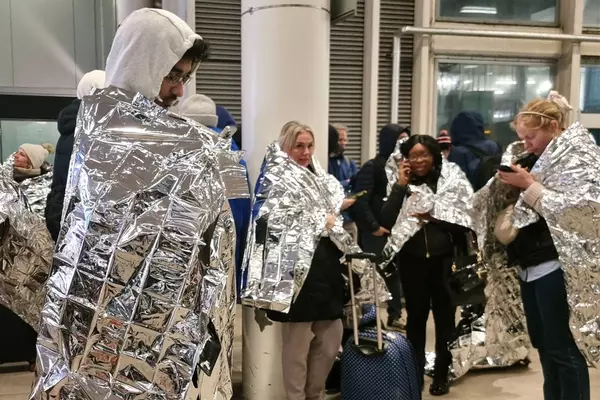
The incident caused significant disruption to weekend travel, affecting more than 600 scheduled flights carrying an estimated 121,000 passengers, according to aviation analytics firm Cirium. Social media videos showed thousands of displaced travelers gathered outside the terminal, with some receiving emergency foil blankets to combat the cold.
Airport authorities used social media platform X to inform passengers they were being kept outside the building while the investigation continued. Police advised people to avoid the area due to substantial traffic congestion around the airport.
The Gatwick incident occurred on the same day London police conducted a controlled explosion near the U.S. embassy in south London after discovering what was later determined to be a hoax package, though authorities indicated the events were unrelated.
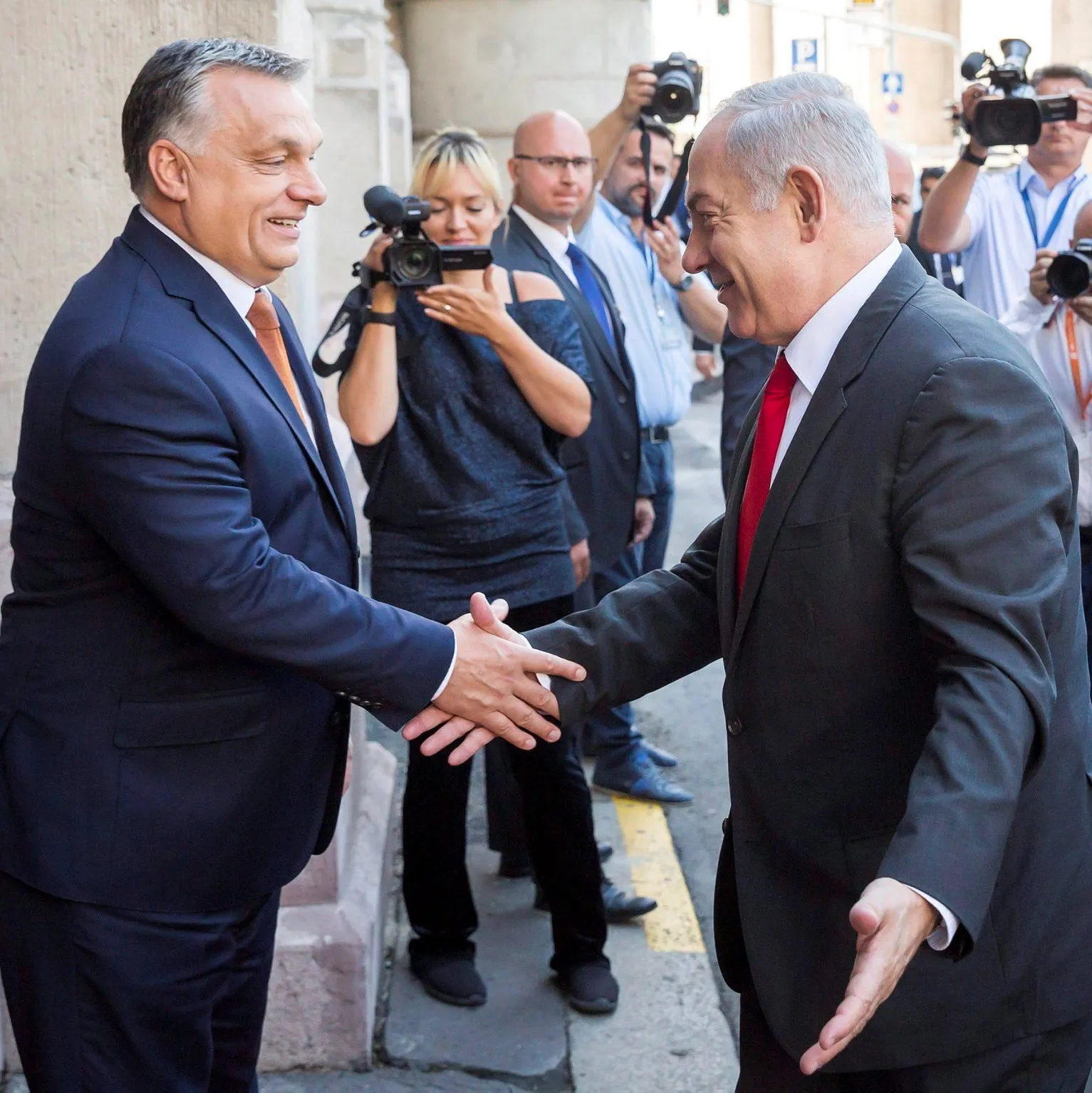
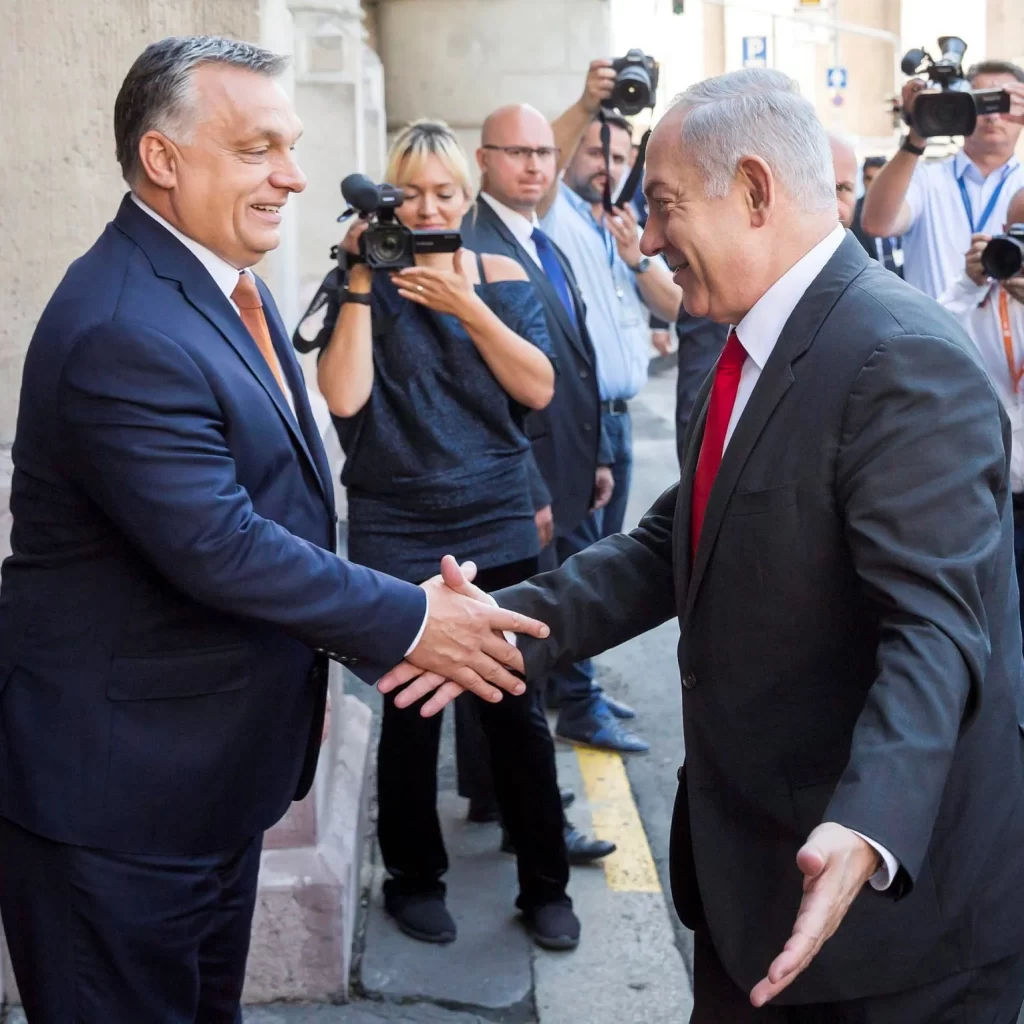
European nations fractured along political and diplomatic lines Friday over the International Criminal Court’s arrest warrant for Israeli Prime Minister Benjamin Netanyahu, as Hungarian Prime Minister Viktor Orban extended an explicit invitation while other EU members pledged to enforce the court’s decision.
“Today I will invite Israel’s prime minister, Mr. Netanyahu, for a visit to Hungary and in that invite I will guarantee him that if he comes, the ICC ruling will have no effect in Hungary, and we will not follow its contents,” Orban declared, calling the warrants “brazen, cynical and completely unacceptable.”
The ICC’s Thursday decision to issue warrants for Netanyahu, former Defense Minister Yoav Gallant, and Hamas leader Ibrahim Al-Masri over alleged war crimes in Gaza has created a significant diplomatic challenge for European nations, all ICC members legally obligated to execute its warrants.
“For us Europeans, this warrant exposes a real dilemma between international law, which is our law, and our foreign policy, especially for those member states that are unconditionally backing Israel,” Eurointelligence analysts noted.
Major European powers have adopted notably different stances. Germany, citing its unique historical responsibility toward Israel stemming from the Nazi era, declined to specify how it would respond to a potential Netanyahu visit. “Germany is one of the biggest supporters of the ICC – this attitude is also the result of German history,” a government spokesperson said, while emphasizing the country’s “unique relations and great responsibility with Israel.”
France moderated its initial response, describing the ICC’s action as a “formalization of an accusation” rather than a ruling, with officials privately expressing concerns that pressuring Netanyahu could derail Lebanese ceasefire negotiations.
The Netherlands, Finland, Ireland, Italy, and Spain have committed to fulfilling their ICC obligations, while Cyprus, despite close Israeli ties, acknowledged the warrants as legally binding. In the Netherlands, far-right leader Geert Wilders, head of the largest government party though not a cabinet member, announced plans to visit his “friend” Netanyahu in Israel despite his government’s stance.
The Czech Republic exhibited similar tensions between legal obligations and political sympathies, with its foreign ministry affirming respect for international legal commitments while Prime Minister Petr Fiala labeled the ICC decision “unfortunate.”
The ICC, lacking its own enforcement mechanism, relies on member states’ cooperation to execute its warrants. The divergent European responses highlight growing rifts in the continent’s approach to international law and Middle East policy.
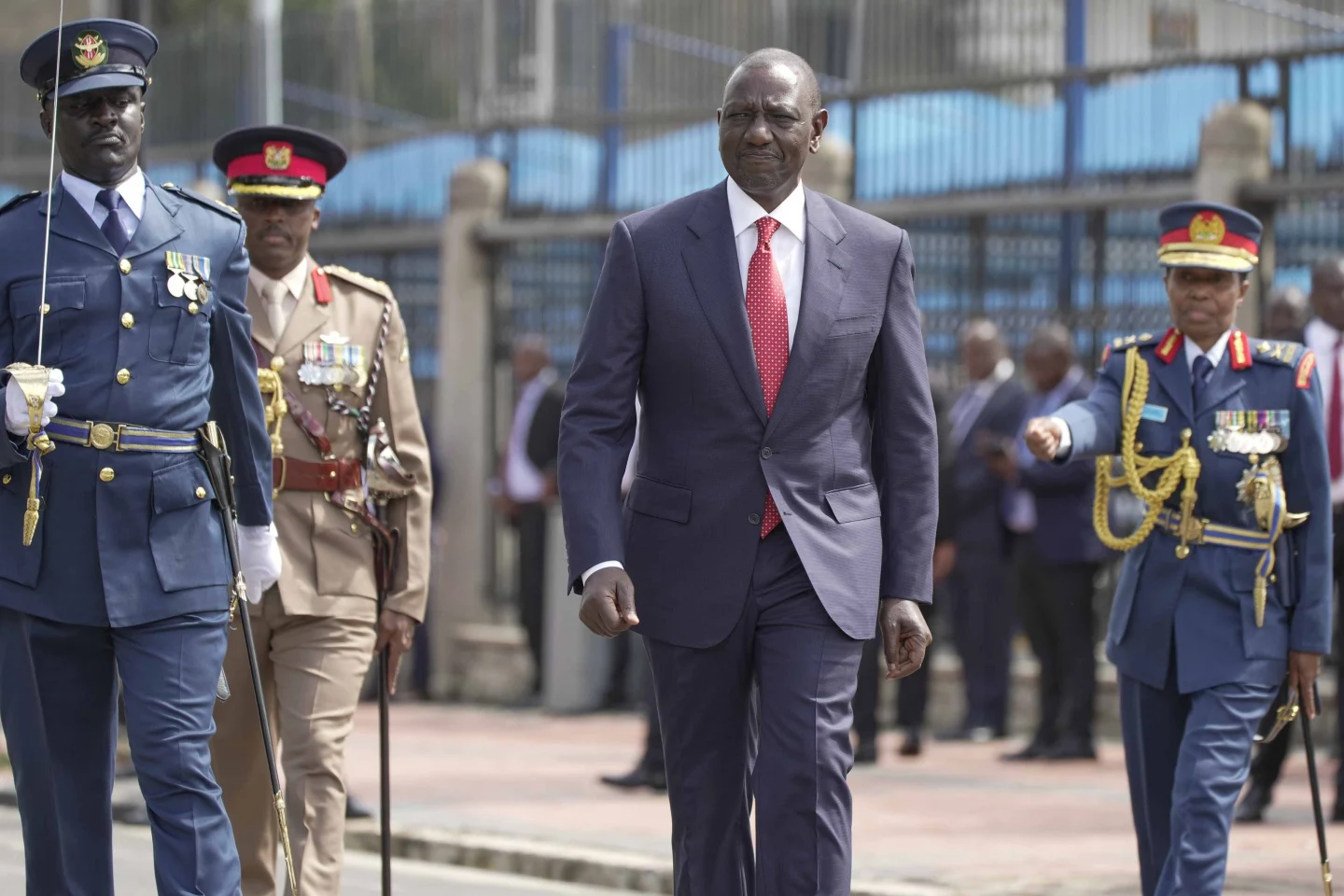
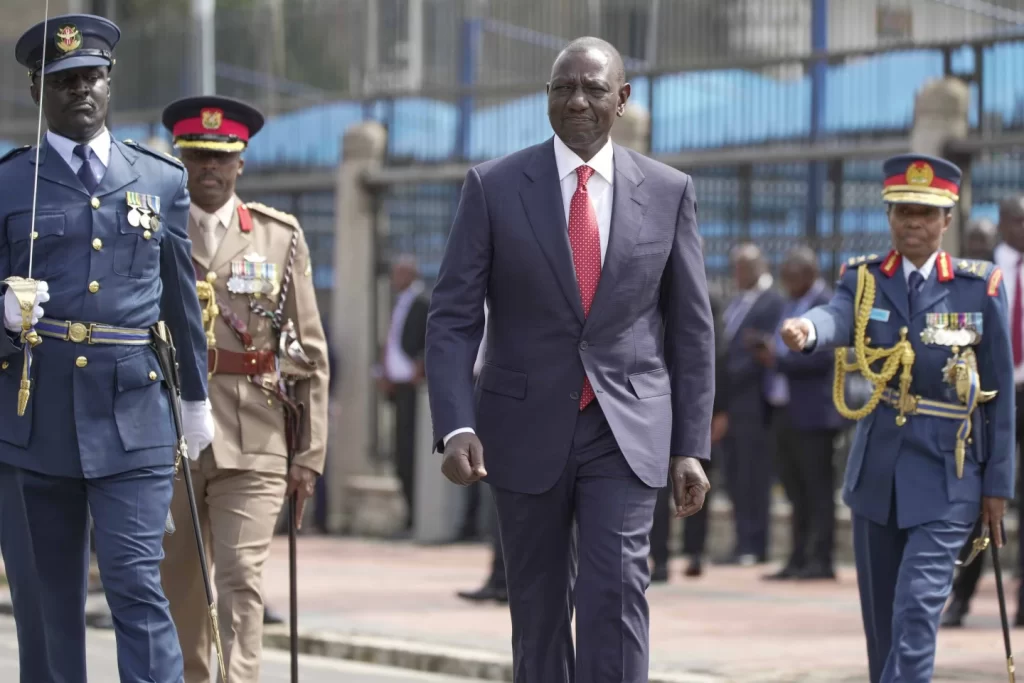
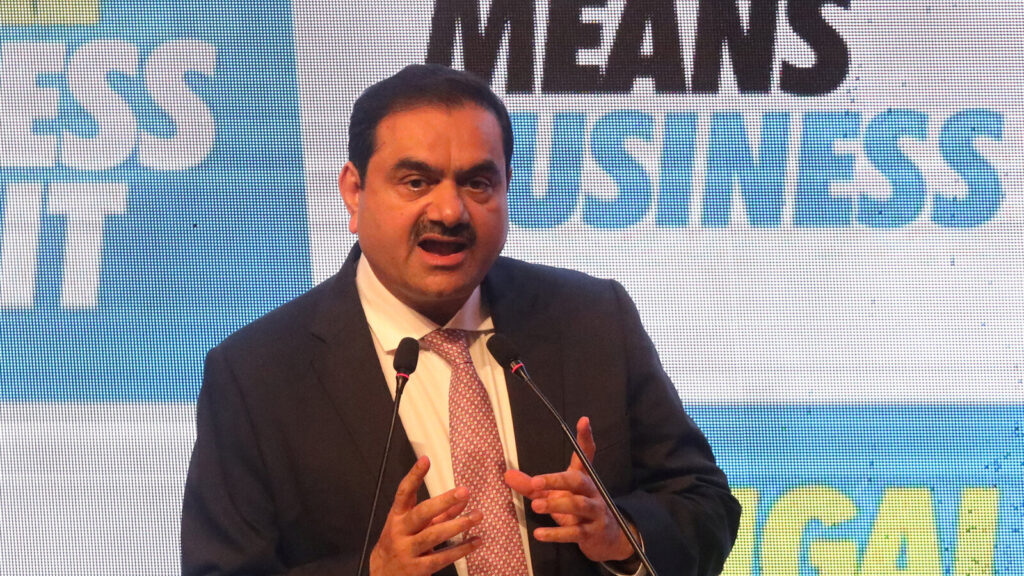
Kenyan President William Ruto announced Thursday the cancellation of major infrastructure deals with Indian billionaire Gautam Adani’s business empire, citing intelligence from “investigative agencies and partner nations” following the tycoon’s indictment in the United States on fraud charges.
The terminated agreements included a controversial plan for the Adani Group to modernize and operate Nairobi’s main airport for 30 years in exchange for constructing an additional runway and terminal. The project had faced significant domestic opposition, triggering protests and airport worker strikes over concerns about potential job losses and deteriorating working conditions.
A separate agreement for the construction of power transmission lines in East Africa’s largest economy was also scrapped. Energy Minister Opiyo Wandayi, appearing before a parliamentary committee Thursday, emphasized that no corruption had tainted Kenya’s side of the energy sector negotiations.
The cancellations follow U.S. prosecutors’ indictment of Adani on charges of securities fraud and conspiracy, alleging he misled investors about a major solar energy project in India through an alleged bribery scheme. The charges represent a significant blow to one of Asia’s wealthiest individuals and his global business operations.
Ruto’s decision, revealed during his state of the nation address, marks a dramatic reversal in Kenya’s infrastructure development plans and highlights growing international scrutiny of the Adani Group’s operations following the U.S. charges.
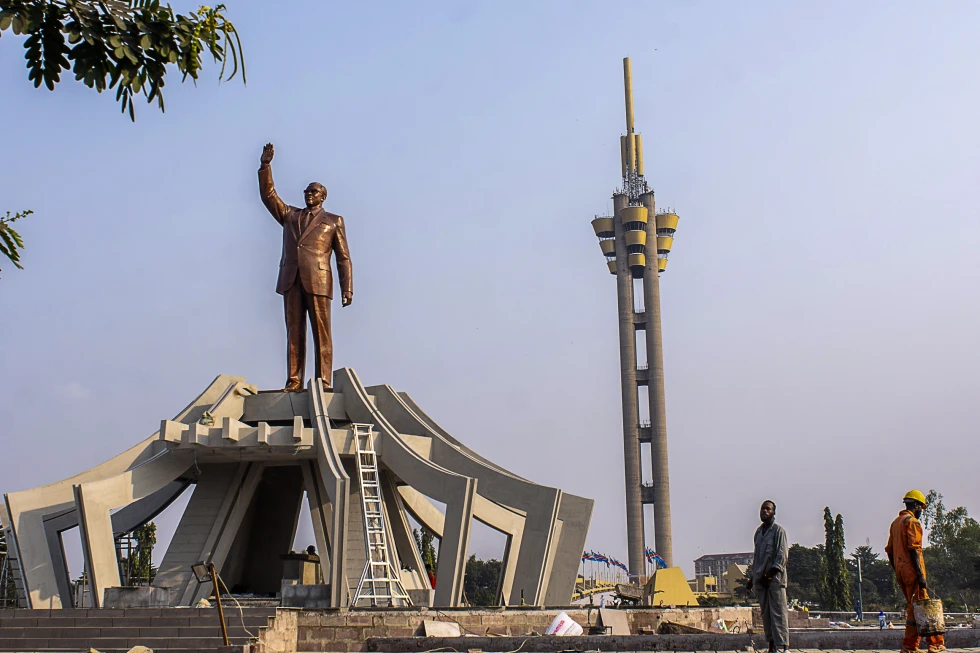
Congolese police arrested six suspects Wednesday in connection with the vandalism of independence hero Patrice Lumumba’s mausoleum, as authorities sought to reassure the public about the safety of a historically significant tooth relic that represents the only remaining part of the assassinated leader’s body.
Interior Minister Jacquemin Shabani confirmed that while vandals damaged a display case during Monday’s break-in, Lumumba’s gold-capped tooth remained secure. “We assure that the relic is secure and it is protected,” Shabani told reporters, though he declined to specify its location. Police continue to search for two additional suspects.
The incident has reignited discussions about the preservation of Congo’s historical legacy, with Lumumba’s grandson, Jean-Jacques Lumumba, expressing mixed emotions about the arrests. “We are happy that the perpetrators of this act have been arrested,” he told The Associated Press. “But we regret that the mausoleum has been abandoned by the country’s authorities.”
The tooth’s significance extends beyond its physical presence, embodying a complex history of colonial violence and national liberation. Retrieved from Belgium in 2022 after decades abroad, the relic had toured Congo in a nationwide celebration, allowing citizens to pay respects to their first prime minister, who was assassinated in 1961 just months after helping secure independence.
Lumumba’s brutal death – his body was dismembered and dissolved in acid to prevent his grave from becoming a shrine – marked a tragic turn in Congo’s post-colonial history. His assassination cleared the path for Mobutu Sese Seko’s decades-long dictatorship, supported by Western powers until 1997.
The tooth’s return to Congo followed decades of controversy over its possession by a Belgian police commissioner who oversaw Lumumba’s body’s destruction. Belgian authorities seized the relic in 2016, and it was finally repatriated during King Philippe’s visit, where he expressed regret for Belgium’s colonial abuses.
For many Congolese, Lumumba represents unfulfilled promise – a visionary leader whose elimination derailed the nation’s potential trajectory. His death, while carried out by Congolese separatists, has raised enduring questions about Belgian and American complicity, given Cold War concerns about his perceived Communist sympathies.
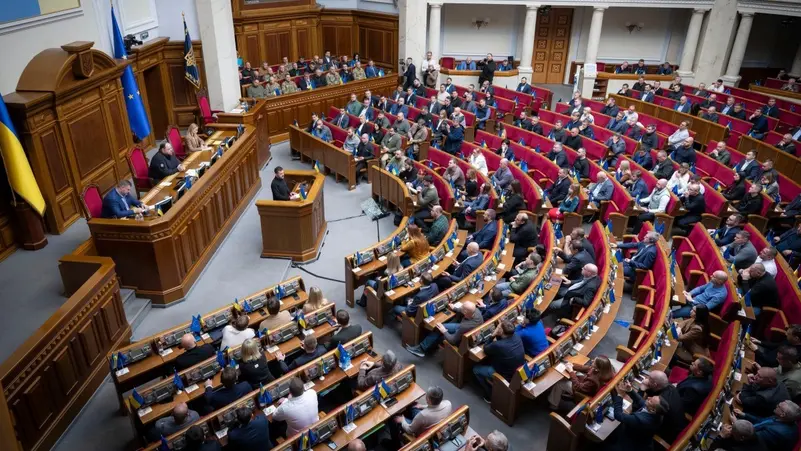
Ukraine’s parliament canceled its Friday session and heightened security around government buildings as NATO announced emergency talks following Russia’s deployment of a new ballistic missile system that President Vladimir Putin claims can evade Western air defenses.
Three Ukrainian lawmakers confirmed the parliamentary closure came in response to specific threats against government facilities in Kyiv’s center. “There was also recommendation to limit the work of all commercial offices and NGOs that remain in that perimeter, and local residents were warned of the increased threat,” said lawmaker Mykyta Poturaiev, noting similar warnings had occurred previously.
The security measures follow Russia’s Thursday launch of what Putin called the “Oreshnik” missile against a weapons facility in Dnipro. Ukraine’s Main Intelligence Directorate reported the missile, fired from Russia’s Kapustin Yar test range, reached speeds of Mach 11 during its 15-minute flight and carried six warheads, each containing six submunitions. The Pentagon confirmed it was a new experimental weapon based on the RS-26 Rubezh ICBM.
Overnight violence continued elsewhere as Russian forces struck the city of Sumy with Shahed drones, killing two people and injuring 12 in a residential area. Regional head Volodymyr Artiukh told Suspilne media that Russia had employed a new variant of the Iranian-made drones packed with shrapnel, saying, “These weapons are used to destroy people, not to destroy objects.”
NATO announced it would hold ambassador-level emergency talks with Ukraine next Tuesday, likely focusing on the new missile threat. The escalation comes as Czech Foreign Minister Jan Lipavský arrived in Kyiv to assess Ukraine’s response to the bombardments and discuss international aid coordination.
While parliament suspended operations, President Volodymyr Zelenskyy’s office continued working under standard security protocols, according to a spokesperson. The heightened alert follows Putin’s warning that U.S. air defense systems would be ineffective against the new missile, which he claimed travels at ten times the speed of sound.
Ukraine’s intelligence services noted that similar missile tests were conducted at Kapustin Yar in October 2023 and June 2024, suggesting extended development of the weapon system.
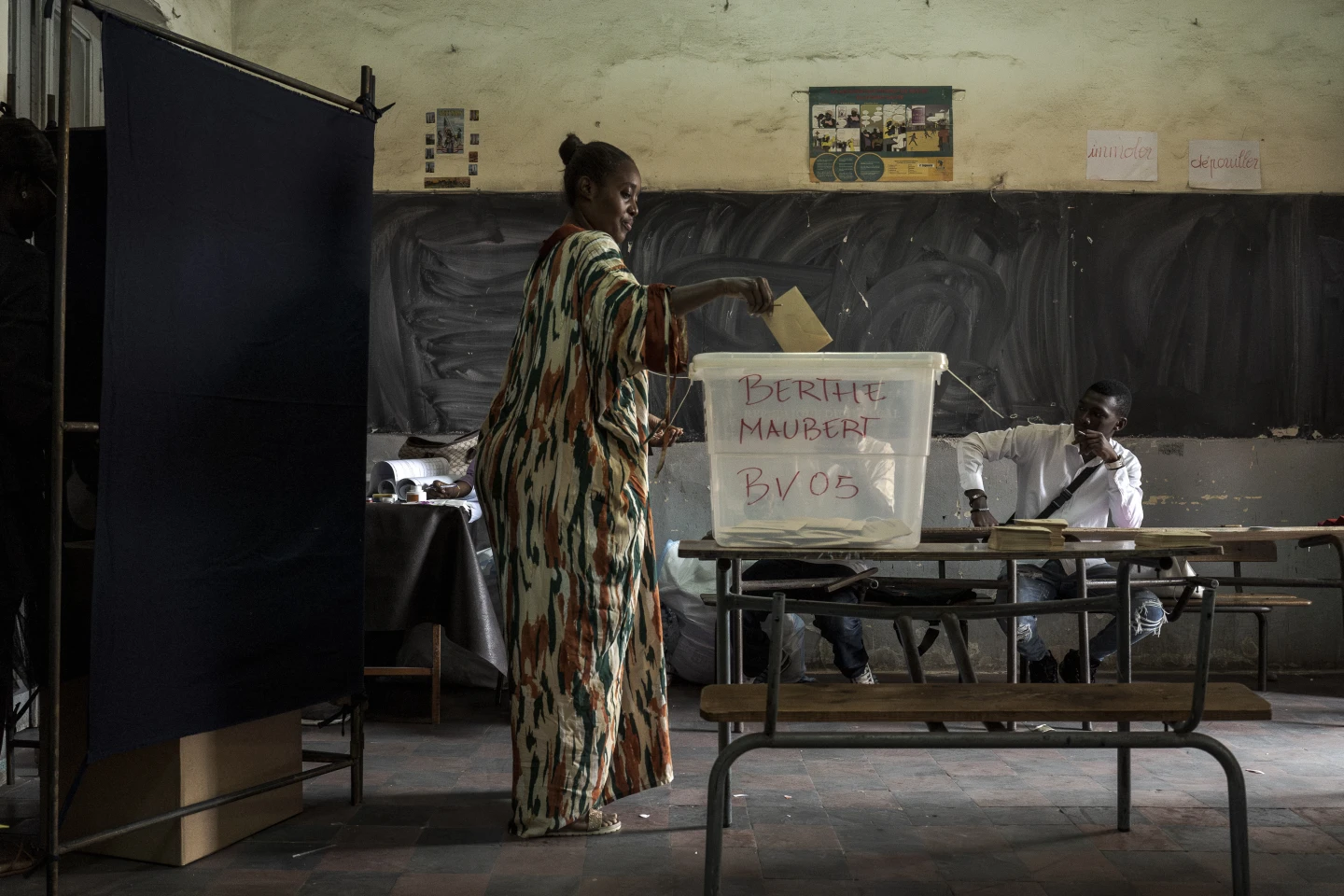
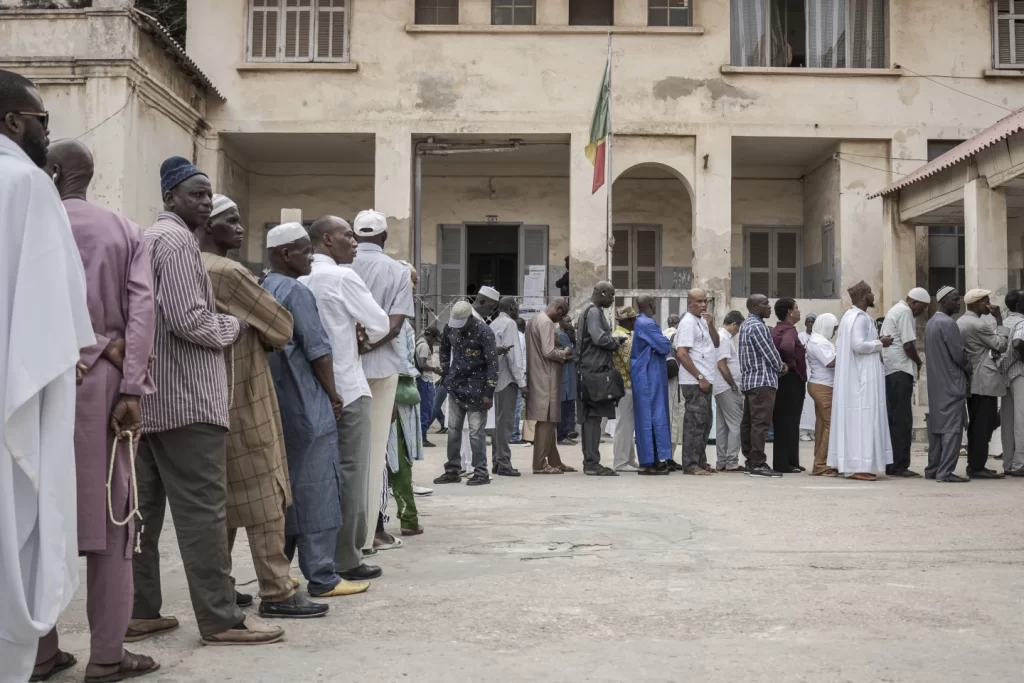
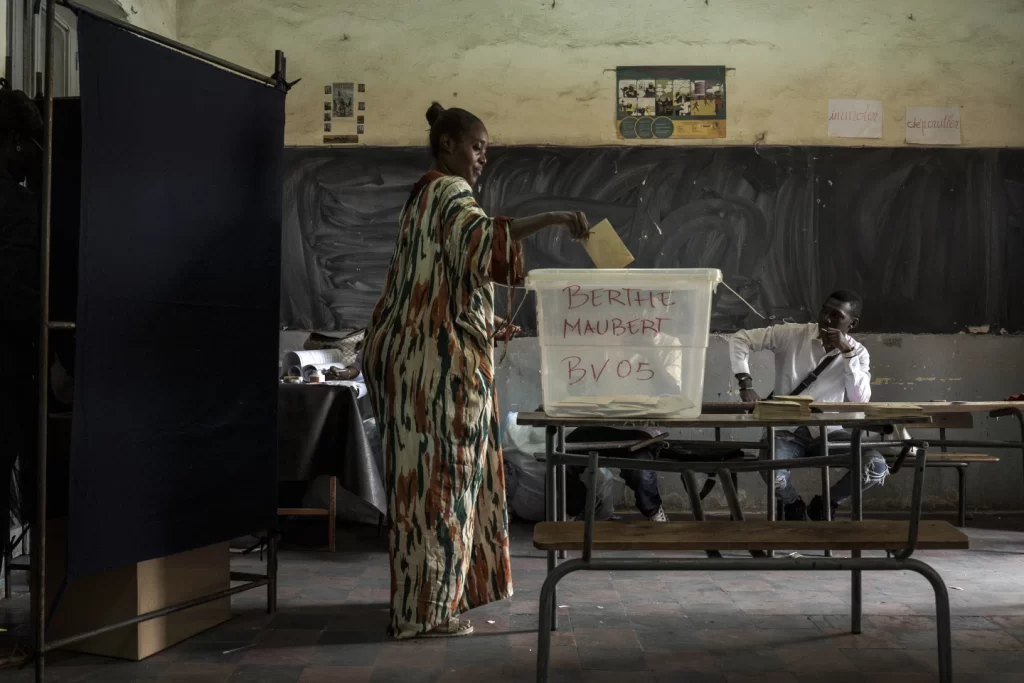
President Bassirou Diomaye Faye’s ruling PASTEF party secured a commanding parliamentary majority Thursday, winning 130 of 165 seats in Senegal’s National Assembly, according to provisional results that dramatically strengthen the new president’s reform agenda.
The national vote counting commission’s announcement marks a seismic shift in Senegalese politics, transforming PASTEF’s position from holding just 56 seats to commanding nearly 80 percent of parliament. The opposition coalition led by former President Macky Sall managed only 16 seats, a steep decline from its previous slim majority of 83.
Faye, 44, who became Africa’s youngest elected leader in March shortly after his release from prison, now holds unprecedented authority to implement his ambitious reform program. His platform includes anti-corruption measures, revitalization of the fishing industry, and enhanced management of the country’s natural resources.
“The lack of a majority had prevented me from executing reforms I pledged during my presidential campaign,” Faye had stated before dissolving the opposition-led parliament in September to trigger early elections. The move has now yielded the decisive majority he sought.
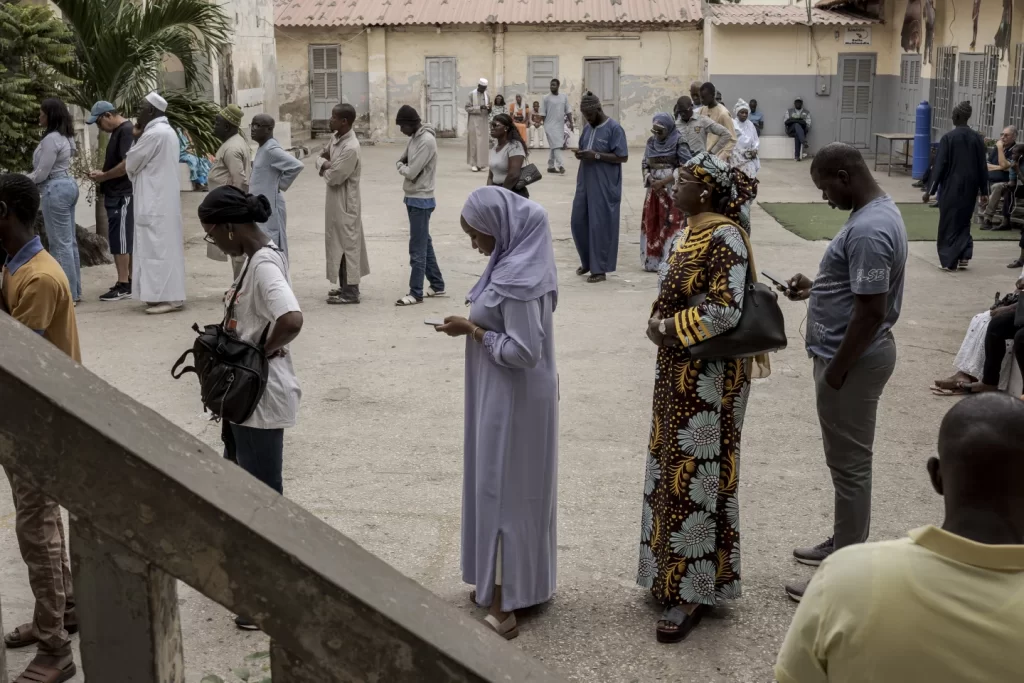
The election, closely watched as a barometer of democratic stability in West Africa, proceeded peacefully despite sporadic campaign violence between rival supporters. International observers, including delegations from the African Union and ECOWAS (Economic Community of West African States), praised both the voting process and Senegal’s democratic maturity.
Sall, the former president, demonstrated the country’s growing democratic tradition by promptly congratulating PASTEF via social media as results emerged. Two other major opposition leaders conceded defeat shortly after polls closed Sunday.
Faye’s rise to power reflects growing youth frustration across Africa, where the world’s youngest population often confronts leaders who have held power for decades. His victory, pending confirmation by the constitutional council next week, positions Senegal for potentially transformative changes in governance and economic policy.
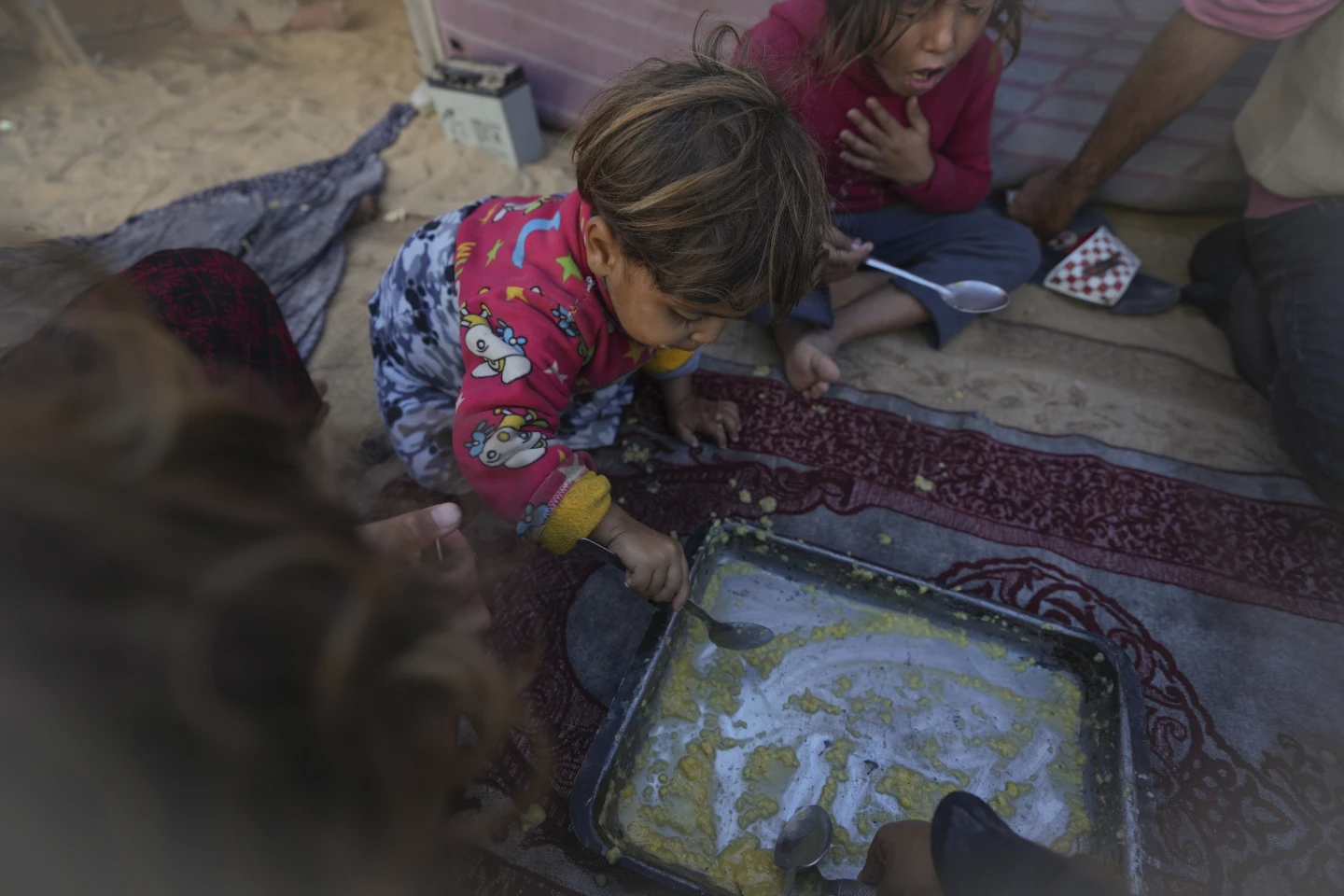
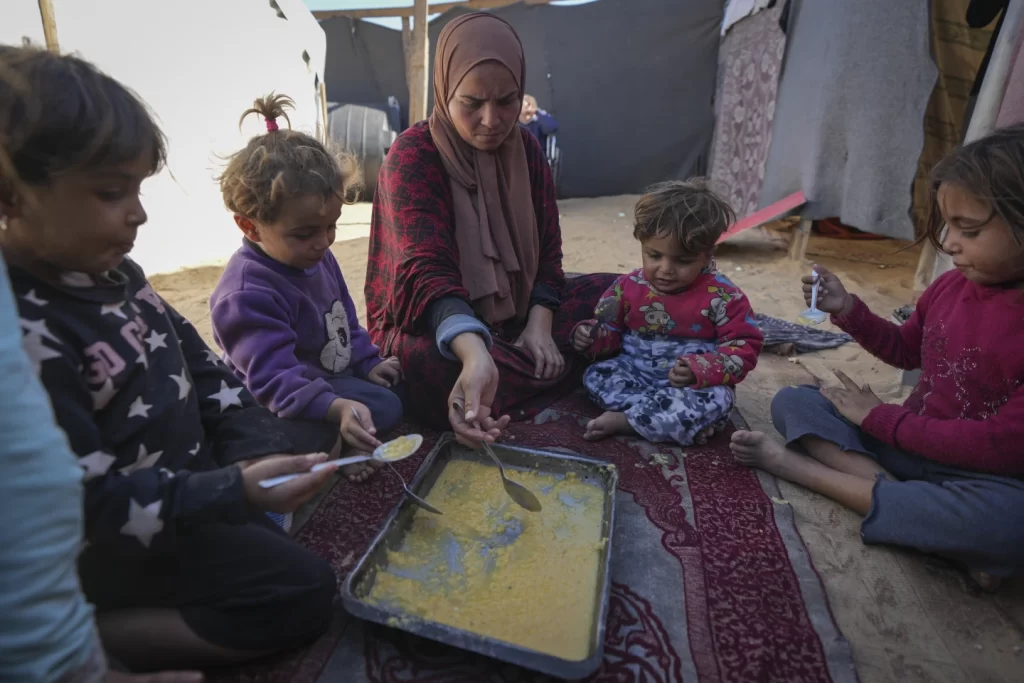
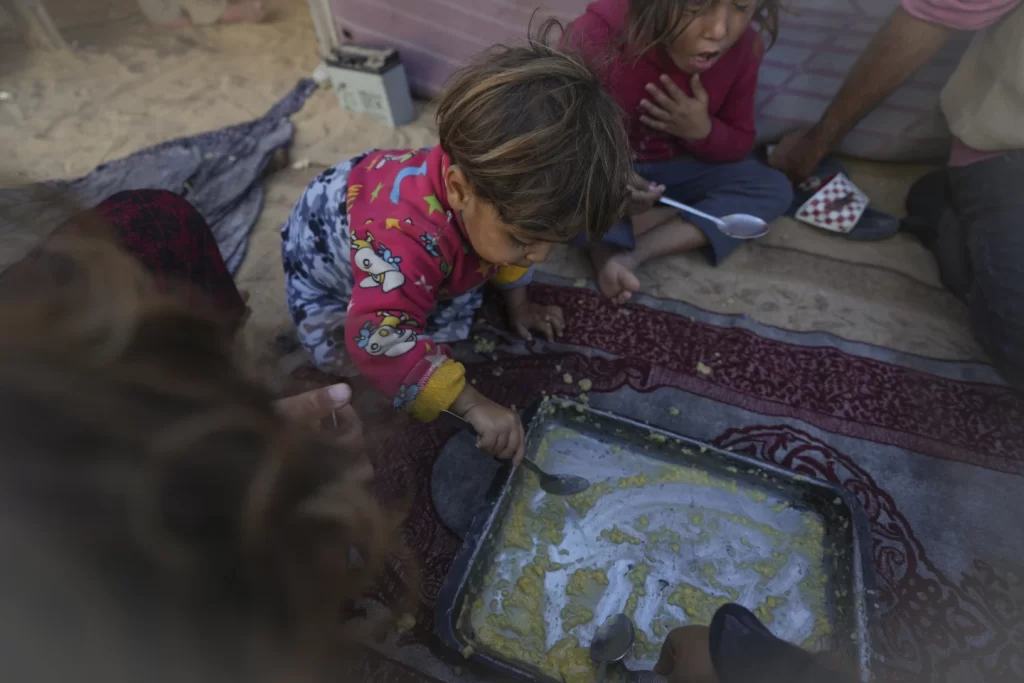
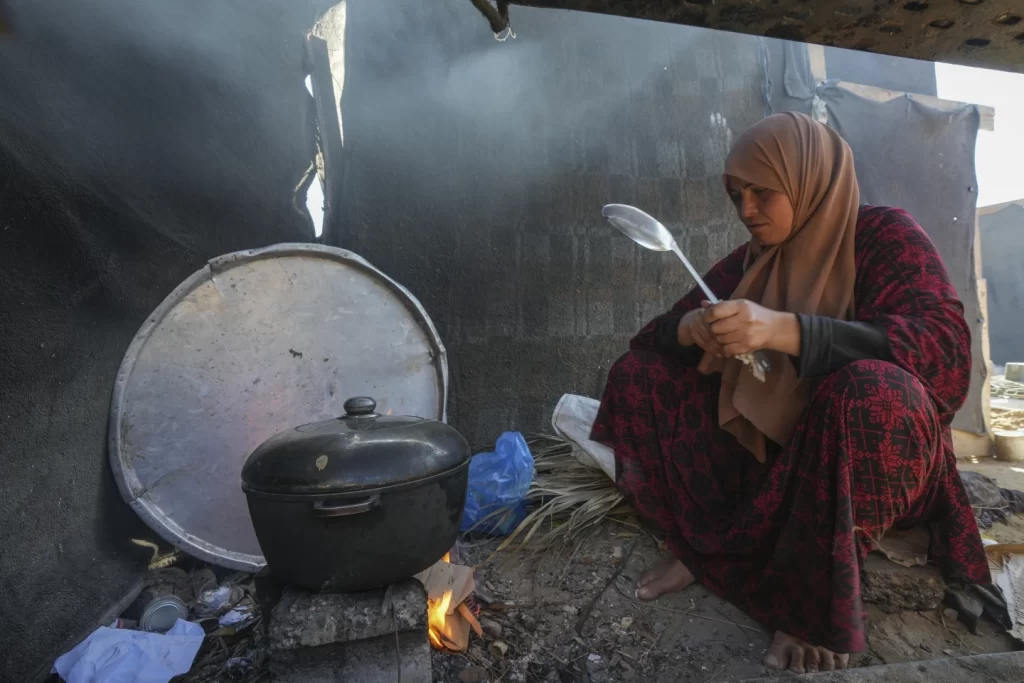
In a makeshift tent in central Gaza, Yasmin Eid stirs a small pot of lentils over a fire of twigs and paper scraps, preparing the day’s only meal for her family of six. The scene, increasingly common across the Palestinian enclave, illustrates the deepening humanitarian crisis as food assistance dwindles and prices soar beyond reach.
“My girls suck on their thumbs because of how hungry they are, and I pat their backs until they sleep,” Eid said, describing her four daughters’ nightly struggle with hunger. Her family has been displaced five times since Israel launched its offensive against Hamas in October.
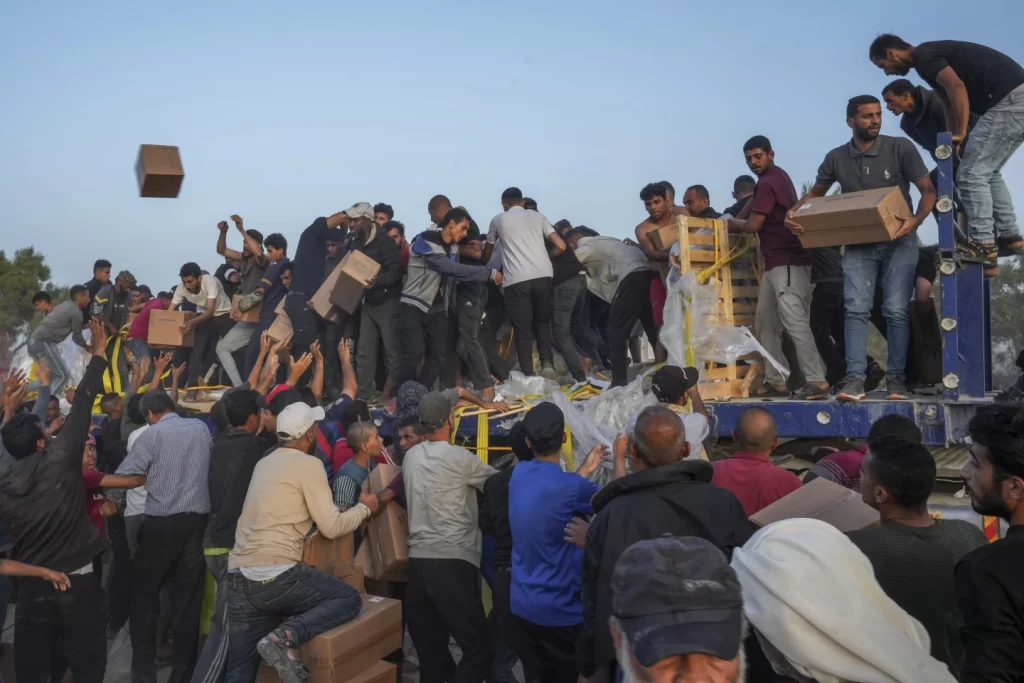
The situation has deteriorated sharply following last weekend’s armed robbery of nearly 100 aid trucks in southern Gaza, prompting the United Nations humanitarian office to warn of a “stark increase” in severe hunger across central and southern regions. Basic commodities, when available, have reached astronomical prices: bread costs $13 per bag, onions $10 per kilogram, and cooking oil $15 for a medium bottle.
Israel maintains it places no limits on humanitarian aid entering Gaza, citing the recent opening of a new crossing point. However, military figures reveal a dramatic decline in aid deliveries, from over 4,200 trucks in September to approximately 1,800 in October. Current projections suggest about 2,400 trucks might enter in November, less than half the pre-war average of 500 daily trucks.
The United Nations reports that less than half the arriving aid reaches its intended recipients due to ongoing combat, Israeli movement restrictions, and deteriorating security conditions following the collapse of local law enforcement. Hamas-run police have largely disappeared after Israeli airstrikes targeted their facilities.
Local charitable organizations struggle to meet overwhelming demand. The Gaza Soup Kitchen, which formerly operated on $500 daily, now requires $1,300 to serve half of the 1,000 families seeking assistance each day. “We can go to the market on one day and buy something for $5, and then go back in the afternoon to find it doubled or tripled in price,” said co-founder Hani Almadhoun.
The crisis intensified as the International Criminal Court issued arrest warrants Thursday for Israeli Prime Minister Benjamin Netanyahu and his former defense minister, accusing them of using “starvation as a method of warfare” — charges Israel strongly denies.
The humanitarian emergency follows the October 7 Hamas attack that killed 1,200 people in Israel and took about 250 hostages. Israel’s retaliatory campaign has killed over 44,000 Palestinians, according to local health authorities, while displacing most of Gaza’s 2.3 million residents.
Despite a U.S. ultimatum in October threatening to curtail military support unless aid flow increased, the Biden administration has declined to take action, citing limited progress. Meanwhile, Israel has severed ties with UNRWA, the main U.N. aid agency, over allegations of Hamas infiltration, which the U.N. denies.
For Palestinians like Hani Eid, Yasmin’s husband, the political maneuvering means little as his family of 21 struggles to survive. “I find it difficult to talk about the suffering we are experiencing. I am ashamed to talk about it,” he said. “What can I tell you? I’m a person who has 21 family members and is unable to provide them with a bag of flour.”