

Mali’s military says it has regained access to the strategic northern base of Anefis after reinforcing government troops and breaking what separatist fighters described as a blockade around the town, marking another escalation in the country’s worsening security crisis.
Military authorities announced Friday that a large convoy carrying troops and supplies successfully reached Anefis overnight after advancing from the city of Gao despite repeated attacks along the route. The operation followed days of intense fighting involving separatist forces, armed militants and Russian military allies supporting Mali’s ruling junta.
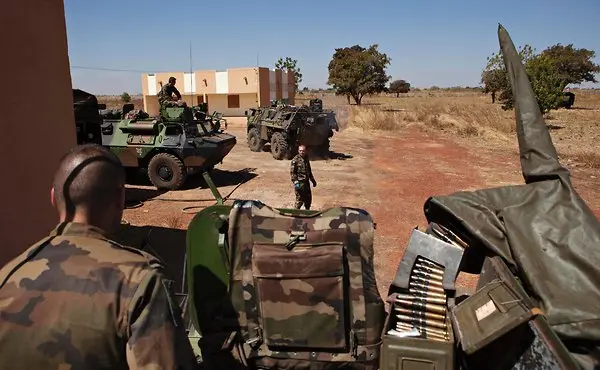
The latest confrontation highlights the increasingly volatile security environment in northern Mali, where separatist groups and militants linked to Al Qaeda continue to challenge government control across key transportation corridors.
What we know so far
The Malian military said air and ground operations enabled reinforcement convoys to reach Anefis after overcoming several ambushes launched by armed groups identified as the Azawad Liberation Front, known as the FLA, the Al Qaeda linked Jama’at Nasr al Islam wal Muslimin, or JNIM, and their allied fighters.
Military officials said 12 combat vehicles used by opposing forces were destroyed and nearly 100 fighters were killed during operations conducted over the past 24 hours. The army did not disclose casualty figures among government troops or its allied forces.
Separatist leaders acknowledged Friday that their fighters had withdrawn from the area following prolonged combat. FLA spokesman Mohamed Elmaouloud Ramadane described the move as a tactical decision intended to allow the group to reorganize after the fighting.
Ramadane said five FLA fighters were killed and about 10 wounded. He also claimed government forces and Russian Africa Corps personnel suffered heavy losses during the operation. Those assertions could not be independently verified.
The military convoy had been attempting to reopen access to Anefis after separatist forces announced they had cut off the strategic base earlier this week by attacking reinforcement columns traveling from Gao.
Images circulating on social media, purportedly showing destroyed military vehicles and a downed helicopter, have not been independently verified.
What authorities are saying
Mali’s armed forces maintained that the situation around Anefis has been stabilized following the arrival of reinforcements.
Military officials credited coordinated air strikes and ground operations for securing the route despite repeated attacks from armed groups operating in northern Mali.
Separatist representatives maintained that their withdrawal was voluntary rather than the result of military defeat and insisted they remain capable of launching additional operations across the region.
Neither side’s battlefield claims has been independently confirmed.
Why this matters
Anefis occupies one of the most strategically important positions in northern Mali.
Located between Gao, which remains under government control, and Kidal, a longtime separatist stronghold, the town serves as a critical military supply corridor. Control of Anefis affects the government’s ability to reinforce northern positions and project military power across the region.
The latest clashes also demonstrate the increasingly complex conflict unfolding in Mali, where government forces are confronting both separatist movements seeking greater autonomy and extremist organizations affiliated with Al Qaeda.
Since military governments took power in Mali, Burkina Faso and Niger, the three countries have strengthened security cooperation with Russia after reducing military partnerships with Western nations. Despite those changes, militant attacks across the Sahel have continued to increase, raising concerns among regional security analysts over the effectiveness of current counterinsurgency strategies.
The renewed offensive follows major coordinated attacks launched earlier this year that significantly expanded separatist influence across parts of northern Mali.
What happens next
Military operations are expected to continue as government forces attempt to secure supply routes connecting Gao with northern bases vulnerable to renewed attacks.
Security analysts say separatist fighters and extremist groups are likely to continue targeting strategic military positions to disrupt government logistics and maintain pressure on junta forces.
Whether the latest operation represents a lasting military breakthrough or only a temporary reopening of the corridor will depend on the army’s ability to maintain control of key transport routes in the coming weeks.
While Mali’s military has presented the operation as a significant battlefield success, the broader conflict remains far from resolved. Northern Mali continues to witness overlapping insurgencies involving separatist groups, extremist organizations and foreign military partners, creating one of the most complicated security environments in Africa.
The battle for Anefis illustrates how logistics and transportation corridors have become as strategically important as major cities. Even when government forces reclaim territory, maintaining supply lines through remote desert regions remains a persistent challenge.
The continued involvement of Russian Africa Corps personnel also reflects the evolving geopolitical landscape across the Sahel, where regional governments increasingly rely on non Western security partnerships while militant organizations adapt their tactics and expand operations across national borders.
AP





