Home Blog Page 559

French Farmers Launch Protests Against South American Trade Deal

French farmers initiated protests Tuesday against a proposed European Union-Mercosur trade agreement that would increase South American agricultural imports, sparking what organizers say will become widespread demonstrations across Europe’s farming community.

The protests in Aurillac, southern France, come amid concerns the deal could be finalized at the upcoming G20 summit in Brazil, despite French Agriculture Minister Annie Genevard calling such an outcome “highly unlikely.” More than 600 French lawmakers reinforced opposition through an open letter in Le Monde, urging European Commission President Ursula von der Leyen to reject the agreement.

“The anger hasn’t gone away. It’s still there, and, in fact, our worries have grown,” said Véronique Le Floc’h, president of Coordination Rurale, France’s second-largest farmers’ union. “If the Mercosur agreement is signed, it will spell the end of our agriculture.”

France’s three major farming unions have announced coordinated actions. The FNSEA, the country’s largest agricultural union, plans nationwide protests after mid-November’s winter sowing season. Coordination Rurale promises “an agricultural revolt” starting November 19 in southwestern France, while the anti-globalization Confédération Paysanne prepares its own demonstrations.

European farmers argue they face stringent EU environmental regulations while competing against South American imports produced under lower environmental and labor standards. Belgian farmers have scheduled protests near EU headquarters in Brussels Wednesday, expanding the movement internationally.

“We don’t want this agreement because it’s harmful. It will bring in products, including substances banned in Europe, at the cost of deforestation. It will unfairly compete with our domestic production,” Genevard told TF1.

The EU and Mercosur bloc — comprising Brazil, Argentina, Paraguay, Uruguay, and Bolivia — reached an initial agreement in 2019, but implementation stalled amid opposition from farmers and some European governments. French President Emmanuel Macron has called the deal “terrible” and “outdated,” opposing any agreement until South American producers meet European environmental and health standards.

apnews.com

South Korean Actor Song Jae-lim Dies at 39

Song Jae-lim, a South Korean actor who gained prominence through his role in the hit fantasy drama “Moon Embracing the Sun,” was found dead Tuesday at his home in Seoul’s Seongdong district. He was 39.

Police discovered a note at Song’s residence after a friend, who had arrived for a scheduled lunch, found the actor unresponsive, according to South Korea’s Yonhap news agency, citing anonymous police sources. Officials reported no signs of foul play, though Seongdong district police declined immediate comment on the cause of death.

Song launched his acting career with the 2009 film “Actresses” before achieving widespread recognition for his portrayal of a royal guard in the 2012 television series “Moon Embracing the Sun,” a fantasy drama chronicling the romance between a medieval Korean king and a female shaman.

His career encompassed both scripted and reality programming, including an appearance on the popular show “We Got Married” in 2014. Most recently, Song had taken a supporting role in this year’s streaming series “Queen Woo,” another period fantasy drama focusing on royal power struggles.

Indian Parties Court Women Voters with Cash Programs Despite Fiscal Strain

Indian political parties are increasingly targeting women voters with direct cash payments ahead of elections, straining state budgets as they compete for a crucial voting bloc amid high inflation and unemployment.

These handout programs, implemented by both Prime Minister Narendra Modi’s BJP and opposition parties, now reach about 134 million women and cost approximately 2 trillion rupees ($23.70 billion) annually, or 0.6% of GDP, according to Axis Bank’s economic research division.

“This is a substantial burden on the exchequer,” said Neelkanth Mishra, chief economist at Axis Bank. “Where is the funding coming from? Some from higher deficits.” States offering these programs show higher budget deficits than five years ago, often reducing capital expenditure to fund populist measures.

The eastern state of Jharkhand, currently holding elections, exemplifies this trend. The opposition-ruled state recently doubled its monthly payment to 2,500 rupees ($30) for five million women, responding to BJP promises of 2,100 rupees. In Maharashtra, India’s wealthiest state, the BJP alliance offers 1,500 rupees to low-income women, while opposition parties pledge to double that amount before next week’s local elections.

“Women or people coming from economically backward sections are seen as a soft target by political parties,” said Congress party spokesperson Udit Raj. BJP spokesperson Shazia Ilmi countered that Modi’s government prioritized women’s welfare through programs like subsidized cooking gas and toilet construction.

The focus on women voters reflects their growing electoral importance, as female turnout has surpassed male participation in the past decade. However, these programs emerge as India faces a 14-month inflation peak and 8.9% unemployment.

While Elara Securities warns of potential national budget implications from state fiscal slippage, economists note positive effects of increasing women’s financial autonomy. “The categories seeing stronger incremental demand may be food, conveyance, durable goods and health,” Mishra said. “For the targeted population, these schemes boost incomes by 5% to 40%.”

The effectiveness of such programs faces a test in upcoming state elections, with results expected November 23. Modi’s BJP has relied on smaller allies to maintain power after losing its parliamentary majority in recent general elections.

Russia Launches First Missile Strike on Kyiv in Months, Testing Defenses

Russia launched its first missile attack on Kyiv since August Wednesday morning, sending residents scrambling for shelter as Ukrainian air defenses intercepted two cruise missiles, two ballistic missiles, and 37 drones across the country.

“Putin is launching a missile attack on Kyiv right now,” Andriy Yermak, head of the president’s office, wrote on Telegram as explosions echoed across the capital. Though no major damage or casualties were reported in Kyiv, falling debris injured a 48-year-old man and ignited a warehouse fire in the surrounding region.

The assault marks an escalation from the near-nightly drone attacks that have disrupted life in the capital for weeks. About 100 residents, including sleeping children on yoga mats and elderly women in fold-out chairs, took shelter in the central Universitet metro station.

“The mornings are totally ruined. I started college in September and every morning has been ruined by the bloody Russians. I cannot sleep, cannot think and I drink energy drinks all the time,” said Mykyta, a teenager huddled with his dog in the metro station.

Ukrainian officials warn the attack could herald renewed strikes on the power grid as winter approaches. Andrii Kovalenko, a senior National Security and Defence Council official, said Russia has accumulated cruise missiles for another “massive” assault, similar to the August 26 attack that killed seven people and deployed over 200 drones and missiles.

Power grid operator Ukrenergo announced restrictions on electricity supply for businesses due to “significantly” lower power imports and generation, though it was unclear if the limitations were directly related to Wednesday’s attack. The restrictions will affect Kyiv, its surrounding region, and the regions of Odesa, Dnipro, and Donetsk, according to DTEK, Ukraine’s largest private power generator.

City mayor Vitali Klitschko reported a drone still flying over central Kyiv Wednesday morning as air raid alerts continued to sound across the city and buzz on residents’ phones.

REUTERS

Explosion at Louisville Food Plant Injures 11, Prompts Hazmat Response

An explosion at a natural food coloring manufacturing facility east of downtown Louisville injured 11 people Tuesday afternoon, triggering a brief shelter-in-place order as authorities responded to what they called a “large scale incident.”

The blast occurred at Givaudan Sense Colours, prompting emergency services to declare a “hazardous materials incident” and establish a one-mile shelter radius. Fire Chief Brian O’Neill said the response addressed an explosion, structural collapse, and hazardous material concerns at the site.

“Once we got the fire knocked down, we immediately started air monitoring for the immediate area,” O’Neill told reporters. “The evacuation was a precautionary measure.” Officials lifted the shelter order approximately an hour after it was issued, though some residents were evacuated due to blown-out windows in their homes.

Firefighters rescued one trapped person and helped others escape the building. O’Neill credited facility workers for their emergency response in getting most people out quickly. The 11 injured were transported to local hospitals, though officials did not release their conditions.

Air quality monitoring continues as structural damage could create new chemical leaks, though O’Neill said testing has shown no concerning chemical levels in the surrounding area. NBC affiliate WAVE captured footage of a large emergency response, with police and fire vehicles lining nearby residential streets.

Givaudan Sense Colours, which manufactures natural food colorings, did not immediately respond to requests for comment.

Former Somali Officials Get 30 Years for American Journalist’s Kidnapping

A federal court sentenced two former Somali officials to 30 years in prison Tuesday for their roles in the nearly three-year kidnapping of American journalist Michael Scott Moore, marking a significant conviction in the fight against Somali piracy.

Abdi Yusuf Hassan, 56, a naturalized U.S. citizen from Minneapolis who served as Interior Minister of Somalia’s Galmudug province, and Mohamed Tahlil Mohamed, 43, a Somali army officer from Mogadishu, were convicted in February following a three-week trial in the Eastern District of New York.

Evidence presented at trial revealed Moore was researching piracy and Somalia’s economy when armed men ambushed his vehicle near Galkayo on January 21, 2012. The attackers beat Moore with weapons before transferring him to various locations, including a hijacked fishing vessel where he witnessed the torture of fellow captives.

Hassan, leveraging his position as Interior Minister, led ransom negotiations with Moore’s mother and used his home as an operational base. Mohamed, utilizing his military background, served as head of security, managing Moore’s movements and maintaining the pirates’ arsenal of machine guns and grenade launchers.

“During my captivity, I was chained at night, surrounded by armed guards, and repeatedly threatened,” Moore told the court. Prosecutors detailed how captors forced him to make ransom videos while providing only a radio for outside contact. His release came in September 2014 following a ransom payment.

The case revealed disturbing details about the pirates’ operations, including the murder of a Vietnamese fishing vessel’s captain and the torture of a Seychellois fisherman who was hung upside down and beaten while Moore was forced to watch. The hostage-takers had initially captured Moore alongside two Seychellois fishermen before moving him to the hijacked vessel F/V Naham III, which held 28 crew members from various Asian nations.

Assistant Attorney General Matthew G. Olsen announced the sentences alongside U.S. Attorney Damian Williams and FBI Executive Assistant Director Robert Wells. The investigation involved collaboration between FBI field offices and the State Department’s Diplomatic Security Service.

Both defendants received one day of supervised release following their prison terms. The convictions represent a rare case of high-ranking officials being held accountable for Somalia’s persistent piracy problems.

Taliban Set to Hold Public Execution in Eastern Afghanistan

Taliban authorities announced Tuesday they will publicly execute a murder convict Wednesday morning at a sports stadium in Gardez, eastern Afghanistan, marking the sixth such execution since the group returned to power in August 2021.

The execution in Paktia province’s capital, announced via social media platform X, cites the Islamic principle of qisas, or retributive justice. Officials invited religious scholars and civilian and military authorities to attend but banned cameras and cell phones from the event, where previous executions have been carried out by gunshot.

The announcement comes amid intensifying international criticism of the Taliban’s implementation of their strict interpretation of Islamic law, or Sharia. The United Nations has condemned public executions as “inconsistent with the fundamental right to life” and “a form of cruel, inhuman, or degrading treatment or punishment.”

Taliban courts have also ordered the flogging of hundreds of men and women in packed stadiums for “immoral crimes” including adultery, homosexuality, and theft. According to Taliban Supreme Court data, nearly 100 Afghans, including women, received public lashings and jail terms ranging from six months to two years in October alone.

Women’s rights have deteriorated significantly under Taliban rule, with leader Hibatullah Akhundzada issuing a series of decrees that U.N. assessments say “systematically” exclude women from public life. The restrictions now encompass bans on education beyond primary school, severe workplace limitations, and strict rules governing public appearance and behavior. Women must fully cover their bodies and faces in public, are forbidden from being heard in public, and face restrictions on interactions with unrelated men.

The Taliban have defended their governance model as properly Islamic while rejecting international pressure to reverse restrictions on women’s freedoms. No country has officially recognized the Taliban government since it resumed control of Afghanistan.

Human rights organizations continue to urge immediate cessation of corporal punishment, arguing it violates both human rights and international law. The Taliban’s justice system, however, shows no signs of moderation as the group consolidates its rule.

Judge Blocks Louisiana Law Mandating Ten Commandments in Classrooms

A federal judge temporarily blocked a new Louisiana law Tuesday that would have required public schools to display the Ten Commandments in every classroom by January 1, ruling the measure “unconstitutional on its face.”

U.S. District Judge John W. deGravelles issued a preliminary injunction in response to a lawsuit filed by parents of Louisiana public school children, who argued the law violates First Amendment protections against government establishment of religion and guarantees of religious liberty.

The legislation, passed by Louisiana’s Republican-dominated Legislature, would have required poster-sized displays measuring at least 28 by 36 centimeters in all K-12 and state-funded university classrooms, accompanied by a four-paragraph statement describing the Ten Commandments’ role in American public education.

The ruling follows a 1980 U.S. Supreme Court precedent that struck down a similar Kentucky law for having “no secular purpose.” Louisiana proponents argue the displays hold historical significance to U.S. law rather than purely religious meaning, while opponents warn they would isolate non-Christian students.

The law represents part of a broader conservative push to incorporate religion into classrooms across the country. Similar initiatives include Florida’s allowance of volunteer chaplains in schools and Oklahoma’s directive to incorporate Bible lessons. Comparable Ten Commandments display laws proposed in Texas, Oklahoma, and Utah have faced legal challenges preventing implementation.

“This marks a win for opponents who argue that it is a violation of the separation of church and state,” said the judge, who noted plaintiffs are likely to prevail in their case. While the law specified schools could use donated displays rather than public funds, critics note tens of thousands of posters would be needed statewide.

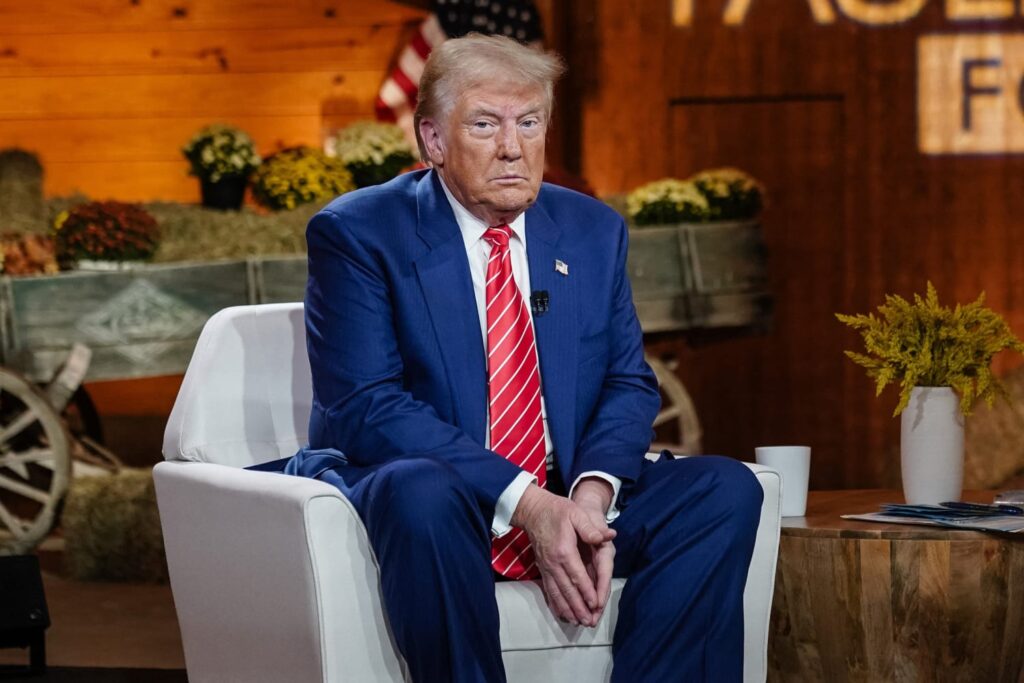
The injunction comes as President-elect Donald Trump and other Republicans have voiced support for such measures, highlighting ongoing tension between religious expression in public schools and constitutional restrictions.

Russian Doctor Sentenced to Prison After Patient’s Mother Reports War Comments

A Moscow court sentenced pediatrician Nadezhda Buyanova to 5½ years in a penal colony Tuesday for allegedly spreading “fakes” about the Russian army, after a patient’s mother publicly denounced the 68-year-old doctor over comments she denies making.

The case, stemming from a video complaint by Anastasia Akinshina about remarks concerning her son’s father who died fighting in Ukraine, represents a growing trend of Russians informing on fellow citizens for perceived political crimes. Rights group OVD-Info has documented 21 such criminal prosecutions since February 2022, with an additional 175 administrative cases resulting from civilian informants.

“I can’t get my head around it,” said Buyanova, her grey hair closely cropped, before the verdict that sparked cries of “Shame!” in the courtroom filled with supporters wearing T-shirts bearing her image. Her lawyer, Oscar Cherdzhiev, called the sentence “monstrously cruel” in comments to news outlet Mediazona.

The investigation began after Akinshina recorded a video claiming Buyanova had called her ex-husband, killed in Ukraine, a “legitimate target.” The footage was shared by Mash, a Telegram channel with over 3 million subscribers known for connections to Russian security services. Buyanova has consistently denied making the statement.

More than 1,000 Russians have faced criminal prosecution for speaking against the war, according to OVD-Info, with over 20,000 detained for protesting. Eva Levenberg, a lawyer for the rights group, told Reuters that 79 people have been fined in administrative cases for “discrediting” the Russian army following civilian denunciations.

Russian doctors have rallied to Buyanova’s defense, writing an open letter calling the denunciation a “disgrace.” A petition supporting her release has gathered more than 6,000 signatures.

Archbishop of Canterbury Resigns Over Historic Abuse Scandal Response

Justin Welby, Archbishop of Canterbury and spiritual leader of the world’s Anglicans, resigned Tuesday over his handling of abuse allegations, becoming the first Anglican archbishop to step down over a sexual abuse scandal.

Welby’s departure follows last week’s damning Makin Report, which found he failed to properly investigate allegations against John Smyth, a British lawyer who subjected more than 100 boys and young men to “brutal and horrific” physical and sexual abuse over four decades at Christian summer camps.

“The last few days have renewed my long felt and profound sense of shame at the historic safeguarding failures of the Church of England,” Welby wrote in his resignation letter. “As I step down I do so in sorrow with all victims and survivors of abuse.”

The report revealed Smyth beat victims with up to 800 cane strokes, requiring them to wear diapers to absorb bleeding, before sometimes draping himself over them and kissing their necks or backs. After moving to Africa in 1984, Smyth continued his abuse until near his death in 2018.

Though Welby, 68, maintained he had “no idea or suspicion” of the allegations before 2013, the report concluded this was unlikely, criticizing his failure to ensure proper investigation when the Church learned of the abuse. Cambridge history professor Richard Rex noted that by 2013, any bishop should have recognized such allegations demanded “the utmost seriousness and care.”

Archbishop of York Stephen Cottrell, the Church’s second-ranking cleric, called the resignation “the right and honourable thing to do.” Prime Minister Keir Starmer’s office said he respected Welby’s decision.

Welby’s decade-long tenure saw him navigate deep divisions over homosexual rights and women clerics between liberal churches in North America and Britain and conservative African congregations. His successor will face challenges including unifying the increasingly fractious worldwide Anglican community and addressing a 20% decline in British church attendance since 2019.

Several prominent bishops have emerged as potential successors. The Bishop of Leicester Martyn Snow, who abstained from voting on gay couple blessings, is considered alongside the Bishop of Norwich Graham Usher, known for supporting gay rights. The Bishop of Chelmsford Guli Francis-Dehqani, an Iranian-born priest, could become the first woman to serve as Archbishop of Canterbury.

Under church rules, a clerical body will submit preferred and alternative candidates to the prime minister, who advises the monarch on the appointment.