Home Blog Page 62

Motorcycle-Mounted Raiders Slaughter 30 in Northwestern Nigeria Village Attacks

0
A man stands in front of a damaged and burnt house following a deadly gunmen attack in Yelwata, Benue State, Nigeria, June 16, 2025. REUTERS/Marvellous Durowaiye

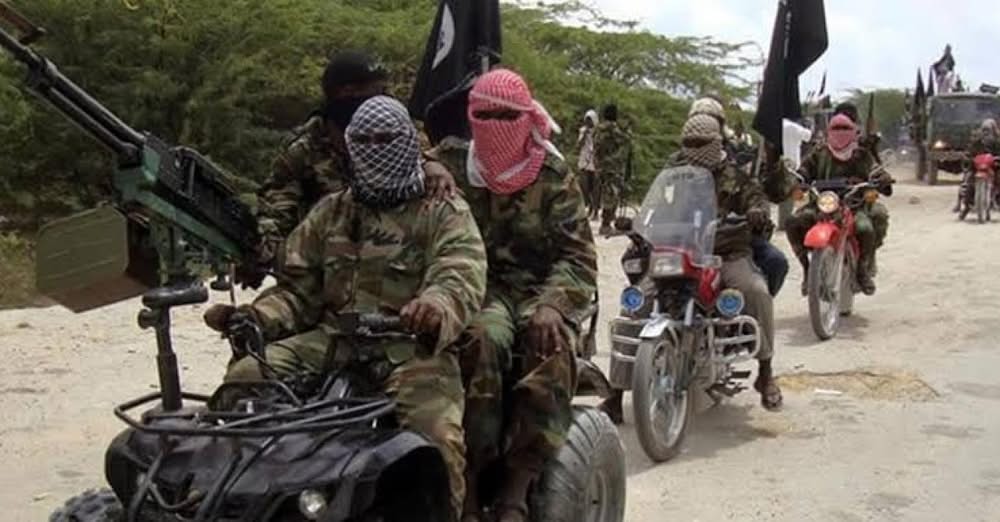
MINNA, Nigeria — Armed raiders mounted on motorcycles massacred at least 30 civilians and incinerated homes and businesses during coordinated predawn assaults on three villages in northwestern Nigeria’s Niger State on Saturday, survivors fleeing the violence told Reuters, marking the latest escalation in the region’s deepening security catastrophe.

A man stands in front of a damaged and burnt house following a deadly gunmen attack in Yelwata, Benue State, Nigeria, June 16, 2025. REUTERS/Marvellous Durowaiye

The attacks targeted communities in Borgu Local Government Area near Nigeria’s border with Benin Republic, where heavily armed groups locally termed “bandits” have unleashed waves of deadly violence, mass abductions for profit, and forced displacement affecting thousands across northern Nigeria’s rural heartland.

Insecurity has emerged as a defining crisis confronting the Nigerian government, with mounting public pressure demanding authorities restore order to regions increasingly characterized by lawlessness and predatory violence against vulnerable farming communities.

Wasiu Abiodun, spokesman for the Niger State police command, confirmed the assault on Tunga-Makeri village, though his initial casualty figures proved substantially lower than accounts provided by multiple witnesses who experienced the violence directly.

“Suspected bandits invaded Tunga-Makeri village … six persons lost their lives, some houses were also set ablaze, and a yet-to-be ascertained number of persons were abducted,” Abiodun stated in an official notification issued Saturday. He acknowledged that assailants subsequently advanced to Konkoso village, though details regarding additional attacks remained incomplete in police communications.

Jeremiah Timothy, a Konkoso resident who escaped to a nearby locality, described how the raid on his community commenced in the early morning hours with sporadic gunfire that rapidly intensified into sustained assault.

“At least 26 people were killed so far in the village after they set the police station ablaze,” Timothy recounted, explaining that attackers entered Konkoso approximately 6:00 a.m. local time while firing weapons indiscriminately at civilians and structures. He reported hearing military aircraft overhead during the attack, suggesting government forces attempted aerial response to the unfolding massacre.

Another witness requesting anonymity for security concerns described a massive assault force exceeding 200 motorcycles sweeping through the region in what appeared to be a carefully coordinated multi-village operation. The scale and organization of the assault force indicates sophisticated planning and substantial manpower unavailable to opportunistic criminal bands, raising questions about the nature and capabilities of groups Nigerian authorities characterize as “bandits.”

Auwal Ibrahim, a Tunga-Makeri resident, provided harrowing testimony about the approximately 3:00 a.m. local time assault on his community that initiated the night’s violence.

“The bandits stormed our town around 3:00 a.m. (local time), riding so many motorcycles while shooting sporadically, beheading six people and killing others. They set shops on fire and forced the whole village to flee,” Ibrahim told Reuters. He emphasized that numerous villagers remain too terrified to return home as armed groups continue operating in proximity to their devastated communities.

Punch Nigeria confirmed that the coordinated assaults unfolded across February 14, with attackers methodically moving between villages while overwhelming minimal security presence and terrorizing civilian populations. The news organization’s investigation corroborated witness accounts of systematic violence including executions, arson targeting both residential and commercial structures, mass abductions, and the destruction of a police outpost.

The initial raid struck Tunga-Makeri on Friday evening, where assailants killed six residents and systematically burned homes before advancing to additional targets. Mohammed Ibrahim, an eyewitness interviewed by Punch, described how raiders encountered negligible resistance from security forces, emboldening their progression to Paso and subsequently to other villages including Pisa.

“They moved to another village called Pisa again to carry out another operation. Seven people have been slaughtered by the bandits in Konkoso,” Mohammed Ibrahim explained, his account documenting the methodical nature of the multi-location assault. “This is how they destroyed the Pissa police outpost. So far, 26 deaths have been recorded in the Konkoso bandit attack.”

The destruction of a police station during the rampage demonstrates both the raiders’ military capabilities and the severe security vacuum afflicting rural northwestern Nigeria. That armed groups can assault and destroy law enforcement facilities with apparent impunity underscores the government’s struggle to maintain basic state authority across vast territories where banditry has metastasized from nuisance criminality into an existential threat to communities.

The Niger State Police Command confirmed the attacks occurred but declined to address questions regarding the police station’s destruction or provide comprehensive casualty assessments. Spokesman Abiodun indicated that a joint security team comprising multiple agencies had been deployed to affected areas to evaluate the situation, secure surviving residents, and attempt rescuing abducted victims.

“On 14/2/2026 at about 6 a.m., a report was received indicating that at about 3 a.m., suspected bandits invaded Tunga-Makeri village via Shafachi district, Borgu LGA. During the attack, six people lost their lives,” Abiodun stated in the official police account. “Some houses were also set ablaze, and a yet-to-be ascertained number of persons were abducted, as the terrorists were also reported to have moved to Konkoso village. Other details are still sketchy.”

The discrepancy between official police casualty figures acknowledging six deaths in Tunga-Makeri and witness accounts documenting at least 30 deaths across multiple villages reflects persistent challenges in documenting violence in remote rural areas where government presence remains minimal and communication infrastructure proves unreliable. Survivors often flee to distant locations before authorities arrive, while fear of retaliation discourages cooperation with investigators.

The Borgu attacks exemplify a broader pattern of escalating violence across northwestern Nigeria, where armed groups have evolved from cattle rustling and sporadic raids into sophisticated criminal enterprises controlling territory, taxing populations, and challenging state authority. These groups maintain extensive motorcycle fleets enabling rapid mobility across difficult terrain, sophisticated weapons rivaling security forces’ capabilities, and intelligence networks identifying vulnerable targets.

The terminology “bandits” employed by Nigerian authorities and media understates the scale and nature of the security threat. Many groups operate with quasi-military organization, maintaining camps in forested areas, coordinating multi-village operations, and demonstrating tactical sophistication suggesting training and leadership beyond typical criminal organizations. Some maintain links to extremist groups operating in Nigeria’s northeast, though the extent of ideological alignment versus pragmatic cooperation remains debated among security analysts.

Mass abductions for ransom have become a primary revenue source for these organizations, with families forced to pay substantial sums for relatives’ release. Schools, religious institutions, and entire villages have been targeted, with captives sometimes held for months while negotiations proceed. The profitability of kidnapping fuels the groups’ expansion and emboldens increasingly brazen operations.

Rural communities bear disproportionate suffering from this violence, lacking resources to hire private security or relocate to safer areas. Farmers frequently abandon fields due to abduction risks, creating food security challenges as agricultural production declines in affected regions. Markets and commercial activity collapse when traders fear traveling roads controlled by armed groups, further impoverishing already marginalized populations.

The Nigerian government has deployed military forces to combat banditry, conducting air strikes against suspected camps and ground operations to reclaim territory. However, the vast ungoverned spaces across northwestern Nigeria, porous borders facilitating weapons flows, and limited intelligence on group movements complicate military responses. Corruption within security forces occasionally enables bandits to evade operations through advance warning or safe passage arrangements.

State governments have attempted various approaches including amnesty programs offering financial incentives for bandits to surrender weapons, communication blackouts disrupting group coordination, and livestock market restrictions reducing rustling profitability. These initiatives have produced mixed results, with some former bandits returning to violence after exhausting amnesty payments, while communication restrictions also hamper legitimate economic activity and emergency response.

Civil society organizations and traditional leaders advocate addressing root causes including poverty, unemployment, ethnic tensions over land and resources, and youth marginalization that makes banditry attractive to young men lacking alternative economic opportunities. However, structural reforms require long-term investment and political will often overshadowed by demands for immediate security responses.

The international community has provided limited assistance to Nigeria’s security challenges, with Western partners offering training and intelligence support while expressing concerns about human rights violations by security forces. Regional cooperation through the Economic Community of West African States remains constrained by member states’ own security challenges and limited resources for coordinated action.

For residents of Tunga-Makeri, Konkoso, and surrounding villages now displaced by Saturday’s violence, immediate survival takes precedence over long-term solutions. Sheltering with relatives in safer locations or in makeshift camps, they face uncertain futures without homes, livelihoods, or confidence that authorities can protect them from future attacks.

Security operations continue in affected communities as forces work to secure areas and locate abducted residents, though the raiders’ head start and familiarity with local terrain typically enable escape before military reinforcements arrive. Previous patterns suggest abducted victims will face weeks or months of captivity while families scramble to assemble ransom payments, with those unable to pay sometimes killed or held indefinitely.

The psychological trauma inflicted on survivors extends beyond immediate physical danger. Witnessing neighbors beheaded, homes destroyed, and communities scattered creates lasting mental health impacts compounded by limited access to counseling or support services in rural areas. Children who experience such violence carry these traumas into adulthood, potentially perpetuating cycles of violence and instability.

As Nigeria approaches elections and political attention focuses on national issues, the grinding violence in rural northwestern communities risks becoming normalized—a tragic backdrop to national life rather than an urgent crisis demanding comprehensive response. For the at least 30 people killed Saturday in obscure villages far from power centers, their deaths may warrant brief headlines before fading from public consciousness.

Yet each massacre represents individual lives destroyed, families shattered, and communities traumatized. The accumulation of such violence across hundreds of incidents annually threatens Nigeria’s social fabric and territorial integrity, raising fundamental questions about state capacity and the social contract between government and citizens. Without dramatic improvements in security, governance, and economic opportunity, northwestern Nigeria faces a future where violence becomes the defining reality for millions trapped in zones of lawlessness.

Reuters/Punchng

UN Documents Massacre of Over 6,000 Civilians Over 3 Days in Sudan’s el-Fasher Offensive

0
Members of army walks near a destroyed military vehicle and bombed buildings, as Sudan's army retakes ground and some displaced residents return to ravaged capital in the state of Khartoum Sudan March 26, 2025. REUTERS/El Tayeb Siddig

United Nations human rights investigators have documented the deaths of more than 6,000 civilians during a catastrophic three-day assault on the Sudanese city of el-Fasher in late October, describing systematic atrocities by paramilitary forces that constitute war crimes and potentially crimes against humanity.

The Rapid Support Forces unleashed what the UN Human Rights Office characterized as “a wave of intense violence … shocking in its scale and brutality” when they overran el-Fasher, the Sudanese military’s final remaining bastion in the Darfur region. The offensive culminated on October 26 following an 18-month siege that had already devastated the city’s population and infrastructure.

“The wanton violations that were perpetrated by the RSF and allied Arab militia in the final offensive on el-Fasher underscore that persistent impunity fuels continued cycles of violence,” declared UN High Commissioner for Human Rights Volker Türk in a statement accompanying the 29-page report released Friday.

The investigation documented at least 4,400 people killed within el-Fasher between October 25 and October 27, with an additional 1,600 civilians slaughtered as they attempted to flee the paramilitary rampage. Researchers compiled the death toll through interviews with 140 victims and witnesses, cross-referenced against independent satellite imagery analysis and contemporaneous video documentation.

However, investigators cautioned that the actual casualty figures from the week-long offensive remain “undoubtedly significantly higher” than confirmed deaths. The documented toll excludes at least 460 people killed when RSF fighters stormed the Saudi Maternity Hospital on October 28, according to the World Health Organization, and approximately 300 residents killed during shelling and drone strikes on the Abu Shouk displacement camp northwest of the city between October 23 and October 24.

The report catalogues a horrifying litany of atrocities including mass killings, summary executions, widespread sexual violence, abductions for ransom, torture, arbitrary detention, and enforced disappearances. Investigators found that attacks frequently targeted specific ethnic groups, with African communities from the Zaghawa and other non-Arab tribes bearing disproportionate violence.

In one particularly gruesome incident on October 26, RSF combatants opened fire with heavy weapons on approximately 1,000 civilians sheltering in the Rashid dormitory at el-Fasher University, killing an estimated 500 people. A witness described seeing bodies hurled into the air by the explosions, comparing the scene to “a horror movie,” according to testimony recorded in the UN report.

That same day, approximately 600 people—including 50 children—were executed while seeking refuge in other university facilities. The deliberate targeting of educational institutions where civilians had gathered for protection demonstrates what investigators characterize as systematic rather than incidental violence against non-combatants.

Sexual violence emerged as a pervasive weapon of war during the el-Fasher offensive. RSF fighters and their allied Janjaweed Arab militias systematically raped women and girls, particularly targeting those from Zaghawa communities accused of maintaining links to or supporting the Sudanese military. Both individual rapes and gang rapes occurred with apparent frequency, according to survivor testimonies.

Türk, who traveled to Sudan last month to assess the humanitarian catastrophe firsthand, emphasized that sexual violence survivors provided accounts demonstrating the practice “was systematically used as a weapon of war” rather than isolated criminal acts by individual combatants.

The paramilitaries established at least 10 detention facilities throughout el-Fasher following their capture of the city, including converting the Children’s Hospital into an interrogation and holding center. Thousands of residents have been confined in these facilities, with several thousand more remaining missing and unaccounted for weeks after the offensive concluded.

Many civilians attempting to escape el-Fasher were abducted by RSF forces and released only after families paid substantial ransoms—a pattern that transforms wartime violence into profitable criminal enterprise while terrorizing populations already traumatized by combat and displacement.

The RSF did not respond to requests for comment on the UN findings. General Mohammed Hamdan Dagalo, the paramilitary force’s commander, has previously acknowledged that his fighters committed abuses but has consistently disputed the scale and systematic nature of reported atrocities.

The el-Fasher massacre mirrors RSF operational patterns documented in previous offensives, including attacks on the Zamzam displacement camp 15 kilometers south of el-Fasher and the 2023 assaults on West Darfur’s Geneina city and the nearby town of Ardamata. This consistency across multiple locations and timeframes supports UN assessments that atrocities represent deliberate strategy rather than breakdowns in discipline.

Türk concluded that “reasonable grounds” exist to determine that RSF forces and allied Arab militias committed war crimes during the el-Fasher offensive, with their actions potentially rising to the threshold of crimes against humanity—the gravest category of international criminal law short of genocide. He demanded accountability for those responsible, including commanders who directed operations or failed to prevent subordinate atrocities.

The violence in el-Fasher unfolds within Sudan’s broader civil war, which erupted in April 2023 when power-sharing tensions between the RSF and the Sudanese Armed Forces exploded into open combat in Khartoum and rapidly spread nationwide. The conflict has created what aid organizations describe as the world’s largest humanitarian emergency, with multiple regions experiencing famine conditions and millions displaced both internally and as refugees in neighboring countries.

The International Criminal Court has announced investigations into alleged war crimes and crimes against humanity committed during the conflict. The Biden administration determined in its final months that RSF forces were committing genocide in Darfur—a designation carrying significant legal and diplomatic implications, though the Trump administration has not yet confirmed whether it will maintain that assessment.

Diplomatic efforts to negotiate a ceasefire resumed Wednesday in Cairo, where Egyptian and United Nations officials convened talks aimed at securing a nationwide humanitarian truce as the war approaches its three-year anniversary. Egyptian Foreign Minister Badr Abdelatty emphasized that Cairo would not accept Sudan’s collapse, institutional disintegration, or territorial partition, describing such outcomes as “red lines” for Egyptian national security.

“There is absolutely no room for recognizing parallel entities or any militias. Under no circumstances can we equate Sudanese state institutions, including the Sudanese army, with any other militias,” Abdelatty declared during a joint press conference with Ramtane Lamamra, the UN Secretary-General’s personal envoy for Sudan. The comments signal Egypt’s fundamental rejection of treating the RSF as a legitimate political or military actor equivalent to Sudan’s internationally recognized government.

Lamamra offered cautious optimism that diplomacy could still produce resolution despite repeated previous failures. “The meeting demonstrated that diplomacy remains a viable path toward peace,” he said, though he acknowledged the enormous challenges facing negotiators.

Members of army walks near a destroyed military vehicle and bombed buildings, as Sudan’s army retakes ground and some displaced residents return to ravaged capital in the state of Khartoum Sudan March 26, 2025. REUTERS/El Tayeb Siddig

Massad Boulos, senior U.S. adviser for Arab and African Affairs, participated in the Cairo discussions and announced that more than 1.3 metric tons of humanitarian supplies reached el-Fasher on Wednesday—the first aid delivery since the RSF siege began 18 months ago. The shipment resulted from American-led negotiations, demonstrating limited progress on humanitarian access despite continued military confrontation.

“As we press the warring parties for a nationwide humanitarian truce, we will continue to support mechanisms to facilitate the unhindered delivery of assistance to areas suffering from famine, malnutrition, and conflict-driven displacement,” Boulos wrote on social media platform X.

Egyptian President Abdel Fattah el-Sissi met with Boulos to coordinate bilateral efforts toward stabilizing Sudan, expressing appreciation for President Donald Trump’s engagement on the crisis. The Egyptian leader emphasized the interconnection between Egyptian and Sudanese national security, suggesting Cairo’s willingness to take direct action if Sudan’s territorial integrity faces existential threats.

The United States, Saudi Arabia, Egypt, and the United Arab Emirates—collectively known as the Quad—have proposed a humanitarian truce that both warring parties reportedly accepted in principle. However, fighting has continued unabated despite these commitments, raising questions about the belligerents’ sincerity and the international community’s leverage to enforce agreements.

Violence continued this week with fresh atrocities reported across multiple fronts. The UN Office for the Coordination of Humanitarian Affairs confirmed that at least 19 civilians died during ground operations Monday in Jarjira, North Darfur. A Darfur rebel group aligned with the Sudanese military claimed responsibility for a joint operation that reportedly liberated the area and forced RSF withdrawal southward.

An additional 10 civilians died and nine sustained injuries Monday when a drone strike hit Sinja, the capital of Sennar province, according to OCHA and the Sudan Doctors Network. The medical advocacy organization attributed the attack to RSF forces and condemned the deliberate targeting of civilians as “a full-fledged war crime.”

“The network holds the RSF fully responsible and demands an end to the targeting of civilians and the protection of civilian infrastructure,” the group stated, reflecting mounting frustration among humanitarian workers witnessing persistent attacks on non-combatants and medical facilities.

Recent violence has displaced more than 8,000 additional people from North Darfur villages, with some seeking safer locations within the province while others fled across the border into Chad, according to International Organization for Migration estimates. The fresh displacement adds to millions already uprooted by nearly three years of conflict.

The el-Fasher massacre and continuing atrocities present the international community with profound moral and practical challenges. Despite extensive documentation of war crimes, crimes against humanity, and potential genocide, mechanisms for accountability remain largely theoretical. The Sudanese government has not accepted ICC jurisdiction, limiting the court’s ability to prosecute suspects, while UN Security Council action faces potential vetoes from members prioritizing geopolitical considerations over humanitarian imperatives.

Sudan’s descent into what some analysts characterize as state collapse creates additional complications for peacemaking efforts. With military forces controlling some regions, RSF paramilitaries dominating others, and various armed groups holding additional territory, no clear path exists toward restoring unified governance even if a ceasefire could be achieved.

The humanitarian catastrophe continues expanding as international attention and resources remain limited. Famine conditions persist in multiple regions, with aid organizations warning that hundreds of thousands face starvation without immediate intervention. Yet insecurity, bureaucratic obstacles, and deliberate obstruction by warring parties prevent adequate humanitarian access to populations in desperate need.

For the survivors of el-Fasher’s October massacre and Sudan’s broader civil war, the international community’s response will determine whether perpetrators face justice or impunity prevails. The UN report’s documentation provides essential evidence for future accountability mechanisms, but translating evidence into prosecutions requires political will that has proven elusive in previous African conflicts.

As diplomatic efforts resume in Cairo and humanitarian workers struggle to reach suffering populations, the fundamental question remains whether the international system possesses the capacity and determination to halt mass atrocities in real time rather than merely documenting them for historical record. For the 6,000 civilians who died in el-Fasher and countless others killed throughout Sudan’s war, the answer has already arrived too late.

AP

State Department Orders Nonprofit Libraries to Halt Passport Services, Drawing Bipartisan Backlash

0

The U.S. Department of State has directed certain nonprofit public libraries across the country to stop processing passport applications, ending a service that many communities have relied upon for years and prompting bipartisan concern in Congress.

In notices issued beginning in late fall, the department informed not-for-profit libraries that they were no longer authorized to participate in the federal Passport Acceptance Facility program. The change took effect Friday, effectively barring affected libraries from continuing to collect passport applications and related fees.

According to The Associated Press, a department spokesperson explained that the action stems from federal statutes and regulations that “clearly prohibit non-governmental organizations” from collecting and retaining fees tied to passport applications. Libraries operated directly by municipal or county governments remain eligible to provide the service.

The spokesperson did not elaborate on why enforcement of the rule intensified now or specify the number of institutions affected. In a written statement, the department said its passport services network includes more than 7,500 acceptance facilities nationwide and that the libraries deemed ineligible account for less than 1% of that total.

Yet the scope of potential impact appears broader when viewed through the lens of library governance. The American Library Association estimates that roughly 1,400 mostly nonprofit public libraries could be affected, depending on how many currently offer passport processing. That figure represents about 15% of public libraries nationwide.

At the Otis Library in Norwich, Connecticut, passport services had been available for 18 years before staff received a cease-and-desist letter in November. Cathleen Special, the library’s executive director, said residents continue to call seeking appointments.

“Our community was so used to us offering this,” Special said, describing daily inquiries even after the service ended.

Members of Congress from Connecticut, Pennsylvania, New York, New Jersey and Maryland — spanning both parties — have urged the department to reconsider. In a letter sent this month to Secretary of State Marco Rubio, lawmakers requested that the existing arrangement remain in place until Congress can enact a permanent legislative fix.

They argued that libraries often serve as among the most accessible passport acceptance facilities, particularly for working families and residents of rural communities. With demand for passports climbing amid enforcement of Real ID requirements, they warned that limiting local options could force applicants to travel farther, take unpaid leave or delay obtaining travel documents.

The letter also referenced broader anxieties driving passport demand, including heightened immigration enforcement and concerns about documentation requirements for civic participation. Lawmakers contended that the change would be especially disruptive in states where many public libraries are organized as nonprofit entities rather than municipal departments.

Library governance varies widely by state. In Pennsylvania, approximately 85% of public libraries operate as nonprofit organizations rather than as arms of local government. The share is 56% in Maine, 54% in Rhode Island, 47% in New York and 46% in Connecticut, the American Library Association said.

In Pennsylvania, Democratic Rep. Madeleine Dean and Republican Rep. John Joyce have introduced bipartisan legislation to amend the Passport Act of 1920 to explicitly allow 501(c)(3) nonprofit public libraries to continue serving as passport acceptance facilities. A companion proposal has been introduced in the Senate.

Dean, who learned of the policy shift after a library in her district that had processed passports for two decades received notice, described the department’s interpretation of the statute as misguided. Joyce highlighted the implications in his largely rural district in south-central Pennsylvania, where the Marysville-Rye Library had been one of only two passport facilities serving Perry County’s 556 square miles. With the library’s removal from the program, the county courthouse now stands as the sole remaining option.

The State Department has emphasized that 99% of the U.S. population lives within 20 miles of a designated passport processing location, such as a post office or county clerk’s office. The agency indicated it would seek alternative eligible partners in areas where service gaps emerge.

But librarians say proximity alone does not capture the practical role libraries play. Special noted that the Norwich post office frequently directed residents to the library, particularly when appointments were needed outside regular business hours or when families required a more accommodating setting. Library staff, she added, often assisted applicants with language barriers and helped parents manage paperwork while children remained occupied.

“And now the burden falls on them to do all of it,” she said of the post office. “I don’t know how they’re keeping up, to be honest, because it was such a popular service with us.”

The dispute underscores the increasingly complex intersection of federal regulation and local service delivery. While the department’s legal rationale rests on longstanding statutory language, critics question why the rule is being enforced now after years of nonprofit library participation without apparent controversy.

The financial dimension is also significant. Passport processing fees have provided a modest but meaningful revenue stream for some libraries, helping to offset staffing and programming costs. In smaller communities, the loss of that income could compound budgetary pressures already facing public institutions.

At the same time, the department’s assertion that the ineligible libraries represent less than 1% of its national network suggests a limited administrative footprint. Whether that percentage translates into negligible real-world impact depends heavily on geography. In densely populated areas with multiple nearby facilities, alternatives may be plentiful. In rural counties, however, a single library’s withdrawal can materially reduce access.

The episode also highlights Congress’s role in clarifying statutory ambiguities. The Passport Act of 1920 predates modern library governance structures and the expansion of community-based passport services. Lawmakers now face a choice between reaffirming the department’s interpretation or modernizing the law to reflect contemporary practice.

As travel demand continues to rebound and identification requirements tighten, access to passport services has become more than a convenience; for some Americans, it is intertwined with employment, education and personal security considerations. Whether the current standoff yields legislative reform or a recalibrated enforcement approach may determine how communities navigate those pressures in the months ahead.

For now, nonprofit libraries that once helped residents navigate the passport process are left waiting — and so are many of the patrons who depended on them.

The Associated Press original

Department of Homeland Security Partial Shutdown Begins as Immigration Reform Stalemate Stalls Funding

0

The DHS partial shutdown took effect Saturday after Congress failed to approve funding for the U.S. Department of Homeland Security before the fiscal deadline, deepening a political standoff over immigration enforcement reforms and leaving thousands of federal workers temporarily unpaid.

Lawmakers departed Washington without passing a fiscal 2026 spending measure for the department, making DHS the last major federal agency without full-year funding through Sept. 30. The lapse follows weeks of negotiations centered on Democratic demands for tighter controls on immigration enforcement activities carried out by Immigration and Customs Enforcement and Customs and Border Protection.

Despite the funding gap, the vast majority of DHS operations are expected to continue uninterrupted. More than 90% of the agency’s roughly 272,000 employees are classified as essential and will remain on duty, though many will not receive pay until Congress acts.

President Donald Trump said Friday that discussions were ongoing and indicated he would take part in negotiations. He criticized Democratic proposals aimed at imposing new limits on immigration agents, arguing the measures could undermine law enforcement operations.

Democrats counter that the reforms are necessary to align federal immigration agents with standards commonly applied to local police departments, particularly in the use of force and the execution of searches and arrests. The dispute intensified following fatal shootings involving immigration agents during protests in Minneapolis earlier this year, events that triggered widespread public scrutiny and calls for accountability.

Even without new appropriations, key immigration enforcement programs are positioned to continue operating. ICE and CBP benefit from a substantial funding stream authorized under the “One Big Beautiful Bill” enacted in July, which directed more than $135 billion toward immigration and border enforcement efforts. That funding provides a cushion for ongoing deportation initiatives and border security programs during the shutdown.

Democrats have limited leverage to curtail ICE and CBP activities through the funding lapse alone. According to DHS contingency plans, more than 93% of ICE and CBP personnel will continue working. About 44,500 DHS employees are funded through separate appropriations and will continue receiving paychecks, while other law enforcement personnel are expected to receive compensation under alternative funding authorities.

The shutdown also affects agencies within DHS such as the U.S. Secret Service, U.S. Coast Guard and the Federal Emergency Management Agency. However, core missions tied to national security and public safety are classified as essential and will proceed.

FEMA’s Disaster Relief Fund remains funded at levels sufficient to sustain operations for weeks, with billions of dollars available to respond to natural disasters and emergencies. Experts estimate that, absent a major catastrophe, the agency’s available funds could last approximately two months.

Rachel Snyderman, managing director of the economic policy program at the Bipartisan Policy Center, said the immediate public impact is likely to be minimal because so many DHS roles are deemed critical. However, she cautioned that prolonged uncertainty could erode morale and lead to staffing challenges if the impasse stretches on.

Air travel disruptions are not expected to mirror previous shutdowns that snarled flights due to air traffic controller shortages, since the Federal Aviation Administration falls under the Department of Transportation and has already secured funding for the fiscal year.

However, Transportation Security Administration officers — who operate under DHS — will continue working without pay. If the shutdown extends for weeks, travelers could encounter longer security lines as absenteeism potentially rises among unpaid personnel.

The funding standoff hinges on Democratic proposals to reform immigration enforcement practices. The measures include requiring agents to remove face coverings during operations, mandating body cameras, tightening warrant requirements for searches and arrests, and strengthening use-of-force policies. Republicans have largely resisted those provisions, framing them as restrictions that could hamper federal agents and compromise border security.

Senate Majority Leader John Thune said discussions had yielded some progress on specific proposals, including reconsideration of mask policies for agents conducting operations. But the broader package remains stalled, and only one Senate Democrat supported the funding bill before lawmakers recessed.

Democratic Sen. Jeanne Shaheen of New Hampshire said the absence of firm guardrails leaves communities concerned about potential enforcement actions expanding to additional cities. She argued that reforms are necessary to restore public confidence in DHS operations.

The DHS lapse arrives months after a 43-day government shutdown — the longest in U.S. history — disrupted federal operations late last year. President Donald Trump also presided over a 35-day shutdown during his first term, underscoring how budget disputes have repeatedly unsettled Washington.

Unlike broader shutdowns that shutter national parks or halt IRS services, this episode is confined to DHS. All other federal departments have secured funding through the remainder of the fiscal year.

With Congress in recess and negotiations ongoing between the White House and Senate Democrats, the timeline for resolving the DHS partial shutdown remains unclear. Lawmakers are scheduled to return later this month but could be called back sooner if a compromise emerges.

For now, border enforcement, counterterrorism operations, disaster response functions and protective services will continue largely as normal. The most immediate consequence will be financial strain on employees required to work without pay — a familiar hallmark of government shutdowns.

As political leaders trade blame over immigration enforcement and public safety, the durability of DHS operations may hinge less on logistics and more on whether Congress can bridge its widening divide over the future of federal immigration policy.

Reuters/CNN

 U.S. Military Prepares for Potential Weeks-Long Iran Operations as Tensions Escalate-Reuters

0

The U.S. military is preparing for the possibility of extended operations against Iran that could last for weeks if President Donald Trump authorizes military action, according to two U.S. officials familiar with the planning, raising the prospect of a conflict more prolonged and complex than prior confrontations between the two countries.

The officials, who spoke on condition of anonymity due to the sensitivity of operational deliberations, described contingency planning that goes beyond a limited strike scenario. Their account was first disclosed by Reuters.

The preparations unfold as diplomatic efforts remain fragile. U.S. and Iranian representatives met in Oman last week in an attempt to revive negotiations over Tehran’s nuclear program. Those talks followed a significant buildup of American military assets in the Middle East ordered by Trump, a move that intensified speculation about potential military action.

On Friday, Pentagon officials confirmed that an additional aircraft carrier strike group would be deployed to the region, reinforcing an already substantial U.S. presence that includes thousands of troops, fighter aircraft and guided-missile destroyers. The carrier is expected to join the USS Abraham Lincoln, which has been operating in the area. Reuters also reported that the USS Gerald R. Ford is being repositioned toward the Middle East.

Speaking to troops at a base in North Carolina on Friday, Trump acknowledged difficulties in reaching an agreement with Tehran.

“It’s been difficult to make a deal,” Trump said. “Sometimes you have to have fear. That’s the only thing that really will get the situation taken care of.”

White House spokesperson Anna Kelly said the president has not foreclosed any options. “President Trump has all options on the table with regard to Iran,” Kelly said, adding that he considers a range of viewpoints before determining what best protects U.S. national security interests.

The Pentagon declined to elaborate on operational specifics.

The planning described by U.S. officials suggests a more expansive approach than previous U.S. military actions targeting Iran.

Last year, the United States launched a strike known as “Midnight Hammer,” a one-time operation involving stealth bombers flying from the U.S. mainland to attack Iranian nuclear facilities. Iran responded with a limited retaliatory strike against a U.S. installation in Qatar, and the exchange did not escalate into broader hostilities.

This time, however, officials indicated that contingency plans contemplate a sustained campaign. One official said that in such a scenario, U.S. forces could strike not only nuclear infrastructure but also Iranian state and security facilities. The official declined to identify specific targets.

The scope of planning reflects concern that any conflict would not remain narrowly confined. Iran maintains a sizable arsenal of ballistic and cruise missiles, as well as proxy forces across the region capable of targeting U.S. assets and allies.

Iran’s Islamic Revolutionary Guard Corps has warned that attacks on Iranian territory would trigger retaliation against U.S. military installations throughout the Middle East.

The United States operates bases in Jordan, Kuwait, Saudi Arabia, Qatar, Bahrain, the United Arab Emirates and Turkey, positioning American forces within range of Iranian missiles and drone capabilities.

The military preparations unfold amid delicate diplomatic maneuvering. Iranian officials have signaled willingness to discuss limits on their nuclear program in exchange for sanctions relief but have ruled out linking negotiations to their ballistic missile program.

Trump has repeatedly threatened military action over Iran’s nuclear activities, missile development and internal crackdowns. On Thursday, he cautioned that absent a diplomatic breakthrough, the alternative would be “very traumatic.”

Israeli Prime Minister Benjamin Netanyahu met with Trump in Washington earlier this week, emphasizing that any agreement with Tehran must address security concerns vital to Israel. Netanyahu has long urged Washington to adopt a harder line toward Iran’s missile program and its support for militant groups.

The renewed U.S. force posture appears designed both to deter Iran and to strengthen Washington’s leverage in negotiations. Whether it will produce diplomatic movement or provoke further escalation remains uncertain.

A sustained U.S. military campaign against Iran would represent a significant departure from prior limited engagements and would carry heightened risks of regional war.

Iran’s missile inventory and regional proxy networks differentiate it from adversaries targeted in previous U.S. operations. A prolonged exchange could involve strikes not only between U.S. and Iranian forces but also indirect confrontations involving allied militias in Iraq, Syria, Lebanon and Yemen.

Military analysts note that extended operations could strain U.S. logistics and require defensive deployments to protect American installations across the Gulf. The presence of multiple aircraft carriers enhances offensive capabilities but also presents high-value targets in a missile-rich environment.

There is also the economic dimension. Escalation could disrupt shipping lanes in the Strait of Hormuz, through which a significant portion of global oil supplies transit, potentially triggering energy market volatility.

At the same time, Trump’s strategy appears calibrated to maximize pressure without necessarily crossing into open conflict. By signaling readiness for weeks-long operations, Washington may be seeking to reinforce deterrence and compel concessions at the negotiating table.

Whether Iran interprets the buildup as leverage for diplomacy or as preparation for imminent attack could determine the trajectory of the crisis.

For now, U.S. officials say no final decision has been made. But with additional naval power en route and contingency plans in place, the window for a diplomatic resolution may narrow as military preparations accelerate.

Nigerian-Born U.S. Marine Declared Dead After Falling Overboard From USS Iwo Jima During Caribbean Operation

0

The United States Marine Corps has confirmed the death of Lance Cpl. Chukwuemeka E. Oforah, a 21-year-old infantry rifleman who disappeared after falling from the amphibious assault ship USS Iwo Jima while conducting operations in the Caribbean Sea, marking the first American military fatality connected to Operation Southern Spear.

Oforah, a Nigerian-born Marine from Florida, went missing on February 7, 2026, triggering an intensive three-day search and rescue effort involving substantial naval and air assets. Military officials declared him deceased on Tuesday following the exhaustive but unsuccessful recovery operation that concluded February 10.

The Marine Corps announced the tragedy Thursday, revealing that five U.S. Navy vessels, one rigid-hull inflatable boat, and ten aircraft from the Navy, Marine Corps, and Air Force participated in the 72-hour search spanning Caribbean waters. Despite the extensive resources deployed and favorable search conditions, rescue teams failed to locate the young serviceman.

“We are all grieving alongside the Oforah family,” Col. Tom Trimble, commanding officer of the 22nd Marine Expeditionary Unit (Special Operations Capable), said in a statement. “The loss of Lance Cpl. Oforah is deeply felt across the entire Navy-Marine Corps team. He will be profoundly missed, and his dedicated service will not be forgotten.”

Military authorities have launched an investigation into the circumstances surrounding how Oforah fell overboard, though officials have not disclosed details about the incident. The Marine Corps statement provided no information regarding whether the fall occurred during routine shipboard activities, training exercises, or operational tasks, leaving critical questions unanswered about the safety protocols in place at the time.

Oforah enlisted in the Marine Corps in October 2023, beginning his military service during a period of renewed focus on Western Hemisphere security operations. He completed recruit training at Marine Corps Recruit Depot, Parris Island in February 2024, then advanced through the School of Infantry at Camp Lejeune, North Carolina, where he earned his designation as an infantry rifleman—one of the Corps’ most fundamental combat roles.

Following his infantry training, Oforah received assignment to 3rd Battalion, 6th Marine Regiment, a storied infantry unit based at Camp Lejeune with extensive combat deployments throughout its history. At the time of his death, he was serving with Battalion Landing Team 3/6, 22nd Marine Expeditionary Unit aboard the USS Iwo Jima.

USS Iwo Jima

The USS Iwo Jima occupies a central position in Operation Southern Spear, President Donald Trump’s military initiative targeting drug trafficking networks and what the administration characterizes as malign actors throughout the Caribbean basin and Pacific Ocean approaches. The operation has conducted 38 lethal strikes against suspected drug transport vessels since its September launch, representing a dramatic escalation in U.S. military engagement with transnational criminal organizations.

The amphibious assault ship gained particular prominence in January when it served as the initial detention facility for Venezuelan President Nicolás Maduro and his wife following their capture during a controversial U.S. military raid. The couple was transported by helicopter to the Iwo Jima immediately after their apprehension before subsequently being transferred to the United States to face criminal charges.

Operation Southern Spear represents a significant shift in American military doctrine, applying combat capabilities traditionally reserved for conventional warfare against non-state criminal networks. The operation’s aggressive rules of engagement—authorizing lethal force against drug trafficking vessels—have drawn both praise from law enforcement advocates and criticism from human rights organizations concerned about due process and proportional response.

Oforah’s death as the first U.S. military casualty associated with Operation Southern Spear adds a somber dimension to the mission’s record. While the operation has been promoted by the Trump administration as a major success in disrupting drug flows and projecting American power in the Western Hemisphere, the loss of a young Marine highlights the inherent risks accompanying military deployments regardless of their stated objectives.

The circumstances of non-combat deaths aboard naval vessels frequently raise questions about safety procedures, training adequacy, and operational tempo. Modern warships operate as complex, dangerous environments where personnel work around heavy machinery, aircraft, weapons systems, and the constant hazards presented by ocean conditions. Falls overboard, while relatively rare, represent a persistent risk that naval services work continuously to mitigate through training, safety equipment, and watchstanding procedures.

The Marine Corps maintains rigorous investigation protocols for all service member deaths, particularly those occurring in operational contexts. Investigators will likely examine whether Oforah was wearing required safety equipment, what activities he was engaged in when he fell, whether lighting and weather conditions contributed to the incident, and whether watch personnel followed proper procedures for detecting and responding to man-overboard situations.

The extensive search operation’s failure to recover Oforah despite deploying significant resources reflects the Caribbean Sea’s challenging search and rescue environment. Ocean currents, water temperature, visibility conditions, and the time elapsed between the fall and search initiation all affect recovery prospects. Even with modern sensor technology and coordinated air and sea assets, locating an individual in open ocean remains extraordinarily difficult.

For Oforah’s family, the loss carries particular poignancy given his immigrant background and achievement of military service. Nigerian immigrants to the United States have demonstrated high rates of educational attainment and professional success, with many families viewing military service as both an expression of patriotism and a pathway to citizenship and opportunity. Oforah’s choice to serve in the Marine Corps infantry—among the military’s most demanding career fields—reflected significant dedication and courage.

Lance Cpl. Chukwuemeka E. Oforah

The 22nd Marine Expeditionary Unit, Oforah’s parent command, specializes in rapid-response operations and maintains constant readiness for crisis response throughout its area of responsibility. The unit routinely deploys aboard amphibious vessels like the Iwo Jima, training for scenarios ranging from humanitarian assistance to combat operations. For the young Marines comprising these units, deployments involve long separations from family, demanding training schedules, and exposure to various hazards.

Military officials have not indicated whether Oforah’s remains might eventually be recovered or whether the family will receive support for memorial services without physical recovery. The Marine Corps maintains robust casualty assistance programs designed to support families through the complex practical and emotional challenges following a service member’s death, regardless of circumstances.

The incident underscores broader questions about the human costs of expanded military operations in the Caribbean region. While Operation Southern Spear has avoided the combat casualties that might accompany conventional military campaigns, the inherent dangers of naval operations persist regardless of whether forces engage in combat. Young service members like Oforah face risks from training accidents, equipment failures, weather conditions, and the constant hazards of shipboard life.

As military investigators work to determine exactly what happened aboard the Iwo Jima on February 7, Oforah’s family, fellow Marines, and the broader military community confront the reality that every deployment—combat or otherwise—carries potential for tragedy. The 21-year-old’s brief military career, spanning just over two years from enlistment to his death, represents both the promise of military service and its ultimate costs.

The Marine Corps has not announced plans for memorial services or indicated whether Oforah will receive any posthumous recognition. His name will likely be added to memorials honoring Marines who died in service to the nation, ensuring his sacrifice receives lasting acknowledgment even as the circumstances of his death remain under investigation.

Foxnews/Punchng/ABC7

Don Lemon Pleads Not Guilty in Minnesota Church Protest Case as Supporters Rally Outside Federal Court

0

Former CNN anchor Don Lemon entered a not guilty plea Friday to federal civil rights violations connected to a January church demonstration in Minnesota, maintaining he attended as a working journalist documenting civil unrest rather than as an active participant in the disruption.

The high-profile case has ignited fierce debate over press freedoms, prosecutorial discretion, and the boundaries between journalistic observation and protest participation. Lemon now operates as an independent journalist following his departure from CNN, producing content for his livestream program that focuses on political and social justice issues.

Approximately two dozen demonstrators gathered outside the federal courthouse during Lemon’s arraignment, directing their ire at Attorney General Pam Bondi with rhythmic chants demanding her removal from office. The crowd simultaneously voiced support for press protections, creating a raucous backdrop to the legal proceedings unfolding inside.

“For more than 30 years, I’ve been a journalist, and the power and protection of the First Amendment has been the underpinning of my work,” Lemon declared outside the courthouse following his appearance before a federal magistrate. “The First Amendment, the freedom of the press, are the bedrock of our democracy.”

The charges against Lemon and eight co-defendants stem from a January 18 incident at Cities Church, a Southern Baptist congregation in St. Paul. Demonstrators interrupted worship services by chanting “ICE out” and “Justice for Renee Good,” referencing a 37-year-old mother of three fatally shot by an Immigration and Customs Enforcement officer in Minneapolis last month during the Trump administration’s intensified immigration enforcement operations.

Federal prosecutors invoked the 1994 Freedom of Access to Clinic Entrances Act to charge the nine individuals. The statute prohibits interference with or intimidation of any person through force, threatened force, or physical obstruction while they exercise religious freedom rights at houses of worship. Those convicted face maximum penalties of one year imprisonment and fines reaching $10,000.

The law’s application to this case represents an unusual expansion of legislation originally designed to protect abortion clinic access from blockades and harassment. Legal scholars note the statute’s language extends beyond reproductive health facilities to encompass all religious worship locations, though prosecutions for church disruptions remain comparatively rare.

During Friday’s hearing, Lemon’s attorney Abbe David Lowell requested the return of his client’s mobile phone, which law enforcement officials confiscated during Lemon’s arrest in Los Angeles. Prosecutors revealed the device remains in Department of Homeland Security custody, with the search warrant authorizing its examination still under court seal. The phone cannot be returned until forensic analysis concludes, government lawyers told the court.

The seizure and ongoing search of a journalist’s phone raises significant constitutional questions about press freedom and government overreach. Press advocacy organizations have historically challenged such actions as potential violations of reporter privilege and threats to source confidentiality, though courts have sometimes permitted such searches when journalists face criminal charges.

Four additional defendants entered not guilty pleas Friday, including Nekima Levy Armstrong, a prominent civil rights attorney and local activist who became an unwitting subject of digital manipulation by the White House. Armstrong appeared in a doctored photograph distributed through official White House social media channels that falsely depicted her crying during her arrest—an image that never actually occurred.

The fabricated image forms part of a broader pattern of artificially altered photographs circulating since federal officers fatally shot Renee Good and Alex Pretti in Minneapolis. The deployment of AI-generated misinformation by official government accounts represents an unprecedented development in American political communications, raising alarm among digital rights advocates and misinformation researchers.

Two more defendants connected to the Cities Church incident face arraignment next week, including Georgia Fort, another independent journalist whose presence at the demonstration similarly raises questions about distinguishing journalistic coverage from protest participation. The government’s decision to prosecute two individuals claiming journalistic status has generated particular controversy.

Lemon has consistently maintained his journalistic independence from the protest organizers. “I have spent my entire career covering the news. I will not stop now. In fact, there is no more important time than right now, this very moment for a free and independent media that shines a light on the truth and holds those in power accountable,” he told journalists following his initial arrest.

The church disruption provoked sharp condemnation from conservative religious and political figures. White House press secretary Karoline Leavitt issued a warning via social media: “President Trump will not tolerate the intimidation and harassment of Christians in their sacred places of worship.” The administration’s response reflects its cultivation of evangelical Christian support and positioning as a defender of religious liberty.

Interestingly, even clergy members who oppose the administration’s immigration enforcement approach expressed discomfort with the protest tactics. The disruption of worship services—regardless of the demonstrators’ motivations—violated widely shared norms about the sanctity of religious spaces and the appropriateness of political action during sacred observances.

Lemon’s legal team includes Joe Thompson, one of several former prosecutors who recently resigned from the Minnesota U.S. Attorney’s Office citing disagreements with the Trump administration’s immigration enforcement priorities and the Justice Department’s handling of the Good and Pretti shooting investigations. Thompson previously directed the office’s sprawling investigation into major public program fraud cases before departing last month.

The fraud cases Thompson supervised disproportionately affected Minnesota’s substantial Somali community, with most defendants coming from that population. The Trump administration has repeatedly cited these prosecutions as justification for heightened immigration enforcement in Minnesota, though critics argue the connection conflates criminal fraud with immigration status in misleading ways.

Thompson’s transition from federal prosecutor to defense attorney representing a defendant charged by his former office creates an unusual dynamic. His insider knowledge of Justice Department operations and prosecutorial strategies could prove valuable to Lemon’s defense, though it also highlights the significant turnover and internal dissent within federal law enforcement agencies over current administration policies.

The case raises fundamental questions about how courts should differentiate between journalists documenting civil disobedience and activists participating in it. Traditional distinctions relied on factors like press credentials, employment by established news organizations, and physical positioning relative to protesters. However, the proliferation of independent journalism, citizen reporting, and livestream documentation has blurred these once-clear boundaries.

Lemon’s transition from mainstream media employee to independent content creator places him in an increasingly common category that challenges conventional frameworks. While major news organizations provide institutional credibility and legal resources to shield their journalists, independent reporters often operate without such protections, making them potentially more vulnerable to prosecution when covering controversial events.

The prosecution’s decision to charge Lemon and Fort—both claiming journalistic roles—sends a chilling signal to reporters covering protest movements and civil unrest. Press freedom organizations worry that aggressive prosecution of journalists at demonstrations could deter coverage of dissent and government accountability, particularly among independent reporters lacking corporate legal departments.

First Amendment scholars will watch this case closely as courts balance competing constitutional values: religious freedom to worship without disruption versus press freedom to document events of public concern. The outcome could establish important precedents for how authorities treat journalists present at protests that cross legal boundaries.

Beyond its immediate legal significance, the case reflects broader tensions surrounding immigration enforcement, religious liberty, press freedom, and political dissent in contemporary America. The convergence of these issues in a single prosecution illustrates how deeply polarized the nation has become over fundamental questions of rights, responsibilities, and the proper exercise of governmental power.

As the case proceeds toward trial, both legal arguments and public opinion will shape its trajectory. Whether Lemon ultimately prevails may depend less on the specific facts of January 18 than on how courts and jurors perceive the essential nature of journalism in an era when anyone with a smartphone can claim to be documenting history.

Ugandans Allegedly Recruited to Fight for Russia in Ukraine as Investigations Expose Covert Network

0

(AP) — A video circulating online last month shows a group of men in military fatigues standing in a snow-covered forest, singing a Ugandan song. Off camera, a voice speaking Russian derides them as “disposable.”

The footage has intensified scrutiny over allegations that Ugandan citizens — including military veterans — have been recruited and sent to fight alongside Russian forces in Ukraine, sometimes under false pretenses.

Media investigations, including one published Monday by AFP, have highlighted what they describe as a covert recruitment pipeline funneling Ugandans into the conflict. The revelations follow similar reporting that stirred debate in Kenya and South Africa over African nationals joining the war.

Uganda has long maintained close diplomatic and military ties with Russia during the nearly four decades of President Yoweri Museveni’s leadership. Kampala has acquired Russian military equipment and abstained from United Nations votes condemning Moscow’s invasion of Ukraine.

In March 2023, Museveni’s son, Muhoozi Kainerugaba, then a senior military commander and now Uganda’s army chief, publicly voiced support for Moscow on social media, writing that Uganda would defend Russia if it were threatened by “imperialists.”

Uganda is widely regarded as having one of East Africa’s most capable militaries. Its troops have formed a substantial part of international peacekeeping forces in Somalia, and many veterans have gone on to work with private security firms in Afghanistan and Iraq.

An official with the Special Returnees Association, a Ugandan veterans’ group, told AFP that recruiters had recently approached some of its estimated 20,000 members with overseas job offers. The official, who spoke on condition of anonymity due to security concerns, indicated that the recruits were initially promised employment in Israel but were instead routed to Russia.

He said he was aware of “more than ten” individuals who traveled to Russia under such arrangements, including three who later died. The official described warnings issued to veterans about the risks, saying they feared the men would be killed and buried in harsh winter conditions.

Ugandan intelligence sources quoted by AFP said that in August nine men were stopped at Entebbe International Airport while preparing to board a flight to Russia. The men were reportedly part of a larger group — estimated at more than 100 Ugandans with prior military experience — who had been leaving the country in stages.

One intelligence source indicated that a Russian national arrested in connection with the case was later released and that the inquiry has since stalled. Another security official suggested some recruits have since begun departing via neighboring Kenya.

Ugandan authorities have not publicly detailed the scope of the investigation, nor have they announced prosecutions tied to the alleged network.

The authenticity and precise location of the widely shared forest video have not been independently verified. In the clip, a Russian voice comments that the men will “sing differently” once sent to the front lines.

Ugandan broadcaster NTV recently aired an interview with the widow of Edson Kamwesigye, who was killed in Ukraine last month. Images of his body and identification documents circulated on social media shortly after his death.

Uganda’s state minister for foreign affairs, Okello Oryem, told NTV that the government could not intervene directly in the repatriation of bodies from the conflict zone.

In another development, a Ugandan man identified as Richard Akantoran appeared in a video published by Ukraine’s military, saying he had been rescued after fleeing a Russian unit. He described being promised employment in Russia as a supermarket worker or security guard.

Once in Russia, he alleged, he and others were compelled to sign military contracts under threat.

“A soldier pointed a gun at us and said, ‘You sign these papers,’” Akantoran said in the recording.

In February 2024, Uganda’s government shared a message on X from Russia’s ambassador describing “unlimited opportunities for young people in Russia.” The post drew renewed attention after the AFP investigation.

Akantoran used the Ukrainian video to caution others. “To my fellow Africans… do not fall into the trap,” he said. “They promise you well-paid jobs in Russia… it’s a lie.”

The allegations underscore the expanding global footprint of the war in Ukraine, now entering its third year. While foreign fighters have joined both sides since the conflict escalated, recruitment efforts targeting economically vulnerable populations in Africa raise additional ethical and geopolitical questions.

African governments face a delicate balance. Many, including Uganda, maintain historical ties with Russia dating back to Cold War-era alliances. Moscow has cultivated influence through arms sales, security partnerships and diplomatic outreach. At the same time, Western nations have pressed African states to distance themselves from Russia over the invasion.

If substantiated, the recruitment of Ugandan veterans through deceptive contracts could strain Kampala’s diplomatic positioning. It may also prompt closer scrutiny of private recruiters operating across borders, particularly where employment offers mask military enlistment.

The episode further highlights the economic pressures that can make overseas job promises appealing. High youth unemployment and underemployment among veterans create fertile ground for recruiters offering stable pay abroad.

Analysts note that while foreign recruitment is not new in global conflicts, the use of intermediaries and misleading employment contracts complicates accountability. Determining whether recruits joined voluntarily or under coercion could shape potential legal consequences.

For families of those killed, however, the geopolitical ramifications offer little solace. As investigations continue, questions remain over how many Ugandans may have been drawn into the war — and whether oversight mechanisms can prevent further departures.

Ugandan officials have not announced new policy measures, and Russia has not publicly addressed the allegations in detail.

 4 Killed in Epic E1000 Plane Crash Near Steamboat Springs, Colorado, Authorities Confirm

0

(AP) — Four people were killed early Friday when a small turboprop aircraft went down in rugged terrain on a mountain overlooking this northwestern Colorado resort community, authorities said.

The single-engine Epic E1000, configured to seat up to six passengers, crashed around 12:20 a.m. with four people aboard, the Federal Aviation Administration said in a statement. All four occupants were pronounced dead at the scene, according to Routt County Coroner Mitch Locke.

The aircraft came to rest on a remote section of Emerald Mountain, a prominent peak crisscrossed by hiking and biking trails just across the Yampa River from downtown Steamboat Springs. Routt County Sheriff Doug Scherar described the crash site as difficult to access, noting the mountainous terrain and limited nighttime visibility at the time of the accident.

Preliminary information indicates the plane struck mountainous terrain under circumstances that remain unclear, the National Transportation Safety Board said. Investigators from both the NTSB and the FAA have launched a joint inquiry to determine what led to the crash.

The airplane is registered to ALS Aviation LLC of Franklin, Tennessee. Tennessee business filings do not publicly identify a company contact.

Emergency crews were dispatched shortly after the crash was detected, but reaching the wreckage required navigating steep and rugged ground. Authorities have not disclosed how the crash was initially reported, though aircraft tracking data and emergency locator transmitters often aid search efforts in such incidents.

Emerald Mountain rises above Steamboat Springs and is a popular year-round recreation area. In winter months, snow and freezing temperatures can further complicate rescue and recovery operations. Officials did not immediately indicate whether weather conditions played a role in the accident.

The FAA confirmed the aircraft departed with four people aboard but did not release the flight’s origin or intended destination. That information is expected to emerge as investigators examine flight plans, radar data and onboard instrumentation.

The NTSB, which leads civil aviation accident investigations in the United States, will analyze wreckage patterns, engine components and flight data to determine the probable cause. Investigators typically examine weather conditions, pilot qualifications, aircraft maintenance history and communications with air traffic control.

A preliminary report is usually released within weeks, though a final determination of cause can take a year or more.

The Epic E1000 is a high-performance, single-engine turboprop manufactured in Bend, Oregon. Known for its speed and advanced avionics, the aircraft is often used for personal and business travel. While generally regarded as technologically advanced, like all aircraft it remains subject to the risks associated with mountainous flying, especially during nighttime operations.

Colorado’s mountainous terrain presents unique challenges for pilots, particularly in winter when icing, strong downdrafts and rapidly shifting winds are common. Even experienced aviators must account for high-elevation performance limits and limited emergency landing options.

Nighttime operations in remote terrain add another layer of complexity. Reduced visibility can obscure ridgelines and terrain features, and visual illusions are more likely when flying over dark, sparsely lit areas. If mechanical issues arise, pilots may have little margin for maneuvering in confined mountain valleys.

While authorities have not cited weather or mechanical failure as factors, aviation safety experts note that controlled flight into terrain — when a functioning aircraft inadvertently flies into the ground — remains a leading cause of fatal small-plane accidents in mountainous regions.

The coming investigation will determine whether terrain awareness systems were active and functioning, and whether any distress calls were transmitted before the crash.

Steamboat Springs, best known for its ski slopes and outdoor recreation, has experienced occasional aviation incidents due to its alpine setting and fluctuating weather conditions. The crash site’s proximity to residential neighborhoods and recreational trails has heightened local attention, though officials emphasized there was no danger to people on the ground.

Authorities have not yet released the identities of the victims pending family notification.

As investigators continue to document the wreckage and collect evidence, officials urged the public to avoid the area to allow recovery operations to proceed safely.

The FAA and NTSB said updates will be provided as more information becomes available.

Trump Says Change in Power in Iran Would Be ‘Best Outcome’ as U.S. Sends Second Carrier to Middle East

0

(AP) — President Donald Trump said Friday that a shift in Iran’s governing structure “would be the best thing that could happen,” delivering one of his most direct endorsements yet of political change in Tehran as his administration weighs possible military action.

Trump made the remarks following a visit with U.S. troops at Fort Bragg in North Carolina and after confirming that a second U.S. aircraft carrier strike group will head to the Middle East.

“It seems like that would be the best thing that could happen,” Trump told reporters when pressed on whether he favors ending Iran’s Islamic clerical leadership. “For 47 years, they’ve been talking and talking and talking.”

The president’s comments came hours after he disclosed that the USS Gerald R. Ford, the Navy’s newest and largest aircraft carrier, is departing from the Caribbean Sea for the Middle East. The Ford will join the USS Abraham Lincoln and its guided-missile destroyers, which have operated in the region for more than two weeks.

“In case we don’t make a deal, we’ll need it,” Trump said of the additional carrier group. “It’ll be leaving very soon.”

The reinforced naval presence marks a sharp escalation at a moment when diplomacy appears stalled but not entirely abandoned. Indirect discussions between U.S. and Iranian representatives took place in Oman last week, though no formal breakthrough emerged. Trump said Friday he believes negotiations “will be successful,” but cautioned that failure would mean “a bad day for Iran, very bad.”

Tehran, for its part, has maintained that its nuclear program serves peaceful objectives. Prior to the brief but intense conflict last June — a 12-day confrontation that included U.S. strikes on Iranian nuclear sites — Iran had enriched uranium to 60% purity, just below weapons-grade levels.

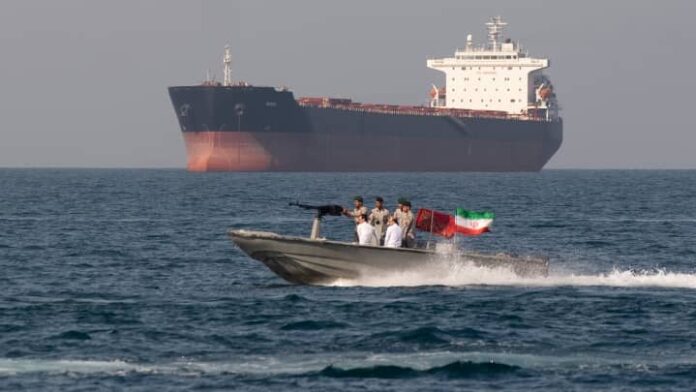
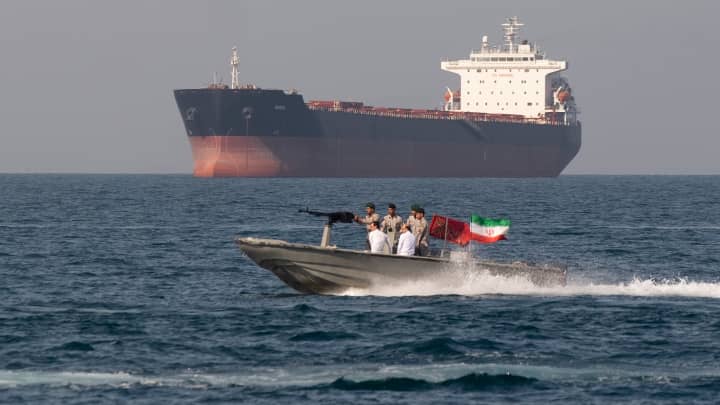
The current deployment follows an incident last week in which U.S. forces downed an Iranian drone that approached the Lincoln. On the same day, Iranian authorities attempted to halt a U.S.-flagged vessel transiting the Strait of Hormuz, underscoring the volatility of the waterway that handles a significant portion of global energy shipments.

Regional governments have expressed concern that a direct clash could ignite a broader Middle East war, particularly as the region continues to absorb the aftershocks of the Israel-Hamas conflict in Gaza.

Trump conferred Wednesday with Israeli Prime Minister Benjamin Netanyahu, emphasizing that diplomatic channels with Iran should remain open. Netanyahu has urged Washington to demand that Iran curb its ballistic missile development and sever support for militant organizations such as Hamas and Hezbollah in any agreement.

The decision to redirect the Ford from the Western Hemisphere represents a rapid shift in force posture. The carrier had been part of a substantial U.S. presence in the Caribbean last fall during operations tied to Venezuela. Its redeployment to the Middle East appears to contrast with the administration’s stated defense priority of strengthening security partnerships closer to home.

U.S. Southern Command said operations in Latin America would continue uninterrupted. Col. Emanuel Ortiz, a spokesperson, said American forces remain “fully ready to project power, defend themselves, and protect U.S. interests in the region” even as global positioning evolves.

The Ford strike group will add more than 5,000 sailors and aviators to the region. While it does not introduce entirely new capabilities beyond those already present with the Lincoln, two carriers effectively double available aircraft and munitions, expanding military options available to planners.

Given its current position, naval analysts expect the Ford could take weeks to reach waters near Iran.

The extended deployment has also drawn scrutiny within the Navy. The Ford first sailed in late June 2025, meaning its crew is approaching eight months at sea. Standard carrier deployments typically last six to seven months.

Adm. Daryl Caudle, the Navy’s top officer, said last month that prolonged extensions can be “highly disruptive” for service members and their families. Extended missions affect maintenance schedules and increase wear on critical systems.

A recent example underscores those risks. The aircraft carrier USS Dwight D. Eisenhower completed a nine-month deployment to the Middle East in 2024, much of it focused on Iran-backed Houthi militants in Yemen. The ship entered scheduled maintenance in early 2025 but exceeded its anticipated completion timeline and remains in overhaul.

Caudle recently told The Associated Press he favors deploying smaller, newer vessels when feasible rather than relying repeatedly on large carriers.

The military developments unfold as Iran confronts internal unrest. Families of those killed during last month’s nationwide protests have begun holding traditional 40-day mourning ceremonies, gatherings that historically have served as flashpoints for renewed dissent.

Online videos circulating this week show mourners assembling at gravesites, some singing the patriotic song “Ey Iran,” a piece dating to the 1940s under Shah Mohammad Reza Pahlavi. The song, once banned after the 1979 Islamic Revolution, has periodically resurfaced at moments of national tension.

Iran’s leadership faces mounting economic pressure from sanctions layered atop domestic dissatisfaction. Analysts note that Trump’s public endorsement of political change could embolden opposition voices while simultaneously hardening resistance among ruling elites.

Trump’s comments signal a rhetorical shift from pressing for policy concessions to openly welcoming systemic change. While he stopped short of outlining a strategy to achieve that outcome, the message aligns with a broader pattern of using economic sanctions and military positioning to force diplomatic concessions.

Whether the dual-track approach of negotiation and force projection yields results remains uncertain. Two carrier groups provide a visible deterrent, yet their presence also increases the risk of miscalculation in crowded maritime corridors.

The coming weeks may prove decisive. If talks resume and produce tangible limits on Iran’s nuclear activities, the military buildup could be framed as leverage that succeeded. If diplomacy falters, Washington may face a stark choice between sustained containment and direct confrontation.

For now, Trump has made clear that he views change in Tehran as desirable. How — or whether — that change unfolds may depend as much on internal dynamics within Iran as on aircraft carriers positioned just beyond its shores.