Home Blog Page 631

Deadly Floods, Landslides Kill 15 in India’s Meghalaya State

At least 15 people have died in floods and landslides triggered by heavy rainfall in India’s northeastern state of Meghalaya over the past four days, state officials reported Monday.

Sanjay Goyal, commissioner and secretary of Meghalaya’s Revenue and Disaster Management Department, told The Associated Press, “The situation is improving as the weather has cleared, but we’ve retrieved all bodies.” He added that approximately 17,000 people from 165 villages have been evacuated to relief camps.

Among the casualties were seven members of a single family buried alive in the South Garo Hills district. Two others died when their vehicle was swept away by floodwaters, and another man was killed by a falling tree.

The India Meteorological Department forecasts “isolated heavy rainfall” to continue in parts of Meghalaya this week, classifying rainfall between 64.5 mm (3 inches) and 115.5 mm (5 inches) as “heavy.”

“These ongoing rains pose significant challenges for rescue and relief efforts,” said Dr. Ritesh Kumar, a climate scientist at the Indian Institute of Tropical Meteorology. “The saturated soil increases the risk of further landslides.”

The disaster has also affected neighboring Bangladesh, where the death toll from flooding in northern regions rose to six on Sunday. However, Torofdar Mahmudur Rahman, district administrator of hard-hit Sherpur, reported that floodwaters are slowly receding. “People are already starting to leave the shelters and return to their homes,” he said.

This latest catastrophe follows August flooding in eastern Bangladesh that killed over 70 people and caused an estimated $1.2 billion in damage, according to the Centre for Policy Dialogue think tank.

REUTERS

Nigeria Reports 359 Cholera Cases, a Sharp Rise in Deaths

Nigeria has recorded 359 cholera deaths in the first nine months of 2023, marking a 239% increase from the same period last year, according to data released Monday by the Nigeria Centre for Disease Control (NCDC).

The water-borne disease, which health authorities attribute to a lack of potable drinking water in rural areas and urban slums, has seen a significant surge in both fatalities and suspected cases.

“We’ve witnessed an alarming increase in cholera cases this year,” said Dr. Chikwe Ihekweazu, Director-General of NCDC. “The number of suspected cases has tripled to 10,837, up from 3,387 in the previous year.”

The NCDC report highlights that children under five years old are the most affected demographic, with Lagos, the country’s commercial capital, recording the highest number of cases. Additionally, northeastern Borno state reported a cholera outbreak amid flooding that has displaced nearly 2 million people.

Dr. Osagie Ehanire, Minister of Health, emphasized the compounding nature of this outbreak: “This cholera outbreak is exacerbating existing health crises, particularly in flood-affected areas.”

Public health experts stress the need for improved water and sanitation infrastructure. Professor Oyewale Tomori, a virologist and adviser to the Nigerian government, noted, “Addressing the root causes of cholera requires significant investment in clean water access and hygiene education.”

As Nigeria faces this escalating health crisis, authorities are calling for increased international support and local community engagement to combat the spread of the disease. The situation underscores the urgent need for comprehensive public health measures and infrastructure improvements across the country.

American Tourist Body Found in Belly of Shark During by Indonesian Fishermen

An American tourist is believed to have been killed by a shark during a diving trip in Indonesia, with her remains reportedly found inside a shark’s stomach by fishermen in neighboring East Timor.

Colleen Monfore, 68, from South Dakota, was swept away by strong currents during a boat trip with six friends near Pulau Reong island on September 26, Indonesian authorities said.

“The diving guide was unable to pull her back to the boat,” said Ipda Giovani BM Toffy, chief of police in Southwest Maluku. Rescue teams searched for eight days before suspending efforts on October 3 due to dangerous sea conditions.

On Sunday, a fisherman in East Timor’s Liquisa District discovered human remains inside a shark. Officials reported the body was wearing a black wetsuit and appeared to be that of a Western woman.

Muhammad Saleh Goro, head of the Alor Islands Marine Park management, stated, “We are now investigating the case further to confirm if they are the remains of anyone reported missing in Indonesia.”

The incident has raised concerns about diving safety in the region. Marine biologist Dr. Sarah Chen told the Associated Press, “While shark attacks are rare, this tragedy underscores the importance of understanding local conditions and having proper safety measures in place during diving expeditions.”

Indonesian and East Timorese authorities are cooperating to identify the remains and investigate the circumstances surrounding Monfore’s disappearance.

Russian Court Sentences 72-Year-Old American to 7-Year Prison Term for Ukraine Fighting

A Russian court on Monday sentenced Stephen Hubbard, a 72-year-old American, to nearly seven years in prison for allegedly fighting as a mercenary in Ukraine, marking a significant development in the ongoing tensions between Russia and the United States.

Hubbard, from Michigan, received a sentence of six years and 10 months in a general-security prison following a closed trial. Prosecutors had initially sought a seven-year term in a maximum-security facility.

“This case represents a new level of legal action against Americans in Russia,” said legal analyst Dmitry Petrov. “It’s the first known conviction of a U.S. citizen on charges of fighting in Ukraine.”

According to prosecutors, Hubbard signed a contract with the Ukrainian military shortly after Russia’s invasion in February 2022 and fought alongside Ukrainian forces for two months before his capture.

The charges carried a potential 15-year sentence, but prosecutors cited Hubbard’s age and admission of guilt in requesting a reduced term.

This conviction comes amid growing concern that Russia may be targeting U.S. nationals for arrest as potential bargaining chips in negotiations over Russians convicted of crimes in the U.S. and Europe.

“The Hubbard case adds another layer of complexity to U.S.-Russia relations,” said foreign policy expert Dr. Elena Volkova. “It could impact future prisoner exchanges and diplomatic negotiations.”

The sentencing follows the largest U.S.-Russia prisoner swap in post-Soviet history, completed in August, which involved 24 individuals. Several U.S. citizens remain incarcerated in Russia following that exchange.

Mexican Mayor Assassinated Days After Taking Office

Alejandro Arcos, the newly elected mayor of Chilpancingo, capital of Mexico’s violence-plagued Guerrero state, was assassinated Sunday, just six days after taking office, state Governor Evelyn Salgado confirmed.

“His loss mourns the entire Guerrero society and fills us with indignation,” Salgado said in a statement shared on social media.

The killing marks a grim escalation of violence against public officials in Guerrero, a state grappling with entrenched drug cartel activity. Arcos’ murder follows the shooting death of the city government’s secretary, Francisco Tapia, just three days earlier.

“They were young and honest officials who sought progress for their community,” Senator Alejandro Moreno, head of Mexico’s PRI political party, wrote on social media. Moreno called for federal involvement in the investigation, citing “the situation of ungovernability in Guerrero.”

Chilpancingo, a city of around 280,000 people, has become a flashpoint in Mexico’s ongoing struggle with organized crime. At least six candidates for public office were killed in Guerrero in the run-up to Mexico’s June 2 elections.

“This assassination underscores the severe security challenges facing elected officials in regions dominated by cartels,” said Dr. Raul Benitez, a security expert at the National Autonomous University of Mexico. “It raises serious questions about the government’s ability to protect public servants.”

Prior to his death, Arcos had been overseeing disaster relief efforts following Hurricane John, which caused severe flooding in the nearby resort town of Acapulco last month.

UPDATED: ‘Terrorist Attack’ Near Karachi Airport Kills Two Chinese Nationals

An explosion near Karachi’s international airport killed two Chinese nationals on Sunday night, in what the Chinese embassy in Pakistan has described as a “terrorist attack.”

The embassy said in a statement that a convoy from the Port Qasim Electric Power Company was targeted near the airport. “The Chinese Embassy and Consulates General in Pakistan strongly condemn this terrorist attack,” the statement read, adding that Chinese officials are working with Pakistani authorities in the aftermath.

The Baloch Liberation Army (BLA), a separatist militant group, claimed responsibility for the attack. In an email to journalists, the BLA said it used a vehicle-borne improvised explosive device to target Chinese nationals, including engineers.

Pakistani Prime Minister Shehbaz Sharif confirmed that a Chinese national was also injured in the attack. “Pakistan stands committed to safeguarding our Chinese friends,” Sharif said on social media platform X. “We will leave no stone unturned to ensure their security and well-being.”

The attack comes as Pakistan prepares to host the Shanghai Cooperation Organisation summit in Islamabad, where high-level Chinese representation is expected.

“This incident underscores the ongoing security challenges facing Chinese interests in Pakistan,” said regional security expert Dr. Ayesha Siddiqa. “It may impact future Chinese investments in the region, particularly those under the China-Pakistan Economic Corridor.”

The BLA, which seeks independence for Pakistan’s Balochistan province, has a history of targeting Chinese interests in the region. The group accuses Beijing of exploiting Balochistan’s resources in collaboration with Islamabad.

UN: Telegram App Hosts ‘Underground Markets’ for Southeast Asian Crime Gangs

The messaging app Telegram has become a hub for large-scale illicit activities by powerful criminal networks in Southeast Asia, according to a report released Monday by the United Nations Office for Drugs and Crime (UNODC).

The report highlights how the encrypted platform has enabled a fundamental shift in organized crime operations, with sprawling channels facilitating the trade of hacked data, cybercrime tools, and money laundering services.

“We’re seeing a digital Wild West emerge on Telegram,” said Benedikt Hofmann, UNODC’s deputy representative for Southeast Asia and the Pacific. “For consumers, this means their data is at a higher risk of being fed into scams or other criminal activity than ever before.”

The UNODC found evidence of open trade in hacked personal data, including credit card details and browser histories. Cybercrime tools, such as deepfake software and data-stealing malware, are widely available. Unlicensed cryptocurrency exchanges offer money laundering services, with one advertisement boasting, “We move 3 million USDT stolen from overseas per day.”

Southeast Asia has emerged as a major hub for cybercrime, with UNODC estimating the industry generates between $27.4 billion to $36.5 billion annually. Many operations are run by Chinese syndicates operating from fortified compounds staffed by trafficked workers.

The report comes as Telegram faces increasing scrutiny worldwide. In France, CEO Pavel Durov was recently charged under a new law for allowing criminal activity on the platform, including the spread of child sexual abuse material.

In response to recent allegations, Durov announced Telegram would hand over users’ IP addresses and phone numbers to authorities making legal requests and remove features abused for illegal activity.

The UNODC report also noted the integration of new technologies by criminal groups, including generative AI and deepfakes, to enhance their operations. As investigations into Telegram’s role in facilitating cybercrime continue globally, the platform’s future and the broader implications for digital security remain uncertain.

Hezbollah Accuses Israel of Hindering Search for Senior Leader

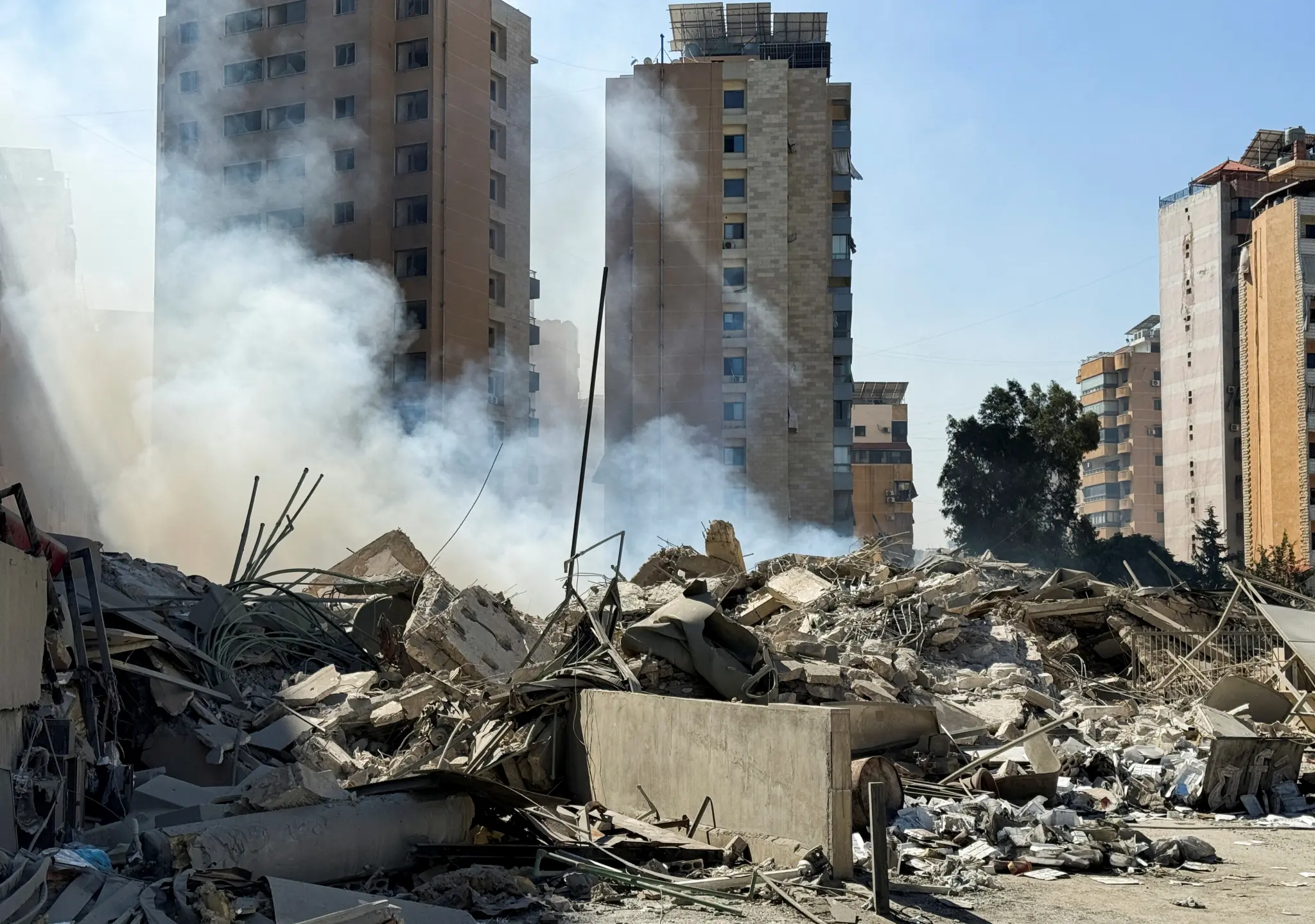
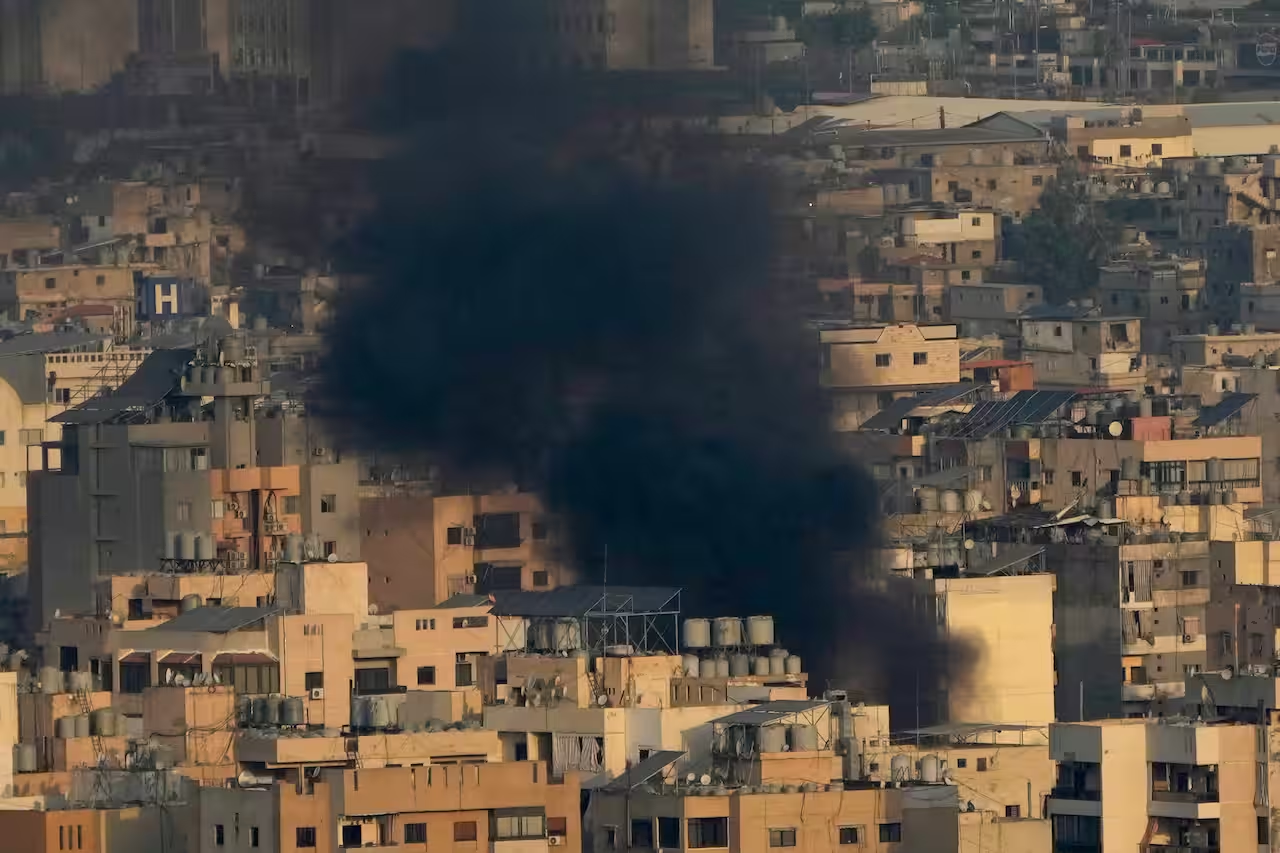
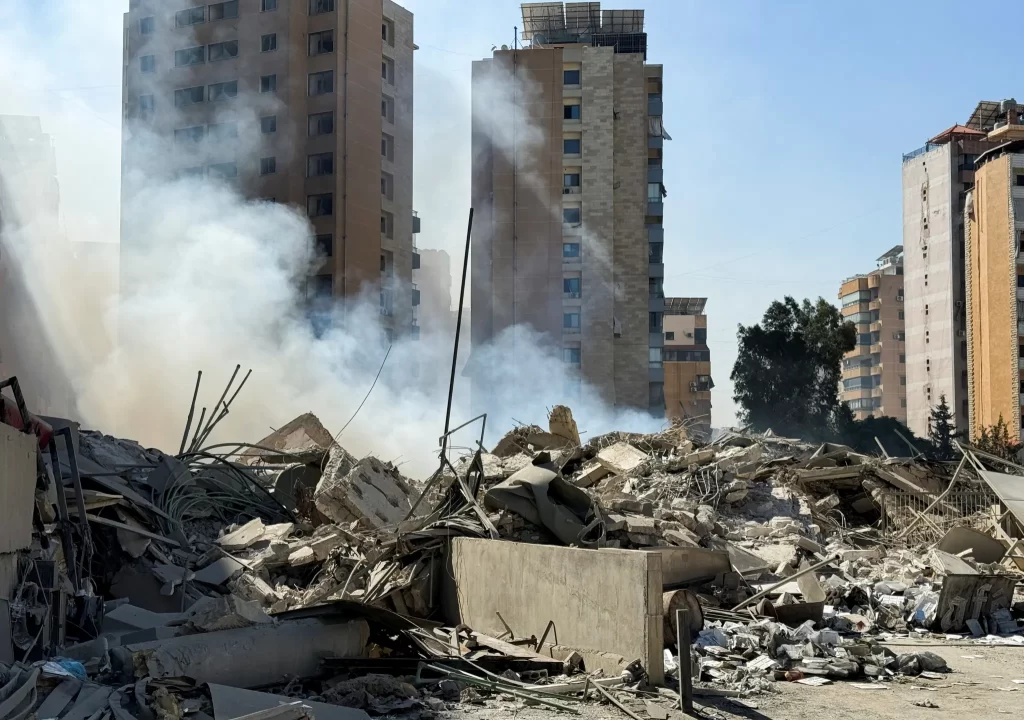
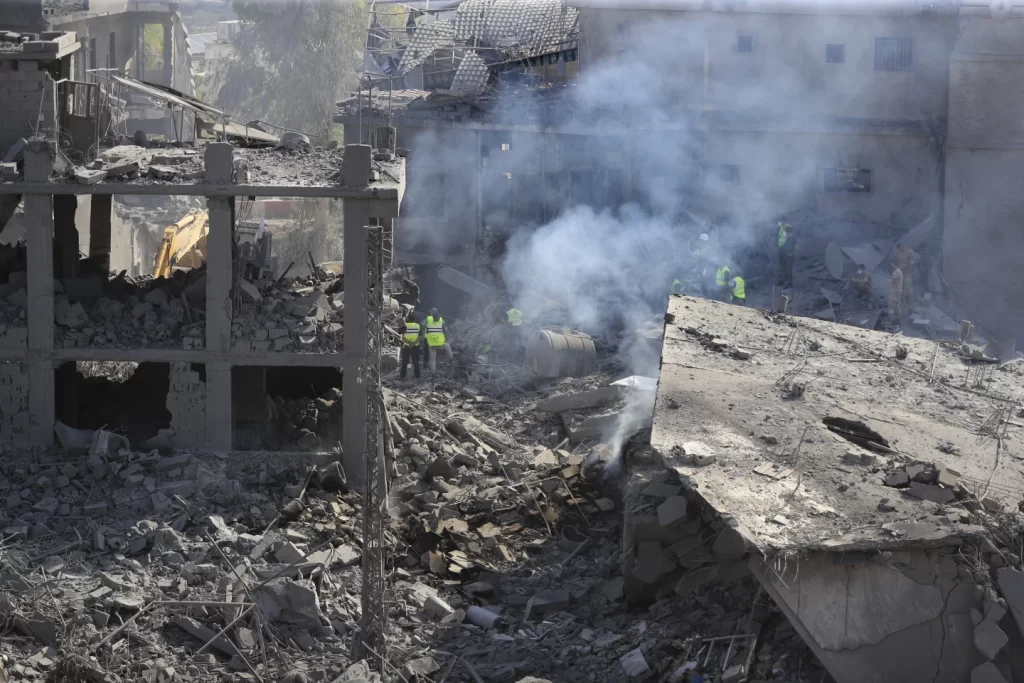
A senior Hezbollah official accused Israel on Sunday of obstructing search and rescue efforts for Hashem Safieddine, a top Hezbollah leader believed to have been in Beirut’s southern suburbs during Israeli airstrikes last Thursday.

Mahmoud Qmati, speaking to Iraqi state television, said Israel should “let rescue teams do their work.” Safieddine, widely considered a potential successor to the recently killed Hezbollah leader Sayyed Hassan Nasrallah, remains unaccounted for following the strikes on the Dahiye area.

“The situation remains tense and uncertain,” said Middle East analyst Dr. Sarah Levin. “Safieddine’s fate could significantly impact Hezbollah’s leadership structure and future operations.”

Qmati also addressed rumors about Iranian Quds Force leader Esmail Qaani, stating he had no information on reports that Qaani has not been heard from since the Beirut strikes.

Highlighting Hezbollah’s current leadership structure, Qmati explained, “What’s important is that joint command is in place. The method of choosing a replacement for the secretary-general takes time and requires appropriate circumstances, and for that reason we suffice today with temporary joint command.”

The official confirmed that Nasrallah’s body remains in Lebanon, with plans to bury him in Beirut’s southern suburbs when conditions allow.

These developments come amid nearly a year of escalating conflict between Israel and Hezbollah, which intensified following Hamas’ October 7 attack on Israel. Recent weeks have seen a rapid expansion of hostilities, with Israel launching a widespread air campaign across Lebanon.

“The conflict has taken a devastating toll,” said UN humanitarian coordinator Lynn Hastings. “An estimated 1.2 million people have been displaced in Lebanon, according to government figures, creating a dire humanitarian situation.”

REUTERS

Ukraine Hits Russian Oil Hub as War Enters ‘Important Phase’

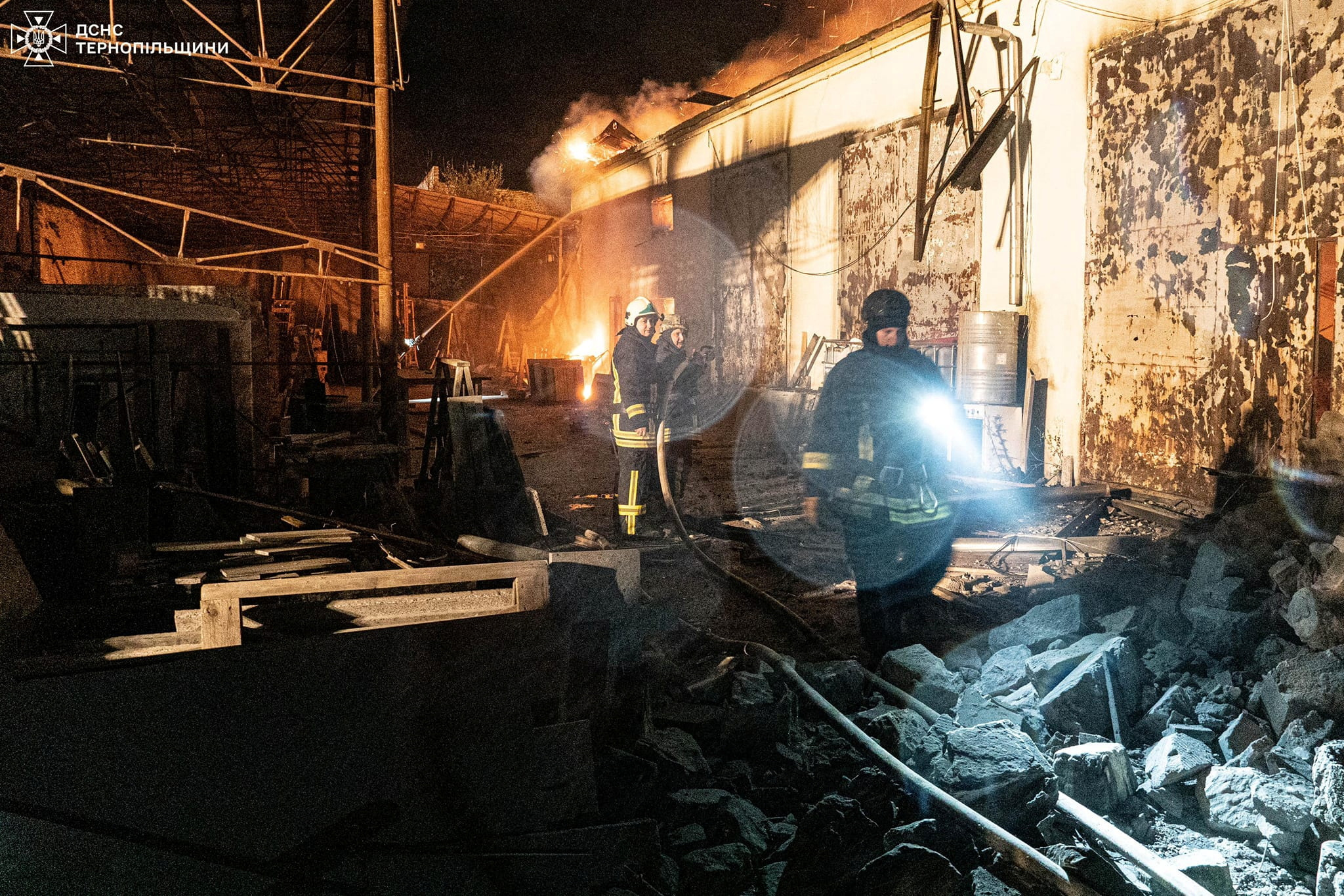
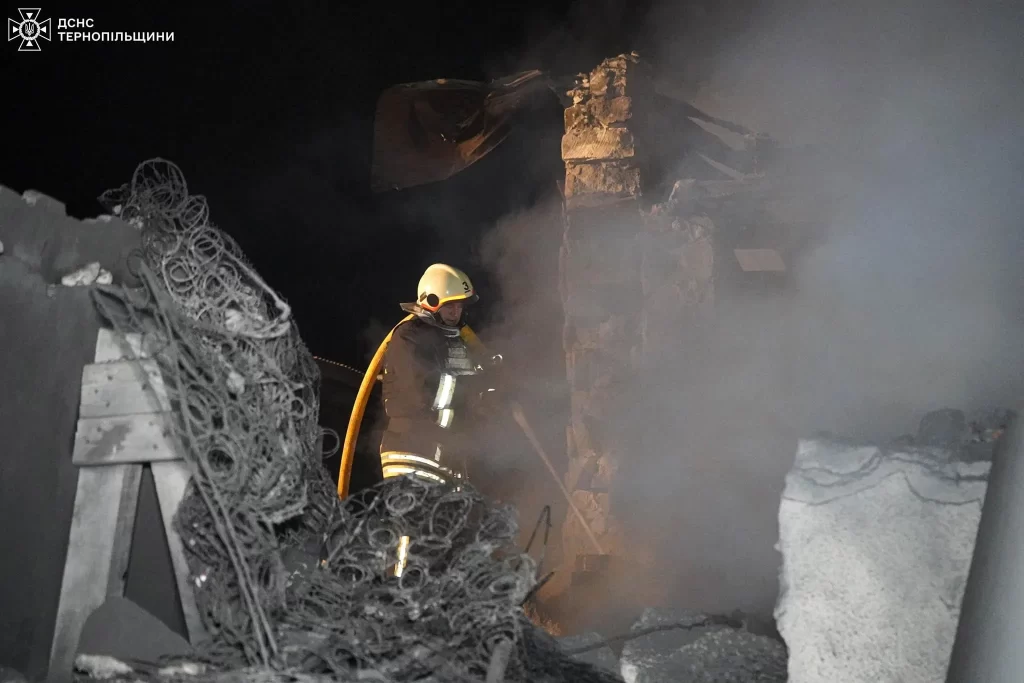
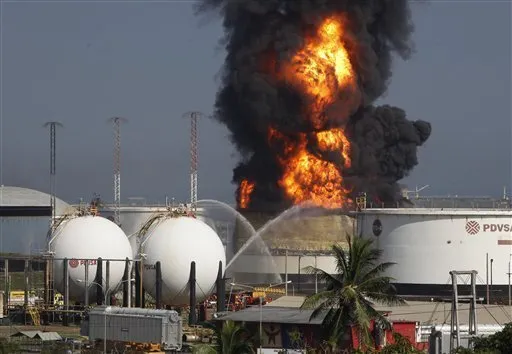
Ukraine’s military claimed Monday it struck a major oil terminal in Russian-occupied Crimea, as President Volodymyr Zelenskyy declared the war has entered a crucial phase.

The Ukrainian General Staff said the attack on Feodosia’s oil terminal, which supplies fuel to Russian forces, aims to “undermine the military and economic potential of the Russian Federation.”

“This strike represents our ongoing strategy to disrupt Russia’s logistical capabilities,” said a Ukrainian military official, speaking on condition of anonymity.

Russian-installed authorities in Feodosia reported a fire at the terminal but did not specify the cause.

Zelenskyy, in a video statement, emphasized the war’s critical juncture. “We will continue to apply even greater pressure on Russia — because only through strength can we bring peace closer,” he said.

The conflict, now in its third year, has evolved into a war of attrition. Ukraine has increasingly targeted Russian rear areas with long-range drones, striking oil depots and armories to impair Russia’s front-line support.

Meanwhile, Russia launched overnight attacks on Ukraine, firing six missiles and 74 Shahed drones, according to Ukraine’s air force. Kyiv reported minor damage from missile debris.

As both sides grapple with sustaining their war efforts, attention turns to next weekend’s meeting at Ramstein Air Base in Germany, where defense leaders from over 50 nations will coordinate military aid to Ukraine.

AP

American Scientists Win Nobel Prize for MicroRNA Discovery

The Nobel Prize in Physiology or Medicine was awarded Monday to Americans Victor Ambros and Gary Ruvkun for their groundbreaking discovery of microRNA, the Nobel Assembly at the Karolinska Institute announced.

MicroRNA, tiny pieces of genetic material that alter gene function at the cellular level, could lead to new approaches in treating diseases like cancer, according to the Nobel committee.

“This discovery is proving to be fundamentally important in understanding how organisms develop and function,” said Thomas Perlmann, Secretary-General of the Nobel Committee.

Dr. Claire Fletcher, a lecturer in molecular oncology at Imperial College London, explained the significance of microRNA in medical research. “MicroRNA alters how genes in the cell work,” Fletcher said. “We can take a microRNA that we know alters the activity of a mutated gene and deliver it to cancer cells to stop that gene from having its effect.”

Ambros conducted his prize-winning research at Harvard University and is currently a professor at the University of Massachusetts Medical School. Ruvkun, a professor of genetics at Harvard Medical School, performed his research at Massachusetts General Hospital.

The prize carries a cash award of 11 million Swedish kronor ($1 million) from a bequest left by Alfred Nobel.

This year’s Nobel announcements continue with physics on Tuesday, chemistry on Wednesday, literature on Thursday, and the Peace Prize on Friday. The Economics prize will be announced on October 14.

As researchers continue to explore microRNA’s potential, Fletcher anticipates possible drug treatments approved by regulators within the next five to ten years, opening up new avenues for developing medicines and controlling gene activity in various diseases.

apnews.com