Home Blog Page 68

Peru Declares State of Emergency in Over 700 Districts as El Niño–Driven Rains Kill 68, Damage Roads Nationwide

LIMA, Peru (BN24) — Peru’s government has placed more than 700 districts under a state of emergency following weeks of torrential rainfall, landslides and flooding that have left dozens dead and severely damaged infrastructure across the country.

The decree, endorsed by interim President José María Balcázar and formalized in the nation’s official gazette Wednesday, enables authorities to accelerate the release of emergency funds. The measure is intended to allow local and regional governments to reinforce bridges and highways, restore electricity and water systems, and safeguard vulnerable communities facing continued downpours.

The emergency order covers districts stretching from Peru’s Pacific coastline to the Andean highlands and into the Amazon basin a swath that represents nearly half of the country’s administrative divisions.

Government officials attribute the extreme weather to rising ocean temperatures associated with the coastal climate pattern known as El Nino Costero. Specialists say warming waters along the Pacific shoreline are intensifying evaporation, which in turn fuels heavier rainfall and swells river systems beyond their capacity.

Although rainfall has intensified in recent days, the newly installed administration had been unable to enact emergency measures sooner. President Balcázar was sworn in only this week after naming a Cabinet, ending a ministerial vacuum that began Feb. 17 when his predecessor, José Jerí, was removed from office amid a corruption and influence-peddling investigation.

The Ministry of Transportation indicated Wednesday that approximately 931 kilometers (580 miles) of roadway have sustained damage nationwide. The heaviest destruction is concentrated in four regions that have borne the brunt of the storms. Officials noted that the affected routes serve more than 500,000 people weekly, underscoring the disruption to commerce, agriculture and daily life.

Authorities have confirmed that 68 people have died from rain-related incidents since December. Among the latest fatalities were a father and son carried away by a landslide in the southern region of Arequipa. In the capital, Lima, a police officer drowned in the Rimac River while attempting to rescue a dog stranded by surging floodwaters descending from the Andes.

Meteorological authorities caution that Pacific Ocean temperatures remain above seasonal averages and that El Niño Costero conditions are projected to intensify slightly in March. Elevated sea surface temperatures typically generate high evaporation rates, feeding moisture-laden systems that produce prolonged and extreme rainfall across coastal and mountainous terrain.

The mounting damage highlights Peru’s longstanding vulnerability to climate-driven disasters. Many rural roads and bridges particularly in mountainous regions are susceptible to erosion and collapse during sustained downpours. In low-lying urban neighborhoods, inadequate drainage systems frequently exacerbate flooding.

While the emergency declaration expedites spending and coordination, implementation will test the capacity of regional governments already grappling with limited resources. Emergency designations in Peru allow authorities to bypass certain bureaucratic procedures, but reconstruction projects often face logistical and geographic hurdles.

The unfolding disaster also places immediate pressure on Balcázar’s fledgling administration. The leadership transition followed the ouster of Jerí, whose removal left the executive branch temporarily without a full ministerial team. That gap delayed formal action as storms intensified.

Analysts note that swift mobilization will be critical not only for humanitarian reasons but also for political stability. Peru has experienced repeated episodes of governmental turnover in recent years, and public confidence often hinges on effective disaster response.

El Niño Costero differs from the broader El Niño phenomenon that affects global weather patterns. The coastal variant primarily influences Peru and neighboring Ecuador, periodically triggering severe flooding and landslides. Scientists have observed that climate variability may amplify the frequency and intensity of such events, though attribution studies remain ongoing.

Peru’s geography compounds the risk. The Andes create steep slopes prone to landslides, while rivers descending from the mountains can swell rapidly when rainfall intensifies. Communities in both remote highland villages and densely populated coastal cities face exposure.

Beyond immediate emergency response, the latest crisis underscores structural challenges confronting Peru and other Andean nations as ocean temperatures fluctuate. Rising Pacific waters not only increase rainfall but also threaten fisheries a vital sector for Peru’s economy. Warmer conditions can alter marine ecosystems, affecting anchovy stocks that support both domestic consumption and global fishmeal exports.

Infrastructure resilience remains another pressing concern. Repeated emergency declarations in recent years suggest that reactive measures alone may be insufficient. Long-term adaptation could require redesigning road networks, reinforcing riverbanks and modernizing drainage systems to withstand heavier precipitation cycles.

Climate researchers caution that episodic warming events such as El Niño Costero may interact with broader global warming trends, potentially intensifying their impact. Although not every heavy rainfall event can be directly attributed to climate change, cumulative patterns point to increasing volatility.

For residents in affected districts, however, the immediate priority is recovery restoring access to transportation, ensuring clean water supplies and preventing further casualties as the rainy season continues.

As meteorologists monitor Pacific conditions ahead of March, authorities face a narrowing window to fortify vulnerable regions before additional storms arrive. The effectiveness of the emergency decree and the government’s ability to translate funding into rapid on-the-ground action may shape both the humanitarian outcome and Peru’s political trajectory in the months ahead.

Maduro Seeks Dismissal of U.S. Drug Indictment, Citing Blocked Venezuelan Funds for Legal Defense

(AP) — Deposed Venezuelan President Nicolas Maduro urged a federal judge Thursday to throw out a sweeping U.S. narcotics indictment, contending that American sanctions have prevented him from accessing Venezuelan government funds to pay for his legal defense, thereby violating his constitutional rights.

In papers filed in Manhattan federal court, defense attorney Barry Pollack argued that the U.S. government has deprived Maduro of due process by blocking payments that, under Venezuelan law and custom, should cover the legal costs of a sitting head of state. The filing asserts that Maduro cannot afford private counsel and has relied on the expectation that the Venezuelan government would finance his defense.

“Mr. Maduro, as Venezuela’s head of state, has both a right and an expectation to have legal fees associated with these charges funded by the government of Venezuela,” Pollack wrote.

The submission included a sworn declaration signed “President Nicolas Maduro Moros,” in which Maduro stated that Venezuelan legal practices entitle him to state-funded representation. “I have relied on this expectation and cannot afford to pay for my own legal defense,” he said.

Maduro and his wife, Cilia Flores, have been held in New York since early January, when U.S. authorities seized them from their home in Venezuela during a covert nighttime operation. Both have entered not guilty pleas.

The 25-page indictment accuses Maduro and several associates of collaborating with drug trafficking organizations and elements of the Venezuelan military to funnel thousands of tons of cocaine into the United States. Prosecutors allege that the conspiracy included acts of violence, including kidnappings, beatings and killings tied to drug debts. If convicted, Maduro and Flores face potential life sentences.

Pollack indicated in correspondence to the court that the U.S. Treasury Department’s Office of Foreign Assets Control (OFAC), which administers sanctions involving Venezuela, initially authorized payment of legal fees from the Venezuelan government on Jan. 9. He asserted that the authorization was rescinded less than three hours later without explanation.

According to the filing, OFAC has permitted legal payments for Flores’ defense while withholding approval for Maduro’s representation.

“The conduct of the United States government not only undermines Mr. Maduro’s rights but also this Court’s mandate to provide a fair trial to all defendants,” Pollack argued, adding that proceeding under such constraints would produce a trial that could later be deemed constitutionally defective.

Pollack further stated that if the court declines to dismiss the indictment, he intends to seek withdrawal from the case so that court-appointed counsel can assume Maduro’s defense.

The Justice Department has not publicly responded to the latest motion. The case is unfolding amid longstanding diplomatic tensions between Washington and Caracas. The Trump administration severed ties with Maduro’s government in 2019 and recognized opposition leadership as Venezuela’s legitimate authority, a policy that continued under President Joe Biden.

Maduro’s motion places the intersection of criminal law and U.S. foreign policy squarely before a federal court. By framing the dispute as a constitutional issue tied to the Sixth Amendment right to counsel and Fifth Amendment due process protections, his legal team is challenging the operational impact of sanctions in a criminal proceeding.

Sanctions administered through OFAC are typically designed to limit financial flows and commercial transactions with targeted governments or individuals. However, courts have historically scrutinized whether such restrictions impede a defendant’s ability to mount an adequate defense. The uneven authorization described in the filing — permitting payment for Flores while withholding it for Maduro — could draw judicial inquiry into consistency and procedural fairness.

At the same time, dismissing a high-profile indictment on constitutional grounds would be extraordinary. Federal judges often explore narrower remedies, such as appointing counsel under the Criminal Justice Act or crafting limited financial authorizations that preserve both sanctions policy and defendants’ rights.

The case also raises broader geopolitical implications. Maduro continues to refer to himself as Venezuela’s head of state in court filings, underscoring unresolved questions about diplomatic recognition and sovereignty. Whether a U.S. court gives weight to that designation could subtly reflect or reinforce executive-branch foreign policy positions.

For now, the dispute centers on access to legal funds. Yet its resolution could clarify how sanctions regimes interact with criminal prosecutions involving foreign leaders — and whether financial restrictions can withstand constitutional scrutiny when liberty, and potentially life imprisonment, are at stake.

 Trump and ICE Release Columbia Student After NYC Mayor Raises Detention During White House Discussion

 President Donald Trump said a Columbia University student detained Thursday by federal immigration authorities would be released after New York City Mayor Zohran Mamdani raised the case during a meeting at the White House.

The student, identified as Ellie Aghayeva, had been taken into custody early Thursday morning after Department of Homeland Security agents entered a Columbia residential building in Manhattan. Hours later, Mamdani disclosed on social media that he had discussed the detention directly with Trump during a meeting focused on housing policy.

“In our meeting earlier, I shared my concerns about Columbia student Elaina Aghayeva, who was detained by ICE this morning,” Mamdani wrote on X. “He has just informed me that she will be released imminently.”

CNN later confirmed Aghayeva’s release. The student also posted on Instagram verifying she had been freed after earlier sharing a message from the back of a vehicle that read, “DHS illegally arrested me. Please help.”

The Department of Homeland Security confirmed Immigration and Customs Enforcement officers detained Aghayeva but did not directly address Columbia University’s assertion that agents misrepresented their purpose to gain access to the building. In a statement distributed to media outlets, DHS said Aghayeva’s student visa had been terminated in 2016 during the Obama administration for failure to attend classes and that she had no pending appeals or applications with the agency.

Columbia University Acting President Claire Shipman said agents entered the building at approximately 6:30 a.m. and that administrators were still gathering details. She indicated that the university believes federal officers claimed they were searching for a “missing person” in order to gain entry to nonpublic residential space.

“Our understanding at this time is that the federal agents made misrepresentations to gain entry to the building,” Shipman wrote in a message to the campus community. She reiterated university policy requiring law enforcement to present a judicial warrant or subpoena before accessing dormitories and other restricted facilities.

A spokesperson indicated that the building manager and Aghayeva’s roommate permitted officers into the apartment. Columbia said it was working to contact the student’s family and provide legal support.

Aghayeva, originally from Azerbaijan, is a senior majoring in neuroscience and political science, according to the American Association of University Professors, which confirmed her identity after being alerted by Columbia’s AAUP chapter.

The detention drew swift reaction from local and federal officials. New York Gov. Kathy Hochul criticized the enforcement action, asserting on X that ICE agents did not possess the appropriate judicial warrant and used deception to access the student’s residence. Democratic lawmakers including Rep. Jerry Nadler and Rep. Adriano Espaillat also condemned the arrest, describing it as alarming for students and faculty.

The case unfolded nearly a year after federal authorities detained Columbia graduate student Mahmoud Khalil, who spent more than 100 days in ICE custody in 2025 and continues to contest deportation proceedings. Another Columbia student, Ranjani Srinivasan, was also detained during campus protests last year before leaving the country.

Aghayeva’s release following Mamdani’s intervention underscores the political stakes surrounding immigration enforcement at universities. While DHS cited visa compliance issues, the rapid reversal after the mayor’s appeal to Trump illustrates how high-profile detentions can quickly escalate into national political matters.

Presidential involvement in an individual ICE case is uncommon and signals both the visibility of the situation and the administration’s responsiveness to local leadership. For Mamdani, raising the issue during an unrelated housing discussion demonstrates the growing intersection between municipal governance and federal immigration policy.

The episode also spotlights the ongoing debate over ICE access to educational institutions. Universities across the country have strengthened protocols requiring judicial warrants for entry into nonpublic campus areas, seeking to balance compliance with federal law and protection of student rights.

At the same time, DHS’s statement regarding Aghayeva’s visa termination may prompt renewed scrutiny over how long-standing immigration status issues are enforced and whether adequate notice was provided. The department has not indicated whether further proceedings will continue.

The swift release may ease immediate tensions, but the broader questions remain unresolved: how immigration enforcement should operate on campuses, what procedural safeguards must be honored, and how political intervention shapes individual cases.

By Thursday evening, Aghayeva was no longer in federal custody, closing a dramatic day that moved from an early-morning detention in Manhattan to a White House-level discussion and a same-day release — a rare sequence in immigration enforcement matters.

ICE Arrests Columbia University Student After Alleged Misrepresentation to Enter Dormitory

Federal immigration officers detained a Columbia University student inside a campus residence hall early Thursday after allegedly misrepresenting their purpose to gain access to the building, according to university officials.

Acting Columbia President Claire Shipman said agents from the Department of Homeland Security entered the dormitory at approximately 6:30 a.m. Shipman indicated that federal officers told building personnel they were searching for a “missing person,” a claim the university later suggested was inaccurate.

“Our understanding at this time is that the federal agents made misrepresentations to gain entry to the building,” Shipman said in a written statement. She added that the university is seeking additional details, attempting to contact the student’s family and arranging legal assistance.

The student, identified by school officials as neuroscience major Ellie Aghayeva, posted a brief video to Instagram from the back seat of a vehicle shortly after the arrest. In the recording, she wrote, “Dhs illegally arrested me. Please help.”

Aghayeva, originally from Azerbaijan, had her student visa terminated in 2016, according to a statement issued by Homeland Security. Federal officials have not publicly detailed the circumstances leading to Thursday’s detention or clarified whether a judicial warrant was presented at the time of entry.

A spokesperson told The Independent that the building manager and the student’s roommate permitted officers into the apartment. University policy requires that law enforcement obtain a judicial warrant or subpoena to access nonpublic campus areas, including residential facilities. Administrative warrants issued internally by federal agencies are not sufficient for entry into restricted spaces, Shipman reiterated.

“Do not allow them to enter or accept service of a warrant or subpoena,” Shipman wrote in guidance circulated to the campus community, underscoring the institution’s stance on protecting student housing from unauthorized entry.

The arrest marks the latest immigration enforcement action involving Columbia students. In March of last year, graduate student Mahmoud Khalil was taken into custody in the lobby of a university-owned building. His case became a focal point in broader debates over federal efforts to detain and remove international students during President Donald Trump’s administration.

Khalil, a legal permanent resident and student activist critical of Israel’s military operations in Gaza, was stripped of his green card and detained after Secretary of State Marco Rubio authorized his removal. Court filings indicated the government alleged Khalil promoted antisemitism and offered material support to terrorist organizations — claims his attorneys described as unfounded. Khalil spent more than 100 days in immigration detention in Louisiana before being released as federal judges scrutinized what one court described as an “unconstitutional conspiracy” infringing on First Amendment protections.

An immigration judge later ordered Khalil removed to Syria or Algeria based on alleged omissions in his green card application, a ruling his legal team has challenged.

Another Columbia student, Mohsen Mahdawi, was detained during a citizenship interview and later released after an immigration judge dismissed deportation proceedings against him, finding insufficient grounds for removal.

School of General Studies Dean Lisa Rosen-Mestch informed students of Aghayeva’s detention in an email obtained by The Columbia Spectator, calling the development “upsetting and unsettling for our community.” She said administrators were working closely with university leadership to support the student and her family.

New York City Council members were briefed on Thursday’s events. Speaker Julie Menin and Councilman Shaun Abreu issued a joint statement asserting that immigration enforcement activity on college campuses undermines trust and safety.

“ICE has no place in our schools and universities,” they said, adding that such actions foster fear rather than security. Both officials, alumni of Columbia College, said they had contacted university leaders to offer assistance.

The Department of Homeland Security has not publicly addressed the university’s claim that agents misrepresented their purpose when seeking entry.

Thursday’s detention highlights ongoing friction between federal immigration authorities and higher education institutions that serve large populations of international students. Universities across the United States have increasingly formalized policies outlining when and how federal agents may enter campus property, particularly after high-profile enforcement actions involving student activists.

Columbia’s insistence on judicial warrants reflects broader efforts by universities to clarify legal boundaries between federal enforcement powers and institutional autonomy. Legal scholars note that while federal agents possess authority to execute lawful immigration warrants, access to private or restricted property without proper judicial authorization can raise constitutional concerns, particularly under the Fourth Amendment.

The case also unfolds against a politically charged backdrop. Immigration enforcement targeting students has become intertwined with debates over campus activism, academic freedom and foreign policy dissent. Federal courts in prior Columbia-related cases have questioned whether enforcement decisions were influenced by protected speech, intensifying scrutiny of government actions involving international students.

At the same time, immigration officials argue that visa compliance and lawful status enforcement remain within their statutory mandate. The unresolved question in Thursday’s arrest centers not only on Aghayeva’s immigration status but also on whether procedural safeguards were properly observed.

For international students, the incident may deepen uncertainty about campus security and federal oversight. Universities depend heavily on global enrollment both academically and financially, and episodes involving immigration agents can reverberate far beyond a single case.

Columbia officials said they are continuing to gather information. As of Thursday evening, federal authorities had not detailed potential charges or removal proceedings.

The unfolding investigation is likely to draw further legal review and political attention in the coming days, particularly as questions persist about the circumstances under which federal agents gained entry to student housing.

The Independent

American Airlines 737 Found With Suspected Bullet Hole After Landing in Colombia From Miami

An American Airlines Boeing 737 MAX 8 was pulled from service after maintenance crews in Colombia discovered what appeared to be a bullet hole in the aircraft’s wing shortly after it completed a flight from Miami, the airline confirmed.

The jet, operating as Flight 923, landed without incident in Medellín late Sunday. During a post-arrival inspection, ground personnel identified a puncture in the right-hand aileron — a hinged control surface along the trailing edge of the wing used to help steer the aircraft during turns.

Documents reviewed by CBS News indicated the damage consisted of a small, circular entry point on one side of the aileron and a corresponding exit hole on the opposite side, suggesting a projectile may have passed entirely through the structure. Individuals familiar with the matter told CBS that the pattern of damage was consistent with a possible bullet strike.

American Airlines said in a statement to The Independent that the aircraft experienced no operational irregularities during the flight and that passengers and crew were not harmed.

“Following a routine inspection, our teams identified a puncture to the exterior of one of our aircraft in Medellín, Colombia,” the airline said. “The aircraft was immediately removed from service for further inspection and repair. We will work closely with all relevant authorities to investigate this incident.”

It was not immediately clear when or where the damage occurred. The airline did not indicate whether the puncture happened while the aircraft was airborne, during approach, or while on the ground.

Aviation blogger @xJonNYC first drew public attention to the discovery in a post on X, stating that bullet holes had been found on an American Airlines aircraft in Medellín. Subsequent details about the puncture circulated online before being confirmed by news outlets.

Temporary repairs were performed overnight in Colombia. Data from flight-tracking service Flightradar24 showed the aircraft returned to Miami on Monday morning and later operated a flight to Dallas. It has not flown since, according to tracking records.

Ailerons play a critical role in aircraft control by moving in opposite directions to create differential lift, allowing the plane to roll left or right. Aviation safety experts note that while localized structural damage does not automatically compromise flight safety, any suspected projectile strike requires thorough inspection to rule out internal or systemic damage.

American Airlines did not provide additional technical details about the extent of structural impact or whether further forensic analysis would determine the object responsible.

Although rare, incidents involving gunfire striking commercial aircraft have occurred in recent years. In 2024, a Southwest Airlines plane preparing for departure from Dallas Love Field Airport sustained a bullet impact near the cockpit area. No injuries were reported in that case, and the aircraft was temporarily sidelined for repairs.

Globally, aviation authorities treat suspected projectile damage with heightened scrutiny, particularly when incidents occur in regions near urban areas or where celebratory gunfire has been documented. Investigators typically examine radar data, flight path altitude, and local law enforcement reports to determine whether gunfire originated from the ground or elsewhere.

The discovery in Medellín also highlights the multilayered safety systems in modern commercial aviation. The Boeing 737 MAX 8, manufactured by Boeing, is equipped with redundant control mechanisms and structural reinforcements designed to tolerate certain levels of impact without catastrophic failure. Even so, airlines adhere to strict maintenance protocols requiring immediate grounding of aircraft until engineers can assess and clear them for return to service.

Colombian aviation authorities have not publicly detailed whether they are conducting a parallel investigation. Coordination between local authorities and the airline is typical in such cases, especially when the origin of damage remains uncertain.

For passengers, the incident underscores how many forms of aircraft damage are detected only after landing through systematic inspections rather than in-flight emergencies. Airlines routinely perform exterior walk-around checks after each flight segment, and more comprehensive inspections occur at designated intervals.

American Airlines has not disclosed how long the aircraft will remain out of rotation. The carrier said it would continue cooperating with relevant authorities as the review proceeds.

While the cause of the puncture remains under examination, officials emphasized that the flight itself was completed safely and without disruption. For now, the focus shifts to determining how the damage occurred and whether any security or environmental factors contributed to the unusual discovery.

The Independent

Kenya Arrests Suspect Accused of Trafficking Recruits to Fight for Russia in Ukraine

0

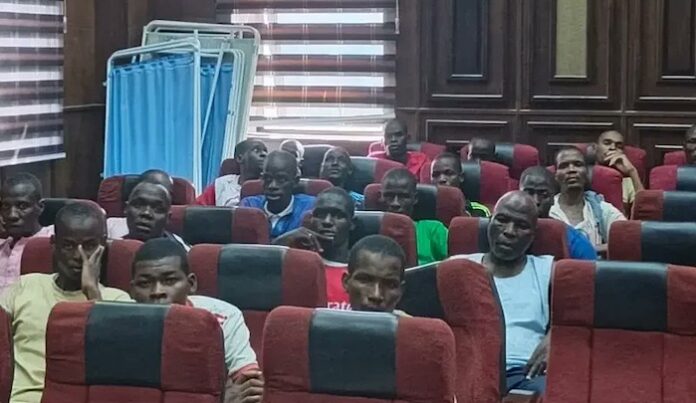
(AP) — Kenyan police have detained a man accused of orchestrating a recruitment scheme that allegedly lured hundreds of Kenyans to Russia with promises of skilled employment, only for many to find themselves deployed to the front lines of Moscow’s war in Ukraine.

Festus Omwamba was arrested in Moyale, a town in northern Kenya near the Ethiopian border, on suspicion of human trafficking. Police spokesperson Michael Muchiri confirmed that the suspect would be transferred to Nairobi for further questioning and possible prosecution. Authorities indicated Omwamba had recently returned from Russia and was attempting to evade law enforcement.

Omwamba’s name surfaced in interviews with three Kenyan recruits who spoke to The Associated Press and described how they were drawn into what they believed were legitimate overseas job opportunities. Those recruits said he disappeared from contact after families began raising alarm over the disappearance and reported deaths of relatives fighting in Ukraine.

Kenyan officials disclosed last week that more than 1,000 citizens had been recruited to fight alongside Russian forces. Government figures show at least 89 Kenyans remain on the front lines, 39 are hospitalized, 28 are missing in action, and several have returned home. At least one Kenyan has been confirmed dead.

An intelligence brief presented before Parliament by Majority Leader Kimani Ichung’wah alleged collusion between Kenyan and Russian officials and rogue employment agencies in channeling recruits into combat roles. The report suggested that the scheme exploited economic hardship and high unemployment among Kenyan youth.

The Russian Embassy in Nairobi rejected those claims in a statement issued Thursday, asserting that it had not issued visas to individuals traveling to Russia for the purpose of fighting in Ukraine. The embassy added that while Russia does not prevent foreign nationals from voluntarily enlisting in its armed forces, it denied facilitating any recruitment drive targeting Kenyans.

Kenya’s Foreign Minister Musalia Mudavadi told The Associated Press on Feb. 9 that he planned to travel to Russia to pursue what he described as a diplomatic effort aimed at curbing questionable recruitment practices. Mudavadi said Kenyan authorities were also working to secure the return of citizens detained in Ukraine and repatriate those stranded in Russia.

He recalled that President William Ruto had appealed directly to Ukrainian authorities to consider the circumstances of Kenyans found on the battlefield and to facilitate their return where possible.

Omwamba’s arrest marks the most significant law enforcement action so far in Kenya’s attempt to dismantle what officials characterize as a trafficking pipeline feeding foreign battlefields.

One recruit, John Kamau, who managed to flee the front lines and seek assistance from the Kenyan Embassy in Russia before being processed for return home, told the AP he first encountered Omwamba at a Nairobi residence where prospective recruits were housed while awaiting travel documents.

Another recruit, who requested anonymity citing fears of retaliation, said Omwamba avoided written communication and instead relied on in-person meetings or phone calls. The recruit said he had responded to an offer for plumbing work in Russia but was detained upon arrival, had his passport confiscated, and was transported to a military training facility before deployment to Ukraine.

The recruits said Omwamba supervised their tourist visa applications and coordinated flight bookings. Within two weeks of initial contact, they had received travel documents and departed for Russia.

The revelations come as the war in Ukraine continues to draw foreign nationals into its ranks, whether through formal enlistment, mercenary networks or deceptive recruitment schemes. Russia has faced manpower shortages amid sustained fighting, and reports of foreign fighters joining its forces have surfaced periodically since the invasion began in 2022.

For Kenya, the episode underscores vulnerabilities tied to youth unemployment and labor migration. Thousands of Kenyans seek work abroad each year, particularly in the Gulf and Europe, creating fertile ground for unscrupulous agents promising lucrative placements overseas.

Analysts say the alleged recruitment network may have exploited gaps in oversight of private job agencies and insufficient scrutiny of outbound travel linked to ambiguous employment offers. The intelligence report presented in Parliament suggests the possibility of deeper systemic failures if collusion claims are substantiated.

Diplomatically, the situation places Nairobi in a delicate position. Kenya has maintained formal neutrality regarding the Ukraine conflict while balancing relationships with Western allies and non-Western partners. Allegations of recruitment tied to Russian interests risk complicating those ties and could prompt stronger regulatory frameworks governing foreign labor contracts.

The human toll also raises domestic political pressure. Families of missing or deceased recruits have staged protests demanding accountability and government intervention. The confirmation that dozens of Kenyans remain hospitalized or missing intensifies scrutiny of official responses.

If prosecutors move forward with charges against Omwamba, the case could set a precedent for addressing transnational recruitment schemes tied to foreign conflicts. Legal experts note that successful prosecution would likely hinge on demonstrating intent to deceive and direct involvement in facilitating combat deployment rather than civilian employment.

For the individuals who returned, reintegration poses additional challenges. Many may carry psychological trauma from combat exposure, and some could face legal ambiguity regarding their participation in foreign military service.

Kenyan authorities have pledged continued investigation into the alleged network and have urged citizens to verify overseas job offers through official government channels. As diplomatic engagements unfold and legal proceedings advance, the case highlights the global reach of the Ukraine war and its ripple effects far beyond Europe’s borders.

The arrest in Moyale may represent only the first step in unraveling a complex web of recruitment, deception and international geopolitics — one that has drawn ordinary Kenyans into one of the most consequential conflicts of the 21st century.

Turkish F-16 Crash Kills Pilot Moments After Takeoff From Balıkesir Base

 A Turkish Air Force F-16 fighter jet crashed shortly after departing a base in western Turkey early Wednesday, killing its pilot, authorities said, prompting both military and judicial investigations into the cause of the accident.

The aircraft took off from the 9th Main Jet Base in Balıkesir province at 12:56 a.m. local time (2156 GMT Tuesday), Turkey’s Defense Ministry said in a statement carried by the state-run Anadolu Agency. Communication and radar contact with the jet were lost soon after takeoff.

Search and rescue teams were dispatched immediately and later located the wreckage near the Istanbul-Izmir Highway, where debris was scattered across the area, local media outlets reported.

“Our pilot was martyred. The cause of the accident will be determined following an investigation by the crash examination team,” the ministry said, extending condolences to the pilot’s family.

National Defense Minister Yasar Guler identified the pilot as Air Force Major Ibrahim Bolat, describing him as a “heroic comrade-in-arms” who died in the line of duty on Feb. 25, 2026.

Justice Minister Akin Gurlek said the Balıkesir chief public prosecutor’s office had initiated a formal inquiry. He indicated that senior prosecutors were deployed to the crash site to oversee the judicial dimension of the investigation.

Vice President Cevdet Yilmaz said authorities would conduct a “meticulous” review of the incident through both administrative and legal channels. The Interior Ministry echoed that assessment, noting that technical specialists would examine flight data and wreckage to establish what led to the crash.

NATO Member’s Fighter Fleet Under Scrutiny

Turkey, a NATO member since 1952, operates a fleet of F-16 jets manufactured by Lockheed Martin. The F-16 has long served as the backbone of Turkey’s air combat capability and is widely used by NATO allies.

The crash in Balıkesir adds to a series of recent F-16 accidents globally. In January, a Taiwanese F-16 plunged into the sea during a routine mission, and its pilot was reported missing after ejecting. In Poland, another F-16 went down during rehearsals for an air show in August, killing its pilot.

Turkey itself has experienced prior aviation incidents. In November, Ankara suspended flights of its C-130 cargo aircraft after one crashed in neighboring Georgia while returning from Azerbaijan, killing all 20 people on board.

Although aviation mishaps are statistically rare given the volume of sorties conducted worldwide, each crash typically triggers intense scrutiny due to the high cost of advanced fighter aircraft and the critical role they play in national defense.

Political Context and Military Exercises

The fatal crash occurred during a week in which President Recep Tayyip Erdogan highlighted Turkey’s participation in NATO military exercises.

In remarks unrelated to the crash, Erdogan said Turkish forces had taken part in the NATO Steadfast Dart 2026 Exercise, praising the performance of the Bayraktar TB3 unmanned combat aerial vehicle and the amphibious assault ship TCG Anadolu. He described the exercise as a demonstration of Turkey’s growing defense capabilities and interoperability within the alliance.

The juxtaposition of those statements with news of the F-16 crash underscores the inherent risks associated with high-tempo military aviation operations. While NATO exercises and readiness drills showcase technological prowess and operational coordination, they also demand rigorous maintenance standards and pilot training protocols.

Investigation Focus

Officials have not indicated whether mechanical failure, human error or environmental conditions may have contributed to the crash. The timing — shortly after takeoff — often narrows investigative focus to engine performance, flight control systems or possible bird strikes, though authorities have not publicly suggested any specific cause.

Crash examination teams typically analyze black box flight data recorders, maintenance logs and air traffic communications. Investigators may also assess whether weather conditions or runway factors played a role.

Turkey’s defense establishment has invested heavily in modernizing its air force amid shifting geopolitical dynamics in the region, including tensions in the Eastern Mediterranean and ongoing security concerns along its southern borders. Ensuring fleet reliability is central to maintaining deterrence and alliance commitments.

Operational Risks and Strategic Implications

While military aviation accidents do not necessarily signal systemic problems, they can raise broader questions about fleet readiness, maintenance cycles and training standards. The F-16 platform, first introduced in the 1970s, remains in active service globally, often upgraded with modern avionics and weapons systems. Aging airframes, however, can require extensive maintenance oversight.

For Turkey, which has sought to expand indigenous defense production while also negotiating upgrades and potential acquisitions within NATO frameworks, each incident can influence procurement debates and public perception of military preparedness.

The loss of an experienced pilot also represents a significant human and institutional cost. Fighter pilots undergo years of specialized training, and their expertise is not easily replaced.

At a time when Ankara is emphasizing its strategic role within NATO and showcasing advanced platforms like the Bayraktar TB3, the Balıkesir crash serves as a sobering reminder of the dangers inherent in military aviation — even outside combat conditions.

Authorities have pledged transparency in determining the cause of the accident. Until investigators release their findings, questions surrounding the jet’s final moments are likely to persist, both within Turkey and among its NATO partners.

Tribune/TheIndependent

Bill Gates Calls Epstein Ties a ‘Huge Mistake,’ Admits Affairs in Candid Foundation Town Hall

Microsoft co-founder Bill Gates acknowledged during a staff town hall at the Gates Foundation that he had extramarital affairs during his marriage and described his association with convicted sex offender Jeffrey Epstein as a “huge mistake,” while insisting he engaged in no illicit conduct.

Gates addressed foundation employees Tuesday in a session that included questions about recently released Epstein-related emails and the potential reputational impact on the organization’s global health mission. A recording of the event was reviewed by The Wall Street Journal, which first detailed Gates’ remarks.

“I did nothing illicit. I saw nothing illicit,” Gates said, according to the Journal’s account of the meeting. He added that he “never spent any time with victims, the women around him,” referring to individuals abused by Epstein.

Gates conceded that he had two affairs while married to Melinda French Gates, and said Epstein later became aware of them. He maintained that the affairs did not involve any of Epstein’s victims.

“It was a huge mistake to spend time with Epstein,” Gates said during the town hall. “I apologize to other people who are drawn into this because of the mistake that I made.”

Emails and Renewed Scrutiny

The renewed scrutiny follows the disclosure of emails from 2013 in which Epstein claimed he was Gates’ “right hand” and suggested he had participated in matters that were “ethically unsound.” Representatives for Gates have dismissed Epstein’s assertions as “absolutely absurd and completely false.

In one July 2013 message cited by news outlets, Epstein wrote to Boris Nikolic, then Gates’ science and technology adviser, naming two women he alleged had affairs with Gates and warning that their identities could become public. Epstein suggested reputational fallout could follow, writing that Gates risked appearing hypocritical and that charitable pledges could be affected.

Nikolic has said the emails were not written on his behalf or at his request.

Gates told foundation staff that he began meeting with Epstein in 2011, several years after Epstein pleaded guilty in Florida in 2008 to soliciting a minor for prostitution. Gates said he was not fully aware of the scope of Epstein’s criminal conduct at the time and that, in hindsight, continuing the relationship was a grave error.

“Knowing what I know makes it a hundred times worse,” Gates said, according to the Journal’s review, referencing both Epstein’s past crimes and what later emerged as ongoing misconduct.

Gates said 2014 was the final year he met with Epstein.

Travel and Association

During the town hall, Gates acknowledged traveling on a private jet with Epstein and meeting him in New York, Washington, Germany and France. He said he never visited Epstein’s private island.

Gates explained that the presence of other high-profile individuals at some meetings contributed to what he described as a false sense of normalcy.

“It made it easier for me to feel like this was a normalized situation,” he said, adding that the association ultimately conflicted with the foundation’s values and mission.

“It definitely is the opposite of the values of the foundation and the goals of the foundation,” Gates said. “Our work is very reputational sensitive. People can choose to work with us or not work with us.”

A spokesperson for the Gates Foundation told NBC News that Gates holds town halls twice annually and that he addressed employee-submitted questions about the Epstein files, artificial intelligence initiatives and the future of global health. The spokesperson said Gates “spoke candidly” and “took responsibility for his actions.”

Personal and Institutional Fallout

Gates and French Gates divorced in 2021 after 27 years of marriage. French Gates has previously expressed discomfort with her former husband’s ties to Epstein. During Tuesday’s meeting, Gates acknowledged her skepticism.

“To give her credit, she was always kind of skeptical about the Epstein thing,” he said.

Gates has previously characterized his decision to meet with Epstein as “foolish.” In an earlier interview with The Wall Street Journal in 2025, he said he had hoped the relationship would advance philanthropic goals in global health but conceded that it did not.

“I thought it would help me with global health philanthropy. In fact, it failed to do that. It was just a huge mistake,” he told the newspaper at the time.

Reputation, Accountability and Philanthropy

The town hall remarks illustrate the continuing shadow Epstein’s crimes cast over prominent figures who associated with him, even tangentially. For Gates, whose philanthropic brand centers on global health, poverty reduction and scientific innovation, reputational trust is integral to maintaining partnerships with governments, multilateral organizations and private donors.

The Gates Foundation operates in politically sensitive environments where credibility can determine access and influence. Any perception of ethical lapses at the leadership level risks complicating collaborations and fueling criticism from skeptics of large-scale philanthropy.

At the same time, Gates’ public acknowledgment of personal failings and explicit apology to staff reflect an effort to confront the issue directly rather than allow speculation to linger unaddressed. His insistence that he saw no illicit activity underscores the delicate balance between accepting responsibility for poor judgment and denying criminal wrongdoing.

The episode also highlights broader questions about how influential figures navigate associations in elite networks. Epstein cultivated relationships with academics, financiers and philanthropists long after his 2008 conviction, raising enduring concerns about due diligence and moral responsibility.

For Gates, the reputational consequences appear likely to persist, even as he emphasizes the foundation’s mission. Whether his candid remarks to staff help restore confidence or further inflame scrutiny may depend on what additional disclosures, if any, emerge from ongoing document releases.

What is clear is that Gates’ acknowledgment — both of personal misconduct and of the gravity of his association with Epstein — marks one of his most direct public reckonings with a controversy that has lingered for years.

TheIndependent/NBC

Cuba Says Border Troops Killed 4 on Florida-Registered Speedboat After Armed Clash Near Island’s Coast

(NBC/Reuters) — Cuban authorities said Wednesday that border guard troops fatally shot four people and wounded six others aboard a Florida-registered speedboat after the vessel entered Cuban territorial waters and initiated gunfire near the island’s northern coast, an episode unfolding against a backdrop of strained relations between Havana and Washington.

Cuba’s Ministry of the Interior said the confrontation occurred about one nautical mile northeast of the El Pino channel near Falcones Cay, roughly 200 kilometers (120 miles) east of Havana. According to a ministry statement posted on Facebook and carried by multiple news outlets, five members of a Cuban border patrol unit approached the vessel to identify it when the crew of the speedboat opened fire.

The exchange left the commander of the Cuban patrol boat wounded, the ministry said. Cuban forces returned fire, killing four people aboard the speedboat. Six others on the vessel were injured and evacuated for medical treatment, authorities said. The ministry added that the incident remains under investigation to determine the precise sequence of events.

Cuban officials identified the vessel as registered in Florida under number FL7726SH but did not release the names or nationalities of those killed or wounded.

NBC News cited Cuban officials as saying the Florida-registered boat violated territorial waters, triggering the armed confrontation with border guard troops. The ministry’s statement said the firefight erupted after Cuban personnel attempted to conduct an identification procedure.

“Faced with the current challenges, Cuba reaffirms its commitment to protecting its territorial waters,” the ministry said, describing national defense as a central pillar of sovereignty and regional stability.

The U.S. State Department did not immediately respond to requests for comment from Reuters and NBC News.

Florida Officials Demand Investigation

In Florida, Attorney General James Uthmeier announced that he had directed the Office of Statewide Prosecution to begin its own inquiry in coordination with federal, state and local partners.

“I’ve directed the Office of Statewide Prosecution to work with our federal, state, and law enforcement partners to begin an investigation,” Uthmeier wrote in a post on X. “The Cuban government cannot be trusted, and we will do everything in our power to hold these communists accountable.”

U.S. Rep. Carlos Gimenez, R-Fla., whose district includes the southern tip of Florida, also urged a federal review. In a statement, Gimenez called the episode a “massacre” and pressed U.S. authorities to determine whether any of the victims were American citizens or lawful permanent residents.

“United States authorities must determine whether any of the victims were U.S. citizens or legal residents and establish exactly what occurred,” Gimenez said, asserting that serious concerns had been raised about the use of lethal force against a U.S.-registered vessel. He did not provide evidence to support his characterization of the incident.

Secretary of State Marco Rubio was in St. Kitts and Nevis on Wednesday for meetings with Caribbean leaders. His office did not immediately issue a public statement addressing the confrontation.

Heightened Bilateral Tensions

The clash unfolded during a period of renewed friction between the United States and Cuba. The Trump administration has curtailed most oil shipments to the island, intensifying economic pressure on the Communist-led government. U.S. officials have also tightened restrictions on energy flows from Venezuela, a longtime ally of Havana.

At the same time, the United States announced Wednesday that it would permit limited sales to Cuba’s private sector, a move seen as a targeted adjustment within broader sanctions policy.

The broader geopolitical climate has grown more volatile following Washington’s capture of Venezuelan President Nicolas Maduro in Caracas on Jan. 3, an action that removed a key Cuban partner from power and further complicated regional dynamics.

Against that backdrop, even a single maritime confrontation carries outsized diplomatic implications.

Cuba maintains that the speedboat penetrated its territorial waters and initiated the exchange of gunfire. International maritime law generally recognizes a nation’s sovereignty within 12 nautical miles of its coastline. If Cuban forces acted within that zone and responded to gunfire, Havana could argue its actions were consistent with self-defense.

However, U.S. officials and Cuban-American lawmakers have cast doubt on Havana’s narrative, calling for independent verification of the facts. The absence of publicly released identities and the lack of immediate U.S. confirmation leave key details unresolved.

The incident also underscores the longstanding volatility of maritime crossings between Florida and Cuba. Over decades, speedboats have been used for migration, smuggling and political activism, often drawing swift response from Cuban authorities.

What distinguishes this episode is the reported exchange of gunfire and the fatal outcome, an escalation that risks inflaming an already fragile bilateral relationship.

While the facts remain under investigation, the confrontation highlights how quickly tensions between Havana and Washington can spill into open crisis. Maritime encounters are inherently sensitive, particularly when they involve U.S.-registered vessels and loss of life.

For Florida officials, the political stakes are high. Cuban-American communities wield significant influence in state and national elections, and allegations of excessive force by Cuban authorities resonate deeply among voters with personal ties to the island.

For Cuba, projecting control over its territorial waters serves both strategic and symbolic purposes. Amid economic strain and diplomatic isolation, Havana may view firm enforcement actions as demonstrations of sovereignty.

Yet such incidents also risk unintended escalation. If any of the deceased are confirmed to be U.S. citizens or residents, pressure could mount on Washington to respond more forcefully. Conversely, if evidence substantiates Cuba’s account of an armed provocation, U.S. authorities may face complex legal and diplomatic calculations.

With investigations now underway in both Havana and Florida, the coming days are likely to determine whether this episode remains an isolated maritime clash or becomes another flashpoint in a long history of mistrust between the two nations.

Rep. Al Green Ejected From Trump’s State of the Union After Displaying Protest Sign Referencing Racist Video

Democratic Rep. Al Green of Texas was escorted from the House chamber moments after President Donald Trump began delivering his State of the Union address Tuesday night, after the congressman raised a protest sign referencing a recently circulated racist video.

Green stood in the center aisle as the president opened his speech, holding a sign that read, “Black people aren’t apes!” The message alluded to a video Trump had previously shared — and later deleted — that depicted former President Barack Obama and former first lady Michelle Obama as apes in a jungle. CNN disclosed that Trump had shared and then removed the video earlier this month.

House Speaker Mike Johnson ordered Green removed, and Capitol staff escorted the congressman from the chamber as he continued holding the sign aloft. Several Republican lawmakers attempted to block the sign from camera view or reached toward it as Green exited. Rep. Troy Nehls, a Republican from Texas, approached Green during the exchange, and Sen. Markwayne Mullin also moved toward him before staff intervened.

As Green departed, some Republicans chanted “USA! USA!” His seat remained empty for the remainder of the address, marked only by a handwritten cardboard sign bearing his name.

The removal marked the second consecutive year Green has been escorted from a presidential address. During last year’s speech, he was directed out after verbally interrupting the president.

Speaking with reporters outside the chamber Tuesday night, Green dismissed the removal as insignificant. He maintained that he felt compelled to act. “You have to take a stand,” Green said, still holding the sign for photographers. “I am just a person who has done it — but there are many others, I believe, who would.”

Green has long positioned himself among Trump’s most outspoken critics. He was the first member of Congress to initiate impeachment proceedings against Trump in 2017. Representing a predominantly African American district in Texas, Green has frequently focused his legislative efforts on civil rights issues.

The confrontation unfolded as dozens of Democratic lawmakers declined to attend the speech altogether. Those who remained largely sat in silence as Republican members repeatedly rose to applaud the president.

Several Democrats left before the address concluded. Sen. Mark Warner of Virginia wrote on the social media platform Bluesky that he could not remain for what he described as “an hour of Trump’s lies,” departing during the president’s remarks about economic achievements. Rep. Bill Foster of Illinois announced on X that he would exit after hearing what he counted as five “bald-faced lies,” stating he reached that threshold less than an hour into the speech.

During Trump’s discussion of immigration enforcement, Rep. Rashida Tlaib of Michigan shouted comments referencing the killing of Minneapolis nurse Alex Pretti, who was shot by federal agents. “They saw the videos, Mr. President,” Tlaib called out. Rep. Ilhan Omar of Minnesota also directed remarks toward the president, telling him, “You should be ashamed,” before leaving the chamber alongside Tlaib.

Republican lawmakers, meanwhile, offered sustained applause throughout the address and remained seated in unified support of the president.

The episode underscores deepening partisan divisions as President Donald Trump begins another election year facing heightened scrutiny and mounting political polarization. Green’s protest, though brief, spotlighted racial tensions tied to the viral video controversy and amplified ongoing debates over political rhetoric and its consequences.

While the State of the Union is traditionally a moment of national unity, recent years have seen it transform into a stage for overt partisan demonstrations. Lawmakers from both parties have increasingly used the televised platform to signal dissent, whether through coordinated attire, silent gestures or direct interruptions.

Green’s silent protest reflects a strategic shift from verbal disruption to symbolic messaging. Unlike last year’s vocal outburst, this year’s action relied on visual impact — a sign crafted to address what he and other critics view as racially inflammatory content associated with the president.

The reaction from Republicans — including attempts to obscure the sign and audible chants as Green exited — illustrated how quickly symbolic gestures can escalate into confrontational exchanges inside the chamber.

Political analysts note that such moments often resonate beyond the Capitol. Images from presidential addresses circulate widely across television and social media, potentially shaping public perception more than policy proposals delivered in the speech itself. In that sense, Green’s removal may amplify attention to the controversy surrounding the video in ways a quiet boycott might not have achieved.

At the same time, repeated ejections risk reinforcing perceptions of dysfunction within Congress. With partisan hostility intensifying ahead of key legislative battles, including immigration funding and economic policy debates, Tuesday’s incident may further entrench divisions rather than foster dialogue.

Green’s actions also reflect ongoing tensions surrounding race and representation in American politics. As one of the most vocal Black lawmakers in Congress, his protest drew attention to concerns among civil rights advocates about the normalization of racially charged imagery in political discourse.

The State of the Union, constitutionally mandated as a report on the nation’s condition, has evolved into a high-stakes political spectacle. Tuesday night’s events made clear that, in today’s polarized environment, even moments designed to project institutional continuity can quickly become flashpoints.

Whether Green’s protest alters the broader political conversation remains uncertain. But the episode added another vivid chapter to the contentious relationship between President Donald Trump and his Democratic critics — a dynamic that continues to shape the nation’s political landscape.

The Guardian