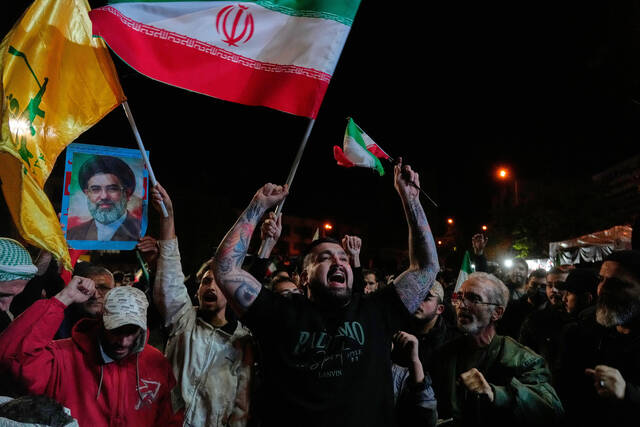
(NewYorkPost)-Iran warned it could target U.S. Navy ships entering the Strait of Hormuz after American warships passed through the strategic waterway for the first time since the conflict began, raising tensions as diplomatic talks continue.
Multiple U.S. military vessels, including at least two guided-missile destroyers, transited the strait on Saturday in what officials described as an uncoordinated move. The passage marked a significant development in the standoff over control of the narrow shipping route, a critical artery for global energy supplies.
President Donald Trump appeared to confirm the operation in a series of social media posts, stating that the United States had begun efforts to reopen the route to international shipping. He framed the move as part of a broader effort to ensure the flow of energy supplies to global markets.
Iranian officials responded with warnings that any U.S. naval presence in the strait could be treated as a hostile act. A government spokesperson indicated that Iranian forces had tracked one American destroyer approaching the area and cautioned that further movement could trigger a military response.
Despite the warnings, the U.S. vessels completed their transit without incident. A report by The Wall Street Journal described the operation as a routine freedom-of-navigation mission, adding that the ships were not escorting commercial traffic.
The episode unfolded as U.S. and Iranian representatives met in Pakistan for high-level negotiations aimed at preserving a fragile ceasefire. Iranian officials signaled that military activity in the strait could complicate those discussions, warning that continued U.S. movements might undermine diplomatic progress.
Iran has maintained that control over the waterway is central to any broader agreement, while the United States has insisted on unrestricted access for international shipping. The competing positions have emerged as a key obstacle in ongoing efforts to de-escalate the conflict.
The transit of U.S. warships through the Strait of Hormuz represents a calculated show of force designed to reinforce freedom of navigation while testing Iran’s red lines. By proceeding without coordination, Washington signaled it does not recognize any unilateral restrictions on the waterway, even as negotiations continue.
Iran’s response reflects its reliance on the strait as a strategic lever. Control over the route provides Tehran with significant influence over global energy markets, allowing it to exert pressure far beyond the immediate conflict. The threat to target U.S. vessels, even if not acted upon, underscores the risk of rapid escalation in a confined and heavily trafficked maritime corridor.
The timing is particularly sensitive. With talks underway in Pakistan, both sides appear to be balancing diplomacy with displays of strength. Such parallel strategies can increase leverage at the negotiating table but also heighten the risk of miscalculation, especially in a region where military forces operate in close proximity.
For global markets, the incident highlights the fragility of supply routes that handle a large share of the world’s oil and natural gas. Even limited disruptions or threats can drive price volatility and ripple through international economies.
Ultimately, the episode illustrates how the Strait of Hormuz has become the central pressure point in the conflict. Whether it remains open or becomes a flashpoint for further confrontation may determine the trajectory of both the negotiations and the broader regional stability.
A man armed with a large knife was shot and killed by police Saturday after he attacked three people in a busy New York City subway station, authorities said.
Officers responded to an emergency call shortly before 10 a.m. at Grand Central Terminal, where they encountered the suspect behaving erratically and holding a weapon. Police Commissioner Jessica Tisch said the man ignored repeated commands to drop the knife and advanced toward officers before he was shot.
“He continued to pose a serious threat after injuring multiple people,” Tisch said at a news briefing, adding that officers attempted to calm the situation before using force.
Authorities identified the suspect as Anthony Griffin, 44. He was taken to Bellevue Hospital, where he was pronounced dead. Officials said he had prior arrests.
Three victims — two men, ages 84 and 65, and a 70-year-old woman — were injured in the attack. Police said their wounds were not believed to be life-threatening, though one man suffered severe cuts to the head and face and another sustained a skull fracture. The woman had a shoulder injury.
Investigators said the suspect first attacked a person on one platform before moving to another area of the station and injuring two more individuals. Transit Chief Joseph Gulotta said early findings suggest the violence was random.
New York Gov. Kathy Hochul praised officers for their swift response, saying they acted quickly to stop the threat as the investigation continues.
Transit officials temporarily suspended some train stops at the station and urged commuters to avoid the area as police secured the scene.
Witness Beau Lardner described hearing loud bangs before seeing crowds rush toward exits. He said the surge of passengers fleeing the platforms was unlike anything he had experienced during years of commuting through the station.
The incident highlights ongoing concerns about safety in one of the nation’s busiest transit systems, even as officials have increased police presence in recent years. While violent crime in the subway remains relatively rare compared to overall ridership, high-profile attacks continue to shape public perception and commuter behavior.
The response by officers reflects a broader shift in policing strategy that emphasizes rapid intervention when a suspect poses an immediate threat. In this case, authorities stressed that de-escalation efforts were attempted before deadly force was used, underscoring the challenges officers face in fast-moving situations involving armed individuals in crowded public spaces.
The apparent randomness of the attack adds to concerns about unpredictability in urban transit environments. Unlike targeted incidents, such acts can heighten anxiety among riders and complicate prevention efforts.
From a policy standpoint, the event may renew debate over mental health services, transit security measures and the balance between enforcement and prevention. Officials have increasingly pointed to the need for coordinated responses that combine policing with social services to address underlying risks before they escalate into violence.
U.S. Vice President JD Vance arrived in Pakistan on Saturday to lead high-level negotiations with Iranian officials, marking the first direct engagement between the two sides since the conflict began more than a month ago and testing whether a fragile ceasefire can hold.
The American delegation, which includes special envoy Steve Witkoff and adviser Jared Kushner, is seeking to stabilize a temporary halt in fighting brokered by Shehbaz Sharif’s government and lay the groundwork for a broader peace agreement.
Iranian representatives, led by parliament speaker Mohammad Bagher Ghalibaf, arrived earlier in the capital. Ghalibaf indicated that meaningful discussions would depend on conditions including a halt to Israeli military actions in Lebanon and the release of frozen Iranian assets.
Tensions remain high despite the ceasefire, with continued exchanges of fire between Israeli forces and Hezbollah fighters along southern Lebanon’s border raising doubts about the agreement’s durability.
President Donald Trump has publicly pressed Iran ahead of the talks, portraying its negotiating position as weak while accusing Tehran of leveraging control over the Strait of Hormuz to influence global energy flows. In social media posts, Trump said the negotiations represent a critical moment for determining whether a lasting deal is possible.
Security across Islamabad was tightened ahead of the meetings, with major roads sealed and residents urged to remain indoors. The usually busy capital appeared largely deserted as authorities implemented sweeping precautions.
Sharif described the negotiations as entering a decisive stage, calling the current moment critical as both sides attempt to transition from a temporary pause in fighting to a more durable settlement.
Before departing Washington, Vance expressed cautious optimism about the talks but warned that the United States would not respond favorably to what he described as insincere engagement.
Meanwhile, diplomatic efforts are expanding beyond the U.S.-Iran channel. The office of Lebanese President Joseph Aoun said direct talks between Israel and Lebanon are expected to begin Tuesday in Washington. The discussions are aimed at ending hostilities involving Hezbollah and addressing long-standing security concerns along the border.
Israel, led by Prime Minister Benjamin Netanyahu, has maintained that its operations in Lebanon fall outside the scope of the ceasefire with Iran, a position that has fueled friction and threatened to derail broader peace efforts. Recent airstrikes in Lebanon have caused significant casualties, further complicating negotiations.
At the center of the dispute remains the Strait of Hormuz, a vital shipping route through which a significant portion of the world’s oil supply passes. Iran’s restrictions on traffic through the waterway have disrupted global markets, driving up energy prices and adding urgency to the talks. Only a limited number of vessels have transited the route since the ceasefire took effect, far below normal levels.
The Islamabad talks represent a high-stakes diplomatic effort shaped as much by military leverage as by negotiation strategy. The United States is entering discussions from a position of force, reinforced by military deployments and public messaging from President Trump, while Iran is relying on its control of a critical global energy route to strengthen its hand.
This dynamic creates a delicate balance. While both sides have incentives to avoid renewed conflict, their core demands remain far apart. Iran’s insistence on linking the ceasefire to developments in Lebanon adds a regional dimension that complicates what might otherwise be a bilateral negotiation.
The continued fighting involving Hezbollah underscores the risk that parallel conflicts could undermine diplomatic progress. Even if Washington and Tehran reach a framework, unresolved tensions involving Israel and Lebanon could quickly destabilize any agreement.
Economically, the disruption of shipping through the Strait of Hormuz has already demonstrated how regional conflict can ripple across global markets. Sustained restrictions could intensify inflationary pressures worldwide, making the outcome of these talks significant far beyond the Middle East.
Ultimately, the negotiations in Pakistan may determine whether the current pause in fighting evolves into a lasting settlement or collapses into another phase of escalation. The presence of senior officials from both sides signals the seriousness of the effort, but the competing conditions and ongoing violence suggest the path to peace remains uncertain.
Artemis II’s astronauts returned from the moon with a dramatic splashdown in the Pacific Ocean on Friday to close out humanity’s first lunar voyage in more than half a century, marking a triumphant milestone in NASA’s effort to establish permanent human presence beyond Earth orbit.
It was a victorious homecoming for the crew of four whose record-breaking lunar flyby revealed not only expansive regions of the moon’s far side—never before witnessed by human eyes—but also a total solar eclipse visible only from their unique vantage point in deep space. Commander Reid Wiseman, pilot Victor Glover, Christina Koch, and Canada’s Jeremy Hansen hit the atmosphere traveling Mach 33—or 33 times the speed of sound—a blistering velocity not experienced since NASA’s Apollo moonshots of the 1960s and 1970s.
Their Orion capsule, christened Integrity, made the plunge on automatic pilot as four astronauts sat helplessly strapped in their seats while computers managed the precise atmospheric entry angles required to prevent the spacecraft from skipping off Earth’s atmosphere like a stone across water or burning up from excessive friction.
The tension in Mission Control mounted as the capsule became engulfed in red-hot plasma during peak heating and entered a planned communication blackout that left ground controllers blind to the crew’s status. All eyes focused on the capsule’s life-protecting heat shield that had to withstand thousands of degrees during reentry—a critical test given concerns about its performance.
On the spacecraft’s only previous test flight in 2022 with no crew aboard, the shield’s charred exterior returned looking as pockmarked as the moon itself, raising questions about whether modifications would be required before risking human lives. The successful performance of the heat shield during Artemis II’s reentry validates the design for future missions carrying astronauts to lunar surface.
Like so many others, lead flight director Jeff Radigan anticipated feeling some of that “irrational fear that is human nature,” especially during the six-minute blackout that preceded the opening of the parachutes. The recovery ship USS John P. Murtha awaited the crew’s arrival off the San Diego coast, along with a squadron of military planes and helicopters positioned to provide assistance if the landing went awry.
The last time NASA and the Defense Department collaborated for a lunar crew’s reentry was Apollo 17 in 1972—making the Artemis II recovery the first such operation in 53 years and requiring relearning of procedures and capabilities that had atrophied during decades of low-Earth orbit operations aboard space shuttles and the International Space Station.
Artemis II was projected to come screaming back at 36,170 feet per second—equivalent to 24,661 miles per hour—just shy of the record before slowing to a 19 mph splashdown through a carefully choreographed sequence of parachute deployments. “A perfect bull’s-eye splashdown,” Mission Control’s Rob Navias announced, confirming the capsule landed precisely where trajectory calculations predicted.
Launched from Florida on April 1, the astronauts accumulated one success after another as they deftly navigated NASA’s long-awaited lunar comeback—the first major step in establishing a sustainable moon base that could serve as staging point for eventual Mars missions. Artemis II didn’t land on the moon or even orbit it, instead performing a figure-eight trajectory that took the crew around the lunar far side before returning to Earth.
But the mission broke Apollo 13’s distance record and marked the farthest that humans have ever journeyed from Earth when the crew reached 252,756 miles from home. The record eclipsed Apollo 13’s previous mark set in 1970 during that mission’s emergency circumlunar trajectory after an oxygen tank explosion forced abandonment of landing plans.
In the mission’s most emotionally resonant moment, the tearful astronauts requested permission to name a pair of craters after their moonship and Wiseman’s late wife Carroll. Mission Control granted the request, creating permanent lunar monuments to both technological achievement and personal loss that future astronauts will see when they traverse those regions.
During Monday’s record-breaking flyby, they documented scenes of the moon’s far side never witnessed before by human observers along with a total solar eclipse visible only from deep space. The eclipse in particular “just blew all of us away,” Glover disclosed, conveying the profound impact of witnessing celestial mechanics from perspectives impossible to achieve from Earth’s surface.
Their sense of wonder and profound connection to the mission awed everyone monitoring from the ground, as did their breathtaking photographs of the moon and Earth. The Artemis II crew channeled Apollo 8’s first lunar explorers with Earthset images showing our Blue Marble setting behind the gray moon—reminiscent of Apollo 8’s famous Earthrise photograph from 1968 that transformed humanity’s perspective on our planet’s fragility.
“It just makes you want to continue to go back,” Radigan reflected on the eve of splashdown. “It’s the first of many trips and we just need to continue on because there’s so much” more to learn about the moon and what sustained human presence there could teach us about living beyond Earth.
Their moonshot drew global attention as well as celebrity endorsements, earning recognition from President Donald Trump; Canadian Prime Minister Mark Carney; Britain’s King Charles III; Ryan Gosling, star of the latest space film “Project Hail Mary”; Scarlett Johansson of the Marvel Cinematic Universe; and even Captain Kirk himself, William Shatner of television’s original “Star Trek.” The cultural resonance demonstrated space exploration’s enduring power to unite diverse audiences.
Despite its rich scientific yield, the nearly 10-day flight was not without technical challenges. Both the capsule’s drinking water and propellant systems experienced valve problems that required troubleshooting while traveling through deep space. In perhaps the most high-profile predicament, the toilet kept malfunctioning—forcing the astronauts to employ backup waste management procedures not designed for multi-day use.
The astronauts shrugged off all difficulties with characteristic pilot composure. “We can’t explore deeper unless we are doing a few things that are inconvenient,” Koch observed, “unless we’re making a few sacrifices, unless we’re taking a few risks, and those things are all worth it.” Her perspective reflected the pioneering spirit that has driven exploration throughout human history.
Hansen added: “You do a lot of testing on the ground, but your final test is when you get this hardware to space and it’s a doozy.” The Canadian astronaut’s comment acknowledged the irreplaceable value of actual flight testing versus simulations, no matter how sophisticated ground-based preparations become.
Under the revamped Artemis program, next year’s Artemis III will witness astronauts practicing docking their capsule with a lunar lander or two in orbit around Earth—critical maneuvers required before attempting actual moon landings. Artemis IV will attempt to land a crew of two near the moon’s south pole in 2028, targeting regions where permanently shadowed craters may contain ice deposits useful for life support and rocket fuel production.
The Artemis II astronauts’ primary allegiance was to those future crews whose missions will build upon lessons learned during this pioneering flight, Wiseman emphasized. “But we really hoped in our soul is that we could for just for a moment have the world pause and remember that this is a beautiful planet and a very special place in our universe, and we should all cherish what we have been gifted,” he reflected.
As recovery helicopters plucked the four astronauts from the bobbing capsule in Pacific swells and transported them to the USS John P. Murtha for initial medical examinations and debriefings, NASA officials began the complex process of extracting every possible lesson from the mission to improve future flights.
Engineers will meticulously examine the returned heat shield to understand exactly how the thermal protection system performed under the extreme conditions of lunar return velocities. The valve problems in both water and propellant systems will be investigated to determine whether design modifications are required or if the issues reflected one-time anomalies unlikely to recur.
The toilet malfunctions—while seemingly mundane compared to dramatic reentry sequences—actually represent significant engineering challenges given the difficulty of waste management in zero gravity and the health risks of inadequate sanitation systems on missions lasting weeks or months. Solving these problems proves essential for sustainable deep space exploration.
For the four Artemis II astronauts, the return to Earth gravity after 10 days in weightlessness will require days or weeks of physical rehabilitation as their bodies readjust to bearing their own weight and pumping blood against gravitational pull. The physiological impacts of extended spaceflight remain among the most significant challenges for eventual Mars missions that could last years.
As Wiseman, Glover, Koch, and Hansen begin that recovery process surrounded by families and colleagues celebrating their safe return, they can take satisfaction in knowing they have reignited humanity’s push beyond low Earth orbit after decades of circling our planet at relatively safe altitudes. Their successful mission demonstrates that the United States—in partnership with Canada and other international allies—retains the capability to venture into deep space despite the retirement of Apollo-era infrastructure.
Whether that capability translates into sustained lunar presence and eventual Mars exploration depends on political will, continued funding, and successful execution of increasingly complex missions building toward permanent off-world human settlements. For now, the triumphant splashdown of Artemis II proves that humanity’s reach can still extend to the moon and beyond when vision, resources, and courage align.
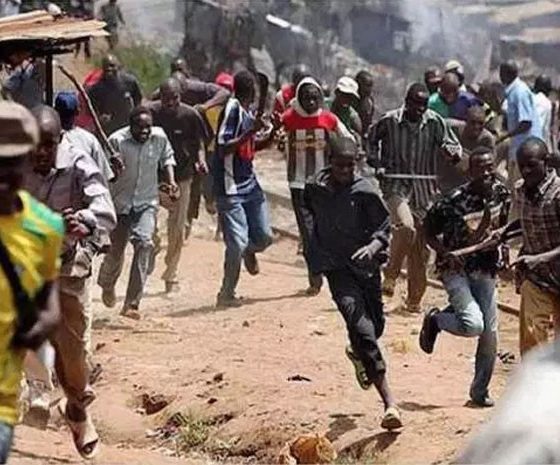
Gunmen invaded Mbwelle village in Bokkos Local Government Area of Plateau State, Nigeria, on Thursday night and killed at least eight persons, mostly members of the same family, in a prolonged assault that lasted several hours without security forces intervening despite the community’s proximity to Bokkos town and military installations.
Those killed included Elder Iliya Mangut Dakus, Mr. Luck Titus Dakus, Mr. Habila Istifanu Dakus, Mr. Hassan Istifanus Dakus, Mrs. Hassan Moses Dakus, Biggie Lucky Dakus, Sunday Gideon Dakus, and Mr. Innocent Barnabas Makwin. The concentration of victims from the Dakus family suggests either deliberate targeting based on family vendettas or that attackers focused on a single compound where extended family members resided together.
The Chairman of the Community Peace Observers in Bokkos Local Government Area, Nigeria, Kefas Mallai, confirmed the killings to The PUNCH in Jos on Friday. He disclosed the attack occurred around 11 p.m. when the assailants invaded the community and opened fire indiscriminately on residents, leaving approximately three other persons injured while some community members remained missing—suggesting the death toll could rise once searches of surrounding areas are completed.
Mallai emphasized: “There was an attack last night at Mbwelle village. The village is very close to Bokkos town. So far eight persons have been confirmed dead this morning.” The proximity to Bokkos town—a district headquarters with government presence and security installations—makes the prolonged attack without intervention particularly troubling for residents questioning whether security forces possess the capability or willingness to protect rural populations.
“The people are saying they want to protest because the security men have not protected them and the attack lasted for hours and yet, no presence of security to repel the assailants until those people finished and left. No trace,” Mallai revealed, conveying community outrage that gunmen could operate for extended periods before departing unmolested by military or police forces supposedly responsible for preventing such violence.
He added: “The attack lasted for several hours with no visible security presence to repel the attackers.” The emphasis on duration suggests this was not a brief raid but rather a sustained assault during which security forces theoretically had ample time to deploy reinforcements and engage the attackers if they possessed the will and capacity to do so.
Mallai further alleged that security forces did not respond despite the area’s proximity to their installations, and that personnel were currently deployed to protect a specific community suspected by natives of Bokkos to be the origin of the attackers. The explosive allegation—that security forces prioritize protecting suspected attacker communities over defending victims—reflects deep distrust between Plateau State residents and authorities they believe have chosen sides in communal conflicts.
Youth Leader of Bokkos Christopher Luka also confirmed the incident, characterizing it as “a sad and devastating assault on the people of Bokkos and Plateau State as a whole.” His language framing the attack as assault on the entire state rather than merely one village suggests he views it as part of broader patterns of violence targeting specific ethnic or religious communities.
“The gunmen came around 11pm and started shooting sporadically. They targeted one family mostly. We have eight confirmed dead, some seriously injured, and others still unaccounted for,” Luka disclosed, providing additional evidence that attackers focused on a particular household rather than killing randomly throughout the village.
Efforts to obtain reaction from the Plateau State Police Command spokesman, DSP Alfred Alabo, proved unsuccessful as of press time. The Media Officer for the Joint Military Taskforce, Chinonso Oteh, was not immediately available to speak on the incident when contacted. “I will get back to you,” he stated without providing substantive information about military response to the attack or investigations underway.
The PUNCH documented that Bokkos and other neighboring local government areas of Plateau State have faced security challenges in recent years. The situation escalated last week when the Berom Youth Moulders Association raised alarm over unrelenting ambushes and killings targeting residents in Barkin Ladi, Riyom, and Jos South local government areas, even with security operatives on the ground.
In a statement signed by its National Publicity Secretary Rwang Tengwong, the group led by National President Dalyop Mwantiri characterized the attacks as a calculated campaign of terror allegedly aimed at grabbing ancestral lands. The land-grabbing accusation transforms the violence from random criminality into systematic ethnic cleansing designed to displace indigenous populations and transfer control of territories to outsider groups.
According to the association, on Wednesday gunmen ambushed travelers returning from mining activities around the Great Commission area along Bokkos Road, heading to Nding in Fan District of Barkin Ladi Local Government Area, at approximately 4:15 p.m. The attackers opened fire on the victims, killing Mr. Ayuba Pam of Nding Sesut. Two others, Mr. Alfred Dung and Mr. Nathaniel Bitrus, sustained serious injuries and were receiving treatment in hospital.
In a separate incident the same evening around 6:30 p.m., gunmen ambushed and killed Mr. Christopher Joshua, a father of three from the Byei community in Riyom Local Government Area, along the Gwolhoss–Byei road as he returned home from daily activities. The targeting of individuals on rural roads during daylight or early evening hours suggests attackers maintain sufficient control over territories to conduct operations without fear of security force intervention.
The Berom Youth Moulders described the incidents as part of sustained aggression against Berom communities and expressed concern that such ambushes continued on busy rural roads used by farmers, miners, and travelers despite security agencies knowing the flashpoints and hideouts of the attackers. The assertion that authorities know attack locations and perpetrator bases but fail to act transforms the issue from mere security incapacity into potential complicity or deliberate inaction.
The association called on security agencies to immediately increase surveillance and patrols along critical corridors, including the Great Commission–Bokkos road, Great Commission–Gashish axis, Rahoss–Rim road, Kwi–Farin Lamba road, Gwolhoss–Jol–Sho road, and Rim–Bachi road. The lengthy list of dangerous routes illustrates how extensive territories have become effectively ungovernable as armed groups operate with apparent impunity.
The Thursday night massacre in Mbwelle village represents the latest incident in escalating violence that has transformed Plateau State from Nigeria’s “Home of Peace and Tourism”—its official slogan—into one of the nation’s most dangerous regions where rural populations live under constant threat of nighttime raids, highway ambushes, and targeted killings.
The violence in Plateau State reflects broader patterns of farmer-herder conflicts, ethnic tensions, land disputes, and religious divisions that have plagued Nigeria’s Middle Belt region for decades. However, the systematic nature of recent attacks and allegations about land-grabbing objectives suggest the violence has evolved beyond spontaneous clashes into organized campaigns with strategic territorial objectives.
For residents of Mbwelle village now burying eight neighbors—including entire branches of the Dakus family tree—the failure of security forces to intervene during hours of gunfire confirms their worst suspicions that government protection extends only to favored communities while others are abandoned to their fate. The determination to protest despite risks of violent suppression demonstrates how profoundly the attack has shaken community trust in authorities.
The concentration of eight deaths within one extended family will devastate Mbwelle’s social fabric as survivors confront not merely individual losses but the decimation of family networks providing economic support, childcare, agricultural labor, and emotional sustenance. The injured struggling to recover in hospital face uncertain futures given Nigeria’s inadequate rural healthcare infrastructure.
For the still-missing community members, families endure agonizing uncertainty about whether their loved ones fled into surrounding bush and will eventually return, were abducted by attackers for ransom or other purposes, or lie dead in locations not yet discovered by search teams. The ambiguity compounds grief and prevents proper mourning or burial according to cultural traditions.
As Plateau State authorities maintain silence about the massacre and security forces offer no explanations for their absence during the prolonged assault, residents of Bokkos and surrounding areas draw conclusions about governmental priorities and their own vulnerability that will shape their responses to future threats.
Whether those responses involve increased self-defense preparations, migration to safer regions, or organized resistance against both attackers and apparently indifferent security forces remains uncertain.
For now, Mbwelle village mourns eight dead, tends three wounded, searches for the missing, and demands answers about why hours of gunfire failed to summon any security response in a nation where government officials insist they are winning the fight against criminality and terrorism that increasingly appears to be winning the fight against governmental authority itself.
At least 10 people were killed Friday when an overcrowded tourist boat overturned in the Yamuna River near the temple town of Vrindavan in northern India, local officials said.
The privately operated vessel, designed to carry about 15 passengers, was transporting roughly 25 people when it capsized midstream, authorities said. Early findings indicate that strong winds destabilized the boat before it collided with a floating bridge and overturned.
Chandraprakash Singh, a senior administrative official, said 15 people were pulled from the water, with four in critical condition. The victims were all Indian nationals, including six women.
Officials said many passengers were not wearing life jackets, and initial inspections suggested the boat was not properly maintained. The operator fled the scene following the incident and remains at large.
The group on board was part of a larger gathering of about 150 visitors traveling in the area, a major pilgrimage destination that draws large crowds year-round.
Fatal boating accidents occur frequently in India, where safety standards are often uneven and overcrowding is common. A similar incident in 2023 in southern India left at least 22 people dead.
The tragedy underscores persistent safety gaps in India’s inland water transport system, particularly in high-traffic religious and tourist destinations. Despite repeated fatal incidents, enforcement of passenger limits and safety regulations remains inconsistent, especially among privately operated vessels.
The absence of life jackets in this case reflects a broader pattern seen in past disasters, where basic safety measures are either ignored or inadequately monitored. While local authorities often announce investigations after such incidents, long-term structural reforms have been slow to materialize.
Vrindavan’s status as a major pilgrimage hub adds another layer of complexity. Seasonal surges in visitors place pressure on transport operators to maximize capacity, sometimes at the expense of safety. Without stricter oversight and penalties for violations, similar incidents are likely to recur.
The operator’s reported flight from the scene also raises questions about accountability and regulatory enforcement. Strengthening licensing systems and ensuring routine inspections could play a critical role in preventing future disasters.
President Donald Trump signaled a potential escalation in the conflict with Iran, saying U.S. warships are being rearmed with advanced weapons as Washington prepares for decisive negotiations aimed at securing a longer-term peace agreement.
In remarks carried by the New York Post and echoed by The Times of Israel, citing AFP, Trump indicated that military options remain firmly on the table if diplomacy fails. He described an ongoing military buildup, noting that naval forces are being supplied with upgraded weaponry following earlier strikes in the conflict.
“We have a reset going,” Trump said, adding that U.S. forces are being equipped with what he characterized as the most advanced weapons systems. He emphasized that those assets would be used if negotiations do not produce an agreement.
The warning comes as Vice President JD Vance and envoy Steve Witkoff travel to Pakistan for talks expected to test a fragile pause in hostilities announced earlier in the week. Trump has framed the negotiations as a pivotal moment, saying it will soon become clear whether a broader settlement can be reached.
In separate comments posted on his Truth Social platform, Trump cast doubt on Iran’s reliability as a negotiating partner, suggesting inconsistencies between its public statements and private assurances. He reiterated his administration’s position that Iran must abandon any pursuit of nuclear weapons capability as part of a final deal.
Vance also underscored the administration’s cautious stance, signaling openness to diplomacy while warning that the United States would not tolerate bad-faith negotiations. He said the U.S. delegation would approach the talks with clear expectations set by the president.
The developments unfold against a backdrop of heightened tensions in the region, where recent military exchanges and disruptions to key shipping routes have raised concerns about broader instability and global economic fallout.
The latest statements highlight a dual-track strategy by the Trump administration that blends diplomacy with overt military pressure. By publicly emphasizing the rearming of warships, the United States appears to be leveraging deterrence as a negotiating tool, aiming to compel concessions while maintaining readiness for rapid escalation.
This approach carries significant risks. While it may strengthen Washington’s bargaining position, it also raises the likelihood of miscalculation, particularly in a region already strained by overlapping conflicts. Iran’s leadership, facing internal and external pressures, may interpret such signals as coercive, potentially hardening its stance rather than encouraging compromise.
The timing of the remarks is also notable. With global energy markets sensitive to disruptions in major shipping routes, any indication of renewed conflict could trigger volatility in oil prices and broader financial markets. The mere suggestion that military action could resume has already contributed to uncertainty among investors and policymakers.
Diplomatically, the talks in Pakistan represent a critical inflection point. A breakthrough could stabilize the region and restore confidence in international shipping lanes. Failure, however, could set the stage for a rapid return to hostilities, with consequences extending far beyond the immediate conflict zone.
Ben Affleck has relinquished his ownership interest in the Beverly Hills mansion he once shared with Jennifer Lopez, marking a significant development in the former couple’s post-divorce financial arrangements.
Newly filed court documents indicate that Affleck has transferred his stake in the property to Lopez, leaving her solely responsible for the home’s future sale and any associated costs. The revised agreement, signed by Lopez on March 31 and by Affleck the following day, updates terms from their original divorce settlement finalized earlier this year.
The estate, located in the Beverly Crest area, was purchased by the couple in May 2023 for approximately $60.85 million. Efforts to sell the property began in mid-2024, with multiple price reductions following a lack of buyer interest. The home was initially listed for $68 million before being reduced and eventually withdrawn from the market earlier this year.
Language in the updated filing outlines that Lopez will assume full financial responsibility tied to any eventual sale, including commissions, taxes and closing costs. The documents also reference a transfer of property ownership, though no timeline for relisting the home has been disclosed.
Details cited by the Daily Mail suggest the revised arrangement effectively leaves Lopez in control of any proceeds from a future sale. Separate reporting from TMZ indicates Affleck surrendered his share without financial compensation, though representatives for both parties have not publicly commented.
The mansion, a 12-bedroom, 24-bathroom estate, had been removed from the market in January after an extended period without securing a buyer. Images published by the Daily Mail at the time showed moving trucks at the property, though the purpose of the activity was not clarified.
Both Affleck and Lopez have since established separate residences following their split. Affleck purchased a home in Pacific Palisades in August 2024, while Lopez acquired a property in Calabasas earlier this year. She has continued to stay at the Beverly Hills estate while renovations are completed on her new home, Daily Mail reporting indicates.
The couple’s divorce filing came in August 2024, coinciding with their second wedding anniversary, bringing an end to a high-profile relationship that had drawn sustained public attention.
The transfer of the Beverly Hills mansion underscores a broader effort by both Affleck and Lopez to disentangle shared financial assets following their divorce. High-value real estate often becomes one of the most complex elements in celebrity separations, particularly when properties are purchased at peak market prices.
Affleck’s apparent decision to relinquish his stake without compensation may reflect a strategic move to expedite the division of assets and avoid prolonged negotiations over a property that has struggled to sell. The lack of buyer interest, despite significant price adjustments, suggests the luxury real estate market at that level may be facing softer demand or pricing resistance.
For Lopez, assuming full control of the property also carries financial risk. With ongoing maintenance costs and a potentially uncertain resale market, the long-term value of the asset remains unclear. However, sole ownership provides her flexibility in determining the timing and pricing of any future sale.
The situation also highlights how personal transitions intersect with financial strategy. Both figures have already secured new homes, signaling a shift toward independence while still resolving shared investments. The final outcome of the mansion sale will likely serve as a benchmark for how effectively high-profile property assets can be managed after a split.
Lawyers for Sean “Diddy” Combs urged an appeals court Thursday to overturn the hip-hop mogul’s prison term of more than four years for prostitution-related crimes, arguing that the sentencing judge improperly considered evidence related to more serious charges that a jury explicitly rejected through acquittal verdicts.
Combs, 56, was sentenced in October following a salacious trial that detailed the alleged “freak-offs” he organized—sexual marathons involving hired male escorts and his ex-girlfriend Casandra Ventura plus another unidentified woman. The case exposed intimate details of the music executive’s private life while raising complex legal questions about how judges may consider acquitted conduct when determining sentences.
According to Punch Nigeria, a jury acquitted Combs of the most serious charges against him—sex trafficking and racketeering—but convicted him of two counts of transporting people across state lines for prostitution. The mixed verdict created the legal controversy now before the appeals court about what evidence judges may properly consider when sentencing defendants for lesser crimes after juries reject more serious allegations.
The disgraced artist was not present at the Manhattan courthouse Thursday as defense lawyer Alexandra Shapiro sought to persuade a three-judge panel that Combs’s sentence of four years and two months was unfairly long for his crimes given that prosecutors failed to prove the most egregious allegations at trial.
“The evidence the judge was relying on was totally separate and, in fact, was acquitted conduct,” Shapiro argued, contending that District Judge Arun Subramanian should not have considered evidence that Combs made threats against Ventura and the other woman because it was related to the acquitted charges rather than the prostitution convictions.
Prosecutors disagreed and pointed to an instance where Combs showed Ventura he possessed videos of her engaging in sex parties hours before another “freak-off” in an apparent bid to ensure her continued participation. “These incidents are specifically tied to transportation,” prosecutor Christy Slavik told the court, arguing that the threats were relevant to the prostitution charges themselves rather than merely background to acquitted counts.
In a sign of the complex legal arguments, Slavik at one point drew an analogy involving pizza to highlight how certain “slices” of evidence were relevant to the ultimate sentencing decision—an unconventional comparison that illustrated the difficulty of parsing which evidence relates exclusively to acquitted charges versus conduct underlying convictions.
The court did not issue an immediate ruling in what Judge William Nardini characterized as an “exceptionally difficult case” raising novel questions that have not yet been considered by any U.S. appeals court. Combs is being held in the low-security Fort Dix prison in New Jersey and is scheduled for release in spring 2028 if his sentence stands.
Combs is also appealing his conviction, though that separate legal challenge was not discussed in detail Thursday. The appeals focused narrowly on sentencing issues rather than whether the jury reached correct conclusions about his guilt on the transportation charges.
Reuters documented that a U.S. appeals court appeared divided Thursday about Combs’s bid to overturn the hip-hop mogul’s prison sentence over prostitution charges in a case that raises novel legal questions about how judges consider conduct for which a defendant has been acquitted when determining punishment.
A three-judge panel of the Manhattan-based 2nd U.S. Circuit Court of Appeals heard arguments in Combs’s request to overturn his 2025 conviction and the sentence of four years and two months imposed by U.S. District Judge Subramanian. The arguments focused on the defense contention that Subramanian improperly considered evidence that Combs had threatened former girlfriends when determining the sentence last October.
Combs was found guilty by a jury last July on two counts of transportation to engage in prostitution. The verdict followed a seven-week trial in Manhattan federal court that centered on drug-fueled and days-long sexual performances, sometimes called “Freak Offs,” between two former girlfriends of the hip-hop mogul and male sex workers hired for the encounters.
However, jurors acquitted the Bad Boy Records founder on more serious sex trafficking and racketeering charges related to allegedly forcing the two former girlfriends—rhythm and blues singer Casandra Ventura and a woman known in court by the pseudonym Jane—to participate in the encounters while he watched, masturbated, and sometimes filmed the activities.
Combs, currently serving his sentence at Fort Dix, was not present at the hearing. Defense lawyer Shapiro argued Thursday that Subramanian should not have considered evidence that Combs threatened to release an explicit video of Ventura and threatened to cut off rent payments for Jane when deciding on the sentence because that evidence involved the criminal counts rejected by the jury.
“The jury did not authorize punishment for sex trafficking or racketeering conspiracy,” Shapiro emphasized, arguing that considering acquitted conduct for sentencing purposes effectively allows prosecutors to obtain punishment for charges they failed to prove beyond reasonable doubt.
Prosecutor Slavik countered that Subramanian was correct to consider the threats because they were relevant to the prostitution counts as well as the acquitted charges. “Judge Subramanian properly considered the aggravated manner in which the defendant carried out his Mann Act offenses,” Slavik stated, referring to the criminal statute that criminalizes transportation across state lines for prostitution purposes.
Judge M. Miller Baker, a member of the 2nd Circuit panel, appeared sympathetic toward the defense arguments, noting that prosecutors did not emphasize the Mann Act charges at trial despite now seeking to uphold a sentence based partly on conduct related to those charges. “It was just a sideshow,” Baker observed about the prostitution charges relative to the sex trafficking allegations that dominated the trial.
“Why shouldn’t we hold you to what you argued to the jury?” Baker questioned Slavik, suggesting prosecutors should not be allowed to minimize charges at trial then rely on them heavily for sentencing purposes when more serious allegations fail.
Judges Nardini and Sarah Merriam, the panel’s two other members, appeared more skeptical of the defense arguments but also posed probing questions of Slavik about the boundaries between evidence supporting convictions versus evidence related exclusively to acquitted conduct. Nardini confirmed the case raises questions that have not yet been considered by any U.S. appeals court, making the eventual ruling potentially significant for sentencing practices nationwide.
“This is an exceptionally difficult case,” Nardini acknowledged, recognizing the legal complexity of determining which evidence judges may properly consider when sentencing defendants convicted of some charges but acquitted of others arising from the same underlying conduct.
Combs has acknowledged abusing his former girlfriends but maintained that incidents of what he characterized as domestic violence were separate from the sexual performances at issue in the case, which he insisted were consensual. The acknowledgment of abuse complicates his legal position by admitting wrongdoing even while disputing the specific criminal charges prosecutors pursued.
He is currently scheduled for release from prison on April 15, 2028, according to Bureau of Prisons records, though that date could change if appeals courts overturn either his conviction or sentence and order new proceedings.
The case illustrates ongoing tension in American criminal justice between jury verdicts that specifically reject certain allegations and judicial sentencing discretion that allows consideration of broader conduct patterns when determining appropriate punishment. Federal sentencing guidelines grant judges substantial authority to consider “relevant conduct” beyond elements of convicted offenses, creating potential for defendants to face punishment influenced by allegations juries rejected.
Legal scholars have debated for decades whether considering acquitted conduct at sentencing violates defendants’ constitutional rights by allowing punishment without proof beyond reasonable doubt. The Supreme Court has not definitively resolved the question, leaving appellate courts to navigate case-by-case determinations about which evidence crosses the line from legitimate sentencing consideration to improper end-run around jury acquittals.
For Combs, the legal arguments carry enormous personal stakes. If the appeals court concludes that Subramanian improperly inflated his sentence by considering threats related to acquitted charges, his prison term could be substantially reduced. Conversely, if the court upholds the sentence, he will serve the full four years and two months unless his separate appeal of the underlying convictions succeeds.
The three-judge panel’s apparent division during oral arguments suggests the eventual ruling could be close, potentially producing dissenting opinions that further develop the law in this unsettled area. Whether the court issues its decision within weeks or months remains uncertain, though federal appeals courts typically rule within six to twelve months of oral arguments.
For Ventura, Jane, and other women who testified about Combs’s alleged abuse, the appellate proceedings may feel like prolonged legal battles denying them closure after already enduring the trauma of publicly recounting intimate violations during trial. Whether they view potential sentence reduction as injustice or accept it as legitimate correction of legal error likely depends on their perspectives about criminal justice system fairness versus desires for maximum punishment of someone they believe harmed them profoundly.
As Combs serves his sentence while awaiting appellate rulings that could alter both his punishment and conviction, the case continues generating legal precedents that will influence how courts nationwide handle sentencing for defendants who face multiple charges arising from related conduct when juries convict on some counts while acquitting on others.
The United States and Iran are preparing for high-level talks aimed at stabilizing a fragile ceasefire, while Israel has authorized new negotiations with Lebanon, adding a parallel diplomatic track to efforts to ease tensions in the region.
U.S. Vice President JD Vance is expected to lead the American delegation to talks scheduled to begin Saturday in Islamabad. Iranian officials have not publicly confirmed their negotiating team, as Tehran presses Washington to halt Israeli military actions in Lebanon.
The planned discussions come as the ceasefire remains under strain, with ongoing concerns about restricted shipping through the Strait of Hormuz and continued exchanges of fire involving Israel and the armed group Hezbollah.
President Donald Trump on Thursday questioned Iran’s compliance with the agreement, saying the country was not allowing sufficient oil shipments to pass through the vital waterway.
“That is not the agreement we have,” Trump wrote on social media, warning that the United States could respond if commitments are not met.
Shipping data shows only a limited number of vessels have moved through the strait since the ceasefire took effect, raising concerns about global energy supplies. The route typically handles a significant share of the world’s oil and gas shipments, and disruptions have driven up prices in international markets.
At the same time, Israel signaled a possible shift in its regional approach. Prime Minister Benjamin Netanyahu said he has authorized direct negotiations with Lebanon “as soon as possible,” with a focus on disarming Hezbollah and improving relations between the two countries.
Israel and Lebanon have remained in a state of conflict for decades, and officials emphasized that no formal ceasefire currently exists between them. The announcement follows some of the heaviest Israeli airstrikes in Lebanon since the latest round of fighting began earlier this year.
U.S. officials said talks involving Israel and Lebanon could begin next week in Washington, though it remains unclear who will represent Lebanon.
Despite diplomatic efforts, violence has continued. Israel’s military said it carried out strikes on rocket launch sites in Lebanon after projectiles were fired toward northern Israel. Lebanese health officials reported hundreds of casualties from recent airstrikes in central Beirut and other areas.
Iran has warned that continued Israeli attacks in Lebanon could trigger a strong response, underscoring the risk of further escalation even as negotiations are being planned.
Meanwhile, questions remain over key issues tied to the ceasefire, including the future of Iran’s nuclear program, the flow of oil through the strait and the role of armed groups aligned with Tehran.
Regional energy infrastructure has also been affected. Saudi Arabia said recent attacks damaged a major pipeline used to transport oil to the Red Sea, adding to concerns about supply disruptions.
The ceasefire, brokered with international involvement, has been in place for just over two weeks but has shown signs of weakening amid competing claims and ongoing military activity.
The upcoming talks between the United States and Iran represent a critical test of whether the current ceasefire can hold. With both sides accusing each other of failing to meet commitments, the negotiations are likely to focus on immediate de-escalation measures as well as longer-term security concerns.
The situation is further complicated by the involvement of multiple actors. Israel’s decision to pursue talks with Lebanon introduces a separate diplomatic track that could either complement or complicate broader efforts to stabilize the region.
Control of the Strait of Hormuz remains a central issue. Any sustained disruption to shipping through the waterway has global economic implications, particularly for energy markets. The limited flow of vessels since the ceasefire suggests that confidence in the agreement remains low.
At the same time, continued military actions highlight the fragile nature of the truce. Without clear enforcement mechanisms or mutual trust, even small incidents risk escalating into wider conflict.
The coming days of negotiations will be crucial in determining whether diplomatic efforts can reduce tensions or whether the region will see a return to more intense fighting.