Home Blog Page 703

Airbus Beluga Lands at London’s Heathrow Airport for Special Delivery

An Airbus Beluga, a uniquely shaped aircraft named for its resemblance to the beluga whale, landed at London’s Heathrow Airport on Monday to deliver crucial spare parts for a grounded British Airways plane.

The Beluga flew from Toulouse, France, carrying components for a British Airways Airbus A350 that has been out of service since April. The A350 was damaged in a ground collision with a Virgin Atlantic 787 that was being towed at Heathrow’s Terminal 3.

The incident, which occurred on April 25, saw the empty Virgin Atlantic aircraft clip the wingtip of the stationary British Airways plane during towing operations. Footage from the scene showed minor damage to both aircraft and the presence of emergency services and ground crew on the runway. No passengers were on board either plane at the time, and no injuries were reported.

While the Virgin Atlantic 787 has since returned to service, the British Airways A350 sustained more serious damage, necessitating the special parts delivery via the Beluga.

The Airbus Beluga is a massive cargo aircraft specifically designed to transport large aircraft parts or oversized cargo. Its distinctive shape allows it to carry entire sections of planes in its voluminous hold. Airbus currently operates a fleet of six Beluga aircraft for such specialized transport needs.

According to flight tracking website Flightradar24, the Beluga is scheduled to return to Toulouse later today after completing its mission at Heathrow.

This unusual sighting at one of the world’s busiest airports highlights the complex logistics involved in aircraft maintenance and repair, especially following incidents that can ground multimillion-dollar planes for extended periods.

The arrival of the Beluga at Heathrow also serves as a reminder of the intricate supply chains and specialized equipment required to keep the global aviation industry running smoothly, even in the face of unexpected challenges.

Source: news.sky.com

RSF Paramilitaries Kill 31 in Sudanese City of Sennar, Activists Say

At least 31 people have been killed and 100 wounded in the southeastern Sudanese city of Sennar since Sunday, following a renewed assault by the paramilitary Rapid Support Forces (RSF), according to reports from Emergency Lawyers, a legal activist group monitoring civilian casualties and humanitarian violations.

The group stated that several parts of Sennar, including the main market, have been targeted by RSF artillery fire. This latest offensive comes as the RSF, which already controls most of Sennar and approximately half of Sudan, faces slowed progress in the southeast due to heavy rains hampering movement.

The ongoing conflict between the RSF and Sudan’s army has plunged the country into a humanitarian crisis, creating what is now considered the world’s largest hunger and internal displacement emergency. Tens of thousands of civilians have been killed, and much of Sudan’s infrastructure and economy lies in ruins.

Emergency Lawyers also reported that the Sudanese army had killed at least four people in al-Souki, a town near Sennar, during airstrikes. Additionally, RSF artillery strikes in el-Obeid, another contested town, resulted in one death and 17 injuries.

This escalation of violence comes in the wake of a UN-mandated mission’s report released on Friday, which stated that both sides in Sudan’s 18-month-old civil war have committed abuses that may amount to war crimes. The mission called for the deployment of peacekeepers and the implementation of a country-wide arms embargo.

However, Sudan’s army-aligned foreign ministry rejected these recommendations on Saturday, dismissing the idea of international peacekeepers as “the wish of Sudan’s enemies and it will not be fulfilled.”

As the conflict continues to ravage Sudan, the international community faces mounting pressure to intervene and address the escalating humanitarian crisis. The situation in Sennar underscores the urgent need for a resolution to the conflict and highlights the devastating impact of prolonged warfare on civilian populations.

Leader of Nigeria’s Labour Federation Arrested, Union Says

0

The president of Nigeria’s largest labour federation, Joe Ajero, was arrested on Monday by the country’s state security service, according to the Nigeria Labour Congress (NLC). The charges against Ajero have not been disclosed.

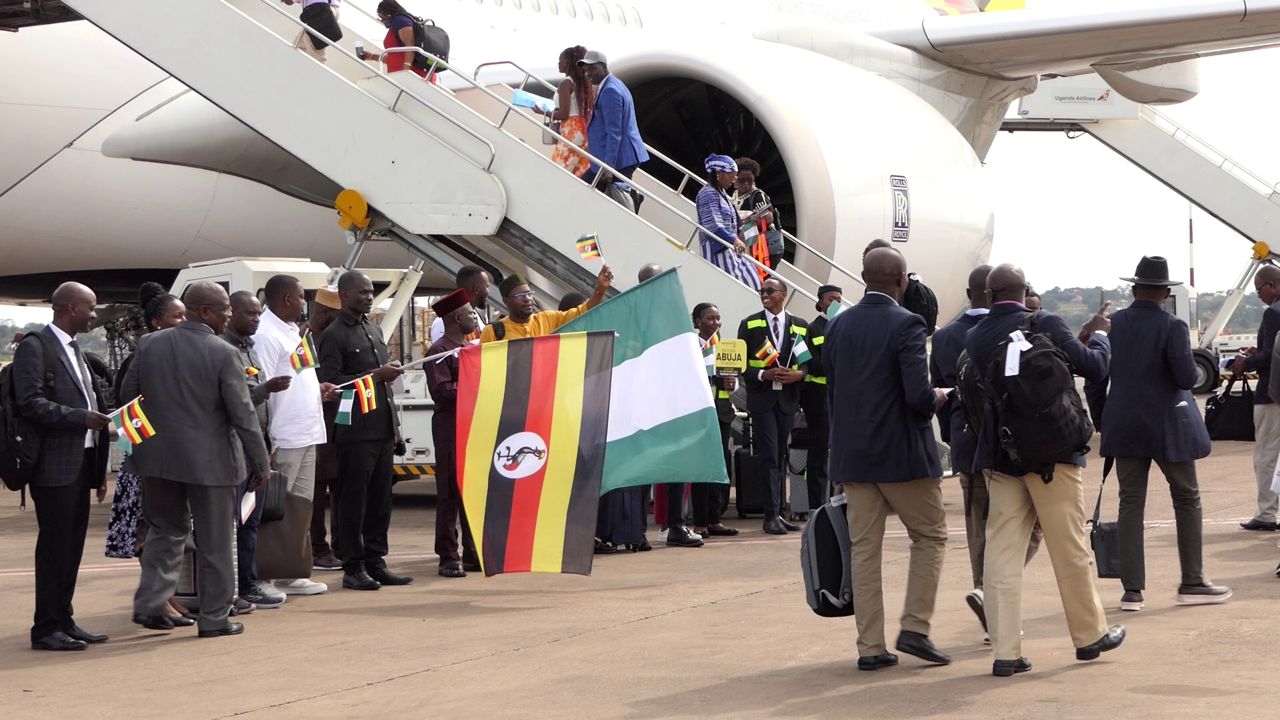
The arrest occurred at the Abuja airport as Ajero was attempting to board a flight to Britain for union business, the NLC reported on social media platform X. The Department of State Security (DSS), responsible for the arrest, has not immediately commented on the situation.

This development comes just days after Ajero publicly criticized the government’s decision to raise gasoline prices by 39%. He had threatened to call for a strike if the price hike was not reversed. The increase in fuel prices was a key factor in cost of living protests that took place in early August.

The timing of Ajero’s arrest has raised concerns about potential government retaliation against labour leaders who oppose its economic policies. Nigeria has been grappling with significant economic challenges, including high inflation and widespread hardship among its population.

Analysts suggest that the latest increase in gasoline prices could further exacerbate inflation, which is already in double digits. Gasoline is widely used by small businesses and households to power generators due to unreliable electricity supply, making its price a sensitive economic and political issue.

The arrest of a prominent labour leader like Ajero could potentially escalate tensions between the government and workers’ unions. It may also impact ongoing discussions about economic reforms and labour rights in Africa’s most populous nation.

As news of the arrest spreads, labour unions and civil society organizations are likely to demand Ajero’s immediate release and clarification on the charges against him. The incident could also draw international attention to Nigeria’s treatment of union leaders and its approach to managing economic dissent.

The NLC, under Ajero’s leadership, has been a vocal critic of government policies that it perceives as detrimental to workers and the general population. This arrest may signal a potential shift in the government’s tolerance for such criticism.

Abducted Tanzanian Opposition Official Found Dead, Acid Poured on Face

The body of Ally Kibao, a senior official from Tanzania’s main opposition party CHADEMA, was found on the outskirts of Dar es Salaam on Saturday, showing signs of severe beatings and acid burns to his face, according to party officials. This gruesome discovery comes a day after Kibao was reportedly abducted by armed men from a bus traveling to the northeastern port city of Tanga.

CHADEMA chairman Freeman Mbowe, addressing journalists late Sunday, stated that a preliminary post-mortem examination revealed evidence of severe beating and acid attacks. A full autopsy report is expected to be completed on Monday.

The incident has cast a shadow over President Samia Suluhu Hassan’s efforts to soften the authoritarian image of Tanzania’s government since taking office three years ago, following the death of her predecessor John Magufuli.

President Hassan responded to the news on social media platform X, formerly Twitter, saying she had ordered an investigation into what she termed Kibao’s assassination. “Our country is democratic and every citizen has the right to live. The government I lead does not tolerate such brutal acts,” she wrote.

Freeman Mbowe (C), chairman of Chadema, Tanzanian main opposition party arrives at Kisutu Magistrate Court in Dar es Salaam, Tanzania March 10, 2020. REUTERS/Emmanuel Herman

Police have issued a statement confirming they are investigating the “tragic incident.” However, CHADEMA chairman Mbowe has called for the formation of an independent judicial commission to investigate the abduction and killing, expressing concern that police might be among the suspects in the case.

This incident follows the arrest and brief detention of over 500 CHADEMA supporters, including top leadership, last month as they attempted to gather for a youth wing meeting in southwestern Tanzania.

While President Hassan has taken steps to ease restrictions on media and opposition since coming to power, human rights groups continue to report instances of arbitrary detentions.

The brutal nature of Kibao’s death has shocked many and raised concerns about political violence in Tanzania. As investigations proceed, the incident is likely to intensify scrutiny of the country’s human rights record and the government’s commitment to democratic reform.

REUTERS

At Least Six Dead After Migrant Boat Sinks Off Senegal Coast

0

A boat carrying approximately 100 migrants capsized off the coast of Senegal over the weekend, resulting in at least six deaths, according to a spokesperson for the Senegalese armed forces on Monday.

The vessel, a narrow wooden fishing boat known locally as a pirogue, departed from the town of Mbour. State broadcaster Radio Television Senegalaise (RTS) reported that the boat overturned after only 4 kilometers (2.5 miles) of navigation.

While four individuals were rescued, many passengers remain missing. The Senegalese navy has deployed a plane and two boats to search for survivors and recover bodies, with efforts continuing into Monday.

This incident highlights the ongoing risks associated with the popular migration route from West Africa to Spain’s Canary Islands. European Union border agency Frontex has reported a 154% surge in arrivals to the Canary Islands in the first seven months of this year, with 21,620 people making the crossing.

Spanish authorities, who have police operating in the region, warn that as many as 150,000 more migrants from Africa may attempt this dangerous journey in the coming months.

The tragedy occurs against a backdrop of increased naval activity in the area. On Friday, the French navy, which conducts operations in Senegalese waters, intercepted two pirogues carrying a total of 276 migrants off the Senegalese coast, as announced by the Senegalese Navy on social media platform X.

This latest incident underscores the urgent need for addressing the root causes of migration and implementing safer alternatives for those seeking better opportunities. It also raises questions about the effectiveness of current measures to prevent such tragedies and protect vulnerable migrants.

El Salvador Police Director, Accused Embezzler Killed in Helicopter Crash

A military helicopter crash in southeastern El Salvador on Sunday night claimed the lives of the country’s police director, Mauricio Arriaza, and Manuel Coto, a man accused of embezzling $35 million, the Salvadoran government announced.

The incident occurred in the Pasaquina district, near the border with Honduras, as Arriaza was escorting Coto back to El Salvador. Coto had been arrested earlier that day in Honduras while attempting to flee to the United States and was subsequently handed over to Salvadoran authorities.

The Salvadoran Armed Forces confirmed the crash but did not specify the total number of individuals on board at the time of the incident. The cause of the crash remains under investigation.

President Nayib Bukele addressed the tragedy on social media platform X, formerly known as Twitter, stating, “What happened cannot remain a simple ‘accident’. It must be investigated thoroughly and to the last consequences.” Bukele praised Arriaza for his significant contributions to national security and his roles in various police operations.

Salvadoran Manuel Coto Barrientos accused of money laundering in his country, is detained by Honduran authorities, in Choluteca, Honduras in this undated handout photo released on September 8, 2024. Policia Nacional/Handout via REUTERS

The loss of Arriaza, a key figure in El Salvador’s law enforcement, comes at a critical time for the country as it continues to grapple with issues of crime and corruption. His death is likely to have significant implications for ongoing security operations and policies.

The circumstances surrounding Coto’s arrest and subsequent death add another layer of complexity to the incident. As a high-profile suspect in a major embezzlement case, his loss may impact ongoing investigations into financial crimes in El Salvador.

This tragic event highlights the risks associated with high-stakes law enforcement operations and raises questions about security protocols for transporting high-value detainees. As the investigation unfolds, it may lead to a review of procedures for such operations in the future.

The crash also underscores the challenges faced by El Salvador in its efforts to combat corruption and financial crimes, as well as the dangers inherent in law enforcement work in the region.

REUTERS

Typhoon Yagi Leaves 59 Dead in Vietnam, Pounds Factories

Typhoon Yagi, the most powerful storm to hit Asia this year, has left a trail of destruction across northern Vietnam, resulting in at least 59 deaths and over 22 people missing, according to preliminary government estimates released on Monday. The majority of casualties were caused by landslides and floods triggered by the typhoon’s intense rainfall.

The storm made landfall on Saturday along Vietnam’s northeastern coast, an area home to significant manufacturing operations of both domestic and foreign companies. Although downgraded to a tropical depression on Sunday, Vietnam’s meteorological agency continues to warn of the potential for further floods and landslides.

Yagi’s impact has been widespread and severe. Millions of households and businesses have been left without power, highways have been flooded, and telecommunications networks have been disrupted. The storm’s ferocity also resulted in the collapse of a medium-sized bridge and uprooted thousands of trees, bringing economic activity in many industrial hubs to a standstill.

In Haiphong, a coastal city of two million people and a major industrial center, factory managers and workers reported ongoing power outages on Monday. Many were scrambling to salvage equipment from plants where metal sheet roofing had been torn away by the storm’s powerful winds. Bruno Jaspaert, head of DEEP C industrial zones, which hosts plants from over 150 investors in Haiphong and neighboring Quang Ninh province, described a scene of widespread damage and urgent efforts to secure facilities and protect inventory.

The storm’s impact on foreign-owned factories has been particularly notable. South Korean electronics giant LG Electronics saw the walls of its Haiphong factory collapse, as evidenced by photographs and eyewitness accounts. While LG confirmed there were no casualties among its employees, it acknowledged significant damage to its production site, including flooding in a warehouse storing refrigerators and washing machines.

Hong Sun, chairman of the South Korean business association in Vietnam, characterized the damage to Korean factories in coastal areas as “lots of damages,” indicating the widespread nature of the storm’s impact on foreign investments in the region.

The destruction extends beyond industrial zones. On Monday, authorities reported the collapse of a bridge in Phu Tho province, described as a key transportation link in the area. Initial investigations suggest that eight vehicles were on the bridge at the time of its collapse, though casualty reports are still pending.

As recovery efforts begin, the threat of further damage looms. Vietnam’s weather agency has issued warnings of additional floods and landslides, with expectations of heavy rain and strong winds in the capital city of Hanoi, home to 8.5 million people, late Monday.

The state-run power provider EVN reported that over 5.7 million customers lost electricity during the weekend due to dozens of broken power lines. As of Monday, power had been restored to nearly 75% of those affected, but significant work remains to fully restore the country’s power infrastructure.

This devastating storm underscores the vulnerability of Vietnam’s rapidly developing coastal regions to extreme weather events, likely exacerbated by climate change. As the country grapples with the immediate aftermath of Typhoon Yagi, questions are arising about long-term strategies for protecting vital industrial areas and infrastructure against future storms of this magnitude.

Flooding Sweeps Away Bus, Bridge Collapses as Vietnam Storm Death Toll Rises to 59

Vietnam is grappling with widespread devastation as flooding and landslides continue in the wake of Typhoon Yagi, with the death toll rising to at least 59. The storm, which made landfall on Saturday before weakening to a tropical depression, has caused significant disruption to businesses and industrial hubs in the country’s north.

On Monday, a passenger bus carrying 20 people was swept into a flooded stream by a landslide in mountainous Cao Bang province. Rescue efforts have been hampered by landslides blocking access routes.

In Phu Tho province, a steel bridge over the swollen Red River collapsed, plunging 10 cars, two trucks, and two motorbikes into the rushing waters. Three people were rescued and hospitalized, while 13 others remain missing. Pham Truong Son, a 50-year-old survivor, recounted his harrowing experience to VNExpress, describing how he clung to a drifting banana tree to stay afloat until rescued.

The industrial sector has been severely impacted, with dozens of businesses in Haiphong province unable to resume operations due to extensive damage. State media Lao Dong newspaper reported that factory roofs were torn apart and floodwaters damaged finished goods and expensive equipment. Power outages continue to affect Haiphong and Quang Ninh provinces, home to major exporters including EV maker VinFast and Apple suppliers Pegatrong and USI.

Prime Minister Pham Minh Chinh visited Haiphong on Sunday, approving a $4.62 million aid package to assist in recovery efforts. Initial estimates suggest nearly 100 enterprises have been damaged, with losses potentially reaching millions of dollars.

Typhoon Yagi, the strongest to hit Vietnam in decades, made landfall Saturday with winds up to 149 kph (92 mph). Although it has weakened, the country’s meteorological agency warns of continuing downpours that could trigger more floods and landslides.

On Sunday, a landslide in Sa Pa town killed six people, including an infant, and injured nine others. The popular trekking destination is known for its terraced rice fields and mountains.

In the capital, Hanoi, workers are clearing uprooted trees, fallen billboards, and toppled electricity poles. Heavy rain continues in northwestern Vietnam, with forecasts predicting up to 40 centimeters (15 inches) in some areas.

The storm has also damaged agricultural land, primarily affecting rice cultivation. Before reaching Vietnam, Yagi caused at least 20 deaths in the Philippines and four in southern China.

Climate experts, including Benjamin Horton, director of the Earth Observatory of Singapore, warn that storms like Typhoon Yagi are intensifying due to climate change, fueled by warmer ocean waters leading to increased wind speeds and heavier rainfall.

As Vietnam struggles to recover from this devastating storm, the incident highlights the increasing vulnerability of the region to extreme weather events and the urgent need for improved disaster preparedness and climate resilience measures.

Bomb Hits Vehicle Guarding Anti-Polio Drive in Pakistan, Wounding 9

A roadside bomb struck a vehicle carrying security officers protecting a polio vaccination team in northwestern Pakistan on Monday, wounding six officers and three civilians, according to local officials. The attack occurred in South Waziristan, a district in Khyber Pakhtunkhwa province and former stronghold of the Pakistani Taliban.

Local police official Tahrir Sarfraz reported that no polio workers were harmed in the incident. The attack, which appeared to target the police, has not been claimed by any group as of yet.

This violence comes as Pakistan launched a major drive to vaccinate 30 million children against polio. The country has reported 17 new polio cases since January, threatening decades of efforts to eradicate the disease.

Anti-polio campaigns in Pakistan have long been targets of militant violence. Extremist groups often falsely claim that vaccination efforts are part of a Western conspiracy to sterilize children, leading to attacks on health workers and their security details.

Pakistan, along with neighboring Afghanistan, remains one of the last countries where polio transmission has not been stopped. The potentially fatal, paralyzing disease primarily affects children under five years old and typically spreads through contaminated water.

This latest attack underscores the ongoing security challenges faced by health workers and law enforcement in Pakistan’s efforts to eliminate polio. It highlights the complex interplay between public health initiatives, regional security, and extremist ideologies in the country.

As Pakistan continues its fight against polio, incidents like this raise concerns about the safety of health workers and the potential impact on vaccination efforts. The government and international health organizations remain committed to the goal of polio eradication, despite the persistent threats and obstacles.

Israeli Strikes in Syria Leave 14 Dead and More Than 40 Wounded

Israeli airstrikes across central Syria late Sunday night have resulted in 14 deaths and over 40 injuries, according to Syrian state media reports on Monday morning. The attacks, which targeted several areas, caused significant damage and sparked fires in Hama province.

The Syrian state news agency SANA, citing Faysal Haydar, head of the Masyaf National Hospital in western Hama province, reported that the death toll had risen from an initial four to 14, with 43 people wounded. The U.K.-based Syrian Observatory for Human Rights, a war monitor, stated that at least four of those killed were civilians.

Among the targets was a scientific research center in Maysaf, as well as sites allegedly housing “Iranian militias and experts” involved in weapons development in Syria, according to the Observatory. Local media also reported strikes in the vicinity of the coastal city of Tartous.

The Israeli military has not immediately commented on the attacks. Israel has conducted hundreds of strikes on targets within government-controlled areas of Syria in recent years, though it rarely acknowledges or discusses these operations publicly. These strikes often target Syrian forces or Iranian-backed groups.

Israel has consistently stated its intention to prevent Iranian entrenchment in Syria, viewing the country as a key route for Iran to supply weapons to the Lebanese militant group Hezbollah. The latest attacks come against the backdrop of ongoing clashes between Hezbollah and Israeli forces over the past 11 months, coinciding with Israel’s war against Hamas in Gaza.

These strikes underscore the complex nature of the Syrian conflict, which has drawn in multiple regional and international actors. As tensions continue to simmer in the region, the incident raises concerns about potential escalation and the impact on civilian populations caught in the crossfire.

The Syrian government has repeatedly condemned such attacks as violations of its sovereignty, while Israel maintains that its actions are necessary for national security. As the situation develops, international observers will be closely monitoring for any shifts in regional dynamics or responses from involved parties.

AP