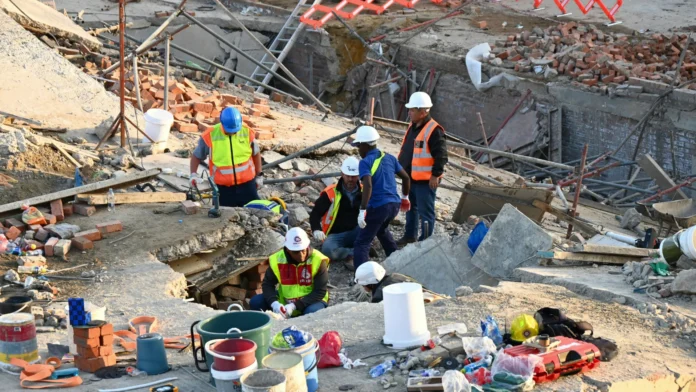
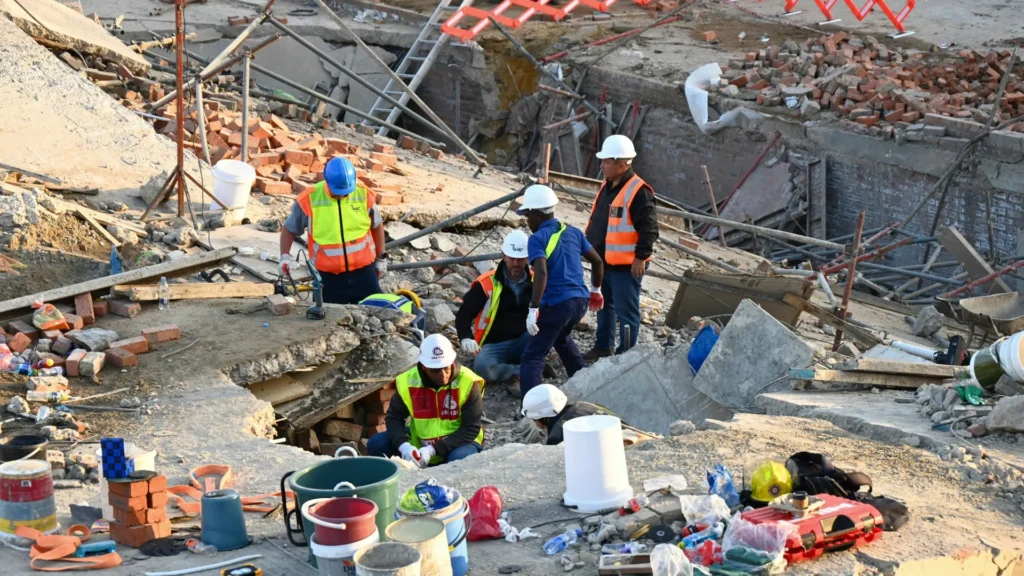
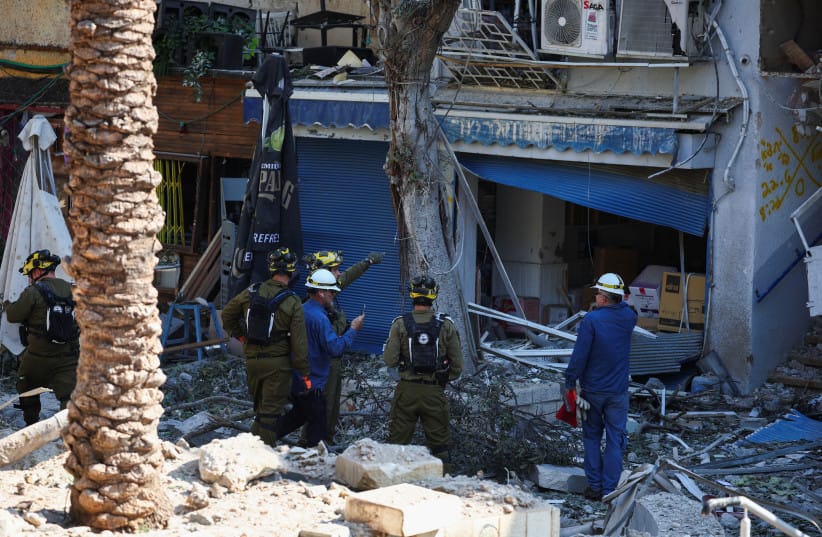
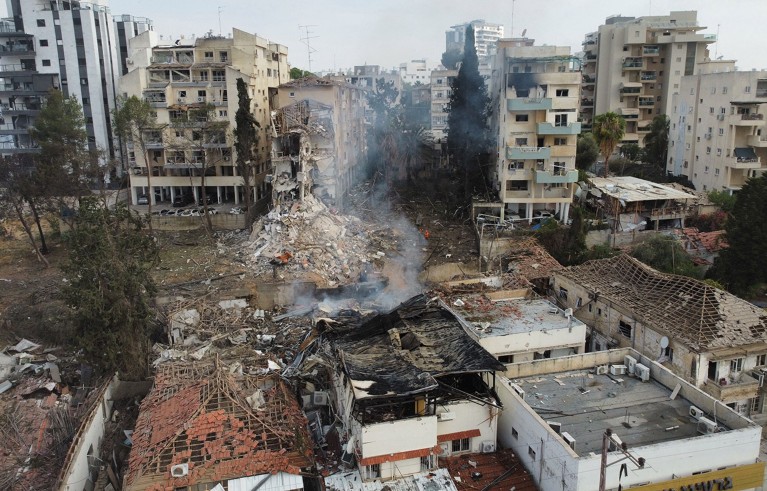
(AP) — At least six people were killed Monday when a concrete floor under construction gave way inside a building in southern Johannesburg, sending debris crashing onto workers below and triggering a high-risk rescue operation, city officials said.
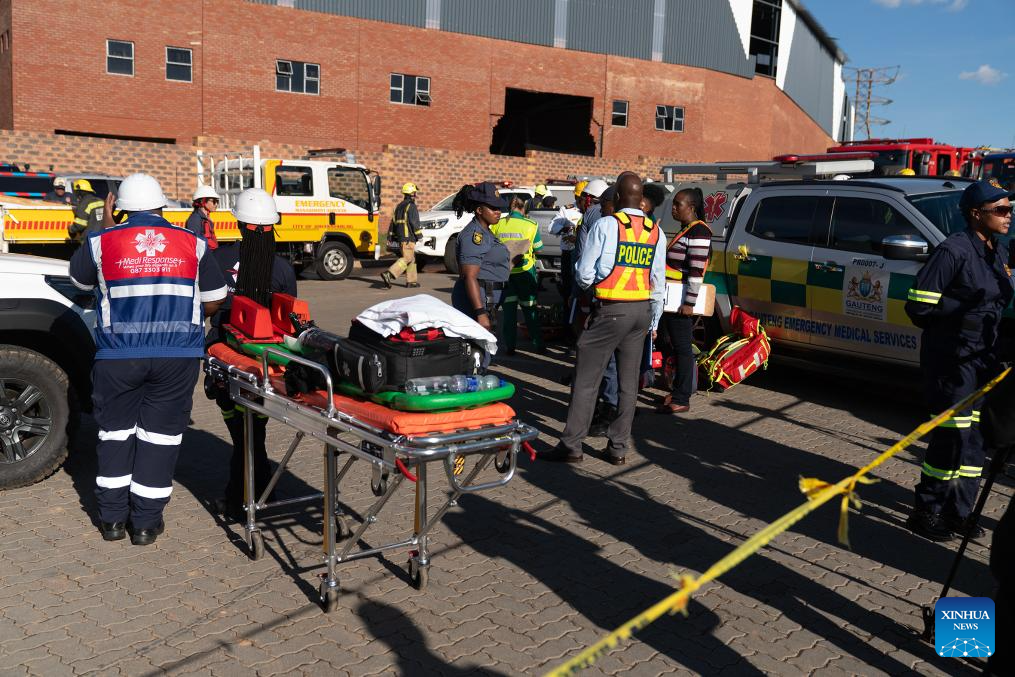
Emergency crews rushed to the site in the Ormonde suburb after the upper-level floor slab collapsed, trapping multiple people beneath heavy rubble, according to the Johannesburg Emergency Management Services.
Xolile Khumalo, spokesperson for the emergency service, said six fatalities had been confirmed. Two individuals remained pinned under debris, while three others were unaccounted for as of late Monday. One person was pulled alive from the wreckage.
Khumalo told reporters at the scene that parts of the structure remained unstable, complicating rescue efforts. Sections of the building continued to shift and crumble as crews worked, creating dangerous conditions for first responders.
“It is a risky operation for our teams,” she said, explaining that the damaged structure was still “caving in” in places.
City public safety official Mgcini Tshwaku confirmed that the building was undergoing construction at the time of the incident. Authorities have not yet clarified whether all the victims were construction workers or if others were present inside the structure.
Tshwaku described one of the trapped men as being pinned by a large concrete slab that had crushed his leg. Medical teams were evaluating whether amputation might be necessary to free him safely. A surgeon from a nearby hospital was brought to the site to assess the victim’s condition, Tshwaku said.
“We just have to get everyone out,” he told reporters, underscoring the urgency of the operation.
Rescue personnel continued to comb through the debris using specialized equipment while structural engineers assessed the stability of the remaining framework.
City officials indicated that a formal inquiry would be launched to determine responsibility for the collapse. Tshwaku said investigators would examine who oversaw the project and whether building plans had been properly reviewed and approved before construction proceeded.
Authorities will also evaluate compliance with occupational health and safety regulations, a sensitive issue in South Africa’s construction sector following previous high-profile tragedies.
The collapse revived memories of a devastating 2024 incident in the coastal city of George, where a building under construction crumbled, killing 34 construction workers after a 10-day rescue effort. A subsequent investigation into that disaster uncovered multiple failures, including violations of safety standards and inadequate oversight.
The George tragedy prompted calls for stricter enforcement of building regulations nationwide. Monday’s incident is likely to intensify scrutiny once again.
South Africa’s urban centers, particularly Johannesburg, have experienced a surge in infrastructure development in recent years, driven by commercial expansion and housing demand. However, experts have cautioned that rapid growth can expose weaknesses in regulatory enforcement if oversight mechanisms fail to keep pace.
Construction-related accidents remain a concern, particularly on sites where subcontracting chains complicate accountability. Industry analysts note that insufficient inspections, rushed timelines and cost-cutting measures can heighten structural risks during critical phases such as slab casting.
While the precise cause of the Ormonde collapse has yet to be determined, such failures often stem from issues involving load-bearing calculations, curing time for poured concrete, or inadequate temporary supports during construction.
Structural engineers not involved in the project said investigations typically focus on whether the concrete had fully set before additional weight was applied, whether scaffolding met design standards and whether professional engineers certified each stage of the build.
The incident also highlights broader socioeconomic pressures. Johannesburg remains South Africa’s economic hub, and construction projects are a significant source of employment, particularly for migrant and informal laborers who may lack union protection or adequate safety training.
If regulatory lapses are confirmed, the case could trigger renewed calls for reform in municipal inspection processes. Advocacy groups have long argued that stronger penalties are needed for contractors who fail to comply with safety codes.
Meanwhile, families of the victims are awaiting confirmation of identities as forensic teams continue recovery operations.
As rescue efforts press on, city officials say their immediate priority is stabilizing the structure and locating those still missing. The outcome of the investigation will likely shape both legal consequences and policy debates in the weeks ahead.
For now, the collapse stands as a stark reminder of the risks inherent in construction work and the potentially fatal consequences when safeguards fail.
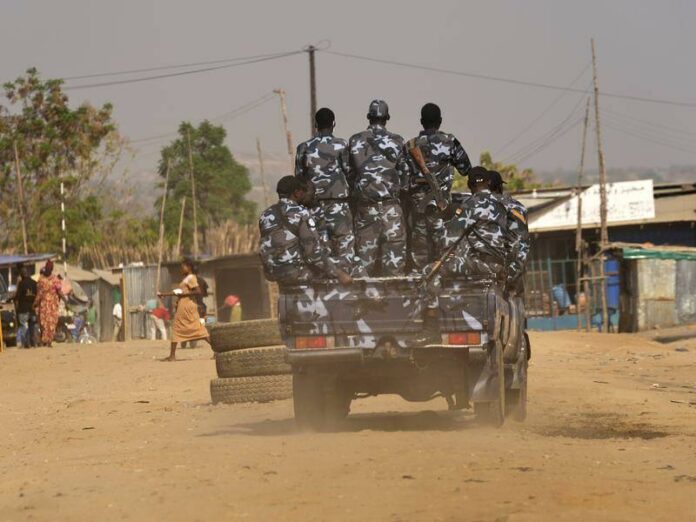
(AP/Reuters) — The number of people killed in a weekend assault on a town in northern South Sudan has climbed to at least 169, regional officials said Monday, underscoring mounting instability in a country still struggling to sustain a fragile peace agreement.
James Monyluak Majok, information minister for the Ruweng Administrative Area, told The Associated Press and Reuters that 90 civilians and 79 government soldiers were among those killed when armed assailants stormed Abiemnhom in Ruweng on Sunday. He cautioned that the toll could increase as search efforts continue.
“We think this number may rise because when the attacks happened many people ran to the bush, and we still have some people who are missing,” Monyluak said in remarks conveyed to Reuters.
The attackers, described by local authorities as youth from Mayom County in neighboring Unity State, battled government forces for more than three hours, Monyluak said. He added that officials were still trying to determine the motive behind the assault.
Stephano Wieu De Mialek, chief administrator of Ruweng Administrative Area, characterized the violence as a coordinated operation involving elements linked to the White Army militia alongside fighters aligned with the Sudan People’s Liberation Movement-in-Opposition (SPLM-IO), the party associated with opposition leader Riek Machar. He described the attack as an act of rebellion.
In a statement, Machar’s group rejected the allegation and asserted that it “has no military presence in the area concerned.”
The United Nations Mission in South Sudan, known as UNMISS, said about 1,000 civilians sought protection at its base following the violence. The mission confirmed at least 23 people were wounded and expressed alarm over reports that dozens of civilians and local officials had been killed.
“Such violence places civilians at grave risk and must stop immediately,” Anita Kiki Gbeho, a senior UNMISS official, said in a statement. She urged all parties to halt hostilities and pursue dialogue to resolve grievances.
“Our peacekeepers will continue to do everything within their capabilities to protect civilians seeking refuge at our base,” she added.
Aid agencies operating in the region warned that limited humanitarian access and insecurity could hamper medical assistance and food distribution, particularly if clashes spread to neighboring areas.
The attack comes amid renewed friction between forces loyal to President Salva Kiir and supporters of Machar, his longtime rival. The two men signed a 2018 peace agreement intended to end a five-year civil war that left an estimated 400,000 people dead. Under that accord, Machar returned to government as first vice president in a unity administration.
However, implementation of the deal has stalled repeatedly, and mutual distrust has persisted. Machar was removed from his post in September after facing criminal charges and is currently under house arrest in Juba as legal proceedings continue. His supporters contend the charges are politically motivated.
The United Nations has warned that South Sudan’s leadership is eroding key pillars of the 2018 agreement. A U.N. inquiry previously concluded that political actors were “systematically dismantling” the peace framework designed to unify rival forces and share power.
Violence intensified in December when opposition fighters seized government outposts in Jonglei state, a region considered an opposition stronghold and long a flashpoint in intercommunal fighting. The U.N. estimates that approximately 280,000 people have been displaced in recent months as clashes spread.
Government forces have mounted counteroffensives since January, employing aerial bombardments and ground assaults despite formal commitments to the peace accord.
The United States has urged renewed talks between Kiir and Machar, calling for restraint and a return to dialogue. Diplomatic observers note that South Sudan’s political crisis risks spilling into broader ethnic and regional tensions if not contained.
Nyakenya Johannes Keah, information minister for Unity State, did not respond to requests for comment regarding allegations that youth from Mayom County participated in the assault.
The surge in violence highlights the precarious state of South Sudan’s political settlement. Although large-scale civil war ended in 2018, the underlying drivers of conflict — competition for power, disputes over security sector reform and ethnic rivalries — remain largely unresolved.
Ruweng, rich in oil resources, occupies strategic and economic significance. Control over such areas can shape political leverage in Juba and influence negotiations over revenue sharing. Analysts say attacks in oil-producing regions may reflect deeper struggles over territorial authority rather than isolated communal disputes.
The continued fragmentation of armed groups also complicates accountability. Militias such as the White Army have historically operated with shifting alliances, sometimes aligning with opposition leaders while retaining local autonomy. That fluidity blurs command structures and hampers efforts to enforce ceasefires.
If political dialogue falters further, humanitarian conditions could deteriorate rapidly. South Sudan already faces food insecurity, flooding and limited infrastructure. Renewed displacement strains aid operations and heightens the risk of localized famine.
The coming weeks will test whether South Sudan’s leaders can revive confidence in the peace process or whether sporadic violence will spiral into broader confrontation. For civilians in Ruweng and beyond, the rising death toll underscores how fragile the promise of stability remains eight years after the country’s devastating civil war formally ended.
(Reuters) — Iran on Monday declared the Strait of Hormuz closed and warned that any vessel attempting to navigate the strategic waterway would face military action, marking a dramatic escalation in the widening confrontation between Tehran, Washington and Israel.
A senior official within the Islamic Revolutionary Guard Corps, the powerful branch of Iran’s armed forces, said naval and Guard units had been ordered to block traffic through the narrow channel linking the Persian Gulf to the Gulf of Oman and the Arabian Sea. Iranian state media carried remarks from Ebrahim Jabari, identified as a senior adviser to the Guards’ commander-in-chief, asserting that forces would strike ships seeking to pass.
“The strait is closed,” Jabari was quoted as saying. “If anyone tries to pass, our forces will set those ships ablaze.”
The warning represents Tehran’s clearest statement yet that it intends to halt maritime traffic through one of the world’s most critical energy corridors. The Strait of Hormuz handles roughly 20% of global daily oil consumption, funneling exports from major producers including Saudi Arabia, Iraq, the United Arab Emirates and Iran itself.
Iran’s move follows U.S. and Israeli military operations launched on Feb. 28 targeting Iranian leadership and military infrastructure. President Donald Trump publicly urged Iranians to rise against the country’s clerical leadership while backing continued military pressure.
Tehran responded with missile salvos aimed at Gulf states hosting U.S. forces, including Qatar, Kuwait and Bahrain. Iranian forces also fired missiles toward the United Arab Emirates, Saudi Arabia and Oman, broadening the geographic scope of the conflict.
The closure of the Strait fulfills years of Iranian threats to block the waterway in retaliation for foreign military action. The passage narrows to about 33 kilometers (21 miles) at its tightest point, making it both strategically vital and militarily vulnerable.
Oil traders reacted sharply to the announcement, with benchmark crude prices climbing amid fears that sustained disruption could choke global supply chains. Analysts note that even limited interference in the Strait can rattle markets because alternative export routes are limited.
Separately, Reuters cited Iranian news agencies as saying a fuel tanker identified as the Honduran-flagged Athe Nova — also referred to as Athen Nova in some reports — was ablaze in the Strait after being struck by two drones.
A statement attributed to the Revolutionary Guards accused the vessel of operating “in unison with America.” Maritime tracking services, including VesselFinder, indicated the 96-meter tanker had been present in the area shortly before the reported strike.
An Iranian military spokesperson, speaking on state television about Guard operations in Gulf waters, referenced the incident but did not explicitly state that Iranian drones carried out the attack. Iranian media outlets suggested the ship was supplying fuel to U.S. Navy vessels.
Reuters said it was unable to immediately reach the tanker’s registered owner for comment, and the ship’s manager did not respond to requests for clarification.
The Strait closure intensifies pressure on global shipping lanes already strained by attacks linked to Yemen’s Iran-aligned Houthi militants. Since the outbreak of the Gaza war in 2023, the Houthis have targeted commercial vessels in the Red Sea and Gulf of Aden with drones and missiles, disrupting trade routes connecting Asia and Europe.
Maritime security firms warned that insurers may suspend coverage for ships transiting the Strait if threats escalate further, potentially deterring commercial traffic even before any sustained blockade takes hold.
Energy-importing nations in Asia and Europe are particularly exposed. Japan, South Korea and India rely heavily on Gulf crude shipments routed through Hormuz, while European markets depend on liquefied natural gas exports from Qatar that also pass through the corridor.
Iran’s declaration signals a willingness to weaponize geography in its standoff with Washington and its regional allies. By threatening the Strait of Hormuz, Tehran leverages one of the few pressure points capable of exerting immediate economic impact far beyond the battlefield.
Yet the move carries profound risks. Any sustained blockade could provoke direct naval confrontation with the United States and allied maritime forces tasked with safeguarding freedom of navigation. Previous episodes of tanker seizures and mine attacks in the Gulf prompted multinational patrol operations and heightened military deployments.
A prolonged closure would likely strain Iran’s own economy as well. The country exports much of its oil through the same channel it now seeks to shut. Analysts suggest Tehran may be signaling resolve rather than preparing for an indefinite blockade, using the threat as leverage in a rapidly evolving conflict.
Markets remain volatile as governments assess contingency plans. Strategic petroleum reserves could cushion short-term disruptions, but a drawn-out standoff would test global supply resilience and risk pushing fuel prices sharply higher.
For now, commercial shipping companies face stark choices: risk transit under heightened military escort or reroute vessels at significant cost and delay. The coming days will determine whether Iran’s declaration becomes an enforced blockade or a bargaining chip in a confrontation that has already transformed the security landscape of the Gulf.
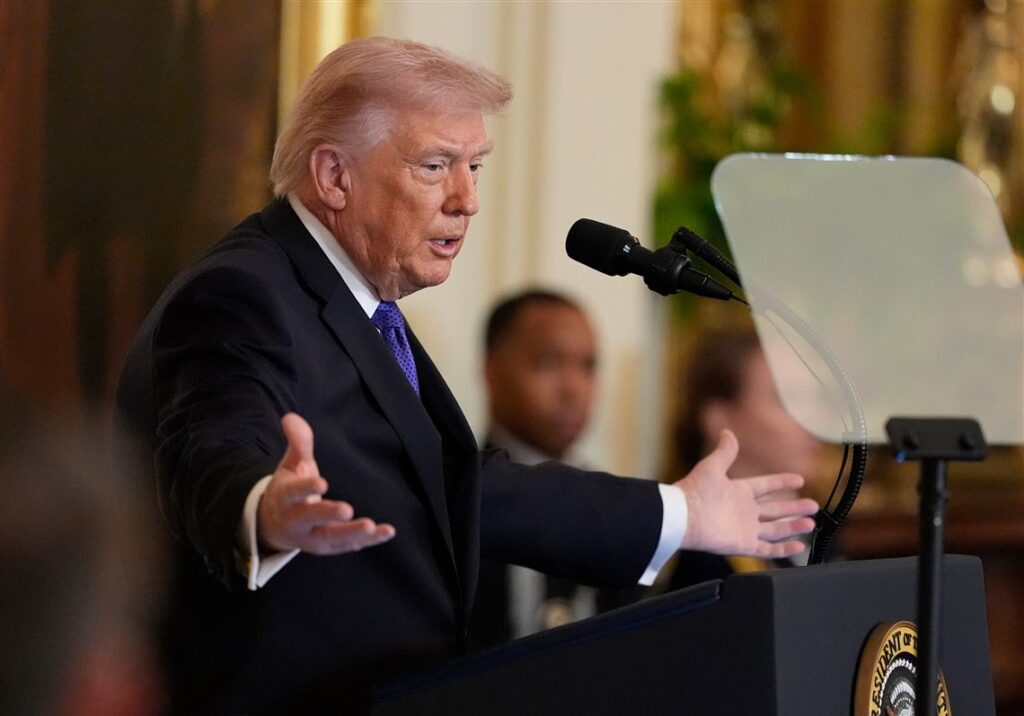
Donald Trump said Monday that U.S. military operations targeting Iran could continue for “four to five weeks — or longer,” underscoring the prospect of a sustained confrontation as hostilities ripple across the Middle East and unsettle global markets.
Speaking at the White House, Trump framed the expanding air and naval offensive as a decisive move to cripple Iran’s missile capabilities, neutralize elements of its naval fleet and block what he described as Tehran’s path toward acquiring a nuclear weapon. The president characterized the campaign as a strategic necessity rather than an open-ended conflict but acknowledged that its duration would depend on battlefield developments.
“This was our final opportunity to act decisively,” Trump said, signaling that U.S. forces are prepared to maintain pressure until objectives are achieved.
The remarks came as U.S. and Israeli strikes intensified across multiple fronts, drawing retaliation from Iran and allied militias and widening a war that now stretches from the eastern Mediterranean to the Persian Gulf.
Iranian state media announced the death of Supreme Leader Ali Khamenei in the initial wave of bombardment, a development that has left the country’s political structure in flux. Iranian officials vowed continued resistance, and military units launched missile and drone attacks aimed at Israeli territory and several Gulf states hosting U.S. military assets.
Lebanon’s Hezbollah, long aligned with Tehran, fired projectiles into northern Israel, prompting Israeli airstrikes on targets in southern Lebanon. Local health authorities there said dozens were killed and more than 150 wounded in the exchange. Israeli defense officials indicated operations would proceed “for as long as required” to eliminate cross-border threats.
The Pentagon confirmed additional U.S. casualties since the campaign began but did not release detailed figures. Defense Secretary Pete Hegseth cautioned that the military phase would involve “gritty, sustained engagement,” preparing Americans for further losses as the mission expands.
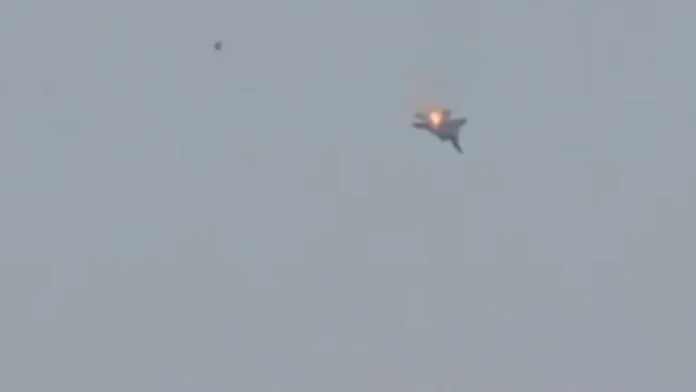
In a separate development, United States Central Command disclosed that three U.S. F-15 fighter jets were inadvertently downed by Kuwaiti air defense systems amid active combat operations. All crew members ejected and were recovered safely, officials said, and an investigation is underway.
Military analysts note that such incidents underscore the complexity of conducting multinational operations in congested airspace where allied defense systems are on heightened alert.
The conflict has spilled into strategic energy corridors. Saudi Arabia’s Ras Tanura oil refinery, one of the world’s largest processing facilities, was targeted by drone fire, though Saudi officials said air defenses intercepted the projectiles before significant damage occurred. Commercial vessels navigating the Strait of Hormuz reported impacts, raising alarm over one of the globe’s most critical oil transit chokepoints.
QatarEnergy temporarily halted liquefied natural gas production at one facility after an attempted strike, contributing to volatility in European gas markets. Traders reacted swiftly, with benchmark crude prices climbing amid fears of prolonged supply disruptions.
Iranian authorities also cited damage to infrastructure linked to the Natanz nuclear enrichment complex, though neither Washington nor Jerusalem publicly confirmed that site as a direct target.
Iranian representatives declared that negotiations with Washington are off the table, dismissing prospects for immediate talks. Trump, while emphasizing military pressure, left open the possibility of dialogue with a future Iranian leadership, suggesting that “new voices” in Tehran could pave the way for diplomacy once hostilities subside.
European allies, including Britain, France and Germany, pledged support for Israel’s defensive measures and urged restraint to prevent further escalation. Gulf nations reinforced missile defenses as sporadic attacks continued.
Beyond the battlefield, the administration’s strategy represents a high-stakes gamble. By targeting top leadership and core military assets, Washington aims to degrade Iran’s capacity to project power. Yet history suggests that regime destabilization can yield unpredictable outcomes, including fragmentation, power vacuums and prolonged insurgency.
Energy markets offer a preview of the conflict’s broader implications. The Strait of Hormuz carries roughly one-fifth of the world’s traded oil. Even limited disruptions can trigger price spikes that ripple through global economies, exacerbating inflationary pressures already confronting consumers. Analysts warn that a drawn-out campaign could test the resilience of international supply chains and strain U.S. relations with partners reliant on Gulf exports.
Domestically, Trump’s announcement of a potentially weeks-long engagement may shape political calculations in Washington. Sustained operations typically require congressional support and public backing, particularly if casualty figures rise. The president’s framing of the campaign as a preventive action against nuclear proliferation could resonate with supporters but draw scrutiny from critics questioning the scope and endgame.
In Tehran, the death of Khamenei marks a watershed moment. The Islamic Republic’s governance structure hinges on the supreme leader’s authority. A sudden transition during wartime heightens uncertainty about succession, military cohesion and internal stability. Security forces established checkpoints across parts of the capital as residents sheltered from airstrikes.
Trump’s assertion that operations could extend “as long as necessary” reflects the fluid nature of the conflict. Pentagon officials indicated that additional U.S. naval and air assets are deploying to the region, signaling preparation for sustained engagement.
As the war widens geographically and politically, the international community faces mounting pressure to contain escalation. For now, the trajectory appears set toward continued confrontation, with diplomatic pathways obscured by retaliatory strikes and hardened rhetoric on all sides.
Whether the campaign achieves its stated objectives without igniting a broader regional war remains uncertain. What is clear is that the Middle East has entered a volatile new chapter, with consequences likely to reverberate well beyond the battlefield.
A fifth U.S. service member has died from injuries sustained during the opening phase of Operation Epic Fury, U.S. Central Command confirmed Monday, as President Donald Trump continues to press forward with military operations against Iran despite mounting political concerns at home.
The service member, who was wounded during the initial wave of U.S.-Israeli strikes launched Saturday, died Monday, according to a statement from Central Command. Four other American troops have been killed since the campaign began, marking the first combat fatalities of Trump’s renewed presidency.
Military officials did not release the identity of the fallen service member, pending notification of next of kin. The announcement came as U.S. forces remain engaged in what Trump has described as a sustained operation aimed at crippling Iran’s military and political leadership.
The expanding conflict has already reshaped the political landscape in Washington.
According to Reuters, Trump moved ahead with the strikes despite private warnings from senior aides that escalation could spiral and present political risks for Republicans in the November midterm elections. Two senior White House officials and a Republican close to the administration indicated that advisers cautioned the president about the unpredictability of retaliation and the potential domestic fallout.
White House press secretary Karoline Leavitt defended the operation, saying Trump carried out a decision long contemplated by presidents of both parties. “The President’s decision to launch Operation Epic Fury is one that presidents of both parties have contemplated for more than fifty years, but none had the courage to execute,” Leavitt said. She added that the administration’s focus remains ensuring the operation’s success in coordination with the Pentagon and other agencies.
Trump has signaled the campaign could last four to five weeks, acknowledging in weekend interviews that additional American casualties are possible. “Sadly, there will likely be more before it ends,” he said earlier, framing the conflict as a necessary assertion of U.S. strength.
A Reuters/Ipsos poll conducted Sunday found that roughly one in four Americans supported the strikes that killed Iran’s leader. About half of respondents — including a quarter of Republicans — said they believe Trump is too willing to use military force. The survey concluded before the U.S. military confirmed the first American fatalities.
Privately, some White House aides had urged Trump to maintain a focus on domestic issues such as healthcare costs and inflation in the lead-up to the midterms, echoing themes from his recent State of the Union address. The rapid shift from economic messaging to sustained military engagement has complicated that strategy.
Rob Godfrey, a Republican strategist quoted by Reuters, described the transition as abrupt, noting that aligning economic priorities with an overseas conflict would pose a messaging challenge. Other advisers suggested the electoral impact may unfold gradually, shaped by the duration of the war, the scale of Iranian retaliation, the number of American casualties and fluctuations in fuel prices.
Political operatives within the Republican Party are examining how a prolonged conflict might affect competitive congressional districts, particularly in the House of Representatives, where Republicans hold a narrow majority. According to Reuters, internal modeling shows that even modest voter skepticism in swing districts could influence tightly contested races.
Lawmakers such as Colorado Rep. Gabe Evans, Wisconsin Rep. Derrick Van Orden and Pennsylvania Rep. Rob Bresnahan could face scrutiny over war powers votes and constituent concerns about an expanding conflict, particularly in areas where voters prioritize economic stability.
A senior Republican operative cited by Reuters argued that foreign policy victories often carry limited electoral benefit, while prolonged or costly military engagements can generate political backlash. “Unless this operation goes bad, voters, especially for the midterms, don’t care about foreign policy,” the operative said.
The administration’s calculus reflects competing pressures. Trump campaigned on an “America First” platform that included pledges to avoid prolonged overseas wars. At the same time, he has increasingly framed decisive military action as evidence of strong leadership.
An informal adviser told Reuters that the greater electoral risk may lie not with independent voters but with elements of Trump’s MAGA base, many of whom embraced a non-interventionist stance during the 2024 campaign. Lower turnout among those voters in a midterm environment could narrow Republican margins.
A February Reuters/Ipsos poll showed 58% of Americans disapproved of Trump’s job performance. Since early January, his approval rating has slipped from 42% to 39%, according to the latest survey cited by Reuters.
Interviews with Trump supporters suggest a complex response. Some voters expressed surprise at the scale of the Iran operation, while others endorsed it as a necessary response to Tehran’s actions. BJ Moore, an 83-year-old Trump voter from Atlanta quoted by Reuters, said he was initially caught off guard but ultimately supported the decision.
The fifth U.S. fatality intensifies scrutiny over the war’s trajectory. Analysts say public tolerance for military engagement often hinges on clarity of objectives and measurable outcomes. A short campaign that achieves defined strategic goals could stabilize support. A drawn-out conflict marked by rising casualties and economic disruption could erode it.
Original analysis indicates that the administration now faces a dual-front challenge: managing battlefield developments abroad while navigating domestic political headwinds. With fuel markets sensitive to Gulf instability and voters already focused on affordability, sustained volatility could amplify economic anxieties heading into November.
For now, Trump has aligned himself firmly with advisers who view decisive force as a demonstration of leadership strength. Whether that calculation bolsters or undermines Republican prospects in the midterms may depend less on rhetoric and more on the war’s duration, cost and human toll.
As the Pentagon continues operations and Central Command withholds further details pending family notifications, the addition of a fifth American casualty marks a sobering milestone in a conflict whose political and military consequences are still unfolding.
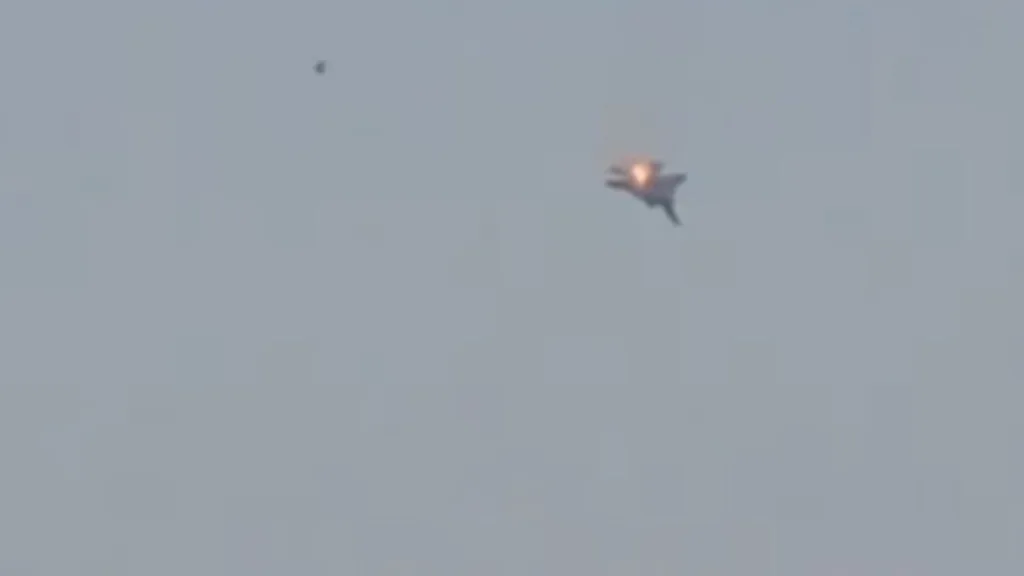
(Reuters) — Three U.S. Air Force F-15 fighter jets were mistakenly shot down by Kuwaiti air defenses during active combat operations over Kuwait, U.S. Central Command confirmed Monday, marking the first loss of American aircraft since the United States and Israel launched strikes against Iran.
The Pentagon characterized the incident as “apparent friendly fire” during Operation Epic Fury, saying Kuwaiti air defense systems engaged the aircraft amid a barrage of Iranian missiles, drones and aircraft operating across the Gulf.
“During active combat — that included attacks from Iranian aircraft, ballistic missiles and drones — the U.S. Air Force fighter jets were mistakenly shot down by Kuwaiti air defenses,” CENTCOM said in a statement released on social media.
All six crew members aboard the three F-15D Strike Eagle aircraft ejected safely and were recovered. U.S. officials said the airmen are in stable condition. Kuwaiti authorities acknowledged the incident, and U.S. commanders expressed appreciation for what they described as Kuwait’s continued cooperation during the unfolding conflict.
The episode underscores the volatility of airspace over the Gulf as Iranian retaliatory strikes intensify in response to U.S.-Israeli operations targeting Iranian military and leadership infrastructure. It also highlights the inherent risks of coalition warfare in a densely contested environment where multiple missile, drone and aircraft threats are unfolding simultaneously.
Video footage circulating online and verified by Reuters showed a U.S. warplane spiraling downward near Al Jahra, west of Kuwait City, close to Ali Al-Salem Air Base. One clip captured a parachute descending toward the ground moments before impact. Kuwait’s Ministry of Defense earlier indicated that several American aircraft had crashed, adding that all crew members survived.
A Pentagon spokesperson said there was no additional information beyond the CENTCOM statement and comments posted by the Secretary of War on social media. CENTCOM said the cause of the incident remains under investigation and that further details would be released once the review is complete.
The friendly-fire episode occurred against the backdrop of Iranian drone and missile attacks targeting Gulf states for a third consecutive day. Kuwait’s air defenses intercepted what officials described as hostile drones over residential areas including Rumaithiya and Salwa. Sirens and loud explosions were heard across Kuwait City throughout the morning, according to Reuters witnesses.
In a separate development, smoke was seen rising from near the U.S. Embassy compound in Kuwait City. Emergency vehicles responded to the scene, though there was no immediate confirmation of casualties or structural damage. The U.S. Embassy urged American citizens to shelter in place and avoid travel to the compound, citing an ongoing threat of missile and drone attacks. The advisory recommended remaining indoors, staying on lower floors away from windows and limiting movement outdoors.
Iranian state media, citing the Islamic Revolutionary Guard Corps, asserted that Iranian forces had struck a U.S. aircraft that later crashed in Kuwait. U.S. officials have not attributed the aircraft losses to direct Iranian fire, instead identifying Kuwaiti air defenses as the source of the mistaken engagement.
The spillover extended to critical infrastructure. Kuwait National Petroleum Company announced that falling debris from intercepted drones injured two workers at the Mina Al-Ahmadi refinery. Both sustained minor injuries. Regional aviation and energy facilities across the Gulf have heightened security measures as the conflict broadens.
Explosions were also reported in Dubai and Doha early Monday, according to Reuters witnesses, reflecting the widening reach of Iranian retaliatory operations. Tehran has vowed to strike U.S. bases throughout the region following the joint American-Israeli strikes that began Saturday.
According to Reuters/Ipsos polling conducted over the weekend, roughly one in four Americans supports U.S. military strikes on Iran, with many respondents expressing concern about potential harm to U.S. service members. President Donald Trump acknowledged Sunday that additional American casualties are possible as operations continue, stating that “we may have casualties” while pledging to press forward with military objectives.
Military analysts say the downing of three U.S. aircraft by allied defenses illustrates how quickly high-intensity conflict can strain coordination among partners. Modern air defense systems are designed to respond within seconds to incoming threats. In an environment saturated with ballistic missiles, drones and combat aircraft, identification errors can occur despite advanced friend-or-foe technology.
Original analysis suggests the incident may prompt a reassessment of airspace management protocols across coalition forces in the Gulf. As Iranian retaliatory strikes expand, the risk of miscalculation increases not only between adversaries but also among allied militaries operating in close proximity. Defense experts note that rapid deconfliction and improved communication channels are essential to prevent further friendly-fire incidents.
The crash also carries symbolic weight. While no American personnel were killed, the loss of three advanced fighter jets represents a significant operational setback and underscores the unpredictable trajectory of the war. The conflict, which began with targeted U.S.-Israeli strikes on Iranian military infrastructure, has expanded to include attacks on Gulf cities, oil facilities and diplomatic compounds.
For Kuwait, a key U.S. security partner hosting American forces, the friendly-fire incident places additional pressure on coordination efforts amid escalating regional tensions. Kuwaiti officials have publicly acknowledged the error, and both governments have emphasized ongoing cooperation.
CENTCOM said its investigation would examine radar data, engagement protocols and communications between U.S. and Kuwaiti forces during the engagement. Military officials indicated that findings would be shared once operational security considerations allow.
As missile alerts continue to sound across Gulf capitals and U.S. forces remain on heightened alert, Monday’s friendly-fire incident stands as a stark reminder of the fog of war — and the fragile margin for error in an increasingly crowded and contested battlespace.
(AP) — The widening war between Iran and a U.S.-Israeli coalition intensified Monday as Iranian missiles and drones struck across Israel and several Arab states, regional militias entered the fray, and key Gulf energy infrastructure came under attack, rattling global markets and deepening fears of a prolonged regional conflict.
Iranian and Iranian-aligned forces launched projectiles toward Israel and U.S.-linked sites across the Gulf, while Israeli and American aircraft continued sustained bombardments inside Iran. Smoke rose from within the U.S. Embassy compound in Kuwait City, and Saudi Arabia confirmed a drone strike targeting one of the world’s largest oil refineries.
The U.S. military said Kuwait “mistakenly shot down” three American F-15E Strike Eagles during an active combat mission as Iranian aircraft, ballistic missiles and drones were operating in the same airspace. U.S. Central Command said all six American pilots ejected safely and were in stable condition. Kuwaiti authorities acknowledged the episode, and U.S. officials expressed appreciation for Kuwaiti defense forces amid what they described as an ongoing and fluid battlefield environment.
Iranian state television asserted that Iranian forces had struck U.S. aircraft but offered no operational specifics. Before the incident at the embassy compound, U.S. officials in Kuwait urged American citizens to shelter in place and advised others to avoid the area.
Casualties mounted on multiple fronts. The Iranian Red Crescent Society said at least 555 people have been killed across Iran since the U.S.-Israeli campaign began, with more than 130 cities hit by airstrikes. Israeli authorities confirmed 11 deaths in Israel, including nine killed when a missile struck a synagogue in Beit Shemesh. Lebanon’s Health Ministry reported 31 fatalities after Israeli retaliatory strikes following rocket fire from Hezbollah.
Lebanon’s government moved swiftly to distance itself from Hezbollah’s actions. Prime Minister Nawaf Salam declared the group’s overnight missile launches into Israel “illegal” and insisted that decisions of war and peace rest solely with the Lebanese state. He directed the Lebanese army to prevent further projectile launches and detain those responsible.
Hezbollah said it fired missiles in response to the killing of Iran’s Supreme Leader, Ayatollah Ali Khamenei, during the joint U.S.-Israeli offensive. Israel countered with heavy strikes in southern Lebanon and Beirut. Maj. Gen. Rafi Milo, head of Israel’s Northern Command, said operations would intensify, underscoring what he described as Hezbollah’s entry into the broader confrontation.
The conflict’s economic dimension became unmistakable Monday when Iranian-aligned attacks targeted Gulf energy infrastructure. Saudi Arabia’s Ras Tanura refinery, with capacity exceeding 500,000 barrels per day, was hit by a drone. Saudi defenses intercepted the incoming aircraft, but debris ignited fires, prompting a temporary shutdown, Saudi state media said. Thick black smoke was visible above the facility near Dammam.
Oman’s state news agency said a bomb-laden drone boat struck a Marshall Islands-flagged oil tanker in the Gulf of Oman, killing one crew member from India. In Kuwait, debris from intercepted drones injured two workers at the Ahmadi refinery, the KUNA news agency reported.
Energy analysts said the targeting of oil infrastructure marked a strategic escalation. Torbjorn Soltvedt of Verisk Maplecroft described the Ras Tanura strike as a turning point that placed Gulf energy assets “squarely in Iran’s sights.” Sascha Bruchmann of the International Institute for Strategic Studies told The Associated Press that Tehran’s apparent objective is to generate global backlash by threatening energy flows, though he noted the destruction so far has not crippled core facilities.
Iran has also signaled it could disrupt shipping in the Strait of Hormuz, a chokepoint through which roughly one-fifth of global oil supplies transit. Several commercial vessels have reported incidents in recent days, heightening shipping insurance rates and driving crude prices upward.
In Tehran, multiple airstrikes shook the capital Monday afternoon. Senior Iranian official Ali Larijani declared on social media that negotiations with Washington were off the table. Iran’s ambassador to the International Atomic Energy Agency, Reza Najafi, accused the United States and Israel of striking the Natanz nuclear enrichment facility and rejected allegations that Iran seeks nuclear weapons, calling such claims “a big lie.” Neither Washington nor Jerusalem immediately confirmed attacks at Natanz.
President Donald Trump vowed retaliation for the deaths of three U.S. service members killed in Kuwait and predicted additional casualties. “Sadly, there will likely be more before it ends,” Trump said in remarks released Sunday, adding that combat operations would continue “in full-force” until American objectives are met. He said B-2 stealth bombers had struck Iranian ballistic missile sites and asserted on social media that several Iranian warships were destroyed.
Britain, France and Germany signaled readiness to cooperate with Washington to curb further Iranian attacks. Cyprus confirmed that an unmanned aircraft struck a British air base on the island, causing limited damage, shortly after British Prime Minister Keir Starmer said the United Kingdom would support U.S. operations.
The war’s rapid expansion underscores how the killing of Khamenei — who led Iran for more than three decades — has reshaped the strategic landscape. His death has created a leadership vacuum within Iran’s political and religious hierarchy, raising questions about succession and internal stability. Analysts warn that power struggles within Tehran could complicate diplomatic off-ramps while emboldening hardline factions.
At the same time, Iranian proxy groups in Iraq have stepped up attacks. The Shiite militia Saraya Awliya al-Dam claimed responsibility for a drone strike targeting U.S. forces at Baghdad’s airport and previously claimed an attack on a U.S. base in Irbil. U.S. and Iraqi authorities have not publicly addressed those assertions.
In Gulf cities once viewed as insulated from regional warfare, debris from intercepted missiles has caused civilian casualties in the United Arab Emirates, Kuwait and Bahrain. Officials in those countries confirmed damage outside U.S. bases, indicating the conflict’s spillover effect.
The World Health Organization called for strict adherence to international humanitarian law. Regional director Hanan Balkhy urged all parties to safeguard civilians and medical facilities, stressing that healthcare protection “must be absolute.”
Original analysis suggests the war has entered a dangerous phase characterized not only by direct state-to-state confrontation but by attacks on global energy arteries and the mobilization of proxy forces. By expanding the battlefield beyond Israel and Iran into the broader Gulf, Tehran appears intent on internationalizing the costs of the conflict. Meanwhile, Washington and Jerusalem show no indication of scaling back operations, suggesting a protracted struggle with unpredictable economic and geopolitical consequences.
As airstrikes continue and regional actors weigh their options, the Middle East faces its most volatile moment in years — one with ramifications extending far beyond its borders.
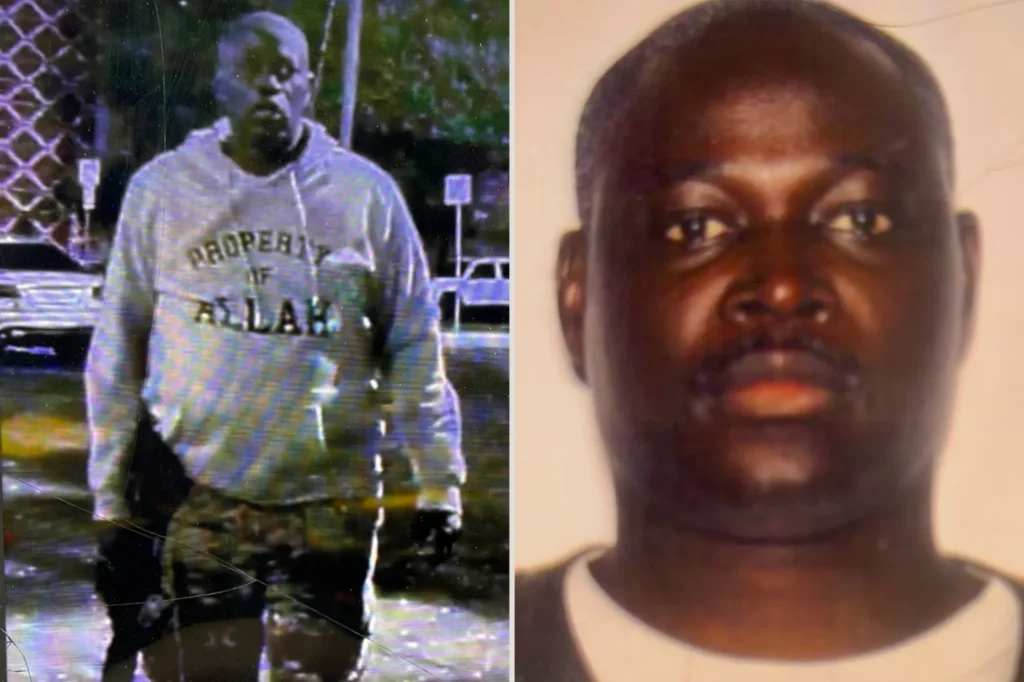
The assailant behind Sunday’s deadly mass shooting at a crowded Austin bar has been identified as Ndiaga Diagne, a 53-year-old Senegalese immigrant with a two-decade criminal history spanning New York and Texas, as federal investigators examine potential terrorism connections including the gunman’s religious attire and possible motivations tied to escalating U.S.-Iran military conflict.
Diagne arrived in the United States on March 13, 2000, entering on a B-2 tourist visa during the Clinton administration before establishing permanent legal residency in June 2006 when he married an American citizen, a source familiar with his immigration history told The Post. He subsequently obtained naturalized U.S. citizenship on April 5, 2013, during the early months of former President Barack Obama’s second term—despite accumulating arrests in multiple jurisdictions that apparently failed to derail his path to citizenship.
The gunman wore a “Property of Allah” hoodie during Sunday’s rampage and possessed a Quran in his vehicle, according to law enforcement sources familiar with the investigation. He was also possibly wearing an undershirt featuring the Iranian flag or other Iranian symbols when he opened fire on Buford’s Backyard Beer Garden near the University of Texas-Austin campus, raising questions about whether the attack represented retaliation for ongoing U.S. military operations against Iran.
“Obviously it’s still way too early in the process to determine the exact motivation but there were indicators on the subject and in his vehicle that indicate potential nexus to terrorism,” Alex Doran, acting Special Agent in charge of the FBI’s San Antonio office, told journalists at a press conference following the shooting.
The violence erupted approximately 2 a.m. Sunday—closing time for the popular nightspot—as hundreds of patrons were departing to head home following an evening of socializing in Austin’s entertainment district. Witnesses reported that Diagne’s large SUV was observed circling the block multiple times before he stopped directly in front of the bar and commenced firing through his front window with a pistol, striking patrons gathered on the establishment’s front patio.
Austin Police Chief Lisa Davis confirmed that after the initial gunfire from his vehicle, Diagne parked his SUV, exited, and began shooting at pedestrians walking along the street in what appeared to be indiscriminate targeting of civilians in the densely populated area near the university campus.
Police officers confronted the shooter within less than one minute of the first gunshot at an intersection on 6th Street—Austin’s famous entertainment corridor—and engaged him with gunfire, authorities confirmed. The rapid police response likely prevented additional casualties as hundreds of people remained in the immediate vicinity when shooting commenced.
Two victims and the shooter died at the scene from gunshot wounds. Emergency responders transported 14 additional patients to nearby hospitals, with three initially listed in critical condition. The swift medical response and proximity to major trauma centers likely saved lives among the severely wounded.
“Our hearts go out to the people that are victims of this and I want to reiterate my thanks to our public safety officers and officials that so rapidly were on the scene, they definitely saved lives,” Austin Mayor Kirk Watson declared in a statement acknowledging both the tragedy and the effective emergency response that limited casualties.
Texas Governor Greg Abbott issued a forceful statement connecting the attack to broader regional tensions and warning against additional violence targeting Texans or critical infrastructure. “This act of violence will not define us, nor will it shake the resolve of Texans. To anyone who thinks about using the current conflict in the Middle East to threaten Texans or our critical infrastructure, understand this clearly: Texas will respond with decisive and overwhelming force to protect our state,” Abbott proclaimed.
The governor’s explicit reference to Middle Eastern conflict suggested that state authorities were seriously considering whether Diagne’s attack constituted terrorism motivated by U.S. military operations against Iran that have dominated international headlines in recent days. The timing—occurring as American forces continue bombing Iranian targets—provided circumstantial context potentially supporting terrorism hypotheses.
Diagne’s immigration and criminal history revealed a troubling pattern of legal violations that apparently failed to trigger deportation or prevent his naturalization. In New York City, he accumulated arrests between 2001 and 2016, beginning with an illegal vending charge in 2001—just over one year after his arrival in the United States on a tourist visa.
Three additional New York City arrests were sealed, preventing public disclosure of the charges or outcomes, law enforcement sources confirmed. The sealed records raise questions about what offenses Diagne committed and why they remained confidential despite his subsequent naturalization as a U.S. citizen—a process that typically involves background checks examining criminal history.
Diagne also faced arrest in Texas on undisclosed charges at some point during his residency in that state, sources indicated. Details regarding the nature of those Texas arrests, when they occurred, or how they were resolved remained unclear as investigators worked to reconstruct his background and identify potential warning signs that might have been missed.
Sources revealed that Diagne was recognized as an emotionally disturbed person in both New York and Texas—a designation typically indicating encounters with law enforcement or mental health professionals involving behavioral concerns. The classification raises questions about whether mental health interventions were attempted and whether authorities adequately tracked an individual known to experience psychological disturbances.
In a puzzling twist, Diagne applied for asylum in 2016—sixteen years after his initial entry to the United States and three years after obtaining citizenship. The outcome of that asylum application and the stated reasons for seeking protected status remained unclear, though the timeline suggested possible complications in his personal circumstances or immigration status that investigators would need to unravel.
The serial offender’s decision to target Buford’s Backyard Beer Garden—a popular establishment frequented by University of Texas students and young professionals—appeared calculated to maximize casualties among civilians enjoying weekend nightlife. The 2 a.m. timing coincided with bar closing when large crowds would be concentrated outside the venue, providing a target-rich environment for someone seeking to inflict mass casualties.
The FBI’s involvement signaled federal authorities’ assessment that the attack potentially constituted domestic terrorism rather than merely criminal violence. The presence of religious texts and imagery, combined with the geopolitical context of intensifying U.S.-Iran conflict, provided sufficient indicators to warrant terrorism investigation under federal statutes addressing ideologically motivated violence.
However, investigators cautioned against premature conclusions about Diagne’s motivations. Mass shootings frequently involve complex combinations of personal grievances, mental health crises, ideological influences, and opportunistic targeting that resist simple explanations. Whether Diagne acted primarily from religious extremism, political motivations related to Iran, personal psychological disturbance, or some combination remained subject to ongoing investigation.
The Austin shooting represented the latest in a series of mass casualty incidents that have plagued American communities with devastating regularity. The attack’s potential terrorism dimension added layers of complexity to debates about immigration screening, criminal justice responses to repeat offenders, mental health intervention systems, and counterterrorism strategies addressing domestic threats.
For Austin residents and University of Texas students who frequent the 6th Street entertainment district, the violence shattered assumptions about safety in familiar environments. The randomness of the attack—targeting people simply enjoying weekend social activities—amplified psychological impacts as survivors and community members grappled with vulnerability in spaces previously considered secure.
As FBI agents continued processing evidence from Diagne’s vehicle and reconstructing his movements prior to the attack, federal prosecutors prepared to examine whether additional individuals provided support, encouragement, or resources that facilitated the violence. Terrorism investigations typically explore networks and connections beyond lone perpetrators to identify potential conspirators or enablers who might pose continuing threats.
The investigation also promised to scrutinize how Diagne—despite multiple arrests and designation as emotionally disturbed—navigated immigration and naturalization processes without triggering interventions that might have prevented tragedy. Immigration authorities and citizenship adjudicators would face questions about screening procedures, background check thoroughness, and whether existing systems adequately identify individuals whose criminal histories or behavioral patterns suggest elevated risks.
For victims’ families confronting sudden losses and survivors processing trauma from witnessing mass violence, Diagne’s background and potential motivations provided little comfort. Regardless of whether investigators ultimately classified the attack as terrorism, criminal rampage, or mentally ill violence, the human toll remained devastatingly real for Austin families whose lives were irrevocably shattered by gunfire on a Sunday morning.
As the investigation continued, Austin joined the grim roster of American communities forced to process mass shooting trauma while debating policy responses that might prevent future attacks. The potential terrorism dimension added urgency to conversations about domestic extremism, radicalization indicators, and the challenges of identifying and disrupting individuals who transition from harboring violent ideologies to executing deadly attacks against innocent civilians.
American and Israeli forces pounded targets across Iran on Sunday, unleashing massive bombs on ballistic missile facilities and obliterating naval vessels as part of an intensifying military campaign following the assassination of Supreme Leader Ayatollah Ali Khamenei, while President Donald Trump signaled unexpected willingness to engage diplomatically with Tehran’s emerging leadership despite vowing vengeance for the first American casualties in the expanding conflict.
Blasts rattled windows throughout Iran and sent towering smoke plumes above Tehran as the relentless bombardment entered its second full day. Iranian authorities confirmed more than 200 people have perished since strikes commenced Saturday, killing Khamenei and numerous senior leaders in coordinated attacks that eliminated the theocratic regime’s top echelon in what Israeli military officials characterized as a meticulously planned operation exploiting a “golden opportunity” when key figures gathered simultaneously.
Iran vowed devastating retaliation, launching missiles at Israel and Gulf Arab states in counteroffensives that the U.S. military acknowledged resulted in three American service members’ deaths—the first known U.S. combat casualties from the conflict. Israeli emergency services confirmed strikes hit multiple locations including Jerusalem and a synagogue in the central town of Beit Shemesh, where nine people died and 28 sustained injuries, elevating Israel’s overall death toll to eleven. Eleven individuals remained missing following the Beit Shemesh attack, police disclosed.
However, the assaults on Iran demonstrated no indications of diminishing as American and Israeli forces targeted critical military, political, and intelligence installations in what appeared to constitute an expanding war carrying potential for prolonged conflict that could engulf the Middle East and destabilize it catastrophically. The strikes represented a startling display of military might for an American president who ascended to office championing an “America First” platform and pledging to avoid “forever wars.”
Trump issued a video statement posted to social media declaring the United States would “avenge” the fallen service members’ deaths and warning that “there will likely be more” killed before hostilities conclude. His acknowledgment of probable additional American casualties marked a sobering recognition that the military operation he authorized carried genuine risks extending beyond surgical precision strikes initially suggested.
Israel, which had committed to “nonstop” bombardment, announced it was escalating attacks, with 100 fighter jets simultaneously striking Tehran targets, Brigadier General Effie Defrin told journalists at a briefing. The targets encompassed buildings belonging to Iran’s air force, its missile command apparatus, and its internal security forces that violently suppressed anti-government demonstrations in January that left thousands dead.
The U.S. military confirmed that B-2 stealth bombers struck Iran’s ballistic missile installations with 2,000-pound munitions—among America’s most powerful conventional weapons designed to penetrate hardened underground facilities. Trump declared via social media that nine Iranian warships had been sunk and that the Iranian navy’s headquarters had been “largely destroyed,” conveying the comprehensive nature of military operations aimed at dismantling Iran’s conventional warfare capabilities.
Europe has predominantly remained distant from direct military involvement while pressing for diplomatic resolution, but in an indication that conflict could draw additional nations into combat, Britain, France, and Germany announced Sunday their readiness to cooperate with the United States to help neutralize Iran’s retaliatory strikes.
British Prime Minister Keir Starmer confirmed Britain would permit the United States to utilize its military bases for strikes against Iranian missile sites. The United Kingdom maintains strategically positioned bases on Cyprus and the Chagos Islands—a British archipelago in the Indian Ocean providing proximity to Middle Eastern theaters.
The weekend attacks constituted the second occasion in eight months that American and Israeli forces had combined against Iran. During the 12-day war last June, Israeli and American strikes substantially degraded Iran’s air defenses, military leadership, and nuclear program infrastructure. However, Khamenei’s assassination—ending his more than three-decade rule over Iran—creates a leadership vacuum dramatically increasing risks of regional instability whose consequences remain impossible to predict.
Trump, who one day earlier had encouraged Iranians to “take over” their government through popular uprising, signaled Sunday his openness to dialogue with Iran’s nascent leadership despite the ongoing bombardment.
“They want to talk, and I have agreed to talk, so I will be talking to them,” Trump told The Atlantic magazine, revealing that communication channels existed even as American warplanes continued dropping bombs on Iranian territory. The president’s simultaneous prosecution of military operations while entertaining diplomatic engagement illustrated the contradictory impulses characterizing his Iran strategy.
In a separate interview with the Daily Mail, Trump indicated the military campaign against Iran could persist for approximately four weeks, providing the first timeline for operations whose objectives and endpoints remained vaguely defined despite their catastrophic humanitarian and geopolitical consequences.
Iranian strikes reached far beyond American and Israeli targets, dragging Gulf cities that have long promoted themselves as regional safe havens into direct combat. The foreign ministers of Qatar, Saudi Arabia, the United Arab Emirates, Kuwait, Oman, and Bahrain declared Sunday that their nations retain “the legal right to respond and the right to self-defense” following Iranian strikes that hit hotels, airports, and additional sites throughout multiple Gulf capitals.
In the United Arab Emirates, authorities confirmed that most Iranian missiles and drones were intercepted by sophisticated air defense systems. However, some projectiles penetrated defenses or fell as debris, killing three people, injuring others, and causing substantial damage to civilian infrastructure in cities marketed globally as secure environments for business and tourism.
Bahrain and Kuwait reported that Iranian strikes within both countries hit civilian targets rather than exclusively military installations, contradicting Tehran’s claims of limiting retaliation to American bases and exposing Gulf populations to combat effects their governments had desperately sought to avoid.
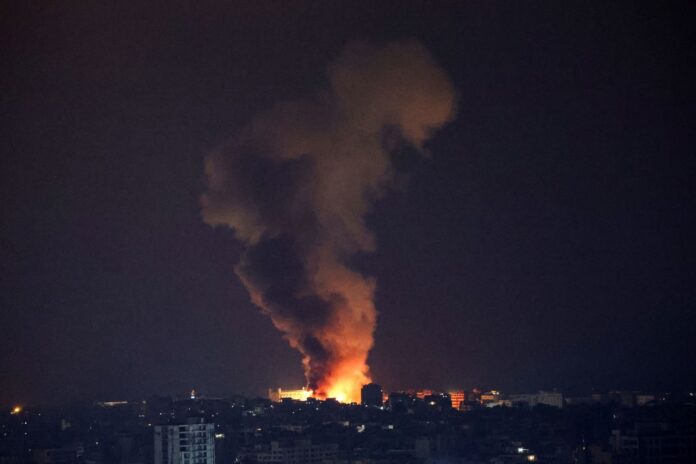
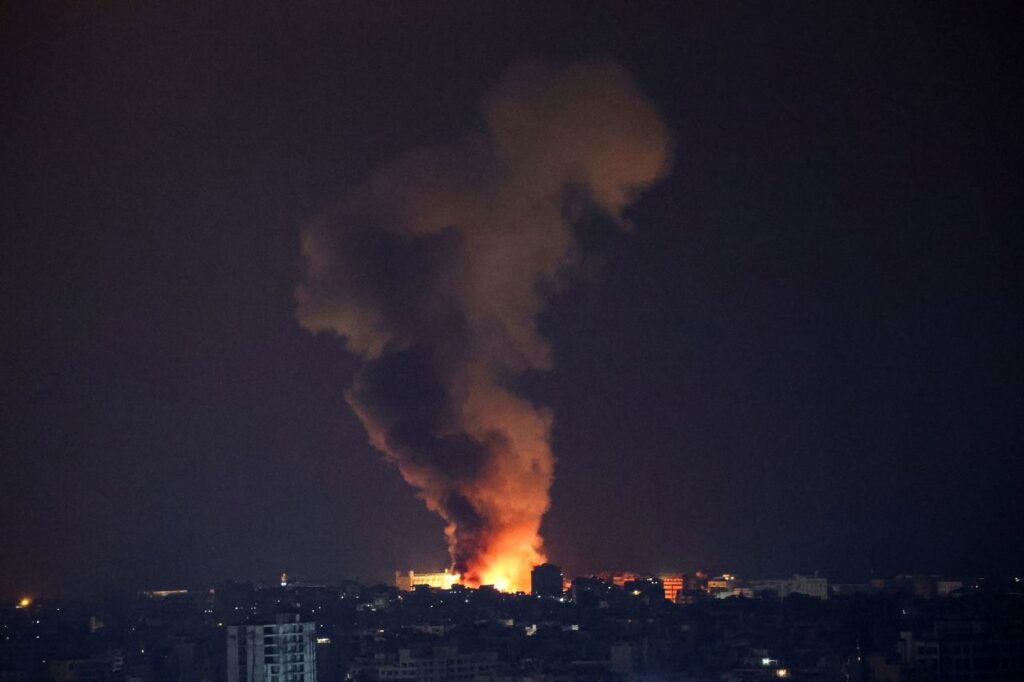
Israel launched a barrage of strikes against Lebanon’s capital Beirut early Monday after the Lebanese militant organization Hezbollah fired missiles across the border—the first time in more than one year that Hezbollah has claimed strikes against Israel. The Israeli military confirmed intercepting a projectile that crossed the border while several others fell in unpopulated areas without causing injuries or damage.
Hezbollah declared in a statement that the strikes constituted retaliation for Khamenei’s assassination and for “repeated Israeli aggressions,” signaling that Iran’s principal Lebanese proxy was entering the conflict despite warnings from Western diplomats that Hezbollah involvement could trigger devastating Israeli retaliation against Lebanon.
In Tehran, little evidence emerged suggesting Iranians had heeded Trump’s exhortations for popular uprising against the government. Streets remained largely deserted as residents sheltered during airstrikes, witnesses told The Associated Press while speaking anonymously for fear of retribution. The paramilitary Basij forces—which played central roles crushing protests—established checkpoints throughout the city, they confirmed.
Two powerful explosions echoed through Tehran’s affluent Niavaran neighborhood late Sunday. An eyewitness in the city told AP that their apartment windows shook violently, and residents evacuated onto streets fearing remaining indoors posed greater danger. Video footage from Tehran showed smoke plumes filling the skyline, and the official IRNA news agency confirmed that portions of the Islamic Republic of Iran Broadcasting building were struck Sunday.
In southern Iran, at least 165 people perished Saturday when a girls’ school was struck, with dozens more wounded, IRNA conveyed. The Israeli military stated it lacked awareness of strikes in that area, while the U.S. military indicated it was investigating the reports—suggesting possible targeting errors or intelligence failures that produced mass civilian casualties at an educational facility.
As supreme leader since 1989, Khamenei maintained final authority over all major policies, leading Iran’s clerical establishment and the Revolutionary Guard—the two primary power centers within the governing theocracy. His elimination creates unprecedented uncertainty about succession processes and whether Iran’s complex political system can maintain cohesion amid external military assault.
The CIA had been tracking movements of senior Iranian leaders including Khamenei for months, according to a person familiar with operations who was not authorized to comment publicly and spoke on condition of anonymity. Intelligence was shared with Israeli officials, and strike timing was adjusted partially based on that information, the source revealed.
Iranian President Masoud Pezeshkian announced in a prerecorded message that a new leadership council had commenced work. The country’s foreign minister, Abbas Araghchi, indicated a new supreme leader would be selected within “one or two days,” though the process for choosing Khamenei’s successor amid ongoing bombardment remained unclear.
Araghchi wrote Sunday in correspondence to the United Nations that attacks on Iran by the United States and Israel—including the strike assassinating Khamenei—”recklessly open a dangerous Pandora’s box, eroding the bedrock of sovereign equality and the stability of the international system.” His letter argued that targeting heads of state violated fundamental international law principles and established precedents that could return to haunt Western powers.
As word circulated regarding Khamenei’s death, some Tehran residents could be observed cheering from rooftops, witnesses confirmed. Others mourned as a black flag was raised over the Imam Reza shrine in Mashhad—Iran’s holiest site—symbolizing grief in Shia tradition.
An Iranian medical professional in northern Iran conveyed that he and colleagues spent early Sunday hours celebrating Khamenei’s death indoors because armed security forces remained heavily deployed throughout his city. Forces were stopping and interrogating people celebrating in vehicles, though no gunfire had erupted, said the doctor who spoke anonymously fearing reprisal.
“It was one of the best nights, if not the best night of our lives,” the physician said in a voice message from the city of Rasht. “It was actually my first time ever smoking a cigarette. It was a very, very nice time. We didn’t sleep at all. And we don’t even feel tired.”
The sharply divided reactions within Iran exposed profound fault lines in a nation traumatized by thousands killed during the January crackdown that Khamenei authorized against anti-government protests—the deadliest unrest wave since the 1979 Islamic Revolution. For many Iranians who experienced decades of repression under his rule, Khamenei’s death represented liberation regardless of the chaotic circumstances surrounding it.
Araghchi blamed the United States and Israel for initiating warfare. He indicated he had spoken with counterparts in Gulf countries and urged them to pressure Washington and Jerusalem to terminate military operations before additional casualties accumulated and regional stability deteriorated beyond recovery.
“You have crossed our red line and must pay the price,” Iran’s parliamentary speaker Mohammad Bagher Qalibaf declared in a televised address. “We will deliver such devastating blows that you yourselves will be driven to beg.” The inflammatory rhetoric reflected Iranian leadership’s determination to project strength despite catastrophic losses and vulnerability exposed by successful enemy strikes against the most protected targets.
Trump warned via social media against additional Iranian retaliation, writing “IF THEY DO, WE WILL HIT THEM WITH A FORCE THAT HAS NEVER BEEN SEEN BEFORE!”—his characteristic bombastic threat style amplified by capital letters suggesting both genuine anger and calculated intimidation.
An Israeli military official described Saturday’s mission against Iranian leadership as the result of months of “extremely high coordination” with the United States. The official, speaking anonymously to discuss covert operations, explained that various factors created a “golden opportunity” including weeks of training and monitoring senior figures’ movements combined with “real time intelligence” that targets had gathered together.
The results, the official revealed, were near-simultaneous strikes within 60 seconds of one another at three locations 1,000 miles from Israel that killed Khamenei and approximately 40 senior figures including the Revolutionary Guard commander and Iran’s defense minister—a decapitation strike virtually eliminating the theocratic regime’s top leadership tier in minutes.
According to Reuters, Israel launched renewed waves of strikes on Tehran on Sunday while Iran responded with additional missile barrages, plunging the Middle East and global economy into deepening uncertainty. U.S. and Israeli strikes—combined with Iranian retaliation—sent shockwaves worldwide through sectors from shipping to air travel to petroleum markets, amid warnings of escalating energy costs and business disruption throughout the Gulf region.
U.S. Central Command confirmed hitting more than 1,000 Iranian targets since the campaign’s commencement. Trump declared via video statement posted to Truth Social that military strikes would continue until “all our objectives are achieved,” though he never precisely defined those objectives beyond vague references to preventing nuclear weapons development and eliminating threats.
Trump instructed Iranian military and police to lay down arms, promising immunity for those surrendering while threatening “certain death” for those resisting. He reiterated calls for Iranian populations to revolt against the government. “I call upon all Iranian patriots who yearn for freedom to seize this moment, to be brave, be bold, be heroic and take back your country,” Trump declared in the prerecorded video. “America is with you.”
With the vital Strait of Hormuz closed and Gulf cities of Dubai, Abu Dhabi, and Doha under bombardment, the scale of risk Trump accepted by attacking Iran months before U.S. midterm elections determining congressional control was becoming unmistakable. Only approximately one-quarter of Americans approved of the operation according to a Reuters/Ipsos poll conducted Sunday, suggesting significant domestic political vulnerability.
If Hormuz—the passage for roughly 20 percent of global oil supplies—remains closed beyond several days, American consumers will experience pressure on gasoline prices, creating political liabilities for Republicans defending congressional seats in November elections.
The Israeli military announced late Sunday that its air force had established aerial superiority over Tehran, and that strike waves across the capital had targeted intelligence, security, and military command centers. An Israeli official confirmed that Israel’s present focus involves undermining the Iranian government so thoroughly that it collapses, adding that Israel “is acting in its own ways” to encourage Iranians taking to the streets.
Iran’s Revolutionary Guards claimed Sunday they had hit three U.S. and UK oil tankers in the Gulf and Strait of Hormuz, and attacked military bases in Kuwait and Bahrain with drones and missiles. Shipping data showed hundreds of vessels including oil and gas tankers dropping anchor in nearby waters as traders anticipated sharp crude oil price jumps Monday morning when markets opened.
Global air travel sustained heavy disruption as continued airstrikes kept closed major Middle Eastern airports including Dubai—the world’s busiest international hub—in one of the most significant aviation interruptions in recent years. Airlines canceled thousands of flights, stranding passengers and severing commercial connections that sustain the region’s service-based economies.
Russian President Vladimir Putin denounced Khamenei’s death as cynical murder while Chinese Foreign Minister Wang Yi characterized it as “blatant killing,” signaling that major powers viewed the assassination as dangerous precedent that could legitimize targeting their own leaders in future conflicts.
Inside Iran, facing its gravest existential challenge since the 1980-88 war with Iraq, the hastily assembled leadership council struggled to project authority while managing military operations, succession politics, and popular unrest simultaneously—a nearly impossible combination that raised prospects of state collapse whose regional consequences remained terrifyingly unpredictable.
Three American service members have been killed and five others seriously wounded during ongoing U.S. military operations against Iran, U.S. Central Command said Sunday, marking the first confirmed American combat deaths in the rapidly expanding conflict.
In a statement posted on X, Central Command said additional troops sustained minor shrapnel injuries and concussions and are being treated and prepared to return to duty.
“Major combat operations continue and our response effort is ongoing,” the command said, adding that the situation remains fluid. Officials declined to release the identities of the fallen service members, saying notification of next of kin must be completed before further details are disclosed.
The announcement came on the second day of intensified U.S. and Israeli strikes on Iranian targets ordered by President Donald Trump, including operations that Iranian state media say killed Supreme Leader Ayatollah Ali Khamenei.
The deaths represent the first American combat-related fatalities since Trump returned to office and authorized major operations against Iran. Previous U.S. strikes in the region over the past year did not result in American casualties.
Trump had warned Saturday that losses were possible.
“My administration has taken every possible step to minimize the risk to U.S. personnel in the region,” Trump said in remarks shortly after the strikes began. “Even so … the lives of courageous American heroes may be lost, and we may have casualties. That often happens in war.”
The Pentagon has not disclosed where the troops were killed or the precise circumstances of the attack. Iranian forces have launched waves of missiles and drones targeting U.S. bases and allied facilities across the Middle East in retaliation for the strikes on Iranian leadership and military infrastructure.
Iran’s Revolutionary Guard said it carried out coordinated attacks on U.S. military installations throughout the region. Explosions were reported near bases and infrastructure in several Gulf nations, including Qatar, Bahrain, Kuwait and the United Arab Emirates.
Iranian state media claimed that ballistic missiles targeted the USS Abraham Lincoln aircraft carrier. U.S. officials said the vessel was not struck and that the missiles did not come close to hitting it.
Black smoke was seen rising near Erbil International Airport in northern Iraq after an apparent strike near facilities used by U.S. forces, though officials have not confirmed the extent of damage.
Regional authorities reported intercepted missiles and drone attacks, with falling debris causing injuries and structural damage in some areas. An oil tanker off the coast of Oman was also reported hit amid the escalation.
The conflict has widened dramatically following the joint U.S.-Israeli strikes that Iranian media say killed Khamenei and other senior leaders. Iranian outlets also reported the death of former President Mahmoud Ahmadinejad in the strikes, though independent confirmation has been limited.
Trump has defended the military action as necessary to dismantle Iran’s leadership and military capabilities, saying the United States would respond forcefully to any retaliation.
“Iran just stated that they are going to hit very hard,” Trump wrote on social media Sunday. “We will respond with a force that has never been seen before.”
A U.S. official familiar with military planning said the operation is expected to continue for weeks, though the White House has not publicly outlined a timeline.
Central Command said combat operations remain underway and that efforts are continuing to protect U.S. personnel and assets in the region.
The Pentagon has not indicated whether additional troop deployments are planned.
The deaths of the three service members are likely to intensify scrutiny of the expanding military campaign and its long-term objectives. Lawmakers in Washington have begun calling for briefings on the scope of operations and the administration’s strategy moving forward.
For now, officials say the priority is stabilizing the situation and safeguarding American forces amid continued missile and drone attacks.