Home Blog Page 79

Syria Seizes Key Dam Town From US-Backed Kurds as Post-Assad Power Struggle Intensifies

0

Syrian government forces captured the strategic town of Tabqa on Sunday, seizing control of a critical dam and military air base as Damascus intensifies its push against U.S.-backed Kurdish forces east of the Euphrates River in a campaign that threatens to unravel the fragile post-Assad territorial settlement.

The military advance into Raqqa province represents a significant escalation in tensions between President Ahmad al-Sharaa’s government and the Syrian Democratic Forces, the Kurdish-led alliance that controls substantial territory across northeastern Syria and has served for years as Washington’s primary partner in combating the Islamic State group.

An Associated Press reporter in Tabqa witnessed residents emerging from homes to welcome Syrian troops while waving the national flag, scenes suggesting at least some local support for the government takeover in this predominantly Arab town. The reception reflects complex ethnic dynamics in areas where Arab populations have chafed under Kurdish-led administration despite the SDF’s military effectiveness against Islamic State militants.

The capture of Tabqa holds strategic importance due to the dam controlling water flow southward into territories still under SDF administration and the presence of a military air base that enhances Damascus’s ability to project power across the region. Control of water infrastructure provides leverage over downstream communities and agricultural production, creating economic and political pressure points beyond purely military considerations.

Tensions between Damascus and the SDF erupted into violence earlier this month when deadly clashes in Aleppo left 23 people dead and displaced tens of thousands. The government subsequently took control of three Aleppo neighborhoods previously held by Kurdish fighters, establishing a pattern of territorial gains that continued Sunday with the Tabqa operation.

Since leading the insurgency that ousted Bashar Assad in December 2024, al-Sharaa has struggled to assert comprehensive control across Syria’s war-ravaged territory and to win confidence from minority communities skeptical of Islamist-led governance. The government and SDF have exchanged accusations of violating a March agreement intended to reintegrate northeastern Syria and Kurdish forces with Damascus administration.

The United States, which developed strong ties with al-Sharaa’s government after Assad’s removal while maintaining its longstanding partnership with Kurdish forces, has attempted to mediate tensions between the two sides. Washington urged calm following this month’s Aleppo violence, seeking to preserve both relationships despite their increasingly apparent incompatibility.

SDF leader Mazloum Abdi announced Friday that his forces would withdraw from contested areas to positions east of the Euphrates River following al-Sharaa’s announcement of measures strengthening Kurdish rights in Syria. The withdrawal decision suggests Kurdish leadership concluded that defending exposed positions west of the river had become untenable given Damascus’s determination to reassert control and the limited international support for maintaining the territorial status quo.

Last week, Syria’s Defense Ministry declared a contested area in eastern Aleppo a military zone, encompassing portions of the tense frontline separating government and SDF territories. Government troops now appear to be advancing deeper toward Raqqa city, one of the most significant urban centers in northeastern Syria under Kurdish administration.

Tabqa represents the latest predominantly Arab town that government forces have captured in Raqqa province. How far into the Kurdish heartland the Syrian military will advance remains uncertain, though the trajectory suggests Damascus intends to reclaim substantial territory beyond mixed Arab-Kurdish areas.

Syrian state media SANA reported Sunday that Kurdish forces detonated a bridge in Tabqa, apparently attempting to slow government advances into the city. The bridge destruction indicates SDF forces withdrew under pressure rather than negotiating a peaceful handover, suggesting continued distrust despite announcements about Kurdish rights protections.

The Syrian government issued a statement accusing SDF forces of executing prisoners in Tabqa before withdrawing from the area. The SDF denied the allegations, stating they had transferred detainees from the prison, and accused government forces of firing at the facility. The Kurdish alliance shared video footage showing armed men in civilian clothing inside the prison seizing munitions left behind, with the person filming shouting, “We liberated Tabqa prison!” The brief video showed no bodies, leaving the execution allegations unverified.

The SDF captured Tabqa from Islamic State forces in 2017 during its military campaign to dismantle the extremist group’s self-proclaimed caliphate, which at its peak controlled vast territories across Syria and Iraq. The town’s return to government control reverses one of the key gains from that anti-Islamic State campaign, raising questions about whether Damascus can maintain security against potential extremist resurgence.

In Deir el-Zour province further east, the governor asked residents to remain home following reports of clashes with SDF forces. Relations between the Kurdish-led alliance and Arab tribes in the eastern province near a strategic border crossing with Iraq have remained strained, creating vulnerabilities that Damascus appears positioned to exploit.

Deir el-Zour hosts the Al-Omar oil field and Conoco gas facilities, located near where U.S. troops maintain bases in the area. Unconfirmed reports suggest local armed tribes opposing Kurdish-led administration have seized control of the energy installations, though neither U.S. forces nor SDF leadership have confirmed those accounts.

The Syrian Observatory for Human Rights, a Britain-based war monitor, reported that government forces gained control of more than a dozen villages and towns in eastern Deir el-Zour countryside after SDF forces withdrew. The territorial losses suggest Kurdish forces are conducting strategic retreats across multiple fronts rather than defending exposed positions that could become encircled.

The rapid government advances raise fundamental questions about the future of Kurdish autonomy in Syria and the sustainability of U.S. military presence in northeastern territories. American troops deployed to support SDF operations against Islamic State militants now find themselves amid escalating conflict between Damascus and their Kurdish partners, creating complex policy dilemmas for Washington.

The United States has approximately 900 troops stationed in Syria, primarily in the northeast, where they have partnered with SDF forces for years. The collapse of Kurdish-government cooperation undermines the security architecture that enabled those deployments and threatens to force Washington to choose between competing partnerships rather than maintaining both simultaneously.

For Kurdish communities in Syria, the government’s territorial advances evoke historical anxieties about Arabic domination and the loss of autonomy gains achieved during the civil war when Damascus’s attention focused elsewhere. The autonomous administration established in northeastern Syria during Assad’s rule represented unprecedented Kurdish self-governance that many fear will disappear under renewed Damascus control.

Al-Sharaa’s government faces delicate challenges in managing reconquered territories. Heavy-handed treatment of Kurdish populations could trigger renewed insurgency and international criticism, while excessive accommodation might encourage separatist sentiment and alienate Arab constituencies. The government must demonstrate it can provide security, services and inclusive governance superior to Kurdish administration without resorting to repression that characterized Assad’s rule.

The territorial realignment also affects international efforts to stabilize Syria and facilitate reconstruction. European nations and Gulf states considering engagement with Damascus will watch closely how the government treats Kurdish areas, using those interactions as indicators of whether al-Sharaa’s administration represents genuine departure from Assad-era authoritarianism or merely a rebranded version of centralized Arab rule.

Islamic State remnants retain presence across eastern Syria despite the group’s territorial defeat. The disruption caused by government-SDF conflict creates opportunities for extremist resurgence as security forces focus on each other rather than counterterrorism operations. Areas changing hands between competing authorities experience governance vacuums where militant cells can reestablish networks.

The role of external powers beyond the United States complicates the situation further. Turkey maintains intense interest in limiting Kurdish autonomy along its southern border and has conducted military operations against Syrian Kurdish forces it considers terrorist organizations. Russia retains military presence and political influence in Syria following its decisive intervention supporting Assad. Iran’s regional ambitions include maintaining access corridors through Syrian territory to support Lebanese Hezbollah.

These overlapping external interests create conditions where local conflicts between Damascus and Kurdish forces can escalate into broader confrontations involving multiple international actors. The United States’ dual relationships with both the Syrian government and Kurdish forces place Washington in an increasingly untenable position as the two sides move toward open conflict.

For ordinary Syrians in affected areas, the territorial fighting represents another chapter in over a decade of conflict that has devastated infrastructure, displaced millions and destroyed economic opportunities. War-weary populations care less about which authority controls their regions than whether governing powers can restore security, provide services and permit normal life to resume.

The coming weeks will reveal whether Sunday’s capture of Tabqa represents a limited operation to assert government control over mixed Arab-Kurdish areas or the beginning of a comprehensive campaign to eliminate Kurdish autonomy entirely. Kurdish leaders’ calculations about whether to defend remaining territories or withdraw to core Kurdish areas will shape the conflict’s trajectory and determine whether Syria moves toward unified governance or prolonged territorial partition.

U.S. Strike in Syria Kills al-Qaida-Linked Operative Tied to ISIS Ambush That Left 3 Americans Dead

0

A U.S. military strike in northwest Syria has killed a senior al-Qaida–affiliated operative who American officials say had direct ties to an ISIS gunman responsible for a deadly ambush that killed two U.S. service members and an American interpreter last month, underscoring Washington’s continued campaign to dismantle militant networks operating in the region.

U.S. Central Command said Saturday that the strike eliminated Bilal Hasan al-Jasim, whom the military described as an experienced terrorist leader involved in plotting attacks against U.S. and partner forces.

Central Command said al-Jasim was directly connected to the ISIS attacker who carried out a Dec. 13 assault near Palmyra, Syria, that killed three Americans and wounded additional U.S. and Syrian personnel during what the Defense Department described as a counterterrorism engagement.

“The death of a terrorist operative linked to the deaths of three Americans demonstrates our resolve in pursuing terrorists who attack our forces,” said Adm. Brad Cooper, the commander of U.S. Central Command, in a statement released Saturday.

“There is no safe place for those who conduct, plot, or inspire attacks on American citizens and our warfighters,” Cooper added. “We will find you.”

Fox News first reported Central Command’s announcement, citing U.S. military officials who said the strike took place Friday and targeted al-Jasim because of his operational links to the ISIS gunman involved in the December ambush.

NBC News separately confirmed the strike, reporting that U.S. officials characterized al-Jasim as a veteran militant figure with a history of coordinating and enabling attacks.

The December ambush marked one of the deadliest attacks on U.S. forces in Syria in recent months and prompted an immediate escalation in American military operations aimed at ISIS remnants and their associates.

Defense Secretary Pete Hegseth said in a post on X in December that U.S. partner forces had already killed the individual who carried out the Palmyra attack, while U.S. forces continued to pursue those who supported or facilitated the operation.

President Donald Trump vowed retaliation after the ambush, calling it “an ISIS attack against the U.S.” and signaling that those responsible would be hunted down.

Central Command said the strike that killed al-Jasim was part of a broader campaign to disrupt terrorist networks operating in Syria, including elements aligned with both ISIS and al-Qaida.

In the days following the December attack, the U.S. launched a series of large-scale strikes across Syria under an operation known as Hawkeye Strike.

According to Central Command, U.S. and partner forces have struck more than 100 ISIS infrastructure and weapons sites using more than 200 precision-guided munitions since the operation began.

Those strikes, the military said, were designed to degrade ISIS’s ability to plan, coordinate and carry out attacks against U.S. forces, regional partners and civilians.

Over the past year, U.S. and partner forces have captured more than 300 ISIS operatives and killed more than 20 across Syria, Central Command said, removing what it described as terrorists who posed a direct threat to U.S. and regional security.

Fox News reported that Operation Hawkeye Strike has focused on dismantling ISIS logistics hubs, weapons depots and command-and-control facilities in areas where the group continues to operate despite its territorial defeat.

While ISIS no longer controls large swaths of territory in Syria, U.S. officials have repeatedly warned that the group retains the capability to conduct lethal attacks and exploit instability in the country.

The killing of al-Jasim also highlights the increasingly blurred lines between extremist groups operating in Syria, where rival factions often cooperate tactically despite ideological differences.

Analysts say such connections complicate counterterrorism efforts, as operatives affiliated with one group may provide logistical support, intelligence or safe haven to attackers aligned with another.

The strike comes amid shifting political dynamics in Syria following the fall of the Assad regime and renewed diplomatic engagement between Washington and Damascus.

U.S. Special Envoy for Syria Tom Barrack met Jan. 10 in Damascus with Syrian President Ahmed al-Sharaa, Foreign Minister Asaad al-Shaibani and other senior officials to discuss security conditions in Aleppo and the broader political transition underway in the country.

In a statement posted on X after the meeting, Barrack said President Donald Trump had agreed to lift U.S. sanctions in order to “give Syria a chance” to move forward.

“The United States Government welcomes Syria’s historic transition and extends its support to the Syrian government under President Ahmed al-Sharaa as it works to stabilize the country, rebuild national institutions, and fulfill the aspirations of all Syrians for peace, security, and prosperity,” Barrack wrote.

Barrack said Syrian officials reaffirmed their commitment to a March 2025 integration agreement with the Syrian Democratic Forces, a U.S.-backed coalition that has played a central role in the fight against ISIS.

However, he said developments in Aleppo appeared to challenge the terms of that agreement and raised concerns about renewed instability.

“We urge all parties to exercise maximum restraint, immediately cease hostilities, and return to dialogue in accordance with the March 10 and April 1, 2025 agreements between the Syrian government and the SDF,” Barrack said.

“Violence risks undermining the progress achieved since the fall of the Assad regime and invites external interference that serves no party’s interests,” he added. “The objective remains a sovereign, unified Syria—at peace with itself and its neighbors—where equality, justice, and opportunity are extended to all its people.”

The U.S. strike that killed al-Jasim reflects Washington’s dual-track approach in Syria: pursuing high-value counterterrorism targets while cautiously engaging with a new Syrian leadership seeking international legitimacy.

By targeting an al-Qaida–linked figure connected to an ISIS attack, U.S. forces signaled that affiliation across extremist networks will not shield operatives from American military action.

Security analysts say the operation also serves as a warning to militant leaders who believe they can operate in the gray zones of Syria’s fragmented security landscape.

At the same time, the ongoing Hawkeye Strike campaign suggests U.S. officials remain concerned that ISIS could exploit transitional uncertainty to regroup.

The diplomatic outreach to Damascus, including the decision to lift sanctions, highlights a strategic calculation that long-term stability may reduce the space in which extremist groups operate.

Still, the persistence of deadly attacks against U.S. forces shows that Syria remains a complex and dangerous environment, where counterterrorism gains can be fragile.

Whether sustained military pressure combined with political engagement can prevent groups like ISIS from resurging remains an open question for U.S. policymakers.

Uganda’s Museveni Wins 7th Presidential Term With 72% as Bobi Wine Rejects Results and Calls for Protests

0

KAMPALA, Uganda — President Yoweri Museveni secured a seventh consecutive term Saturday after official results showed him capturing 71.65 percent of votes in an election overshadowed by a days-long internet blackout, the systematic failure of voting technology in opposition strongholds and fraud allegations from his youthful challenger, who rejected the outcome and called for sustained peaceful protest.

Musician-turned-politician Bobi Wine, whose legal name is Kyagulanyi Ssentamu, received 24.72 percent of votes in final tallies announced by electoral authorities. The 43-year-old opposition leader immediately condemned what he characterized as a fraudulent electoral process and urged Ugandans to demonstrate peacefully until what he termed “the rightful results are announced.”

Wine said he escaped his residence Friday night to avoid arrest by security forces who stormed the property. Police spokesperson Kituuma Rusoke disputed the claim, stating Wine was “not under arrest” and could leave his house freely, though authorities implemented “controlled access” for others attempting to enter the premises to prevent the property’s use for inciting violence.

The election unfolded amid extraordinary disruptions that undermined confidence in the democratic process. Biometric voter identification machines failed Thursday across polling stations, causing substantial delays in urban areas including the capital, Kampala, where opposition support runs strongest. The technological breakdown dealt a significant blow to pro-democracy activists who had long demanded biometric systems to prevent ballot manipulation.

After the machines malfunctioned, polling officials reverted to paper voter registers, abandoning the very technology intended to ensure electoral integrity. The failure will likely form the foundation for legal challenges to the official results, though Wine has not indicated whether he will pursue court remedies that previous opposition candidates have attempted without success.

Uganda’s courts have consistently refused to nullify Museveni’s victories while recommending electoral reforms that never materialize, creating a cyclical pattern where judicial acknowledgment of systemic problems produces no meaningful change. This history of futile legal challenges may explain Wine’s emphasis on popular protest rather than litigation as the primary vehicle for contesting the results.

Museveni endorsed the electoral commission’s decision to use paper records after biometric systems failed, but Wine alleged systematic fraud involving “massive ballot stuffing” and claimed his party’s polling agents were abducted to provide unfair advantage to the ruling party. The allegations paint a picture of coordinated manipulation extending beyond technological failure to active suppression of opposition oversight.

Goodluck Jonathan, former Nigerian president leading the African Union observer mission, told journalists Saturday the delegation found “no evidence of ballot stuffing” at polling stations the team monitored. He urged electoral authorities to test biometric machines in advance to prevent the failures and delays that characterized election day, a recommendation that implicitly acknowledges serious organizational deficiencies while stopping short of endorsing fraud allegations.

Local observers offered sharper criticism. Livingstone Sewanyana, head of the Foundation for Human Rights Initiative, a Kampala civic organization, called the biometric machine failures a red flag. He said the election climate was “characterised by fear and tension among the electorate, and some people just chose not to participate in the process.”

Voter turnout reached just 52 percent, the lowest figure since Uganda restored multiparty politics in 2006. The depressed participation reflects both the intimidating security environment and widespread cynicism about whether voting can produce genuine political change under Museveni’s authoritarian system.

The 81-year-old president has maintained power through decades by systematically rewriting constitutional constraints on his rule. Term limits and age restrictions, the final legal obstacles to indefinite tenure, have been stripped from the constitution, while potential rivals have been imprisoned or marginalized. Museveni has not indicated when he might retire and faces no challengers within senior ranks of his party.

Kizza Besigye, a veteran opposition figure who challenged Museveni four times for the presidency, remains imprisoned on treason charges he characterizes as politically motivated. His continued detention eliminates a experienced opposition voice who might otherwise have unified disparate anti-Museveni factions.

Yusuf Serunkuma, an academic and columnist for the local Observer newspaper, told The Associated Press on Saturday that Wine “didn’t stand a chance” against the authoritarian Museveni, who appoints the electoral commission. “He has quite successfully emasculated the opposition,” Serunkuma said of the president.

Even with Wine’s challenge, Museveni faced “one of the weakest oppositions” in recent times partly because opposition figures lack unity while the president maintains undisputed leadership of his party and commands authority over armed forces, Serunkuma said. This structural imbalance creates insurmountable obstacles for opposition candidates regardless of their popular support.

The internet shutdown, which remained in effect from Tuesday through late Saturday, devastated businesses ranging from sports betting shops to ride-sharing drivers. The Uganda Communications Commission directed service providers to suspend access over an unspecified national security threat, though the directive lacked legal authority absent a declared state of emergency.

Service providers complied despite the order’s questionable legality, demonstrating the government’s practical control over communications infrastructure regardless of formal legal requirements. The shutdown prevented activists from documenting alleged electoral malpractices through social media and hindered opposition efforts to coordinate election monitoring across the country’s 21.6 million registered voters.

Security forces maintained heavy presence throughout the campaign period. Wine said authorities followed him constantly, harassed supporters with tear gas and created an atmosphere of intimidation. He campaigned wearing a flak jacket and helmet due to legitimate fears for his personal safety, images that captured the militarized nature of Uganda’s electoral politics.

Wine told The Associated Press in a recent interview that at least three supporters were killed during campaign events, claiming “the military has largely taken over the election.” The Office of the United Nations High Commissioner for Human Rights in Geneva has cited “widespread repression” including abduction and disappearance of opposition supporters, allegations Ugandan authorities reject while insisting campaigns proceeded peacefully.

Ugandan authorities deployed troops Saturday throughout Kampala, with armored vehicles spreading across the city and soldiers patrolling streets. Military spokesman Col. Chris Magezi characterized the deployment as meant to deter violence, rejecting concerns about anti-democratic mobilization. The visible military presence serves simultaneously as deterrent to protest and reminder of the armed force backing Museveni’s rule.

Wine’s National Unity Platform urged followers to remain near polling stations after voting as part of a “protecting the vote” strategy aimed at preventing rigging. Ugandan law permits voters to gather 20 meters from polling stations, though electoral officials urged citizens to vote and return home, potentially returning later for vote counting.

The dispute over whether voters should stay at polling stations as witnesses animated public debate and raised fears the election could turn violent if security forces chose to enforce the electoral body’s guidance. “The first step is for all of us to stay at the polling stations (while observing the 20-metre distance) and ensure that nothing criminal happens,” Wine wrote Tuesday on X. “We implore everyone to use their cameras and record anything irregular.”

This strategy reflects opposition recognition that formal oversight mechanisms controlled by government-appointed electoral authorities cannot be trusted. By mobilizing supporters as informal monitors, Wine attempted to create accountability through citizen surveillance, though the strategy’s effectiveness was undermined by internet blackouts that prevented real-time documentation sharing.

In a New Year’s Eve address, Museveni recommended security forces use tear gas against what he called “the criminal opposition,” framing peaceful assembly as inherently threatening rather than a democratic right. The characterization exemplifies how Museveni’s government delegitimizes opposition activity as criminal rather than political, justifying repressive responses.

Wine faced similar obstacles when he first challenged Museveni in 2021. Police frequently roughed him up, ripped clothing from his body and jailed dozens of supporters. The pattern of violence and intimidation represents not isolated incidents but systematic strategy to raise the cost of opposition participation beyond what ordinary citizens will endure.

Museveni has ruled Uganda for nearly 40 years without witnessing peaceful presidential power transfer since independence from British colonial rule six decades ago. The absence of democratic succession creates profound uncertainty about Uganda’s political future and raises questions about stability when Museveni eventually leaves office through death or incapacity rather than electoral defeat.

The president has no recognizable successor within senior ranks of the ruling National Resistance Movement, creating a succession vacuum that his son appears positioned to fill. Gen. Muhoozi Kainerugaba, the military’s top commander and Museveni’s presumptive heir, has publicly expressed desire to succeed his father, raising fears of hereditary rule that would further distance Uganda from democratic norms.

Kainerugaba, a four-star general, sparked controversy by writing social media messages widely viewed as offensive, including comments about beheading Wine and hanging Besigye. The inflammatory rhetoric demonstrates either poor judgment or deliberate intimidation, neither quality reassuring for a potential future leader. His position as military chief creates structural conditions enabling a succession that bypasses democratic processes entirely.

The six other presidential candidates who participated in the election received negligible vote shares, reflecting the binary nature of competition between Museveni’s entrenched authority and opposition forces united primarily by opposition to his continued rule rather than coherent alternative vision.

The election’s outcome was never seriously in doubt despite Wine’s energetic campaign and substantial support among younger Ugandans frustrated with decades of Museveni’s rule. The president’s control over electoral machinery, security forces and constitutional framework creates conditions where opposition victories require not merely winning voter support but overcoming systematic obstacles designed to prevent power transfer.

International observers’ relatively mild criticism, focusing on technical failures rather than fundamental legitimacy questions, provides Museveni with sufficient international acceptance to continue governing despite domestic opposition. The African Union delegation’s failure to find ballot stuffing evidence, while noting serious procedural problems, exemplifies how observer missions often validate flawed elections by distinguishing between imperfect processes and outright fraud.

For Wine and his supporters, the path forward involves sustaining protest momentum despite security force intimidation, internet restrictions and the risk that sustained demonstrations will provide justification for even harsher crackdowns. The opposition faces the fundamental challenge confronting movements against entrenched authoritarian rule: how to translate popular dissatisfaction into political change when democratic institutions have been captured by the ruling party.

Museveni’s victory extends his tenure toward five decades in power, a period that will have spanned from Cold War-era politics through the digital age. His ability to adapt authoritarian tactics to changing technological and political environments while maintaining control demonstrates both resilience and the difficulty of dislodging long-serving rulers who have systematically dismantled constraints on their power.

The election confirms Uganda’s trajectory away from democratic norms despite formal maintenance of electoral processes that provide veneer of legitimacy without substantive competition. Whether Wine’s protest call generates sustained movement capable of forcing genuine political change or whether it dissipates amid repression and exhaustion will shape Uganda’s political landscape for years ahead.

AP

Trump Announces Tariffs on Denmark, Germany, France and Five Other European Countries in Greenland Acquisition Push

0

President Donald Trump announced Saturday he would impose a 10 percent import tax on goods from eight European nations beginning in February, wielding tariffs as a weapon to pressure longtime NATO allies into supporting American acquisition of Greenland and threatening to fracture transatlantic partnerships that have anchored Western security for more than seven decades.

Denmark, Norway, Sweden, France, Germany, the United Kingdom, the Netherlands and Finland face the initial tariff, Trump said in a Truth Social post from his golf club in West Palm Beach. The rate would escalate to 25 percent on June 1 if no agreement emerges for “the Complete and Total purchase of Greenland” by the United States, creating an ultimatum that places economic coercion at the center of his Arctic territorial ambitions.

The Republican president framed the tariffs as leverage to compel negotiations with Denmark and other European countries over the status of Greenland, a semiautonomous Danish territory he considers essential to American national security despite its population of approximately 57,000 people having repeatedly expressed opposition to U.S. control.

“The United States of America is immediately open to negotiation with Denmark and/or any of these Countries that have put so much at risk, despite all that we have done for them,” Trump wrote on his social media platform.

The threat represents a potentially catastrophic rupture between the United States and its most reliable European partners, jeopardizing an alliance structure dating to 1949 that provides collective security guarantees protecting both continents from external aggression. Trump has consistently attempted to use trade penalties as instruments of diplomatic pressure against allies and adversaries alike, securing investment commitments from some nations while provoking fierce resistance from others, particularly China.

The timing proves particularly awkward given Trump’s scheduled appearance Tuesday at the World Economic Forum in Davos, Switzerland, where he will encounter the very European leaders he just threatened with punitive tariffs set to take effect in barely two weeks. The prospect of face-to-face meetings occurring amid fresh economic hostilities creates diplomatic complications that could undermine substantive discussions on other critical issues.

Danish Foreign Minister Lars Løkke Rasmussen characterized Trump’s announcement as a “surprise” given what he described as a “constructive meeting” with senior U.S. officials this week in Washington. The disconnect between diplomatic engagement and subsequent tariff threats suggests either poor coordination within the Trump administration or deliberate deception during the Washington discussions.

European Commission President Ursula von der Leyen and European Council head Antonio Costa issued a joint statement declaring that tariffs “would undermine transatlantic relations and risk a dangerous downward spiral.” They said Europe would remain “committed to upholding its sovereignty,” signaling unified resistance to Trump’s pressure campaign.

Immediate questions emerged about implementation mechanisms given that the European Union operates as a single economic zone for trade purposes, a European diplomat said, speaking on condition of anonymity because they were not authorized to comment publicly. The legal framework Trump would invoke under U.S. law remained unclear, though he could potentially cite emergency economic powers currently subject to Supreme Court challenge.

Trump has long maintained the United States should control the strategically positioned, mineral-rich island whose defense Denmark currently provides. He intensified his calls following the military operation that removed Venezuelan President Nicolás Maduro from power earlier this month, suggesting a pattern of emboldened territorial assertions after successful uses of American military force.

The president indicated the tariffs represent retaliation for what appeared to be deployment of symbolic troop levels from the European countries to Greenland. Trump has characterized Greenland as essential for the “Golden Dome” missile defense system protecting the United States, while arguing that Russia and China harbor their own designs on the territory.

The United States already maintains access to Greenland under a 1951 defense agreement. American military presence on the island has declined substantially from thousands of soldiers across 17 bases and installations in 1945 to approximately 200 personnel at the remote Pituffik Space Base in the island’s northwest, the Danish foreign minister has said. That facility supports missile warning, missile defense and space surveillance operations for both the United States and NATO.

European resistance to Trump’s Greenland ambitions has steadily mounted even as several continental countries accepted his 15 percent tariffs last year to preserve economic and security relationships with Washington. The willingness of some European nations to accommodate previous Trump trade demands may have encouraged him to believe similar pressure tactics would succeed with Greenland.

French President Emmanuel Macron equated the tariff threat to Russian President Vladimir Putin’s war in Ukraine in a social media post that framed both as illegitimate attempts to redraw sovereign borders through coercion. “No intimidation or threats will influence us, whether in Ukraine, Greenland or anywhere else in the world when we are faced with such situations,” Macron said in a translated post on X.

The comparison to Putin’s aggression carries profound implications, placing Trump’s territorial designs in the same category as actions that have prompted widespread Western condemnation and comprehensive sanctions against Russia. Macron’s willingness to make this parallel explicit reflects the severity with which European leaders view Trump’s Greenland campaign.

Hundreds of people in Greenland’s capital, Nuuk, braved near-freezing temperatures, rain and icy streets Saturday to rally in support of self-governance. Thousands more marched through Copenhagen, many carrying Greenland’s flag alongside signs reading “Make America Smart Again” and “Hands Off,” demonstrations that underscore the gap between Trump’s territorial ambitions and actual sentiment among affected populations.

“This is important for the whole world,” Danish protester Elise Riechie told The Associated Press while holding Danish and Greenlandic flags. “There are many small countries. None of them are for sale.”

The rallies occurred hours after a bipartisan U.S. congressional delegation visiting Copenhagen sought to reassure Denmark and Greenland of American support, creating a jarring contrast between executive and legislative branch messaging that complicates foreign perceptions of coherent U.S. policy.

Danish Maj. Gen. Søren Andersen, leader of the Joint Arctic Command, told the AP that Denmark does not expect American military forces to attack Greenland or any NATO ally, though he confirmed that European troops were recently deployed to Nuuk for Arctic defense training. He said the goal involves training military units to work together with allies rather than sending messages to the Trump administration, even as the White House has not ruled out taking the territory by force.

“I will not go into the political part, but I will say that I would never expect a NATO country to attack another NATO country,” Andersen said from aboard a Danish military vessel docked in Nuuk. “For us, for me, it’s not about signaling. It is actually about training military units, working together with allies.”

The Danish military organized a planning meeting Friday in Greenland with NATO allies including the United States to discuss Arctic security on the alliance’s northern flank given potential Russian threats. American forces were invited to participate in Operation Arctic Endurance in Greenland in coming days, Andersen said, demonstrating continued military cooperation despite escalating political tensions.

In his two and a half years commanding forces in Greenland, Andersen said he has not observed Chinese or Russian combat vessels or warships despite Trump’s claims that they patrol off the island’s coast. The absence of actual military threats from adversarial powers raises questions about whether Trump’s security justifications for controlling Greenland reflect genuine strategic assessments or serve primarily as pretexts for territorial expansion.

In the unlikely event of American troops using force on Danish soil, Andersen confirmed that Danish soldiers maintain an obligation to fight back, establishing that a U.S. military operation against Greenland would trigger armed conflict with a NATO ally — an outcome that would effectively dissolve the alliance and fundamentally reshape global security architecture.

Trump has repeatedly contended that China and Russia harbor designs on Greenland and its vast untapped reserves of critical minerals, asserting recently that anything less than the Arctic island being in U.S. hands would be “unacceptable.” The mineral reserves include rare earth elements essential for advanced technology manufacturing, creating legitimate strategic interest even if the security threats Trump describes remain speculative.

The president views tariffs as tools to achieve objectives without resorting to military action. At the White House on Friday, he recounted threatening European allies with tariffs on pharmaceuticals and suggested the possibility of doing so again. “I may do that for Greenland, too,” Trump said, telegraphing the tariff announcement that came the following day.

After Trump implemented the tariffs, Rep. Don Bacon, R-Neb., said “Congress must reclaim tariff authorities” so they are not exercised solely at presidential discretion. The comment reflects growing bipartisan concern among legislators that executive branch trade powers lack adequate congressional oversight, particularly when deployed for purposes unrelated to traditional trade disputes.

Denmark announced this week it would increase its military presence in Greenland in cooperation with allies, a measured response that enhances defensive capabilities without provocative escalation. The deployment serves multiple purposes: demonstrating sovereignty, reassuring Greenlandic residents and signaling to the United States that Danish commitment to the territory extends beyond diplomatic rhetoric.

“There is almost no better ally to the United States than Denmark,” Sen. Chris Coons, D-Del., said while visiting Copenhagen with other congressional members. “If we do things that cause Danes to question whether we can be counted on as a NATO ally, why would any other country seek to be our ally or believe in our representations?”

Coons’ observation captures the fundamental damage Trump’s Greenland campaign inflicts on American credibility. Alliance relationships depend on trust that partners will honor commitments and respect sovereignty, principles that Trump’s territorial designs and tariff threats directly contradict.

The congressional delegation’s visit to Copenhagen aimed to lower tensions in the Danish capital as Trump simultaneously escalated pressure through tariff threats, creating contradictory signals that confuse both allies and adversaries about actual U.S. intentions. The disconnect between congressional reassurance and presidential coercion reflects deep divisions within American government about appropriate approaches to allied relationships.

Earlier this week, Danish and Greenlandic foreign ministers met in Washington with Vice President JD Vance and Secretary of State Marco Rubio. That encounter failed to resolve fundamental disagreements but produced agreement to establish a working group, though Denmark and the White House then offered sharply diverging public characterizations of the group’s purpose.

European leaders have insisted that only Denmark and Greenland can decide matters concerning the territory’s status, rejecting any suggestion that outside powers possess legitimate authority to determine Greenland’s future. This position reflects both international law principles regarding self-determination and practical recognition that forced territorial transfers would establish dangerous precedents potentially applicable to other disputed regions.

Sen. Lisa Murkowski, R-Alaska, said after meeting Danish lawmakers that the congressional visit reflected a strong relationship spanning decades and “it is one that we need to nurture.” She told reporters that “Greenland needs to be viewed as our ally, not as an asset, and I think that’s what you’re hearing with this delegation.”

Murkowski’s framing directly contradicts Trump’s approach, which treats Greenland explicitly as an asset to be acquired rather than a partner to be respected. The senator emphasized Congress’s role in spending decisions and conveying constituent views, noting that polls show approximately 75 percent of Americans oppose U.S. acquisition of Greenland.

Along with Sen. Jeanne Shaheen, D-N.H., Murkowski has introduced bipartisan legislation prohibiting use of Defense or State Department funds to annex or control Greenland or sovereign territory of any NATO member without that ally’s consent or North Atlantic Council authorization. The legislation attempts to impose congressional constraints on presidential actions that lawmakers view as threatening alliance cohesion.

Greenlandic Prime Minister Jens-Frederik Nielsen said Tuesday that “if we have to choose between the United States and Denmark here and now, we choose Denmark. We choose NATO. We choose the Kingdom of Denmark. We choose the EU.” The statement establishes clear priorities that directly oppose Trump’s territorial ambitions and demonstrate unified Greenlandic-Danish resistance to American pressure.

Sara Olsvig, chair of the Nuuk-based Inuit Circumpolar Council representing approximately 180,000 Inuit from Alaska, Canada, Greenland and Russia’s Chukotka region, told The Associated Press that persistent White House statements about owning Greenland offer “a clear picture of how the US administration views the people of Greenland, how the U.S. administration views Indigenous peoples, and peoples that are few in numbers.”

Olsvig said the issue concerns “how one of the biggest powers in the world views other peoples that are less powerful than them. And that really is concerning.” She added that Indigenous Inuit in Greenland do not want to be colonized again, invoking historical experiences with European imperialism that resonate deeply within Greenlandic society.

Aaja Chemnitz, a Greenlandic politician and Danish parliament member who participated in Friday’s meetings, said “we have heard so many lies, to be honest and so much exaggeration on the threats towards Greenland. And mostly, I would say the threats that we’re seeing right now is from the U.S. side.” The comment flips Trump’s security narrative, characterizing American territorial ambitions rather than Chinese or Russian interest as the primary threat to Greenlandic security and autonomy.

The dispute looms large in Greenlandic life, overshadowing economic development priorities, self-governance evolution and cultural preservation efforts with existential questions about political future and territorial integrity. For a population of 57,000 people, the attention from a superpower represents both validation of Greenland’s strategic importance and a potentially overwhelming challenge to maintain independence amid great power competition.

The tariff announcement transforms what had been primarily rhetorical pressure into concrete economic consequences for European allies, marking an escalation that previous administrations would have considered inconceivable against NATO partners. Whether Trump will actually implement the tariffs or whether they represent negotiating positions subject to reversal remains uncertain.

The February implementation timeline provides minimal space for diplomatic resolution, particularly given the complexity of issues involved and the fundamental sovereignty questions at stake. European nations face difficult choices about whether to ignore the tariffs and absorb economic costs, retaliate with countertariffs that could spiral into broader trade war, or attempt negotiations that might legitimize Trump’s premise that Greenland’s status is subject to international bargaining.

For the NATO alliance, Trump’s Greenland campaign and associated tariff threats represent the most serious challenge to collective security architecture since the alliance’s founding. The precedent of one NATO member attempting to coerce territorial concessions from another through economic pressure fundamentally contradicts the mutual defense and sovereignty respect principles upon which the alliance rests.

Whether NATO can survive a U.S. president who treats alliance partners as adversaries to be pressured rather than partners to be respected represents a question with implications extending far beyond Greenland’s status, potentially determining whether the post-World War II international order centered on democratic alliances and institutional cooperation can persist into the mid-21st century.

Source: Associated Press

7 Chadian Soldiers Killed in Border Clash With Sudan’s RSF as Regional Tensions Escalate

0

Seven Chadian soldiers were killed during a deadly confrontation near the country’s eastern border with Sudan, an incident the Chadian government says involved fighters linked to Sudan’s paramilitary Rapid Support Forces, underscoring how Sudan’s civil war continues to destabilize neighboring states.

Chadian authorities said the clash occurred Thursday near the border town of Tine, a remote area that has become increasingly volatile as fighting rages just across the frontier in Sudan.

Government spokesman and Minister of Communication Gassim Cherif Mahamat said armed fighters crossed from Sudan into Chadian territory, prompting Chadian troops to intervene and demand their withdrawal.

When the fighters refused to leave, an exchange of fire followed, resulting in the deaths of seven Chadian soldiers and injuries to others, Mahamat told reporters at a news briefing Friday.

A senior government official, speaking to AFP, identified the intruders as elements of Sudan’s Rapid Support Forces, the powerful paramilitary group locked in a devastating war with Sudan’s national army since April 2023.

Mahamat described the incident as a serious violation of Chad’s sovereignty and warned that further incursions would not be tolerated.

“We call on all parties involved in the conflict in Sudan to immediately cease violations of Chadian territory,” he said.

“This is our final warning,” Mahamat added, stressing that Chad would not allow its defense forces or civilians to be drawn into Sudan’s war.

The RSF has not issued a public response to Chad’s accusations, and independent verification of the circumstances surrounding the clash remains difficult due to limited access to the border region.

The confrontation marks one of the deadliest spillover incidents from Sudan’s conflict into Chad, which has struggled to maintain neutrality while absorbing the humanitarian fallout of the war.

Since fighting erupted between the Sudanese army and the RSF nearly two years ago, tens of thousands of people have been killed and about 12 million displaced inside Sudan, according to United Nations estimates.

Roughly one million Sudanese refugees have fled into Chad, placing immense pressure on the country’s fragile economy and overstretched humanitarian infrastructure, the U.N. refugee agency says.

Chadian officials said the latest clash follows a pattern of increasing instability along the porous border, where armed groups, smugglers and fighters frequently move across vast desert terrain with little oversight.

On Dec. 26, two Chadian soldiers were killed in a drone attack near the same border area, an assault authorities also attributed to the RSF.

Africanews cited Mahamat as saying Thursday’s incident involved an “incursion” by Sudan-based fighters, reinforcing concerns that the conflict is increasingly breaching international boundaries.

The border area around Tine has strategic significance because of its proximity to Sudan’s Darfur region, where some of the war’s worst atrocities have been reported.

Since October, RSF forces have carried out multiple operations near Chad’s eastern frontier after seizing El-Fasher, the Sudanese army’s last major stronghold in Darfur.

That offensive triggered global condemnation amid reports of mass killings, summary executions and systematic sexual violence attributed to RSF fighters, allegations the group has repeatedly denied.

The UAE, which has been accused by critics and advocacy groups of supporting the RSF, condemned the border violence, according to reporting by The Star, but did not directly attribute responsibility to the paramilitary group.

Sudan’s conflict has increasingly taken on a regional dimension, with neighboring countries facing security threats, refugee flows and economic disruptions tied to the fighting.

Chad shares a long and lightly monitored border with Sudan, making it particularly vulnerable to cross-border violence as armed factions maneuver for territory and supply routes.

Analysts say the latest incident highlights the limits of Chad’s efforts to remain insulated from Sudan’s war, despite repeated calls for restraint.

While Chad has avoided direct military involvement in Sudan’s conflict, the killing of its soldiers risks intensifying domestic pressure on the government to take a firmer security stance.

Regional security experts warn that continued border clashes could escalate into broader confrontations if left unchecked, particularly if armed groups perceive weak enforcement of territorial boundaries.

The situation also complicates humanitarian operations, as aid groups rely on cross-border access to deliver food and medical supplies to displaced civilians on both sides of the frontier.

Beyond immediate security concerns, the clash reflects the wider fragmentation of authority in Sudan, where competing armed factions operate with limited accountability.

Since the collapse of Sudan’s transitional government, diplomatic efforts to broker a ceasefire have repeatedly failed, allowing violence to spread unchecked.

Chad’s leadership has urged international mediators and regional organizations to intensify efforts to halt the fighting, warning that continued instability threatens the entire Sahel region.

For Chad, already grappling with poverty, climate shocks and internal security challenges, the spillover from Sudan’s war represents a growing strategic risk.

As long as Sudan’s conflict persists, analysts say, border nations like Chad are likely to face recurring violence, deepening humanitarian crises and heightened regional insecurity.

Libya to Prosecute Trafficking Suspect Tied to Mass Grave of Migrants as Scrutiny Grows Over Smuggling Networks

0

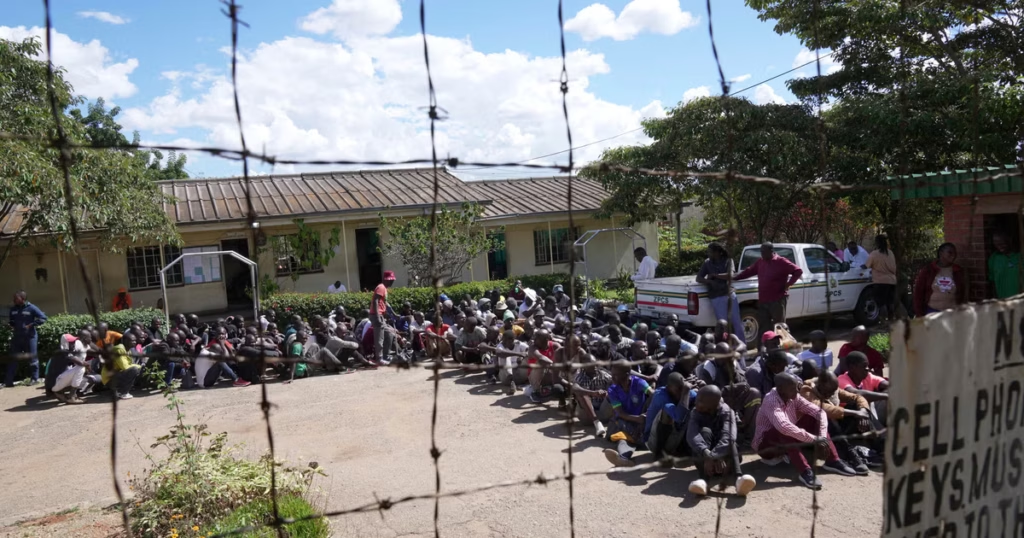
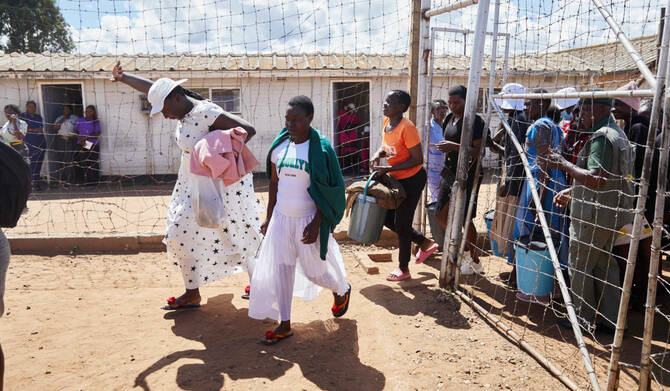
Libyan authorities will put on trial a suspected member of a criminal network accused of human trafficking after investigators linked the group to a mass grave containing the remains of 21 migrants, the country’s attorney general’s office announced Friday, underscoring the persistent dangers faced by people transiting the country in hopes of reaching Europe.

In a statement posted on Facebook, the attorney general’s office said the suspect had been referred to court on a charge of human trafficking. Prosecutors said evidence showed the criminal group organized illegal migration operations and trafficked people in the southeastern city of al-Kufra and in Ajdabiya, in eastern Libya. The statement did not identify the suspect or name the criminal network.

Authorities said the case emerged from an investigation into a trafficking ring accused of detaining migrants, torturing them and extorting ransoms from their families. Prosecutors said 195 migrants were freed from captivity during the operation. One member of the group was arrested, while other suspects remain at large and are being pursued, according to the attorney general’s office.

The investigation also uncovered a mass grave containing the bodies of 21 migrants, though officials did not specify when or exactly where the remains were found, nor did they detail how or when the victims died. Images released by the attorney general’s office showed bodies wrapped in black plastic bags, with some remains partially buried under dirt. The Associated Press said it could not immediately and independently verify the images.

Libya has long been a major transit point for migrants fleeing conflict, persecution and poverty across Africa and the Middle East. Many attempt to cross the Central Mediterranean by sea toward Europe, often relying on smugglers who operate with near impunity amid years of political instability and weak law enforcement.

The country has struggled to regain stability since a 2011 uprising toppled and killed longtime ruler Moammar Gadhafi. In the years since, armed groups, traffickers and militias have flourished, particularly in remote desert regions such as al-Kufra, which sits near Libya’s borders with Sudan and Chad and has become a hub for smuggling routes.

Human rights organizations and international agencies have repeatedly documented widespread abuses against migrants in Libya, including arbitrary detention, forced labor, sexual violence and torture aimed at extorting money from families abroad. The attorney general’s statement said the freed migrants in the latest case had been subjected to torture, consistent with earlier reports of abuse by trafficking networks.

Deaths along the migration route continue to mount. Most recently, at least 42 people went missing and were presumed dead after a boat carrying migrants capsized off Libya’s coast, according to the International Organization for Migration. The incident added to a growing toll in one of the world’s deadliest migration corridors.

The IOM’s Missing Migrants Project said more than 1,000 people have died in the Central Mediterranean since the beginning of 2025, including more than 500 off the coast of Libya. The figures underscore how dangerous the journey remains, despite years of international efforts to curb smuggling and reduce crossings.

Libya’s fragmented political landscape has complicated those efforts. Since Gadhafi’s fall, the country has effectively been split between rival administrations in the east and west, each backed by armed groups and foreign allies. The western government, led by Prime Minister Abdul-Hamid Dbeibah, is based in Tripoli, while the eastern administration, headed by Prime Minister Ossama Hammad, governs areas including Ajdabiya.

The attorney general’s office did not specify which authorities carried out the arrests or where the trial would be held, though the announcement suggested coordination across regions. Prosecutors have increasingly sought to demonstrate progress in pursuing traffickers, even as critics question whether isolated prosecutions can dismantle entrenched criminal networks.

The decision to bring a trafficking suspect to trial in connection with a migrant mass grave highlights both a measure of accountability and the scale of the challenge Libya faces in addressing abuses along migration routes. While the prosecution signals a willingness by authorities to confront traffickers, it also exposes the extreme brutality that has become commonplace in an environment shaped by conflict, weak governance and economic desperation.

Al-Kufra’s role in the case is particularly telling. The remote desert city has long served as a gateway for migrants entering Libya from sub-Saharan Africa, making it a strategic choke point for smuggling networks. Control over such routes often translates into significant profits, fueling competition among armed groups and complicating enforcement efforts.

International actors, including European governments, have invested heavily in border control initiatives aimed at reducing departures from Libya. Critics argue that these measures, while lowering arrivals in Europe at times, have trapped migrants in Libya, where they remain vulnerable to abuse by traffickers and militias. The discovery of mass graves reinforces concerns that containment strategies may inadvertently increase risks for migrants.

The rising death toll in the Central Mediterranean also suggests that smugglers continue to adapt, using increasingly dangerous routes and overcrowded vessels. For many migrants, the lack of legal pathways leaves little alternative but to rely on criminal networks, despite the known dangers.

Libya’s divided governance further complicates accountability. Prosecuting one suspect may offer some measure of justice, but dismantling networks that operate across vast territories and exploit political fragmentation will require sustained coordination, resources and political will. Without broader reforms and stability, experts warn that trafficking rings are likely to regenerate even after individual arrests.

For the families of the 21 migrants found in the mass grave, the trial may represent a first step toward answers. For Libya and the international community, it is another stark reminder that migration through the country remains a humanitarian crisis marked by violence, exploitation and loss of life.

AP

Second Crane Collapse Near Bangkok Kills 2, Intensifying Scrutiny After Deadly Thailand Train Disaster

0

A construction crane collapsed onto an elevated roadway near Bangkok on Thursday, killing two people and deepening national scrutiny of Thailand’s infrastructure safety just one day after a separate crane failure derailed a passenger train and killed dozens in the country’s northeast.

Thai authorities said the latest accident occurred at a construction site along an extension of Rama 2 Road, a major expressway linking Bangkok to southern provinces. The project, long criticized for repeated safety lapses, has been the site of numerous construction accidents, some of them fatal.

The crane fell in Samut Sakhon province, trapping two vehicles beneath twisted steel and concrete, the government’s Public Relations Department said. Transport Minister Phiphat Ratchakitprakarn told Thai television Channel 7 that two people were confirmed dead, though officials cautioned that the full scope of the damage remained unclear.

Rescue teams were unable to immediately enter the site, citing the risk of further collapse. Suchart Tongteng, a rescue worker with the Ruamkatanyu Foundation, said dangling steel plates and unstable debris made the area unsafe.

“At this moment, we still can’t say whether another collapse could happen,” Suchart said. “That’s why there are no rescue personnel inside the scene, only teams conducting on-site safety assessments.”

The incident came less than 24 hours after a launching gantry crane — a large mobile structure used in elevated rail and road construction — fell onto a moving passenger train in Nakhon Ratchasima province, derailing the train and killing 32 people. That disaster, one of the deadliest rail accidents in recent Thai history, has already prompted widespread public anger and official investigations.

At the site of Wednesday’s derailment, search operations were formally concluded Thursday, Gov. Anuphong Suksomnit of Nakhon Ratchasima said. Three passengers initially listed as missing were believed to have disembarked earlier in the journey, though authorities said the matter was still under review.

Officials said 171 people were believed to have been aboard the three-carriage train when it was struck. Crews on Thursday began removing the mangled rail cars from the scene as police continued gathering evidence and interviewing witnesses. Provincial Police Chief Narongsak Promta said no charges had yet been filed.

South Korea’s Foreign Ministry confirmed that a South Korean man in his late 30s was among those killed in the train crash.

Both accidents have drawn renewed attention to the companies involved and to Thailand’s rapid expansion of large-scale infrastructure projects, many of them tied to regional connectivity plans. The high-speed rail project where Wednesday’s derailment occurred is linked to Beijing’s Belt and Road Initiative, which aims to connect China with Southeast Asia through rail, road and port networks.

Anan Phonimdaeng, acting governor of the State Railway of Thailand, said the rail project’s main contractor was Italian-Thai Development Plc, widely known as Italthai, with a Chinese firm responsible for design and construction supervision. A statement posted on Italthai’s website expressed condolences to the victims’ families and said the company would cover compensation for the dead and medical expenses for the injured.

Transport Minister Phiphat said Italthai was also the lead contractor on the Rama 2 Road expressway extension where Thursday’s crane collapse occurred, though he noted that multiple companies were involved in the highway project.

The company’s role in both accidents has fueled public outrage, particularly because Italthai was also a co-lead contractor on the State Audit Building in Bangkok that collapsed during construction last March amid a major earthquake centered in Myanmar. That collapse marked Thailand’s worst quake-related disaster, killing about 100 people.

In that case, Thai prosecutors have indicted 23 individuals and companies, including Italthai’s president and the local director of China Railway No. 10, the project’s joint venture partner. Charges include professional negligence and document forgery, and Thailand’s Department of Special Investigation has recommended additional indictments.

The repeated involvement of the same contractors — including Chinese firms — in multiple high-profile accidents has intensified debate in Thailand about regulatory oversight, safety enforcement and transparency in megaprojects.

In Beijing, Chinese Foreign Ministry spokesperson Mao Ning said Wednesday that China was aware of the rail accident and had conveyed condolences, but did not directly address questions about the role of Chinese companies in the construction.

The back-to-back crane collapses have become a flashpoint for public frustration over Thailand’s development strategy, which has prioritized speed and scale in infrastructure expansion but has repeatedly faced criticism for weak enforcement of safety standards. Rama 2 Road, in particular, has gained a reputation among motorists as one of the country’s most dangerous construction corridors, with accidents frequently snarling traffic and, in some cases, costing lives.

While Thai officials have promised investigations after each major incident, critics say systemic problems persist, including fragmented oversight across agencies, reliance on subcontracting chains that dilute accountability, and limited penalties that fail to deter negligence. The recurrence of accidents involving the same major contractors has amplified calls for deeper structural reform rather than case-by-case responses.

The link to Belt and Road projects adds a geopolitical dimension, as Southeast Asian governments balance the economic benefits of Chinese-backed infrastructure with domestic concerns over quality control and safety. For Thailand, a regional transport hub, failures in flagship projects risk undermining public trust and investor confidence.

As investigators probe the causes of the two latest disasters, pressure is mounting on the government to demonstrate that lessons will be enforced — not just acknowledged. For families of the victims, the demand is more immediate: accountability that translates into safer roads and rails, rather than another cycle of condolences followed by the next tragedy.

The Associated Press

Actor Timothy Busfield Held Without Bond as Prosecutors Cite New Allegation in 16-Year-Old Child Sex Abuse Case

0

Emmy Award-winning actor and director Timothy Busfield was ordered Wednesday to remain jailed without bond as prosecutors outlined a new allegation of sexual misconduct involving a 16-year-old girl, adding to existing criminal charges that accuse him of abusing two child actors on the set of a television series in New Mexico.

Busfield, 67, did not enter a plea during his first court appearance in Bernalillo County Metropolitan Court, where Judge Felicia Blea-Rivera ruled that he would remain in custody pending a detention hearing to be scheduled within five business days. Busfield appeared remotely via video from jail, dressed in an orange detention uniform, and did not speak as a defense attorney addressed the court.

The actor faces two felony counts of criminal sexual contact of a minor and one count of child abuse. The charges stem from allegations made by twin boys who told Albuquerque police they were inappropriately touched by Busfield while working on the Fox television series “The Cleaning Lady,” which was filmed in the city, according to a criminal complaint.

Prosecutors, in a seven-page motion seeking Busfield’s continued detention, also disclosed a separate allegation reported this week involving a 16-year-old girl in California. Busfield has not been criminally charged in connection with that allegation.

According to the filing, law enforcement received a report Tuesday from the girl’s father, who said Busfield kissed his daughter and touched her intimate parts “several years ago.” Prosecutors said Busfield allegedly urged the family not to report the incident if he sought therapy. No charges have been filed in that case, and prosecutors emphasized the allegation was presented as part of their argument that Busfield poses an ongoing risk.

Busfield’s attorneys did not immediately respond to requests for comment regarding the new allegation. New Mexico-based counsel for the actor also could not be reached Wednesday following the court hearing.

Busfield turned himself in to authorities Tuesday after an arrest warrant was issued last week. He was booked into the Bernalillo County Metropolitan Detention Center later that day, according to jail records.

The criminal complaint alleges that the abuse involving the two boys occurred over a period spanning from November 2022 through the spring of 2024. One of the children told investigators that Busfield first touched him inappropriately when he was 7 years old and again when he was 8, including contact with his private areas over his clothing. The boy said he was afraid to report the alleged abuse because Busfield was the director on set and he feared getting into trouble.

The child’s twin brother told police he was also touched by Busfield, though he did not specify where. He said he stayed silent because he did not want to get in trouble, according to the complaint. The boys’ parents later reported the allegations to Child Protective Services.

In an interview with investigators last fall, Busfield denied the accusations and suggested that the boys’ mother was motivated by anger after her children were not asked to return for the show’s final season. That claim was echoed by his attorney. The actor also told police that the set environment was playful and that he may have picked up or tickled the children, according to the complaint.

Warner Bros., which co-produced “The Cleaning Lady,” commissioned an independent investigation by a law firm following complaints about Busfield’s conduct. Christina McGovern of Solomon Law said the review did not find evidence corroborating the allegations.

“Based on what was alleged, and all evidence gathered, including multiple witness statements, I found no corroborating evidence that Mr. Busfield engaged in inappropriate conduct or that he was ever alone with the accusers on set,” McGovern said in a statement.

Prosecutors challenged that conclusion in their detention motion, arguing that the investigator failed to interview key witnesses and that the review should not outweigh sworn statements from alleged victims.

In court filings, prosecutors described what they called a pattern of sexual misconduct, abuse of authority and grooming behavior spanning more than two decades. They said witnesses have expressed fear of retaliation and professional harm, particularly given Busfield’s status and influence in the entertainment industry.

“The defendant’s authority, access and public profile uniquely position him to evade accountability and circumvent safeguards designed to protect children,” prosecutors wrote, arguing that no conditions of release could reasonably ensure public safety.

They also criticized Busfield for sharing a video with the media outlet TMZ before turning himself in, saying it suggested an attempt to control the public narrative rather than comply with the judicial process. In that video, Busfield called the allegations lies and vowed to fight the charges.

Busfield is best known for his roles as a reporter on NBC’s “The West Wing” and an advertising executive on ABC’s “Thirtysomething,” a performance that earned him an Emmy Award. He also appeared in the film “Field of Dreams.” He is married to actor Melissa Gilbert, a former president of the Screen Actors Guild and star of “Little House on the Prairie.”

Gilbert’s representative said Tuesday that she supports her husband and will address the public at an appropriate time, adding that she would not comment further at the request of Busfield’s lawyers.

The case against Busfield underscores a broader reckoning within the entertainment industry, where allegations involving abuse of power continue to surface years after the height of the #MeToo movement. Prosecutors’ emphasis on alleged patterns of behavior and authority-driven silence reflects a legal strategy increasingly used in cases involving prominent figures with access to minors.

The decision to hold Busfield without bond also highlights how courts are weighing community safety and victim protection in high-profile abuse cases, even when some allegations remain uncharged. As the legal process unfolds, the case may test how much weight courts give to prior investigations conducted by private studios versus criminal inquiries led by law enforcement.

Busfield remains in custody as the court prepares for a detention hearing that will determine whether he stays jailed while awaiting trial.

NBC/AP

 US Indefinitely Suspends Immigrant Visa Processing for 75 Countries, Including Nigeria, Brazil, and Somalia

0

WASHINGTON — The State Department has suspended immigrant visa processing for citizens of 75 countries in an indefinite freeze that officials characterize as necessary to prevent foreign nationals from exploiting American public assistance programs, marking one of the Trump administration’s most sweeping immigration restrictions since returning to power.

The pause takes effect Jan. 21 and will continue without a specified end date while the department conducts what it calls a comprehensive reassessment of screening and vetting procedures for immigrant visa applicants. The affected nations span multiple continents and include major population centers such as Nigeria, Brazil, Russia, Iran, Somalia, Afghanistan, Thailand, Egypt and Iraq, among others.

A State Department memo obtained by Fox News Digital directs consular officers at U.S. embassies worldwide to refuse immigrant visas under existing public charge provisions of immigration law during the review period. The directive represents an extraordinary assertion of executive authority over legal immigration channels that could affect millions of prospective immigrants seeking permanent residency in the United States.

“The State Department will use its long-standing authority to deem ineligible potential immigrants who would become a public charge on the United States and exploit the generosity of the American people,” State Department spokesperson Tommy Piggott said in a statement Wednesday. “Immigration from these 75 countries will be paused while the State Department reassess immigration processing procedures to prevent the entry of foreign nationals who would take welfare and public benefits.”

Bloomberg first reported the suspension Wednesday, citing earlier Fox News coverage of the internal State Department directive. The Associated Press and Reuters subsequently confirmed the policy’s implementation, though the State Department has not publicly released the complete list of affected countries.

The suspension applies exclusively to immigrant visas, which confer permanent residency rights, and does not affect nonimmigrant visa categories used by temporary visitors, tourists or business travelers. This distinction means that while pathways to permanent U.S. residence remain closed for citizens of the 75 designated countries, short-term travel may continue subject to existing restrictions.

The complete roster of affected nations comprises Afghanistan, Albania, Algeria, Antigua and Barbuda, Armenia, Azerbaijan, Bahamas, Bangladesh, Barbados, Belarus, Belize, Bhutan, Bosnia, Brazil, Burma, Cambodia, Cameroon, Cape Verde, Colombia, Cote d’Ivoire, Cuba, Democratic Republic of the Congo, Dominica, Egypt, Eritrea, Ethiopia, Fiji, Gambia, Georgia, Ghana, Grenada, Guatemala, Guinea, Haiti, Iran, Iraq, Jamaica, Jordan, Kazakhstan, Kosovo, Kuwait, Kyrgyzstan, Laos, Lebanon, Liberia, Libya, Macedonia, Moldova, Mongolia, Montenegro, Morocco, Nepal, Nicaragua, Nigeria, Pakistan, Republic of the Congo, Russia, Rwanda, Saint Kitts and Nevis, Saint Lucia, Saint Vincent and the Grenadines, Senegal, Sierra Leone, Somalia, South Sudan, Sudan, Syria, Tanzania, Thailand, Togo, Tunisia, Uganda, Uruguay, Uzbekistan and Yemen.

The geographic and demographic diversity of the list suggests the administration’s selection criteria extend beyond traditional security concerns to encompass economic considerations about which immigrant populations might utilize public assistance programs. The inclusion of countries across Africa, Asia, Latin America, the Middle East and Eastern Europe indicates a broad-based approach to restricting immigration from what officials have characterized as higher-risk sources.

Somalia has attracted particular scrutiny from federal authorities following what prosecutors described as widespread fraud in Minnesota involving taxpayer-funded benefit programs. Many individuals implicated in those cases were Somali nationals or Somali-Americans, creating a political environment where broader restrictions on Somali immigration gained traction within the administration.

The suspension builds on guidance issued in a November 2025 State Department cable that instructed consular officers worldwide to enforce stringent new screening protocols under the public charge provision. That directive established expansive criteria for denying visas to applicants deemed likely to rely on government benefits, weighing factors including health status, age, English language proficiency, financial resources and potential need for long-term medical care.

Under the November guidance, older applicants or those classified as overweight could face visa denials, as could individuals with any history of receiving government cash assistance or institutional care. The breadth of these criteria represents a significant departure from previous interpretations of public charge inadmissibility, which traditionally focused on applicants unable to support themselves without government aid.

“The Trump administration is bringing an end to the abuse of America’s immigration system by those who would extract wealth from the American people,” the State Department said in its Wednesday statement announcing the suspension.

The public charge provision has existed in U.S. immigration law for decades, authorizing consular officers to deny visas to individuals likely to become primarily dependent on government assistance. However, enforcement has varied dramatically across administrations, with officers historically exercising considerable discretion in applying the standard to individual cases.

President Trump first expanded the public charge definition in 2019 during his initial term, broadening the range of public benefits considered in eligibility determinations. That expansion faced immediate legal challenges, with portions ultimately blocked in federal court before the Biden administration rescinded the policy entirely upon taking office in 2021.

The Biden administration’s 2022 public charge rule narrowed the scope of benefits considered in visa decisions, primarily limiting scrutiny to cash assistance programs and long-term institutional care while excluding commonly used benefits such as the Supplemental Nutrition Assistance Program, the Special Supplemental Nutrition Program for Women, Infants and Children (WIC), Medicaid and housing vouchers.

The Trump administration’s revival and expansion of restrictive public charge enforcement reflects a fundamental philosophical difference in immigration policy, prioritizing economic self-sufficiency concerns over family reunification and humanitarian considerations that have traditionally influenced American immigration decisions.

State Department officials indicated that exceptions to the suspension will be “very limited” and granted only after applicants have satisfied heightened public charge scrutiny. The lack of specificity about exception criteria creates uncertainty for applicants with compelling cases such as immediate family members of U.S. citizens or individuals with specialized skills.

The suspension arrives amid a broader pattern of aggressive visa revocation and restriction by the Trump administration. Fox News reported that the State Department revoked more than 100,000 foreign visas in 2025, an all-time record exceeding twice the 40,000 revocations processed in 2024 during the final year of the Biden administration.

The majority of those revocations targeted business and tourist travelers who overstayed their authorized periods. However, approximately 8,000 students and 2,500 specialized workers also lost legal status, with department officials stating that most had criminal encounters with law enforcement.

Among specialized workers whose visas were revoked, half faced drunk driving charges, 30 percent were charged with assault, battery or unlawful confinement, and the remaining 20 percent encountered charges including theft, child abuse, substance abuse and distribution, fraud and embezzlement. Nearly 500 students lost visas for drug possession and distribution, while hundreds of foreign workers faced revocation based on child abuse allegations, Fox News reported, citing department sources.

In August 2025, the Trump administration announced it would review all 55 million foreigners holding valid U.S. visas, an unprecedented undertaking that signals the administration’s commitment to what officials describe as protecting American security and economic interests through immigration enforcement.

Principal deputy spokesperson Piggott said the administration would maintain its enforcement posture through a new “continuous vetting center” designed to monitor visa holders throughout their time in the United States. “The Trump administration will continue to put America first and protect our nation from foreign nationals who pose a risk to public safety or national security,” he said.

The visa suspension emerges from Trump’s November vow to “permanently pause” migration from what he termed “Third World Countries” following a shooting near the White House by an Afghan national that killed a National Guard member. That incident provided political momentum for the expanded restrictions now taking effect.

The policy’s implementation raises profound questions about America’s continued role as a destination for immigrants seeking opportunity and refuge. The 75 affected countries include nations with deep historical, cultural and economic ties to the United States, where generations of families have maintained connections across borders through immigration channels now indefinitely closed.

For prospective immigrants from the designated countries who have invested years preparing applications, gathering documentation and waiting for processing, the suspension represents a potentially devastating interruption of life plans involving family reunification, employment opportunities or escape from difficult circumstances in home countries.

The economic implications extend beyond individual applicants to encompass American employers, educational institutions and communities that rely on immigrant contributions. Restrictions on permanent immigration affect workforce development, demographic trends and the economic vitality of regions where immigrant populations have driven growth and revitalization.

International diplomatic repercussions appear inevitable as affected countries respond to what many will characterize as discriminatory treatment based on national origin. The suspension affects U.S. allies including Brazil and NATO partners, potentially complicating broader foreign policy objectives in regions where cooperation on security, trade and other priorities requires goodwill.

The lack of a specified timeline for the suspension creates open-ended uncertainty that may persist indefinitely depending on the administration’s assessment of when “reassessed” procedures satisfy its objectives. Whether the pause represents a temporary review or an extended de facto ban on immigrant visas from these countries remains unclear.

Legal challenges appear likely from advocacy organizations, affected individuals and potentially foreign governments arguing that the suspension exceeds executive authority or violates immigration law’s intent. Previous Trump administration immigration restrictions faced extensive litigation, though courts have generally afforded broad deference to executive determinations regarding national security and immigration policy.

The suspension’s effectiveness in achieving its stated objectives of preventing public benefit usage by immigrants remains uncertain given the complex factors influencing benefit utilization and the difficulty of predicting individual applicants’ future economic trajectories based on demographic characteristics.

As the January 21 implementation date approaches, consular officers at U.S. embassies in the affected countries prepare to halt processing of immigrant visa applications that may have reached advanced stages, creating administrative challenges and human costs that will reverberate through families and communities worldwide.

Forbes/AP/Reuters

Nigerian Caregiver Arrested in Toronto for Allegedly Assaulting Vulnerable Adults at Group Home

0

Toronto police have arrested a caregiver on multiple assault charges after he allegedly attacked vulnerable adults during a month-long employment period at an East York group home, authorities said Wednesday.

Oghenemaro Dave Ejerua, 38, of Toronto, faces seven counts of assault stemming from incidents that occurred between Nov. 1 and Nov. 30, 2025, at a residential facility in the Sibley Avenue and Dentonia Park Avenue area. The Toronto Police Service took Ejerua into custody following a manhunt that began after officers responded to an assault call at approximately 9 a.m. on Dec. 10.

The Toronto Police Service said in a statement posted to its website that investigators determined Ejerua had been employed as a caregiver at the group home during the period when the alleged assaults took place. The facility houses vulnerable adults who require assistance with daily living activities, making residents particularly defenseless against potential abuse from those entrusted with their care.

“It is alleged that the suspect was employed as a caregiver at a group home for vulnerable adults between November 1 and November 30, 2025,” the police statement said. “During this period, the accused committed a series of assaults on the residents of the home.”

The case highlights ongoing concerns about safeguarding vulnerable populations in residential care settings, where dependence on caregivers creates inherent power imbalances that can enable abuse. Group homes serving adults with disabilities, cognitive impairments or advanced age rely on staff integrity and proper oversight to protect residents who may lack capacity to report mistreatment or defend themselves against attacks.

Authorities declared Ejerua wanted in December 2025 after investigating the initial assault report. The Toronto Star, a local news outlet, published details of the manhunt, describing the suspect as five feet eight inches tall with a medium build, curly black hair and black facial hair. Police released a photograph of Ejerua as they sought public assistance in locating him.

The gap between when the alleged assaults occurred in November and when police responded to the first report in December raises questions about detection mechanisms within group home environments. Whether residents reported abuse that went unaddressed, whether injuries were initially attributed to other causes or whether the full scope of alleged misconduct only became apparent through subsequent investigation remains unclear from available information.

Ejerua appeared before the Ontario Court of Justice at 10 Armoury Street on Wednesday, Jan. 7, 2026, at 10 a.m. in room 106 for his scheduled court date. The judicial process will now determine whether sufficient evidence exists to proceed with prosecution on the seven assault charges.

The Nigerian national’s arrest marks another instance of caregiver misconduct allegations involving members of Toronto’s Nigerian community. PUNCH Metro, a Nigerian news outlet, reported that this case follows the December arrest of Babatunde Afuwape, a 28-year-old Nigerian charged with murder in connection with the death of Shivank Avasthi, a 20-year-old university student killed on Dec. 23, 2025.

These incidents, while involving individuals from the same national origin, should not suggest broader patterns within any immigrant community. Criminal behavior reflects individual choices rather than ethnic or national characteristics, and the vast majority of Nigerian immigrants in Canada contribute positively to their communities through lawful employment and civic participation.

The caregiver profession attracts workers from diverse backgrounds, including many immigrants seeking employment opportunities in Canada’s healthcare and social services sectors. The work involves intimate contact with vulnerable individuals, requiring trustworthiness, patience and genuine concern for clients’ wellbeing. Most caregivers perform these demanding duties with professionalism and compassion, making cases of abuse particularly disturbing betrayals of the trust placed in those roles.

Group homes in Ontario operate under provincial regulations designed to protect residents through staff screening, training requirements and oversight mechanisms. Background checks, reference verification and other hiring safeguards aim to identify individuals unsuitable for positions of trust with vulnerable populations. Despite these protections, some unsuitable candidates inevitably slip through screening processes, or behavioral problems emerge only after employment begins.

The alleged series of assaults over a month-long period suggests either that detection systems failed to identify concerning incidents or that abuse escalated gradually in ways that initially avoided notice. Modern group homes often employ surveillance cameras in common areas, incident reporting protocols and regular resident wellness checks, though privacy considerations and resource limitations can create gaps in monitoring.

Families placing loved ones in group home care face the difficult reality that they must trust strangers with individuals who cannot fully protect themselves. Regular family visits, communication with facility administrators and attention to unexplained injuries or behavioral changes can help identify problems, though many families live at distances that make frequent in-person contact challenging.

The seven assault charges suggest multiple separate incidents or victims, though precise details about the nature and severity of the alleged attacks have not been disclosed publicly. Assault charges in Canada can range from minor physical contact to serious violence causing injury, with penalties varying accordingly. The accumulation of seven distinct charges indicates a pattern of alleged behavior rather than a single incident.

For the residents allegedly victimized, the assaults represent profound violations of safety within what should be a protective environment. Vulnerable adults placed in group homes often have experienced trauma, health challenges or life circumstances that already diminish their sense of security. Abuse by caregivers compounds these vulnerabilities and can create lasting psychological harm alongside any physical injuries sustained.

The facility where the alleged assaults occurred has not been publicly identified, likely to protect resident privacy and prevent stigmatization that might affect individuals currently receiving care there. However, the lack of public identification also prevents families researching group home options from making informed decisions about facility safety records.

Toronto Police asked anyone with information about the case to contact investigators at 416-808-5500 or reach Crime Stoppers anonymously at 416-222-TIPS (8477) or through 222tips.com. The public appeal suggests authorities believe additional information about the incidents may exist beyond what has already been reported.

The investigation’s outcome will carry implications extending beyond this specific case. Successful prosecution might identify systemic failures in hiring, supervision or incident response that permitted the alleged abuse to continue for a month. Conversely, acquittal would raise questions about how assault allegations arose and whether investigative or charging decisions were premature.

Regardless of the individual case’s resolution, the broader challenge of protecting vulnerable adults in care settings remains constant. Regulatory frameworks, facility policies and family vigilance all contribute to resident safety, yet no system proves entirely foolproof against individuals determined to abuse positions of trust.

For Toronto’s Nigerian community, these high-profile criminal cases involving community members create uncomfortable scrutiny and potential stereotype reinforcement. Community leaders often emphasize that criminal behavior by individuals should not reflect on ethnic groups as a whole, while simultaneously working to address any underlying factors that might contribute to such incidents.

The case serves as a reminder that caregiver positions demand not only skills and credentials but fundamental human decency and respect for the vulnerable individuals entrusted to their care. Most who enter these professions do so with genuine desire to help others, making the alleged actions attributed to Ejerua particularly disturbing departures from professional and ethical norms.

Punchng/TorontoStar