Home Blog Page 82

Meagan Good and Jonathan Majors Granted Guinean Citizenship After Ancestry Trace

0

Hollywood actors Meagan Good and Jonathan Majors have been granted citizenship of Guinea after DNA testing traced their ancestry to the West African nation, Guinean officials said Friday.

The couple received their citizenship during a private ceremony in Conakry, the capital, where senior government figures formally welcomed them as nationals of the country.

Djiba Diakité, chief of staff to Guinea’s president, said the decision reflected the government’s recognition of historical ties between Guinea and descendants of Africans taken abroad during the transatlantic slave trade.

“We think that you are among the worthy sons and daughters of this Guinea,” Diakité said during the ceremony. “You represent our country, the red-yellow-green flag all over the world.”

Good and Majors are expected to tour several of Guinea’s cultural and tourist sites on Sunday, officials said.

The move places the couple among a growing number of prominent figures in the African diaspora who have been granted citizenship or formal residency rights by West African nations seeking to reconnect with descendants of enslaved Africans.

Guinea is not the first country in the region to pursue such outreach.

Last year, U.S. singer Ciara became one of the first high-profile Americans to receive citizenship from Benin, which has promoted similar initiatives aimed at the African diaspora.

Ghana has gone further, naturalizing hundreds of African Americans in recent years following an invitation issued by then-President Nana Akufo-Addo in 2019 urging members of the diaspora to “come home.”

In 2024 alone, Ghana granted citizenship to 524 African Americans as part of commemorations marking 400 years since the arrival of the first enslaved Africans in North America in 1619.

For Guinea, the decision to grant citizenship to Good and Majors comes as the country seeks greater international visibility while navigating a complex domestic political landscape.

Guinea has been led by junta leader Gen. Mamadi Doumbouya since a military coup in 2021.

Last month, Doumbouya was declared the winner of a presidential election held after a prolonged transition period, following a crackdown on opposition figures and dissent that left him without major challengers.

While the government has framed the election as a step toward stability, critics have questioned its credibility and the broader state of political freedoms in the country.

Against that backdrop, the citizenship ceremony carried both symbolic and diplomatic weight, projecting an image of cultural openness and global engagement.

Jonathan Majors, once considered one of Hollywood’s fastest-rising stars, has seen his career trajectory shift dramatically in recent years.

He gained critical acclaim for performances in films such as “Da 5 Bloods” and the HBO series “Lovecraft Country,” before securing a central role in Marvel Studios’ cinematic universe as the villain Kang the Conqueror.

That ascent stalled after Majors was arrested following a 2023 altercation with his then-girlfriend in New York.

He was later convicted on assault and harassment charges, prompting Marvel to drop him from future projects.

A film widely viewed as a potential awards contender, “Magazine Dreams,” was shelved before eventually being released last year after a delay.

Meagan Good, an established actor in her own right, began dating Majors in 2023 and was a consistent presence at his trial.

The couple became engaged in 2024 and married last year in a small, impromptu ceremony held as Majors promoted “Magazine Dreams.”

Their public relationship, unfolding amid legal scrutiny and career uncertainty, has drawn sustained attention in U.S. entertainment media.

The granting of Guinean citizenship adds a new dimension to their public narrative, linking their personal story to broader historical currents involving identity, ancestry and the legacy of slavery.

Beyond the celebrity aspect, Guinea’s decision highlights a wider effort by African nations to redefine relationships with the global African diaspora.

For countries whose populations were deeply affected by the slave trade, citizenship initiatives serve both as symbolic restitution and as a practical strategy to attract investment, tourism and international advocacy.

DNA testing has increasingly become a gateway for such reconnections, offering individuals a sense of historical grounding while providing governments with a modern framework for outreach.

At the same time, critics argue that high-profile citizenship grants risk appearing selective or performative, particularly when extended to celebrities rather than to broader diaspora communities.

In Guinea’s case, the move may also be read as an attempt to soften its international image at a time when its political legitimacy is under scrutiny.

For Good and Majors, citizenship offers cultural affirmation rather than immediate political involvement, but their global visibility means their association with Guinea will inevitably carry diplomatic resonance.

As more African states formalize pathways for diaspora citizenship, the trend raises deeper questions about belonging, nationality and the meaning of return centuries after forced displacement.

What remains clear is that the legacy of the transatlantic slave trade continues to shape contemporary politics, culture and identity, now intersecting with Hollywood fame and modern genetics in unexpected ways.

AP

Nobel Institute Rejects Machado’s Suggestion of Sharing Peace Prize With Trump, Citing Finality Rules

0

OSLO, Norway — The Norwegian Nobel Institute has definitively rejected any possibility that Venezuelan opposition leader María Corina Machado could give or share her 2025 Peace Prize with President Donald Trump, issuing a rare public statement clarifying that Nobel awards remain permanently fixed once announced.

Venezuelan opposition leader María Corina Machado

The organization that oversees the Nobel Peace Prize released its unequivocal position Friday following days of speculation about Machado’s expressed desire to honor Trump for his role in the military operation that captured Venezuelan President Nicolás Maduro.

Once the Nobel Peace Prize is announced, it cannot be revoked, transferred or shared with others, the Norwegian Nobel Institute stated in unusually blunt language designed to end the discussion.

“The decision is final and stands for all time,” the institute declared.

The Nobel Foundation statutes contain no provisions for appeals, modifications or redistribution of prizes after announcement, institute officials emphasized.

The statement comes after Machado told Fox News host Sean Hannity on Monday that she would like to give or share the prestigious award with Trump.

Trump oversaw the controversial U.S. military raid that extracted Maduro from Venezuela on January 3.

Maduro now faces narco-terrorism and drug trafficking charges in federal court in New York.

“I certainly would love to be able to personally tell him that we believe — the Venezuelan people, because this is a prize of the Venezuelan people — certainly want to give it to him and share it with him,” Machado stated during Monday’s Fox News appearance.

“What he has done is historic. It’s a huge step towards a democratic transition,” she added.

Machado dedicated the prize to Trump, along with the Venezuelan people, shortly after the Nobel Committee announced her selection in October 2025.

The dedication came before the dramatic U.S. military operation that removed Maduro from power.

Trump has coveted the Nobel Peace Prize and has openly campaigned for winning the award himself since returning to office in January 2025.

The former and current president has frequently referenced his belief that he deserves the prize for various diplomatic initiatives during both his administrations.

The Norwegian Nobel Institute statement also noted that Nobel committees do not comment on laureates’ actions or statements after receiving awards, according to Reuters.

This institutional silence policy means the committee will not address Machado’s political statements or her characterization of what the Venezuelan people want regarding the prize.

When Hannity directly asked Machado during Monday’s interview whether she had offered to give Trump the Nobel Peace Prize, she responded with carefully chosen words.

“Well, it hasn’t happened yet,” Machado stated, leaving ambiguous whether she meant the offer or the actual transfer.

Trump, speaking to Hannity on Thursday, indicated he would be honored to accept the prize if Machado presented it during a planned meeting in Washington next week.

“It would be a great honor,” Trump told Hannity, confirming that Machado plans to visit the White House.

President Donald Trump

However, Trump’s enthusiastic reception of Machado’s symbolic gesture contrasts sharply with his actual governance decisions for post-Maduro Venezuela.

When it comes to governing Venezuela after Maduro’s capture, Trump has backed someone else entirely: Delcy Rodríguez, who served as vice president under Maduro.

Trump has called Machado a “very nice woman” but maintains she lacks sufficient support within Venezuela to govern effectively.

The disconnect between accepting symbolic honors from Machado while empowering her political rival to run Venezuela highlights the complex calculations driving Trump administration policy.

Machado, a former National Assembly member, was barred from running in Venezuela’s 2024 general election by authorities aligned with Maduro.

She backed a stand-in candidate who independent observers widely considered to have won the vote, although Maduro claimed victory.

Ballot audits by independent election monitors showed significant irregularities in official results that credited Maduro with victory.

Machado’s exclusion from the ballot and the disputed election results helped justify international criticism of Maduro’s government as authoritarian.

The Nobel Committee cited her courageous opposition to authoritarianism and advocacy for democratic principles when awarding her the 2025 Peace Prize.

A representative for Machado did not immediately respond to messages seeking comment on the Nobel Institute’s statement.

The episode illustrates how Nobel Peace Prizes can become entangled in geopolitical controversies and domestic political calculations that extend far beyond the committee’s original intentions.

The Prize Politics and Presidential Ambitions

The Nobel Institute’s swift intervention to clarify prize rules reflects institutional concern about protecting the award’s integrity from becoming a political football in U.S.-Venezuela relations.

While Machado’s gesture toward Trump appears motivated by genuine gratitude for Maduro’s removal, it also serves strategic purposes by publicly aligning her with the American president whose support she needs.

For Trump, the symbolic offer of a Nobel Prize—even one he cannot actually receive—provides validation he has long sought from an institution that has frustrated his ambitions.

The president’s visible pleasure at Machado’s gesture, coupled with his invitation for her White House visit, suggests he values the symbolic recognition regardless of legal impossibility.

Yet Trump’s decision to back Rodríguez rather than Machado for Venezuelan leadership reveals that symbolic gestures matter less than pragmatic calculations about who can actually govern.

Rodríguez, despite serving under Maduro, apparently commands networks within Venezuelan institutions that Trump’s advisors believe Machado lacks.

This creates an awkward situation where Trump accepts honorary credit for “democratic transition” from an opposition leader he simultaneously marginalizes from actual power.

The Nobel Institute’s unusual public statement also protects the prize from becoming devalued through political horse-trading.

If laureates could transfer or share awards based on political allegiances, the Nobel Peace Prize would lose credibility as recognition of individual achievement and become instead a tradeable commodity in diplomatic relations.

The institute’s firm response establishes precedent that may deter future laureates from similar gestures, preserving the award’s symbolic power.

The Broader Context of Nobel Prize Controversies

The Norwegian Nobel Committee has faced persistent criticism about politicized selections, with some prizes appearing to reward hoped-for outcomes rather than achieved accomplishments.

Barack Obama’s 2009 Peace Prize, awarded just months into his presidency, generated widespread criticism that the committee sought to influence rather than recognize his policies.

The committee cannot revoke prizes even when laureates subsequently engage in actions seemingly contradicting peace, as evidenced by Myanmar’s Aung San Suu Kyi maintaining her award despite presiding over ethnic cleansing.

This institutional rigidity—once announced, prizes remain permanent regardless of subsequent events—stems from Norwegian law and Nobel Foundation statutes established over a century ago.

The rules prevent committees from second-guessing historical judgments or responding to political pressure by revoking controversial selections.

Machado’s case differs from attempts to revoke prizes because she seeks to add a recipient rather than remove one, but the same inflexibility applies.

The Nobel Institute’s Friday statement treats transfer and sharing as equivalent to revocation—all constitute modifications to announced decisions that statutes prohibit.

Trump’s Long-Standing Nobel Ambitions

Trump’s interest in winning the Nobel Peace Prize dates to his first term, when he publicly suggested his North Korea diplomacy warranted consideration.

Japanese Prime Minister Shinzo Abe’s 2018 nomination of Trump for the prize was later revealed, fueling Trump’s expectations that recognition would follow.

No award materialized despite Trump’s diplomatic outreach to North Korean leader Kim Jong Un in historic summits that ultimately produced no denuclearization progress.

Trump’s second-term interest in the prize has only intensified, with the president frequently referencing his belief that Venezuelan intervention deserves Nobel recognition.

Machado’s offer, though legally impossible to fulfill, provides Trump with a form of validation from a Nobel laureate even if the committee never selects him.

The episode demonstrates how symbolic gestures can partially satisfy ambitions when formal recognition remains elusive.

Implications for U.S.-Venezuela Relations

Machado’s planned White House visit next week will test how Trump balances symbolic recognition of an opposition figure with practical support for Rodríguez’s transitional government.

The Venezuelan opposition leader needs American backing but currently lacks the institutional power base to govern without U.S. military enforcement.

Rodríguez, conversely, brings continuity and existing administrative networks but carries the stigma of serving Maduro’s authoritarian government.

Trump’s attempt to leverage both figures—honoring Machado symbolically while empowering Rodríguez practically—may prove unsustainable as Venezuelan politics stabilize.

The Nobel Prize controversy adds another layer to already complex negotiations about Venezuela’s future governance structure and the extent of American control over the country’s political transition.

As Washington determines Venezuela’s trajectory, symbolic disputes about prize transfers matter less than fundamental questions about sovereignty, democracy, and whether military intervention can actually produce the democratic transitions it promises to deliver.

AP/Reuters

Nigeria’s Super Eagles Outclass Algeria to Reach AFCON 2025 Semi-Finals, Set Up Morocco Showdown

0

Nigeria’s Super Eagles continued their commanding run at the 2025 Africa Cup of Nations on Saturday night, overpowering Algeria 2-0 at the Stade de Marrakech to book a place in the tournament’s semi-finals and extend their status as one of the competition’s most formidable sides.

The quarter-final victory sets up a high-stakes last-four clash against tournament hosts Morocco, who advanced earlier after defeating Cameroon. For Nigeria, the result reinforced their growing momentum in the competition, while bringing an abrupt end to Algeria’s previously resilient campaign.

Nigeria entered the match buoyed by a dominant 4-0 Round of 16 victory over Mozambique and carrying the tournament’s most potent attack. The Super Eagles had scored 12 goals across four matches, a tally unmatched by any other team at the finals. Algeria, by contrast, arrived in Marrakech unbeaten, having conceded just once in the same number of games, with their defensive discipline widely viewed as their biggest strength.

From the opening whistle, Nigeria imposed themselves on the contest. The Super Eagles controlled possession, pressed aggressively high up the pitch and forced Algeria into a compact defensive shape deep inside their own half. Victor Osimhen spearheaded the attack with trademark intensity, combining physical strength and pace, while Ademola Lookman and Akor Adams provided movement and width. In midfield, Alex Iwobi dictated the tempo, linking play between defense and attack with calm authority.

Nigeria’s early dominance translated into a series of chances in the first half. Akor Adams came closest to breaking the deadlock when he raced through on goal, only to see his effort denied in a one-on-one situation. Moments later, another Nigerian attempt was dramatically cleared off the line as Algeria scrambled to keep the score level. Despite sustained pressure, the North African side remained organized at the back, with goalkeeper Luca Zidane producing key interventions to frustrate Nigeria’s forwards.

Algeria’s approach relied on absorbing pressure and seeking opportunities on the counterattack, but those moments were limited. Nigeria’s midfield shield, anchored by Wilfred Ndidi, repeatedly broke up Algerian transitions before they could develop into genuine threats. As a result, Algeria struggled to test Nigeria’s back line in the opening half, even as they reached the interval still level.

The breakthrough Nigeria had been pushing for arrived in the second half. Osimhen, who had been a constant menace, rose above his marker to power home a header, finally converting Nigeria’s territorial dominance into a deserved lead. The goal lifted the tempo further, with the Super Eagles sensing an opportunity to take full control of the contest.

Rather than retreat, Nigeria continued to dictate proceedings. Their full-backs pushed high, stretching Algeria’s defensive lines, while the wingers’ movement created space centrally. That pressure told again when Akor Adams doubled Nigeria’s advantage, finishing clinically after being set up by Osimhen, who turned provider after opening the scoring himself.

At 2-0 down, Algeria made a series of substitutions in an attempt to change the game’s momentum. However, Nigeria’s composure and defensive organization ensured the contest never drifted out of their control. Ndidi continued to disrupt Algerian build-up play, while Nigeria’s center-backs dealt confidently with aerial balls and late pressure.

As the minutes ticked down, the Super Eagles managed the game with maturity, circulating possession and limiting Algeria’s opportunities to mount a comeback. By the final whistle, Nigeria’s superiority had been emphatically underlined, with the scoreline reflecting a performance that combined attacking flair with tactical discipline.

The victory carries broader implications for the tournament. Nigeria’s attacking efficiency and balance across the pitch have made them one of the standout teams of AFCON 2025, and their ability to overcome a defensively solid Algeria side sends a strong signal to remaining contenders. With Osimhen leading the line and multiple attacking options contributing, the Super Eagles have demonstrated depth and versatility that could prove decisive in the final stages.

The semi-final against Morocco now looms as one of the tournament’s marquee matchups. Morocco, playing on home soil, will enjoy strong local support and arrive with confidence after their own quarter-final success. For Nigeria, the challenge will be to replicate the intensity and control shown against Algeria while navigating the added pressure of facing the hosts.

Beyond the immediate contest, Nigeria’s run to the semi-finals reflects a broader resurgence under a system that emphasizes high pressing, midfield control and quick transitions. The Super Eagles’ consistency across matches suggests a side growing in belief, with experienced leaders blending effectively with emerging talents.

Algeria, meanwhile, exit the competition having been undone by Nigeria’s pace and persistence. Despite their strong defensive record leading into the quarter-finals, they were ultimately unable to contain Nigeria’s sustained pressure or find a foothold in midfield. Their elimination highlights the fine margins at this stage of the tournament, where a single lapse can shift the balance decisively.

As AFCON 2025 moves toward its climax, Nigeria’s performance in Marrakech has placed them firmly among the favorites. With confidence high and a semi-final showdown against Morocco ahead, the Super Eagles remain focused on translating their impressive form into a place in the final — and potentially, continental glory.

Punchng

2 Dead, Several Trapped After Building Under Construction Collapses Along Ngong Road, Kenya

0

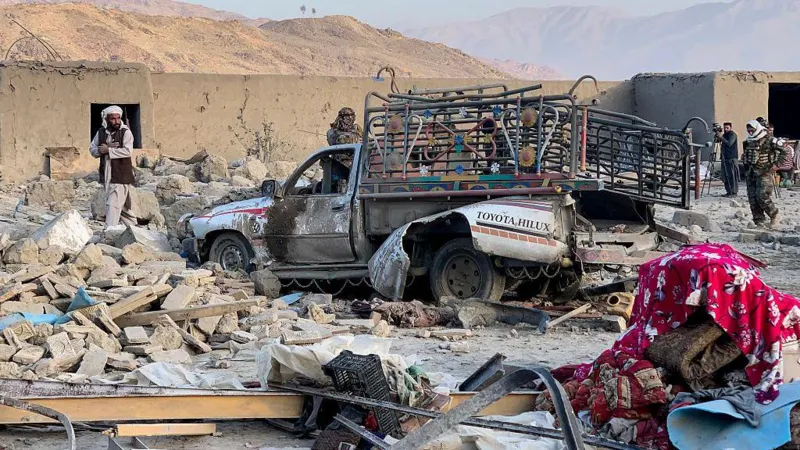
At least two people were killed and several others were injured Saturday evening after a building under construction collapsed along Ngong Road in Nairobi’s Karen area, prompting a large-scale rescue operation and renewing scrutiny of construction safety standards in Kenya’s capital.

Emergency responders rushed to the scene opposite Karen Community Church shortly after the structure gave way at about 5 p.m., trapping workers beneath concrete and twisted metal. By around 6 p.m., the Kenya Red Cross said it had evacuated three critically injured people as rescuers worked against fading daylight to search for survivors.

Police said preliminary findings indicate the structure had reached the first-floor level when the slab suddenly collapsed, crushing workers who were on site at the time. Two builders were pronounced dead at the scene, while seven others were pulled from the debris and taken to hospital for treatment. Rescue teams continued operations late into the night amid uncertainty over whether more people remained trapped.

Confusion persisted over the exact number of fatalities. Former Nairobi Gov. Mike Sonko, who confirmed the incident through a public statement, said three bodies had been recovered. “Another building has just collapsed in Karen near KCB. Several people are trapped inside. Three dead bodies have already been confirmed,” Sonko said. Authorities, however, had not independently verified that figure as of publication.

Police and the National Construction Authority had yet to issue an official briefing on the collapse, though officers from the Directorate of Criminal Investigations were among those at the scene gathering evidence and questioning witnesses. Investigators were expected to focus on structural integrity, compliance with approved building plans and whether safety protocols were followed during construction.

Emergency officials said it was still unclear how many workers were on site when the building failed. Rescue teams, including volunteers and medical personnel, continued carefully removing debris to avoid triggering further collapse.

The Nairobi County government and the National Disaster Management Unit had not released statements on the incident by the time of publication, leaving residents and families of workers anxiously awaiting confirmation of casualties and accountability measures.

The Karen collapse comes less than two weeks after another building failure in Nairobi’s South C estate, where a 12-storey structure under construction collapsed, killing two people. That incident had already intensified public concern over lax oversight in the city’s rapidly expanding construction sector.

Urban planners and safety experts say the repeated collapses point to deeper systemic problems. The Architectural Association of Kenya has repeatedly warned that a significant number of buildings in Nairobi are unsafe for occupation, citing weak enforcement of regulations, corruption in approvals and widespread use of substandard construction materials.

Figures cited by built-environment professionals show inspections conducted by the National Building Inspectorate found that only about 15 percent of assessed buildings were structurally sound. The remaining 85 percent were classified as unsafe, requiring major structural intervention or posing potential risks to occupants and the public.

Those statistics underscore what experts describe as a crisis fueled by rapid urbanization, rising land values and pressure to cut costs. Developers, engineers and contractors often operate in a fragmented system where oversight is split among county authorities, national regulators and professional bodies, creating gaps that can allow unsafe practices to go unchecked.

Saturday’s collapse again raised questions about whether lessons from past disasters have translated into meaningful reform. In previous incidents, investigations have identified failures ranging from poor foundation work and unauthorized design changes to the use of counterfeit or low-grade materials.

Beyond the immediate human toll, the incident is likely to intensify calls for tougher enforcement and accountability. Construction accidents have eroded public trust in regulatory agencies, particularly when investigations stall or fail to result in prosecutions.

For residents of Karen and surrounding neighborhoods, the collapse also highlighted broader safety concerns. Ngong Road is a major artery lined with homes, churches, schools and businesses, meaning construction failures pose risks not only to workers but also to passersby.

Emergency responders said crowd control was necessary at the site as onlookers gathered, complicating rescue efforts. Authorities urged the public to keep a safe distance to allow heavy machinery and medical teams to operate.

The tragedy has reignited debate over the responsibilities of developers and professionals involved in construction projects. Under Kenyan law, developers, architects, engineers and contractors can all be held liable if negligence or regulatory violations are found to have contributed to a collapse.

As investigations proceed, families of the victims are likely to press for answers and justice. Worker advocates have long argued that laborers on construction sites often face the greatest risks, sometimes without adequate safety equipment, insurance or clear records of employment.

While rescue operations continued, analysts noted that the Karen collapse adds to mounting pressure on authorities to act decisively. Without sustained reform, they warn, Nairobi risks seeing similar tragedies repeat as the city continues to grow vertically to accommodate its expanding population.

For now, emergency teams remain focused on the immediate task of locating survivors and accounting for all workers who were on site when the building came down. Officials have said more information will be released once rescue operations conclude and investigators establish the full circumstances behind the collapse.

Kenyans.co

Mississippi Man Charged After 6 People Including 7-Year-Old Girl and Pastor Killed in Multi-Location Shooting Spree

0

CLAY COUNTY, Mississippi — A 24-year-old Mississippi man has been arrested and charged with first-degree murder in the Friday night deaths of six people, including a 7-year-old child and a local pastor, across three separate locations in Clay County in what law enforcement officials characterized as one of the most horrific crime sprees in the rural county’s history.

Daricka Moore, a Clay County resident, is accused of killing several family members and a pastor before being apprehended just before midnight Friday, Clay County Sheriff Eddie Scott announced Saturday during a press conference. The charge against Moore is expected to be upgraded to capital murder, with the death penalty a distinct possibility if he is found mentally competent to stand trial, officials confirmed.

“This is horrific. It’s about as bad as it gets,” stated Scott Colom, the district attorney for Mississippi’s Sixteenth Circuit Court, whose jurisdiction includes Clay County. Colom indicated his office would pursue the death penalty given the extreme nature of the crimes, departing from his typical practice of consulting with victims’ families before making such decisions.

According to Sheriff Scott, Moore is accused of fatally shooting his father, brother, and uncle in the head Friday evening at the first location just before 7 p.m. Evidence and witness statements led investigators to believe Moore was the sole shooter in the rampage that unfolded across multiple sites over several hours, with each location presenting increasingly disturbing crime scenes.

Moore then allegedly stole his brother’s truck and drove to a second location where authorities say he attempted to sexually assault a 7-year-old girl who was related to him. In front of witnesses, Moore is accused of shooting and killing the child in the head after the attempted sexual battery, according to Reuters and NPR reports citing Sheriff Scott’s statements.

Scott revealed that two other children were present in the home at the second location, in addition to the children’s mother who witnessed the horrific violence. Based on witness accounts, a second, younger child was threatened with a gun at this location as well, though it remained unclear whether the weapon misfired or whether Moore chose not to pull the trigger.

“According to the statements, after the 7-year-old was violently murdered, a weapon was stuck to the head of a small child in the house,” the sheriff stated during the press conference, his voice reflecting the emotional toll of investigating such brutality. “That’s how violent he was, to shoot one and stick a gun to another one.”

The presence of witnesses including the children’s mother and other minors who observed the 7-year-old’s murder and the weapon being pointed at another child adds layers of psychological trauma extending beyond the immediate victims to include survivors who will carry memories of the violence for the rest of their lives.

A 911 call then directed law enforcement to a third location, where two additional men were found fatally shot in the head. The victims at the third scene were brothers, with Sheriff Scott confirming that one was a pastor at a local church. 

The relationship between Moore and these final two victims remained under investigation as of Saturday, though authorities indicated they were working to establish connections between the suspect and all victims.

The victims ranged in age from the 7-year-old girl to a 67-year-old man, according to NPR’s confirmation of Sheriff Scott’s statements to reporters. No other injuries beyond the six fatalities were reported, though the psychological impact on witnesses and surviving family members will likely prove devastating and long-lasting.

Moore was apprehended at a location near the third crime scene just before midnight Friday, bringing to an end a multi-hour rampage that terrorized the small northeastern Mississippi county. The relatively brief time between the first shooting around 7 p.m. and Moore’s capture before midnight meant that law enforcement had limited opportunity to warn residents or establish protective perimeters before additional killings occurred.

“This has really shaken our community,” Sheriff Scott told the assembled media at Saturday’s press conference. “Personally, I don’t know what kind of motive you could have to kill a 7-year-old.” The sheriff, who has served in law enforcement for nearly 30 years, characterized the case as “one of the toughest ones we’ve had to work,” reflecting the emotional challenge of investigating crimes against children and the sheer number of victims across multiple scenes.

“This has really, really shaken our community, and for me, almost 30 years in, this is one of the toughest ones we’ve had to work,” Scott stated, his comments underscoring how even experienced law enforcement officials struggle to comprehend violence directed at young children and the methodical nature of attacks spanning multiple locations and victim groups.

The motives for the killings remained unknown as of Saturday, with Sheriff Scott emphasizing that investigators had not yet determined what prompted Moore to allegedly embark on the deadly spree. 

The progression from family members to the attempted sexual assault of a child to the killing of two men including a pastor suggested either escalating loss of control or execution of some planned sequence whose logic remained incomprehensible to investigators.

District Attorney Colom announced that his office would be pursuing the death penalty against Moore if the defendant is found eligible under Mississippi law, which requires consideration of the defendant’s mental competency and the presence of aggravating factors that warrant capital punishment. “Typically, I would consult with the victims and wait down the line, but there’s some cases that they’ve got to get the worst punishment,” Colom explained.

“Six people, one night, several different scenes. You’ve heard the allegations, they’re about as bad as it gets,” the district attorney continued, laying out the prosecutorial reasoning that the crime’s severity justified immediate death penalty consideration rather than the more deliberative process typically employed in capital cases where prosecutors consult extensively with victims’ families before making charging decisions.

The Mississippi Crime Lab, a state office that handles forensic analysis for major crimes, will conduct autopsies on all six victims, Sheriff Scott confirmed. The autopsies will establish official causes of death, document any additional injuries beyond the fatal head shots, and potentially provide forensic evidence linking Moore to the crime scenes through ballistics analysis, gunshot residue, or other physical evidence.

Moore is scheduled to appear in court Monday for initial proceedings where formal charges will be read and bail will be addressed, though given the severity of the allegations and the number of victims, legal experts suggest bail is highly unlikely to be granted. 

The defendant will likely be appointed public defenders given the capital nature of the charges, with Mississippi providing experienced capital defense attorneys for defendants facing potential death sentences.

Located in northeastern Mississippi near the Alabama border, Clay County has a population of nearly 20,000 residents spread across rural communities where violent crime—particularly mass casualty events—occurs rarely. 

The county seat of West Point and surrounding unincorporated areas maintain the close-knit character common to rural Southern communities, making the Friday night rampage particularly shocking for residents accustomed to knowing their neighbors and rarely confronting violence of this magnitude.

The case joins a disturbing pattern of family annihilation cases where perpetrators kill multiple relatives across different locations, often involving combinations of domestic violence, sexual assault, and seemingly random targeting that investigators struggle to explain through conventional criminal motives.

 The inclusion of a pastor among victims adds elements suggesting either personal grievance, religious delusion, or opportunistic targeting that may become clearer as the investigation progresses.

For Clay County’s faith communities, the pastor’s killing creates particular trauma as congregations process the loss of a spiritual leader while grappling with theological questions about why such violence occurs and how communities should respond. 

The pastor’s identity had not been publicly released as of Saturday pending family notification, though Sheriff Scott’s disclosure that the victim served a local church suggests he was known within the county’s religious community.

The attempted sexual assault of the 7-year-old before her murder elevates the depravity of the crimes beyond even the multiple homicides, with prosecutors likely to argue that the sexual battery attempt combined with the child’s killing represents the kind of aggravated circumstances that Mississippi capital punishment statutes specifically address. 

The public nature of the assault and killing—occurring in front of witnesses including the child’s mother and siblings—compounds the horror and will likely feature prominently in any capital trial.

The threatened shooting of a second child whose life was spared either through weapon malfunction or the suspect’s decision not to fire raises agonizing questions about what spared that child when others died. Survivors, particularly young children, may struggle with guilt about surviving when siblings or relatives died, requiring extensive psychological support to process trauma that extends well beyond the immediate violence to encompass existential questions about randomness and fairness.

Clay County will face substantial challenges supporting victims’ families, witnesses, first responders, and community members traumatized by the crimes. Rural counties often lack the mental health infrastructure and victim services resources that urban areas can mobilize after mass casualty events, potentially leaving survivors without adequate support as they navigate grief, trauma, and the lengthy legal proceedings that capital cases inevitably require.

The death penalty pursuit, while supported by the district attorney given the crime’s severity, will trigger years of appeals and legal proceedings before any execution could occur, assuming Moore is convicted and sentenced to death. 

Mississippi maintains capital punishment and has executed prisoners in recent years, though the state’s death row population has declined as juries increasingly choose life sentences even in eligible cases.

Moore’s mental competency will become a central issue in proceedings, with defense attorneys likely to request comprehensive psychiatric evaluations before trial. If Moore is found incompetent to stand trial, proceedings would be suspended while he receives treatment to restore competency, potentially delaying justice for victims’ families while creating legal complexities about whether someone can be forcibly medicated to make them competent for trial on capital charges.

The multi-location nature of the crimes will require extensive crime scene processing, witness interviews, and forensic analysis to establish timelines, document Moore’s movements between locations, and build the comprehensive case necessary for capital prosecution. The presence of witnesses to the second-location crimes provides crucial testimony but also means that children and adults who observed unimaginable violence will need to relive those experiences through multiple interviews, depositions, and potentially trial testimony.

For the small Clay County Sheriff’s Office and local prosecutors, handling a capital case of this magnitude will strain resources and require assistance from state and potentially federal law enforcement agencies with expertise in complex homicide investigations.

 The Mississippi Bureau of Investigation and FBI may provide technical assistance, criminal profiling, and other resources that exceed local capabilities while ensuring that the investigation meets the heightened scrutiny capital cases demand.

As the community begins the difficult process of mourning six lives lost in one horrific night, questions about how to prevent such tragedies remain unanswered. 

The family connections between Moore and most victims suggest domestic violence dynamics, though the killing of the pastor and the attempted sexual assault of a child indicate elements beyond typical family annihilation cases where perpetrators kill relatives before committing suicide.

The case will likely prompt renewed discussions about mental health screening, domestic violence intervention, and whether warning signs existed that might have prevented the rampage if identified and addressed. 

However, Sheriff Scott’s statement that motives remain unknown suggests that even thorough investigation may fail to provide satisfying explanations for why a 24-year-old man allegedly chose to murder six people including a young child in a single night of incomprehensible violence.

NPR/Reuters

Ukrainian Drones Ignite Fire at Russian Oil Depot After Moscow Deploys New Hypersonic Missile

0

A Ukrainian drone attack ignited a fire at an oil depot in Russia’s southern Volgograd region overnight, escalating cross-border strikes after Moscow launched a new hypersonic missile and a wave of drones and missiles that disrupted electricity and heating across Ukraine.

Volgograd Gov. Andrei Bocharov said local authorities were responding to a blaze at the fuel facility and warned that residents living nearby could face evacuation if conditions worsened. His comments were published on the regional administration’s Telegram channel. Officials did not immediately disclose the extent of the damage, and no casualties were reported.

Ukraine’s General Staff said its forces carried out the strike, identifying the target as the Zhutovskaya oil depot. In a statement released on Telegram, the military said the site supplies fuel to Russian forces and that assessments of the damage were ongoing.

Kyiv has increasingly relied on long-range drone attacks against Russian energy infrastructure, a strategy aimed at weakening Moscow’s oil export revenue, which helps finance the war. Russia, in turn, has intensified strikes on Ukraine’s power grid, a tactic Ukrainian officials say is designed to leave civilians without heat, electricity and water during winter.

The latest exchange followed a massive Russian assault overnight into Friday, when hundreds of drones and dozens of missiles struck multiple regions of Ukraine, killing at least four people in Kyiv, Ukrainian authorities said. During that barrage, Russia fired its nuclear-capable Oreshnik hypersonic missile for only the second time since the war began nearly four years ago, sending a pointed signal to Ukraine’s Western allies.

The heavy attack came amid signs of progress in discussions between Ukraine and its partners over long-term security guarantees should a U.S.-led peace initiative materialize.

U.N. Secretary-General spokesperson Stéphane Dujarric said Friday’s Russian strikes caused extensive civilian harm and cut off essential services for millions. He said the attacks hit at a time of “acute humanitarian need,” leaving large parts of the population without electricity, heating or running water.

Ukrainian Prime Minister Yulia Svyrydenko said heating in Kyiv was expected to be fully restored by the end of Saturday. She said emergency blackouts on the west bank of the Dnieper River would gradually be lifted, while repairs on the more heavily damaged east bank were proving more complex due to extensive destruction of the power grid.

Russia’s Defense Ministry said its forces had struck Ukrainian energy facilities and fuel depots using aircraft, missiles, artillery and drones. The Ukrainian air force said Russia launched 121 drones and one Iskander-M ballistic missile during the attack, adding that air defenses destroyed 94 of the drones.

Separately, Russia’s Defense Ministry said air defenses intercepted 59 Ukrainian drones overnight over Russian territory and occupied Crimea.

Ukraine’s military also said its forces hit additional Russian targets, including a drone storage site linked to the 19th Motor Rifle Division in the Zaporizhzhia region and a drone command-and-control center near the eastern city of Pokrovsk.

AP

Anti-ICE Protests Sweep U.S. Cities After Fatal Minneapolis Shooting and Portland Incident

0

MINNEAPOLIS (AP) — Protests against U.S. immigration enforcement surged across cities nationwide over the weekend as anger and fear mounted following two high-profile shootings involving federal officers in Minneapolis and Portland, Oregon, prompting calls from state and local leaders for calm even as demonstrations continued to grow.

In Minneapolis, thousands of demonstrators filled streets and parks Saturday to denounce the fatal shooting of 37-year-old Renee Nicole Good by an Immigration and Customs Enforcement officer earlier in the week, as well as the wounding of two people by a Border Patrol agent during a vehicle stop in Portland. The Minneapolis march was among hundreds of coordinated protests planned in cities and towns across the country, reflecting a rapidly escalating backlash against the Trump administration’s aggressive immigration enforcement campaign.

The city has remained on edge since Wednesday, when Good, a U.S. citizen and mother, was shot while seated in her car during an ICE operation. Federal officials have described the killing as an act of self-defense, alleging that Good attempted to use her vehicle as a weapon. That account has been sharply disputed by Minneapolis Mayor Jacob Frey and witnesses at the scene.

“We’re all living in fear right now,” said Meghan Moore, a Minneapolis resident and mother of two who joined Saturday’s march. “ICE is creating an environment where nobody feels safe, and that’s unacceptable.”

Minnesota leaders repeatedly urged demonstrators to remain peaceful, particularly after a protest outside a Minneapolis hotel turned violent late Friday. Minneapolis Police Chief Brian O’Hara said about 1,000 people gathered near the hotel, where some demonstrators threw ice, snow and rocks at officers. One officer suffered minor injuries after being struck by ice, and 29 people were cited and released, O’Hara said.

Mayor Frey emphasized that while most demonstrations had been peaceful, authorities would not tolerate violence or property damage. He blamed what he called outside agitators for inflaming tensions.

“This is what Donald Trump wants,” Frey said, referring to President Donald Trump’s push for large-scale immigration enforcement in major U.S. cities. “He wants us to take the bait.”

Minnesota Gov. Tim Walz echoed that warning, accusing the administration of seeking chaos to distract from the fatal shooting.

“Trump sent thousands of armed federal officers into our state, and it took just one day for them to kill someone,” Walz wrote on social media. “Now he wants nothing more than to see chaos distract from that horrific action. Don’t give him what he wants.”

The Department of Homeland Security has said its deployment of immigration officers in the Twin Cities represents its largest-ever enforcement operation in the region, involving more than 2,000 federal personnel. DHS has maintained that both the Minneapolis killing and the Portland shooting were acts of self-defense against drivers who “weaponized” their vehicles to threaten agents.

That explanation has done little to ease public outrage. In Portland, federal officials said a Border Patrol agent fired on a vehicle during a targeted stop after agents were allegedly nearly run over. Local officials there have said they cannot independently verify DHS’s account and have called for a full investigation.

Across Minneapolis, protesters marched through neighborhoods known for their cultural diversity, carrying handmade signs reading “De-ICE Minnesota!” and “ICE melts in Minnesota,” while chanting against federal enforcement tactics. Families with children joined the march despite sub-freezing temperatures and light snowfall, underscoring the depth of concern among residents.

Connor Maloney, who attended the Minneapolis protest, said frustration with the immigration crackdown had been building for months.

“Almost daily I see them harassing people,” he said. “It’s just sickening that it’s happening in our community around us.”

The anger was not confined to Minnesota. In Durham, North Carolina, Steven Eubanks said he felt compelled to protest after watching news of the Minneapolis killing.

“It was horrifying,” Eubanks said. “We can’t allow it. We have to stand up.”

Indivisible, a national progressive organization formed in response to Trump’s presidency, said hundreds of protests were scheduled over the weekend in states including Texas, Kansas, New Mexico, Ohio and Florida, signaling a broad-based mobilization against federal immigration policies.

Despite the massive demonstration in Minneapolis, federal enforcement activity continued across the city. As protesters gathered in a park roughly half a mile from the neighborhood where Good was killed, an Associated Press photographer observed heavily armed federal officers — at least one wearing a Border Patrol uniform — confronting an individual who had been following them. Two agents raised long guns and ordered the person to stop, issuing what they called a “first and final warning,” before driving away without making an arrest.

Chief O’Hara said Minneapolis police have been responding to calls about abandoned vehicles left behind after drivers were apprehended by immigration officers. In one instance, a car was left running in park; in another, a dog was found inside an abandoned vehicle.

“Immigration enforcement activities are happening all over the city,” O’Hara said, adding that emergency dispatchers have received numerous calls reporting ICE arrests and enforcement activity.

Lawmakers also clashed with federal authorities over access and oversight. On Saturday morning, U.S. Reps. Ilhan Omar, Kelly Morrison and Angie Craig attempted to tour the ICE facility inside the Minneapolis federal building. Although initially allowed to enter, the three lawmakers said they were ordered to leave after about 10 minutes.

The representatives accused ICE of obstructing members of Congress from performing their constitutional oversight duties. Their attempt came weeks after a federal judge temporarily blocked the Trump administration from enforcing policies that restrict congressional visits to immigration detention facilities. That ruling followed a lawsuit filed by 12 members of Congress who said ICE unlawfully denied them access.

The protests come as the Trump administration defends its sweeping crackdown, which officials say is tied in part to allegations of fraud involving Somali residents in Minnesota. Civil rights advocates, however, argue that the enforcement actions have sown fear in immigrant communities and increased the risk of violent encounters.

While demonstrations in Minneapolis have remained largely peaceful — a stark contrast to the unrest that followed the 2020 killing of George Floyd — tensions remain high. Smaller confrontations were reported Thursday and Friday near the airport, where protesters clashed with officers guarding a federal building used as a base for immigration operations.

As investigations continue into both the Minneapolis and Portland shootings, the protests reflect a broader national reckoning over immigration enforcement, federal authority and the use of deadly force. For many demonstrators, the weekend marches were not only about two shootings, but about what they see as a rapidly expanding enforcement system that has pushed fear and uncertainty into daily life.

Whether the protests will lead to policy changes remains unclear. But with demonstrations planned in hundreds of communities and mounting pressure on elected officials, the unrest signals that immigration enforcement — and the methods used to carry it out — will remain a central and volatile issue in the months ahead.

Russia Fires Hypersonic Oreshnik Missile Near NATO Border in ‘Clear Warning’ as Overnight Strikes Kill 4 in Kyiv, Cut Heat to 6,000 Buildings

0

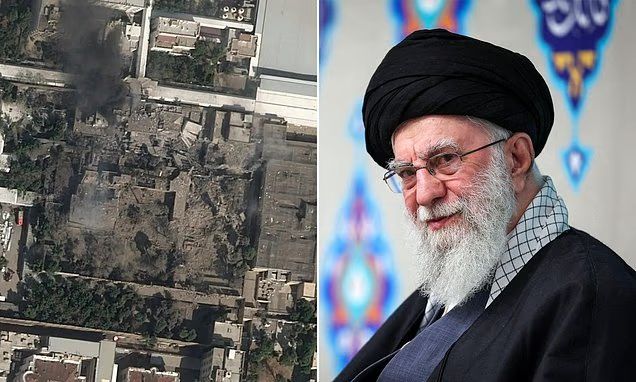
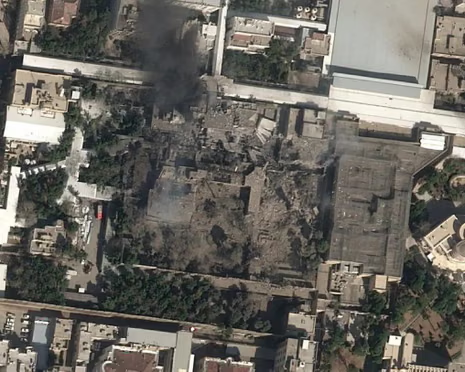
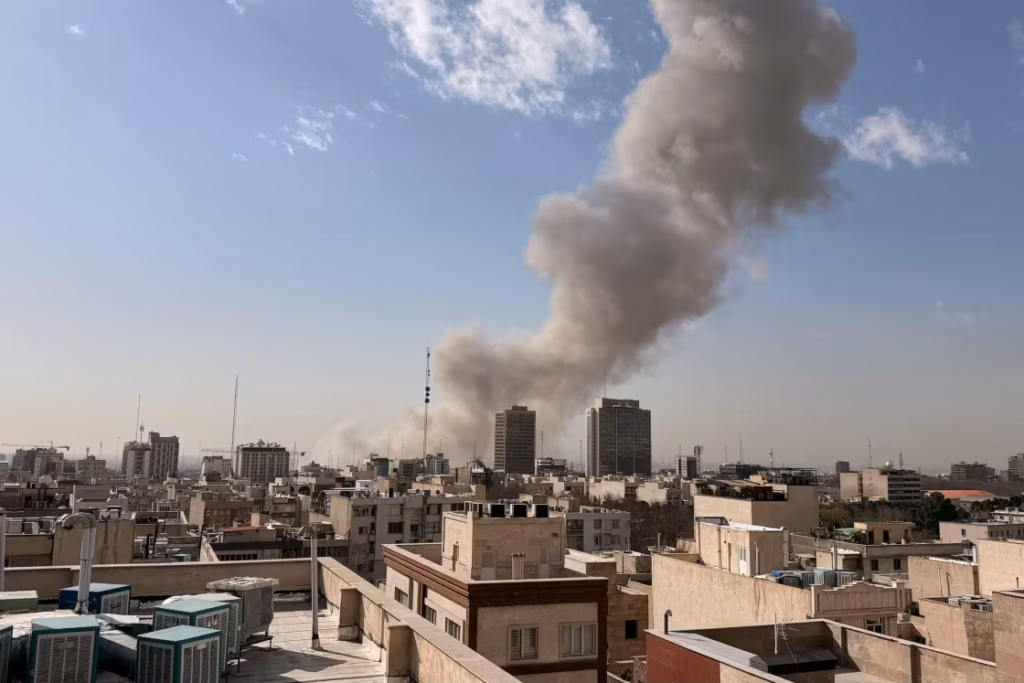
Russia fired a powerful Oreshnik hypersonic missile overnight at a target in western Ukraine near the border with NATO member Poland, marking only the second deployment of the nuclear-capable weapon in what Kyiv’s European allies condemned Friday as a deliberate attempt to intimidate them from continuing support for Ukraine’s defense.

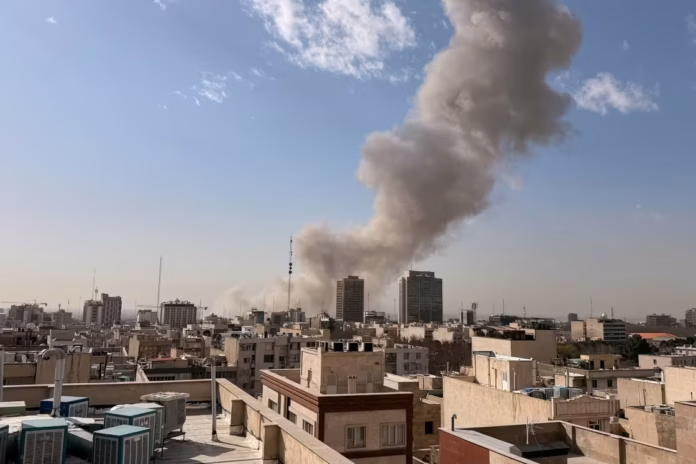
The strike came amid a massive nighttime assault that Ukrainian authorities said killed four people in Kyiv, knocked out electrical power in the capital, damaged the Qatari embassy, and left nearly 6,000 apartment buildings without heat as temperatures plunged to minus 8 degrees Celsius (17.6°F), creating humanitarian crisis conditions for hundreds of thousands of residents forced to shelter in unheated homes during winter’s coldest period.

The Oreshnik—an intermediate-range ballistic missile (IRBM) designed to project Russian power across Europe and which Moscow claims is impossible to intercept—can carry nuclear warheads although there was no indication it had done so in this strike. 

A senior Ukrainian official stated the missile appeared to be carrying inert “dummy” warheads similar to the first Oreshnik deployment in November 2024, suggesting Russia deployed the weapon for psychological impact and strategic signaling rather than maximum destructive effect.

According to Reuters, the strike appeared aimed at intimidating Ukraine at a crucial juncture in peace negotiations, with analysts noting it occurred after a difficult week for Russia including the U.S. military capture of Venezuelan President Nicolás Maduro, a close ally of Russian President Vladimir Putin whose detention represented a significant blow to Moscow’s Latin American relationships and demonstrated American willingness to use military force against governments aligned with Russian interests.

Moscow claimed it fired the Oreshnik missile in retaliation for what Russian officials characterize as an attempted drone attack on one of Putin’s residences last month—allegations that Ukraine denies and the United States has explicitly stated did not occur. 

U.S. President Donald Trump told reporters he does not believe the alleged attack happened, though he acknowledged “something else happened in the area,” leaving ambiguous what incident Russia might be mischaracterizing or fabricating.

Ukrainian Foreign Minister Andriy Sybiha condemned the strike as posing “a grave threat to security” given its proximity to European Union and NATO borders. “It is absurd that Russia attempts to justify this strike with the fake ‘Putin residence attack’ that never happened,” Sybiha wrote on X. “Putin uses an IRBM near EU and NATO border in response to his own hallucinations — this is truly a global threat. And it demands global responses.”

President Volodymyr Zelenskyy emphasized the strike was “demonstrably” close to EU member states and warned Ukraine’s neighbors to recognize the dangers the missile deployment poses beyond Ukraine’s borders. 

“From the standpoint of the use of medium-range ballistics, this is the same challenge for Warsaw, Bucharest, Budapest, and many other capitals,” Zelenskyy stated in his nightly video address. “Everyone should understand it in the same way, and take it equally seriously.”

The strike occurred just days after a European summit where countries pledged to deploy troops in Ukraine in the event of a ceasefire, with Washington backing security guarantees for Kyiv—diplomatic developments that may have prompted Russia to demonstrate military capabilities that threaten NATO allies supporting Ukraine with the message that continued assistance carries risks of Russian retaliation extending beyond Ukrainian territory.

“Russia’s reported use of an Oreshnik missile is a clear escalation against Ukraine and meant as a warning to Europe and to the U.S.,” EU foreign policy chief Kaja Kallas declared on X. “EU countries must dig deeper into their air defence stocks and deliver now. We must also further raise the cost of this war for Moscow, including through tougher sanctions.”

German Chancellor Friedrich Merz, who spoke with the leaders of France and Britain following the strike, stated: “Threatening gestures are intended to instil fear, but they will not work. We stand with Ukraine.” 

The coordinated response from major European powers demonstrated unified rejection of Russian intimidation attempts while reaffirming support for Ukraine despite the implicit threats the Oreshnik deployment represented.

The senior Ukrainian official told Reuters the missile struck a workshop belonging to a state enterprise in Lviv, the western city approximately 70 kilometers from the Polish border. 

Impact from several submunitions caused “minor penetrations of concrete structures” at the workshop and created craters in surrounding forest areas, suggesting the weapon’s destructive potential even when carrying non-explosive warheads designed primarily for testing and psychological effect.

Separately, Ukraine’s SBU state security service stated Russia had attempted to destroy civilian infrastructure in the Lviv region amid “rapidly deteriorating weather conditions”—timing that maximizes humanitarian impact by targeting energy systems during periods when heating failures threaten lives. Moscow claimed it hit energy infrastructure and a factory manufacturing drones allegedly used in the disputed attack on Putin’s residence.

Kyiv has characterized Moscow’s allegation that Ukraine attacked Putin’s residence in Russia’s Novgorod region on December 29 as “an absurd lie” designed to sabotage peace negotiations and provide justification for escalatory strikes. 

The lack of credible evidence supporting Russian claims, combined with American statements that the attack did not occur, suggests Moscow either fabricated the incident or significantly misrepresented what actually happened.

Russia fired a total of 242 drones and 36 missiles, including the Oreshnik, targeting infrastructure in the western Lviv region and in and around Kyiv, according to Ukrainian military statements. 

The massive scale of the assault—among the largest single-night attacks of the war—demonstrated Russia’s continued capability to launch overwhelming drone and missile barrages despite nearly four years of sustained warfare depleting weapons stockpiles.

Among the four people killed in Kyiv was Serhiy Smoliak, 56, an emergency medic who arrived to assist survivors at a suburban apartment building hit by a drone and was killed in a follow-up strike—a targeting pattern suggesting Russian forces deliberately attacked first responders, a war crime under international humanitarian law. His body lay covered on snowy ground near a roadside where he died attempting to save others. Four other medics and five rescuers were wounded at the same location.

Authorities reported more than 25 people injured across Kyiv with electricity knocked out to more than half a million homes. With overnight temperatures forecast to fall to minus 10 degrees Celsius (14°F), Kyiv Mayor Vitali Klitschko stated that heating had been restored to nearly 1,100 apartment buildings of approximately 6,000 affected by the strikes—meaning that roughly 5,000 buildings remained without heat as residents faced life-threatening cold.

Residents sheltered underground on mattresses and chairs, some wrapped in blankets as they waited for repairs to heating systems. Prime Minister Yulia Svyrydenko stated that repair crews were working around the clock to restore heat and power in Kyiv, though the scale of damage and winter conditions complicated restoration efforts.

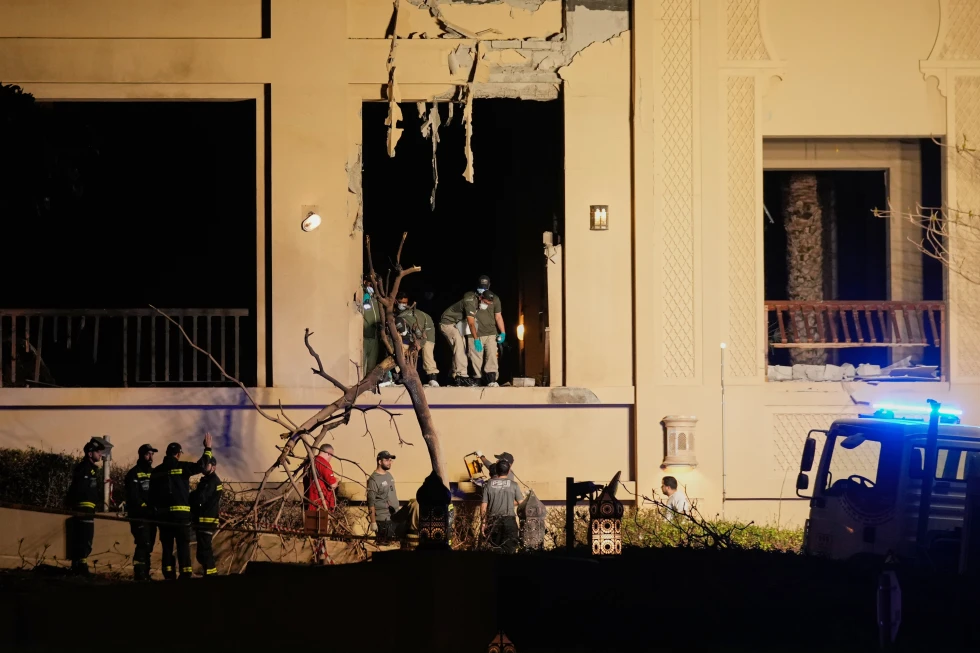
Qatar confirmed its embassy in Kyiv sustained damage though no personnel were injured. The country has occasionally acted as mediator in the conflict, facilitating prisoner exchanges and maintaining diplomatic channels between warring parties. 

The embassy damage—whether intentional targeting or collateral damage—creates diplomatic complications for a nation attempting to play neutral mediating role.

The Oreshnik was fired just before midnight according to Lviv regional officials, with Ukrainian military tracking showing the missile traveled at speeds reaching 13,000 kilometers per hour (approximately 8,000 miles per hour or Mach 10).

 Such extreme velocity makes interception extraordinarily difficult with current missile defense technologies, as systems designed to track and destroy incoming projectiles struggle to react quickly enough against hypersonic threats moving at ten times the speed of sound.

Moscow first deployed an Oreshnik—Russian for “hazel tree”—against what it characterized as a military factory in Ukraine in November 2024. Ukrainian sources stated that missile carried dummy warheads rather than high explosives and caused limited physical damage, suggesting Russia used the November deployment primarily to demonstrate possession of the new weapons system and test its performance under operational conditions.

The Friday deployment occurred Tuesday following announcements by Britain and France of plans to deploy troops in Ukraine in the event of a ceasefire—prompting Moscow to respond that it would view foreign soldiers as legitimate combat targets. 

British Defence Minister John Healey was in Kyiv on Friday discussing potential future troop deployments, making the Oreshnik strike’s timing appear calculated to influence those negotiations through demonstration of Russia’s capability to threaten NATO forces that might eventually deploy to Ukrainian territory.

According to The Associated Press, the intense barrage and launch of the nuclear-capable Oreshnik missile came days after Ukraine and its allies reported major progress toward agreeing on frameworks for defending the country from further Russian aggression if a U.S.-led peace deal is reached. 

The timing suggests Russia aims to shape negotiations by demonstrating military capabilities that could threaten any post-peace security arrangements.

Europe’s leaders condemned the attack as “escalatory and unacceptable,” with EU foreign policy chief Kaja Kallas stating that Putin’s reply to diplomacy was “more missiles and destruction.” 

The assessment reflected European frustration that diplomatic initiatives toward peace negotiations have been met with Russian military escalation rather than de-escalation that might facilitate compromise.

The attack also coincided with deteriorating relations between Moscow and Washington after Russia condemned U.S. seizure of oil tankers in the Atlantic as part of the Venezuela blockade. 

It came as President Trump signaled support for a comprehensive sanctions package designed to economically cripple Moscow, though Russia has given no public indication of willingness to moderate its maximalist demands that Ukraine cede territories, abandon NATO aspirations, and accept permanent limitations on its military capabilities.

Ukrainian intelligence services assessed that the Oreshnik carries six warheads, each containing six submunitions, for a total of 36 separate impact points from a single missile. 

This multiple independently targetable reentry vehicle (MIRV) design allows one missile to strike dispersed targets across a wide area, dramatically increasing the weapon’s effectiveness against distributed infrastructure or military facilities.

Putin has previously claimed the Oreshnik streaks toward targets “like a meteorite” at Mach 10 velocity and remains immune to any existing missile defense system. 

The Russian president has warned that several Oreshnik missiles used in conventional strikes could produce destruction comparable to nuclear attacks, while threatening that Russia might use the weapon against NATO allies of Kyiv that permit Ukraine to strike inside Russia with longer-range missiles.

Ukrainian Foreign Minister Sybiha announced Ukraine would initiate international action in response to the missile deployment, including requesting an urgent United Nations Security Council meeting and convening the Ukraine-NATO Council. “Such a strike close to EU and NATO border is a grave threat to the security on the European continent and a test for the transatlantic community. We demand strong responses to Russia’s reckless actions,” Sybiha wrote on X.

Ukraine’s request for an emergency Security Council meeting has been conveyed to council members, with six of 15 members calling for Monday discussions, though no date had been set by Friday evening, according to a U.N. diplomat speaking anonymously because deliberations remain private. 

The Security Council response will likely prove symbolic given Russia’s permanent seat and veto power preventing any binding resolutions condemning its actions.

Pope Leo XIV, speaking at the Vatican to ambassadors from around the world, urged the international community to continue pursuing peace and ending suffering in Ukraine. 

“Faced with this tragic situation, the Holy See strongly reiterates the pressing need for an immediate ceasefire, and for dialogue motivated by a sincere search for ways leading to peace,” the pontiff declared, reflecting Vatican concern about escalating weapons deployments and humanitarian catastrophe.

Several Kyiv districts sustained damage in overnight attacks, with drones crashing onto a multistory building’s roof in the Desnyanskyi district while the first two floors of another residential building were destroyed. 

In the Dnipro district, drone debris damaged a multistory building and sparked fires that emergency services battled through the night.

Dmytro Karpenko, 45, whose windows shattered in the attacks, rushed to help his neighbor whose house caught fire. “What Russia is doing, of course, shows that they do not want peace. 

But people really want peace, people are suffering, people are dying,” he stated, capturing the war-weariness afflicting Ukrainian civilians after nearly four years of sustained conflict.

Lviv resident Kristofer Chokhovich, who identified himself as American, described hearing “a loud, shocking explosion, and it’s normal at this time of the war to hear these things here.” 

He emphasized: “I just want everyone in the world to know that Ukraine is strong and we don’t care how many missiles you send.”

Another Lviv resident, Ulyana Fedun, characterized the attack as “very unpleasant” but not frightening “because we’ve been living in this state for four years,” reflecting how sustained warfare has normalized experiences that would be traumatic in peacetime contexts. 

The psychological adaptation to constant danger illustrates both Ukrainian resilience and the profound toll that years of bombardment have exacted on civilian populations.

Russian media and military bloggers claimed the Oreshnik targeted an underground natural gas storage facility in the Lviv region, though neither Ukrainian nor Russian officials confirmed the specific target. 

The Lviv region’s proximity to Poland makes it strategically significant as a conduit for Western military aid flowing to Ukraine from supply hubs just across the border, making infrastructure there attractive targets for Russian strikes attempting to disrupt logistics.

Analysts assess that the Oreshnik deployment provides Russia with new psychological warfare capabilities, unnerving Ukrainian civilians and intimidating Western nations supporting Ukraine by demonstrating weapons systems that appear unstoppable with current defense technologies. 

The psychological impact may exceed the weapon’s actual military utility, particularly when deployed with inert warheads that cause minimal physical damage but maximum fear about Russia’s willingness to use increasingly powerful weapons.

The attack’s timing—amid diplomatic initiatives toward peace negotiations, following European commitments to deploy troops in ceasefire scenarios, and during a period when Russia faces setbacks including Maduro’s capture—suggests Putin calculated that escalatory demonstration of military power would strengthen Russia’s negotiating position by reminding Western nations of the costs and risks of continued support for Ukraine.

Whether the Oreshnik deployment achieves its apparent objectives of intimidating NATO or instead strengthens Western resolve to support Ukraine depends on how European and American leaders respond. 

Initial statements condemning Russian escalation while reaffirming support for Ukraine suggest the intimidation strategy may be counterproductive, though sustained pressure through winter attacks targeting civilian infrastructure could eventually erode public support for continued involvement in a conflict with no clear resolution timeline.

2 Wounded in Portland Border Patrol Shooting as DHS Cites Self-Defense During Vehicle Stop

0

PORTLAND, Ore. — Federal officials on Friday identified two people wounded by a U.S. Border Patrol agent during a shooting in Portland, Oregon, describing the incident as an act of self-defense during a targeted vehicle stop, even as local authorities and community leaders called for transparency amid rising tensions over federal immigration enforcement.

The Department of Homeland Security said the shooting occurred Thursday after agents attempted to stop a vehicle and were met with what it described as a life-threatening situation. In a statement posted on the social media platform X, DHS identified the wounded individuals as “suspected Tren de Aragua gang associates,” a claim that local police said they were not yet in a position to independently verify.

According to DHS, the driver of the vehicle was identified as Luis David Nico Moncada, who the department alleged entered the United States illegally in 2022. The passenger, Yorlenys Betzabeth Zambrano-Contreras, was accused by federal officials of playing a role in a prostitution ring linked to Tren de Aragua, a Venezuelan-based criminal organization. DHS said she entered the U.S. in 2023.

Federal officials said the shooting unfolded after agents identified themselves and attempted to conduct what they described as a targeted vehicle stop involving a red Toyota in east Portland. Tricia McLaughlin, a spokesperson for the Department of Homeland Security, said the driver responded by attempting to flee and using the vehicle as a weapon.

“When agents identified themselves to the vehicle, the driver allegedly weaponized his vehicle and attempted to run over the law enforcement agents,” McLaughlin said. “Fearing for his life and safety, an agent fired defensive shots.”

McLaughlin said the driver fled the scene with the passenger after the shots were fired, and both were later treated for gunshot wounds. She added that the situation remained under investigation and that additional information would be released as it became available.

Two law enforcement sources familiar with the matter told NBC News that as the vehicle attempted to escape, it struck an agent, prompting another agent to fire at the car. Portland police officials, however, emphasized that they could not confirm those details because local officers were not present when the shooting occurred.

Portland Police Chief Bob Day said officers responded only after the incident had already unfolded and stressed that the city’s police department was not leading the investigation.

“We do not know the facts of this case,” Day said at a news conference. “Our role is to provide support to the FBI, which is the lead investigative agency.”

The FBI’s Portland field office said it was investigating what it described as “an assault on federal officers” involving two Customs and Border Protection agents. The agency confirmed that two individuals who fled the scene were later located and treated for their injuries.

The Portland shooting came just one day after another high-profile and deadly encounter involving federal immigration authorities, intensifying scrutiny of DHS operations. In Minneapolis, 37-year-old Renee Nicole Good, a U.S. citizen and mother, was fatally shot by an Immigration and Customs Enforcement officer while she was seated in her car.

In that case, DHS also claimed the officer acted in self-defense, alleging that Good attempted to run over federal agents with her vehicle. Minneapolis Mayor Jacob Frey publicly rejected that account, calling it “bulls—,” while witnesses said Good appeared to be attempting to flee rather than attack officers when she was shot.

The back-to-back incidents have heightened public concern and fueled protests and demands for accountability, particularly in cities that have long resisted aggressive federal immigration enforcement.

Chief Day acknowledged the broader context surrounding the Portland shooting, urging calm as investigators work to establish the facts.

“We understand the heightened emotion and tension many are feeling in the wake of the shooting in Minneapolis,” Day said in a statement. “But I am asking the community to remain calm as we work to learn more.”

Portland Mayor Keith Wilson sharply criticized the federal operation, condemning the shooting and calling for Immigration and Customs Enforcement to suspend activities in the city until a full investigation is completed. The incident occurred in Hazelwood, one of Portland’s largest and most diverse neighborhoods.

“I call on every Portlander to represent our values and to show up with calm and purpose during this difficult time,” Wilson said in a statement. “Portland does not respond to violence with violence. We respond with clarity, unity, and a commitment to justice.”

The Multnomah County Board of Commissioners echoed those concerns, issuing a statement that denounced what it described as escalating fear caused by federal enforcement actions.

“What we can say now is enough is enough,” the board said. “The terror and violence ICE is causing in our neighborhoods must end now.”

The conflicting narratives surrounding both the Portland and Minneapolis shootings have placed renewed focus on the use of force by federal immigration agents, particularly during vehicle stops. Civil rights advocates have long argued that such encounters carry a heightened risk of escalation, especially when agents operate in plain clothes or without clear coordination with local law enforcement.

DHS officials, for their part, have defended their agents’ actions, emphasizing the dangers officers face during enforcement operations and reiterating claims that vehicles have been used as weapons in both incidents. The department has said that internal reviews are underway, in addition to the FBI-led investigations.

Legal experts note that the outcome of those investigations could have broader implications, not only for the agents involved but also for how federal immigration operations are conducted in jurisdictions that oppose or limit cooperation with ICE and Customs and Border Protection.

In Portland, a city that has declared itself a sanctuary jurisdiction, the shooting has intensified an already fraught relationship between local leaders and federal authorities. The mayor’s call for ICE to halt operations underscores growing political pressure to reassess the scope and tactics of federal enforcement within city limits.

As investigations continue, officials at every level have urged patience, while residents and advocacy groups demand transparency and accountability. With two people wounded in Portland, one person dead in Minneapolis, and sharply divergent accounts of what transpired, the incidents have become flashpoints in the national debate over immigration enforcement, public safety and the use of deadly force by federal agents.

Authorities have said more details are expected to emerge in the coming days as investigators review evidence, interview witnesses and analyze body camera footage and other surveillance material. Until then, the shootings remain under intense scrutiny, reflecting a broader reckoning over how immigration laws are enforced and at what cost to community trust.

NBC

U.S. Seizes 5th Oil Tanker in Caribbean as Venezuela Blockade Tightens, 16 Vessels Evade Quarantine

0

U.S. military forces seized the Olina tanker in the Caribbean on Friday, marking the fifth vessel captured in recent weeks as the Trump administration intensifies efforts to enforce a comprehensive blockade of Venezuelan oil exports following the military operation that removed President Nicolás Maduro from power.

Photo: AP

In a predawn operation, marines and sailors from Joint Task Force Southern Spear, launched from the aircraft carrier USS Gerald R. Ford, apprehended the Olina in Caribbean waters “without incident,” U.S. Southern Command announced on X. The seizure demonstrated continued American willingness to use military force to control petroleum flows from Venezuela despite international criticism characterizing the blockade as resource theft.

“Once again, our joint interagency forces sent a clear message this morning: ‘there is no safe haven for criminals,'” Southern Command declared, framing the tanker seizure as law enforcement rather than economic warfare against a sovereign nation whose government the United States forcibly removed.

The Olina, which according to public shipping database Equasis was falsely flying the flag of Timor-Leste, had previously departed from Venezuela and returned to the region carrying a full cargo of crude oil, according to an industry source with direct knowledge of the vessel’s movements. 

The ship left Venezuela last week fully loaded as part of a flotilla that departed shortly after U.S. forces captured President Maduro on January 3, and was returning with its cargo following implementation of the American oil export blockade.

According to the Associated Press, Southern Command and Homeland Security Secretary Kristi Noem both posted unclassified footage on social media showing a U.S. helicopter landing on the vessel and American personnel conducting searches of the deck while tossing what appeared to be an explosive device in front of a door leading to the ship’s interior—imagery suggesting breaching operations to access secured areas where crew members may have barricaded themselves.

In her social media post, Noem characterized the ship as “another ‘ghost fleet’ tanker ship suspected of carrying embargoed oil” that had departed Venezuela “attempting to evade U.S. forces.” The “ghost fleet” designation refers to aging tankers operated through opaque ownership structures designed to circumvent sanctions by disabling tracking systems, using false flags, and conducting ship-to-ship transfers at sea.

The Olina represents the fifth tanker seized by U.S. forces as part of President Donald Trump’s strategy to control production, refining, and global distribution of Venezuela’s petroleum products following Maduro’s ouster. 

The escalating maritime interdiction campaign has effectively blockaded Venezuela’s primary revenue source, preventing the country from earning foreign currency through oil sales except under American supervision.

Samir Madani, co-founder of TankerTrackers.com, stated his organization used satellite imagery and surface-level photographs to document that at least 16 tankers departed the Venezuelan coast in contravention of the quarantine U.S. forces established to block sanctioned ships from conducting trade. 

The Olina was among that flotilla, suggesting that despite five vessel seizures, most tankers attempting to transport Venezuelan crude have successfully evaded American interdiction.

U.S. government records show the Olina was sanctioned for transporting Russian oil under its prior name, Minerva M, when registered in Panama. The vessel’s history of sanctions violations and flag changes exemplifies the shadow fleet’s operational patterns where ships frequently alter names, registrations, and ownership documentation to evade enforcement while continuing to transport embargoed petroleum.

While current records show the Olina flying Timor-Leste’s flag, international shipping registries list it as having a false flag, meaning the claimed registration is invalid. In July, the vessel’s registered owner and manager changed to a Hong Kong company—a corporate restructuring typical of sanctions evasion strategies employing shell companies in jurisdictions with limited transparency or cooperation with Western enforcement.

According to ship tracking databases, the Olina last transmitted its location in November in the Caribbean north of Venezuela’s coast. 

Since then the vessel operated with its location beacon disabled—a practice called “going dark” that sanctions-evading ships employ to avoid satellite tracking that enforcement agencies use to monitor petroleum smuggling operations.

While Noem and military officials framed the seizure as law enforcement, other Trump administration officials have explicitly characterized vessel captures and oil confiscation as revenue generation mechanisms as they pursue plans to rebuild Venezuela’s deteriorated petroleum infrastructure and control the country’s economy.

In an early morning post on his Truth Social network, Trump stated that the U.S. and Venezuela “are working well together, especially as it pertains to rebuilding, in a much bigger, better, and more modern form, their oil and gas infrastructure.” 

The optimistic characterization of bilateral cooperation notably omitted mention that such “cooperation” occurs under threat of continued military action against a country whose president the United States kidnapped and whose acting government faces explicit threats of violence if it fails to comply with American demands.

The administration announced expectations to sell 30 million to 50 million barrels of sanctioned Venezuelan oil, with proceeds allegedly benefiting both American and Venezuelan populations—though the distribution mechanisms and whether Venezuela would actually receive significant revenues remain unclear. 

Trump expects the arrangement to continue indefinitely as he meets Friday with executives from 17 oil companies to discuss investing $100 billion in Venezuela to repair and upgrade oil production and distribution infrastructure.

Vice President JD Vance told Fox News this week that the United States can “control” Venezuela’s “purse strings” by dictating where its oil can be sold, making explicit that American policy aims to establish long-term control over Venezuelan petroleum revenues rather than simply enforcing temporary sanctions during a transition period.

Madani estimated the Olina carries 707,000 barrels of oil which, at current market prices of approximately $60 per barrel, would be worth more than $42 million. The substantial cargo value illustrates the financial stakes in each tanker seizure, with five captured vessels potentially containing over $200 million in petroleum that the U.S. plans to sell while claiming authority to confiscate and liquidate Venezuelan state assets.

“The vessel’s AIS (location) tracker was last active 52 days ago in the Venezuelan EEZ, northeast of Curacao,” British maritime risk management company Vanguard stated separately. 

“The seizure follows a prolonged pursuit of tankers linked to sanctioned Venezuelan oil shipments in the region,” indicating that U.S. forces tracked the vessel for weeks before executing the capture operation.

Reuters reported that the United States imposed sanctions on the Olina in January 2024 when it operated as the Minerva M, designating it as part of the “shadow fleet” of ships that sail with minimal regulation or known insurance. 

Shadow fleet vessels often lack legitimate maritime insurance, creating environmental risks if accidents occur since no insurers would pay for spill cleanup or compensate affected parties.

The M Sophia, another tanker from the flotilla of approximately a dozen vessels that departed Venezuela earlier this month, was seized by U.S. forces earlier this week, demonstrating systematic American efforts to intercept multiple ships from the same convoy rather than isolated vessel captures.

Three vessels—Skylyn, Min Hang, and Merope—all fully loaded and part of the same flotilla that departed last week, sailed back to Venezuelan waters on Thursday, according to the industry source. 

Seven additional tankers from that flotilla, also carrying full cargoes, were scheduled to return to Venezuelan waters Friday and Saturday, the source stated.

All petroleum aboard these ten returning tankers is owned by Venezuelan state producer PDVSA, the source added, indicating that Venezuela successfully exported at least ten full tanker loads despite the American blockade—a significant percentage of the flotilla that evaded interdiction. PDVSA did not immediately respond to requests for comment about the returning vessels or the overall impact of American seizures on export operations.

It remained unclear whether Washington would take action against other tankers sailing toward Venezuela, though the return of ten vessels suggests either that U.S. forces lack sufficient assets to intercept all targets or that officials are selectively capturing ships to demonstrate enforcement capability while allowing some trade to continue. The selective interdiction creates unpredictability for tanker operators while avoiding a total blockade that might trigger more severe international condemnation.

The U.S. blockade of sanctioned Venezuelan oil remains in full effect “anywhere in the world,” Defense Secretary Pete Hegseth stated Wednesday, indicating that American forces claim authority to seize Venezuelan petroleum regardless of where tankers operate globally rather than limiting interdiction to Caribbean waters near Venezuela.

The assertion of worldwide enforcement authority raises profound questions about international law and maritime sovereignty. While the United States can legally intercept vessels in international waters under certain circumstances, claiming blanket authority to seize any ship carrying Venezuelan crude anywhere on Earth dramatically expands American power projection beyond traditional legal frameworks governing maritime interdiction.

For Venezuela’s acting government led by Delcy Rodríguez, the blockade creates impossible circumstances. The country desperately needs petroleum revenues to pay government salaries, import food and medicine, and maintain basic services, yet American interdiction prevents earning such revenues except through arrangements where Washington controls sales and dictates profit distribution. The economic strangulation provides leverage compelling Venezuelan cooperation with Trump administration demands while demonstrating the costs of resistance.

International maritime law experts have questioned whether comprehensive petroleum blockades constitute acts of war requiring congressional authorization, though the Trump administration characterizes actions as sanctions enforcement and law enforcement operations rather than military blockades. 

The semantic distinction becomes important for domestic legal challenges to presidential authority, though the practical effect—preventing a country from exporting its primary commodity through military force—resembles traditional naval blockades regardless of terminology.

The environmental risks posed by shadow fleet vessels add another dimension to the crisis. Ships operating without legitimate insurance or adherence to safety standards present elevated risks of accidents, spills, or mechanical failures. 

If any of the 16 tankers that evaded the blockade experience problems, the lack of insurance and opaque ownership makes determining liability and funding cleanup efforts extraordinarily difficult.

For oil companies meeting with Trump on Friday, Venezuelan petroleum infrastructure investment presents potentially lucrative opportunities if American military control over Venezuela enables contracts on favorable terms. 

However, such investments also carry substantial political and legal risks given uncertain legitimacy of arrangements negotiated under military occupation and potential future Venezuelan governments’ unwillingness to honor agreements signed under duress.

The tanker seizures illustrate the Trump administration’s willingness to use military force not just for immediate tactical objectives like capturing Maduro but for sustained economic control through maritime interdiction that could continue indefinitely. 

Whether such sustained military operations to control another nation’s petroleum exports will prove sustainable domestically, internationally acceptable, or economically successful remains uncertain as the Venezuela occupation enters its third week.

Reuters/AP