A Delta flight was forced to turn around on a cross-Atlantic journey after “encountering lightning.” The flight, Delta 112, was on its way to Rome from Logan International Airport in Boston on Sunday evening when the crew reported that the plane had been struck by lightning shortly after departure, according to the Federal Aviation Administration.
The plane turned around over the Atlantic and headed back to Boston following the strike. The flight was intended to be an approximately seven-hour journey.
A Delta spokesperson told the New York Post that the plane was diverted back to Boston “out of an abundance of caution” following the strike. The plane landed in Boston around 7:20 p.m. local time and was met by fire trucks on the tarmac, according to WCVB.
Boston emergency medical staff confirmed that no passengers or crew were injured. “The flight landed safely and without further incident,” the Delta spokesperson said.
A passenger on the flight, Donna Pilat, told ABC News that she heard a “small pop” during the flight and described the plane having a rough landing on its return to Logan International Airport.
“We could smell burning rubber from the wheels,” she told the outlet. “They had to tow this plane to a hangar and that’s why we didn’t get our luggage for hours. Long night but it could have been worse.”
The Federal Aviation Administration noted that commercial jetliners are required by law to be built to withstand lightning strikes, ensuring the safety of passengers and crew during such incidents.
Antonio Riano, a U.S. fugitive nicknamed “The Devil” and once featured on “America’s Most Wanted,” has been apprehended in Mexico after nearly two decades on the run. The 62-year-old was found working as a local police officer in his hometown of Zapotitlan Palmas, in the Mexican state of Oaxaca.
The United States Marshals Service announced Riano’s arrest on Thursday, marking the end of a manhunt that began in 2004. Riano had been charged with the murder of 25-year-old Benjamin Becarra outside the Roundhouse Bar in Hamilton, Ohio. After the murder weapon was discovered in Riano’s bathroom, he fled the United States, allegedly to evade prosecution.
Riano’s notoriety grew when he was featured in a 2005 episode of Fox’s “America’s Most Wanted,” cementing his place on the Butler County Sheriff’s Office “Most Wanted” list. His capture was the result of a collaborative effort between the U.S. Marshals, the U.S. Department of Justice’s Office of International Affairs, and local law enforcement partners in Mexico.
Following his arrest, Riano was swiftly extradited to the United States. He was flown from Mexico City to Cincinnati and then transported to the Butler County Jail. Riano now faces two counts of murder and one count of felonious assault, with his arraignment scheduled for Monday.
Butler County Prosecutor Michael T. Gmoser praised the cooperation between various agencies that led to Riano’s apprehension, highlighting the importance of international collaboration in bringing fugitives to justice. “This type of apprehension would not be possible without the cooperation and due diligence of both the Prosecutor’s Office investigators, the United States Marshal Service, and the United States Department of Justice,” Gmoser stated.
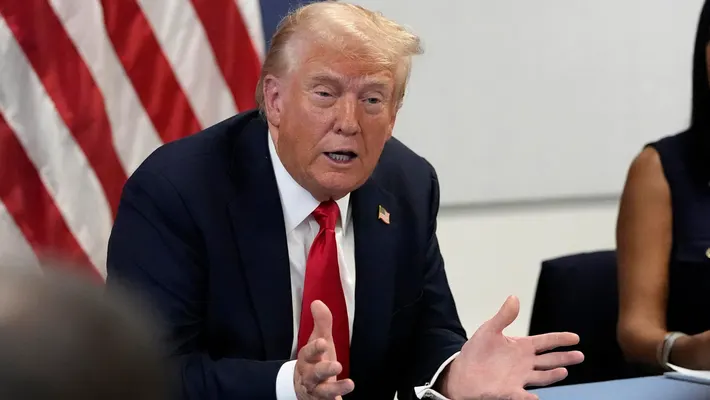
The U.S. Supreme Court on Monday denied a request from the state of Missouri to halt Donald Trump’s upcoming sentencing for his conviction in New York on felony charges related to hush money payments. The decision came in response to Missouri’s lawsuit, which argued that the case against Trump infringed upon voters’ rights under the U.S. Constitution as he campaigns for the Republican presidential nomination ahead of the November 5 presidential election.
The Supreme Court’s order was issued without any accompanying opinions, but conservative Justices Clarence Thomas and Samuel Alito noted that they would have considered Missouri’s case but ultimately agreed not to grant further relief.
Trump was found guilty in May of falsifying business records to cover up a $130,000 payment to adult film actress Stormy Daniels in exchange for her silence regarding an alleged affair with Trump years prior. Prosecutors argue that this payment was intended to bolster Trump’s chances in the 2016 presidential election, where he defeated Democratic nominee Hillary Clinton.
Trump, currently the leading Republican candidate for the upcoming election, denies having an affair with Daniels and has vowed to appeal his conviction after his sentencing, which is scheduled for September.
Missouri’s Republican Attorney General Andrew Bailey filed a lawsuit on July 3 against New York State, requesting that the Supreme Court postpone Trump’s impending sentencing and the gag order imposed by New York State Judge Juan Merchan.
Bailey’s lawsuit argued that the case against Trump violated the rights of Missouri voters by interfering with their ability to hear from and vote for their preferred candidate, citing the First Amendment. However, the Supreme Court declined to intervene, leaving the sentencing process to proceed as scheduled.
As legal proceedings continue, Trump and his legal team are preparing to challenge the conviction, which could have significant implications for his presidential campaign and legal standing.
The Google sign is shown over an entrance to the company's new building in New York on Wednesday, Sept. 6, 2023. The U.S. government is taking aim at what has been an indomitable empire: Google’s ubiquitous search engine and the lucrative digital services hatched by its unwavering status as the internet’s main gateway. (AP Photo/Peter Morgan)
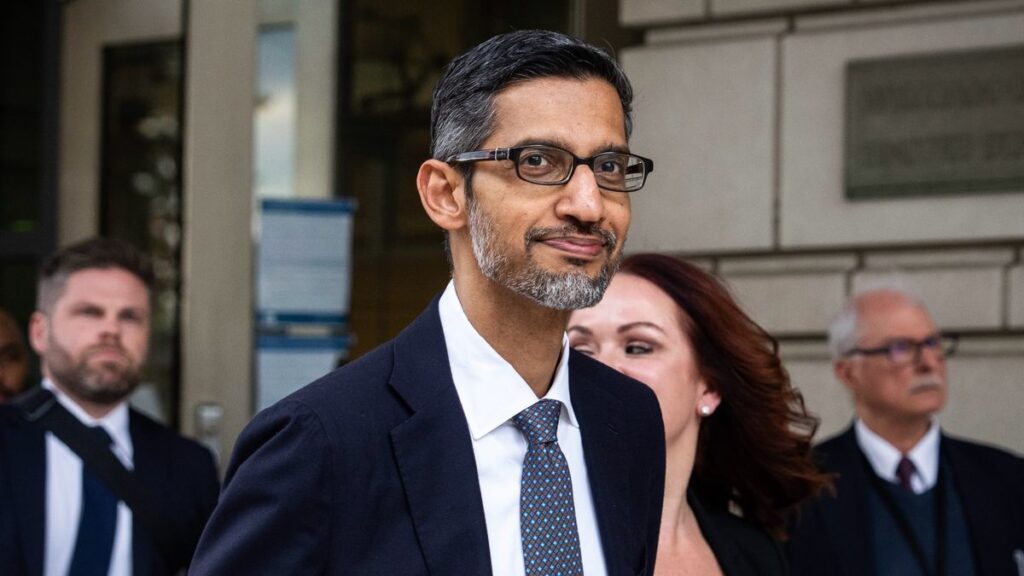
A U.S. judge ruled on Monday that Google’s dominant search engine has been illegally exploiting its market position to squash competition and stifle innovation. This landmark decision has the potential to dramatically alter the tech landscape and impact one of the world’s most recognized companies.
The highly anticipated decision, issued by U.S. District Judge Amit Mehta, comes nearly a year after the commencement of a trial brought by the U.S. Justice Department against Google, marking one of the country’s most significant antitrust cases in a quarter-century.
The ruling follows extensive evidence presented during last year’s 10-week trial, which included testimony from top executives at Google, Microsoft, and Apple. Judge Mehta delivered his decision three months after the closing arguments were presented in early May.
This verdict represents a substantial setback for Google and its parent company, Alphabet Inc. Throughout the trial, Alphabet argued that its search engine’s popularity was primarily driven by consumer preference due to its superior capabilities and performance.
The Google sign is shown over an entrance to the company’s new building in New York on Wednesday, Sept. 6, 2023. The U.S. government is taking aim at what has been an indomitable empire: Google’s ubiquitous search engine and the lucrative digital services hatched by its unwavering status as the internet’s main gateway. (AP Photo/Peter Morgan)
Google’s search engine is a cornerstone of its business, handling an estimated 8.5 billion queries per day worldwide. This figure is nearly double its daily volume from 12 years ago, as highlighted in a recent study by investment firm BOND.
The ruling challenges Google’s ability to maintain its grip on the online search market, potentially paving the way for increased competition and innovation in the tech industry.
Given the significance of this ruling, Google is expected to appeal the decision. The appeal process could eventually reach the U.S. Supreme Court, setting the stage for a prolonged legal battle with far-reaching implications for antitrust law and digital markets.
As the case unfolds, the tech industry will closely monitor developments, considering the decision’s impact on business practices, market dynamics, and regulatory frameworks.
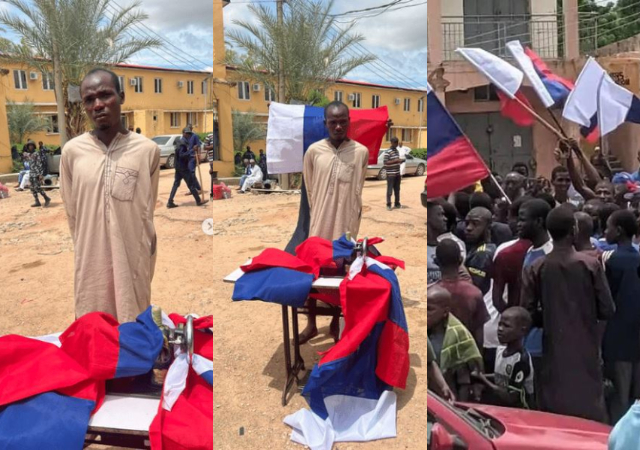
The Department of State Services (DSS) announced on Monday that it has arrested several tailors in Kano State for sewing Russian flags intended for use in the #EndBadGovernanceInNigeria protests. This information was shared through an official statement on the DSS’s X handle.
The DSS confirmed that an investigation is underway and that sponsors who funded the production of these flags have also been apprehended. The agency clarified that it has not detained Adaramoye Michael, the National Coordinator of the Youth Rights Campaign, who is also known as Michael Lenin, contrary to some media reports.
“The DSS can confirm that Adaramoye Michael (aka Michael Lenin) is not in its custody. Meanwhile, the Service has apprehended some tailors in Kano State responsible for making Russian flags being distributed in the area. Some of their sponsors have also been picked. An investigation is ongoing,” the statement read.
Earlier on Monday, the police reported the arrest of 30 protesters, including the supplier of the Russian flags. The nationwide protest, which started on Thursday, August 1, is a response to widespread dissatisfaction among citizens over economic hardship and governance issues.
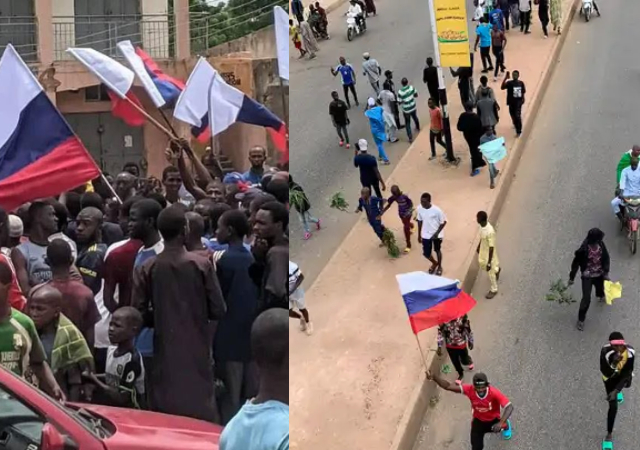
Sunday PUNCH had previously reported concerns from former envoys and ex-military officers over the presence of Russian flags at demonstrations, particularly in some northern states where protesters were seen chanting in Hausa, “Welcome, Russia; Welcome, Russia.”
The Russian Embassy in Nigeria has clarified its stance regarding the use of Russian flags during the recent #EndBadGovernanceInNigeria protests across the country. On Monday, the embassy stated that neither the Russian government nor its officials are involved in, or coordinating with, the protesters.
In a statement released to journalists in Abuja, the embassy emphasized that no Russian entities are participating in the demonstrations. The nationwide protests, which began on Thursday, August 1, were a response to widespread dissatisfaction with the government’s handling of economic and social issues.
Sunday PUNCH reported concerns from former envoys and ex-military officers about the presence of Russian flags among the demonstrators. Additionally, police announced on Monday that they had arrested 30 protesters, including the individual responsible for supplying the Russian flags.
In response, the Russian Embassy declared, “The Government of the Russian Federation, as well as any Russian officials, are not involved in these activities and do not coordinate them in any way. As always, we emphasize that Russia does not interfere in the domestic affairs of foreign states, including Nigeria.”
The embassy attributed the use of Russian symbols by protesters to personal choices, asserting that it does not reflect any official policy or position of the Russian government. “These intentions of some protesters to wave Russian flags are personal choices of individuals, and they do not reflect any official position or policy of the Russian Government in the issue,” the embassy noted.
Nigerian wrestler Blessing Oborududu has secured her place in the semi-finals of the women’s 68kg wrestling event at the 2024 Paris Olympics. The world-ranked number 6 athlete demonstrated her prowess on Monday by defeating Canadian opponent Linda Morais with a convincing 8-2 victory in the quarter-final match.
Oborududu’s strong performance sets the stage for an exciting semi-final bout against Meerim Zhumanazarova from Kyrgyzstan. The highly anticipated match is scheduled for the Champ-de-Mars Arena in Paris at 8 pm.
This isn’t Oborududu’s first time shining on the Olympic stage. She previously claimed a silver medal at the Tokyo 2020 Olympics, showcasing her consistency at the highest level of competition. Her opponent, Zhumanazarova, ranked 16th in the world, brings impressive credentials to the match.
The Kyrgyz freestyle wrestler holds the title of Master of Sport of International Class in her home country and secured a bronze medal in the same weight category at the Tokyo 2020 Olympics. The clash between these two accomplished athletes promises to be a highlight of the wrestling events at the Paris Games.
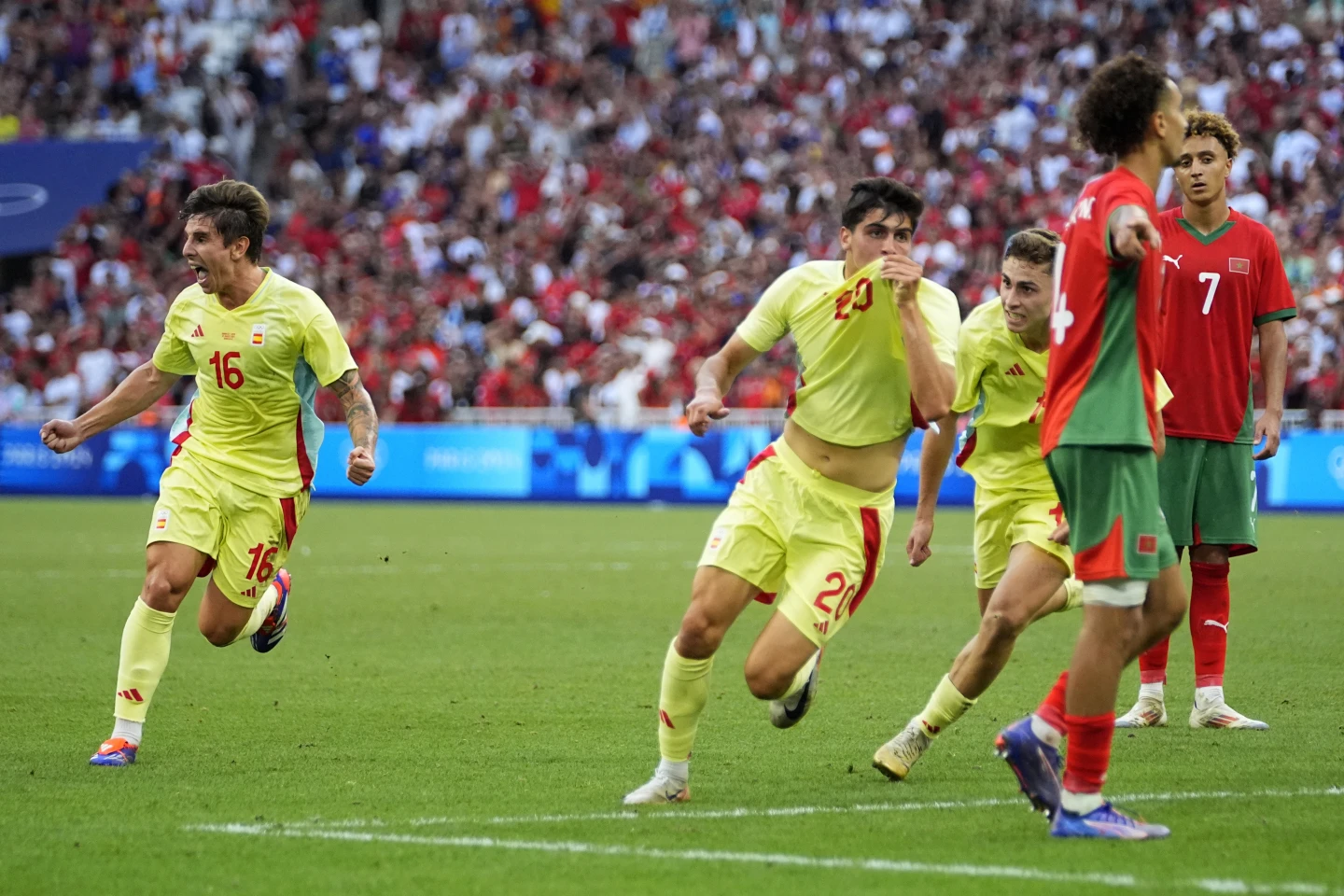
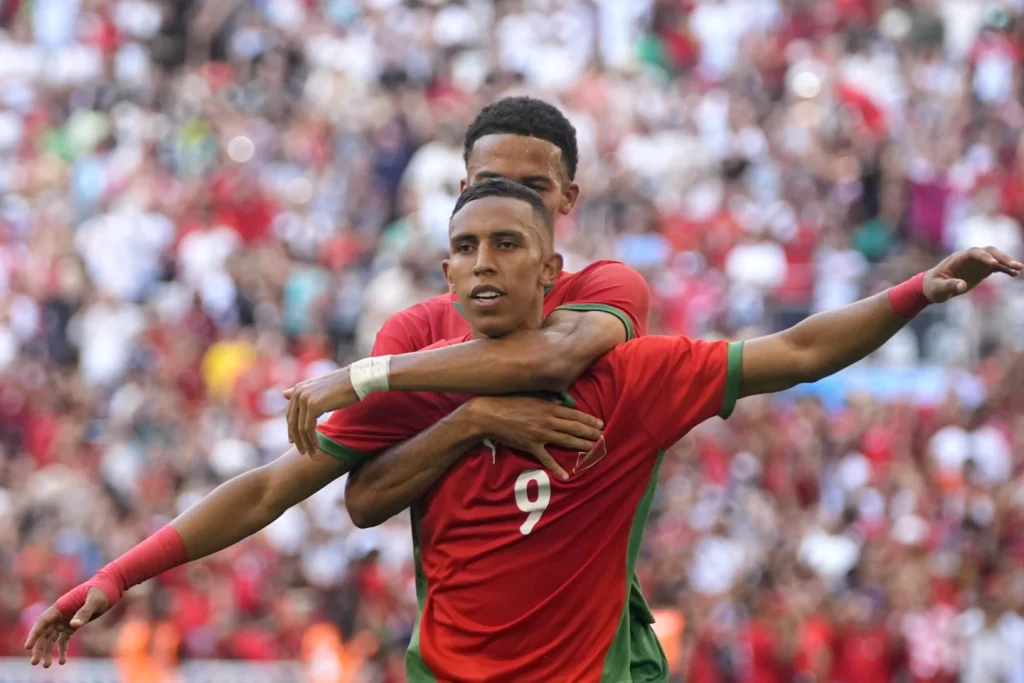
In a pulsating Olympic men’s soccer semifinal at the Stade de Marseille, Spain clinched a hard-fought 2-1 victory over Morocco, securing their place in a record-equaling fifth final. The dramatic win, sealed by substitute Juanlu Sanchez’s 85th-minute goal, sets the stage for Spain to pursue gold against either France or Egypt in the Paris Games final.
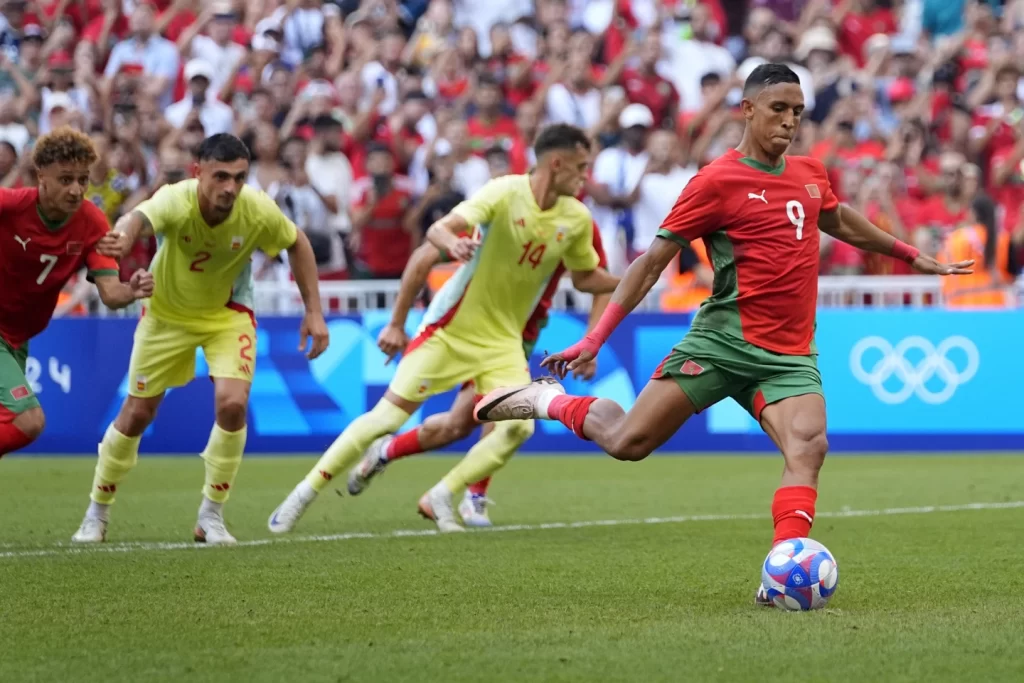
The match unfolded as a tale of two halves, with Morocco taking the lead through tournament top scorer Soufiane Rahimi’s penalty in the 37th minute. The Moroccan team, buoyed by a passionate crowd largely comprised of their supporters, seemed poised to continue their impressive run in the tournament, having already upset Argentina in the group stage.
Spain, however, demonstrated their resilience and championship pedigree in the second half. Barcelona midfielder Fermin Lopez leveled the score in the 65th minute with a display of quick footwork and precision, slotting a left-footed shot into the bottom corner for his fourth goal of the tournament. Lopez’s exuberant celebration, which resulted in a yellow card for breaking the corner flag, underscored the intensity of the moment.
The Spanish team’s persistence paid off in the closing stages when Lopez turned provider, setting up Sanchez for the winning goal. The substitute’s clinical finish into the far corner crushed Morocco’s hopes of reaching their first Olympic soccer final and extended Spain’s remarkable run in international competitions.
This victory continues Spain’s stellar year in soccer, following the senior team’s triumph in the European Championship last month. For the Spanish Olympic team, it presents an opportunity to improve on their silver medal performance from the Tokyo Games three years ago, where they fell to Brazil in the final.
Morocco’s defeat marks another heartbreaking semifinal exit in a major tournament, reminiscent of their fourth-place finish at the 2022 World Cup. Despite the loss, the North African side’s impressive Olympic campaign, which saw them become the first Arab and African nation to reach this stage, has further cemented their status as a rising force in international soccer.
As Spain looks ahead to the gold medal match, they carry the weight of history and expectation. With one Olympic gold from the 1992 Barcelona Games and three silver medals to their name, the team is poised to add another glorious chapter to their soccer legacy.
The Spanish success story at these Olympics extends beyond the men’s team, with the women’s squad also reaching the semifinals. They are set to face Brazil in Marseille, highlighting Spain’s dominance across both men’s and women’s soccer on the international stage.
As the Paris Olympics soccer tournament reaches its climax, all eyes will be on Spain as they aim to cap off an extraordinary year with Olympic gold, further solidifying their status as a powerhouse in global soccer.
Over the past few days, global stock markets have been experiencing significant declines. Trading screens across the US, Asia, and Europe are filled with alarming red numbers as investors react to the latest economic developments. This downturn comes amid growing fears that the US economy, the largest in the world, is slowing down and could potentially be heading toward a recession.
Experts attribute the primary reason for these fears to the latest US jobs data for July, released last Friday, which fell short of expectations. The data has sparked discussions about the possibility of an economic slowdown or even a recession, although some analysts caution that such conclusions may be premature.
The official figures show both positive and negative aspects of the current economic situation. On the negative side, US employers added 114,000 jobs in July, which was significantly below the anticipated 175,000 new roles. This shortfall in job creation has raised concerns about the strength of the labor market.
Moreover, the unemployment rate rose to 4.3%, marking a near three-year high. This increase has triggered a phenomenon known as the “Sahm rule.” Named after American economist Claudia Sahm, the rule suggests that if the average unemployment rate over three months is at least half a percentage point higher than the lowest level over the past 12 months, the country may be at the onset of a recession.
In this case, the rise in the US unemployment rate in July, which averaged 4.1% over three months compared to last year’s lowest point of 3.5%, indicates potential recessionary conditions.
Adding to these concerns is the fact that the US Federal Reserve recently decided not to cut interest rates, despite mounting evidence of a slowing economy. Other central banks in developed economies, including the Bank of England and the European Central Bank, have recently cut interest rates to stimulate economic activity.
The Fed’s reluctance to reduce rates has been met with criticism. Its chair, Jerome Powell, has hinted that a rate cut might be considered in the near future, but many economists argue that the Fed should act sooner rather than later. Lowering interest rates could make borrowing cheaper, encouraging spending and investment, which could help avert an economic downturn.
The global economic landscape is further complicated by ongoing trade tensions, geopolitical uncertainties, and slowing growth in key economies. These factors have contributed to investor anxiety and volatility in the markets.
While some economists believe that talk of a recession is premature, the combination of weak job growth, rising unemployment, and hesitant central bank actions have undoubtedly increased the risks of an economic slowdown.
As the US economy faces mounting challenges, policymakers and investors are closely monitoring economic indicators to gauge the likelihood of a recession. While the situation remains uncertain, proactive measures by central banks and governments could help mitigate the potential impacts and support economic recovery.
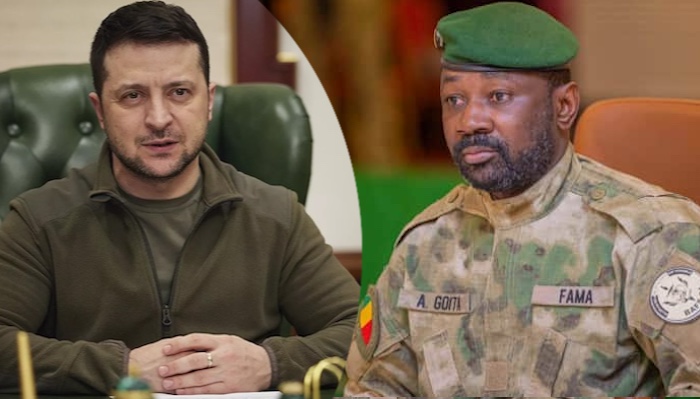
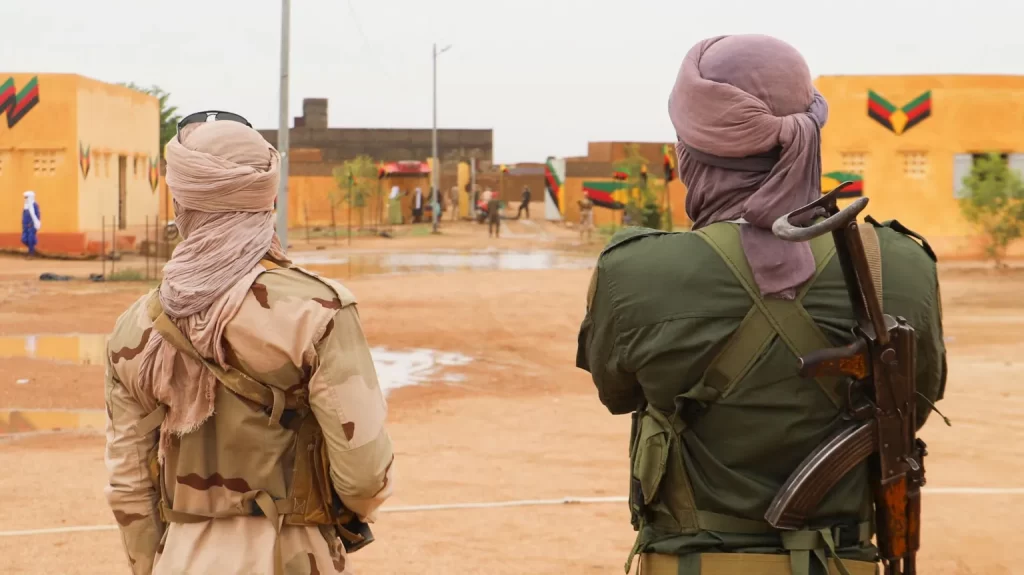
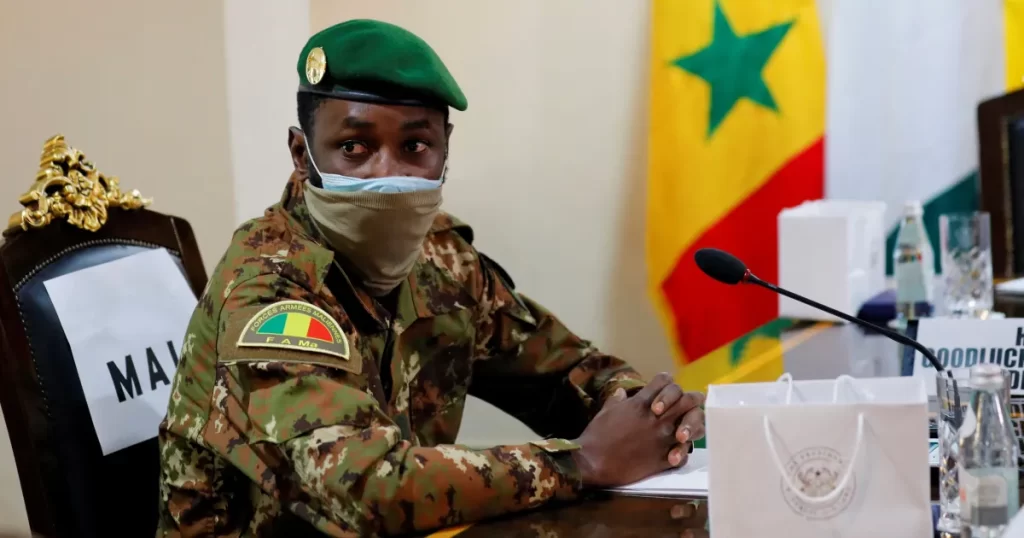
Mali announced it is immediately cutting diplomatic ties with Ukraine following accusations that Ukrainian forces were involved in aiding a deadly rebel attack against Malian soldiers and Russian Wagner fighters in the northern part of the country. This announcement was made on Sunday, marking a significant escalation in regional tensions.
Mali’s northern Tuareg rebels claimed responsibility for the attack, stating they killed at least 84 Russian Wagner mercenaries and 47 Malian soldiers during several days of fierce fighting in the region. This area has seen increased conflict since the Wagner Group, a Russian paramilitary organization, began supporting Malian military authorities two years ago in their fight against insurgent groups.
The conflict, which took place in Mali’s northern desert regions, has been one of the bloodiest confrontations involving the Wagner Group, highlighting the volatile security situation in West Africa.
The accusations against Ukraine stemmed from comments made by Andriy Yusov, a spokesperson for Ukraine’s military intelligence agency (GUR). Although Yusov did not directly confirm Ukraine’s involvement, he suggested that the Tuareg rebels had received the “necessary” information to carry out a successful military operation against what he termed “Russian perpetrators of war crimes.”
In an interview published on public broadcaster Suspilne’s website on Monday, July 29, Yusov remarked, “The rebels received all the necessary information they needed, and not just the information, which allowed [them] to conduct a successful military operation against Russian perpetrators of war crimes. We certainly won’t go into details now – you will see more of this in the future,” he said.
Mali’s government reacted strongly to these comments, expressing “deep shock” at what they called “subversive remarks.” The Malian authorities accused Ukraine of supporting terrorist groups and claimed that Ukrainian involvement was a “cowardly, treacherous, and barbaric attack” that led to the deaths of members of the Malian Defense and Security Forces.
In response to these developments, Mali’s government announced it had expelled Ukrainian Ambassador Yuri Pivovarov and severed all diplomatic ties with Ukraine. In a statement, Mali’s foreign ministry condemned Ukraine’s alleged actions as a severe aggression against Mali and a threat to its sovereignty and territorial integrity.
“This decision is motivated by the unacceptable behavior of Ukrainian authorities, who, through their actions, violated the sovereignty of Mali, an independent and sovereign nation, with a clear aggression against Mali and support for international terrorism,” the Malian government stated.
The expulsion of the ambassador and the severance of diplomatic ties mark a significant deterioration in relations between Mali and Ukraine, adding a new dimension to the geopolitical dynamics in the region.
The incident highlights the complex web of alliances and conflicts in West Africa, where multiple foreign actors, including Russian mercenaries, are involved in ongoing insurgencies. The involvement of external powers has further complicated efforts to stabilize the region, which is already grappling with long-standing ethnic and political tensions.
Mali’s decision to cut ties with Ukraine underscores the fragile political landscape in the Sahel region and the broader implications of foreign involvement in local conflicts. As the situation develops, it is likely to have significant repercussions for regional security and international diplomatic relations.