Home Blog Page 828

Ghana Former President John Mahama Urges Voters to Avoid ‘Skirt and Blouse’ Voting in 2024 Ghana Elections

0

Former President John Dramani Mahama, the National Democratic Congress (NDC) flagbearer for the 2024 Ghana elections, has strongly advised voters against ‘skirt and blouse’ voting during his campaign tour of the Upper East Region. Mahama emphasized that a parliamentary majority is crucial for executing his agenda to revive Ghana’s economy.
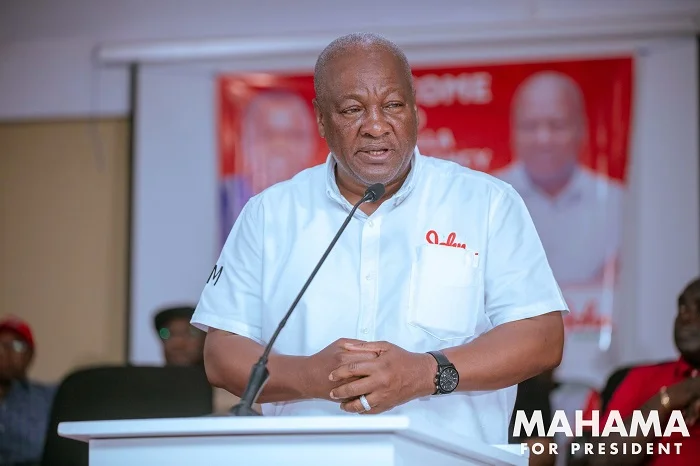
Addressing a mini rally in Binduri on Sunday, Mahama stated, “Avoid any sort of skirt and blouse on December 7. We need majority in Parliament to be able to do what you want us to do for you. No skirt and blouse.” He likened split-ticket voting to entering a boxing ring with tied hands, urging supporters to vote for both NDC presidential and parliamentary candidates.

‘Skirt and blouse’ voting, also known as split-ticket voting, occurs when a voter chooses a presidential candidate from one party and a parliamentary candidate from another. Mahama argues this practice could hinder his ability to implement necessary reforms if elected.

The former president’s campaign promises include reviving Ghana’s economy, creating opportunities for all Ghanaians, and continuing human resource development initiatives. Mahama also committed to maintaining and improving the free senior high school policy, dismissing claims that he would cancel it as malicious propaganda. He highlighted the NDC’s track record in education, citing the Community Day Senior High Schools initiative during his previous tenure.

Mahama outlined plans to regionalize recruitment into security services and recruit 20,000 new personnel to support the implementation of a 24-hour economy. These measures, he argued, would help address unemployment and boost economic growth.

The campaign tour included stops in Binduri, Zebilla, Nabdam, and Bolgatanga East, where Mahama engaged with various groups including market vendors, students, and traditional and religious leaders. Throughout these engagements, he consistently emphasized the importance of unified support for the NDC in both presidential and parliamentary elections.

As the 2024 Ghana elections approach, Mahama’s campaign against split-ticket voting underscores the NDC’s strategy to secure both the presidency and a parliamentary majority. This approach reflects the party’s belief that a unified government is necessary to address Ghana’s current economic challenges effectively.

Mahama’s message resonates with NDC supporters who view a strong parliamentary presence as essential for implementing the party’s policies. However, it remains to be seen how this strategy will play out in constituencies where local dynamics might influence voting patterns differently for presidential and parliamentary candidates.

Source: ghanaiantimes.com.gh
Deadly Landslide in Southern Ethiopia Claims at Least 13 Lives

0

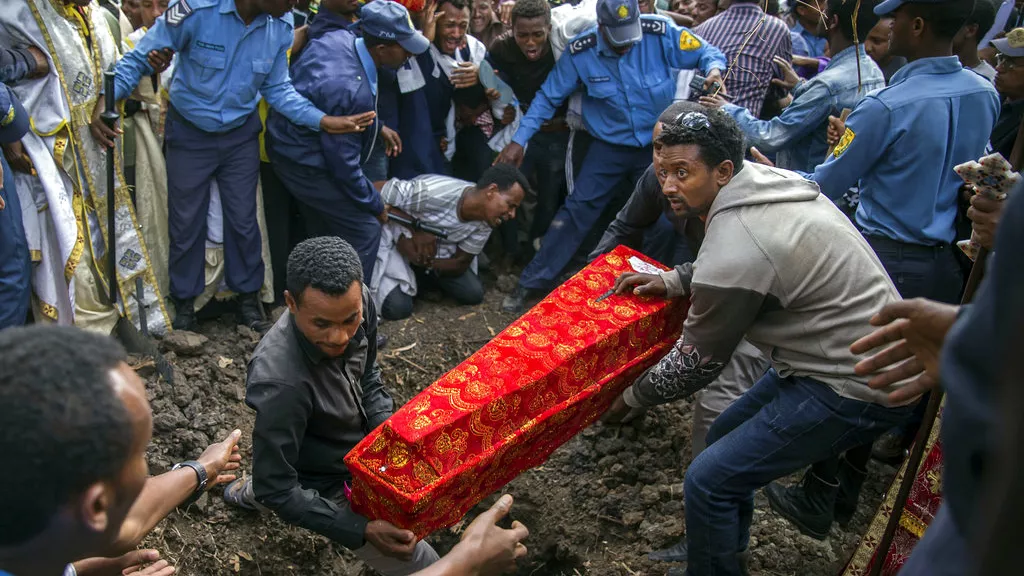
A devastating landslide in southern Ethiopia’s Wolaita area has resulted in at least 13 fatalities, with local officials expecting the death toll to rise. Samuel Fola, zone chief administrator of Wolaita, reported that the disaster occurred in the Kindo Didaye district following heavy rains in the region.

“Children are among the dead,” Fola stated, highlighting the tragic impact on local families. In response to the crisis, authorities have evacuated over 300 people from the affected area as a precautionary measure. The evacuation efforts are ongoing, with officials anticipating the possibility of another major landslide.

The regional government has launched a frantic rescue operation in the Wolaita area, working against time to save lives and provide assistance to those affected. However, the number of people unaccounted for remains unknown, adding to the urgency of the rescue efforts.

While this landslide appears less severe than a similar incident last month in another part of southern Ethiopia that claimed over 200 lives, it underscores the persistent threat posed by such natural disasters in the region. Landslides are a common occurrence during Ethiopia’s rainy season, which typically lasts from July to mid-September.

The mountainous terrain of Wolaita, coupled with limited infrastructure, makes the area particularly susceptible to such accidents. In 2016, a similar incident in the same region resulted in 41 deaths and displaced hundreds of residents.

The recent tragedy in Wolaita follows a major mudslide in neighboring Gamo Gofa last month, where at least 229 people lost their lives. The United Nations Office for Human Rights (OCHA) suggested that the actual death toll in that incident could be as high as 500.These recurring disasters highlight a broader pattern of deadly mudslides across the East African region, affecting countries from Uganda to Kenya. In April, flash floods and a landslide in Kenya’s Rift Valley region claimed at least 45 lives and caused significant infrastructure damage

Ghanaians in Germany Petition for Expedited Dual Citizenship Process

0

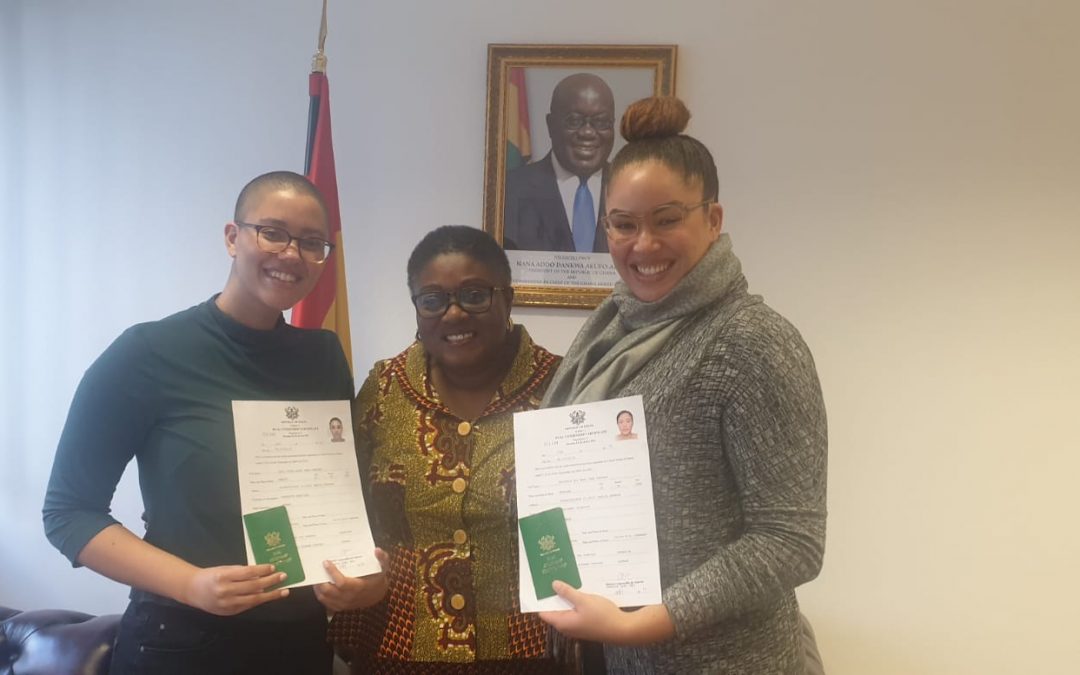
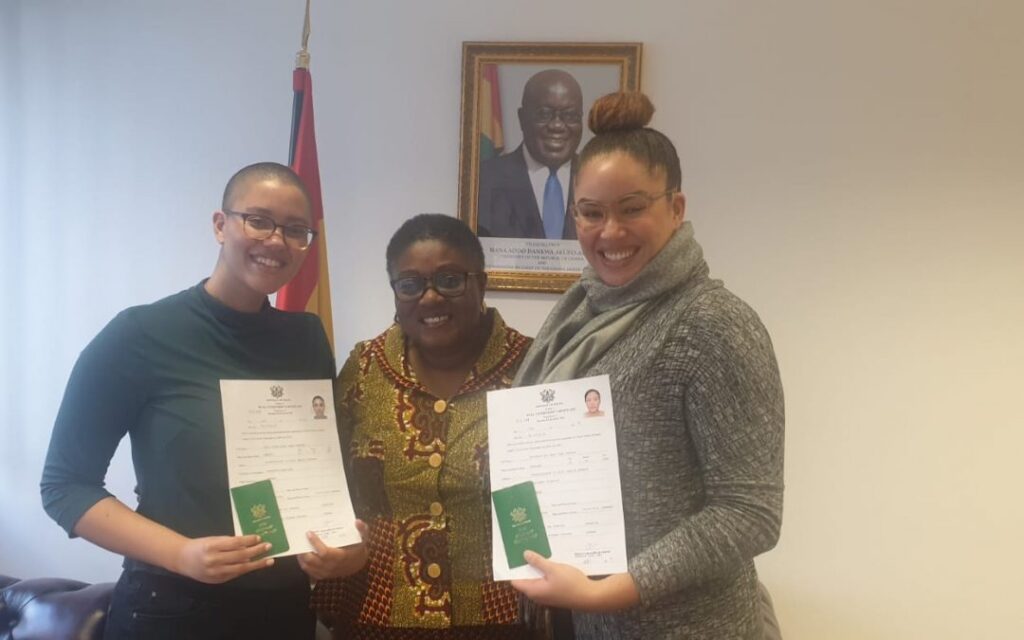
Ghanaians living in Germany have formally petitioned Ghana’s Ambassador to Germany, Gina Blay, and Interior Minister Henry Quartey, urging them to expedite the process of reinstating their Ghanaian citizenship. This move comes in the wake of Germany’s recent passage of a Dual Citizenship law, which now allows these individuals to reclaim their Ghanaian nationality.

Kwaku Appiah, the Ghanaian Community Leader in Germany, expressed disappointment over the lack of clear information from the Ghana Embassy regarding the reinstatement process. Speaking to Asempa FM’s “Abrokyire Nkomo” host, Kwaku Amankwatia, Appiah stated, “It is disappointing that there are still no clear answers to our questions about the reinstatement process.”

The petition, signed by Benjamin Sarfo Okrah on behalf of the Ghanaian Community in Germany, highlights several concerns. Despite four months passing since the German Dual Citizenship law was enacted, no definitive measures have been announced regarding the cost and timelines for reinstatement to apply for a Ghanaian passport. The community expresses frustration over the embassy’s lack of preparedness, despite being aware of the impending law change for over a year.

Petitioners emphasize the potential benefits of reclaiming Ghanaian citizens in Germany, including strengthened bilateral relations, increased economic investments, boosted remittances, and the contribution of skilled professionals to Ghana’s development. They request a comprehensive process for reinstating Ghanaian citizenship, suggesting that the Ghana Embassy in Norway’s approach could serve as a model.

The current process outlined by the embassy is described as cumbersome, especially for individuals born in Ghana who hold Ghanaian birth certificates. The community has given the embassy a two-week deadline to provide a detailed response outlining the steps and requirements for reinstatement. Failure to do so, they warn, will result in a demonstration in Berlin to highlight the urgency of their concerns.

Sudanese Refugee Athlete Dominic Lobalu Set to Make Olympic History in Paris 2024

0

Dominic Lobalu, a 25-year-old runner born in South Sudan, is poised to make Olympic history as part of the Refugee Olympic Team at the Paris 2024 Games. Lobalu’s journey from a war-torn village to the Olympic stadium exemplifies the resilience and determination of refugee athletes worldwide.

Born in 1998 during Sudan’s civil war, Lobalu fled his village at age nine after a military raid. He found refuge in Kenya’s Kakuma Refugee Camp, where his athletic talents were discovered. In 2017, Lobalu competed in the 1500m heats at the World Championships in London, marking the beginning of his international athletic career.

Lobalu’s path to the Olympics took an unexpected turn when he sought asylum in Switzerland in 2019. This decision initially made him ineligible for the Refugee Olympic Team at the Tokyo 2020 Games. However, after gaining a Swiss residency permit and permission from World Athletics to represent Switzerland from May 2023, Lobalu’s Olympic dreams were revived.

In June 2023, Lobalu made history by becoming the first refugee to win medals at a major international event, claiming gold in the 10,000m and bronze in the 5,000m at the European Championships. These performances caught the attention of the International Olympic Committee (IOC), leading to his invitation to join the Refugee Olympic Team for Paris 2024.

“This is what I was dreaming for,” Lobalu told BBC Sport Africa. “When I started my training, the goal was to go to the Olympics one day. And now I have it I’m so happy.”

Lobalu will compete in the 5,000m event, with the first round beginning on Wednesday. He joins boxer Cindy Ngamba, who has already assured the Refugee Olympic Team of its first-ever medal. Lobalu’s participation offers the potential to upgrade Ngamba’s guaranteed bronze.

The athlete’s journey is being documented in a short film titled ‘To Chase a Dream’, set for release by Swiss sportswear brand On two days before the men’s 5,000m final. Lobalu hopes his story will inspire other refugee athletes to pursue their dreams.

As Lobalu prepares for his Olympic debut, he remains ambitious about his prospects. “Why not?” he said when asked about the possibility of winning gold. “I’m ready for anything.”

Lobalu’s participation in the Paris Olympics not only represents a personal triumph but also highlights the ongoing global refugee crisis and the power of sport to transcend borders and politics. His story serves as an inspiration to millions of displaced people around the world, demonstrating that with perseverance and opportunity, refugees can achieve their dreams on the world’s biggest sporting stage.

bbc.com

Family of Killed Nigerian Protester Demands Justice Amid Conflicting Reports

0

The family of Abubakar Adam Abdullahi, a 24-year-old tailor from Kaduna, Nigeria, is demanding justice following his death during nationwide protests against the rising cost of living. Abdullahi’s family accuses the police of fatally shooting him in the chest on Thursday, a claim local authorities deny.

Ismail, speaking on behalf of the family, told the BBC that his brother died in Yusuf Dantsoho hospital after being shot near the office of Kaduna state governor Uba Sani. “All we want is justice for our brother,” Ismail stated.

The incident occurred amid widespread demonstrations across Nigeria, which have seen thousands take to the streets despite warnings from President Bola Tinubu. Police report at least seven deaths and 700 arrests nationwide since the protests began five days ago.

Conflicting accounts surround Abdullahi’s death. While his family and witnesses claim police opened fire on protesters, local authorities deny any involvement. Mohammed Lawal Shehu, spokesman for the Kaduna state governor, says they are unaware of any protest-related deaths, citing reliance on police information.

However, Amnesty International contests this, reporting three deaths in Kaduna alone and calling for an investigation into 23 protest-related deaths across the country.

Video footage allegedly shows Abdullahi among a group of young men confronting police before attempting to flee. His friends can be heard shouting “officer stop” and “they shot him” in Hausa as he falls to the ground.

Ismail describes his brother as kind, caring, and hardworking, emphasizing that Abdullahi joined the protests due to economic pressures affecting his tailoring business. “As a tailor, money for the materials he was using had all gone up – food too – and he also has to pay increased rent. Everyone is affected by this economic crisis,” Ismail explained.

The protests in Nigeria, inspired by recent successful demonstrations in Kenya, reflect growing concerns over the escalating cost of living. As the youngest of 14 children, Abdullahi had aspirations for his career and hoped to start a family, dreams his brother says were increasingly challenged by rising costs.

bbc.com

Somali Police Start Seizure of Niqabs (Veils) Amid Security Fears

0

A deadly attack at a popular beachfront location in Mogadishu, Somalia’s capital, resulted in at least 37 fatalities on Friday, according to police reports. The attack, claimed by the militant group al-Shabab, has heightened security concerns in the region.

Al-Shabab, which has been engaged in ongoing conflict with Somali authorities, claims the casualties are higher than official figures suggest. This attack comes in the wake of recent military operations in Jubaland that reportedly killed dozens of jihadist fighters, raising fears of potential reprisal attacks.

Meanwhile, in Kismayo, located in Somalia’s Jubaland state, authorities have begun enforcing a controversial ban on the niqab, a face-covering veil worn by some Muslim women. The operation, which started last Wednesday, involves police confiscating niqabs from women in the streets and forcing them to remove the garment.

Kismayo’s police commissioner, Hasan Wasame, stated that women caught wearing the niqab could face jail time or fines. The ban, initially introduced in 2013 citing security risks, had rarely been enforced until now.

The niqab ban can only be implemented in Kismayo and its surrounding areas, as al-Shabab controls much of southern Somalia, limiting the authorities’ reach. This enforcement has sparked debates about religious freedom and security measures in the predominantly Muslim country.

According to government statistics, 99% of Somalia’s population practices Islam. While the niqab has reportedly gained popularity recently, most Somali women opt for the hijab, which covers the hair but not the face.

Vice President Kamala Harris Selects Minnesota Gov. Tim Walz as Running Mate-AP

0

Vice President Kamala Harris has selected Minnesota Governor Tim Walz as her running mate for the upcoming election, according to three sources who spoke to The Associated Press on condition of anonymity. The choice aims to bolster the Democratic ticket’s appeal in crucial Midwestern states.

Harris is expected to introduce Walz at a rally Tuesday evening in Philadelphia, where the two will make their first public appearance as running mates. The Vice President’s campaign plans to release a video announcement prior to the rally, though the exact timing remains undisclosed.

In choosing Walz, Harris opts for a Midwestern governor with a strong record of implementing progressive policies. Walz, a military veteran and union supporter, has successfully enacted an ambitious Democratic agenda in Minnesota, including comprehensive protections for abortion rights and substantial aid to families.

The selection comes after Harris officially claimed the Democratic nomination on Monday night when the Democratic National Committee (DNC) released final results. She was the only candidate eligible to receive votes after no other contenders qualified by last week’s deadline.

Walz’s selection follows intense speculation about Harris’s potential running mates. In recent days, reports suggested she had narrowed her choices to a trio of finalists, including Pennsylvania Governor Josh Shapiro and Arizona Senator Mark Kelly, alongside Walz.

The decision to choose Walz reflects the campaign’s strategy to strengthen its position in the Midwest, a region crucial to electoral success. Walz’s experience as a governor and his track record on progressive issues are expected to appeal to a broad range of Democratic voters and potentially swing voters in key battleground states.

Ukraine Criticizes Mali’s Decision to Sever Diplomatic Ties as Hasty and Short-Sighted

0

Ukraine on Monday criticized Mali’s decision to sever diplomatic ties as hasty and short-sighted, stating that no evidence had been provided to support claims of Kyiv’s involvement in recent clashes that resulted in the deaths of Malian soldiers and Russian mercenaries.

The West African nation announced on Sunday the immediate termination of relations with Ukraine following comments made by Ukraine’s military intelligence agency about fighting in northern Mali in late July. During these clashes, Tuareg rebels claimed to have killed at least 84 Russian Wagner mercenaries and 47 Malian soldiers, marking what appeared to be Wagner’s heaviest defeat since its involvement in Mali two years ago.

Ukraine’s foreign ministry expressed regret over Mali’s decision, stating, “It is regrettable that … Mali decided to sever … relations … without conducting a thorough study of the facts and circumstances of the incident … and without providing any evidence of Ukraine’s involvement in the said event.”

The diplomatic rupture was triggered by remarks from Andriy Yusov, a spokesperson for Ukraine’s military intelligence agency, who said in a televised interview that Malian rebels had received “necessary” information to conduct the attack. Ukraine’s statement, however, fell short of confirming Kyiv’s direct involvement in the incident.

Mali condemned the remarks as “subversive” and equated them to supporting international terrorism. In response, Ukraine’s foreign ministry rejected the allegation of supporting terrorism and viewed the severance of ties as an unfriendly act.

“Ukraine unconditionally adheres to the norms of international law, the inviolability of the sovereignty and territorial integrity of other countries,” the ministry stated, adding that Ukraine reserves the right to take necessary political and diplomatic measures in response.

This diplomatic spat comes at a time when Ukraine is actively seeking global support, particularly aiming to broaden its appeal in the Global South. However, Oleksandr Merezhko, a senior Ukrainian lawmaker heading the parliament’s foreign policy committee, predicted that the rupture in relations would not significantly impact Ukraine or its ties with the Global South.

“There will be no serious consequences, as there are no established relations between Mali and Ukraine today,” Merezhko was quoted as saying by the Interfax-Ukraine news agency.

Reuters

Uganda Charges Opposition Lawmakers and Supporters Over Protest March

0

Ugandan police arrested 14 opposition officials and supporters on Monday as they marched through Kampala towards the Kenyan embassy, local media reported. The protesters, members of the Forum for Democratic Change (FDC), were demonstrating against Kenya’s recent detention and deportation of their colleagues.

Police spokesperson Patrick Onyango stated that the arrests were made for “participating in unlawful assembly activities.” The group, which included two lawmakers, was later charged in a magistrate’s court with being “a public nuisance,” according to court documents seen by Reuters.

This incident follows the July 23 detention of 36 FDC members by Kenyan authorities. The group had traveled to Kenya for a training course but was deported to Uganda and subsequently charged with terrorism-related offenses, which they denied.

The arrests and deportations come amid a backdrop of anti-government demonstrations in both Uganda and Kenya, though Kampala’s streets remained largely quiet on Monday apart from the protest march.

In court, all 14 defendants pleaded not guilty to the charges. Four were released on bail, while the others were remanded to prison until their next court appearance on August 7, according to an unnamed FDC official present at the hearing.

Opposition critics and human rights campaigners have long accused President Yoweri Museveni’s government of using fabricated charges to suppress political opponents. Government officials deny these allegations.

Museveni, 79, has led Uganda, an East African nation of 46 million people, since 1986. His long tenure and the recent crackdown on opposition activities have raised concerns about the state of democracy in the country.

The arrests highlight the ongoing tensions between the Ugandan government and opposition groups, as well as the broader political challenges facing the East African region. As both Uganda and Kenya grapple with public dissent, the international community continues to monitor the situation closely.

Tunisian President Kais Saied Files for Re-Election Amid Political Unrest

0
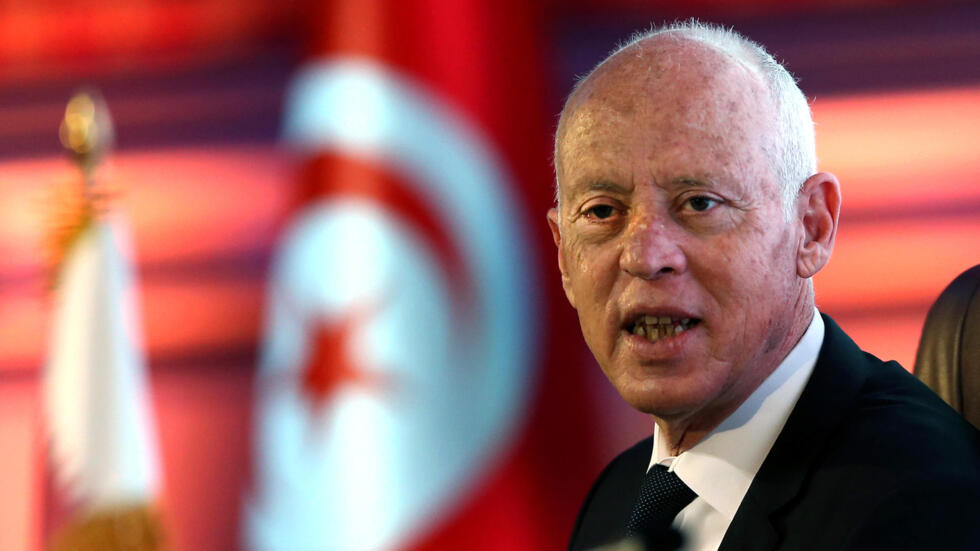
(FILES) In this file photo taken on November 16, 2020, Tunisian President Kais Saied gives a talk on constitutional law during a state visit to Qatar at an event hosted by Lusail University. - Tunisian authorities opened an investigation after a suspicious letter intended for Tunisian President Kais Saied was intercepted, sources close to the presidency said. (Photo by Karim JAAFAR / AFP)

Tunisian President Kais Saied filed his candidacy on Monday to run in the upcoming presidential election scheduled for October 6th. Saied is expected to face minimal competition due to the imprisonment of several potential challengers during his first term.

President Saied submitted 242,224 signatures from registered voters to qualify for inclusion on the ballot, significantly surpassing the requirement set by the Independent High Authority for Elections, which mandates 10,000 signatures for candidates to appear on the ballot in the North African nation.

Despite the political climate, four other candidates have also gathered the required signatures to run in the election. Among them is Abir Moussi, a right-wing critic of Saied, who has been detained since staging a protest outside the presidential residence last year. Her legal team confirmed the submission of her candidacy paperwork on Sunday.

Tunisia’s Independent High Authority for Elections will publish a complete list of candidates by Saturday, ensuring transparency in the electoral process. The authority is tasked with overseeing the fairness and integrity of the elections amidst a challenging political environment.

Political participation in Tunisia has seen a significant decline since the overthrow of longtime dictator Zine El Abidine Ben Ali in 2011. Last year’s local elections recorded a voter turnout of just 11%, highlighting the growing apathy among the Tunisian electorate.

The upcoming presidential election is set against a backdrop of political unrest and economic challenges, with many citizens expressing disillusionment with the current political system.

The outcome of the October presidential election will play a crucial role in shaping Tunisia’s political landscape and addressing the country’s economic and social issues. The international community is watching closely, as the election will test the resilience of Tunisia’s democratic institutions.