Home Blog Page 89

Justice Department Releases New Indictment Charging Maduro and Wife with Narco-Terrorism Conspiracy, 250 Tons of Cocaine Trafficking

0

NEW YORK — The Justice Department released a new indictment Saturday charging Venezuelan President Nicolás Maduro and his wife, First Lady Cilia Flores, with narco-terrorism conspiracy, alleging they led a corrupt government that for decades leveraged state power to protect and promote drug trafficking operations that enriched Venezuela’s political and military elite.

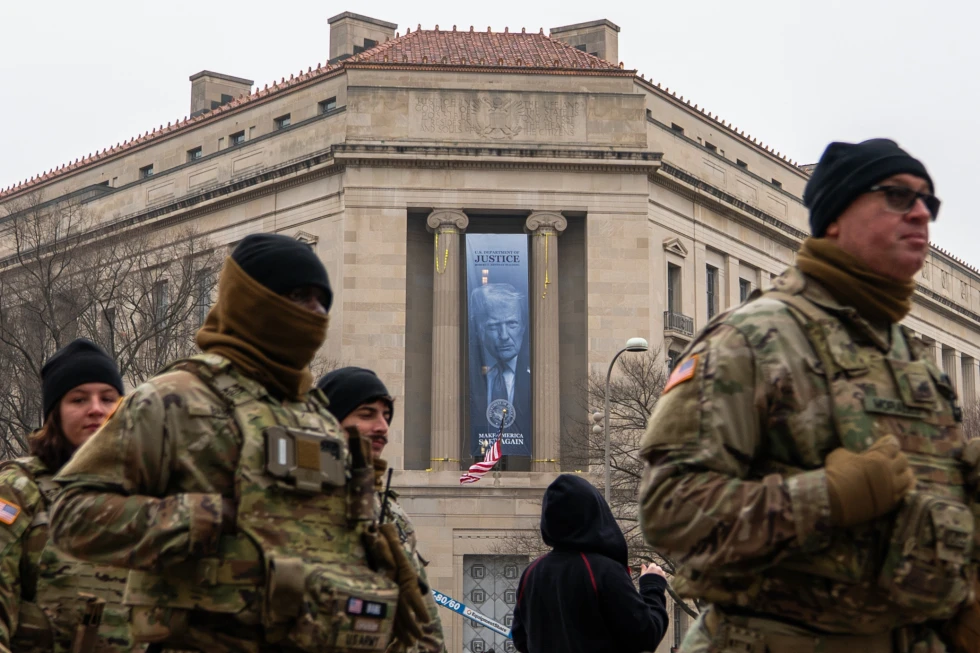
U.S. Attorney General Pam Bondi announced the charges following Maduro’s capture by American forces, vowing in a social media post that the couple would “soon face the full wrath of American justice on American soil in American courts.” The indictment expands previous 2020 charges against Maduro to include his wife, marking the first time the U.S. has formally charged a sitting first lady alongside a head of state in a narco-terrorism prosecution.

The indictment accuses Maduro of leading “a corrupt, illegitimate government that, for decades, has leveraged government power to protect and promote illegal activity, including drug trafficking.” According to charging documents, the drug trafficking efforts “enriched and entrenched Venezuela’s political and military elite,” transforming the Venezuelan state apparatus into what prosecutors characterize as a criminal enterprise.

U.S. authorities allege that Maduro partnered with “some of the most violent and prolific drug traffickers and narco-terrorists in the world” to bring tons of cocaine into the United States, according to the indictment filed in the Southern District of New York. The charges detail systematic collaboration between Venezuelan government officials and Colombian guerrilla groups, Mexican cartels, and other transnational criminal organizations to move narcotics through Venezuelan territory.

Authorities estimate that as much as 250 tons of cocaine were trafficked through Venezuela by 2020, according to the indictment obtained by the Associated Press. The staggering volume of drugs moved through Venezuelan territory represented a significant percentage of total cocaine reaching the United States during that period, prosecutors allege, with Venezuelan government protection enabling trafficking operations at industrial scale.

The drugs were transported on go-fast vessels, fishing boats, and container ships or via planes departing from clandestine airstrips, authorities charge in the indictment. The variety of smuggling methods described suggests sophisticated logistics networks coordinating maritime, aerial, and commercial shipping routes to move cocaine from Colombian production areas through Venezuelan territory to markets in the United States, Europe, and elsewhere.

According to Politico, Bondi stated in her social media announcement that Maduro and Flores had been charged by the Manhattan U.S. attorney’s office with narco-terrorism conspiracy, conspiracy to import cocaine, and possession of machineguns and destructive devices, among other offenses. The weapons charges suggest prosecutors will argue that the drug trafficking conspiracy involved armed protection and potential violence to maintain operations and eliminate competition or threats.

The announcement followed President Donald Trump’s early morning declaration that the United States had carried out “a large-scale strike” in Venezuela and captured Maduro and his wife, flying them out of the country. The timing of the indictment’s release—immediately following the military operation—suggested coordination between Justice Department prosecutors and military planners to provide legal justification for the unprecedented action.

An indictment did not appear to be publicly unsealed by mid-morning Saturday, according to Politico. A spokesperson for the Manhattan U.S. attorney’s office did not immediately respond to requests for comment about the charges or when formal arraignment proceedings might occur. The delay in unsealing suggested prosecutors were managing logistics of presenting captured defendants before a federal magistrate judge for initial appearances.

U.S. officials appeared to be using the charges as legal justification for military strikes in Venezuela that occurred without congressional authorization. Vice President JD Vance wrote on social media that the U.S. had offered Venezuela “multiple off ramps” before taking military action, suggesting the administration had pursued diplomatic alternatives before resorting to force.

“And PSA for everyone saying this was ‘illegal’: Maduro has multiple indictments in the United States for narcoterrorism. You don’t get to avoid justice for drug trafficking in the United States because you live in a palace in Caracas,” Vance stated, directly addressing constitutional concerns raised by Senator Mike Lee and other lawmakers questioning the operation’s legality without congressional war authorization.

Early Saturday morning, Secretary of State Marco Rubio reposted his own social media message from last year referencing charges against Maduro, writing that he is “NOT the president of Venezuela and his regime is NOT the legitimate government.” The emphatic capitalization suggested the administration’s view that Maduro’s illegitimacy as president under international law provided additional justification for his forcible removal beyond the criminal indictment.

New York federal prosecutors, along with prosecutors in Washington D.C. and Florida, initially charged Maduro and 14 other current and former Venezuelan officials in 2020 with narco-terrorism, corruption, and drug trafficking—though that earlier indictment notably did not include Maduro’s wife. The expansion to charge Flores suggests prosecutors developed additional evidence during the intervening years establishing her active participation in the conspiracy rather than merely benefiting from her husband’s alleged crimes.

Amanda Houle, one of the prosecutors who led the 2020 case against Maduro, now serves as criminal chief at the Manhattan U.S. attorney’s office, providing continuity in the government’s pursuit of the Venezuelan leader. The investigation was originally supervised by Emil Bove, Trump’s former criminal defense lawyer and a former prominent Justice Department official who is now a federal judge, creating potential complications if appeals in the Maduro case reach courts where Bove serves.

The fresh charges against Maduro come just weeks after Trump issued an unexpected and controversial pardon to another former foreign leader whom Bove pursued as a prosecutor: Juan Orlando Hernández, the ex-president of Honduras. Hernández had been convicted in 2024 for conspiring to import cocaine into the United States, making Trump’s pardon particularly jarring given the administration’s simultaneous military operation to capture Maduro on similar charges.

The Hernández pardon raised questions about consistency in Trump administration policy toward foreign leaders accused of drug trafficking. Critics argued that pardoning one Latin American president convicted of cocaine conspiracy while simultaneously launching military operations to capture another facing similar allegations suggested selective application of justice based on political considerations rather than consistent legal principles.

President Trump told Fox News Saturday that the U.S. is “now deciding next steps for Venezuela,” adding “we’ll be involved in it very much.” The statement suggested the administration had not finalized plans for Venezuelan governance following Maduro’s removal despite executing the military operation to capture him, potentially creating power vacuums and instability if no clear succession plan exists.

The stunning American military action, which plucked a sitting head of state from office through force, echoed the U.S. invasion of Panama that led to the surrender and seizure of its leader, Manuel Antonio Noriega, in 1990—exactly 36 years ago Saturday. The historical parallel was not lost on Latin American observers who remember the Panama invasion as controversial exercise of U.S. military power to enforce drug trafficking charges against a foreign leader.

Noriega, like Maduro, faced federal drug trafficking charges in the United States and was ultimately convicted and imprisoned following his capture. However, the Panama invasion involved approximately 27,000 U.S. troops and resulted in several hundred Panamanian deaths, generating lasting controversy about proportionality and international law compliance. Whether the Venezuela operation will face similar retrospective criticism depends partly on casualty counts and long-term outcomes in Venezuelan governance.

Trump announced the developments on Truth Social shortly after 4:30 a.m. ET and scheduled a news conference for 11 a.m. ET at his Mar-a-Lago resort in Florida. The president’s decision to make major announcements about military operations and foreign leader captures via social media rather than through formal White House channels or Pentagon briefings reflected his unconventional communication approach but also raised questions about appropriate protocols for disclosing sensitive national security operations.

The charges against Cilia Flores represent unprecedented territory in U.S. prosecution of foreign officials. While the U.S. has previously charged family members of foreign leaders with corruption or money laundering, charging a sitting first lady alongside her husband in a narco-terrorism conspiracy breaks new ground in asserting U.S. criminal jurisdiction over foreign government officials’ families.

If both Maduro and Flores face prosecution in Manhattan federal court, they would likely be represented by separate defense attorneys given potential conflicts of interest between spouses who might seek to minimize their own culpability by cooperating against each other. However, the diplomatic immunity and head-of-state status questions surrounding their detention could generate preliminary legal battles before substantive trial proceedings begin.

The indictment’s allegation that drug trafficking “enriched and entrenched Venezuela’s political and military elite” suggests prosecutors will present evidence showing systematic corruption throughout Venezuelan government and armed forces rather than portraying Maduro as a lone actor. Such evidence could implicate dozens or hundreds of Venezuelan officials in the conspiracy, though practical difficulties of capturing and extraditing such individuals make additional prosecutions uncertain.

The weapons charges—possession of machineguns and destructive devices—typically carry mandatory minimum sentences under federal law when connected to drug trafficking conspiracies. Prosecutors often include such charges to increase potential sentences and provide leverage in plea negotiations, though whether Maduro and Flores would consider plea agreements or insist on trials remains speculative.

The Justice Department’s release of the new indictment immediately following Maduro’s capture suggested careful coordination to frame the military operation as law enforcement action executing arrest warrants rather than regime change operation violating international law. Whether federal courts accept that characterization or find that the circumstances of the defendants’ capture violate due process protections or international law norms will likely become central issues if the case proceeds to trial.

For Venezuela, the charging of both Maduro and his wife creates additional uncertainty about governance and succession. Under Venezuelan constitutional law, Vice President Delcy Rodríguez would assume presidential authority, but whether she can effectively govern while demanding proof of life for her predecessor and facing potential U.S. pressure to resign or cooperate remains highly uncertain.

The narco-terrorism charges carry potential life imprisonment if convictions are obtained, though actual sentences would depend on sentencing guideline calculations and judges’ discretionary decisions. The 250 tons of cocaine allegation would place the conspiracy among the largest drug trafficking cases ever prosecuted in U.S. courts, ensuring intense public and media attention throughout legal proceedings that could last years before final resolution.

Politico/NBC/AP

4 trapped as Nairobi building collapses, rescue teams race against time

0

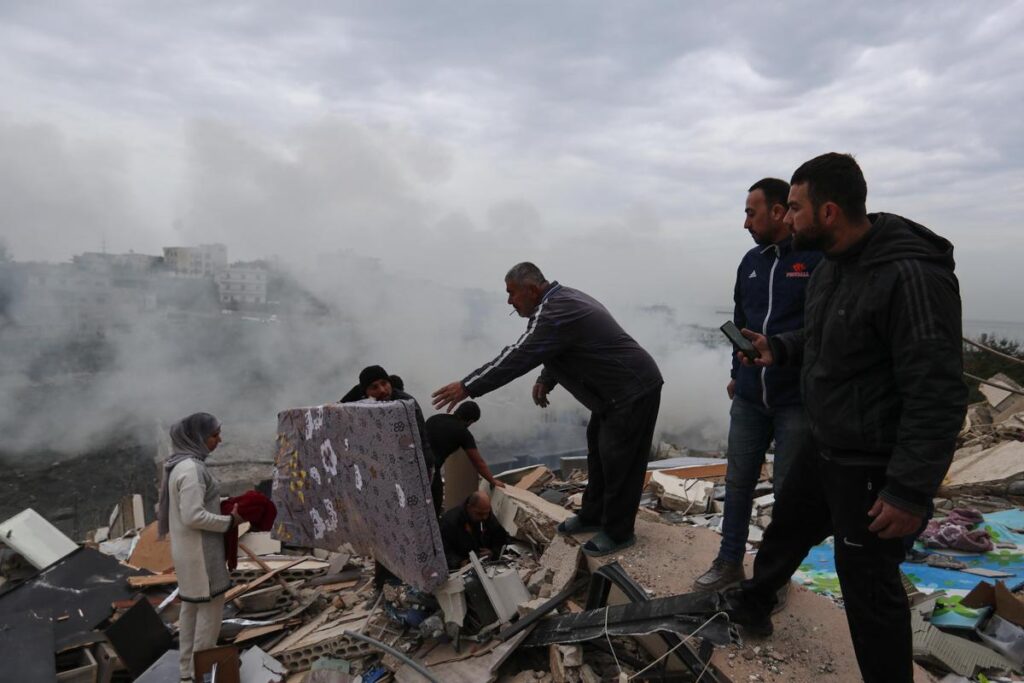
Rescue crews worked through debris in Kenya’s capital on Friday after a multi-storey building under construction collapsed in Nairobi’s South C area, trapping at least four people beneath the rubble as emergency teams rushed to reach survivors.

The Kenya Red Cross said a coordinated, multi-agency rescue operation was underway at the scene, with responders focusing on locating those believed to be buried inside the structure. Authorities identified the trapped individuals as two security guards and two pedestrians who were nearby when the building gave way.

Geoffrey Ruku, cabinet secretary for the Ministry of Public Service, said one man — a taxi driver — survived the collapse and was taken to a nearby hospital. Officials said the driver provided critical details that helped rescuers understand how several people became trapped.

Ruku said the driver had been waiting for a passenger when the structure suddenly came down, pulling nearby pedestrians into the debris. Emergency responders have since used that information to guide search efforts.

Family members of those trapped pleaded for faster action as hours passed. Safia Ali Aden, whose brother was among the watchmen on duty, said he managed to call her from beneath the wreckage early Friday morning.

“He has been trapped since about 4:30 a.m., and as a family we are very worried,” she said, urging authorities to accelerate rescue efforts so her brother could be pulled out alive.

Ruku said President William Ruto had been briefed on the collapse as investigators moved to determine what caused the failure. Preliminary findings indicate the building exceeded its approved height.

“The structure was authorized for a maximum of 12 floors, but had already reached 14,” Ruku said, adding that early assessments point to column overload as a likely factor in the collapse.

The Kenya Red Cross said engineers were also examining a neighboring building after it showed signs of structural weakness, raising fears of additional danger in the area.

Building collapses are a recurring problem in Nairobi, where rapid urban growth and high housing demand have fueled construction booms often marred by poor oversight. Developers have frequently been accused of ignoring safety standards or bypassing regulations altogether.

After a series of deadly collapses in 2015 that killed at least 15 people, Kenya’s presidency ordered a nationwide audit of building safety. The National Construction Authority later found that more than half of Nairobi’s buildings — 58% — were unfit for human habitation.

As rescue teams continued digging through the rubble Friday, officials said efforts would remain focused on reaching the trapped victims while investigators worked to establish accountability for the collapse.

Africanews

U.S. Arrested Maduro to Stand Trial on Narco-Terrorism Charges, Rubio Tells Senator as Venezuela Demands UN Emergency Meeting

0

U.S. Secretary of State Marco Rubio confirmed Saturday that American personnel arrested Venezuelan President Nicolás Maduro to stand trial in the United States on narco-terrorism charges, with military strikes deployed to protect those executing the arrest warrant, according to Senator Mike Lee who spoke with the nation’s top diplomat following predawn operations in Venezuela.

“He informed me that Nicolás Maduro has been arrested by U.S. personnel to stand trial on criminal charges in the United States, and that the kinetic action we saw tonight was deployed to protect and defend those executing the arrest warrant,” Utah Republican Senator Mike Lee posted on X early Saturday after his phone conversation with Rubio.

Lee, who had earlier raised constitutional concerns about the military action, subsequently stated that “this action likely falls within the president’s inherent authority under Article II of the Constitution to protect U.S. personnel from an actual or imminent attack.” The senator added that Rubio “anticipates no further action in Venezuela now that Maduro is in U.S. custody,” suggesting the administration views the operation as complete with Maduro’s capture accomplished.

The confirmation from Rubio provided the first official State Department acknowledgment of Maduro’s arrest following President Trump’s early morning Truth Social announcement claiming U.S. forces had captured the Venezuelan leader and removed him from the country. CNN reached out to the State Department for additional comment but had not received formal responses by Saturday afternoon.

Deputy Secretary of State Christopher Landau declared on X that the administration’s operation brought “a new dawn for Venezuela.” According to CNN, Landau wrote: “The tyrant is gone. He will now — finally — face justice for his crimes,” characterizing Maduro’s removal as liberation rather than regime change through military intervention.

The Trump administration has pursued Maduro’s prosecution through the U.S. legal system for years. In 2020, during Trump’s first presidential term, federal prosecutors in the Southern District of New York indicted Maduro on charges of “narco-terrorism,” conspiracy to import cocaine, and related offenses alleging he conspired with Colombian guerrilla group FARC to flood the United States with cocaine.

The Trump administration initially offered a $15 million bounty for information leading to Maduro’s arrest. That reward was increased to $25 million in the waning days of the Biden administration in early January 2025, then escalated to $50 million in August 2025 after Trump began his second term and designated Cartel de los Soles as a foreign terrorist organization. The administration has claimed Maduro leads that organization, which U.S. officials describe as a criminal enterprise masquerading as government.

“This allegation, this claim, that the Maduro regime is a narcoterrorist organization is not on the basis of political talk or speculation. It is on the basis of evidence provided to a grand jury in the Southern District of New York that returned an indictment,” Secretary of State Rubio stated at a press conference last month, emphasizing that charges rest on evidence prosecutors presented to grand jurors rather than political characterizations.

Senator Lee’s initial response to news of the strikes reflected concerns about constitutional authorization for military action. “I look forward to learning what, if anything, might constitutionally justify this action in the absence of a declaration of war or authorization for the use of military force,” Lee wrote on X early Saturday morning before his conversation with Rubio.

However, following the secretary of state’s explanation that strikes protected personnel executing an arrest warrant, Lee appeared satisfied that the operation fell within presidential constitutional authority. His invocation of Article II powers suggested acceptance of executive branch arguments that protecting American personnel from attack justifies military force even without congressional war declarations or authorizations for use of military force.

The legal theory that Article II grants presidents authority to use military strikes to protect law enforcement personnel executing arrest warrants in foreign countries represents controversial constitutional territory that legal scholars will likely debate extensively. Critics argue such interpretations could justify military interventions worldwide without congressional oversight, fundamentally undermining legislative war powers.

Venezuela responded to the strikes and Maduro’s reported capture by requesting an urgent United Nations Security Council meeting. Foreign Minister Yván Gil Pinto shared the letter sent to the UN on Telegram, declaring: “No cowardly attack will prevail against the strength of this people, who will emerge victorious.” The request for Security Council intervention positioned Venezuela as a victim of aggression seeking international community protection against what it characterizes as illegal U.S. military action.

Venezuelan Vice President for Policy, Citizen Security and Peace Diosdado Cabello struck a defiant tone while addressing security forces, claiming the U.S. only “partially” achieved its objectives. “What they tried to achieve with the bombs and missiles they launched, they only partially succeeded in doing. And I say partially because they expected the people to perhaps run wildly, cowardly. No,” Cabello stated, insisting the country remains calm and knows what it must do moving forward.

However, Vice President Delcy Rodríguez painted a more uncertain picture, stating in an audio call to state-run VTV Venezuela that “we do not know the whereabouts of President Nicolás Maduro and First Lady Cilia Flores.” According to CNN, Rodríguez demanded “immediate proof of life from the government of President Donald Trump regarding the lives of President Maduro and the first lady,” directly challenging U.S. claims about Maduro’s capture and condition.

Rodríguez added that the U.S. attack “has cost the lives of officials, military personnel and civilians across the country,” providing the first Venezuelan government acknowledgment of casualties from the strikes. However, officials have not released specific death tolls or injury figures, leaving the operation’s human cost uncertain as families across Venezuela seek information about loved ones who may have been near targeted facilities.

Russia condemned what its Foreign Ministry called an “act of armed aggression against Venezuela” by the United States, characterizing any excuses justifying such actions as “untenable.” According to CNN, the ministry stated: “We reaffirm our solidarity with the Venezuelan people and our support for the Bolivarian leadership’s course of action aimed at protecting the country’s national interests and sovereignty.”

The Russian Foreign Ministry added that Latin America must “remain a zone of peace” and called for preventing further escalation through dialogue. “Venezuela must be guaranteed the right to determine its own destiny without any destructive, let alone military, interference from outside,” the statement declared. The Russian Embassy in Caracas continues operating normally with no reports of Russian citizens affected by the strikes.

CNN correspondent Mary Mena reported from Caracas that the capital remained calm Saturday morning despite earlier explosions and military aircraft activity. “We listened to many airplanes and helicopters passing by, but right now the city remains quiet, for the past two hours,” Mena stated, noting that citizens appeared to be staying home awaiting additional news rather than taking to streets as the Venezuelan government had urged.

Defense Minister Vladimir Padrino López called for “massive deployment” of military forces across Venezuela, according to information from the ministry of defense. State television repeatedly broadcast messages urging citizens to remain calm while promising military deployment throughout the country, though the purpose of such mobilization remained unclear given that U.S. officials indicated no further military action was anticipated.

Several blasts could be heard across Caracas around 2 a.m. local time Saturday morning, Mena reported, but “right now, the capital city is in silence.” The absence of widespread civilian mobilization or violent resistance suggested either that government control mechanisms prevented organized response or that many Venezuelans remained uncertain how to react to the unprecedented situation.

Maduro served as Venezuelan president for twelve contentious years after succeeding populist leader Hugo Chávez, who died of cancer in 2013. The former bus driver and union leader never commanded the popular support or charisma that Chávez possessed, with his 2013 electoral victory contested by opposition groups from the outset, according to CNN’s Tim Lister.

During Maduro’s tenure, Venezuela experienced severe economic crisis, bouts of civil unrest, and growing international isolation amid U.S. sanctions and mismanagement of the country’s critical oil industry. In 2017, Maduro sought to expand presidential powers to bypass the opposition-controlled National Assembly amid weeks of street protests in Caracas. His 2018 reelection was widely denounced by the international community as illegitimate, with opposition leaders and foreign governments refusing to recognize the results.

The first Trump administration charged Maduro with narco-terrorism in 2020. Then-Attorney General William Barr stated that the Venezuelan regime “remains plagued by criminality and corruption,” alleging that “for more than 20 years, Maduro and a number of high-ranking colleagues allegedly conspired with the [Colombian guerilla group] FARC, causing tons of cocaine to enter and devastate American communities.” Maduro responded by calling Trump a “racist cowboy.”

Further accusations of electoral fraud emerged when Maduro declared victory in the July 2024 presidential contest. Opposition groups and international observers characterized the election as stolen, triggering protests that resulted in thousands of arrests. Maduro was sworn in for another term in January 2025 despite widespread international skepticism about the election’s legitimacy.

The Trump administration escalated economic and military pressure throughout 2025. On August 7, U.S. Attorney General Pamela Bondi announced the $50 million reward for information leading to Maduro’s arrest—the highest bounty the U.S. government has offered for a sitting head of state. The reward increase from $15 million to $50 million within months signaled intensifying commitment to Maduro’s removal.

Maduro’s wife, Cilia Adela Flores de Maduro, is a lawyer who has served as a deputy in the National Assembly for ten years. Trump’s announcement indicated she was captured alongside her husband, though her specific legal status and whether she faces U.S. criminal charges remained unclear. The joint detention of a president and first lady represented an unprecedented scenario in modern U.S. law enforcement operations against foreign leaders.

If Maduro is prosecuted in the Southern District of New York as officials indicated, he would face trial before a jury on charges carrying potential life imprisonment. However, the circumstances of his capture through military strikes killing Venezuelan officials, soldiers, and civilians could generate complex legal challenges regarding whether evidence obtained through such means would be admissible and whether the prosecution itself violates international law.

The operation’s success or failure will ultimately be judged not just by whether Maduro faces trial but by what follows in Venezuela, where power vacuums in countries with weak institutions and armed factions have historically triggered instability, violence, and humanitarian crises that can persist for years regardless of whether deposed leaders face justice.

CNN

Russia Condemns U.S. ‘Armed Aggression’ Against Venezuela as International Allies Denounce Strikes, Demand Emergency UN Meeting

0

MOSCOW/CARACAS — Russia’s Foreign Ministry condemned what it characterized as a U.S. “act of armed aggression” against Venezuela in a statement posted Saturday, demanding that the South American nation be “guaranteed the right to determine its own destiny without any destructive, let alone military, outside intervention” as international condemnation mounted over predawn strikes and President Trump’s claim that Venezuelan leader Nicolás Maduro had been captured.

The Russian ministry called for dialogue to prevent further escalation and reaffirmed its “solidarity” with the Venezuelan people and government in a Telegram channel statement. Russia joined calls for an emergency United Nations Security Council meeting to address what Moscow characterized as a deeply concerning violation of international law and Latin American sovereignty.

“Latin America must remain a zone of peace,” Russia’s Ministry of Foreign Affairs declared, labeling the U.S. military action a “deeply concerning” act of aggression. “The pretexts used to justify such actions are unfounded,” the statement continued, directly challenging Trump administration assertions that the strikes represented legitimate counter-narcotics operations or law enforcement actions to apprehend an indicted fugitive.

The Russian condemnation carried particular weight given Moscow’s permanent seat on the UN Security Council, where it maintains veto power over resolutions addressing threats to international peace and security. Russia’s call for an emergency council meeting suggests Moscow may seek formal Security Council action condemning the strikes or demanding U.S. withdrawal, though such measures would likely face American vetoes that would prevent binding resolutions while highlighting international isolation of U.S. policy.

Colombian President Gustavo Petro, whose country shares an extensive border with Venezuela and has absorbed millions of Venezuelan refugees fleeing economic collapse, declared on X that “Caracas is being bombed right now.” Petro stated the bombing involved missiles and called on the Organization of American States and United Nations to convene immediately to address the crisis.

The Colombian president’s real-time commentary on the strikes reflected the alarm with which regional leaders viewed U.S. military action in South America, where historical memories of American interventionism remain powerful political forces. Petro, a leftist leader who has maintained complex relationships with both the Maduro government and Washington, positioned himself as a voice for Latin American sovereignty against what he implicitly characterized as U.S. aggression.

Cuba’s President Miguel Díaz-Canel issued one of the most forceful condemnations, labeling the strikes “state terrorism” and demanding international community response. “Cuba denounces and urgently demands the reaction of the international community against the criminal attack by the U.S. on Venezuela,” Díaz-Canel stated in a post on X, employing rhetoric equating U.S. military action with the terrorism Washington claims to combat.

Cuba and Venezuela maintain strong alliances based on shared ideology, political alignment, and economic necessity. Cuba has deployed thousands of doctors, military advisors, and other professionals to Venezuela in exchange for oil shipments that sustain the Caribbean island’s struggling economy. The strikes on Venezuela therefore represent not just an attack on an ally but a potential threat to Cuban economic interests dependent on Venezuelan petroleum.

The Cuban government’s characterization of U.S. actions as “state terrorism” reflected Havana’s longstanding rhetorical framework for describing American foreign policy toward nations resisting U.S. hegemony. For Cuba, which has endured decades of American sanctions and survived multiple U.S.-backed attempts at regime change including the Bay of Pigs invasion, the Venezuela strikes confirmed narratives about American imperialism that Cuban leaders have promoted throughout the revolutionary government’s existence.

Iran’s Foreign Ministry similarly condemned the strikes, calling on all governments and international organizations to join its denunciation. “The American military attack on Venezuela is a clear violation of the basic principles of the United Nations Charter and the fundamental rules of international law,” the ministry stated in a release published by Iran’s semi-official Tasnim news agency on Telegram.

Iran urged the international community to take “immediate action” to stop what it characterized as “illegal” escalation against Venezuela, arguing the strikes represented blatant violations of Venezuelan “sovereignty and territorial integrity.” The Iranian statement invoked core principles of international law enshrined in the UN Charter that prohibit member states from using force against other nations except in self-defense or with Security Council authorization.

Iran has maintained close ties with Venezuela for years, strengthened by their shared status as targets of U.S. sanctions and their mutual enmity toward Washington. Both nations have cooperated on oil exports, weapons transfers, and diplomatic coordination to counter American pressure. For Tehran, the Venezuela strikes demonstrated what Iranian leaders have long warned: that the United States disregards international law when pursuing regime change objectives against governments it deems hostile.

The Mexican embassy in Venezuela urged calm Saturday morning amid multiple explosions across the South American country. In a post on X, the embassy instructed Mexican citizens to follow orders from local officials and maintain readily accessible documents, water, and medicine. The embassy provided an emergency phone number for Mexican nationals to contact diplomatic personnel for assistance or information about evacuation options.

The cautious Mexican response reflected the country’s delicate balancing act between its geographic proximity and economic integration with the United States and its historical support for principles of non-intervention in Latin American affairs. Mexico’s leftist government under President Claudia Sheinbaum has sought to maintain cordial relations with both Washington and Caracas while avoiding taking sides in confrontations that could damage Mexican interests.

The United States had not officially confirmed it was behind military action in Venezuela by Saturday afternoon, despite President Trump’s social media announcements claiming U.S. forces had conducted strikes and captured Maduro. The absence of formal government statements from the Pentagon, State Department, or White House beyond Trump’s Truth Social posts created unusual ambiguity about the operation’s authorization, execution, and legal justification.

NBC News summarized the situation as President Donald Trump claiming the U.S. carried out large-scale strikes against Venezuela early Saturday and “captured” President Nicolás Maduro, who along with his wife had been flown out of the country according to Trump’s Truth Social post. A series of explosions struck Caracas and surrounding areas Saturday morning, with further details expected at an 11 a.m. ET news conference Trump scheduled at his Mar-a-Lago resort.

The U.S. has escalated pressure on Venezuela for months, assembling massive military presence in the Caribbean, intercepting two fully-loaded Venezuelan crude tankers, and killing dozens in strikes on boats the U.S. alleged were carrying drugs. Trump had repeatedly pressed Maduro to voluntarily relinquish power and told NBC News on December 18 that he was leaving the possibility of war with Venezuela “on the table.”

Thousands of Venezuelans were arrested following sometimes violent protests after July 2024 presidential elections that the opposition and international observers characterized as stolen in favor of Maduro. The disputed election results, combined with Venezuela’s ongoing economic collapse and refugee crisis, provided political context for Trump administration claims that military intervention served humanitarian purposes beyond counter-narcotics operations.

The international condemnation highlighted deep divisions over U.S. military action, with American adversaries and some Latin American governments characterizing the strikes as illegal aggression while right-wing regional leaders including Argentine President Javier Milei celebrated what they viewed as liberation of Venezuela from authoritarian rule. The polarized responses reflected broader geopolitical alignments where attitudes toward U.S. military power increasingly define international relationships.

Russia’s formal support for an emergency UN Security Council meeting created potential for high-stakes diplomatic confrontation where American actions would face scrutiny from international community members concerned about precedents for unilateral military intervention. While U.S. veto power would prevent binding Security Council resolutions condemning the strikes, debate would force American diplomats to defend legal justifications before global audience skeptical of regime change rationales.

The invocation of UN Charter principles by Russia, Iran, and other critics emphasized that international law theoretically prohibits the use of force against sovereign nations except in self-defense or with Security Council authorization. Trump administration officials would need to argue either that strikes represented legitimate self-defense against drug trafficking threats or that executing arrest warrants justified military action—legal theories that most international law scholars would dispute.

Cuba’s characterization of the strikes as “state terrorism” employed provocative language designed to equate U.S. actions with the jihadist violence and insurgent attacks that Washington has spent decades combating. The rhetorical strategy aimed to delegitimize American moral authority on terrorism issues by arguing that military strikes killing Venezuelan officials, soldiers, and civilians constituted terrorism regardless of stated counter-narcotics justifications.

Colombian President Petro’s real-time social media commentary about Caracas being bombed with missiles provided vivid description of the attacks’ intensity while positioning Colombia as a voice for regional concerns about U.S. military action. Petro’s call for immediate OAS and UN meetings reflected understanding that regional and international organizations represented the only potential forums for constraining U.S. actions that individual Latin American nations lacked power to prevent through bilateral diplomacy.

The Organization of American States, historically dominated by U.S. influence, faced pressure to address strikes that many member states would view as violations of OAS charter principles prohibiting intervention in member nations’ internal affairs. However, OAS internal divisions between governments supporting and opposing Maduro would likely prevent consensus condemnation, potentially exposing the organization’s limited effectiveness when confronting U.S. military actions in the hemisphere.

Iran’s emphasis on “sovereignty and territorial integrity” violations invoked concepts that resonate powerfully with developing nations concerned about maintaining independence from great power interference. The Iranian statement aimed to rally Global South support for condemning strikes as neocolonial aggression rather than legitimate law enforcement, potentially building diplomatic coalitions that could complicate U.S. objectives even if they couldn’t prevent military operations.

Russia’s insistence that “Latin America must remain a zone of peace” echoed Cold War-era rhetoric about spheres of influence while positioning Moscow as defender of Latin American sovereignty against U.S. hegemony. The statement reflected Russian strategic interests in maintaining influence with governments resisting American power while demonstrating to other potential U.S. targets including Syria and Iran that Russia supports allies facing Western military pressure.

The international response’s fragmentation along ideological and geopolitical lines illustrated how the Venezuela strikes became proxy for broader debates about American global role, legitimacy of humanitarian intervention, appropriate responses to authoritarianism, and whether international law meaningfully constrains great power military action. The crisis would test whether multilateral institutions retain relevance when addressing military interventions by permanent Security Council members or whether such organizations simply provide theaters for diplomatic posturing without practical enforcement mechanisms.

For Latin American nations navigating between U.S. economic ties and sovereignty concerns, the strikes posed difficult choices about whether to publicly condemn actions that might anger Washington or remain silent and accept tacit legitimization of intervention principles that could theoretically justify future U.S. military actions against any regional government Washington deemed problematic. The varied responses reflected different calculations about national interests, domestic politics, and assessments of whether regional solidarity or bilateral U.S. relationships better served long-term security and prosperity.

NBC/CNN/Reuters/AP

Venezuela’s Vice President Demands ‘Proof of Life’ for Maduro as Delta Force Capture Reported Following U.S. Strikes on Caracas

0

Venezuela’s Vice President Delcy Rodríguez demanded Saturday that the United States provide immediate proof that President Nicolás Maduro and First Lady Cilia Flores remain alive following predawn military strikes on the capital and President Trump’s extraordinary claim that U.S. forces captured the Venezuelan leader and flew him out of the country.

“In the face of this brutal situation and in the face of this brutal attack, we do not know the whereabouts of President Nicolás Maduro and first lady Cilia Flores,” Rodríguez stated during a phone call broadcast on state television station Venezolana de Televisión. “We demand from the government of President Donald Trump immediate proof of life of President Maduro and of the first lady.”

The dramatic demand came hours after Trump announced on Truth Social that the United States had captured Maduro and removed him from Venezuela, though the Venezuelan government’s statement suggested officials either genuinely did not know his location or were publicly challenging U.S. claims while privately assessing the chaotic situation following the military strikes.

CBS News reported that U.S. officials confirmed Maduro was captured by Delta Force, the U.S. military’s elite counter-terrorism unit. According to the BBC’s U.S. partner network, the specialized force executed the operation to detain the Venezuelan president, though neither the Pentagon nor White House had officially confirmed Delta Force’s involvement by Saturday morning.

Rodríguez condemned what she characterized as a “savage” attack on Venezuela, stating that officials, soldiers, and civilians had been killed in the strikes. However, the Venezuelan government had not released an official casualty tally by Saturday afternoon, leaving the human cost of the operation uncertain as families across Caracas searched for information about loved ones who may have been near targeted installations.

A CNN team witnessed several explosions in Caracas during the early Saturday morning attack, with the first blast recorded at approximately 1:50 a.m. local time. “One was so strong, my window was shaking after it,” CNNE correspondent Osmary Hernandez reported from the Venezuelan capital, describing the intensity of detonations that reverberated through residential neighborhoods surrounding military and government facilities.

Several areas of Caracas lost electrical power following the strikes, plunging portions of the city into darkness. CNN journalists in the Venezuelan capital heard aircraft sounds after the explosions, consistent with U.S. military assets conducting operations over the city. The power outages affected both residential areas and critical infrastructure, complicating emergency response efforts and leaving civilians uncertain about whether additional strikes might follow.

The brother of NBC News senior producer Geraldine Cols Azocar, who is Venezuelan, was “woken up by the sound of bombs” in Caracas where he lives, Cols Azocar reported during live coverage. The family’s home sits in the same neighborhood as a military base in Caracas, placing them in proximity to likely strike targets. Helicopters flew overhead, and “immediately within minutes of the first couple of bombs falling they lost electricity,” she stated in a phone interview, adding that family members were “hunkering down” as the situation unfolded.

Before his reported capture, Maduro declared a state of external emergency across the entire nation, according to Venezuelan state television channel TeleSUR, following what his government described as “serious military aggression perpetrated by the current Government of the United States of America.” The decree grants Maduro authority to restrict certain constitutional rights, mobilize armed forces, and implement extraordinary measures for an unspecified period, though the declaration’s validity remained unclear if Maduro had indeed been removed from Venezuelan territory.

The strikes represented a dramatic escalation of months of mounting U.S. pressure on Venezuela. President Trump had repeatedly warned that the U.S. was preparing new action against alleged drug trafficking networks in Venezuela and that strikes on Venezuelan soil would begin “soon.” In October, Trump acknowledged authorizing the CIA to operate inside Venezuela to combat what he characterized as illegal flows of migrants and drugs from the South American nation.

CNN reached out to the White House, State Department, Pentagon, and U.S. Southern Command for comment on the strikes and Maduro’s reported capture. The Pentagon referred inquiries to the White House, which had not provided detailed responses by Saturday afternoon despite intense international media attention and demands for clarification from multiple governments.

The United States has accused Maduro of operating a “narco-state” and rigging the 2024 presidential election that international observers widely deemed fraudulent. Trump administration officials have characterized Venezuela under Maduro as a criminal enterprise masquerading as a government, using drug trafficking proceeds to maintain power while devastating the country’s economy and triggering massive emigration that has created regional refugee crises.

Maduro has consistently asserted that Washington seeks control of Venezuela’s oil reserves, the world’s largest proven petroleum deposits. The Venezuelan leader has portrayed U.S. pressure as neo-colonial imperialism aimed at seizing natural resources rather than legitimate concern about drug trafficking or human rights. His government has cultivated alliances with Russia, China, Cuba, and Iran to counterbalance U.S. influence and sanctions.

Trump had promised land operations in Venezuela and stated Monday that it would be “smart” for Maduro to voluntarily relinquish power, effectively delivering an ultimatum that the Venezuelan president either ignored or was unable to accept given domestic political constraints. The warning provided limited time for Maduro to consider options before the U.S. launched what Trump characterized as a successful operation to forcibly remove him.

The United States has conducted a major military buildup in the Caribbean region, deploying an aircraft carrier, warships, and advanced fighter jets to waters surrounding Venezuela. In November, the USS Gerald R. Ford, America’s largest and most sophisticated aircraft carrier, arrived in the Caribbean with thousands of personnel and advanced strike capabilities that dramatically expanded U.S. military options for operations against Venezuelan targets.

Trump has sought what he terms a “blockade” of Venezuelan oil exports and expanded sanctions against the Maduro government beyond measures implemented during previous administrations. U.S. forces also conducted more than two dozen strikes on vessels that the U.S. alleged were involved in trafficking drugs in the Pacific Ocean and Caribbean Sea, killing at least 115 people according to numbers announced by the Trump administration.

The maritime interdiction campaign generated congressional concern about legal authority and appropriateness of using lethal military force against suspected smuggling vessels. Some lawmakers questioned whether the strikes constituted acts of war requiring congressional authorization, while Trump administration officials argued they fell within executive authority to combat transnational criminal organizations threatening U.S. national security.

Maduro had recently signaled potential openness to negotiations with Washington on drug trafficking cooperation, marking what observers interpreted as acknowledgment that sustained U.S. pressure was affecting his government. “The U.S. government knows, because we’ve told many of their spokespeople, that if they want to seriously discuss an agreement to combat drug trafficking, we’re ready,” Maduro stated in a taped interview with Spanish journalist Ignacio Ramonet aired Thursday.

In that wide-ranging conversation, Maduro declined to directly address an alleged CIA ground attack on a docking facility along Venezuela’s shoreline the previous month, stating only that he could discuss it “in a few days.” The CIA, following standard practice, declined to comment on reports it conducted what would represent the first-known land attack on Venezuelan territory by U.S. forces.

However, Trump confirmed Monday that the U.S. had “knocked out” a Venezuelan facility he linked to drug operations. “We just knocked out — I don’t know if you read or you saw — they have a big plant or big facility where they send the, you know, where the ships come from,” Trump stated during a WABC radio interview. “Two nights ago, we knocked that out. So we hit them very hard.” The president did not provide further details, and NBC News could not independently confirm the strike.

Maduro had attempted to strike conciliatory notes regarding potential cooperation on both drug trafficking and oil production. “If they want oil, Venezuela is ready for U.S. investment, like with Chevron, whenever they want it, wherever they want it and however they want it,” he told Ramonet, suggesting room for economic partnership if political tensions could be resolved.

“The U.S. people should know that here they have a friendly, peaceful people, and they also have a friendly government,” Maduro stated, according to an English translation published on TeleSUR’s website. The appeal directly to the American public represented an attempt to circumvent the Trump administration’s hostile posture by cultivating U.S. popular opinion against military intervention.

However, Trump appeared unmoved by diplomatic overtures, stating in November that Maduro’s “days are numbered” and telling NBC News in a separate interview that he was “not ruling out war with Venezuela.” The threatening rhetoric preceded Saturday’s strikes by just weeks, suggesting Trump administration officials had decided military action represented the only viable path to Maduro’s removal after diplomatic and economic pressure failed to achieve regime change.

The latest U.S. strike on alleged drug-trafficking vessels occurred New Year’s Eve, with U.S. Southern Command reporting that five people were killed in operations targeting two boats. Since launching maritime strikes in September, the Trump administration has not provided evidence supporting allegations about vessels or people on board, relying instead on classified intelligence that lawmakers and international observers cannot independently verify.

U.S. forces also seized oil tankers off the Venezuelan coast last month and ordered a blockade of all sanctioned tankers, working to prevent vessels from entering or leaving Venezuelan ports. The naval blockade effectively constituted an act of war under international law, though Trump administration officials characterized it as sanctions enforcement rather than military aggression requiring congressional authorization.

The United States does not recognize Maduro as Venezuela’s legitimate president following the 2024 election that opposition groups and international observers concluded was fraudulent. The U.S. has instead recognized opposition figure Juan Guaidó as interim president, though Guaidó has been unable to assume power or exercise meaningful authority given Maduro’s military support.

Maduro has previously denied having ties to drug trafficking and accused the U.S. of “fabricating” justifications for aggression against his government. However, U.S. prosecutors indicted Maduro in March 2020 on narco-terrorism conspiracy charges in the Southern District of New York, alleging he conspired with Colombian guerrilla groups to flood the United States with cocaine while using drug proceeds to fund his government.

The indictment provided legal framework for Maduro’s detention and prosecution, though the use of military strikes to execute an arrest warrant raised profound questions about whether such methods violate international law prohibitions on aggressive war and whether evidence obtained through military intervention would be admissible in federal court.

If Maduro is indeed in U.S. custody and faces prosecution, his trial would represent one of the most significant criminal cases against a sitting head of state in modern history. However, the circumstances of his capture—through military strikes killing Venezuelan officials, soldiers, and civilians—could generate complex legal challenges regarding the legitimacy of both the detention and any subsequent conviction.

The Venezuelan government’s demand for proof of life reflected either genuine uncertainty about Maduro’s fate or a propaganda strategy designed to challenge U.S. narratives while buying time to assess options. Under Venezuelan constitutional law, Vice President Rodríguez would assume presidential authority if Maduro were confirmed dead, incapacitated, or permanently absent from the country, potentially triggering power struggles between military factions, political elites, and opposition forces.

The human cost of Saturday’s strikes remained unclear as Venezuelan authorities had not released casualty figures and independent verification proved impossible given communication disruptions and government information controls. Rodríguez’s acknowledgment that officials, soldiers, and civilians died suggested significant loss of life beyond military targets, raising questions about whether U.S. forces took adequate precautions to minimize civilian casualties during urban strikes.

The operation’s ultimate success or failure will be determined not just by whether Maduro was captured but by what follows in Venezuela and across Latin America, where memories of U.S. military interventionism remain powerful political forces shaping attitudes toward Washington’s regional role.

NBC/CNN/AP/BBC

U.S. Strikes Venezuela, Trump Announces Maduro Captured and Removed from Country in Predawn Military Operation

0

CARACAS/WASHINGTON — The United States launched what President Donald Trump characterized as a “large-scale strike” against Venezuela in the predawn hours Saturday, with the president announcing that Venezuelan leader Nicolás Maduro had been captured and flown out of the country in an extraordinary nighttime operation that immediately raised profound constitutional and international law questions.

Multiple explosions reverberated through Caracas, Venezuela’s capital, as low-flying aircraft swept overhead during the attack that Trump announced on Truth Social shortly after 4:30 a.m. Eastern Time. The Venezuelan government immediately condemned what it called an “imperialist attack” on civilian and military installations, urging citizens to take to the streets in resistance.

“The United States of America has successfully carried out a large scale strike against Venezuela and its leader, President Nicolas Maduro, who has been, along with his wife, captured and flown out of the Country,” Trump wrote on his social media platform. “This operation was done in conjunction with U.S. Law Enforcement. Details to follow.”

The president scheduled a news conference for 11 a.m. Saturday at his Mar-a-Lago resort in Florida, though he declined to answer questions from The New York Times about whether he had sought congressional authorization for the military action. In a brief phone interview, Trump praised what he called a “brilliant operation” involving “a lot of good planning and lot of great, great troops and great people.”

It remained unclear who was running Venezuela following the reported capture, with Maduro’s whereabouts unknown despite Trump’s claims. Under Venezuelan constitutional law, Vice President Delcy Rodríguez would assume power in the president’s absence, though no confirmation of such a transition had occurred by Saturday morning.

Rodríguez issued a statement following the strikes that directly challenged Trump’s narrative. “We do not know the whereabouts of President Nicolás Maduro and First Lady Cilia Flores,” she declared. “We demand proof of life.” Her statement suggested either that Venezuelan officials genuinely did not know Maduro’s location or that they were publicly disputing U.S. claims while privately assessing the situation.

The White House did not immediately respond to inquiries about where Maduro and his wife were being transported or whether the Justice Department intended to prosecute him on federal charges. Maduro was indicted in March 2020 on “narco-terrorism” conspiracy charges in the Southern District of New York, providing potential legal framework for his detention and prosecution in the United States, though the legality of using military force to execute an arrest warrant remained highly contested.

At least seven explosions struck Caracas during the attack, which lasted less than 30 minutes according to witnesses and video footage. Residents rushed into streets while others documented the blasts on social media, though casualty figures from either side were not immediately available. The Federal Aviation Administration issued a ban on U.S. commercial flights in Venezuelan airspace citing “ongoing military activity” ahead of the explosions.

Video obtained from Caracas and an unidentified coastal city, verified by The Associated Press, showed tracers and smoke clouding the night sky as repeated muted explosions illuminated the landscape. Other footage captured an urban highway with vehicles passing as blasts lit up hills in the background, with unintelligible conversation audible. Smoke rose from a military base hangar in Caracas, while another military installation in the capital lost power.

“The whole ground shook. This is horrible. We heard explosions and planes,” said Carmen Hidalgo, a 21-year-old office worker, her voice trembling as she walked briskly with two relatives returning from a birthday party. “We felt like the air was hitting us.”

Armed individuals and uniformed members of civilian militias took to the streets in a Caracas neighborhood long considered a ruling party stronghold, according to reports. However, other areas of the city remained empty hours after the attack. Parts of Caracas lost power, though vehicles continued moving freely through most areas, suggesting the strikes targeted specific military and government facilities rather than civilian infrastructure broadly.

Venezuela’s government responded with a mobilization call. “People to the streets!” it declared in an official statement. “The Bolivarian Government calls on all social and political forces in the country to activate mobilization plans and repudiate this imperialist attack.” The statement added that Maduro had “ordered all national defense plans to be implemented” and declared “a state of external disturbance”—an emergency designation granting him power to suspend civil rights and expand military authority, though the declaration’s validity remained unclear if Maduro had indeed been removed from the country.

The website of the U.S. Embassy in Venezuela, which has been closed since 2019, issued warnings to American citizens in the country. “U.S. citizens in Venezuela should shelter in place,” the advisory stated, acknowledging awareness of “reports of explosions in and around Caracas.”

The operation sparked immediate constitutional concerns in Washington. U.S. Senator Mike Lee, a Utah Republican representing the party’s libertarian wing, publicly questioned the legal basis for military action. “I look forward to learning what, if anything, might constitutionally justify this action in the absence of a declaration of war or authorization for the use of military force,” Lee posted on X.

However, Lee appeared to moderate his position following a phone call with Secretary of State Marco Rubio, who provided additional details about the operation’s objectives. According to NBC, Rubio “informed me that Nicolás Maduro has been arrested by U.S. personnel to stand trial on criminal charges,” Lee posted, adding that Rubio anticipated “no further action in Venezuela” now that Maduro was in U.S. custody.

Lee subsequently characterized the military strikes as protective measures for personnel executing an arrest warrant. “The kinetic action we saw tonight was deployed to protect and defend those executing the arrest warrant,” he wrote. “This action likely falls within the president’s inherent Article II of the Constitution to protect U.S. personnel from an actual or imminent attack.”

The legal theory that Article II presidential powers authorize military force to protect personnel executing law enforcement operations in foreign countries represents controversial constitutional ground. Critics argue that such interpretations could justify military interventions worldwide without congressional oversight, fundamentally undermining the legislative branch’s constitutional authority to declare war and authorize military force.

It remained unclear whether Congress had been officially notified of the strikes. The Armed Services committees in both houses of Congress, which maintain jurisdiction over military matters, had not been notified by the administration of any actions, according to a person familiar with the matter who was granted anonymity to discuss it. The lack of congressional notification would violate the War Powers Resolution requiring the president to notify Congress within 48 hours of introducing armed forces into hostilities.

Lawmakers from both political parties have raised deep reservations and outright objections to U.S. attacks on boats suspected of drug smuggling near the Venezuelan coast, and Congress has not specifically approved authorization for the use of military force for such operations in the region. The escalation from maritime interdiction strikes to operations on Venezuelan soil dramatically raises the stakes and constitutional concerns about presidential war powers.

The strike came after months of escalating Trump administration pressure on Maduro. The CIA conducted a drone strike last week at a docking area believed used by Venezuelan drug cartels—the first known direct U.S. operation on Venezuelan soil since strikes began in September. Trump had repeatedly threatened that he could soon order strikes on targets within Venezuela following months of attacks on boats accused of carrying drugs.

The U.S. military has attacked boats in the Caribbean Sea and eastern Pacific Ocean since early September. As of Friday, 35 boat strikes had killed at least 115 people, according to numbers announced by the Trump administration. The maritime campaign followed a major buildup of American forces in waters off South America, including the November arrival of the nation’s most advanced aircraft carrier, adding thousands of troops to what was already the largest U.S. military presence in the region in generations.

Trump has justified the boat strikes as necessary escalation to stem drug flows into the United States, asserting that the U.S. is engaged in “armed conflict” with drug cartels. However, legal scholars have questioned whether counter-narcotics operations constitute armed conflict under international law or whether they provide sufficient justification for military force that would otherwise violate other nations’ sovereignty.

Maduro has characterized U.S. military operations as thinly veiled efforts to oust him from power, accusations that Saturday’s strikes and his reported capture would seem to vindicate. The Venezuelan president last appeared on state television Friday while meeting with a Chinese delegation in Caracas, providing no indication that he anticipated imminent U.S. military action or planned to flee the country.

International reaction emerged slowly in the early Saturday hours. Cuba, a longtime Maduro supporter and U.S. adversary, called for international community response to what President Miguel Díaz-Canel Bermúdez characterized as “the criminal attack.” According to the Associated Press, Díaz-Canel declared on X that “our zone of peace is being brutally assaulted.” Iran’s Foreign Ministry also condemned the strikes, reflecting alliances between Maduro’s government and U.S. adversaries.

Argentine President Javier Milei, a close Trump ally, praised the claimed Maduro capture with his frequent political slogan celebrating right-wing advances: “Long live freedom, dammit!” The enthusiastic response from regional right-wing leaders contrasted sharply with condemnations from leftist governments historically sympathetic to Venezuela’s socialist leadership.

The Pentagon and U.S. Southern Command did not respond to inquiries following Trump’s social media announcement. The FAA warned all commercial and private U.S. pilots that airspace over Venezuela and Curacao, the small island nation off Venezuela’s northern coast, was off limits “due to safety-of-flight risks associated with ongoing military activity.”

The operation’s implications for Venezuelan governance remain profoundly uncertain. If Maduro has indeed been removed, Venezuela faces potential power struggles between Vice President Rodríguez, military leaders, opposition figures, and other political forces. The country has experienced severe economic collapse, massive emigration, and political polarization during Maduro’s tenure, creating conditions where regime change could trigger either democratic transition or further instability and violence.

The United States has long sought Maduro’s removal, imposing severe economic sanctions and recognizing opposition figure Juan Guaidó as Venezuela’s legitimate president following disputed 2018 elections that international observers deemed fraudulent. However, Maduro maintained power through military support and assistance from Russia, China, Cuba, and Iran, surviving multiple coup attempts and international pressure campaigns.

The 2020 federal indictment charging Maduro with narco-terrorism conspiracy alleged he conspired with Colombian guerrilla groups to flood the United States with cocaine, using drug trafficking proceeds to fund his government and maintain power. The Justice Department offered a $15 million reward for information leading to Maduro’s arrest and conviction, though previous efforts to apprehend him through Venezuelan military defection or covert operations had failed.

If Maduro is indeed prosecuted in the Southern District of New York, he would face trial before a jury on charges carrying potential life imprisonment. However, the circumstances of his capture—through military strikes on a sovereign nation without declared war or clear congressional authorization—could generate complex legal challenges regarding whether evidence obtained through such means would be admissible and whether the prosecution itself violates international law prohibitions on aggressive war.

The strikes represent the most dramatic U.S. military intervention in Latin America since the 1989 invasion of Panama that removed dictator Manuel Noriega, who was subsequently prosecuted on drug trafficking charges in Miami. That operation generated significant international controversy and condemnation from Latin American nations sensitive to U.S. military interventionism, concerns that Saturday’s Venezuela strikes will almost certainly amplify given the region’s history of U.S. interference in domestic politics.

The operation’s success or failure will ultimately be determined not just by whether Maduro has been captured but by what follows in Venezuela. If his removal triggers democratic transition and stability, Trump administration officials will claim vindication for controversial military action. If instead the strikes precipitate civil war, humanitarian crisis, or anti-American backlash across Latin America, the operation could be remembered as a catastrophic miscalculation that destabilized an entire region while establishing dangerous precedents for presidential war powers.

CNN/NBC/AP

Ghana Detains 17 Armed Burkinabè Soldiers Found Establishing Combat Position Near Border

0

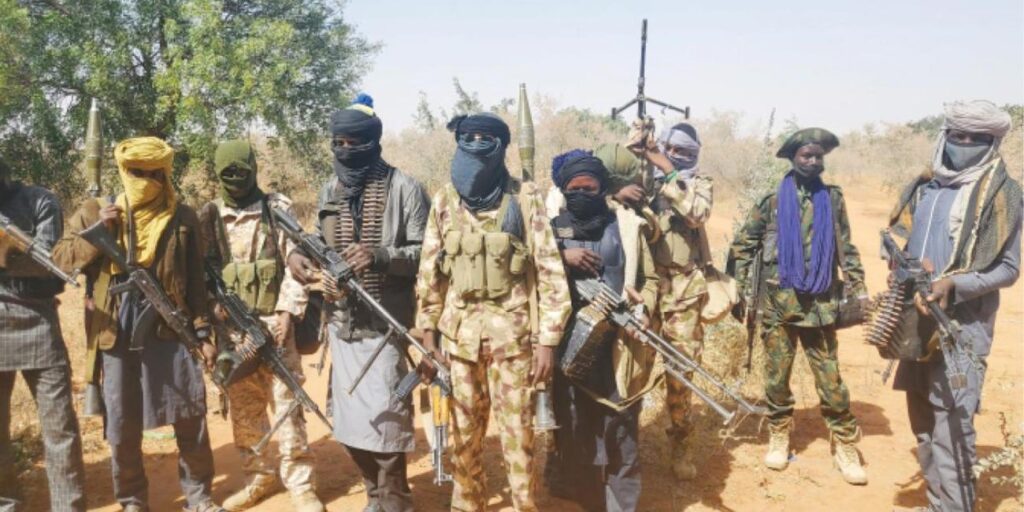
TUMU, Ghana — Ghanaian security forces have arrested and briefly detained 17 heavily armed soldiers from Burkina Faso discovered establishing a combat position inside Ghanaian territory near the border community of Wuru in the Upper West Region, officials confirmed, raising fresh concerns about cross-border security in a region increasingly affected by militant activity.

The soldiers, aged between 20 and 30 years old, were found in possession of dozens of military items including firearms and explosive devices when community residents discovered them constructing fortified positions using sandbags approximately one hour’s drive east of Tumu, the capital of Sissala East District. The incident represents a significant breach of Ghanaian sovereignty and highlights the complex security dynamics along West Africa’s increasingly porous borders.

Officials from the Ghana Immigration Service confirmed that the armed men were actively establishing a combat position when local residents spotted them and immediately raised alarms with authorities. 

The discovery of foreign military personnel conducting what appeared to be tactical operations on Ghanaian soil without authorization triggered swift response from security services concerned about both the immediate threat and broader implications for border integrity.

“We received a distress call from community members about armed elements establishing a combat position,” a Ghana Immigration Service official stated. “We responded swiftly, successfully ambushed them, and transported them together with their weapons to our office.”

The language describing security forces “ambushing” the soldiers suggests a tactical operation where Ghanaian personnel approached covertly to prevent the armed group from fleeing or initiating hostilities. 

The successful detention of 17 armed soldiers without reported casualties indicates professional execution by Ghanaian forces who managed to secure surrender or capture without triggering violent confrontation that could have escalated into cross-border military incident.

During interrogation at immigration facilities, the detained men identified themselves as soldiers of the Burkinabè army conducting routine border patrol operations who had become disoriented and inadvertently crossed into Ghanaian territory. 

Their explanation suggested navigational error rather than deliberate incursion, though the discovery of combat position construction equipment including sandbags raised questions about whether lost patrol units typically carry materials for establishing fortified positions.

Despite their claims of accidental border crossing, Ghanaian authorities detained the soldiers and confiscated their weapons for several hours while senior officials determined appropriate response. 

The detention continued until approximately 9:00 p.m. when national authorities issued directives ordering the soldiers’ release, suggesting high-level diplomatic consultations occurred between Ghanaian and Burkinabè governments to resolve the incident without escalating tensions.

The soldiers’ weapons remained in Ghanaian custody overnight, with authorities releasing the armaments the following day after a diplomatic delegation led by staff from the Ghanaian Embassy in Burkina Faso visited to formally coordinate the return of military equipment. The embassy’s involvement indicates both governments treated the matter as requiring diplomatic resolution rather than purely security or law enforcement response.

The Wuru community where the incident occurred lies within the Nazinga Forest range, a region that has experienced increasing security concerns in recent years. Between 2022 and 2023, residents reported frequent sightings and movements of armed men suspected to be terrorists or militants operating within farmlands inside the forest, creating persistent anxiety about security conditions in borderland areas where state authority remains limited.

Local residents have complained that the presence of armed groups—whether militants, bandits, or unidentified military personnel—has severely disrupted traditional economic activities including farming and hunting that communities depend on for subsistence and income. 

The insecurity has forced many residents to abandon fields or restrict movements, creating economic hardship that compounds the direct security threats posed by armed elements operating in the area.

Intelligence reports indicating the return of suspected terrorists began circulating in December 2025, just weeks before the Burkinabè soldiers were discovered establishing their combat position. 

The timing raises questions about whether the Burkinabè military deployment responded to intelligence about militant activity in the border region, potentially explaining why soldiers crossed into Ghanaian territory if they were pursuing or attempting to interdict suspected terrorist elements.

The incident occurs against a backdrop of deteriorating security across the Sahel region, where jihadist groups affiliated with al-Qaeda and Islamic State have expanded operations from Mali and Burkina Faso toward coastal West African states including Ghana. 

Burkina Faso has experienced particularly severe militant violence in recent years, with government forces struggling to contain insurgent groups that control significant rural territories and regularly attack military positions, civilian communities, and infrastructure.

Burkina Faso’s military government, which came to power through coups in 2022, has prioritized security operations against jihadist militants while simultaneously experiencing tensions with neighboring countries over border security cooperation and accusations of cross-border militant movements. 

The detention of Burkinabè soldiers in Ghana adds another layer to already complex regional security dynamics where cooperation remains essential yet increasingly strained.

Ghana has largely avoided the militant violence devastating its northern neighbors, though security analysts have warned that jihadist expansion threatens Ghana’s northern regions bordering Burkina Faso and Togo. 

The Ghanaian government has invested in enhanced border security and military presence in northern areas to prevent militant infiltration, making the discovery of foreign soldiers establishing combat positions particularly sensitive given concerns about any activities that could facilitate terrorist operations.

The swift release of the detained soldiers suggests Ghanaian authorities accepted Burkina Faso’s explanation that the incursion represented navigational error rather than hostile intent or deliberate sovereignty violation. 

However, the incident will likely prompt discussions about improved border coordination mechanisms to prevent similar occurrences that could escalate into serious diplomatic crises or military confrontations if not managed carefully.

Border demarcation in West Africa’s Sahel region remains imperfect, with many areas lacking clear physical markers indicating where one country ends and another begins. For military patrols operating in remote borderlands, particularly in forested or otherwise challenging terrain, determining precise locations can prove difficult without GPS technology and detailed topographical knowledge. 

However, the presence of sandbags and materials for establishing fortified positions suggests the soldiers intended to remain in the location rather than simply passing through, undermining claims of accidental crossing.

The Nazinga Forest’s characteristics as dense woodland covering both sides of the Ghana-Burkina Faso border create opportunities for armed groups to operate with relative impunity, moving between countries to evade security forces and exploiting sovereignty concerns that sometimes prevent cross-border pursuit operations. 

Militants throughout the Sahel have demonstrated sophisticated understanding of how to exploit border dynamics, establishing safe havens in areas where neighboring countries’ security forces hesitate to operate without explicit authorization.

Ghana’s rapid response to community reports of armed elements establishing positions demonstrates the importance of civilian cooperation in border security. Local residents familiar with normal patterns of movement and activity serve as crucial early warning systems for detecting unusual armed presence, whether from foreign military forces, militants, or criminal groups. The willingness of Wuru community members to immediately alert authorities rather than remaining silent out of fear proved essential to preventing whatever the Burkinabè soldiers intended.

The diplomatic resolution through embassy channels reflects mature bilateral relationships where both countries recognized shared interests in preventing the incident from damaging cooperation needed to address common security threats. The Sahel’s deteriorating security environment requires neighboring states to maintain functional diplomatic and military coordination despite periodic sovereignty concerns or nationalist pressures to respond aggressively to border incidents.

However, the incident will likely generate domestic political pressure in Ghana for more robust responses to foreign military incursions, particularly if opposition figures characterize the soldiers’ release as weakness or failure to defend national sovereignty. Balancing diplomatic pragmatism with domestic expectations about territorial integrity represents a persistent challenge for African governments managing complex border security situations where cooperation with neighbors remains essential.

The recovery of dozens of weapons and explosive devices from the detained soldiers illustrates the firepower that military units routinely carry during operations in conflict-affected regions. The arsenal suggests the group was equipped for significant combat operations rather than routine observation patrols, lending weight to speculation that they were actively pursuing militants or establishing forward positions for operations targeting suspected terrorist elements operating in the border area.

Moving forward, the incident will likely trigger discussions between Ghanaian and Burkinabè military officials about protocols for border operations, notification procedures when patrols approach border areas, and potentially joint coordination mechanisms to ensure that counter-terrorism operations by either country’s forces don’t inadvertently create diplomatic incidents. Such coordination represents sensitive political territory given sovereignty concerns, but the security imperatives of combating shared terrorist threats may compel pragmatic cooperation arrangements.

For residents of Wuru and surrounding communities in the Nazinga Forest region, the incident provides little reassurance about security conditions. Whether armed elements in their territory represent lost Burkinabè soldiers, terrorist militants, bandits, or some combination, the fundamental reality remains that civilians in border areas increasingly find themselves caught between multiple armed groups whose presence disrupts normal life and creates persistent fear about violence erupting without warning.

Russian Missile Strike Levels Kharkiv Apartment Block, Kills 2; Moscow Rejects Responsibility

0

Russian missiles slammed into a multi-storey apartment building in the northeastern Ukrainian city of Kharkiv on Friday, killing at least two people and wounding about 25 others, Ukrainian officials said, as Moscow denied that its forces carried out the attack.

Photographs and videos circulating online showed thick smoke billowing from a heavily damaged residential block, with rescue workers combing through shattered concrete and twisted debris. Emergency crews were seen climbing over rubble as they searched for survivors.

Kharkiv regional Governor Oleh Syniehubov said on Telegram that preliminary information indicated the bodies of a woman and her son were recovered from beneath the ruins. Speaking earlier on Ukrainian television, Syniehubov said two ballistic missiles struck the area, nearly destroying a five-storey building.

“Rescue teams are on site,” Syniehubov said. “They are clearing rubble and searching for people who may still be trapped.”

Ukraine’s State Emergency Service said search-and-rescue operations were continuing amid fears that additional victims remained under the debris.

Syniehubov said about 25 people were injured, with at least 16 hospitalized, including one woman in serious condition. He added that customers may have been inside shops and a café on the building’s ground floor when the explosion occurred.

Russia’s Defence Ministry rejected Ukrainian accounts of the strike, saying reports of a missile attack were false. In a statement posted on Telegram, the ministry suggested the blast resulted from the detonation of Ukrainian ammunition rather than a Russian strike.

“Video footage published seconds before the explosion shows thick smoke of unknown origin, which with high probability indicates a detonation of stored Ukrainian military ammunition at the ‘Persona’ shopping centre,” the ministry said.

The Russian statement said the reports were intended to divert international attention from a New Year’s Eve strike that Moscow blamed on Ukraine, which hit a hotel in a Russian-held part of Ukraine’s southern Kherson region. Ukraine has said its attacks target Russian military and energy infrastructure.

Vladimir Saldo, the Russia-installed governor of the occupied part of Kherson region, told the TASS news agency that the death toll from the New Year’s Eve strike had risen to 28.

Kharkiv, located about 30 kilometers (18 miles) from the Russian border, repelled Russian advances during the opening weeks of Moscow’s full-scale invasion of Ukraine in February 2022. While Russian forces later shifted their focus to eastern Ukraine, the city has remained a frequent target of missile and drone attacks.

The latest strike underscores the continued vulnerability of urban centers far from active front lines and highlights sharply conflicting narratives from Kyiv and Moscow, as civilian casualties remain a central and contested feature of the nearly three-year-old war.

Anthony Joshua’s Driver Charged with Dangerous Driving After Lagos Expressway Crash That Killed Two Team Members

0

SAGAMU, Nigeria — Authorities in southwestern Nigeria have charged the driver involved in a fatal Lagos-Ibadan Expressway crash that killed two members of heavyweight boxing champion Anthony Joshua’s entourage and left the fighter hospitalized with minor injuries, officials confirmed Friday.

Adeniyi Mobolaji Kayode, 46, faces multiple charges including dangerous and reckless driving following Monday’s collision that claimed the lives of Sina Ghami and Latif “Latz” Ayodele, according to Ogun State Police Command spokesman DSP Oluseyi B. Babaseyi. The charges were filed Thursday at Sagamu Magistrate Court, with proceedings adjourned until January 20 for trial.

“The Ogun State Police Command wishes to inform the general public that the driver of the Lexus SUV involved in the Anthony Joshua accident case, Adeniyi Mobolaji Kayode (male), aged 46, was charged at the Sagamu Magistrate Court today, 2nd January, 2026, and the case has been adjourned to 20th January, 2026,” Babaseyi stated in an official release, according to Punchng.

The vehicle carrying Joshua and members of his team struck a stationary truck on the Lagos-Ibadan Expressway, a heavily trafficked corridor connecting Nigeria’s commercial capital Lagos with Ibadan, the capital of Oyo State. The Monday morning collision occurred near Sagamu in Ogun State, a region where the expressway has gained notorious reputation for accidents attributed to poor road maintenance, disabled vehicles left on roadways, and inadequate lighting.

Kayode was taken into custody Thursday following his release from hospital treatment for injuries sustained in the crash. The court subsequently granted him bail of 5 million naira (approximately $3,480 USD), though he remained in detention pending fulfillment of bail conditions, Babaseyi told the Associated Press.

The defendant faces four distinct charges: dangerous driving causing death, reckless and negligent driving, driving without due care and attention, and operating a vehicle without a valid national driver’s license. The multiple charges reflect the severity of the incident and suggest prosecutors believe Kayode’s conduct violated several provisions of Nigerian traffic law simultaneously.

“He was remanded pending when he meets his bail condition,” the police spokesman confirmed, indicating that Kayode must secure financial guarantees and possibly other requirements before gaining release from custody ahead of trial proceedings scheduled to begin January 20.

The absence of a valid driver’s license represents a particularly serious violation in Nigeria’s legal framework, suggesting Kayode was operating the vehicle unlawfully regardless of the crash circumstances. Nigerian law requires all commercial and private drivers to maintain current licenses demonstrating they have passed competency examinations and meet medical fitness standards, requirements designed to ensure only qualified individuals operate motor vehicles on public roads.

Joshua, a two-time heavyweight champion whose professional boxing career has made him one of the sport’s most recognizable figures globally, was released from hospital Wednesday after medical evaluation determined he sustained only minor injuries that did not require extended treatment. The British-Nigerian boxer was discharged after being deemed clinically fit to recuperate at home, authorities confirmed, according to AP reports.

The 34-year-old fighter has maintained family roots in Nigeria and briefly attended boarding school in the country during his childhood. Joshua holds dual British and Nigerian nationality, reflecting his mother’s Nigerian heritage and his own identification with both cultures. His presence in Nigeria at the time of the crash has not been publicly explained, though he has previously visited for personal and promotional purposes related to his boxing career and Nigerian connections.

Joshua’s promoter, Matchroom Boxing, confirmed to the Associated Press on Thursday that the boxer will remain in Nigeria rather than immediately returning to the United Kingdom. The decision to stay suggests either ongoing medical monitoring, participation in the investigation into the crash, or personal matters requiring his presence as authorities work to determine full circumstances surrounding the collision and as he processes the deaths of two close associates.

The deaths of Sina Ghami and Latif “Latz” Ayodele have devastated Joshua’s team and raised questions about the safety protocols surrounding the boxer’s travel arrangements in Nigeria. Both victims were reportedly members of Joshua’s support staff, though their specific roles and relationships to the champion have not been detailed in official statements. The loss of team members transforms what should have been routine transportation into a tragedy that will likely affect Joshua’s professional and personal life for years.

The crash has renewed attention to persistent road safety problems plaguing Nigeria’s highway system, where traffic fatalities remain among the world’s highest per capita rates. The Lagos-Ibadan Expressway accounts for a disproportionate share of serious accidents given its heavy traffic volumes, aging infrastructure, and the dangerous practice of disabled trucks remaining stationary on roadways without adequate warning systems for approaching drivers.

The presence of a stationary truck that the Lexus SUV struck highlights a fundamental hazard on Nigerian highways. Broken-down commercial vehicles frequently remain on expressways for extended periods—sometimes hours or days—without proper warning markers, reflective triangles, or flares that would alert oncoming traffic to the obstruction. Drivers approaching these stationary vehicles, particularly at night or in reduced visibility conditions, often have insufficient time to react before collision occurs.

Nigerian road safety advocates have repeatedly called for regulations requiring disabled vehicles to be rapidly removed from highways and for penalties against truck operators who allow vehicles to remain stationary without adequate warning systems. However, enforcement remains inconsistent and many commercial transport companies prioritize cost savings over safety investments, creating persistent hazards that claim lives in preventable accidents.

The investigation into Monday’s crash will likely examine multiple factors including vehicle speed, driver alertness, road conditions, lighting, the stationary truck’s warning systems or lack thereof, and whether mechanical failures contributed to the collision. Prosecutors must establish that Kayode’s driving conduct directly caused or substantially contributed to the deaths to secure dangerous driving convictions under Nigerian criminal law.

Dangerous driving causing death carries potentially severe penalties under Nigerian law, including substantial prison sentences if convicted. The charge requires prosecutors to prove that the defendant’s driving fell far below the standard expected of a competent and careful driver and that this substandard driving directly resulted in fatalities. Reckless and negligent driving charges typically carry lesser penalties but lower evidentiary standards for conviction.

The bail amount of 5 million naira, while significant by Nigerian standards where per capita income remains low, may be accessible for a driver employed by an internationally prominent boxer whose wealth would enable posting bail on behalf of staff members. However, the court’s decision to grant bail suggests that despite the serious charges, authorities do not believe Kayode poses flight risk or danger to the community that would justify pre-trial detention.

The January 20 trial date provides limited time for both prosecution and defense to prepare their cases, though Nigerian legal proceedings often experience delays that extend well beyond initial scheduling. The compressed timeline may reflect recognition that the high-profile nature of the case involving an international sports celebrity requires expedited handling to address public interest and ensure justice proceeds without unnecessary delays.

For Joshua, the crash represents a traumatic interruption to whatever plans brought him to Nigeria. Beyond physical injuries that medical professionals determined were minor enough to allow discharge, the psychological impact of surviving a collision that killed two close associates will likely prove more significant and enduring. Survivors of fatal accidents commonly experience guilt, anxiety, and post-traumatic stress even when bearing no responsibility for the collision.

The decision to remain in Nigeria rather than immediately return to the United Kingdom suggests Joshua feels obligations to participate in investigations, attend funeral arrangements for the deceased team members, or address other matters that his physical presence can facilitate. His status as both British citizen and Nigerian national may create complex dynamics regarding how Nigerian authorities treat him as both victim and witness in the criminal proceedings against his driver.

Punchng confirmed that the arraignment followed investigations into the fatal crash that occurred December 29, 2025, along the Lagos-Ibadan Expressway near Sagamu. The police had detained the driver as part of ongoing investigations into circumstances surrounding the crash, which attracted widespread public attention due to Joshua’s international profile and the preventable nature of collisions involving stationary vehicles on major highways.

The international media attention the crash has generated may pressure Nigerian authorities to conduct more thorough investigations and pursue more aggressive prosecution than typical traffic accidents receive. High-profile cases involving celebrities or foreign nationals sometimes benefit from enhanced scrutiny that exposes systemic problems receiving inadequate attention in ordinary circumstances, potentially catalyzing broader road safety reforms if public pressure proves sufficient.

However, cynics note that Nigerian corruption and institutional weaknesses often mean that even high-profile cases fail to produce meaningful accountability or systemic changes. Drivers convicted of causing deaths through dangerous driving sometimes receive surprisingly lenient sentences, particularly if they can afford legal representation capable of exploiting procedural technicalities or negotiating reduced charges through plea agreements.

The victims’ families now face the difficult process of seeking justice and potential compensation through Nigerian legal systems that can prove frustrating and inaccessible for ordinary citizens. Whether civil litigation seeking damages will follow the criminal prosecution remains uncertain, though families of traffic accident victims increasingly pursue civil remedies when criminal justice systems fail to provide adequate accountability or when financial compensation becomes necessary to address economic losses from breadwinners’ deaths.

For Joshua’s boxing career, the crash’s impact remains uncertain. Physical injuries described as minor should not prevent his return to training once medical professionals clear him for athletic activity. However, the psychological trauma and grief over losing team members could affect his focus and motivation as he navigates a heavyweight division where maintaining peak physical and mental condition determines success or failure at the sport’s highest levels.

The tragedy underscores how even wealthy, internationally prominent individuals with access to resources ordinary Nigerians cannot afford remain vulnerable to infrastructure failures, inadequate safety enforcement, and systemic problems that make Nigerian roads among the world’s most dangerous for travelers regardless of economic status or social position.

Punchng/AP

Tommy Lee Jones’ Daughter Victoria Found Dead at San Francisco Hotel on New Year’s Day, Suspected Overdose Following History of Drug Arrests

0

Victoria Jones, the 34-year-old daughter of Academy Award-winning actor Tommy Lee Jones, was found dead early New Year’s Day at San Francisco’s landmark Fairmont Hotel in what emergency dispatch audio reveals was a suspected drug overdose, following a troubled year marked by multiple arrests for drug possession and domestic violence.

San Francisco Police Department officers arrived at the historic Nob Hill hotel around 3:14 a.m. Thursday after receiving reports of a medical emergency, according to official statements. Paramedics pronounced a woman, identified by multiple sources as Victoria Jones, dead on arrival, with bystanders receiving instructions to conduct CPR before emergency responders reached the scene.

The San Francisco Fire Department confirmed to Page Six that despite CPR attempts, the woman was deceased by the time authorities arrived. Emergency dispatch audio obtained by PEOPLE classified the incident as a “code 3 for the overdose, color change,” terminology indicating the severity and suspected nature of the medical emergency.

In overdose cases, the term “color change” refers to cyanosis—critically low oxygen levels in the blood often linked to heart or lung failure—which causes distinctive blue or purple discoloration of skin, lips, and nails, according to Cleveland Clinic medical definitions. The specific classification in emergency communications suggests first responders immediately recognized signs consistent with drug overdose upon discovering Victoria’s body.

A police source with direct knowledge of the investigation told NBC Bay Area that the woman found in a hallway of the hotel early Thursday morning is believed to be Tommy Lee Jones’ daughter Victoria, though officials emphasized they cannot formally confirm her identity until the medical examiner completes identification procedures. The source stated that investigators do not suspect foul play in connection with the death.

The circumstances of Victoria’s death become more tragic in light of court records revealing a pattern of legal troubles throughout 2025. She was arrested at least twice during the past year on drug-related charges, according to court dockets reviewed by PEOPLE, with her most recent arrest occurring just months before her death.

On April 28, 2025, Victoria was taken into custody in California’s Napa County and charged with three misdemeanors: obstructing a peace officer, being under the influence of a controlled substance without a valid prescription, and possession of a controlled substance without a valid prescription. She entered a not guilty plea to all charges, which remained pending at the time of her death.

Nearly two months following her initial arrest, Victoria faced additional legal trouble when she was detained again on June 17, 2025, in Napa County on charges of misdemeanor domestic battery. She pleaded not guilty on July 1, with that case also unresolved when she died six months later. The pattern of arrests throughout 2025 suggests escalating personal struggles that Victoria was navigating in the months leading to the New Year’s tragedy.

The San Francisco Fire Department confirmed it responded to the medical emergency at the San Francisco Fairmont just before 3 a.m. local time Thursday. The San Francisco Police Department additionally confirmed that officers met with paramedics at the hotel, where they declared an unnamed adult female deceased at the scene.

The Fairmont Hotel issued a statement Friday expressing condolences while maintaining discretion about the incident: “We are deeply saddened by an incident that occurred at the hotel on January 1, 2026. Our heartfelt condolences are with the family and loved ones during this very difficult time. The hotel team is actively cooperating and supporting police authorities within the framework of the ongoing investigation.”

Victoria was the daughter of Tommy Lee Jones, now 79, and his ex-wife Kimberlea Cloughley. The former couple also shares a son, Austin Jones, 43. Tommy Lee Jones has not publicly commented on his daughter’s death, and representatives for the actor did not immediately respond to media requests for comment.

Victoria followed in her father’s footsteps with select acting appearances beginning at a young age. She made her screen debut in her father’s blockbuster film Men in Black II in 2002, appearing alongside Tommy Lee Jones and Will Smith in the science fiction comedy sequel. She later appeared in The Three Burials of Melquiades Estrada in 2005, a critically acclaimed Western that her father directed and starred in, which also featured her stepmother Dawn Laurel-Jones as the stills photographer.

Beyond her film work, Victoria made a brief appearance in the popular teen drama television series One Tree Hill in a 2003 episode during the show’s first season. According to her IMDB profile, Victoria’s last screen credit was in 2014’s The Horseman, also directed by her father, suggesting she had largely stepped away from acting during the final decade of her life.

In a 2006 New Yorker profile, Tommy Lee Jones opened up about both the joys and challenges of working with his then-teenage daughter on The Three Burials of Melquiades Estrada, offering insights into their complicated relationship and Victoria’s early struggles with work discipline.

“She’s a good actress, has her SAG card, speaks impeccable Spanish,” Jones told the outlet, crediting deliberate parenting choices for her language skills. “When she was a baby, I told Leticia, her nurse, to speak to her in Spanish.”

However, the Oscar-winning actor acknowledged tension during the filming process. “She had to get up at 5 a.m. for her part,” he recalled. “One morning, she wouldn’t get out of bed. I said, ‘Honey, this is work.’ But she wouldn’t budge. So I fired her.”

Jones described how the production staff intervened without his knowledge, rushing Victoria to the set just in time after waking her themselves. The anecdote, shared nearly two decades before Victoria’s death, hints at early challenges with discipline and responsibility that may have foreshadowed later struggles.

Tommy Lee Jones built one of Hollywood’s most distinguished careers over five decades, winning the Academy Award for Best Supporting Actor for his role as U.S. Marshal Samuel Gerard in 1993’s The Fugitive. His acclaimed filmography includes memorable performances in JFK, the Men in Black franchise, No Country for Old Men, Lincoln, and dozens of other critically respected projects that established him as among his generation’s most talented and versatile actors.

The stark contrast between Tommy Lee Jones’ professional success and his daughter’s troubled final years underscores how addiction and mental health challenges affect families across all socioeconomic backgrounds, including those with access to resources that wealth and celebrity status theoretically provide. Despite her father’s prominence and presumed financial means to afford quality treatment, Victoria apparently struggled with substance abuse issues that ultimately proved fatal.

The location of Victoria’s death at the Fairmont San Francisco, one of the city’s most prestigious hotels atop Nob Hill, raises questions about the circumstances that brought her to the historic property on New Year’s Eve. The luxury hotel, known for hosting celebrities, diplomats, and wealthy travelers, seems an unlikely setting for a fatal overdose, though addiction recognizes no boundaries of class or location.

San Francisco has experienced a severe drug overdose crisis in recent years, with fentanyl-laced substances driving record mortality rates even as city officials have implemented various intervention programs. The availability of contaminated drugs throughout the city means that even experienced drug users face unpredictable risks when substances they believe are one thing contain deadly synthetic opioids.

The timing of Victoria’s death on New Year’s Day adds particular poignancy to the tragedy. While millions celebrated the arrival of 2026 with champagne toasts and optimistic resolutions, Victoria apparently struggled alone in a hotel hallway before being discovered by someone who called for emergency assistance. The isolation of her final moments contrasts sharply with the festivities occurring throughout the city and the family connections she presumably maintained despite her troubles.

The San Francisco Office of the Chief Medical Examiner has not released an official cause of death pending completion of toxicology testing and autopsy procedures that typically require several weeks. However, the emergency dispatch classification as an overdose provides strong preliminary indication of what medical examiners will likely confirm through forensic analysis.

Victoria’s death joins a tragic pattern of children of famous actors who have struggled with addiction and died from drug-related causes despite access to resources that most Americans cannot afford. The phenomenon has sparked discussions about whether growing up in Hollywood’s spotlight creates unique pressures that contribute to substance abuse, or whether celebrity children’s struggles simply receive more media attention than the equally tragic deaths of non-famous individuals battling addiction.

For Tommy Lee Jones, now in his late seventies, the loss of his daughter represents a devastating personal tragedy that will likely remain private given the actor’s well-known reluctance to discuss his personal life publicly. Jones has maintained strict boundaries between his professional acting career and his family throughout decades in Hollywood, rarely giving interviews and deflecting questions about his children or personal relationships.

The family now faces not only grief but also the intrusive media attention that inevitably follows when tragedies affect the relatives of major celebrities. Balancing the need to mourn privately while managing public interest in the circumstances of Victoria’s death presents challenges that compound the emotional devastation of losing a child under such difficult circumstances.

Victoria’s brother Austin Jones, 43, has maintained an even lower public profile than his sister, with no indication he pursued entertainment industry careers. How the family will process Victoria’s death and whether her struggles will prompt public discussion of addiction issues within the Jones family remains to be seen, though the actor’s historical privacy makes such openness unlikely.

The tragedy serves as a reminder that addiction represents a medical condition requiring treatment rather than moral failing deserving judgment. Victoria’s apparent inability to overcome substance abuse issues despite multiple arrests and presumably some access to treatment resources illustrates how powerfully addiction grips individuals even when they face legal consequences and family concern about their wellbeing.

Mental health advocates emphasize that addressing America’s ongoing overdose crisis requires expanding treatment access, reducing stigma that prevents people from seeking help, and implementing harm reduction strategies including drug testing resources that help users identify contaminated substances. Whether Victoria’s death will contribute to broader conversations about these issues or remain simply another tragic statistic in the nation’s drug epidemic depends partly on how her family and the media choose to frame her story.

Dailybeast/People.com