

An explosion at a military ammunition depot in Burundi’s commercial capital killed at least 13 people and injured 57 others, the army said Wednesday, after a blast triggered by an electrical fault sent shockwaves across the city and forced residents to flee for safety.
The incident occurred late Tuesday at a major storage site for ammunition in the Musaga area, a densely populated district in the southern part of Bujumbura. Military officials said the blast was caused by a short circuit that ignited stored munitions, leading to a chain of explosions that lasted for hours.
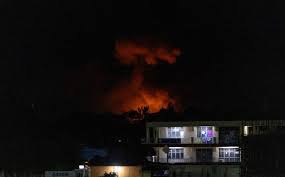
Army spokesperson Gaspard Baratuza told reporters that the force of the blasts caused widespread destruction, damaging homes, vehicles and military facilities. He added that equipment at the base was destroyed and several buildings were burned.
“Houses were damaged in several areas, along with private vehicles. Military equipment and installations were also destroyed,” Baratuza said during a briefing.
The explosions echoed throughout the city, sending thick smoke into the air and sparking panic among residents. Witnesses described a prolonged and chaotic scene as projectiles from the depot flew in multiple directions.
A resident living near the site told Reuters that the explosions continued for hours, forcing people to take shelter wherever they could. The individual, who declined to be identified for safety reasons, described a constant barrage of debris falling unpredictably.
“There were hours of blasts, and objects were flying overhead and landing at random,” the resident said.
In nearby neighborhoods, residents reported casualties as people attempted to flee the area. One witness said a young woman was struck and killed during the chaos, while another resident described a man who died shortly after leaving a church gathering in a different part of the city.
The Burundian army did not confirm whether any soldiers were among the dead, but said at least three military personnel were injured in the blast.
Emergency crews responded to the scene, but efforts to contain the fire were slowed by limited resources. A senior police officer involved in the response said firefighters faced challenges due to a shortage of water, allowing the flames to spread and intensify.
The officer described the destruction as severe, saying the base was largely reduced to ruins by the fire. Smoke and smaller fires were still visible hours after the initial explosion, indicating the scale of the damage.
The ammunition depot is located near a military training institute, where officer candidates live and study. Its position within a crowded urban area raised the risk to civilians, contributing to the high number of casualties and injuries.
Authorities urged residents to remain cautious in the aftermath of the blast, warning that unexploded munitions could still be present. Officials asked the public to report any suspicious objects and avoid handling them.
President Evariste Ndayishimiye expressed condolences to those affected in a message shared publicly, offering support to victims and their families.
According to regional media coverage citing Reuters and other outlets, the explosion has drawn attention to safety conditions at military storage facilities, particularly those located near residential areas.
Burundi, one of the world’s poorest countries based on income per person as measured by global financial institutions, has faced ongoing economic challenges, including shortages of fuel and limited infrastructure. These conditions can complicate emergency responses and increase the risks associated with industrial or military accidents.
The deadly explosion in Bujumbura highlights the dangers posed by storing large quantities of ammunition in densely populated areas. When such facilities are located close to homes and public spaces, even a single technical failure can lead to catastrophic consequences.
The reported cause, an electrical fault, raises questions about maintenance standards and safety oversight at military installations. In environments where resources are limited, routine inspections and infrastructure upgrades may not receive sufficient attention, increasing the likelihood of accidents.
The prolonged nature of the explosions suggests that significant amounts of ammunition were stored at the site, amplifying the scale of the disaster. The inability to quickly control the fire due to water shortages further underscores the challenges faced by emergency services.
This incident also reflects broader structural issues, including urban planning and the placement of high-risk facilities. As cities expand, military sites that were once isolated can become surrounded by residential neighborhoods, elevating the potential impact of any incident.
For Burundi, the explosion may prompt a review of safety procedures and storage practices within the military. It could also lead to calls for relocating hazardous facilities away from populated areas.
In the wider context, the event serves as a reminder of the risks associated with aging infrastructure and limited emergency preparedness. Without significant investment in safety measures and response capabilities, similar incidents could occur in other regions facing comparable challenges.
Reuters





