

Several people were killed and others suffered severe chemical burns after a powerful implosion tore through a paper mill facility in southwestern Washington state on Tuesday morning, triggering a large scale emergency response and raising fresh concerns over industrial safety.
The incident unfolded shortly after 7:15 a.m. at the Nippon Dynawave Packaging Company plant in Longview, where authorities said an 80,000 gallon chemical tank partially filled with a substance known as white liquor ruptured with devastating force. The mixture, commonly used in paper production, contains sodium hydroxide, sodium sulfide, and sodium carbonate, all highly corrosive materials capable of causing life threatening injuries on contact.
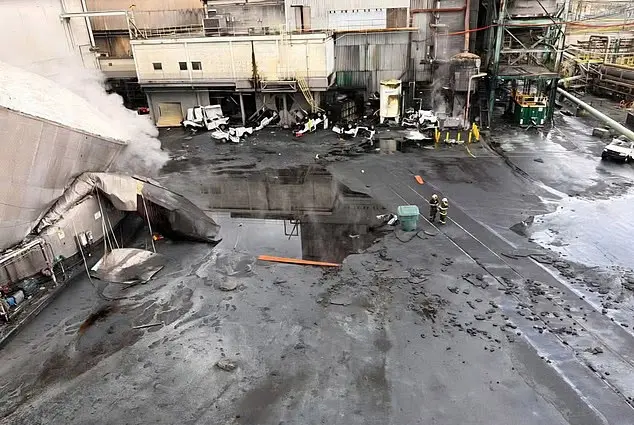
Fire officials confirmed fatalities tied to the blast, though the exact number of victims has not been released pending notification of families. Emergency crews also indicated that several individuals remained unaccounted for as search operations continued at the site.
Multiple workers were rushed to nearby medical facilities, including PeaceHealth St. John Medical Center in Longview and PeaceHealth Southwest Medical Center in Vancouver. Authorities said victims sustained chemical burns and other critical injuries, though the full extent of the damage has not been disclosed. Among the injured was at least one firefighter who responded to the scene.
The Longview Fire Department stated that at least 10 people were hurt in the incident, while hazmat teams and fire crews worked to contain the hazardous materials and secure the damaged structure. Officials stressed that there was no immediate danger to the surrounding community.
The facility, which employs hundreds of workers, produces large quantities of packaging paperboard and pulp products used in billions of consumer containers each year. Operations at the plant were halted as investigators began examining what led to the catastrophic failure of the tank.
Emergency responders deployed multiple fire engines, ambulances, and specialized hazardous materials units to manage the aftermath. Residents in the area had earlier been advised to avoid the site as crews worked to stabilize conditions.
The explosion adds to a history of safety concerns at the plant, where a multi day fire broke out in 2023. Authorities have not yet determined whether equipment failure, human error, or chemical instability contributed to the latest incident.
The disaster also comes amid heightened national attention to industrial chemical risks. In recent weeks, a separate chemical emergency in Orange County prompted a state of emergency declaration by Gavin Newsom and federal assistance authorized by Donald Trump through the Federal Emergency Management Agency.
While officials in Washington have emphasized that no evacuation is currently required, the incident is expected to draw scrutiny from regulators and workplace safety experts. Industrial accidents involving volatile chemicals remain a persistent risk in manufacturing sectors, particularly in facilities handling high pressure systems and corrosive compounds.
The Longview implosion underscores ongoing vulnerabilities within heavy industry, where aging infrastructure, high production demands, and hazardous materials often intersect. Even with modern safety protocols, incidents involving chemical storage tanks can escalate rapidly due to pressure imbalances or structural fatigue.
Experts note that white liquor, while essential to pulp processing, presents unique dangers because of its highly caustic properties. A failure in containment systems can lead not only to explosive force but also to widespread chemical exposure, complicating rescue operations and medical treatment.
This event is likely to renew calls for stricter oversight of industrial facilities, particularly those with prior safety incidents. It may also intensify legal and regulatory pressure on companies to invest in upgraded equipment, improved monitoring systems, and enhanced worker training.
As investigators work to determine the cause, the broader implications could extend beyond Washington state, influencing national discussions on industrial safety standards and emergency preparedness in high risk manufacturing environments.
NYPost





