

(AP/Aljazeera) — Gunmen launched a coordinated attack on Niger’s main international airport in the capital early Thursday, killing 11 soldiers and two civilians in a fierce exchange of fire that also left dozens of attackers dead, authorities said.
The assault targeted the Diori Hamani International Airport complex, a strategic military and civilian hub, in what officials described as one of the most serious security breaches in recent months.
Armed fighters stormed Niger’s main airport and adjoining military base, triggering hours of gunfire, killing security personnel and civilians before troops repelled the attack and restored control.
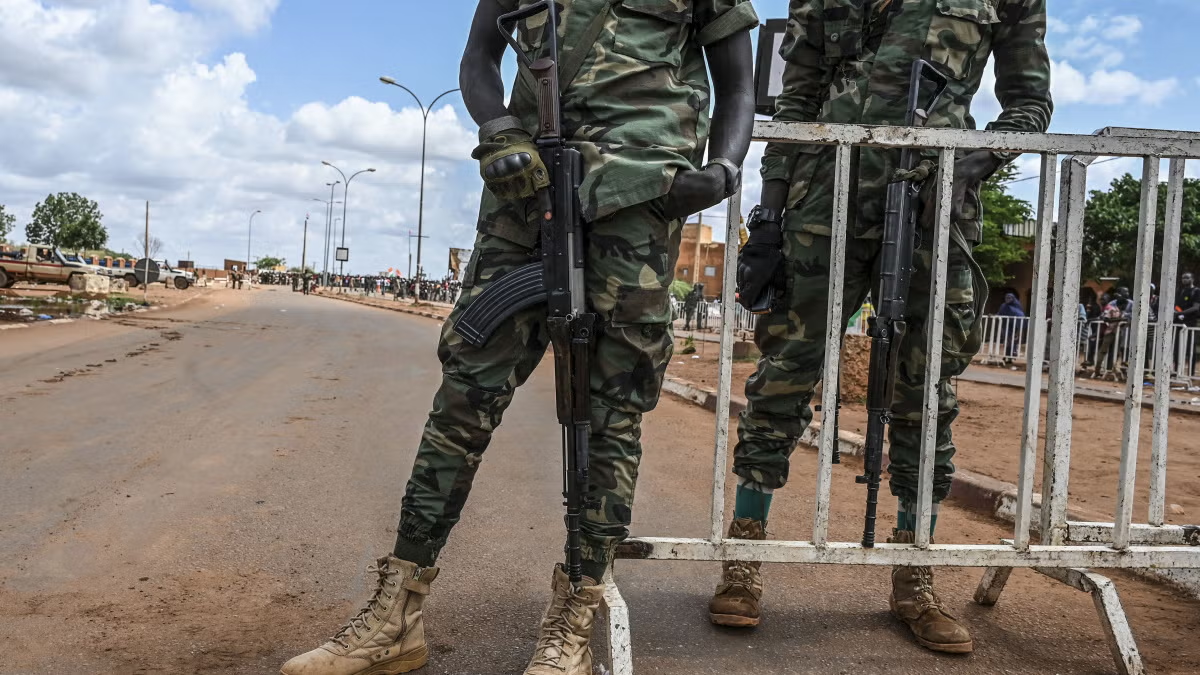
What we know so far
Niger’s Defense Ministry said 11 soldiers and two civilians were killed during the attack, while 22 of the assailants were also killed. About 20 suspects were arrested, along with weapons and ammunition.
The attack began around 6 a.m. local time when gunmen arrived near a security checkpoint and engaged troops guarding the airport and adjacent airbase. Witnesses described prolonged gunfire and explosions across the area.
Residents living near the airport reported heavy military deployment and intense exchanges of fire, prompting some to turn back from their daily routines for safety.
Four people were injured, according to preliminary figures released by the ministry.
Authorities said the airport remained secure and continued operating, with aviation officials later confirming that flights resumed after the incident.
What authorities are saying
The Defense Ministry said security forces mounted a large scale response that neutralized the attackers and secured the facility.
Officials indicated that an armed group linked to al Qaeda claimed responsibility for the assault, describing it as a coordinated operation targeting both the civilian airport and nearby military infrastructure.
Security analysts and officials have warned that such high value sites remain prime targets for militant groups operating across the Sahel.
Why this matters
The attack underscores the persistent threat posed by armed groups in Niger and the wider Sahel region, where governments continue to struggle against insurgencies linked to extremist networks.
Diori Hamani International Airport holds strategic importance, serving as a base for military operations, including regional counterterrorism efforts and drone missions. It also plays a key role in safeguarding critical national assets, including uranium reserves.
The incident marks the second attack on the airport this year, highlighting ongoing vulnerabilities despite increased security measures.
Beyond Niger, the assault reflects a broader pattern of instability affecting neighboring countries such as Mali and Burkina Faso, where similar groups have expanded their operations.
What happens next
Authorities said investigations are ongoing, with security forces continuing operations to track down remaining suspects and prevent further attacks.
The government is expected to review and possibly strengthen security around key infrastructure, particularly in high risk areas around the capital.
Regional and international partners may also reassess their security cooperation as threats to strategic sites intensify.
The scale and coordination of the attack point to a growing level of sophistication among armed groups in the Sahel. Targeting a heavily guarded airport complex signals both operational capability and intent to strike symbols of state authority.
Despite increased surveillance, including expanded perimeter defenses and installation of security cameras, militants continue to exploit gaps, often relying on speed and surprise.
The attack also carries economic and geopolitical implications. Disruption or damage to facilities linked to uranium storage or military operations could have ripple effects beyond Niger, affecting global supply chains and regional security strategies.
For Niger’s military government, the incident presents a test of its ability to restore stability following the 2023 coup. Continued attacks risk undermining public confidence and complicating efforts to secure international support.





