

Iran has put forward a proposal to reopen the strategically vital Strait of Hormuz in exchange for the United States lifting its naval blockade and agreeing to end the ongoing conflict, regional officials said Monday, signaling a potential shift in a standoff that has shaken global energy markets.
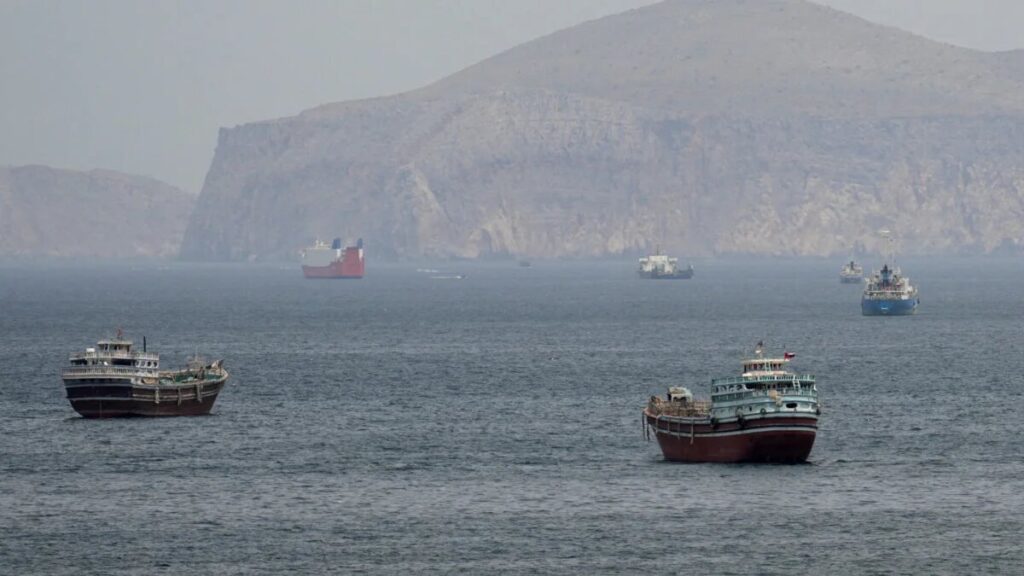
The proposal, conveyed to Washington through Pakistani intermediaries, would restore maritime traffic through one of the world’s most critical shipping lanes while postponing negotiations over Iran’s nuclear program to a later stage. Two regional officials with direct knowledge of the discussions disclosed the framework on condition of anonymity due to the sensitivity of ongoing diplomatic efforts. The development was first brought to light by Axios.
President Donald Trump has not publicly endorsed the proposal and appears unlikely to accept it in its current form, as it does not directly address U.S. demands concerning Iran’s nuclear capabilities, a central issue that contributed to the outbreak of hostilities on Feb. 28.
The Strait of Hormuz, a narrow passage linking the Persian Gulf to global waters, handles roughly one-fifth of the world’s traded oil and natural gas under normal conditions. Iran’s effective restriction of traffic through the channel has become a key pressure point in the conflict, while the U.S. blockade has targeted Iran’s ability to export oil, cutting off a major source of revenue for Tehran.
The resulting standoff has disrupted global supply chains and driven sharp increases in energy prices. Brent crude, the international oil benchmark, hovered near $108 per barrel Monday, reflecting a surge of nearly 50% since the conflict began. Tankers carrying crude have been forced to idle in the Gulf, unable to safely pass through the contested waterway.
The economic consequences have extended well beyond energy markets. Rising fuel costs have pushed up prices for food, fertilizer and other essential goods, placing strain on consumers and businesses worldwide. The spike in gasoline prices has also added political pressure on the Trump administration ahead of key midterm elections, while U.S. allies in the Gulf region face mounting challenges in maintaining export flows.
Under the terms outlined by the regional officials, Iran would agree to allow free passage through the strait once the U.S. lifts its blockade and a broader cessation of hostilities is secured. Discussions over Iran’s nuclear program would be deferred, a condition that appears to conflict with Washington’s insistence on addressing nuclear concerns as part of any agreement.
Trump has repeatedly emphasized that preventing Iran from developing nuclear weapons remains a central objective of U.S. policy. While Tehran maintains that its nuclear program is intended for peaceful purposes, U.S. officials have pressed for the removal of Iran’s stockpile of highly enriched uranium, citing concerns that it could be used to produce a nuclear weapon.
Diplomatic efforts to bridge the divide have intensified in recent days, though progress remains uncertain. Pakistan has taken on a mediating role, attempting to revive stalled negotiations between the two sides. Talks were expected to take place in Islamabad over the weekend, but the planned visit by U.S. envoys was called off, with Trump later suggesting that any discussions could occur remotely.
Iran’s foreign minister, Abbas Araghchi, has been actively engaged in regional and international diplomacy. State media outlet IRNA reported that he arrived in St. Petersburg on Monday for talks with Russian President Vladimir Putin, a longstanding ally of Tehran. Araghchi described the visit as an opportunity to review recent developments in the conflict and coordinate positions with Moscow.
Over the weekend, Araghchi also traveled to Pakistan and Oman, both of which have played roles in facilitating dialogue. Oman, which shares control of the Strait of Hormuz, has been identified as a potential partner in implementing a system that could regulate maritime transit through the waterway. A regional official involved in mediation efforts indicated that Iran has proposed a mechanism under which vessels might pay transit fees, though Oman’s response has not been publicly disclosed.
The diplomatic activity comes as a fragile ceasefire, initially agreed to on April 7, continues to hold despite ongoing tensions. Trump last week announced an indefinite extension of the ceasefire, which has largely halted direct military engagements but has not resolved the underlying conflict.
Casualty figures from the war underscore its severity. Since late February, at least 3,375 people have been killed in Iran, while violence linked to the broader conflict has claimed at least 2,509 lives in Lebanon. Additional fatalities have been recorded in Israel and several Gulf states, along with losses among military personnel and peacekeeping forces.
The situation remains further complicated by parallel tensions involving Israel and the armed group Hezbollah, which resumed hostilities shortly after the conflict with Iran began. A separate ceasefire between those parties has been extended, though it remains fragile.
Trump indicated over the weekend that Iran had submitted an improved proposal following the cancellation of the U.S. delegation’s trip to Pakistan, describing it as “much better” without providing specifics. He reiterated that any agreement must ensure Iran does not obtain a nuclear weapon.
Iran’s proposal to reopen the Strait of Hormuz in exchange for relief from U.S. economic pressure reflects a strategic calculation shaped by both military and economic realities. By leveraging its control over a key global energy route, Tehran has demonstrated its ability to influence international markets and create urgency among global powers. However, the proposal’s exclusion of immediate nuclear negotiations highlights a fundamental gap between the two sides that could limit the chances of a breakthrough.
For the United States, accepting such terms could ease economic pressures and stabilize global energy markets but may be viewed as conceding leverage without securing long-term security guarantees. The delay in addressing nuclear issues raises concerns that the core dispute would remain unresolved, potentially leading to renewed tensions.
At the same time, the broader geopolitical landscape suggests that regional players are increasingly seeking to prevent further escalation. Countries reliant on the strait for exports have strong incentives to support any arrangement that restores stability, while mediators such as Pakistan and Oman are positioning themselves as key diplomatic intermediaries.
The ongoing stalemate illustrates the complexity of modern conflicts, where military, economic and diplomatic factors are deeply intertwined. Even with a ceasefire in place, the absence of a comprehensive agreement leaves the situation vulnerable to sudden shifts, with global implications.
The Associated Press





