

Israel’s defense minister said Monday that Israeli forces will remain in territories seized in Lebanon, Syria and the Gaza Strip, a stance that could complicate a newly announced understanding between the United States and Iran aimed at easing regional tensions.
Defense Minister Israel Katz said Israel intends to maintain its presence “indefinitely” in areas under its control, even as diplomatic efforts move forward on a fragile framework designed to halt hostilities and reopen key global shipping routes.
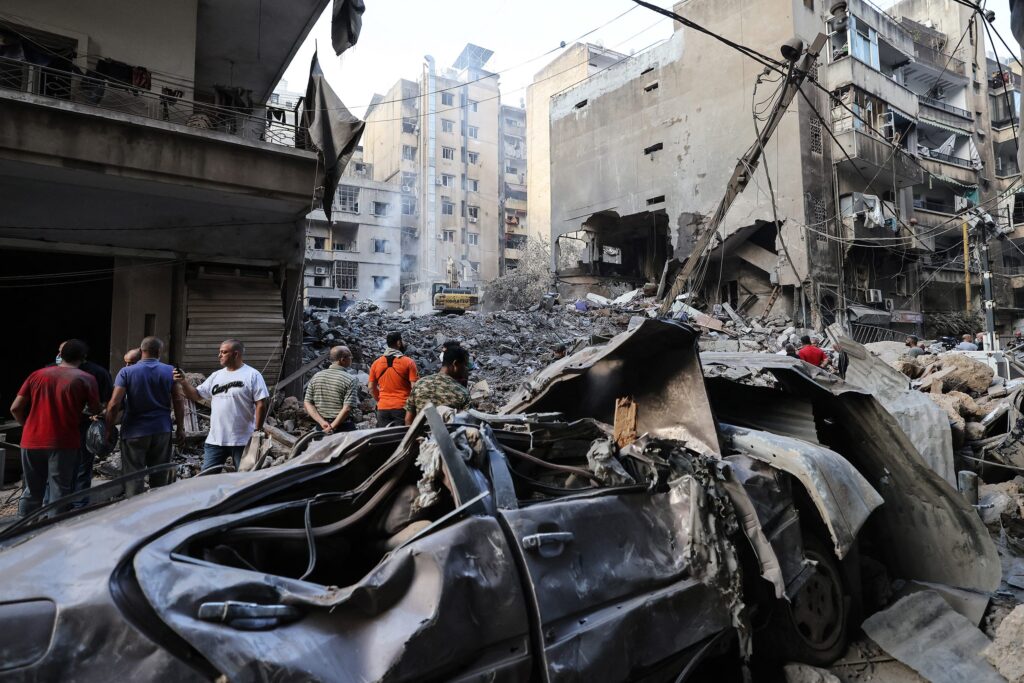
The comments came hours after mediators disclosed an emerging agreement between Washington and Tehran that includes provisions tied to maritime access through the Strait of Hormuz and a broader pause in fighting across multiple fronts.
Israel has indicated it will not withdraw from territories captured in recent conflicts, raising uncertainty over a U.S. and Iran backed framework that seeks to stabilize the region and prevent further escalation.
What we know so far
Israeli forces have taken control of significant areas across Gaza, southern Lebanon and parts of Syria over the past two and a half years, totaling about 1,000 square kilometers. Katz’s remarks mark the first official Israeli response following disclosure of the diplomatic framework.
The proposed arrangement, first announced by Pakistan, outlines a halt in military operations and sets a 60 day timeline to address Iran’s stockpile of highly enriched uranium and its broader nuclear program.
Iranian officials acknowledged the framework but indicated implementation would only begin after a formal signing expected later this week in Switzerland. Qatar has also played a mediating role, with talks in Tehran and planned follow up meetings in Doha.
Recent Israeli airstrikes targeting Hezbollah positions in Beirut’s southern suburbs underscore ongoing tensions that could undermine the fragile understanding.
What authorities are saying
Katz warned that any direct action by Iran in response to Israeli operations in Lebanon would prompt a strong military response. He reiterated that Israel’s strategic posture would not change despite diplomatic developments.
Iran’s deputy foreign minister Kazem Gharibabadi confirmed the agreement on state television but stressed that no measures would take effect before formal endorsement.
Pakistan’s prime minister Shehbaz Sharif described the framework as a step toward ending military operations across all fronts and enabling technical negotiations on unresolved issues.
In Washington, Vice President JD Vance indicated uncertainty about final participation in the signing ceremony, while lawmakers including Senator Lindsey Graham voiced concern about differing interpretations of the agreement.
President Donald Trump, commenting on social media, welcomed the development and said he had authorized steps tied to reopening the Strait of Hormuz and lifting a U.S. naval blockade, though he later clarified such actions would follow the formal signing.
Why this matters
The situation highlights the difficulty of aligning military realities on the ground with diplomatic efforts at de escalation. Israel’s refusal to withdraw from contested territories introduces a major obstacle to any agreement that hinges on reduced hostilities.
The Strait of Hormuz remains one of the world’s most critical energy corridors, and any disruption or reopening has direct implications for global oil markets and economic stability.
The proposed 60 day window to resolve Iran’s nuclear program revives a long standing issue that previously took years of negotiation. The compressed timeline suggests urgency but also raises questions about feasibility.
What happens next
Attention now turns to the planned signing in Switzerland, where negotiators are expected to formalize the framework and begin technical discussions.
If the agreement moves forward, parallel talks will address nuclear concerns, regional security arrangements and enforcement mechanisms. Failure to reach consensus within the set timeframe could extend negotiations or risk renewed escalation.
Israel’s position is likely to remain a central point of contention, with its military posture influencing both diplomatic momentum and the broader security landscape in the region.
The Associated Press original





