

(Skynews) — Two Israeli soldiers have been sentenced to 30 days in military prison and removed from combat duties after they were found responsible for destroying a statue of Jesus in southern Lebanon, the Israeli military confirmed.
The disciplinary action followed the circulation of an image over the weekend showing one soldier striking the statue with a sledgehammer while another documented the act. The incident occurred in the Christian village of Debel, where Israeli forces have been conducting operations.
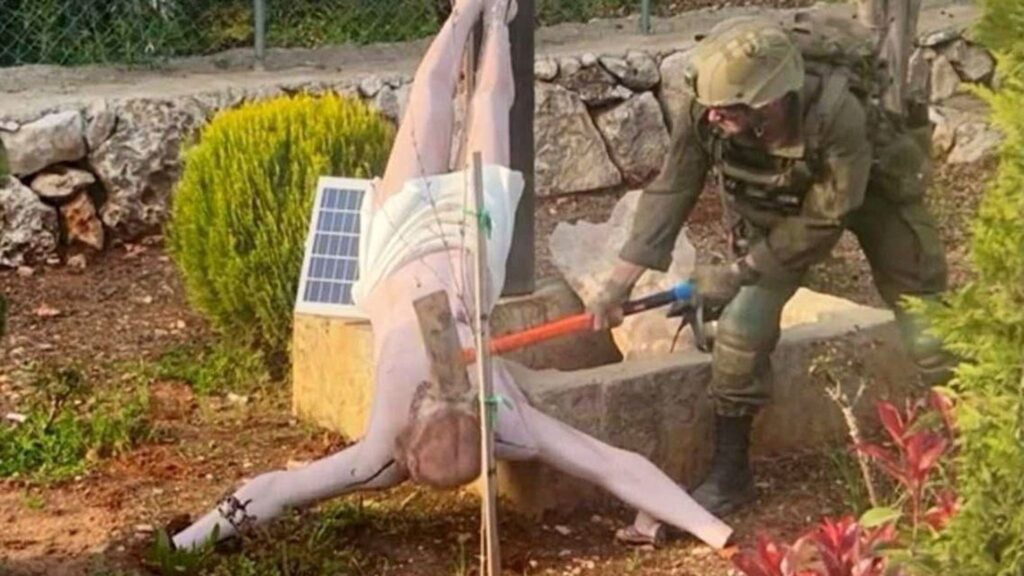
In a statement released Tuesday, the Israeli military said an internal inquiry determined that the soldiers’ actions violated military rules and ethical standards. The statement emphasized that their behavior was inconsistent with the army’s code of conduct.
“The conduct of the soldiers represents a serious deviation from military orders and values,” the statement said, adding that the military “deeply regrets the incident.”
The investigation also found that six additional soldiers were present during the destruction of the statue but failed to intervene or report what happened. Those individuals have been summoned for further review, with officials indicating that additional disciplinary measures could follow.
Israeli Prime Minister Benjamin Netanyahu condemned the incident, describing the actions in strong terms and underscoring that such behavior does not reflect the values of the Israeli military.
The statue was part of a small religious display located in the garden of a home on the edge of the village, according to local priest Fadi Falfel. The area has been affected by ongoing military operations tied to Israel’s conflict with Hezbollah.
The Israeli military stated that its operations in Lebanon are directed solely at armed groups and not at civilians or religious sites. Officials reiterated that preserving civilian life and property remains a core objective during operations.
Following the backlash, the military indicated that the damaged statue has since been replaced.
The incident comes amid heightened tensions along the Israel-Lebanon border, where clashes have persisted despite a ceasefire agreement brokered by the United States. The truce was intended to halt hostilities between Israeli forces and Hezbollah fighters after weeks of cross-border attacks.
Debel is among several communities in southern Lebanon where Israeli troops have maintained a presence as part of ongoing operations. Residents in the region have faced repeated disruptions as fighting and military activity continue.
The destruction of a religious symbol in a sensitive area carries implications beyond the immediate disciplinary action. Incidents involving cultural or religious sites can inflame tensions, particularly in regions where communities already feel vulnerable due to ongoing conflict.
For Israel, the swift punishment of the soldiers appears aimed at reinforcing discipline and signaling accountability, both domestically and internationally. The response may also be intended to limit diplomatic fallout, especially given the presence of Christian communities in southern Lebanon and broader concerns about protecting religious heritage during armed conflict.
At the same time, the involvement of multiple soldiers who failed to intervene raises questions about command oversight and adherence to rules of engagement in complex operational environments. Military leadership may face increased pressure to ensure that standards are consistently enforced in the field.
The incident also highlights the challenges of maintaining discipline in prolonged conflicts, where tensions can escalate and individual actions may carry wider political consequences. Even isolated acts can undermine broader strategic messaging, particularly when they involve symbolic targets.
As ceasefire efforts remain fragile, events like this risk complicating already delicate negotiations and could influence public perception on both sides of the border. Maintaining control over troop conduct will likely remain a priority as military operations continue.





