

President Donald Trump announced Tuesday that the United States will extend its ceasefire with Iran, offering additional time for negotiations while maintaining a naval blockade of Iranian ports.
In a message posted on his social media platform, Trump said the decision followed requests from Pakistani leaders, including Asim Munir and Shehbaz Sharif, who have played a mediating role in the conflict.
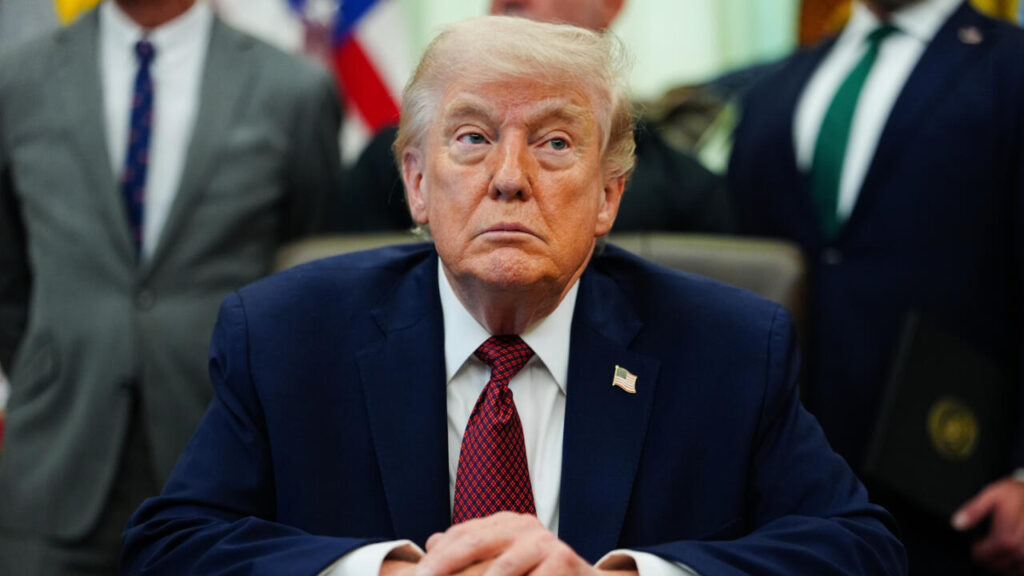
Trump indicated that Iran’s leadership needed more time to align on a unified negotiating position, describing the government as divided. He said U.S. military forces would remain on standby while the blockade continues.
“I have directed our military to maintain the blockade and remain fully prepared, while extending the ceasefire until a proposal is submitted and discussions are completed,” Trump said.
The announcement came just hours before the initial ceasefire was set to expire, with conflicting timelines previously issued about when the truce would end. The extension provides a temporary reprieve in a conflict that has lasted several weeks and caused significant regional instability.
Reporting from Reuters indicated that the extension was intended to allow both sides to continue negotiations aimed at ending the war, which has resulted in thousands of casualties and disrupted global markets. However, it remained unclear whether Iran or U.S. ally Israel had formally agreed to the extension.
Iranian officials did not immediately confirm acceptance of the extended ceasefire. State-linked media outlets in Iran suggested that the country had not requested additional time and warned that continued enforcement of the U.S. blockade could provoke further escalation.
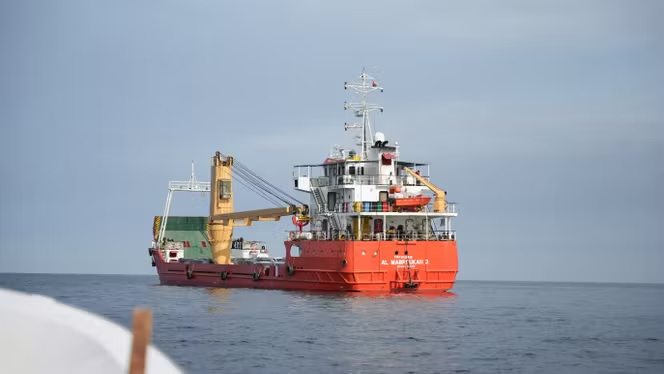
While the ceasefire has been prolonged, the United States is continuing its naval blockade targeting Iranian ports, a move that Iranian leaders have repeatedly described as an act of war. The blockade has restricted shipping and contributed to volatility in global energy markets.
According to The Associated Press, Trump has previously acknowledged that internal divisions within Iran’s leadership have complicated negotiations. He suggested earlier that the removal of key Iranian figures had altered the dynamics of the talks, though he maintained that the United States remains in a strong negotiating position.
The blockade has emerged as a central issue in discussions between Washington and Tehran, with Iran insisting that it will not engage fully in talks while the restrictions remain in place.
Pakistan has played a key role in facilitating dialogue between the two sides, hosting earlier rounds of talks in its capital. Prime Minister Shehbaz Sharif publicly welcomed the ceasefire extension, expressing hope that both parties would use the additional time to reach a comprehensive agreement.
Sharif said he expects further discussions in Islamabad to focus on achieving a lasting resolution to the conflict. However, no official date has been confirmed for the next round of negotiations.
The extension comes against a backdrop of rising concern over the conflict’s impact on global energy supplies. The ongoing standoff has affected shipping routes and contributed to fluctuations in oil prices, with markets reacting to each new development.
The Strait of Hormuz remains a critical point of tension, as it serves as a major channel for global oil shipments. Any prolonged disruption could have far-reaching consequences for economies worldwide.
The decision by President Donald Trump to extend the ceasefire reflects a strategic calculation to balance pressure with diplomacy. By maintaining the naval blockade, the United States continues to exert economic leverage over Iran while avoiding an immediate return to large-scale military action.
At the same time, the extension underscores the challenges of negotiating with a divided leadership structure. Trump’s acknowledgment of internal divisions in Iran suggests that Washington may be seeking to exploit those fractures to secure more favorable terms.
However, the approach carries risks. Iran’s reluctance to engage under pressure could delay or derail talks, particularly if the blockade continues to impact its economy. The absence of a clear commitment from Tehran also raises questions about whether the extension will lead to meaningful progress.
From a broader perspective, the situation highlights the fragile nature of ceasefires in complex conflicts. While the extension reduces the immediate risk of escalation, it does not address the underlying issues driving the dispute, including Iran’s nuclear program and regional influence.
For global markets, the continued uncertainty is likely to sustain volatility. Energy prices remain sensitive to developments in the region, and any breakdown in talks could trigger further disruptions.
Ultimately, the ceasefire extension buys time, but it does not guarantee a resolution. The coming days will be critical in determining whether diplomacy can succeed or whether tensions will once again escalate.
NBC/AP/Skynews/Reuters





