

Israeli airstrikes across southern Lebanon killed at least 19 people on Tuesday, including women and children, Lebanese health officials said, underscoring the continued volatility of a ceasefire that has failed to halt near daily exchanges of fire.
Lebanon’s Health Ministry reported that four women and three children were among those killed in the latest wave of strikes. The attacks mark one of the deadliest days in recent weeks as cross border violence persists despite diplomatic efforts led by the United States to contain the conflict.
Israel’s military did not immediately address the reported casualties but confirmed it carried out strikes on more than 25 locations it described as Hezbollah infrastructure between Monday afternoon and Tuesday afternoon.
The renewed fighting traces back to early March, when Hezbollah launched rockets into Israel following joint United States and Israeli strikes on Iran. Since then, both sides have engaged in frequent attacks, eroding confidence in the ceasefire arrangement.
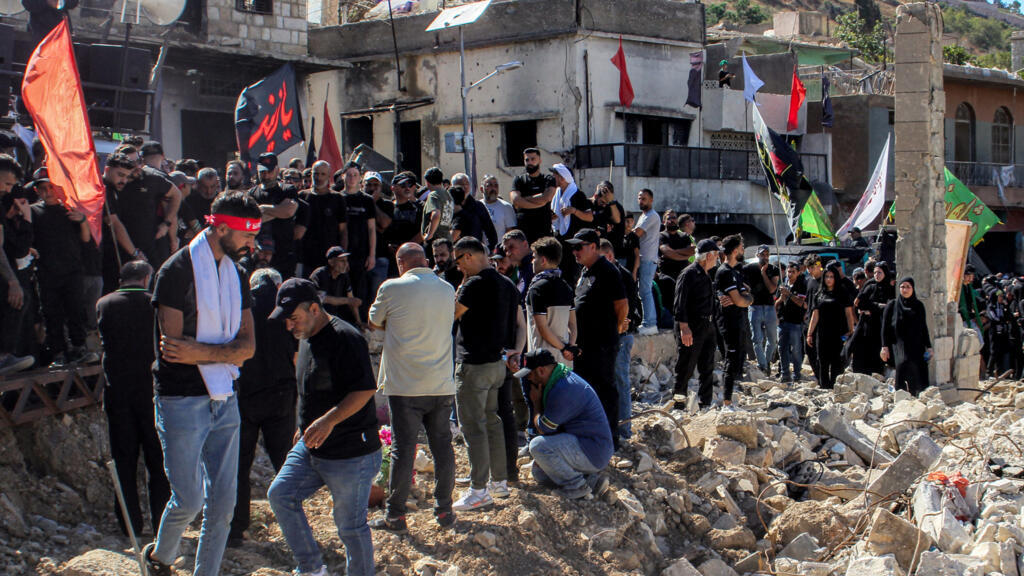
Lebanese authorities said one of the deadliest incidents occurred in the coastal Tyre province, where an airstrike on the village of Deir Qanoun al Nahr killed 10 people. Among the victims were three children and three women. Three others were wounded, including a child.
Lebanon’s state news agency said the strike leveled a residential building, trapping several people beneath the rubble. Rescue teams later recovered bodies from the debris, though officials did not provide further details about the victims or the intended target.
The continued violence highlights the fragility of the ceasefire, which has struggled to hold amid deep mistrust and competing military objectives. While Israel maintains that its operations target militant infrastructure, Lebanese officials and humanitarian groups have raised concerns about the growing toll on civilians.
The latest escalation reflects a broader pattern in the region, where ceasefires often serve as temporary pauses rather than lasting solutions. The absence of a clear enforcement mechanism has allowed both sides to continue limited strikes while avoiding full scale war, creating a dangerous gray zone of conflict.
For Israel, sustained pressure on Hezbollah positions is seen as a strategic necessity to deter future attacks. For Hezbollah, continued resistance reinforces its role as a regional force aligned against Israeli and Western influence. This dynamic leaves little room for de escalation without significant diplomatic intervention.
The civilian toll is also likely to intensify international scrutiny. Repeated incidents involving women and children risk shifting global opinion and could increase pressure on both sides to adhere more strictly to ceasefire terms.
At the same time, the ongoing exchanges raise concerns about miscalculation. A single large scale incident or mass casualty event could rapidly push the conflict beyond its current limits, drawing in additional regional actors and further destabilizing an already tense Middle East landscape.
With no immediate signs of restraint from either side, the situation remains highly volatile, and the ceasefire increasingly appears symbolic rather than effective.
AP





