

Israeli airstrikes in southern Lebanon killed nine people, including three members of the Lebanese armed forces, in an escalation that has cast fresh doubt on a recently brokered ceasefire, Lebanese officials and local media confirmed Saturday.
Lebanon’s military said one strike targeted a vehicle traveling along a road between Nabatiyeh and Marjayoun, killing a brigadier general, a captain and another soldier. A separate strike in the village of Saksakiyah left six civilians dead and four others wounded, the state-run National News Agency reported.
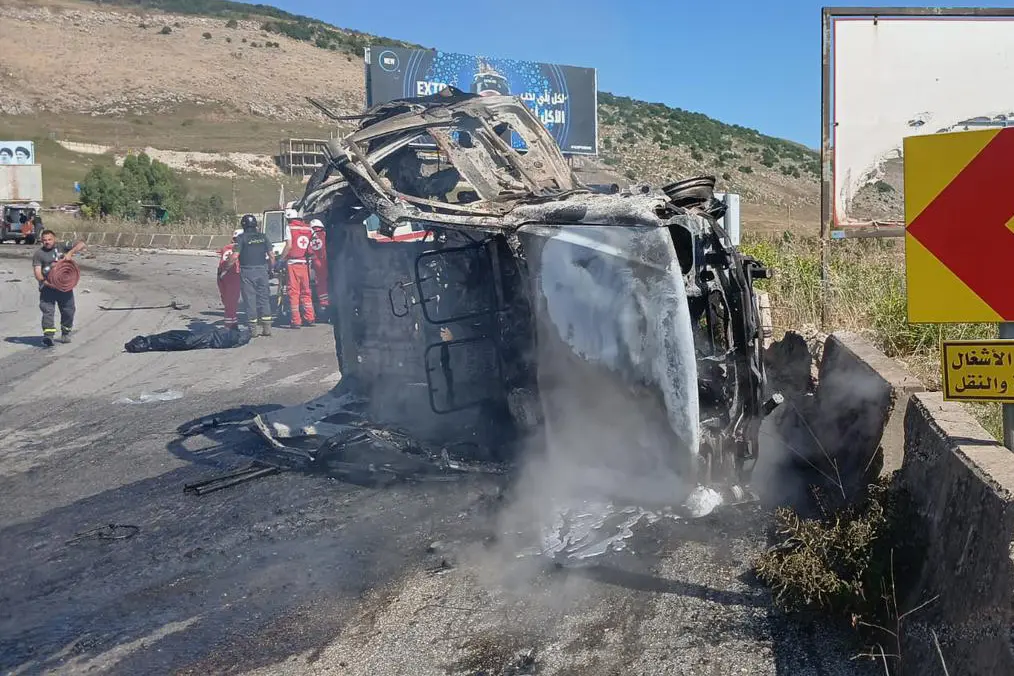
President Joseph Aoun condemned the attack on Lebanese troops, describing it as a clear breach of national sovereignty and international law. He warned that the incident reflects a growing escalation that threatens stability in the country’s south.
The Israeli military acknowledged carrying out the strike on the vehicle, saying it had identified suspicious movement near its forces in the Kfar Tibnit area. Military officials indicated they had intelligence suggesting fighters from Hezbollah were preparing to launch attacks from the vicinity. Israel maintained that its operations are directed at Hezbollah positions and not the Lebanese army.
The Lebanese army, however, said the repeated strikes appear aimed at undermining diplomatic efforts to restore calm, secure a broader ceasefire and push for Israeli withdrawal from occupied areas.
Details cited by the New York Post indicate that the targeted vehicle was part of the Lebanese military, and the strike could jeopardize the fragile truce reached earlier this week through U.S.-mediated talks. The Times of Israel similarly noted that the Israeli military is reviewing the incident after confirming the strike and the presence of Lebanese personnel in the vehicle.
The renewed violence comes amid an already volatile situation along the border. Israeli forces have advanced deeper into southern Lebanon than at any time since their withdrawal in 2000, controlling roughly one-fifth of the territory. Since hostilities intensified in March, more than 3,500 people in Lebanon have been killed and over one million displaced, according to local estimates.
Tensions remain high despite diplomatic efforts. Hezbollah has rejected the latest ceasefire arrangement, while Israeli forces continue operations, including issuing evacuation warnings to residents in several southern communities. Drone activity attributed to Hezbollah has also persisted, with Israeli forces reporting interceptions and impacts near troop positions.
The broader conflict has also triggered political friction between Lebanon and Iran. President Aoun and Lebanon’s prime minister recently criticized Tehran for opposing the ceasefire, accusing it of using Lebanon as leverage in negotiations with Washington. Iran’s foreign minister Abbas Araghchi pushed back, arguing that Israel’s actions are the primary cause of instability and dismissing claims that Iran is exploiting the situation.
The strike on Lebanese military personnel represents a dangerous turning point in the conflict. While Israel has consistently framed its operations as targeting Hezbollah, incidents involving Lebanon’s official armed forces risk widening the scope of the confrontation. Such developments could erode the already fragile distinction between state and non-state actors in the conflict zone.
The timing is especially significant. The ceasefire agreement brokered in Washington was intended to reduce cross-border hostilities and create space for broader negotiations tied to the wider regional crisis involving Iran. This latest escalation suggests that on-the-ground realities are diverging sharply from diplomatic intentions.
There are also implications for U.S. foreign policy. President Donald Trump’s administration has invested political capital in stabilizing the region, and renewed violence could complicate ongoing efforts to manage tensions not only in Lebanon but also in the broader conflict involving Iran.
Additionally, continued displacement and civilian casualties are likely to intensify humanitarian concerns and increase international pressure for a more durable settlement. If attacks involving national military forces persist, they could trigger stronger responses from Lebanon’s government or draw in additional regional actors.
For now, the situation remains volatile, with both military operations and diplomatic rhetoric pointing toward an uncertain path ahead.





