

A Kenyan woman thrust into the spotlight after a widely circulated video appeared to show her damaging property in a United States residence has publicly challenged the claims against her, presenting a sharply different account of events that has deepened uncertainty surrounding the incident.

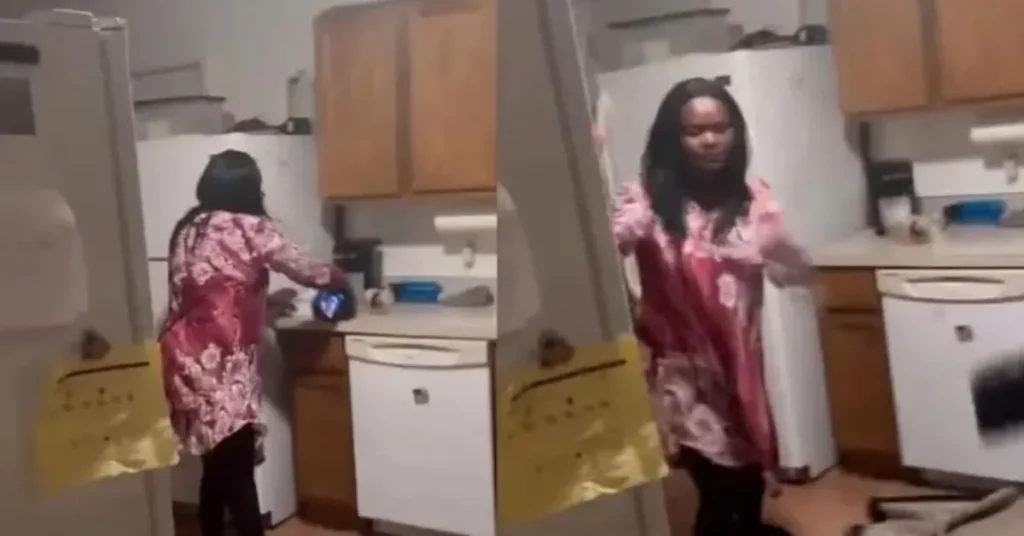
The woman, identified as Ann Kioko, became the subject of intense online scrutiny after footage surfaced on social media platforms showing a chaotic scene inside a home reportedly belonging to her host. The video, which quickly gained traction, prompted widespread speculation and condemnation, with viewers questioning the circumstances that led to the destruction captured on camera.
The controversy escalated after Gibson Nyakundi, the man who hosted Kioko during her stay, made a series of allegations online. He asserted that Kioko had fabricated aspects of her identity and situation, including claims that she created false social media accounts and even circulated misinformation about her own death. He further alleged that she fled the United States while facing legal issues and described her as intoxicated during the incident, portraying her as a danger to his safety.
Nyakundi also indicated that law enforcement documentation existed to support his version of events, though no official records were publicly presented in the immediate aftermath.
Kioko, however, has now issued a detailed response disputing those claims and describing a vastly different experience. In a statement shared online, she said her silence until now had been deliberate but that she felt compelled to present her account.
She explained that she traveled to the United States in March after being invited by Nyakundi, whom she described as a trusted partner. What she expected to be a supportive environment, she said, quickly deteriorated into what she characterized as a situation marked by emotional distress and alleged mistreatment.
Citing information first highlighted by Tuko, Kioko claimed that her stay involved episodes of abuse, manipulation, and psychological strain. She said one incident led to hospitalization, after which she sought temporary shelter before eventually returning to Kenya.
Kioko further alleged that during this period, Nyakundi gained access to her personal devices and social media accounts, suggesting that some of the online activity attributed to her may not have been under her control. She pointed to continued login activity from locations in the United States as part of her claim.
She rejected assertions that she had been deported or was being sought by authorities, describing those claims as false and damaging to her reputation. In a personal disclosure, Kioko added that she is pregnant as a result of the relationship, describing the situation as emotionally overwhelming.
“I have remained silent for some time, but I need to speak my truth,” she said, adding that her current focus is on recovery and rebuilding her life.
The conflicting narratives have left observers without a clear understanding of what transpired, as neither account has been independently verified in full. The absence of official law enforcement statements or court filings has further complicated efforts to establish a definitive sequence of events.
The case highlights the growing influence of viral content in shaping public perception before verified facts are established. In an era where short video clips can reach millions within hours, individuals involved in such incidents often face immediate judgment, with reputational consequences that may persist regardless of later clarifications.
This incident also underscores the complexity of disputes that cross international boundaries. When individuals travel abroad based on personal relationships, differences in legal systems, social support structures, and access to resources can leave them vulnerable if conflicts arise. Kioko’s claims, if substantiated, would point to broader concerns about the safety of individuals navigating unfamiliar environments without established networks.
At the same time, Nyakundi’s allegations reflect another dimension of such disputes, where hosts or residents may feel threatened or wronged, leading to public accusations that can escalate rapidly in the digital space. Without formal adjudication, both sides risk being judged in what effectively becomes a court of public opinion.
The situation also illustrates how social media platforms amplify disputes by prioritizing emotionally charged content. Videos showing dramatic or destructive behavior often spread without context, encouraging immediate reactions that may not account for underlying circumstances such as mental health issues, interpersonal conflict, or alleged abuse.
Another critical factor is the role of digital evidence. Claims about device access, account manipulation, and online activity are increasingly central in disputes of this nature. However, verifying such claims requires technical investigation, which typically falls within the purview of law enforcement or legal proceedings rather than public discourse.
The broader implications extend to immigration and travel dynamics. Cases like this may influence perceptions of safety and trust among individuals considering travel based on personal invitations. They also highlight the importance of clear communication, legal awareness, and contingency planning when entering unfamiliar environments.
As the story continues to unfold, the lack of confirmed legal action or official statements leaves key questions unanswered. Whether authorities in the United States or Kenya will pursue further inquiry remains unclear, and it is uncertain if either party will seek resolution through legal channels.
For now, the case remains a contested narrative shaped by competing claims, viral imagery, and public speculation. What is clear, however, is that the incident has sparked a broader conversation about accountability, digital evidence, and the human consequences of disputes played out on a global stage.





