

Russian forces unleashed a sustained wave of drone and missile strikes across southeastern Ukraine on Saturday, killing at least 10 people and injuring dozens in the city of Dnipro and surrounding regions, officials said, in one of the most intense aerial assaults in recent months.
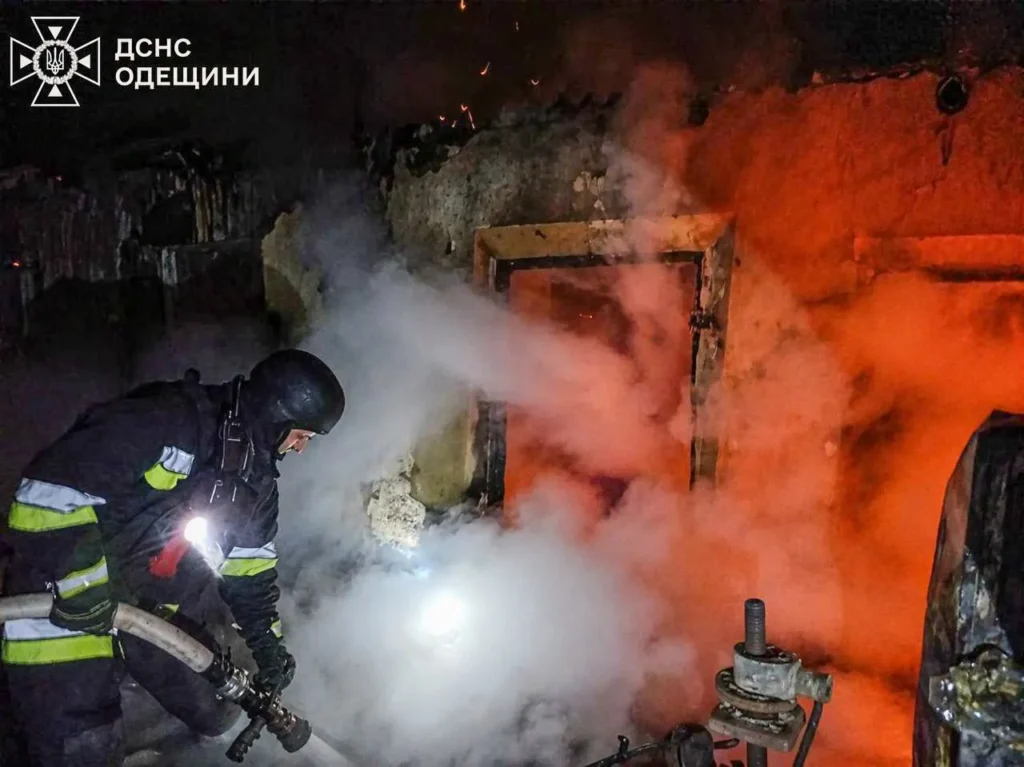
Authorities in the Dnipropetrovsk region said the city endured three separate rounds of attacks over roughly 20 hours, with strikes hitting residential neighborhoods, infrastructure, and emergency response areas. Regional Governor Oleksandr Hanzha said eight people were killed in Dnipro alone and at least 49 others were wounded, including children.
The first strike occurred overnight, when a missile hit a residential building, causing a partial collapse. Rescue teams pulled four bodies from the debris as emergency crews searched for survivors. Hours later, a second strike hit the same area while responders were still working, killing one person and injuring several others in what officials described as a deliberate follow-up attack.
A third wave later in the day left additional people injured, bringing the total number of casualties higher as hospitals treated victims for injuries ranging from minor wounds to critical conditions.
“For more than 20 hours, the city was under continuous attack,” Hanzha said in a statement released through official channels. “Missiles and drones struck repeatedly, including civilian areas.”
Ukraine’s air force said Russian forces launched 619 drones and 47 missiles overnight, marking one of the largest combined aerial assaults of the war. Air defenses intercepted a significant number of incoming threats, downing 580 drones and 30 missiles, but several still reached their targets.
Black smoke rose across the skyline of Dnipro as emergency crews battled fires and searched damaged structures. A journalist on the ground observed air defense systems intercepting drones above the city even as rescue operations continued below.
Russia’s Defense Ministry said its strikes targeted military and energy facilities but did not address reports of damage to residential buildings in Dnipro.
Ukrainian Prime Minister Yulia Svyrydenko condemned the attacks, saying they were aimed at prolonging civilian suffering. “These strikes show a continued focus on infrastructure and residential areas,” she said.
Residents described scenes of fear and devastation. Aliona Katrushova, who lives near the damaged building, watched as survivors were pulled from the rubble. Her apartment was also affected in the blast.
“It feels like everything has been taken from us,” she said, expressing anger over the destruction of civilian homes.
In northern Ukraine, officials in the Chernihiv region confirmed two additional deaths and several injuries after separate missile and drone strikes hit the area.
President Volodymyr Zelenskyy renewed calls for increased international support, particularly in strengthening air defense systems. “Each attack like this underscores the urgency of stronger protection,” he said.
Beyond Ukraine’s borders, the conflict showed signs of spillover risk. Authorities in Romania reported that debris from a downed drone damaged civilian infrastructure near the border, though no injuries were reported. Fighter jets were deployed as a precaution after radar detected nearby aerial activity.
Meanwhile, Ukrainian strikes were also reported inside Russia. Officials in Yekaterinburg said a drone hit an apartment building, causing minor injuries. In the Russian-controlled Luhansk region, authorities said a Ukrainian drone strike killed three people.
The escalation comes as Ukrainian leadership continues to pursue diplomatic and security partnerships. Zelenskyy was visiting Azerbaijan for talks on defense and energy cooperation, aiming to strengthen alliances amid ongoing threats from aerial attacks.
The scale and coordination of the latest strikes highlight a continued shift in the war toward sustained aerial campaigns designed to overwhelm air defenses and inflict damage on civilian infrastructure. While Ukraine’s interception rate remains high, the sheer volume of drones and missiles means that even a small percentage penetrating defenses can result in significant destruction.
The repeated targeting of the same location, particularly during rescue operations, raises concerns about tactics intended to maximize disruption and strain emergency response systems. Such patterns have been documented in previous conflicts and often signal an effort to increase psychological pressure on both civilians and first responders.
From a strategic standpoint, Russia’s use of large-scale drone swarms alongside missiles suggests a dual objective: testing the limits of Ukraine’s defense capabilities while maintaining pressure across multiple regions simultaneously. The inclusion of ballistic and cruise missiles further complicates interception efforts, as each system requires different countermeasures.
For Ukraine, the attacks reinforce the urgency of securing additional advanced air defense systems from allies. While Western support has significantly strengthened Ukraine’s ability to intercept incoming threats, gaps remain, particularly in protecting smaller cities and critical infrastructure outside major urban centers.
The international dimension is also becoming more pronounced. Incidents involving debris in neighboring NATO countries such as Romania highlight the risk of unintended escalation. Even without direct engagement, the proximity of attacks to alliance territory increases pressure on Western governments to respond cautiously but decisively.
Economically, sustained strikes on infrastructure could have long-term effects on Ukraine’s energy grid, industrial output, and civilian resilience. Rebuilding efforts are repeatedly set back by new attacks, creating a cycle that complicates recovery and strains resources.
At the same time, Ukraine’s retaliatory drone operations inside Russia indicate an evolving battlefield where both sides are increasingly capable of striking beyond front lines. While these actions may serve military objectives, they also risk broadening the conflict’s geographic scope.
Ultimately, the latest assault underscores the enduring intensity of the war and the absence of a near-term resolution. As both sides continue to rely heavily on aerial warfare, the humanitarian toll is likely to rise, placing greater urgency on diplomatic efforts, military support, and international engagement aimed at reducing civilian harm.
Reuters/KyivIndependent





