

The total U.S. national debt topped 40 trillion dollars for the first time, the Treasury Department said Wednesday, a milestone that arrived faster than many forecasters expected and drew fresh warnings from budget analysts about an unsustainable fiscal path.
The Treasury’s daily cash and debt balance statement showed total public debt outstanding at 40.047 trillion dollars as of Tuesday, made up of 32.266 trillion dollars in Treasury securities held by the public and 7.782 trillion dollars in intra-governmental debt holdings.
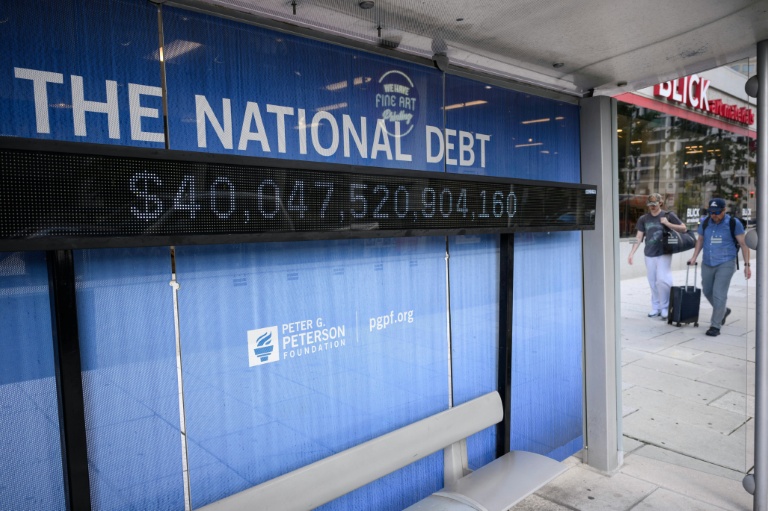
The figure arrived about five months after the debt crossed 39 trillion dollars in March, which itself came roughly five months after the debt passed 38 trillion dollars in October. The pace marks a sharp acceleration from historical norms, given that the debt did not reach its first trillion dollars until 1981 and has now quadrupled in under 20 years.
What We Know So Far
The federal debt has more than doubled in less than a decade, rising from 19.95 trillion dollars when President Donald Trump first took office in January 2017. Roughly a third of that growth occurred during two years of emergency borrowing to fund the government’s COVID-19 pandemic response under both Trump and former President Joe Biden, with the remainder driven by a combination of both administrations’ fiscal choices and longer running structural imbalances between federal spending and tax revenue.
Public debt rose by 7.8 trillion dollars during Trump’s first term, more than half of it accumulated during the pandemic response in his final nine months in office. Since Trump returned to office in January 2025, debt has grown by an additional 3.8 trillion dollars, bringing his combined total across both terms to 11.6 trillion dollars. Public debt rose by 8.4 trillion dollars during Biden’s single term, driven by pandemic recovery spending as well as infrastructure investment and clean energy subsidies.
The Congressional Budget Office has estimated that Trump’s signature second term legislative package, the One Big Beautiful Bill Act, will add another 4.7 trillion dollars to the debt. The Treasury reported last week that July produced the fourth highest monthly deficit in U.S. history, at 432 billion dollars, as tariff refunds pushed customs receipts negative for a third consecutive month while Social Security and Medicare outlays continued climbing. The deficit for the first ten months of fiscal year 2026 has already exceeded the total shortfall recorded for all of fiscal year 2025, with two months still remaining in the current fiscal year.
Interest payments on the debt have become an increasingly large share of federal spending, now totaling about 1.1 trillion dollars annually. The 2025 fiscal year marked the first time debt service costs exceeded Pentagon funding, and in the first ten months of fiscal year 2026, interest costs have surpassed Medicare spending to become the second largest line item in the federal budget, trailing only Social Security.
Demand from foreign investors, who hold roughly a third of outstanding Treasuries, has shown signs of softening over the past year. A 25 billion dollar auction of 30 year Treasury bonds recently sold at the highest yield since 2021, and long bond yields hit their highest levels in nearly two decades this week as investors demanded greater compensation amid heavy government bond issuance. In response, Treasury Secretary Scott Bessent announced Wednesday that the government would double the size of its buybacks for 10 to 30 year Treasuries to at least 4 billion dollars per operation, an effort aimed at pushing long term yields back down.
The U.S. is subject to a statutory debt limit that Congress must periodically vote to raise or suspend. Estimates on when the country will hit the current 41.1 trillion dollar limit vary somewhat, with one analysis projecting sometime between late winter and mid-summer of 2027, while a separate report suggested the Treasury could reach that threshold as early as sometime next year.
What Authorities Are Saying
Maya MacGuineas, president of the nonpartisan Committee for a Responsible Federal Budget, said the debt’s effects are not confined to government ledgers but are felt throughout the economy and ultimately reach individual household budgets. “The more we borrow, the more we exacerbate inflation, squeeze out other priorities in the budget, and leave ourselves vulnerable to emergencies at home and turmoil abroad,” MacGuineas said.
White House spokesman Kush Desai said the administration has been focused on cutting waste, fraud and abuse in federal spending while accelerating economic growth to improve the country’s debt to GDP ratio.
Asked at the White House whether Americans should be concerned about bond market volatility, Trump dismissed the idea, saying the country’s strength should be driving interest rates down rather than up, and describing current rates as ridiculous.
Michael Peterson, CEO of the Peter G. Peterson Foundation, said lawmakers need to act now to put the country on a more sustainable fiscal path if living standards are to improve for current and future generations.
Margaret Spellings, president and CEO of the Bipartisan Policy Center, warned that the current fiscal trajectory is unsustainable even under the best case scenario, and that events such as a recession, global conflict or economic disruption from artificial intelligence could push the situation from a manageable challenge into a full-blown crisis.
Why This Matters
The debt’s impact is already visible in everyday borrowing costs, with rising long term Treasury yields pushing up interest rates for mortgages, auto loans and commercial lending. Analysts say the broader effects extend further, including reduced business investment capacity and higher costs for goods and services, as the government’s borrowing needs compete with private sector demand for capital.
The growing share of the federal budget consumed by mandatory spending, including Social Security, Medicare, Medicaid and veterans’ care, alongside rapidly rising interest costs, leaves policymakers with limited room to maneuver, since most of Trump’s stated spending cuts have targeted discretionary programs that make up a comparatively small share of the roughly 7 trillion dollar annual federal budget. Interest payments alone have now grown large enough to outpace Medicare spending, illustrating how quickly debt servicing costs are reshaping federal budget priorities.
According to recent analysis from the Organization for Economic Co-operation and Development, the United States now holds the weakest fiscal position among developed countries, a comparison that adds international weight to domestic warnings about the country’s debt trajectory.
What Happens Next
Congress will need to address the statutory debt limit again once the country approaches the current 41.1 trillion dollar cap, with estimates suggesting that could occur sometime between early 2027 and mid-2027 depending on the pace of continued borrowing. That vote is expected to renew political battles over federal spending and taxation similar to past debt ceiling standoffs.
The Treasury’s newly announced buyback increase for longer dated bonds is intended to ease upward pressure on yields in the near term, though whether it meaningfully changes investor demand for U.S. debt, particularly among foreign holders, remains to be seen as the debt continues to grow.
Reporting drawn from Reuters, the Associated Press and The Washington Post





