

A four-story residential building collapsed in the early hours of Thursday in the Jrondi district of Fez’s Aïn Nokbi neighborhood, killing at least nine people and sending rescue teams into the rubble of a structure built in the 1980s as authorities ordered the evacuation of adjacent buildings and Morocco’s human rights body called for a national strategy to stop the country’s recurring wave of deadly building collapses.
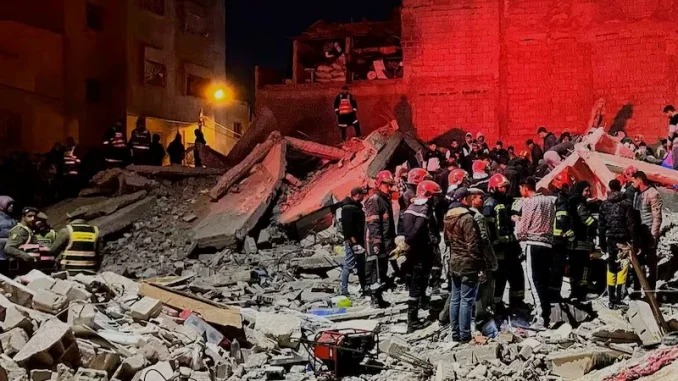
The collapse occurred around 3:30 a.m. in a densely populated area. By midday, six people had been pulled from the wreckage alive, Al Aoula state television confirmed. Several others sustained injuries of varying severity and were transferred to local hospitals. Residents of surrounding buildings were evacuated as a precaution while engineers reinforced neighboring structures against potential secondary collapse.
“The collapse created a wave of fear,” a neighbor told the state television channel.
The Fez city prosecutor confirmed the death toll and said a judicial investigation had been ordered to determine causes, circumstances, and individual responsibility. The Fez Appeals Court prosecutor general pledged strict enforcement of the law and firm action against anyone found responsible once the investigation concludes.
A City That Has Been Here Before
Thursday’s collapse is not Fez’s first this year, nor its worst in recent memory. In December 2025, two residential buildings in the Massira district of the city’s Benssouda area gave way, killing at least 22 people and injuring 16 more. That incident prompted Morocco’s public prosecutor to open a judicial investigation into 21 people, with prosecutors identifying serious violations including construction of additional floors without permits, use of second-hand building materials, illegal transfer of air rights, irregular property sales, and the issuance of housing certificates that did not comply with existing law. Eight of those suspects were ordered detained. The rest are being investigated without custody.
The charges in that case included involuntary manslaughter, bribery and corruption, illegal handling of non-transferable property, complicity, and unlawful issuance of administrative certificates.
Fez itself is a city of extraordinary historical weight, a former Moroccan capital dating to the eighth century and the country’s third most populous urban center. Its older districts contain some of the densest residential construction in North Africa, much of it aging, much of it built informally over decades without consistent regulatory oversight. The physical fragility of that built environment has been known to authorities for years.
Going further back, the collapse of a minaret in the nearby city of Meknes in 2010 killed 41 people. The country has been living with the consequences of inadequate building oversight for more than a generation.
38,800 Buildings at Risk
The number that frames all of this is one the government itself produced. Housing Secretary of State Adib Ben Ibrahim confirmed last year that approximately 38,800 buildings across Morocco had been formally classified as at risk of collapse. That figure covers structures identified through official assessments, meaning it almost certainly understates the actual number of buildings in dangerous condition, since not every at-risk structure has been inspected, catalogued, or flagged.
Thursday’s building in Fez was constructed in the 1980s — not ancient, not improvised, but old enough to have deteriorated and to have potentially accumulated unauthorized modifications over the intervening decades. The pattern that emerged from the December investigation, floors added without permits, substandard materials, administrative certificates issued improperly, points to a systemic failure in which building owners, local officials, and contractors have for years operated outside the rules that exist specifically to prevent what happened overnight in Aïn Nokbi.
The Rights Body’s Demand
Morocco’s National Council for Human Rights deployed a team from its Fez-Meknes regional commission to the site Thursday and released a statement that went beyond condolence into institutional challenge.
The council warned that the recurring nature of these collapses constituted “a direct violation of the right to adequate housing as defined by international standards” and demanded a judicial investigation with published findings and assigned accountability. It called for a national strategy built on proactive monitoring, early warning systems, and strict enforcement of urban planning legislation.
“Strengthened institutional coordination” among government ministries, territorial administrations, and elected councils was necessary, the council said, within a framework that placed the right to adequate housing and citizen safety at the center of public policy rather than at its margins. The council also called for a permanent joint mechanism to respond immediately when cracks or structural defects are detected — intervention before collapse rather than rescue after it.
The rights body had issued a similar statement following the December 2025 Fez collapse. The fact that a comparable disaster struck the same city less than six months later suggests those earlier demands were not acted upon with sufficient urgency.
A Crisis With a Known Cause and a Missing Response
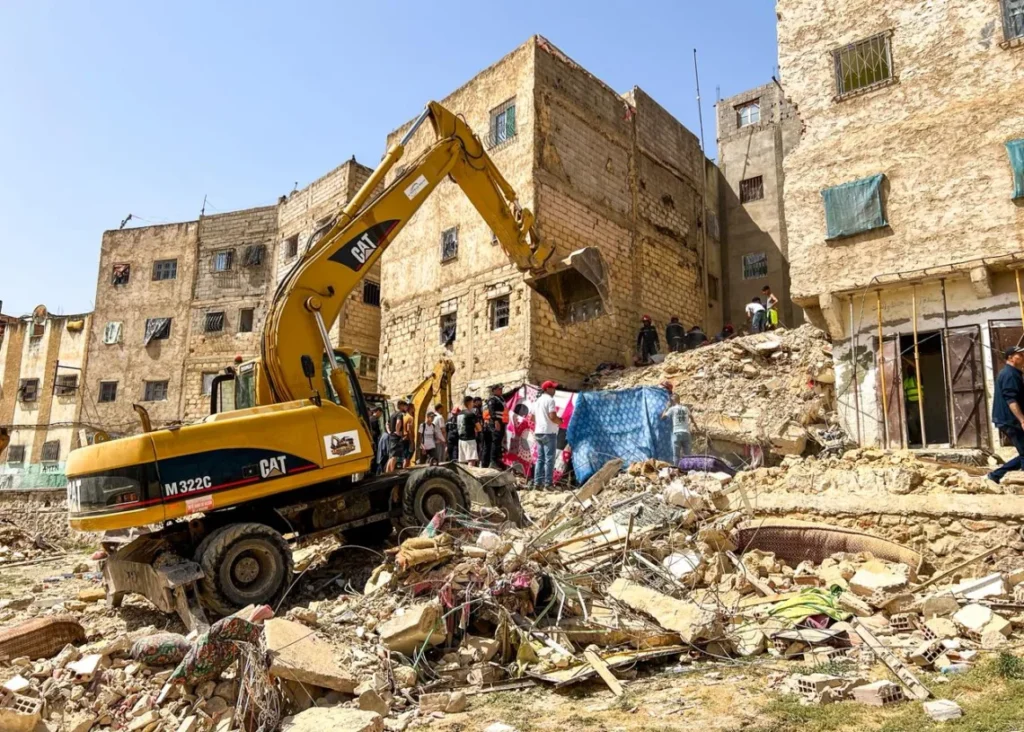
Building collapses in Morocco follow a pattern that is both predictable and preventable. The causes are documented. The scale of the problem is quantified. The legal framework to prevent further deaths exists on paper. What has consistently been missing is the institutional will and capacity to enforce that framework at scale, in time, before buildings fall.
The 38,800 at-risk structures represent a known liability. They are scattered across a country where local building inspection capacity is uneven, where informal construction has historically been tolerated because the housing shortage left authorities with few alternatives, and where the administrative mechanisms for forcing remediation or demolition of unsafe buildings are slow and often contested.
The December prosecutions, with their 21 suspects and charges of bribery and illegal certification, revealed something important: the collapses are not purely the result of aging materials and time. They are enabled by corruption. When building officials issue certificates for structures that do not meet legal standards, when air rights are sold without authorization, when extra floors are added to buildings that were not designed to support them, people in government are either being paid to look away or are simply not doing their jobs. Both explanations demand accountability of a kind that Morocco’s judicial system has been asked to provide but has not yet demonstrated it can deliver at the scale the problem requires.
The human rights council’s call for a national strategy is the right prescription. What it requires is political commitment that treats the 38,800 at-risk buildings not as a future liability to be managed slowly but as an active emergency requiring the kind of systematic, funded, and monitored response that Morocco applied to the 2023 earthquake’s aftermath in the Atlas Mountains.
Nine people died in their sleep in Fez on Thursday morning. Twenty-two more died in the same city in December. Forty-one people died in Meknes in 2010. The numbers keep accumulating because the system that is supposed to prevent them has not been fixed. The buildings that are standing tonight and classified as dangerous are the next entries in that ledger unless something changes.
Reuters/MoroccoWorldNews





