

A Nigerian army general and several soldiers were killed during an attack on a military base in the country’s northeast early Thursday, officials said, in one of the latest assaults linked to the long-running conflict in the region.
The attack took place in the town of Benisheikh in Borno State when armed fighters attempted to overrun a military installation, according to a statement from army spokesman Michael Onoja. Troops stationed at the base fought back and ultimately forced the attackers to retreat.
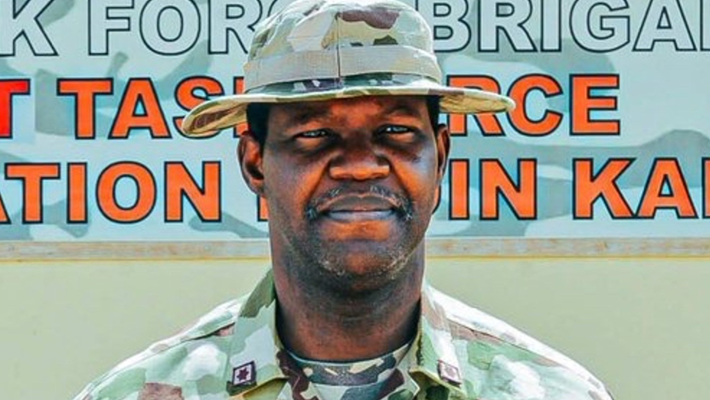
President Bola Tinubu confirmed that a senior officer, Brigadier General Oseni Omoh Braimah, was among those killed in the clash. He described the attack as a sign that the armed groups are under pressure following recent military operations.
“I extend my condolences to the families of our soldiers who made the ultimate sacrifice in the defense of our country,” Tinubu said in a statement, adding that their efforts would not be in vain.
Onoja did not provide an exact number of casualties but said several soldiers were killed during the fighting. He described the attackers as militants, a term used by the military for armed groups operating in the northeast.
According to military officials, the assault began around 12:30 a.m. as fighters attempted to breach the base’s defenses. Troops responded with heavy fire and launched a counterattack that pushed the assailants back after hours of fighting.
A military source said the attack also killed other personnel at the base, including a religious officer, and left several others wounded or missing.
The Defense Headquarters said the response by troops demonstrated strong readiness and coordination, emphasizing that the attackers were unable to achieve their objective.
Despite the successful defense of the base, the military acknowledged losses among its ranks and said families of the fallen would be notified before further details are released.
Nigeria continues to face a complex security crisis, particularly in the north, where armed groups have carried out attacks, kidnappings and raids for more than a decade.
Among the most prominent groups are Boko Haram and a breakaway faction aligned with the Islamic State group, both of which have carried out repeated attacks on civilians and military targets. Other armed groups have also emerged in recent years, expanding the conflict into new areas.
The situation has worsened with the presence of fighters from neighboring regions, increasing pressure on Nigerian security forces.
Earlier this year, the United States deployed about 200 troops and surveillance drones to Nigeria to support the country’s military. U.S. officials said the forces would not take part in direct combat operations but would assist with intelligence and coordination.
The deployment followed a new security agreement between Washington and Abuja after President Donald Trump raised concerns about violence in Nigeria. The U.S. military has also conducted strikes against extremist groups in the region.
Thousands of people have been killed in the conflict, according to United Nations data, with analysts warning that more needs to be done to protect civilians and stabilize affected areas.
Following Thursday’s attack, the Nigerian military said additional operations are underway to track down the fleeing attackers and prevent them from regrouping. Authorities also urged the public to remain calm and avoid spreading unverified information that could interfere with ongoing operations.
Officials said security forces remain committed to restoring stability in the region despite continued threats from armed groups.
The attack underscores the persistent threat faced by Nigerian forces in the northeast, where armed groups continue to demonstrate the ability to launch coordinated assaults on military positions. While officials described the failed raid as a sign of weakening opposition, the loss of a senior officer highlights the ongoing risks for troops on the ground.
The killing of a general may also carry symbolic weight, potentially affecting morale and drawing increased public attention to the conflict. At the same time, the military’s ability to repel the attack suggests that defensive capabilities at key installations remain strong.
The broader security situation remains challenging. Multiple armed groups operate across northern Nigeria, often overlapping in tactics and territory. This has complicated efforts to fully stabilize the region despite years of military campaigns.
International involvement, including support from the United States, reflects growing concern about the spread of violence across West Africa. However, the limited role of foreign troops means that the primary burden of security operations continues to fall on Nigerian forces.
As operations continue in the aftermath of the attack, the focus will likely remain on preventing further assaults while addressing the underlying conditions that allow armed groups to persist.
AP





