

(AP) — Pope Leo XIV on Sunday visited a historic Catholic shrine in Angola deeply tied to the transatlantic slave trade, reflecting on centuries of suffering endured by the country’s people while urging a future shaped by justice and peace.
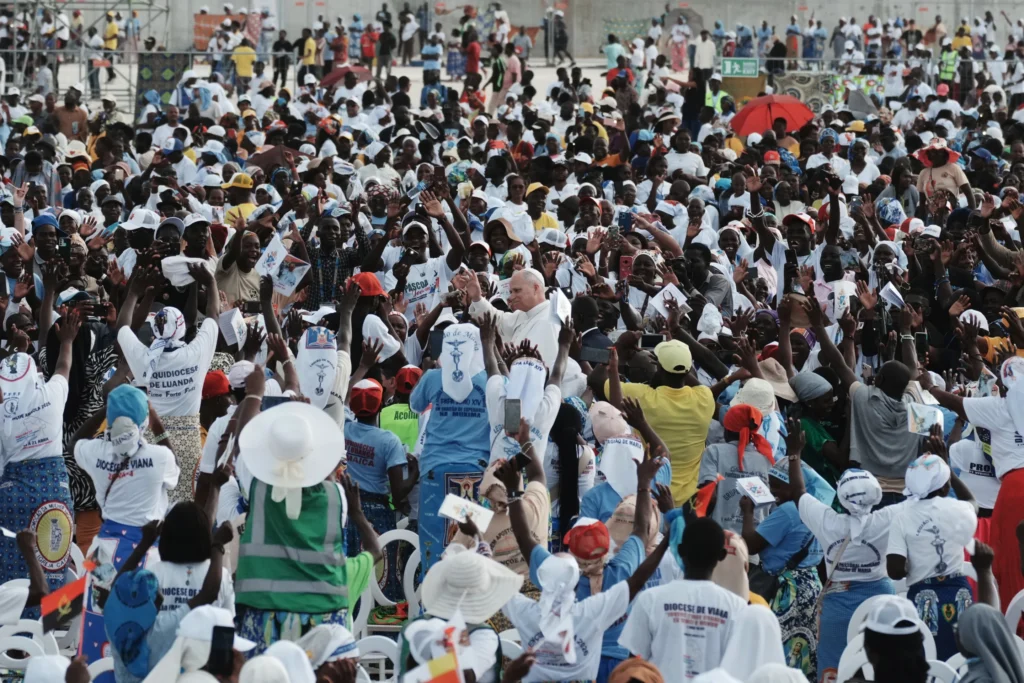
The pope traveled to the Sanctuary of Mama Muxima, located along the Kwanza River, where thousands gathered for prayers at a site that has long served as both a place of spiritual devotion and a reminder of a painful past. The church, built by Portuguese colonial authorities in the late 1500s, later became a central location in the forced movement of enslaved Africans.
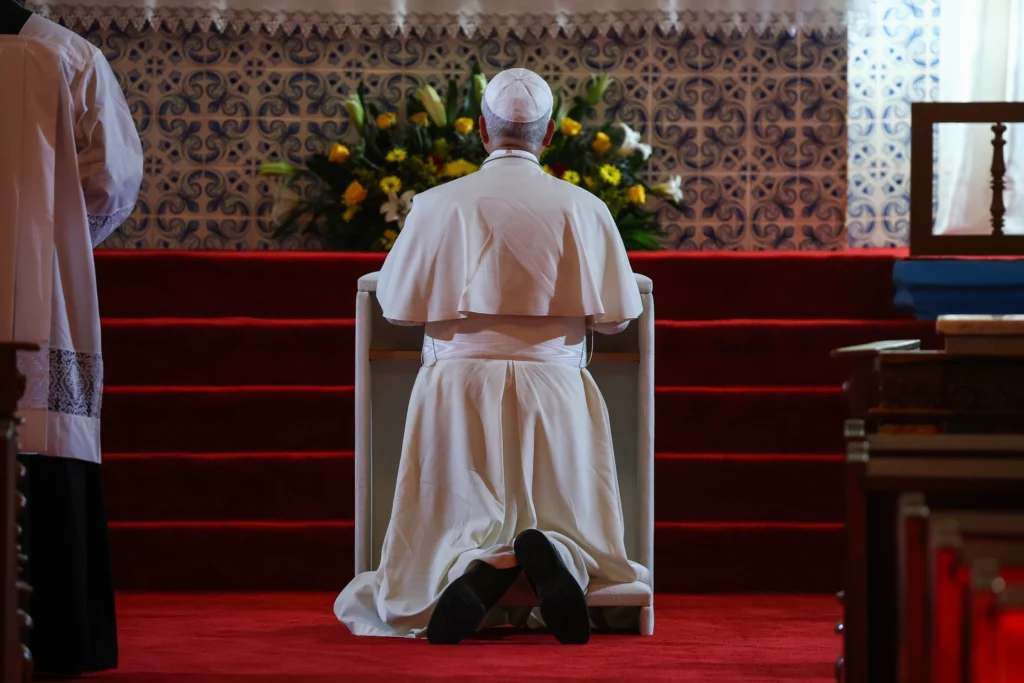
Historical accounts indicate that enslaved men and women were brought to the site, baptized by clergy, and then marched north to Luanda before being shipped across the Atlantic. Over time, the shrine also became a major pilgrimage destination after reports in the 1800s of an appearance of the Virgin Mary.
Speaking in Portuguese, Pope Leo acknowledged the deep historical wounds associated with the location. He described the shrine as a place where generations have prayed in both joy and profound hardship, reflecting the broader experience of the Angolan people.
Without directly referencing slavery, the pope called on those gathered to work toward a more compassionate world free from conflict, injustice, poverty, and dishonesty. An estimated 30,000 people attended the outdoor gathering.
Scholars and observers say the visit carries symbolic weight because of the Catholic Church’s historical links to the slave trade. During the era of European expansion, religious directives issued by church authorities were used by colonial powers to justify conquest and enslavement.
Research cited by historians shows that millions of Africans were transported through Angola during the transatlantic slave trade, making it one of the largest departure points on the continent. Many were forced into slavery after being captured or sold, often under systems that involved both local and foreign actors.
The visit drew attention from academics, including Anthea Butler of Oxford University, who described the moment as significant for Black Catholics. She noted that many descendants of enslaved people were introduced to Catholicism during that era, either through forced conversion or existing religious ties prior to displacement.
Historians also point to official decrees from the 1400s that granted European rulers authority to conquer lands and enslave non-Christians. These directives later influenced broader legal and cultural frameworks that shaped colonization across Africa and the Americas.
The Vatican formally rejected one of those doctrines in 2023, but critics argue that more direct acknowledgment of the Church’s role in slavery remains necessary. The debate has persisted for decades, with calls for stronger statements or formal apologies from church leadership.
Christopher J. Kellerman, a Jesuit priest and author, has written that while later church teachings opposed slavery, earlier actions contributed to systems that enabled it. He has argued that a fuller reckoning with history could carry powerful meaning for affected communities.
Previous popes have addressed the issue in limited ways. Pope John Paul II asked forgiveness in 1985 for the role of Christians in slavery, though he did not directly address decisions made by earlier popes. During a later visit to Senegal, he condemned slavery as a tragedy tied to a society that claimed religious identity.
Pope Leo’s own background adds another dimension to the moment. Genealogical research presented by Henry Louis Gates Jr. indicates that the pope’s ancestry includes both enslaved individuals and slaveholders in the United States. The findings were shared with the pope during a meeting at the Vatican earlier this year.
The pope has not publicly commented on that research, and some scholars caution against drawing conclusions about how it may shape his views. Tia Noelle Pratt of Villanova University emphasized that personal identity remains a matter for the pope himself to address.
Meanwhile, Wilton Gregory, the first African American cardinal, said the connection resonates with many people of African descent who see shared heritage reflected in the Church’s leadership.
Pope Leo XIV’s visit to Muxima reflects a broader effort by the Catholic Church to engage with difficult aspects of its history while maintaining its global spiritual role. The setting itself underscores a dual legacy: a place of faith that also symbolizes suffering tied to forced migration and exploitation.
The pope’s decision not to explicitly mention slavery may reflect a careful diplomatic balance. Direct acknowledgment could intensify calls for formal apologies or reparations, while silence risks criticism from those seeking accountability. This tension illustrates the challenge religious institutions face when confronting historical wrongdoing that spans centuries.
At the same time, the visit highlights the evolving identity of the global Church. With growing membership in Africa and the Americas, there is increasing emphasis on addressing historical injustices that shaped those regions. For many believers, recognition of the past is seen as essential to building trust and unity in the present.
The broader implications extend beyond religion. The legacy of the transatlantic slave trade continues to influence social, economic, and political conditions worldwide. By visiting sites like Muxima, global leaders draw attention to how historical systems of exploitation still echo in modern inequalities.
Ultimately, the significance of the visit may lie less in what was said and more in the act itself. Standing at a place where faith and suffering intersect, the pope’s presence signals an acknowledgment—however measured—of history’s weight and the ongoing need for reflection, dialogue, and reconciliation.





