

A powerful explosion ripped through a major natural gas facility in Qatar late Sunday as workers attempted to resume operations, leaving at least 54 people injured and 18 others unaccounted for, authorities said.
The blast struck the Barzan gas supply facility in the Ras Laffan industrial area, a critical hub for the country’s energy exports. The incident triggered a large fire and sent thick smoke into the sky, raising concerns about global energy supply disruptions.
Qatar had only recently begun restarting the terminal after earlier damage linked to Iranian strikes during the regional conflict that disrupted shipping routes through the Strait of Hormuz.
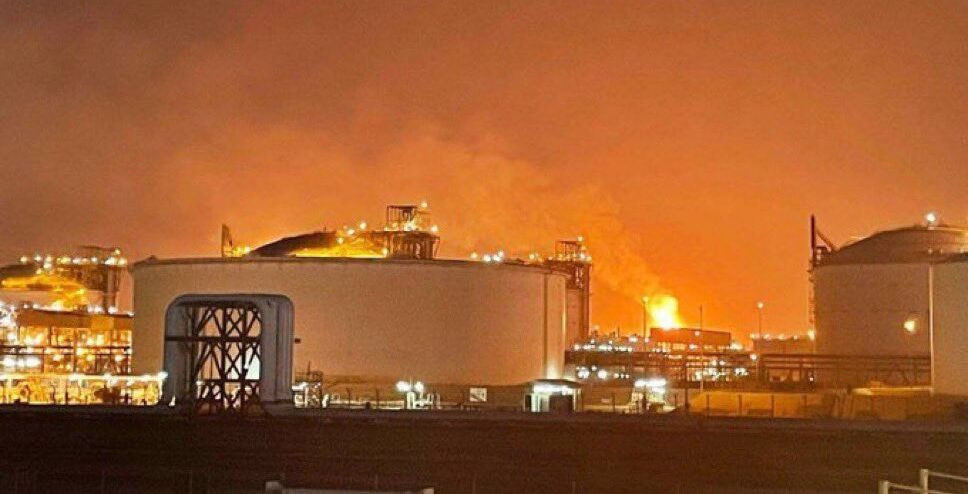
What we know so far
Officials confirmed that the explosion occurred during efforts to bring the facility back online. Qatar’s Interior Ministry put the number of injured at 54, while search teams continued efforts to locate 18 missing individuals.
Emergency crews were deployed quickly and managed to bring the fire under control hours later. Several of the injured were taken to medical facilities, while others received treatment at the scene.
The Barzan facility is a key component of Qatar’s domestic energy network, supplying gas for electricity generation and water desalination, as well as supporting export operations.
Earlier in March, the same industrial zone was struck during regional hostilities, forcing a shutdown of production and evacuation of thousands of workers.
What authorities are saying
QatarEnergy indicated that the explosion was linked to a technical incident during the restart process, adding that there was no immediate threat to public safety.
The Interior Ministry confirmed that rescue operations remain ongoing and pledged updates as more information becomes available.
Officials emphasized that emergency response systems were activated immediately, helping to contain the fire and prevent further escalation.
Statements carried by Reuters and the Associated Press noted that authorities have not yet disclosed the full extent of structural damage to the facility.
Why this matters
Qatar is one of the world’s leading exporters of liquefied natural gas, and Ras Laffan serves as the backbone of its energy infrastructure. Any disruption at the site has implications for global fuel markets, particularly in Europe and Asia, where demand for liquefied natural gas remains high.
The incident also highlights the lingering risks tied to regional instability. The earlier closure of the Strait of Hormuz temporarily trapped a significant portion of global gas supply, underscoring how geopolitical tensions can quickly translate into energy shocks.
With Qatar sharing a major offshore gas field with Iran, the proximity of energy assets to conflict zones continues to pose strategic vulnerabilities.
What happens next
Investigators are expected to determine the precise cause of the explosion, including whether equipment failure or operational pressure during the restart contributed to the incident.
Authorities will likely review safety protocols across the energy sector, especially as facilities resume operations following wartime disruptions.
Energy analysts anticipate that any prolonged outage at Ras Laffan could tighten global supply chains and push prices higher, particularly if repairs take longer than expected.
In the near term, Qatar is expected to prioritize restoring safe operations while reassuring international partners about the stability of its energy exports.
The explosion comes at a delicate moment for global energy markets already strained by geopolitical uncertainty. While officials have downplayed immediate risks, the scale of casualties and the number of missing workers suggest deeper operational challenges.
Restarting large scale energy infrastructure after conflict damage is inherently risky, particularly in facilities handling highly volatile materials. This incident may prompt stricter international scrutiny of restart procedures in post conflict zones.
Beyond the immediate human toll, the blast reinforces how interconnected energy security has become. A single disruption in the Gulf can ripple across continents, affecting prices, supply chains, and political calculations.
If outages persist or similar incidents occur, countries dependent on imported gas may accelerate diversification efforts, including renewable energy investments and alternative suppliers.
Sources: Associated Press, Reuters, USA Today





