

(AP) — The United States military struck an Iranian oil tanker in the Gulf of Oman on Wednesday as pressure mounted on Tehran to accept a proposed agreement aimed at ending months of fighting and reopening one of the world’s most important shipping routes.
U.S. Central Command said an American fighter jet disabled the tanker after it attempted to break through a blockade near Iranian ports. Military officials said the vessel’s steering system was targeted, leaving the ship unable to continue its movement.
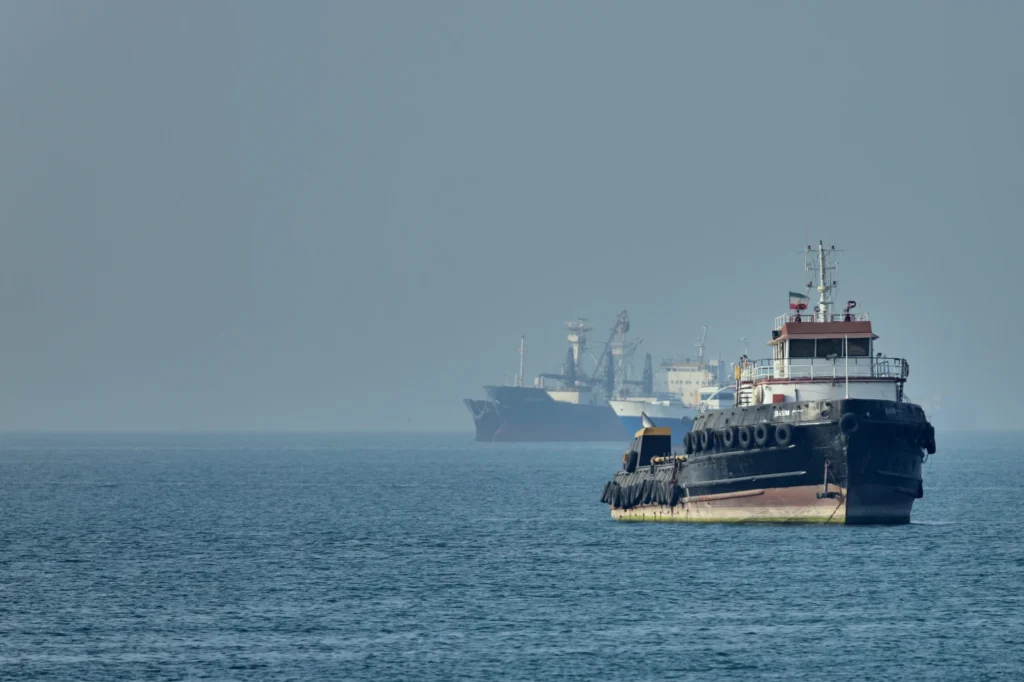
The strike came despite an uneasy ceasefire currently in place between Washington and Tehran, underscoring how fragile the situation remains.
President Donald Trump warned that the conflict could quickly intensify again if Iran refuses terms being discussed behind closed doors.
“If they don’t agree, the bombing starts,” Trump wrote on social media Wednesday, signaling that military action could resume on a larger scale if negotiations fail.
The White House has not publicly released details of the proposed framework, but several media outlets said discussions include reopening the Strait of Hormuz, easing sanctions on Iran, releasing frozen Iranian funds and limiting uranium enrichment activities.
Iran has not accepted the proposal. Officials in Tehran said parts of the framework had already been rejected, though negotiations remain under review.
The latest military action unfolded as hundreds of cargo vessels and oil tankers remain trapped in the Persian Gulf due to Iran’s restrictions on passage through the Strait of Hormuz. The narrow waterway handles a major share of global oil and natural gas shipments and is considered one of the world’s most sensitive trade routes.
The conflict has disrupted energy markets for weeks, driving up fuel prices and straining supply chains across several regions.
Shipping companies say the financial impact is already severe.
German shipping giant Hapag-Lloyd said the closure of the strait is costing the company roughly $60 million each week due to rising insurance rates, longer routes and higher fuel expenses. Other major shipping operators have also slowed or suspended movement through the area.
A vessel operated by French shipping company CMA CGM was damaged Tuesday while attempting to pass through the strait. Several crew members were injured in the attack and later received medical treatment, the company said.
Industry analysts say global trade may remain unstable until commercial ships can move safely again.
“Shipping companies and energy traders are still operating under enormous uncertainty,” said Kaho Yu of risk analysis firm Verisk Maplecroft. “The market will remain nervous until there is clear evidence the situation is stabilizing.”
Oil prices eased slightly Wednesday after surging earlier in the week. Brent crude fell back to around $100 per barrel, though prices remain far above levels seen before the conflict began.
Meanwhile, tensions expanded beyond the Gulf region.
Israel carried out an airstrike in southern Beirut on Wednesday, marking the first attack on the Lebanese capital’s suburbs since last month’s ceasefire with the Hezbollah group. Israeli officials said the operation targeted a senior commander tied to Hezbollah’s Radwan Force.
The strike raised fears that the broader conflict could spill further across the region despite ongoing diplomatic efforts.
Iranian Foreign Minister Abbas Araghchi traveled to China on Wednesday for talks focused on the war, sanctions and the shipping crisis. China, one of Iran’s closest economic partners, called for a broader ceasefire and urged all sides to avoid renewed fighting.
Chinese Foreign Minister Wang Yi said the conflict had caused “serious losses” and damaged regional stability.
China’s role has become increasingly important because of its strong economic ties with Tehran. The Trump administration is pushing Beijing to use its influence to persuade Iran to reopen the Strait of Hormuz and move toward a settlement.
Trump is expected to travel to Beijing later this month for a summit with Chinese President Xi Jinping, adding another diplomatic layer to the crisis.
Iran, however, continues to resist outside pressure.
Senior Iranian officials repeated Wednesday that Tehran would not back away from its position regarding control of the strait. Iranian leaders argue that the waterway remains under their security oversight, though international maritime law guarantees freedom of navigation.
The United States has warned shipping companies not to pay any fees or tolls demanded by Iran for safe passage.
The latest strike on the tanker shows how quickly the ceasefire between Washington and Tehran could collapse.
Although both sides are publicly discussing diplomacy, military pressure remains at the center of negotiations. Trump’s strategy appears designed to force Iran into accepting terms through economic and military leverage rather than prolonged talks.
Any wider disruption in the Strait of Hormuz could send energy prices sharply higher again and deepen pressure on economies already struggling with inflation and supply shortages. Countries heavily dependent on imported fuel, especially in Asia and Europe, could face immediate economic strain.
There is also growing concern among shipping companies and insurers. Many firms now see the Gulf region as too dangerous for normal commercial activity. If the situation worsens, some carriers may permanently shift trade routes, adding long-term costs to global shipping.
Iran’s position also reflects domestic pressure inside the country. Tehran views control of the strait as one of its strongest bargaining tools. Backing down without securing major concessions could be seen internally as a political defeat.
At the same time, Trump faces pressure at home to avoid another prolonged conflict in the Middle East while still appearing tough on Iran.
That leaves both governments trying to project strength while quietly exploring a possible exit from the crisis.
For now, the ceasefire is still holding. But Wednesday’s strike made clear that the line between diplomacy and renewed war remains dangerously thin.





